

Recovering From Myopia Laser Surgery: Screens, Makeup, Swimming and the Follow-Up Calendar

Key Takeaways
- Patient guides from MedlinePlus and the Mayo Clinic describe most LASIK patients returning to work and screens within 1 to 3 days, while PRK typically needs several days to a week because the corneal surface must regrow.
- Vision commonly fluctuates and keeps settling for 3 to 6 months after myopia laser surgery, so surgeons judge the result at the stability visit rather than in the first weeks.
- Screens do not harm the healing cornea; they roughly halve your blink rate, which dries a surface already short on tears, so lubrication and breaks matter more than avoidance.
- Eye makeup is usually paused for about 1 to 2 weeks and swimming, hot tubs and contact sports for weeks longer, because infection and flap displacement are the main early risks.
- Dry eye is the most common side effect and is explained by temporarily cut corneal nerves that signal the tear glands; the Mayo Clinic notes it is usual for around six months and generally improves.
- Laser surgery corrects distance vision for the prescription you have at the time; it does not prevent presbyopia, so reading glasses in the mid-forties are expected biology, not a failed result.
Myopia laser surgery recovery is usually quick for daily life and slow for fine detail. Patient guides describe most people returning to work and screens within 1 to 3 days after LASIK, with longer surface-healing time after PRK, while vision and dryness commonly keep settling for 3 to 6 months. Eye makeup, swimming and rubbing are typically paused for weeks. Your surgeon sets the exact timeline.
The night before her appointment, a 31-year-old software tester did what most people do: she lined up her questions in the notes app on her phone. Could she look at that phone the next day? When could she put mascara back on? She had a holiday booked with a pool and a long flight. And the one she almost didn’t type: how much would it hurt?
Those are the real questions of myopia laser surgery recovery, and they rarely get a straight answer online. Marketing pages promise a weekend turnaround; forum posts describe months of dry, scratchy eyes. Both can be true, because recovery after laser correction for nearsightedness happens on two clocks at once. One runs in hours and days, and governs when you can work, drive and wash your face. The other runs in weeks and months, and governs how your vision sharpens, how your tear film recovers and when your surgeon will finally say the result has settled.
This explainer walks through both clocks, with the typical ranges that patient guides from major medical sources actually give, and with the honest caveat that your surgeon’s instructions always outrank an article.
What myopia laser surgery actually does to the eye
Myopia, or nearsightedness, means light focuses in front of the retina instead of on it, usually because the eye is slightly too long or the cornea is slightly too curved. The cornea is the clear dome at the front of the eye, and it does most of the eye’s focusing. Laser surgery for myopia does not touch the retina or the lens. It reshapes the cornea so that light lands where it should.
The reshaping is done with an excimer laser, a cool ultraviolet laser that removes microscopic layers of corneal tissue without burning the surrounding area. To flatten the center of a myopic cornea, the laser removes a disc of tissue a few dozen micrometers thick, thinner than a human hair. That is the entire correction. The eye is not stretched, shortened or stitched.
Where procedures differ is in how the laser reaches the tissue it needs to reshape. The cornea has a thin outer skin called the epithelium, roughly 50 micrometers of cells that regenerate constantly. In LASIK, a hinged flap of the cornea’s surface is lifted, the laser treats the tissue beneath, and the flap is laid back down, where it adheres on its own within hours. In PRK, the epithelium is removed entirely and grows back over several days. In lenticule extraction, a femtosecond laser cuts a thin lens-shaped sliver inside the cornea, which is removed through a small side opening, so no flap is lifted and no surface layer is scraped.
Understanding this matters for recovery because almost every rule you will be given, from no rubbing to no swimming, exists to protect either a flap that is still bonding or a surface that is still regrowing. Once you know which one applies to you, the instructions stop feeling arbitrary.
LASIK recovery time versus PRK recovery timeline: why the first week looks so different
People who compare notes after surgery are often surprised that friends had wildly different first weeks. The explanation is almost always the procedure, not the person.

After LASIK, the flap settles within hours and the surface of the eye is intact by the next morning. Patient information from the Mayo Clinic and MedlinePlus describes blurry, watery, light-sensitive eyes on the day of surgery, noticeably clearer vision by the next day, and a return to most normal activities within 1 to 3 days. Discomfort is usually described as grittiness or burning that fades within the first day or two.
After PRK, the surface layer has to regrow across the treated zone, and the Mayo Clinic’s PRK guide notes that this typically takes a few days, during which a soft bandage contact lens is worn and discomfort can be significant. Vision clears more gradually, and the same guide says it may take a few weeks before vision stabilizes enough for demanding tasks, with full refinement continuing for months. PRK’s advantage is structural: there is no flap, which is one reason surgeons may suggest it for thinner corneas, higher-contact occupations or people who play contact sports.
Lenticule-based procedures sit between the two in early comfort. There is no surface scrape, so the first days are usually closer to LASIK than PRK, though some patient guides note vision can take slightly longer to sharpen in the first week.
| Procedure | What heals first | Typical early comfort | Typical return to screens and work |
|---|---|---|---|
| LASIK | Flap edge bonds within hours | Gritty, watery for a day | 1–3 days (Mayo Clinic, MedlinePlus) |
| PRK | Surface epithelium regrows over several days | Soreness for 3–5 days, light sensitivity | About a week, sometimes longer (Mayo Clinic) |
| Lenticule extraction | Small side incision closes quickly | Usually mild | A few days, per surgeon guidance |
Treat the table as a map of typical ranges, not a schedule. Your own surgeon will adjust it to your eyes.
Who is usually offered myopia laser surgery, and who is asked to wait
Laser correction is an elective procedure, so the screening before it is often more thorough than the operation itself. Several criteria appear consistently across guidance from the NHS, Mayo Clinic and Cleveland Clinic.
Candidates are adults whose prescription has been stable, typically for at least a year, because a cornea reshaped for a moving target will drift out of focus again. Myopia often keeps changing through the late teens and early twenties, which is why many surgeons ask younger adults to return later rather than operate on a prescription that is still shifting.
The cornea needs enough thickness to tolerate tissue removal and keep a stable shape afterward. Corneal mapping during the assessment is designed to pick up thin or irregularly shaped corneas, including early keratoconus, a condition in which the cornea progressively bulges. Laser treatment on such an eye can accelerate weakening, so these patients are usually directed to alternatives.
Pre-existing dry eye is weighed carefully, because laser surgery temporarily reduces corneal nerve signaling and tear production. Someone who already struggles with dryness may be asked to treat that first, or may be guided toward a different option.
Pregnancy and breastfeeding usually mean postponement; hormonal changes can shift the prescription and alter healing, and the medicated drops used afterward are easier to avoid entirely. Uncontrolled diabetes, autoimmune conditions affecting healing, active eye infection or inflammation, and some medications that affect corneal recovery are also common reasons to pause.
Very high prescriptions may fall outside what laser reshaping can safely correct without removing too much tissue. In those cases, surgeons more often discuss lens-based options such as implantable contact lenses or refractive lens exchange.
None of this is a verdict on a person’s eyes. Being asked to wait usually means the surgeon wants a more predictable result, and waiting is a legitimate, evidence-based plan rather than a rejection.
Is myopia surgery painful? What the first 24 hours really feel like
During the procedure itself, the answer most patients give is no. Anesthetic drops numb the surface of the eye, and the laser portion lasts well under a minute per eye. What people do describe is pressure. In LASIK and lenticule procedures, a suction ring holds the eye still while the laser works, and that pressure, along with a brief dimming of vision, is the strangest part for many.

The hours afterward are a different matter. As the anesthetic wears off, the eye registers that its surface has been disturbed. MedlinePlus describes burning, itching and a sensation that something is in the eye during the first few hours after LASIK, with watering and sensitivity to light. Most people are advised to go home, close their eyes and sleep through the worst of it. By the next morning, the flap has sealed and that sharp grittiness has usually become a mild awareness of the eye.
PRK is more uncomfortable, and honest guides say so. With the surface layer removed, the exposed nerve endings make the eye feel sore and sensitive for several days while the epithelium grows back. The bandage contact lens placed at surgery takes the edge off, and surgeons prescribe drops and sometimes oral pain relief for this window. The soreness fades as the surface closes, typically within the first week according to the Mayo Clinic’s PRK information.
A few practical realities help. Keep the room dim on day one, because light sensitivity is genuine and bright screens or sunlight are hard to tolerate. Wear the protective shields you are given while sleeping so a half-asleep rub cannot disturb a fresh flap. And resist the urge to “check” your vision every ten minutes; the blur on day one is expected and tells you nothing about the result.
Pain that is getting worse rather than better after the first day, especially with increasing redness or discharge, is not part of the normal picture and belongs in the red-flag section below.
How many days should I rest after laser eye surgery?
The honest answer separates two kinds of rest: resting your body and resting your eyes from risk.
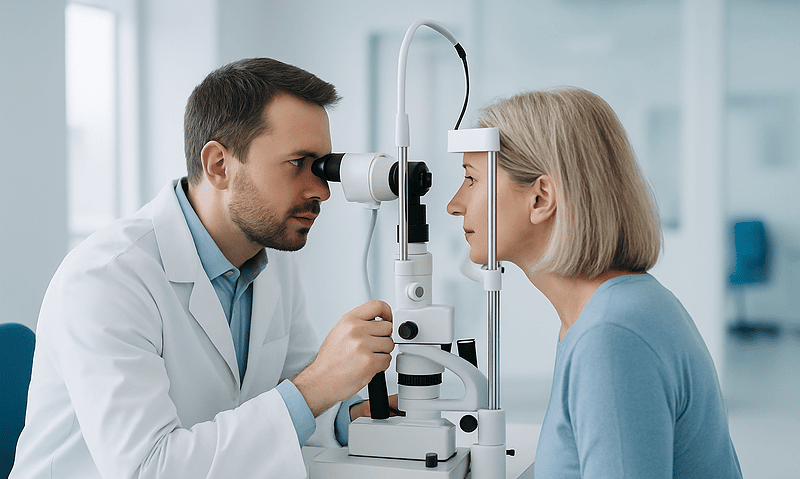
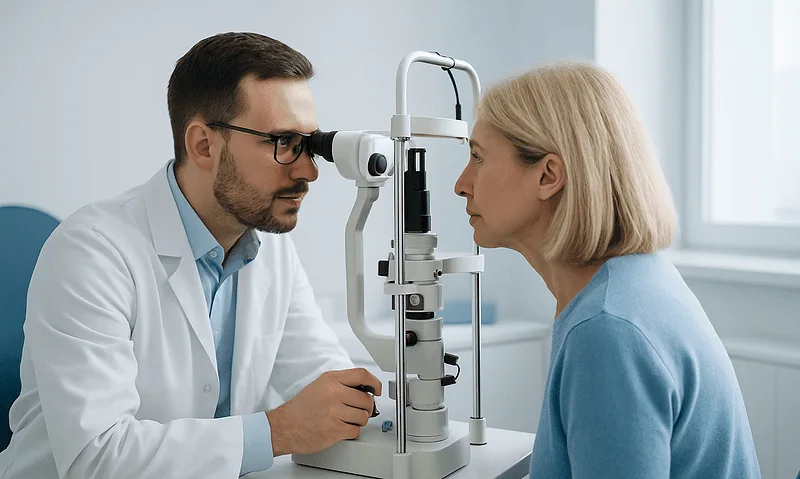
Physical rest is short. After LASIK, patient guides from MedlinePlus and the Mayo Clinic describe most people returning to work and ordinary routines within 1 to 3 days. The day of surgery is essentially written off; you cannot drive home, your vision is blurry, and sleeping is the most useful thing you can do. The next day usually brings a follow-up visit, and many people feel functional enough to work from home. Office work the day after is common; some surgeons suggest a second day off for jobs that demand sustained close focus.
After PRK, the window stretches. Because the surface is regrowing and vision is hazy, the Mayo Clinic’s PRK guidance suggests planning for several days to a week before returning to work, longer if the job depends on fine vision. People who schedule PRK before a long weekend or a week of leave rarely regret it.
Resting your eyes from risk lasts much longer than resting your body. Even when you feel fine on day three, your surgeon’s list of restrictions, covering rubbing, water, makeup, dust and contact sports, continues for weeks. Feeling recovered and being recovered are not the same thing in the first month.
Driving is cleared by the surgeon, not by the calendar. Most people meet legal vision standards at the first-day check after LASIK, but glare and halos at night can lag, so a daytime-only start is a sensible approach that many surgeons recommend. Flying is generally not restricted by cabin pressure, but dry cabin air aggravates post-surgical dryness, and your surgeon will want you reachable for early follow-up. Sleeping with eye shields for the first week or so is a near-universal instruction, and a surprisingly common question is whether you can sleep on your side; the shields exist precisely so the pillow is not a problem.
A typical myopia laser surgery recovery timeline, week by week
Timelines in patient leaflets are averages, and your own healing will wander around them. Still, it helps to know roughly where the milestones sit, so a blurry morning in week two does not feel like a disaster.
| Time after surgery | What is usually happening (LASIK unless noted) | Source for the range |
|---|---|---|
| Day 0 | Blur, burning, watering, light sensitivity; sleep is the plan | MedlinePlus |
| Day 1 | First follow-up; vision noticeably clearer; many cleared to drive in daylight | Mayo Clinic |
| Days 1–3 | Return to work and screens for most LASIK patients | MedlinePlus, Mayo Clinic |
| Days 3–7 (PRK) | Epithelium regrows; bandage lens removed; soreness fades | Mayo Clinic PRK |
| Weeks 1–2 | Eye makeup typically paused; no swimming or hot tubs; shields at night | Mayo Clinic, MedlinePlus |
| Weeks 2–4 | Many surgeons lift water and makeup restrictions; vision still fluctuates | Surgeon-specific |
| Months 3–6 | Vision stabilizes; dryness improves; final assessment and any enhancement discussion | Mayo Clinic, MedlinePlus |
Two patterns are worth knowing in advance. First, vision often fluctuates day to day in the first weeks, sharper in the morning or evening, hazier when tired or dry. Both Mayo Clinic and MedlinePlus note it can take 2 to 3 months, and sometimes up to 6, for vision to settle. Second, the eye tends to feel best just after a lubricating drop and worst after long screen sessions, which is why dryness and screen habits get their own sections.
Notice what the table does not contain: a date when you are “done.” Surgeons generally consider the result stable only at the 3 to 6 month visit, and that is the point at which any residual prescription is assessed. Until then, the measurement of your vision is a snapshot of a healing eye.
Screens after laser eye surgery: phones, laptops and why your eyes feel tired
The phone is usually the first thing people reach for, and the first thing that makes a freshly treated eye complain. Screens are not dangerous to the healing cornea; the problem is what screens do to blinking.
When people concentrate on a display, the blink rate roughly halves, and many of those blinks are incomplete. A healthy eye tolerates this because its tear film refreshes anyway. A post-surgical eye does not. Laser treatment temporarily cuts some of the corneal nerves that signal the tear glands, so tear production dips for weeks to months, a pattern the Mayo Clinic describes as common for the first six months or so after LASIK. Fewer blinks on top of fewer tears means the surface dries, vision blurs and the eye aches, which is precisely the “screens hurt my eyes” complaint of week one.
Most surgeons do not ban screens after LASIK; they ask you to avoid them on the day of surgery, when light sensitivity and blur make them unpleasant anyway, and then to reintroduce them gradually from day one or two. After PRK, the hazy vision of the first several days makes extended screen use frustrating rather than forbidden, and comfort usually dictates the pace.
Practical habits make a real difference. The 20-20-20 rule, looking at something about 20 feet away for 20 seconds every 20 minutes, is a reminder to blink and refocus rather than a magic number. Enlarging text so you do not squint, lowering screen brightness to match the room, using the preservative-free lubricating drops your surgeon recommends before a long session, and taking an actual break every hour all reduce the end-of-day burn.
Blue-light filters and special glasses are frequently marketed for post-surgery screen comfort. The evidence that blue light itself harms the healing eye is weak; the comfort people report from tinted lenses is more plausibly explained by reduced glare and brightness. Your surgeon will not object to them, but they are not a substitute for blinking and lubrication.
When can I wear makeup after laser eye surgery?
For many people this is not a vanity question but a return-to-work question, and the answer has a clear logic once you know what the restriction is protecting against.
Eye makeup is paused for two reasons. The first is infection. Mascara wands, eyeliner pencils and powder brushes carry bacteria, and a cornea with a healing flap edge or a regrowing surface has less defense than usual. The second is mechanical. Applying and especially removing eye makeup involves pressing and wiping along the lid margin, and a firm wipe across a closed eye in week one is exactly the kind of force that can disturb a LASIK flap.
Patient guidance from the Mayo Clinic and MedlinePlus typically advises avoiding eye makeup for about 1 to 2 weeks after LASIK, with some surgeons extending that for PRK until the surface has fully re-epithelialized and the bandage lens is out. Face makeup away from the eyes, including foundation and lipstick, is usually fine from the first days, provided nothing is sprayed near the eyes and nothing drips in.
When you do restart, patient leaflets commonly suggest a fresh mascara and fresh liquid eyeliner rather than the tube you were using before surgery, because opened products harbor bacteria and the cost of a corneal infection is far higher than the cost of new cosmetics. Keep liner on the outer lid rather than the waterline for the first weeks, remove makeup gently with the eyes closed and without dragging, and skip lash extensions, lash glue and false lashes until your surgeon is satisfied with healing, since solvents and adhesives near a healing cornea are an unnecessary risk.
Skin care counts too. Retinoid creams, acid toners and anything that stings should stay well clear of the orbital area in the early weeks, and hair dye or bleach appointments are often postponed for a couple of weeks for the same reason: fumes and splashes. Ask your surgeon for a specific date rather than assuming, because the right answer depends on how your particular eye is healing.
Swimming after laser eye surgery: pools, sea, showers and saunas
Water is the restriction people underestimate, partly because it feels harmless and partly because the timelines are longer than for makeup.
The concern is microbial. Pools, hot tubs, lakes and the sea carry organisms that a healthy cornea shrugs off and a healing one may not, including bacteria and the free-living amoeba Acanthamoeba, which causes a painful and difficult-to-treat corneal infection. Chlorine does not sterilize a pool; it reduces load. Hot tubs are warmer and more crowded with microbes than pools, which is why they often carry the longest wait.
Patient guides from the Mayo Clinic and MedlinePlus advise avoiding swimming and hot tubs for at least a couple of weeks after LASIK, and many surgeons specify longer, commonly 2 to 4 weeks for pools and longer for open water and hot tubs. PRK patients are typically asked to wait until the surface has fully healed and the surgeon has confirmed it, which can push the date later. When you do return, well-fitting swimming goggles for the first weeks add a layer of protection and are a low-cost precaution most surgeons welcome.
Showering is permitted from the first day, but with a specific technique: face away from the spray, keep the eyes closed when water runs down the face, and avoid letting shampoo or soap run into the eyes. Washing your face with a cloth and clean water rather than splashing is a common suggestion for the first week. Baths are fine as long as you are not submerging your head.
Saunas and steam rooms are usually paused for a week or two as well, less because of infection than because heat and sweat dripping into the eye irritate a dry, healing surface, and the instinct to wipe sweat from the eyes is hard to suppress.
Gym workouts are generally restricted only on day one, with heavier exertion and sweat-heavy sessions resuming over the first week. Contact sports, martial arts and anything that could deliver a blow to the eye are typically held for about a month after LASIK, because a direct hit can displace a flap long after it has sealed to casual touch.
Dry eye, glare and halos: the side effects that take the longest to settle
If the first week of recovery is about discomfort and restrictions, the following months are about three sensations that patients do not always expect: dryness, glare and halos.
Dryness is the most common. The cornea is one of the most densely innervated tissues in the body, and those nerves do more than register pain; they tell the tear glands when to secrete. Both the flap cut of LASIK and the surface removal of PRK sever some of these nerves, and until they regenerate, the eye produces fewer tears and blinks less reflexively. The Mayo Clinic notes that dryness is usual for the first six months or so and that it typically improves as nerves recover. Surgeons manage it with preservative-free lubricating drops, sometimes with anti-inflammatory drops, and occasionally with small punctal plugs that slow tear drainage. Which of these you need, and for how long, is a decision for your surgeon based on your tear film, not a generic protocol.
Glare and halos around lights at night are the second group. A freshly reshaped cornea has a treated zone and an untreated periphery, and when the pupil dilates in dim light, some light passes through the transition zone and scatters. Microscopic swelling in the early weeks adds to this. Patient guides describe night-vision symptoms as common in the first weeks to months and usually diminishing as the cornea settles, although a minority of people notice them long term, particularly those with larger pupils or higher corrections.
Fluctuating vision is the third, and it is the one that causes the most needless anxiety. A morning where the clock across the room is sharp and an evening where it swims is normal in month one and reflects tear film and healing, not a failing result. What the surgeon is looking for at follow-up is the trend across visits, not the reading on any one day.
Do you get 20/20 vision after laser eye surgery?
Many people do, and some do not, and the honest answer requires untangling what 20/20 actually means.
20/20 is a measure of distance acuity: the ability to read at 20 feet what a standard eye reads at 20 feet. It is not a measure of perfection. People with 20/20 vision can still have glare, dryness, reduced contrast in low light or difficulty with near reading. Conversely, someone at 20/25 may be delighted and never reach for glasses. The NHS and Mayo Clinic both describe the aim of laser surgery as reducing or removing dependence on glasses or contact lenses for distance, and both note that most people achieve this, while being clear that results vary with the starting prescription, corneal healing and age.
Several factors shape where you land. Higher degrees of myopia and significant astigmatism are harder to correct precisely, so residual prescription is more likely. Healing is individual; two corneas treated identically can end up a quarter-diopter apart. Age matters in a specific way: laser surgery corrects distance vision, and it does nothing to prevent presbyopia, the normal stiffening of the lens that makes near reading harder from the mid-forties onward. A 45-year-old who sees distance perfectly after surgery will still likely need reading glasses, and that is biology rather than a failed operation.
Where a meaningful residual prescription remains once the eye has stabilized, usually at the 3 to 6 month assessment, surgeons may discuss an enhancement, a second, smaller laser treatment. Whether that is appropriate depends on remaining corneal thickness, the stability of the measurements and the size of the residual error, and some surgeons prefer glasses for small residuals rather than more tissue removal.
No article, and no surgeon, can tell you in advance that you personally will reach 20/20. What a good consultation can tell you is the realistic range for your prescription and cornea, and what would happen if you land outside it.
What are the downsides of laser eye surgery? Risks and alternatives, plainly stated
Laser correction has a long safety record, and major medical sources describe serious complications as uncommon. That does not make the downsides trivial, and a clear-eyed list is more useful than reassurance.
Dry eye is the most frequent downside and the one most likely to persist. For most people it fades over months; for a minority it becomes a long-term condition needing ongoing management. Night glare, halos and starbursts follow the same pattern: common early, usually improving, occasionally lasting.
Under-correction, over-correction and regression are possible. The cornea can heal slightly more or less than planned, and in some eyes the correction drifts back partly over years. Astigmatism can be induced if tissue removal is uneven. These usually mean glasses for some tasks or a discussion about enhancement, not a loss of sight.
Flap complications belong to LASIK specifically: incomplete flaps, wrinkles, debris beneath the flap, or inflammation at the interface. Most are managed at or soon after surgery. Epithelial ingrowth, where surface cells grow under the flap edge, is uncommon and treatable. Infection is rare but serious, which is why the water and makeup restrictions exist.
Corneal ectasia, a progressive thinning and bulging of the cornea after surgery, is the rare complication surgeons worry about most, and the detailed corneal mapping before surgery is designed to exclude the eyes most at risk. Loss of best-corrected vision, meaning seeing worse even with glasses than before surgery, is rare but possible, and candid consent conversations include it.
Alternatives are real options rather than consolation prizes. Glasses and contact lenses correct myopia with no surgical risk. Implantable contact lenses, placed inside the eye in front of the natural lens, suit higher prescriptions and thin corneas and are reversible in principle. Refractive lens exchange replaces the natural lens and is more often considered in people approaching cataract age. Each carries its own risk profile, and a surgeon who explains all of them, including the option of doing nothing, is behaving exactly as guidelines expect.
The follow-up calendar: what each visit is actually checking
Follow-up after laser surgery can feel like a lot of appointments for a procedure that took minutes, but each visit has a distinct job.
The day-one visit, which both the Mayo Clinic and MedlinePlus describe as standard, is about structure. After LASIK the surgeon checks that the flap is flat, centered and free of debris or folds, and that the eye shows no early sign of infection or inflammation. After PRK the surgeon checks the bandage lens and the progress of epithelial healing. Vision is measured, but it is a baseline, not a verdict. Driving permission often comes from this visit.
The one-week visit confirms that the surface has healed, removes a PRK bandage lens if it is still in, reviews the drop schedule and begins to relax restrictions. Many people are told here when makeup, pools and workouts can resume, which is why it is worth bringing your list of questions.
The one-month visit looks at the trend: whether vision is sharpening as expected, how the tear film is coping, and whether night symptoms are improving. Anti-inflammatory drops are commonly stepped down around this stage, on the surgeon’s instruction only.
The 3 to 6 month visit is where the result is considered stable enough to judge. Refraction is measured carefully, corneal shape may be re-mapped, and any residual prescription is discussed along with whether an enhancement is sensible. The Mayo Clinic describes follow-up visits continuing at intervals through the first six months, and some surgeons add an annual check thereafter, particularly for higher corrections.
Keeping these appointments matters even when you feel fine. Several complications that surgeons catch at routine visits, including epithelial ingrowth and interface inflammation, can be painless in their early stages. If you have travelled for surgery or moved, arrange in advance who will perform each follow-up and ensure your records and corneal maps go with you, because a surgeon reviewing a healing eye without the pre-operative data is working with one hand tied.
What people often get wrong about myopia laser surgery recovery
Recovery myths spread because they contain a grain of truth stretched past breaking. Here are the ones surgeons hear most, with the correction.
“You can’t look at any screen for a week.” Screens do not damage the healing cornea. They dry it by suppressing blinking. Most LASIK patients are back on screens within 1 to 3 days with lubrication and breaks; PRK patients are limited more by hazy vision than by any rule.
“If my vision is blurry on day three, the surgery failed.” Fluctuation through the first weeks is expected, and vision commonly keeps settling for 3 to 6 months. The surgeon judges the result at the stability visit, not on day three.
“The flap heals permanently in a day.” The flap edge seals within hours and is stable for ordinary life quickly, which is why many restrictions ease at one week. Full adhesion strength builds over longer, and a direct blow can displace a flap long after surgery, which is why contact sports are held for about a month and why rubbing is discouraged well beyond that.
“Dry eye means something went wrong.” Dryness is the most common post-operative symptom and is explained by temporarily reduced nerve signaling to the tear glands. It usually improves over months. What should prompt a call is pain, redness or discharge, not dryness alone.
“Laser surgery means never needing glasses again.” It corrects distance vision for the prescription you have at the time. It does not stop presbyopia in the mid-forties, and a small residual or later regression can still mean glasses for some tasks.
“More drops are better.” Lubricating drops are helpful; using the prescribed medicated drops beyond the instructed schedule, or borrowing someone else’s, is not. Follow the schedule your surgeon set and ask before changing anything.
“Once I feel normal, the rules stop.” Feeling normal arrives in days. The restrictions protecting against infection and flap displacement run in weeks. The two timelines are different, and the second one is the one that matters for safety.
Questions to ask your care team before and after surgery
A good consultation answers most questions before you ask them, but having your own list ensures the ones that matter to your life do not get lost. Consider bringing these.
- Which procedure are you recommending for my eyes, and what about my corneal thickness, prescription or tear film led you there rather than to the alternatives?
- What is the realistic range of outcomes for someone with my prescription, and what would happen if I end up with a residual error?
- How many days should I plan to be off work, and does that differ for my job in particular?
- What exactly can I do in the first 24 hours, the first week and the first month, and what is the single restriction you consider most important?
- When can I drive, and should I start with daytime only?
- When can I wear eye makeup, and do you want me to replace my existing products?
- When can I swim, use a hot tub, go to the gym and return to contact sports?
- What is my drop schedule, how will it change at each visit, and what should I do if I miss a dose or a drop stings unusually?
- What symptoms are normal in week one, and which ones should make me call you the same day?
- How is dry eye managed if it persists, and what is the plan if night glare does not improve?
- What is the follow-up calendar, who will I see at each visit, and who do I contact out of hours?
- If I need an enhancement, when would that be considered, and are there reasons it might not be possible for my cornea?
- I am in my forties: how will presbyopia affect what I should expect from this surgery?
- I have a holiday or long flight planned: how does that fit with my restrictions and follow-up?
Write the answers down or ask for them in writing. On the day of surgery you will be sedated, blurry and distracted, and the printed instructions you take home are the version you will actually consult at eleven at night when your eye feels gritty and you cannot remember whether that is normal.
When to call your doctor: red-flag signs after laser eye surgery
Most of what you feel in the first week after laser surgery is expected: grittiness, watering, light sensitivity, fluctuating blur and mild aching, all improving day by day. The signs below are different because they point to problems that benefit from prompt assessment, and every surgeon would rather receive an unnecessary call than a late one.
Contact your surgeon or the emergency number you were given the same day if you notice any of these:
- Pain that is increasing rather than easing after the first day, or severe pain at any point, particularly if it is in one eye only.
- Sudden worsening of vision after it had started to improve, or a sudden loss of vision.
- Increasing redness, especially with discharge that is thick, yellow or green rather than watery.
- Marked new sensitivity to light that is getting worse, or a white or gray spot visible on the cornea.
- A sense that the flap has moved: a sudden, sharp blur and discomfort after rubbing, a knock to the eye or a child’s finger finding your face.
- Flashes of light, a shower of new floaters or a shadow or curtain across part of your vision, which can indicate a retinal problem and need urgent assessment regardless of recent surgery.
- Any symptom that frightens you and does not match what you were told to expect.
Infection after laser surgery is rare but can progress quickly, and the treatments that preserve vision work best when started early. Flap displacement after LASIK is uncommon and can usually be corrected, but only if the surgeon sees it promptly. Neither of these situations is improved by waiting for the next scheduled visit.
Keep the out-of-hours number in your phone and on paper before surgery. If you are travelling during recovery, know which eye emergency service you would attend locally and carry a summary of your procedure and drops. The decision about what is normal and what is not always rests with your treating team, and they will want to make it with you on the phone rather than have you decide it alone.
Frequently asked questions
How many days should I rest after laser eye surgery?
Most people need only the day of surgery and one or two days afterward before returning to work after LASIK, according to patient guidance from MedlinePlus and the Mayo Clinic. PRK requires longer, typically several days to a week, because the surface layer of the cornea must regrow and vision is hazy meanwhile. Activity restrictions such as no rubbing, swimming or eye makeup continue for weeks regardless of how well you feel. Your surgeon sets the specific dates for your eyes.
Is myopia surgery painful?
The procedure itself is usually not painful because anesthetic drops numb the eye, although many people describe pressure from the suction ring and a brief dimming of vision. Discomfort comes afterward: LASIK typically causes burning, grittiness and watering for several hours that eases by the next day. PRK is more uncomfortable, with soreness and light sensitivity for several days while the surface heals, managed with a bandage contact lens and prescribed drops. Pain that worsens after day one should prompt a call to your surgeon.
Do you get 20/20 vision after laser eye surgery?
Many people reach 20/20 distance vision, but it is not guaranteed and no surgeon can promise it in advance. Outcomes depend on the starting prescription, how the cornea heals and age. Higher myopia and astigmatism carry a greater chance of a small residual prescription, and laser surgery does not prevent presbyopia, so reading glasses remain likely from the mid-forties. The NHS and Mayo Clinic describe the goal as reducing or removing dependence on glasses for distance, which most people achieve.
What are the downsides of laser eye surgery?
The most common downsides are dry eye and night-time glare or halos, both usually improving over months but occasionally persisting. Under- or over-correction, regression over years and induced astigmatism are possible and may mean glasses for some tasks or an enhancement. Flap problems, epithelial ingrowth and infection are uncommon but real risks with LASIK, and corneal ectasia is a rare but serious complication that pre-operative mapping aims to exclude. Alternatives include glasses, contact lenses, implantable lenses and lens exchange.
What is the typical LASIK recovery time before vision is stable?
Functional vision usually returns within a day or two of LASIK, but stability takes longer. Both the Mayo Clinic and MedlinePlus describe vision fluctuating and continuing to settle for 2 to 3 months, and sometimes up to 6, as the cornea heals and the tear film recovers. Surgeons generally consider the result stable at the 3 to 6 month visit, which is when any residual prescription is assessed and an enhancement might be discussed.
How does the PRK recovery timeline differ from LASIK?
PRK removes the cornea’s surface layer rather than lifting a flap, so the first week is slower and more uncomfortable. The Mayo Clinic’s PRK guidance describes several days of soreness and light sensitivity while the epithelium regrows under a bandage contact lens, and vision that takes a few weeks to clear for demanding tasks. Final refinement continues for months, similar to LASIK. The trade-off is that PRK avoids flap-related complications, which is why surgeons may suggest it for thinner corneas or contact sports.
When can I wear makeup after LASIK?
Patient guides from the Mayo Clinic and MedlinePlus typically advise avoiding eye makeup for about 1 to 2 weeks after LASIK, and often longer after PRK until the surface has fully healed. The restriction protects against bacteria from applicators and against the pressing and wiping involved in removal, which can disturb a healing flap. Face makeup away from the eyes is usually fine earlier. Many surgeons suggest starting fresh mascara and liner when you resume, and avoiding lash extensions until cleared.
Is swimming after laser eye surgery safe, and when?
Swimming is usually paused for at least a couple of weeks after LASIK according to Mayo Clinic and MedlinePlus guidance, and many surgeons advise 2 to 4 weeks for pools with longer waits for hot tubs and open water. The concern is infection from waterborne organisms, including Acanthamoeba, reaching a cornea whose surface or flap edge is still healing. PRK patients typically wait until the surgeon confirms the surface has closed. Goggles are a sensible precaution when you first return.
Can I use my phone or laptop the day after laser eye surgery?
Most surgeons allow screens from the day after LASIK, with the day of surgery itself avoided because of blur and light sensitivity. Screens do not damage the cornea; they reduce blinking, which dries a healing eye that is already producing fewer tears. Using lubricating drops recommended by your surgeon, enlarging text, dimming brightness and taking regular breaks keep this manageable. After PRK, hazy vision in the first several days usually limits screen time more than any rule does.
Why are my eyes so dry after laser eye surgery, and will it pass?
Dryness is the most common after-effect because both LASIK and PRK temporarily cut some of the corneal nerves that tell the tear glands to secrete, so the eye produces fewer tears and blinks less reflexively. The Mayo Clinic describes this as usual for the first six months or so, improving as nerves regenerate. Surgeons manage it with preservative-free lubricants and sometimes other measures. Dryness alone is expected; pain, redness or discharge is not and should prompt a call.
References
- LASIK eye surgery: MedlinePlus Medical Encyclopedia
- LASIK Eye Surgery: Cleveland Clinic
- Laser eye surgery and lens surgery: NHS
This article is for general information only and is not a substitute for professional medical advice. Please consult a qualified doctor about your individual situation.

More from the Blog

Keratoconus Treatment Ladder: Lenses, Cross-Linking, Rings and When Transplant Is Discussed
Keratoconus treatment options form a ladder rather than a single choice. Glasses and soft lenses help early; rigid gas-permeable, hybrid or scleral lenses restore…
Can a Contact Lens Get Lost Behind Your Eye? Contact Lens Myths, Corrected
No. A contact lens cannot travel behind your eye. The conjunctiva, the thin membrane lining the inside of the eyelids, folds back onto the…

How IntraLase Creates the LASIK Flap and What That Means for Your Eye
An IntraLase femtosecond flap is the thin, hinged layer of cornea that a femtosecond laser, rather than a mechanical blade, creates during LASIK. The…

When Pink Eye Needs an Eye Doctor Rather Than Time: How Conjunctivitis Care Is Decided
Most pink eye is viral or allergic and settles on its own within one to two weeks, so time and hygiene are usually enough.…

When Is Glaucoma Surgery Needed? What Pushes Care Beyond Drops and Laser
Glaucoma surgery is usually needed when eye pressure stays above the target the treating team has set despite well-used drops and laser treatment, when…
Daily Disposable vs Monthly Contact Lenses: How Your Eye Doctor Helps You Choose
Daily disposable and monthly contact lenses correct vision the same way; they differ in how long each lens is worn before it is discarded.…