

Recovery After TARE Radioembolization for Liver Tumors: Fatigue, Appetite and the First Weeks

Key Takeaways
- Yttrium-90 loses about half its radioactivity every 64 hours, so home precautions are brief and the tumor response is judged weeks later rather than on the day.
- Radioembolization usually causes a milder post-embolization syndrome than chemoembolization, but its fatigue tail often runs longer, commonly into the third to sixth week.
- Loss of appetite tends to outlast nausea; six small protein-containing meals a day are more realistic than three large ones while the liver is tender.
- Light daily walking has repeatedly been shown to shorten cancer-related fatigue, whereas prolonged bed rest tends to lengthen it.
- Radioembolization-induced liver disease appears weeks after treatment as jaundice and abdominal fluid, which is why bilirubin and albumin are rechecked rather than assumed.
- Follow-up imaging is deliberately delayed to around six to twelve weeks because irradiated tissue swells first, and an early scan can look worse than the reality.
Recovery after radioembolization (TARE with yttrium-90 microspheres) is usually gradual rather than dramatic. Most people go home the same day or after one night, then notice tiredness, a dulled appetite, mild nausea and vague upper-belly discomfort that commonly ease over one to two weeks, while fatigue can linger for several weeks. Simple radiation-contact precautions apply briefly. Fever, worsening pain, jaundice or confusion need prompt medical review.
The procedure itself was almost anticlimactic. A tiny puncture at the wrist or groin, a couple of hours lying flat, a sandwich, and then the discharge nurse said the words that sound reassuring in the moment and puzzling a day later: “You may feel a bit washed out.” By the third morning at home, “a bit washed out” has turned into sleeping until ten, staring at a plate of eggs with no interest, and wondering whether this is normal or a warning.
That gap between the brevity of the treatment and the slowness of the aftermath is what most people ask about. Recovery after radioembolization is shaped less by the puncture site than by what the radiation is doing inside the liver over the following days and weeks, and by the body’s response to a large organ being quietly irradiated from within.
This explainer walks through what typically happens, why fatigue and appetite are the two things people notice most, what the radiation precautions really mean, and which symptoms should send you to the phone rather than the sofa.
What actually happens during TARE radioembolization, in plain language
Transarterial radioembolization, usually shortened to TARE, is a way of delivering radiation to liver tumors from the inside. An interventional radiologist (a doctor who treats disease through blood vessels using imaging guidance) threads a thin tube called a catheter from an artery at the wrist or groin up into the hepatic artery, the main vessel feeding the liver. Millions of glass or resin microspheres, each far smaller than a grain of sand, are then released. They carry yttrium-90, a radioactive isotope that emits beta radiation over a distance of only a few millimeters.
The idea rests on a quirk of liver anatomy. Healthy liver tissue draws most of its blood from the portal vein, while liver tumors draw theirs mainly from the hepatic artery. Beads sent down the artery therefore lodge preferentially in and around the tumor, where they sit and irradiate it over the following days. The word “embolization” refers to the beads partially blocking tiny vessels, although the effect in TARE comes mostly from radiation rather than from cutting off blood flow (Mayo Clinic).
Before the treatment day there is almost always a planning procedure. This mapping angiogram (an X-ray study of the liver’s arteries using contrast dye) lets the team check where the vessels run, block any branches that lead to the stomach or bowel, and measure how much blood shunts from the liver to the lungs, since beads reaching the lungs would be undesirable. The treatment itself is then done on a separate day, typically in the same kind of suite.
Yttrium-90 has a half-life of about 64 hours, meaning roughly half its radioactivity is gone every two and a half days. Within about two weeks the great majority has decayed, which explains why home precautions are short and why the tumor response is judged weeks to months later, not on the day.
Who radioembolization is usually for, and who is usually asked to wait
TARE is a liver-directed therapy, which means it treats disease within the liver rather than cancer elsewhere in the body. It is most often discussed for hepatocellular carcinoma (the most common primary liver cancer), for cancers that have spread to the liver from the bowel, and for neuroendocrine tumors that have settled in the liver, usually when surgery to remove the tumors is not an option and disease is largely confined to the liver (NHS; Mayo Clinic).
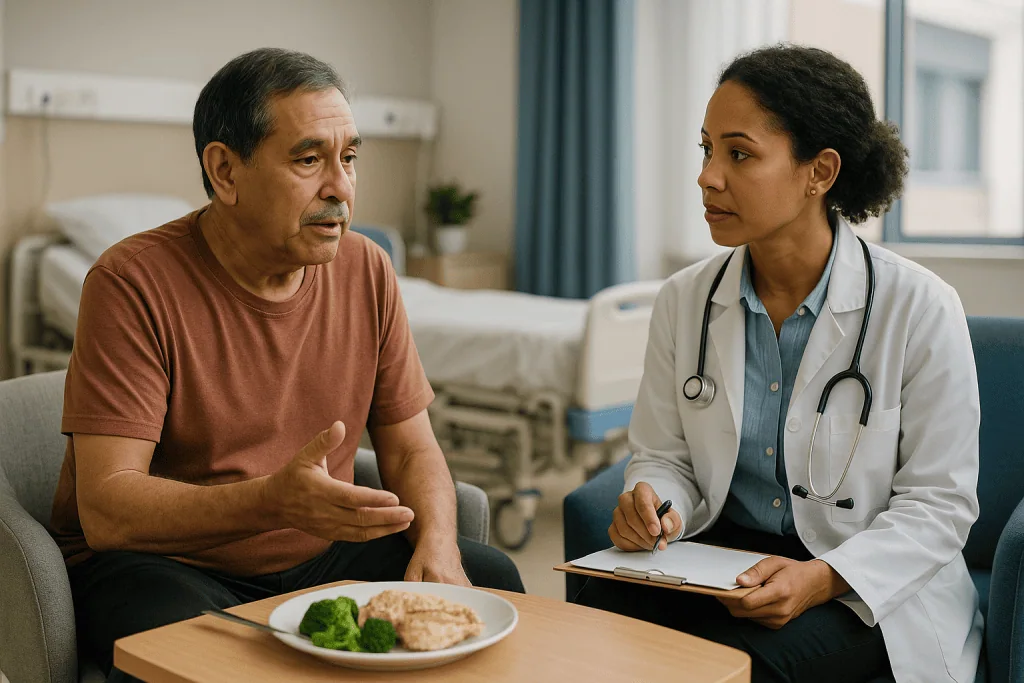
Suitability depends heavily on how well the rest of the liver is working. Because the beads inevitably reach some healthy tissue, a liver that is already struggling has little reserve to absorb the injury. Teams look closely at bilirubin (a yellow pigment that rises when the liver cannot clear it), albumin (a protein the liver makes), clotting tests and whether there is fluid in the abdomen, known as ascites. Someone with significantly raised bilirubin or established liver failure is usually advised against TARE or asked to wait while other options are considered.
The mapping study can also rule people out or postpone them. If too large a fraction of blood shunts from liver to lungs, radiation could injure lung tissue, and the team may lower the plan, treat a smaller area, or choose a different approach. Vessels to the stomach that cannot be safely blocked are another reason to pause.
Other factors weigh in: overall fitness, kidney function (because of the contrast dye), a recent course of certain systemic drugs, and whether the tumor burden has spread widely beyond the liver, in which case a whole-body treatment may make more sense. None of these are moral judgments about who “deserves” treatment. They are estimates of whether the liver can take the hit and recover, and the decision always rests with the multidisciplinary team looking at the whole picture.
The first 24 to 48 hours: what recovery after radioembolization feels like
Most people are surprised by how little the procedure itself hurts. The puncture is done under local anesthetic with sedation, and afterwards you lie flat for a few hours so the artery can seal. A wrist approach usually means a compression band and an earlier walk; a groin approach means longer bed rest and instructions to avoid bending the hip. A small bruise at the site is common and unremarkable.
Many centers send people home the same day; others keep them one night, particularly if a large volume of liver was treated or if nausea needs settling (Mayo Clinic). Either way, the first evening tends to bring a dull ache under the right ribs or in the upper abdomen, sometimes described as a heavy or bloated feeling rather than sharp pain. Anti-nausea medicine and mild pain relief are usually offered, and the treating team decides what fits your other conditions.
A low-grade temperature on the first or second night is common and reflects the liver’s inflammatory response to irradiated tissue rather than infection. The distinction matters, and the discharge sheet will usually give a threshold above which you should call rather than wait it out.
Practical points for the first two days: keep the puncture site dry and clean as instructed, avoid heavy lifting or straining for the period your team specifies, drink fluids steadily to help the kidneys clear contrast dye, and arrange for someone else to drive. Sedation impairs judgment for the rest of the day even when you feel alert. Eating is optional in these hours; small, bland portions are easier to face than a full meal, and a lack of appetite this early is expected rather than worrying.
Post embolization syndrome liver: why you feel flu-ish for a few days
Post-embolization syndrome is the name for the cluster of symptoms that follows any procedure that blocks or irradiates liver vessels: fatigue, low-grade fever, nausea, loss of appetite and vague upper-abdominal discomfort. With bland embolization or chemoembolization it can be quite pronounced; with radioembolization it is generally milder, because the beads are far smaller and less of the blood supply is blocked, but a version of it still occurs in many people (Mayo Clinic; NHS).

The mechanism is inflammation. Irradiated liver cells release signaling molecules that circulate widely and act on the brain’s temperature and appetite centers, producing the same malaise you would feel with a viral infection. There is nothing infected, and antibiotics are not the answer; the feeling fades as the initial wave of cell injury settles.
Typical course: symptoms peak within the first few days and ease over one to two weeks, with the fever component usually the first to disappear and fatigue the last. Because the radiation keeps working as the isotope decays, some people notice a second, gentler dip in energy around the second week rather than a smooth upward line.
Managing it is mostly supportive. Rest without bed-bound inactivity, fluids, small meals, and the anti-nausea and pain medicines your team has recommended. Cold foods, ginger-based drinks and eating before hunger fully returns often help with the nausea component, though the evidence for these is modest and practical rather than definitive.
What post-embolization syndrome is not: a persistent high fever, rapidly worsening pain, yellowing of the skin or eyes, or new confusion. Those point away from expected inflammation and toward complications discussed later, and they warrant a same-day call.
Why radioembolization fatigue often lasts longer than people expect
Ask a room of people who have had TARE what caught them off guard and the answer is rarely pain. It is tiredness that seems out of proportion to a procedure done through a needle hole. Cancer-related fatigue is described by the National Cancer Institute as the most common side effect of cancer treatment, and it is different from ordinary tiredness: it is not relieved by a good night’s sleep, it can come on suddenly, and it affects concentration and mood as well as muscles (NIH National Cancer Institute).
Several things stack up after radioembolization. The liver is doing extra metabolic work clearing dead cells. Inflammatory signaling nudges the brain toward rest. Appetite falls, so calorie and protein intake drop just when repair demands them. Sleep is often fragmented by discomfort or worry. And the underlying cancer, plus any earlier chemotherapy, has already drawn down reserves.
Timelines vary, and no one can promise a date. Cleveland Clinic notes that cancer fatigue can persist for weeks to months after treatment ends, and many people describe energy returning gradually over the third to sixth week after TARE, often in a two-steps-forward pattern (Cleveland Clinic).
The counterintuitive evidence-based advice is that gentle, regular movement helps more than total rest. Short daily walks, building slowly, have consistently been shown to reduce cancer fatigue in trials summarized by the NCI, whereas prolonged inactivity feeds a cycle of deconditioning. Pacing matters: plan the one thing that counts each day, do it when energy is highest, and let the rest go without guilt.
Fatigue that deepens rather than plateaus after the second week, or that arrives with breathlessness, palpitations or jaundice, is a reason for review, since anemia, thyroid change, low sodium or a liver complication can all masquerade as “just tiredness”.
Appetite, nausea and eating in the first weeks
Loss of appetite after radioembolization is nearly universal in the first days and often lingers longer than nausea does. Inflammatory signals blunt hunger, the treated liver sits directly under the stomach and can make a full stomach uncomfortable, and taste sometimes flattens for a while. Add tiredness, and cooking itself becomes a chore. The result is a quiet drift toward eating less, which slows recovery.
The goal in the first two to three weeks is not a perfect diet but adequate protein and calories in whatever form goes down. Practical patterns that dietitians commonly suggest for cancer-related appetite loss include:
Eating six small meals or snacks rather than three large ones, so the stomach is never uncomfortably full against a tender liver. Treating fluids as food: milk-based drinks, smoothies with yogurt or nut butter, soups with lentils or shredded chicken. Keeping ready-to-eat protein visible, such as cheese, eggs, hummus or tinned fish, because the effort of preparing food is often the barrier. Choosing cold or room-temperature foods when smells trigger nausea. Eating by the clock in the early days rather than waiting for hunger, which may not arrive.
Alcohol is best avoided while the liver recovers, and your team will advise on how long. Supplements marketed as “liver detox” or “liver cleanse” have no reliable evidence of benefit after TARE, and some herbal products can themselves stress the liver; anything you plan to take, including over-the-counter products, is worth clearing with the pharmacist or doctor (MedlinePlus).
If weight is dropping noticeably, if swallowing or keeping food down is difficult, or if nausea has not improved by the end of the second week, ask for a referral to an oncology dietitian and a medication review. Persistent vomiting with abdominal pain is a red flag, not an appetite problem.
Y90 recovery time: what the days and weeks usually look like
Every recovery is individual, and the ranges below are typical patterns drawn from general descriptions of liver-directed therapy rather than guarantees. Someone with a small treated volume and a healthy liver may skip several of these stages; someone treated across the whole liver or with cirrhosis may take longer at each step (Mayo Clinic; NHS; Cleveland Clinic).
| Timeframe | What many people notice | What is usually happening |
|---|---|---|
| Day 0–2 | Drowsiness, puncture-site bruise, dull upper-belly ache, mild fever, little appetite | Sedation wearing off; early inflammatory response; contrast being cleared |
| Day 3–7 | Fatigue at its most noticeable, nausea, flu-like malaise, low mood | Peak of post-embolization syndrome; radiation still active |
| Week 2 | Fever gone, nausea easing, appetite returning in small steps, energy variable | Isotope largely decayed; liver enzymes may peak and then fall |
| Weeks 3–6 | Gradual return of stamina, normal eating in most, occasional low-energy days | Inflammation settling; healthy liver regenerating |
| Weeks 6–12 | Near-usual routine for many; first follow-up imaging | Treated tumor shrinking or scarring; response assessed |
Two features of this timeline deserve emphasis. First, imaging done too early can look worse than it is, because irradiated tissue swells before it shrinks; teams usually wait several weeks for that reason. Second, blood tests often show a temporary rise in liver enzymes around the second week, which can alarm a reader of their own results but is expected within limits the team monitors.
If TARE is planned for the other lobe of the liver, that second session is commonly scheduled after a gap of several weeks so the treated side can recover first, and your energy will likely follow a similar curve again.
Radiation safety at home after Y-90: what the precautions actually mean
The beads stay inside the liver; they are not excreted in urine, stool or sweat in any meaningful amount, and you do not make objects or people radioactive by touching them. The precaution that does matter is proximity to your abdomen, because a small amount of radiation can be detected at the skin surface while the isotope decays (Mayo Clinic).
Since yttrium-90 loses half its activity roughly every 64 hours, the period of any measurable exposure is short. Guidance commonly given for about the first week covers three situations. Prolonged close contact: avoid having a child or pregnant person sit on your lap or sleep pressed against your torso; brief hugs are fine. Sleeping: some teams suggest sleeping separately or with distance for a few nights. Travel: carry the card your team gives you, because sensitive radiation detectors at airports and border points can occasionally register a treated person for a few weeks, and the card explains why.
What is not needed: separate crockery, separate bathrooms, isolating from pets, or avoiding public spaces. If the procedure involved resin beads, a small fraction of activity can appear in urine in the first day, so ordinary hygiene, sitting to urinate and flushing twice, is sometimes advised briefly; your specific sheet takes precedence over anything general here.
In the rare event of death within the first weeks after treatment, the family should tell the funeral director that Y-90 microspheres were used, because cremation and embalming have specific handling guidance. This is an uncomfortable line to read, but it is standard information and does not reflect any expectation about your outcome.
If anything about the precautions is unclear, the nuclear medicine or radiation safety team is the right contact, not general internet advice, since instructions differ slightly between bead types and between countries.
Y90 side effects to know: the less common but serious complications
Most people experience only the expected fatigue and appetite dip. A minority develop complications that need prompt attention, and knowing their shape helps you distinguish them from ordinary recovery (Mayo Clinic; NHS).
Radioembolization-induced liver disease, sometimes shortened to REILD, is the most important. It occurs when healthy liver tissue receives more radiation than it can tolerate, and it declares itself weeks rather than days after treatment: jaundice (yellowing of the skin and whites of the eyes), swelling of the abdomen from fluid, and rising bilirubin on blood tests, without the tumor itself having grown. Risk is higher in people with cirrhosis, previous chemotherapy, or a large treated volume, which is exactly why teams screen liver function so carefully beforehand.
Gastric or duodenal ulceration happens if beads travel down an artery to the stomach or upper bowel. The clue is gnawing upper-abdominal pain that worsens with eating, sometimes with black stools or vomiting. Blocking these vessels during the mapping study is designed to prevent it, and if it occurs it is treated like any stomach ulcer under the team’s direction.
Radiation pneumonitis, inflammation of the lungs, is uncommon because of the shunt measurement before treatment, but new cough or breathlessness in the weeks after TARE should be reported.
Biliary injury and abscess in the liver present with fever that persists or climbs rather than fading, often with pain and chills. Cholecystitis (an inflamed gallbladder) is another possibility when beads reach the gallbladder’s artery, causing sharp right-sided pain.
Puncture-site problems are the simplest to spot: a swelling that grows, bleeding that does not stop with pressure, or a cold, pale or numb hand or foot on that side.
None of these should be self-managed. Each has a recognized treatment pathway, and early review changes how straightforward that pathway is.
Follow-up scans and blood tests: what your team is watching for
Recovery after radioembolization is judged on two tracks that run at different speeds. The first is how you feel, which is what this article has focused on. The second is what the liver and the tumor are doing, which shows up in blood tests and imaging over weeks to months.
Blood tests are usually repeated within the first couple of weeks and again around the one-month mark. The team looks at bilirubin, albumin, liver enzymes, clotting and, for some tumor types, tumor markers such as alpha-fetoprotein for hepatocellular carcinoma or chromogranin for neuroendocrine tumors. A transient bump in enzymes is expected; a steady climb in bilirubin with falling albumin is not, and is the pattern that prompts closer monitoring for REILD (Mayo Clinic).
Imaging, usually a contrast-enhanced CT or MRI, is typically scheduled somewhere between six and twelve weeks after treatment. Earlier scans are avoided because irradiated tissue swells and can mimic growth, and because the radiation continues to act on the tumor after the isotope has decayed. Response is assessed not just on size but on how much of the tumor still takes up contrast, which reflects living tissue; a tumor can remain the same size while much of it has died (NIH National Cancer Institute).
Expect the results conversation to include several possible outcomes: good response and continued surveillance; partial response with a plan for the other lobe; stable disease that might suit a different or added therapy; or progression that changes the strategy. None of these are pass or fail marks, and the choice of next step belongs to the multidisciplinary team, ideally with you present and asking questions.
Bring a written list of your symptoms and their timeline to each visit. A note that says “fatigue improved from day 10, appetite back by day 18, night sweats on days 4 to 6” is far more useful to the team than a vague “I’ve been tired”.
How recovery from TARE compares with other liver-directed treatments
People weighing options, or looking back and wondering whether something else would have been easier, often ask how TARE recovery compares with its neighbors. The honest answer is that each trades a different kind of aftermath, and the choice is driven by tumor type, size, number, location and liver reserve rather than by which is most comfortable (NHS; Mayo Clinic).
Transarterial chemoembolization, or TACE, delivers chemotherapy beads and blocks the artery more completely. Its post-embolization syndrome tends to be more intense but shorter: higher fever, more pain, more nausea in the first few days, often requiring an overnight stay. TARE typically produces a milder acute phase but a longer tail of fatigue, and it carries the specific late risk of REILD that TACE does not.
Thermal ablation, in which a needle heats a small tumor to destroy it, usually involves a short hospital stay and a few days of pain at the treatment site, with fatigue less prominent. It suits small, well-placed tumors and is not an alternative for widespread disease.
Surgical resection removes part of the liver and demands the longest recovery, typically weeks of reduced activity, with the compensation that the tumor is gone rather than irradiated in place. Liver transplant is a separate pathway with its own long timeline.
External beam radiotherapy, delivered from outside the body over several sessions, produces fatigue that builds through the course and lingers, plus skin and nausea effects depending on the field.
Systemic therapies such as targeted drugs or immunotherapy have no procedural recovery at all but bring their own continuous side-effect profiles.
None of this ranks one above another. It explains why a friend’s experience of “liver treatment” may bear little resemblance to yours, and why the team’s recommendation reflects your scan, not a general preference.
What people often get wrong about recovering from radioembolization
Several myths circulate in waiting rooms and forums, and each can nudge recovery in the wrong direction.
“It was a day procedure, so I should be fine by the weekend.” The puncture heals quickly; the liver does not. The radiation keeps working for around two weeks, and the fatigue that follows a large organ being irradiated is a physiological event, not a sign of weakness or of something going wrong. Planning two to three quiet weeks is realistic (Cleveland Clinic).
“I am radioactive and dangerous to my family.” The beads are sealed inside the liver, exposure at the skin is low and short-lived, and the precautions are about prolonged close contact with children and pregnant people for a limited period, not about isolation. Overzealous separation adds loneliness at the moment support matters most (Mayo Clinic).
“Resting completely will speed things up.” Trials of cancer-related fatigue consistently point the other way: light, regular activity shortens the fatigue tail, while extended bed rest lengthens it (NIH National Cancer Institute).
“The scan at three weeks shows it did not work.” Early imaging often shows swelling and can look unchanged or worse. Response is assessed at a planned interval for exactly this reason, and no single early scan settles the question.
“A liver cleanse or detox tea will help the liver recover.” There is no credible evidence for these products after TARE, and some herbal preparations are themselves associated with liver injury. Water, adequate protein and avoiding alcohol are the interventions that have a mechanism behind them.
“Nausea means the cancer is spreading.” In the first two weeks it almost always means inflammation from the treatment. Persistent nausea beyond that, or nausea with jaundice or swelling, is a reason for review, but not a reason for a leap to the worst conclusion.
Questions to ask your care team before and after TARE
A short, specific list turns a rushed clinic visit into a useful one. These are the questions that tend to matter most in the first weeks, phrased so you can copy them onto a note.
- How much of my liver is being treated, and how does that affect the recovery you expect for me specifically?
- What temperature, pain level or symptom should make me call today rather than wait for the next appointment, and which number do I call at night or on weekends?
- Which radiation precautions apply to my bead type, for how many days, and do they cover sleeping arrangements, grandchildren and pets?
- Are there medicines I currently take that should be paused, continued or watched more closely while the liver recovers? (The decision is the prescriber’s; the question makes sure it is asked.)
- When will my blood tests be repeated, what are you looking for, and what would a concerning trend look like?
- When is the follow-up scan, why that timing, and what are the possible next steps depending on what it shows?
- Is a second session planned for the other side of my liver, and roughly how long a gap would you expect?
- Can I be referred to a dietitian if appetite has not recovered by a certain point, and is there a target for weight or protein intake?
- How much activity is safe in the first week, and when can I return to driving, work or exercise?
- Whom should I tell about the treatment if I travel or if another doctor treats me for something unrelated?
Write the answers down or ask a companion to. The first days home are foggy, and the discharge sheet rarely covers the questions that occur to you at two in the morning on day four.
When to call your doctor: red-flag signs during recovery after radioembolization
Expected recovery is uncomfortable but stable or slowly improving. The signs below suggest something else and warrant a same-day call to your treating team, or emergency care if severe. This is a short list of warning features, not a self-diagnosis tool; the team decides what each means (Mayo Clinic; NHS; MedlinePlus).
- Fever that persists beyond the first two to three days, climbs rather than fades, or comes with shaking chills.
- Yellowing of the skin or the whites of the eyes, dark urine or pale stools, at any point in the weeks after treatment.
- Abdominal pain that is severe, steadily worsening, or sharply worse with eating, especially with vomiting or black or bloody stools.
- A swelling abdomen, rapid weight gain from fluid, or new swelling of the legs.
- New confusion, unusual drowsiness or marked personality change, which can signal the liver failing to clear toxins.
- Breathlessness, a new persistent cough or chest pain.
- A puncture site that bleeds through pressure, develops a growing lump, or a hand or foot on that side that becomes cold, pale, numb or painful.
- Inability to keep down fluids for more than a day, or signs of dehydration such as dizziness on standing and very little urine.
- Fatigue that deepens after the second week instead of leveling off, particularly with palpitations or fainting.
Call rather than search. Most of these have a clear pathway once the team knows about them, and early contact usually makes that pathway simpler. Keep the after-hours number on the fridge and in your phone, and give it to whoever is staying with you. If you are far from the treating center, any emergency department can begin assessment, and the card explaining your Y-90 treatment helps them do so.
Frequently asked questions
How long does y90 recovery time usually take?
Most people describe the acute phase, with fever, nausea and malaise, easing within one to two weeks, while fatigue commonly lingers into the third to sixth week before energy feels usual again. Ranges vary with how much liver was treated and how healthy the rest of it is, and your team’s estimate for your case matters more than any general figure.
Is radioembolization fatigue normal or a sign something is wrong?
Tiredness that peaks in the first week and then slowly improves is expected and reflects the liver’s inflammatory response to internal radiation. Fatigue that deepens after the second week, or that arrives with jaundice, breathlessness, palpitations or confusion, is not typical and should prompt a call, since anemia, low sodium or a liver complication can present as exhaustion.
What is post embolization syndrome liver after TARE?
It is a cluster of flu-like symptoms, including low-grade fever, nausea, poor appetite, fatigue and dull upper-abdominal ache, caused by inflammation in irradiated liver tissue. After radioembolization it is usually milder than after chemoembolization and settles over days to a couple of weeks. It is not an infection, and a rising or persistent fever points to something else.
What are the most common y90 side effects in the first month?
Fatigue, reduced appetite, mild nausea, vague right-sided abdominal discomfort and a low-grade temperature in the first days are the usual ones, along with a bruise at the puncture site. Less common but important effects include stomach ulceration, gallbladder inflammation, lung inflammation and radioembolization-induced liver disease, which shows up weeks later as jaundice and abdominal swelling.
Am I radioactive to my family after Y-90 treatment?
The microspheres stay inside the liver and are not shed in sweat or on surfaces, so you cannot contaminate people or objects. A small amount of radiation can be measured near your abdomen for roughly the first week, which is why prolonged close contact with young children and pregnant people is limited briefly. Normal daily life, shared meals and short hugs are fine.
Why does my appetite disappear after radioembolization and when does it come back?
Inflammatory signals from the treated liver suppress hunger, a swollen liver presses on the stomach, and tiredness makes cooking harder, so eating drifts downward. Appetite usually returns in small steps over two to three weeks. Small frequent meals, liquid calories and ready-to-eat protein help bridge the gap; noticeable weight loss or vomiting deserves a dietitian referral and a medication review.
When can I drive, work or exercise after TARE?
Driving must wait until the sedation has fully cleared, at minimum the rest of the procedure day, and until you can move without pain from the puncture site. Desk work often resumes within one to two weeks depending on fatigue, while heavy lifting and vigorous exercise are usually delayed longer. Your team gives the specific timing for your puncture approach and liver condition.
Why is my follow-up scan not until several weeks after radioembolization?
Irradiated tissue swells before it shrinks, and the radiation continues to act on the tumor after the isotope has decayed, so a scan in the first few weeks can look unchanged or even worse without reflecting failure. Teams therefore wait, commonly six to twelve weeks, and assess response by how much of the tumor still enhances with contrast, not size alone.
Can I drink alcohol or take herbal supplements while my liver recovers?
Alcohol adds work to a liver that is already repairing itself, and most teams advise avoiding it for a period they will specify. Herbal and “liver detox” products have no reliable evidence of benefit after TARE and some are linked to liver injury, so anything over the counter is best checked with the pharmacist or doctor before use.
What is radioembolization-induced liver disease and how would I notice it?
It is injury to healthy liver tissue from radiation exceeding what that tissue can tolerate, appearing typically weeks after treatment rather than days. Signs include yellowing of the skin or eyes, a swelling abdomen from fluid, dark urine and rising bilirubin on blood tests without tumor growth. People with cirrhosis or prior chemotherapy are at higher risk, and any jaundice needs prompt review.
References
This article is for general information only and is not a substitute for professional medical advice. Please consult a qualified doctor about your individual situation.

More from the Blog
Why Head Cancer Follow-Up Keeps Examinations and Scans on a Schedule After Treatment
Head and neck cancer follow up scans and examinations stay on a schedule because most recurrences appear within the first few years after treatment,…
Ablation or Surgery for Liver Cancer? What Makes Each Option Suitable
Ablation and surgery are both used to treat liver cancer that has not spread beyond the liver. Ablation destroys a small tumor in place…
How Doctors Choose Between HDR and LDR Brachytherapy: Temporary Source or Permanent Seeds
Doctors choose between HDR and LDR brachytherapy based on the cancer type and size, how the tumor sits next to healthy organs, the patient's…

Immunotherapy Cycles Explained: Why Infusions Repeat Every Few Weeks and for How Long
Immunotherapy is usually given in cycles because the drugs are cleared from the body over days to weeks and the immune response they trigger…
How to Support Someone Through Radiation Therapy: Rides, Meals and Watching for Fatigue
To support someone going through radiation, take on the repeatable jobs: a shared ride rota for daily weekday appointments, small frequent meals matched to…

Recovery After Melanoma Surgery: Stitches, Skin Grafts and Getting Back to Activity
Recovery after melanoma surgery usually takes about one to three weeks for a wound closed with stitches, and several weeks longer when a skin…