

Rejuran and Polynucleotides (“Salmon DNA” Injections): What They Are and What Studies Show

Key Takeaways
- Rejuran is a brand of injectable polynucleotides, purified DNA fragments from salmon, and the injected material contains no sperm cells and negligible fish protein.
- Small randomized split-face trials mostly find polynucleotides non-inferior to hyaluronic acid skin boosters over three to six months, not superior, and long-term data are absent.
- The proposed mechanism, adenosine A2A receptor signaling that increases fibroblast collagen output and reduces inflammation, is well supported in cell and animal studies but only partly confirmed in human skin biopsies.
- As of mid-2025 no injectable polynucleotide product is FDA-approved for aesthetic use in the United States, though products are approved in South Korea and CE-marked in Europe.
- Polynucleotide molecules are far too large to cross intact skin, so topical salmon DNA creams act as moisturizers rather than delivering the injected effect.
- Serious risks such as infection and vascular injury come from the act of facial injection itself, which is why practitioner training and product authenticity matter more than the ingredient.
Rejuran is a brand of injectable polynucleotides, which are purified DNA fragments extracted from salmon. Marketed as a skin regenerator rather than a filler, it is licensed in South Korea and parts of Europe and Asia but is not FDA-approved in the United States. A handful of small, short trials suggest modest improvements in skin texture and fine lines; the evidence is limited, and any decision about treatment belongs with a qualified clinician.
The clinic receptionist has stopped correcting people. A year ago, callers asked about “skin boosters.” Now they ask for “the salmon thing,” and everyone in the building knows what they mean. As of mid-2025, searches for Rejuran and so-called salmon DNA injections have climbed on the back of celebrity interviews, a wave of short-form videos filmed in Seoul treatment rooms, and a steady drip of small studies out of Korea and Italy. The phrase “salmon sperm facial” did the rest.
Strip away the shock value and you find a fairly ordinary question: can a purified biological ingredient, injected into the skin, coax it into repairing itself? That is a question researchers have been asking about polynucleotides since the wound-healing literature of the early 2000s, long before anyone filmed a treatment for social media.
This piece walks through what the product is, what the studies actually measured, how strong those findings are, and where the marketing has run well ahead of the data.
What is Rejuran, and what are polynucleotides?
Rejuran is a brand name for an injectable made from polynucleotides. A polynucleotide is simply a chain of nucleotides, the building blocks of DNA; in this product, the chains are fragments of DNA purified from the reproductive cells of salmon and then processed so that almost none of the fish protein remains. The result is a clear, viscous gel that clinicians inject in tiny amounts into the upper layers of the skin.
Why salmon? The choice is more practical than mystical. Salmon milt (the male reproductive fluid) is abundant, cheap to source as a by-product of the fishing industry, and rich in DNA. Its DNA is structurally the same double helix as ours, made from the same four bases, so once the proteins that could trigger an immune reaction are removed, what is left is a molecule the human body already recognizes.
The product sits in a category that marketers call “skin boosters” or “regenerative injectables.” Unlike a hyaluronic acid filler, it is not designed to add volume or fill a fold. Unlike a neuromodulator, it does not relax muscle. The pitch is subtler: the material is meant to sit in the dermis (the deeper layer of skin that holds collagen and fibroblasts, the cells that make collagen) and nudge the tissue toward repair.
Several versions exist under the same brand, formulated for the face, the delicate under-eye area, acne scars and even the scalp. Other manufacturers sell competing polynucleotide products in Europe and Asia. In everyday conversation, and in most of the videos driving this trend, the brand name has become shorthand for the whole category, in much the way one tissue brand stands in for all tissues.
The distinction matters when reading studies. Some trials used one specific product; others used a competitor with a different concentration or purification process. Results from one do not automatically transfer to another.
Why are salmon DNA injections trending right now?
Three currents met at once. The first is celebrity. In 2024 several high-profile actors and reality stars described having a “salmon sperm facial” in interviews, and the phrase was built for headlines. The second is travel. Medical tourism to South Korea has grown sharply, and visitors returning home posted before-and-after clips of treatments that had been routine in Seoul for a decade but were novel to audiences in the United States, Britain and Australia.
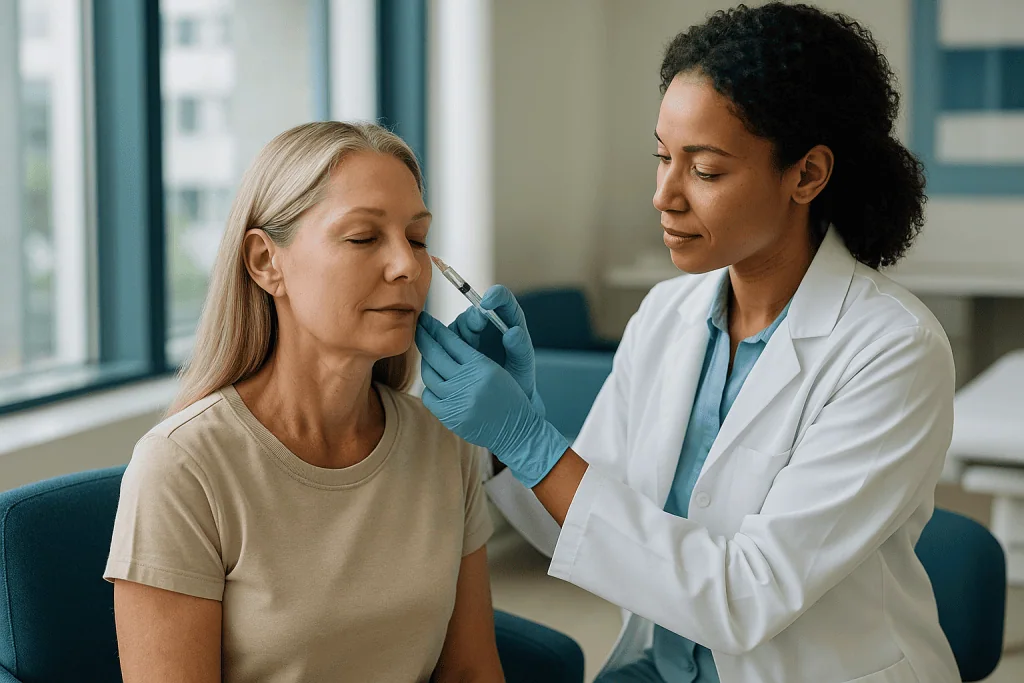
The third current is quieter and more interesting: a shift in what people say they want. For roughly twenty years the dominant aesthetic request was volume, meaning filler in the lips, cheeks and jaw. Patient surveys and clinic anecdotes now describe a swing toward what practitioners call “skin quality,” a catch-all for texture, pore size, fine lines, hydration and glow. Polynucleotides slot neatly into that appetite because they promise to improve the skin itself rather than reshape the face.
Search behavior reflects this. People are not typing “how to look different.” They are typing “does Rejuran work,” “Rejuran vs Profhilo,” “salmon DNA injections side effects,” and “is salmon sperm facial safe.” Those are the questions of someone weighing a purchase, not someone chasing a fantasy.
Trends in aesthetics tend to follow a familiar arc: early adopters, viral moment, rapid uptake by clinics, then a slower reckoning as data catches up. Polynucleotides are somewhere between the second and third stage. The studies exist, but they are small. The safety record is reassuring so far, but follow-up is short. That gap between enthusiasm and evidence is exactly where a careful reader should slow down.
What changed recently
A few dated developments explain the surge rather than a single breakthrough.
In 2014, polynucleotide injectables received approval as a medical device in South Korea, initially with wound-healing and skin-regeneration indications. By 2018 they had spread through Korean and Southeast Asian clinics as a routine “skin booster.” European CE marking followed for several polynucleotide products, opening the door to clinics in Italy, Spain and the United Kingdom, where the treatment became widely available around 2022 and 2023.
Between 2021 and 2024, the published literature grew from a scattering of case series to a few dozen studies, including a small number of randomized, split-face comparisons against hyaluronic acid boosters and combination trials pairing polynucleotides with fractional lasers for acne scarring. At least two narrative reviews and one systematic review appeared in dermatology journals during this window, all reaching a similar verdict: promising, but the trials are small and short.
The 2024 celebrity interviews then turned a niche clinic offering into a household phrase. Searches spiked, and the volume of clinics advertising the treatment in English-speaking countries rose noticeably through 2024 and into 2025.
What has not changed is the regulatory picture in the United States. As of mid-2025, no injectable polynucleotide product has been approved or cleared by the FDA for aesthetic use. General consumer guidance on cosmetic procedures from the NHS and on dermal fillers from the Cleveland Clinic still emphasizes the same fundamentals for any injectable: a licensed practitioner, a regulated product, and a frank conversation about limits. Those fundamentals apply here with extra force because the product is newer and the data thinner.
Nothing in this timeline represents a guideline change from a major medical body. The trend is cultural and commercial, with science trailing behind at a respectable but unhurried pace.
How are polynucleotide injections supposed to work in skin?
The proposed mechanism has three parts, and each rests on a different quality of evidence.
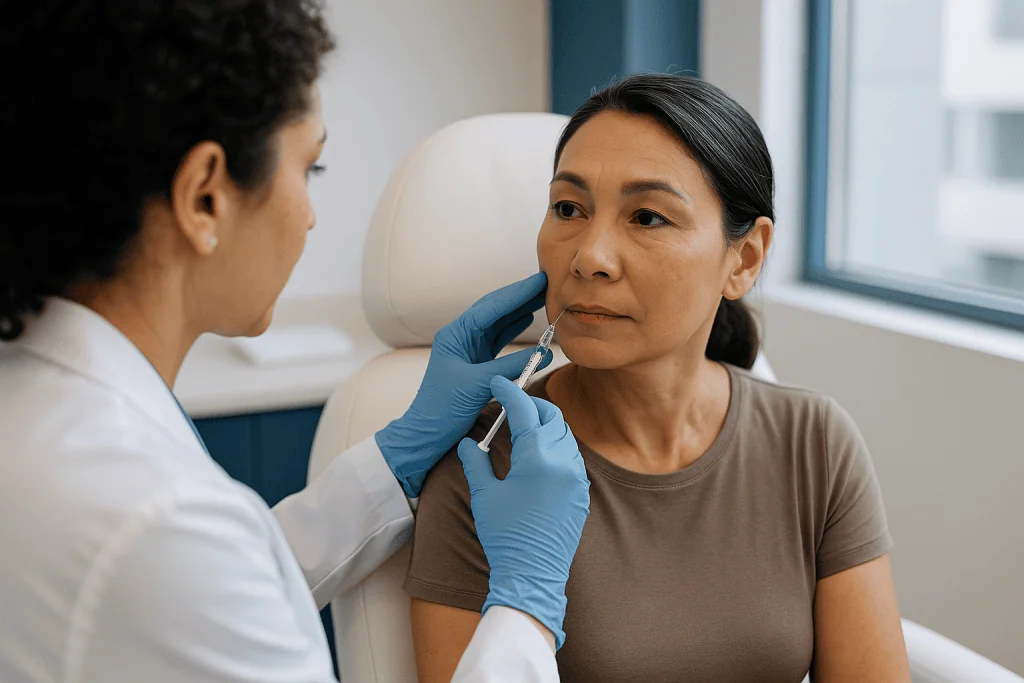
The first is receptor signaling. As polynucleotide fragments break down in tissue, they release adenosine and related molecules that bind to a receptor on cell surfaces called A2A. In laboratory studies, stimulating this receptor prompts fibroblasts to multiply and produce more collagen, and it dampens inflammatory signaling. This is the best-characterized part of the story, but it comes largely from cell cultures and animal wound models, not from human faces.
The second is the “salvage pathway.” Cells normally build new DNA from scratch, an energy-hungry process. When ready-made nucleotides are available nearby, cells can recycle them instead, which in theory frees resources for repair. The idea is elegant and plausible; direct proof that this happens meaningfully after a cosmetic injection is lacking.
The third is physical. Polynucleotide gel binds water, so freshly treated skin can look plumper and more hydrated for days to weeks. Some of the early “glow” that patients describe is probably this simple hydration effect rather than new collagen, which takes weeks to months to form.
Put together, the theory is coherent: reduce inflammation, feed fibroblasts, hold water, and over a series of sessions the dermis thickens slightly and the surface smooths. Skin biopsy data from a few small human studies do show increased collagen density and fibroblast activity after treatment, which supports the theory without proving that the visible change is large.
A fair summary is that the mechanism is biologically reasonable and better supported than most cosmetic ingredients, while the leap from petri dish to reliably younger-looking skin remains only partly bridged.
Is a salmon sperm facial the same thing as Rejuran?
Not necessarily, and the confusion has real consequences. “Salmon sperm facial” is a media nickname, not a medical term, and it is applied to at least three different things.
The first is genuine intradermal polynucleotide injection: a clinician uses a fine needle or a cannula (a blunt-tipped tube) to place the gel into the dermis across the face. This is what the studies examine and what the brand name refers to.
The second is microneedling with a polynucleotide serum. A device makes hundreds of microscopic channels in the skin and the product is applied on top. Some of it may reach the upper dermis; much stays at the surface. Evidence for this approach is thinner, and it is sometimes marketed with the same claims as injection.
The third is a topical “DNA” facial or mask containing salmon-derived polynucleotides or a related molecule called polydeoxyribonucleotide, applied to intact skin. The molecules are far too large to pass through the outer skin barrier in meaningful amounts, so any benefit is likely moisturizing rather than regenerative.
The nickname also oversells the ingredient. What goes into the syringe is highly purified DNA, not sperm cells and not the surrounding fluid. Manufacturers state that protein content is reduced to a tiny fraction of the raw material, which is why fish allergy is treated as a caution rather than an absolute barrier in most clinics, though anyone with a fish allergy should raise it before any treatment.
When reading a clinic menu or a viral post, the useful question is not “is it salmon?” but “is it injected, needled or rubbed on?” Only the first has been studied in controlled trials with meaningful outcomes.
What the evidence actually says
Grading the evidence honestly means separating what has been shown from what has been hoped.
Randomized controlled trials exist but are few and small, typically enrolling between twenty and sixty participants and following them for twelve to twenty-four weeks. The most cited design is the split-face study, in which one side of the face receives polynucleotides and the other a hyaluronic acid booster. These studies generally report that both sides improve on measures such as skin roughness, elasticity and wrinkle depth, and that polynucleotides are “non-inferior,” a statistical term meaning not meaningfully worse than the comparator. Few report a clear superiority.
Observational data, meaning case series and before-and-after cohorts without a control group, make up most of the literature. They consistently describe patient satisfaction and improvements in texture and fine lines, but without a control arm they cannot separate the product from the effects of needling itself, from sunscreen and skincare the participants started using, or from simple expectation.
Mechanistic and biopsy studies support the biology, as described above, and are the strongest part of the evidence base in scientific terms even though they say least about how a face looks.
Long-term data beyond one year are essentially absent. Independent, industry-free trials are rare; many published studies list manufacturer funding or authorship.
Where does that leave a reader? Using standard evidence hierarchies, polynucleotide injections for facial skin quality sit at the level of low-to-moderate certainty: small randomized trials plus observational support, with consistent direction of effect but uncertain magnitude and durability. That is more than many skincare fads can claim and considerably less than the language of “regeneration” and “reversal” implies. Mainstream dermatology guidance from bodies such as the Mayo Clinic still lists retinoids, sun protection and established procedures as the treatments with the longest track record for wrinkles.
Rejuran for acne scars and under-eye skin: what studies show
Two uses attract particular interest because they address problems that fillers handle poorly.
For atrophic acne scars, the indented marks left after inflammatory acne, small trials have combined polynucleotide injection with fractional laser resurfacing. The logic is that laser creates controlled injury and polynucleotides support the healing that follows. Reported outcomes include greater improvement in scar scores on the combination side compared with laser alone, and shorter periods of redness and downtime. These trials are small, often single-center, and follow patients for a few months. They suggest a plausible adjunct role rather than a standalone scar treatment.
The under-eye area is a different story. The skin there is among the thinnest on the body, and hyaluronic acid filler in this region carries a well-known risk of puffiness and a bluish tint if placed superficially. Polynucleotides are thinner and do not add bulk, which makes them attractive for fine crepey lines and dullness. The evidence here is mostly observational, with photographs and patient-reported satisfaction rather than randomized comparison. Improvement in fine wrinkling and skin brightness is commonly reported; effect sizes are modest and variable.
A reasonable clinician will frame expectations accordingly. Deep, tethered acne scars and true hollowing under the eyes are structural problems that a skin-quality treatment will not resolve. Shallow scars, fine lines and a tired-looking texture are the targets where the limited data point to benefit.
One further caution: the under-eye region is also where any injectable carries the highest stakes for technique, because of the density of blood vessels around the eye. Whatever the material, the skill and training of the person holding the needle matters more than the product label.
How polynucleotides compare with fillers, skin boosters and PRP
People rarely choose between polynucleotides and nothing; they choose between polynucleotides and something else on the same menu. The table below compares the main options for “skin quality” by purpose, proposed mechanism, evidence strength and US regulatory status as of mid-2025.
| Treatment | What it is | Main goal | Evidence strength | US status |
|---|---|---|---|---|
| Polynucleotide injections | Purified salmon DNA fragments | Texture, fine lines, hydration, scar support | Small RCTs plus observational series; short follow-up | Not FDA-approved for aesthetic use |
| Hyaluronic acid skin boosters | Thin, lightly cross-linked hyaluronic acid | Hydration, fine lines, elasticity | Several RCTs; moderate evidence | Some products FDA-approved |
| Hyaluronic acid dermal fillers | Thicker cross-linked hyaluronic acid gel | Volume, folds, contour | Many RCTs; long track record | Multiple FDA-approved products |
| Platelet-rich plasma (PRP) | Concentrated platelets from the patient’s own blood | Texture, fine lines, hair support | Mixed RCTs; variable preparation | Devices cleared; use is practitioner-directed |
| Topical retinoids | Vitamin A derivatives applied to skin | Fine lines, texture, pigment | Multiple RCTs over decades; strongest evidence | Prescription and over-the-counter forms available |
A few observations follow from the table. Polynucleotides are competing most directly with hyaluronic acid skin boosters, and the head-to-head data mostly show similar results. Fillers do a different job entirely, and the two are often used together rather than instead of one another. PRP shares the “regenerative” marketing language but suffers from inconsistent preparation methods, which makes its studies hard to compare.
Topical retinoids remain the quiet benchmark. Decades of trials, reviewed by sources such as Harvard Health, show measurable improvement in fine lines and texture with consistent use. Any clinic offering injectable skin boosters should be comfortable saying that a good retinoid and daily sunscreen have better evidence than anything in the syringe.
What a polynucleotide treatment session typically involves
Understanding the process helps set realistic expectations and makes it easier to judge whether a clinic is behaving responsibly.
A proper appointment begins with a consultation, not a needle. The practitioner should ask about medical history, allergies (fish allergy in particular), bleeding tendencies, medicines and supplements that affect clotting, recent procedures, pregnancy or breastfeeding, and any history of cold sores or keloid scarring. They should photograph the face in standardized lighting so that change can be assessed rather than remembered.
Topical numbing cream is usually applied for a period before treatment. The product is then placed into the dermis using either a series of very small injections across the treatment area or a cannula that fans out from a few entry points. The technique resembles that used for hyaluronic acid skin boosters. Sessions are short, typically well under an hour including numbing.
Immediately afterward, the skin shows small raised bumps at each injection point, sometimes described as looking like mosquito bites or a “bubble wrap” texture. These usually flatten within a day or two as the gel disperses and the skin absorbs fluid. Mild redness, pinpoint bleeding and bruising are common and expected.
Clinics generally advise avoiding makeup for the rest of the day, skipping strenuous exercise, saunas and alcohol briefly, and protecting the skin from sun. Most protocols involve a short course of sessions spaced weeks apart followed by occasional maintenance, though the ideal schedule has not been established by comparative trials and varies by practitioner and product. Visible changes in texture, if they occur, are usually described from several weeks after the first session, with fuller effect after the course.
Anyone told that a single session will produce dramatic, lasting change is hearing marketing rather than evidence.
Salmon DNA injections side effects: what the studies report
The safety picture so far is reassuring for a product injected into the face, with the important caveat that reassurance from small, short studies is not the same as proof of long-term safety.
Common, expected effects are the same as for any intradermal injectable: temporary bumps at injection sites, redness, swelling, tenderness, pinpoint bruising and occasionally small lumps that persist for several days before settling. Studies and clinic audits describe these in most patients, resolving without intervention.
Less common effects include prolonged swelling, larger bruises, temporary numbness, flare of acne or cold sores (herpes simplex) in people prone to them, and mild itching. Hypersensitivity reactions have been reported rarely; the purification process removes most fish protein, but “most” is not “all,” which is why allergy history matters.
Rare but serious risks belong to the act of injecting the face rather than to the ingredient specifically. Infection can follow any breach of the skin, particularly if the product, needles or environment are not sterile. Nodules or granulomas, small firm lumps caused by an immune reaction to injected material, have been described with many injectables and cannot be ruled out here. The most feared complication of facial injection, accidental injection into a blood vessel leading to blocked blood flow, skin damage or in extremely rare cases vision loss, is primarily associated with thicker fillers placed in deeper planes. Polynucleotides are thin and placed superficially, so the theoretical risk is lower, but it is not zero, and it rises when untrained hands work near the eyes and nose.
The Cleveland Clinic and NHS guidance on injectables both stress the same protective steps: a medically qualified injector, a genuine product with intact packaging, and a clear plan for what happens if something goes wrong. Those steps are the reader’s real safety net, more than any property of the molecule itself.
Is Rejuran approved? Regulatory status in the US, UK and Korea
Regulatory status is where the trend explainer has to be plain-spoken.
In South Korea, polynucleotide injectables are approved medical devices and have been since 2014, with indications that include wound repair and skin regeneration. In much of Asia and in the European Union, related products carry CE marking, which certifies conformity with safety standards for medical devices; it is not the same as a drug approval and does not itself evaluate cosmetic effectiveness. In the United Kingdom, polynucleotide products are marketed under UK device rules, and the treatment is legal when performed by an appropriately trained practitioner, though the UK aesthetic sector remains lightly regulated and the NHS advises checking any practitioner’s registration.
In the United States, the situation is different. As of mid-2025, no injectable polynucleotide product, under this brand or any other, has been approved or cleared by the FDA for cosmetic or dermatologic use. Any clinic in the US offering it is using a product that has not been evaluated by the US regulator for that purpose. Some clinics import it; that practice sits in a legal gray zone and means the usual safeguards on manufacturing, storage and recall may not apply.
This has three practical implications. First, an American reader who sees the treatment advertised should ask directly how the product was sourced and whether it has FDA approval, and expect an honest “no” to the second question. Second, the product is not for self-use in any country: it is a device intended for administration by trained professionals in a clinical setting, and buying it online for home injection carries risks of counterfeit material, contamination and untreated complications. Third, regulatory approval elsewhere does not guarantee anything about a product bought from an unverified seller.
None of this is a judgment on the science. Approval status reflects where a manufacturer has applied and what a regulator has reviewed, not whether an ingredient works.
Who should not have polynucleotide injections?
Because the evidence is limited, the list of people who should pause is longer than the marketing suggests, and it is drawn from general injectable safety rather than from polynucleotide-specific trials, which excluded most of these groups.
Pregnancy and breastfeeding are the clearest examples. No trials have included pregnant or nursing participants, and there is no safety data, so clinics and manufacturers advise against treatment during these periods as a matter of course.
Known allergy to fish or to any component of the product warrants caution and a specific conversation, even though the purified DNA contains very little protein.
Active skin infection, acne flare, cold sores or inflammatory skin disease in the treatment area should be resolved first, since needling inflamed or infected skin can spread the problem and complicate healing.
Bleeding disorders or medicines that affect clotting increase the likelihood of bruising and, rarely, more significant bleeding. This is a discussion to have with the prescribing doctor, never a reason to stop or adjust a medicine on one’s own.
Autoimmune conditions, a history of keloid or hypertrophic scarring, and previous adverse reactions to injectables all call for extra care and possibly a decision to avoid treatment, because the product’s effect on abnormal healing responses has not been studied.
Recent procedures in the same area, such as laser resurfacing, deep peels or filler, may require a waiting interval so that one treatment does not confound or complicate another.
People under eighteen are generally excluded from cosmetic injectables. People with unrealistic expectations, or who are seeking treatment during a period of significant emotional distress, deserve a practitioner willing to say “not now,” a point echoed in NHS guidance on cosmetic procedures.
The common thread is that a good consultation screens people out as readily as it books them in.
Common myths about salmon DNA injections
Viral claims travel faster than corrections. Here are the ones most worth unpicking.
“It is literally salmon sperm injected into your face.” The ingredient is DNA purified from salmon reproductive tissue and stripped of cells and most protein. No sperm cells or seminal fluid are injected.
“Salmon DNA becomes part of your DNA.” Injected DNA fragments are broken down by enzymes in the tissue into nucleotides and smaller pieces. They do not enter the nucleus of human cells or integrate into the human genome. The proposed benefit comes from breakdown products signaling to cells, not from any genetic transfer.
“It regrows collagen like a facelift in a syringe.” Biopsy studies show modest increases in collagen density in small samples. No study shows lifting, repositioning of tissue or reversal of sagging, which are structural changes beyond what any skin-quality injectable can achieve.
“Results are permanent.” No trial has followed participants long enough to say how durable changes are; most stop at three to six months. Skin continues to age and the effect, whatever its size, is expected to fade.
“It is safer than filler because it is natural.” The risks of infection, bruising, nodules and vascular injury come from the act of injecting, not from whether the material is synthetic or biological. “Natural” is a marketing word, not a safety category.
“You can do it at home with a kit from the internet.” Polynucleotide injectables are medical devices for professional use. Products sold to consumers online are frequently counterfeit, may be contaminated, and remove the single most important safety factor: a trained person who can recognize and manage a complication.
“A topical salmon DNA cream does the same thing.” The molecules are too large to cross intact skin in meaningful quantities; a cream may moisturize but is not delivering the injected effect.
Correcting these does not make the treatment worthless. It simply returns it to its actual size.
Topical salmon DNA creams and serums: do they do anything?
Wherever an injectable trends, a shelf of creams follows, and the salmon DNA moment has produced serums, sheet masks and “DNA repair” moisturizers at every price point.
The scientific problem is size. The outer layer of skin, the stratum corneum, is an effective barrier that generally blocks molecules larger than about 500 daltons, a unit of molecular mass. Polynucleotide fragments used in injectables are measured in tens to hundreds of thousands of daltons. On intact skin they stay on the surface. That does not make such products useless, but it means any benefit comes from the rest of the formula, such as humectants that bind water and emollients that smooth the surface, not from DNA reaching fibroblasts.
Some brands add smaller related molecules, or pair the serum with at-home microneedling rollers to “drive it in.” Home rollers create shallow channels and carry their own infection and irritation risks; controlled evidence that they meaningfully deliver polynucleotides is lacking.
A more grounded approach, supported by consumer guidance from the Mayo Clinic and MedlinePlus on skin aging, is that daily broad-spectrum sunscreen, a retinoid used as directed, a plain moisturizer and not smoking account for most of what topical care can achieve for texture and fine lines. Harvard Health’s review of retinoid evidence makes the same point with decades of trial data behind it.
None of this means a person should avoid a salmon DNA serum they enjoy using. Skincare is allowed to be pleasant. The honest framing is that a topical product is a moisturizer with a good story, while an injectable is a medical procedure with limited but real evidence, and the two should not be marketed with the same promises.
When to see a doctor
Two situations call for medical input: before treatment, when deciding whether it is appropriate, and afterward, if something does not feel right.
Before booking, a conversation with a dermatologist or a medically qualified aesthetic practitioner is worthwhile if you have any of the following: a fish or other significant allergy, an autoimmune or bleeding condition, a history of keloid scarring, diabetes or a condition that impairs healing, medicines that affect clotting or the immune system, or active skin disease on the face. Bring a list of everything you take, including supplements. Never stop or change a prescribed medicine to prepare for a cosmetic procedure without the prescribing clinician’s explicit agreement.
After treatment, mild bumps, redness and small bruises for a few days are expected. Seek prompt medical attention, on the same day, if you notice any of these red-flag signs:
- Skin that turns white, mottled, dusky or bluish, or becomes unusually painful, especially near the nose, eyes or forehead, which can signal blocked blood flow.
- Any change in vision, eye pain or a new drooping eyelid.
- Spreading redness, warmth, increasing pain, pus, or fever, which suggest infection.
- Rapid swelling of the lips, tongue or throat, difficulty breathing, widespread hives or feeling faint, which may indicate a severe allergic reaction and require emergency care.
- Hard, tender or enlarging lumps that persist beyond a couple of weeks, or skin discoloration that does not fade.
- Numbness, weakness or asymmetry of facial movement that was not present before.
A responsible clinic provides an after-hours contact for exactly these situations. If the practitioner cannot be reached and symptoms are severe, an emergency department is the right place; facial injectable complications are time-sensitive and are better over-treated than watched.
Every decision about whether to have polynucleotide injections, how to prepare, and how to manage any reaction belongs with a qualified clinician who has examined you, not with a video, a forum or this article.
Questions to ask before booking Rejuran or any polynucleotide treatment
A few pointed questions separate a careful practice from an opportunistic one, and the quality of the answers tells you more than any brochure.
Ask what the injector’s professional qualification and registration are, and whether they are permitted to prescribe and manage complications, including emergency medicines, on site. In many countries, non-medical injectors can legally administer some products but cannot deal with what goes wrong.
Ask to see the product packaging before it is opened. Genuine products carry lot numbers, expiry dates and regulatory markings appropriate to the country. Ask directly where it was sourced and, in the United States, whether it is FDA-approved; a truthful answer is “no,” and a practitioner who claims otherwise is either misinformed or misleading.
Ask what outcome they realistically expect for your skin, in specific terms: fine lines, texture, hydration, scar depth. Ask how they will measure it, ideally with standardized photographs. Vague promises of “regeneration” or “reversing aging” are a sign to slow down.
Ask what the evidence is. A practitioner who can say “small randomized trials show results similar to hyaluronic acid boosters over a few months, and long-term data are lacking” is giving you the truth. One who says “studies prove it rebuilds your skin” is not.
Ask what happens if you have a reaction: who you call, how quickly they will see you, and what they are equipped to do. Ask how many of these treatments they have performed and what complications they have seen.
Finally, ask what they would recommend instead if you did nothing injectable. A thoughtful answer will mention sunscreen and a retinoid, because those have the strongest evidence for the concerns this treatment targets. The willingness to talk you toward cheaper, better-proven options is the clearest sign that the person across the desk is practicing medicine rather than selling a trend.
Frequently asked questions
What is Rejuran made of?
Rejuran is made of polynucleotides, which are fragments of DNA purified from salmon reproductive tissue. The raw material is processed to remove cells and almost all protein, leaving DNA chains suspended in a clear gel. It contains no sperm cells despite the popular nickname. The DNA is structurally identical to human DNA in its bases and double-helix form, which is why it is considered low in immune reactivity once purified.
Do polynucleotides actually work for skin?
The evidence suggests modest improvement in skin texture, hydration and fine lines over several months, based on small randomized trials and observational studies. Most head-to-head trials against hyaluronic acid skin boosters show similar rather than better results. Biopsy studies support increased collagen activity. The trials are short, small and often industry-linked, so the certainty is low to moderate, and durability beyond one year has not been studied.
Is a salmon sperm facial safe?
When performed by a medically qualified practitioner with a genuine product, reported side effects are mostly mild and temporary, such as bumps, redness, swelling and bruising. Rare risks include infection, nodules and, as with any facial injection, vascular injury. People with fish allergy, bleeding disorders, active skin disease, or who are pregnant or breastfeeding should discuss suitability with a doctor first. Home use of purchased kits is unsafe and not intended.
What is the difference between polynucleotide injections and fillers?
Polynucleotide injections aim to improve skin quality, meaning texture, fine lines and hydration, by stimulating repair in the dermis. Dermal fillers, usually hyaluronic acid, are thicker gels that add volume to restore contour or fill folds. The two do different jobs and are sometimes combined. Fillers have decades of trial data and multiple FDA-approved products; polynucleotides have a smaller, shorter evidence base and no FDA approval for aesthetic use.
Are salmon DNA injections FDA-approved?
No. As of mid-2025, no injectable polynucleotide product has been approved or cleared by the FDA for cosmetic or dermatologic use in the United States. Products are approved as medical devices in South Korea and carry CE marking in Europe, where they are legally offered by trained practitioners. Any US clinic offering the treatment is using a product not reviewed by the US regulator for that purpose, and patients should ask about sourcing directly.
How long do Rejuran results last?
Nobody knows with confidence, because published trials mostly stop at three to six months. Within that window, improvements in texture and fine lines are reported to persist after a course of sessions. Practitioners typically describe effects lasting several months and recommend maintenance, but this reflects clinical habit rather than comparative data. Skin continues to age, so any benefit is expected to fade over time rather than be permanent.
Can polynucleotides help acne scars?
Small trials suggest polynucleotide injections may add benefit when combined with fractional laser resurfacing for shallow atrophic acne scars, with greater scar-score improvement and shorter redness than laser alone. As a standalone treatment for deep or tethered scars, evidence is lacking and results are unlikely to be significant. A dermatologist can advise whether scars are the type that responds to skin-quality treatments or need surgical or resurfacing approaches.
Can I use Rejuran under my eyes?
Polynucleotides are commonly used for fine lines and dull, crepey skin under the eyes because they are thin and do not add bulk, avoiding the puffiness sometimes seen with filler there. The evidence for this area is mainly observational, with modest reported improvement. True hollowing or fat bulges are structural and will not respond. The under-eye region is anatomically delicate, so practitioner training matters greatly; discuss suitability with a qualified clinician.
Does salmon DNA change your own DNA?
No. Injected polynucleotide fragments are broken down by enzymes in the tissue into smaller pieces and nucleotides. They do not enter the nucleus of human cells or integrate into the human genome. The proposed effect comes from breakdown products such as adenosine signaling to skin cells through surface receptors, prompting repair processes. The idea that foreign DNA becomes part of a person’s genetic code is a misunderstanding of the biology.
Do topical salmon DNA serums work like the injections?
No. Polynucleotide molecules are far larger than what intact skin allows through its outer barrier, so serums and masks leave the DNA on the surface. Any benefit comes from moisturizing ingredients in the formula rather than from DNA reaching deeper skin cells. For topical anti-aging, daily sunscreen and a retinoid have far stronger trial evidence. A serum can be pleasant to use, but it should not be marketed with injection-level claims.
References
This article is for general information only and is not a substitute for professional medical advice. Please consult a qualified doctor about your individual situation.

More from the Blog
Why Skin Grafts Sometimes Fail: Pressure, Infection, Smoking and the Signs Your Team Watches
Skin grafts fail most often because something separates the graft from the wound bed before new blood vessels can grow into it: a pocket…
Caring for the Skin After Cryotherapy: Dressings, Showering and Leaving the Crust Alone
After cryotherapy, keep the treated spot clean, let any blister flatten on its own, and leave the crust in place until it separates by…

Questions to Ask Before Your First Botulinum Toxin (Botox) Treatment: Goals and Repeat Timing
Before a first botulinum toxin (Botox) treatment, ask what result is realistic for your face, who will perform the injections and their medical qualifications,…

Reconstructive Surgery Recovery: Drains, Dressings and the Weeks of Swelling Explained
Recovery after reconstructive surgery moves in stages: drains usually come out within the first one to three weeks once output falls, dressings are reduced…
Dermabrasion Risks Explained: Pigment Changes, Scarring and Infection Signs to Report
Dermabrasion risks include temporary redness and swelling, changes in skin color that can be lasting in deeper skin tones, scarring when treatment goes deep,…

Facial Reconstruction After Trauma: How Bone, Nerve and Soft-Tissue Repairs Are Sequenced
Facial trauma reconstruction surgery is sequenced by priority, not by appearance. Life-threatening problems come first: the airway, bleeding, the brain and the neck. Sight-threatening…