

Silicone Scar Sheets and Scar Massage: What Evidence Supports for Fading Scars

Key Takeaways
- Silicone scar sheets are the only pharmacy-aisle scar product with a Cochrane systematic review behind them, and even that review rated the 20 supporting trials as small and at high risk of bias.
- The trials that showed benefit used sheets for 12 to 24 hours a day for two to six months, so a few evening hours for a couple of weeks is not a fair test.
- Silicone works by trapping moisture over a scar and lowering water loss, which appears to calm overactive collagen production; it contains no active drug and cannot dissolve scar tissue.
- The sheets help raised scars that are still pink or firm, regardless of age, and offer essentially nothing to flat, pale, mature scars, acne pits or stretch marks.
- Scar massage has consistent reports of softer, less itchy scars but little trial evidence of visible fading; its clearest value is keeping scars over joints and the abdomen supple.
- A small randomized trial found topical vitamin E did not improve surgical scars and caused contact dermatitis in roughly a third of users, so a plain unscented moisturizer is the safer massage lubricant.
Silicone scar sheets are one of the few over-the-counter scar treatments backed by randomized trials, though the trials are small and often at risk of bias. Worn most of the day for several months on a healed wound, they can soften, flatten and fade raised scars and may lower the risk of hypertrophic scarring. Scar massage has weaker, mostly observational support. Neither erases a scar.
Scroll through any surgery-recovery feed and the same clip plays on a loop: a strip of clear silicone peeled from a cesarean or knee incision, a side-by-side photo, a caption promising the mark will “disappear.” As of mid-2025, searches for silicone scar sheets have climbed alongside those videos, and a second trend has latched on: scar massage routines timed to the second, filmed over a tube of oil.
Some of this enthusiasm is earned. Silicone sheeting has sat in international scar-management guidelines for more than two decades, and it is one of the rare pharmacy-aisle products with a Cochrane review behind it. Some of it is not. The before-and-after photos rarely show the scar that would have faded on its own, and almost nobody mentions the 12 to 24 hours a day of wear the trials actually tested.
So here is the honest version: what the sheets do, what the massage does, how strong the evidence is for each, and where the viral claims part ways with the data.
Why silicone scar sheets are trending right now
Three currents are pushing the same small product into millions of feeds at once. The first is volume: cesarean delivery accounts for roughly one in three births in the United States, and knee replacement, breast surgery and skin-cancer excisions are all rising with an aging population. Every one of those procedures leaves a line someone would rather not have.
The second is timing. Scars look their worst between about six weeks and six months after a wound closes, exactly when people are well enough to start searching for fixes. A product you can buy without a prescription, with a visible “medical-grade” label, lands in a very motivated audience.
The third is the format of the claims. Short videos reward dramatic contrast, and scars oblige: a pink, raised four-month scar and a flat, pale eighteen-month scar look like a miracle side by side, even when nothing was applied in between. Viewers cannot see the control arm.
What makes this trend different from most wellness fads is that the core product is not snake oil. Dermatologists and plastic surgeons have recommended silicone sheeting since the 1980s, and the NHS, Mayo Clinic and Cleveland Clinic all list it among standard first-line options for raised scars. The gap is not between “works” and “does not work.” It is between modest, slow, well-documented improvement and the overnight transformation the clips imply. That gap is where this article lives.
What changed recently
Nothing about the chemistry of silicone has changed. What has changed is how the evidence is summarized, and how the product is marketed.
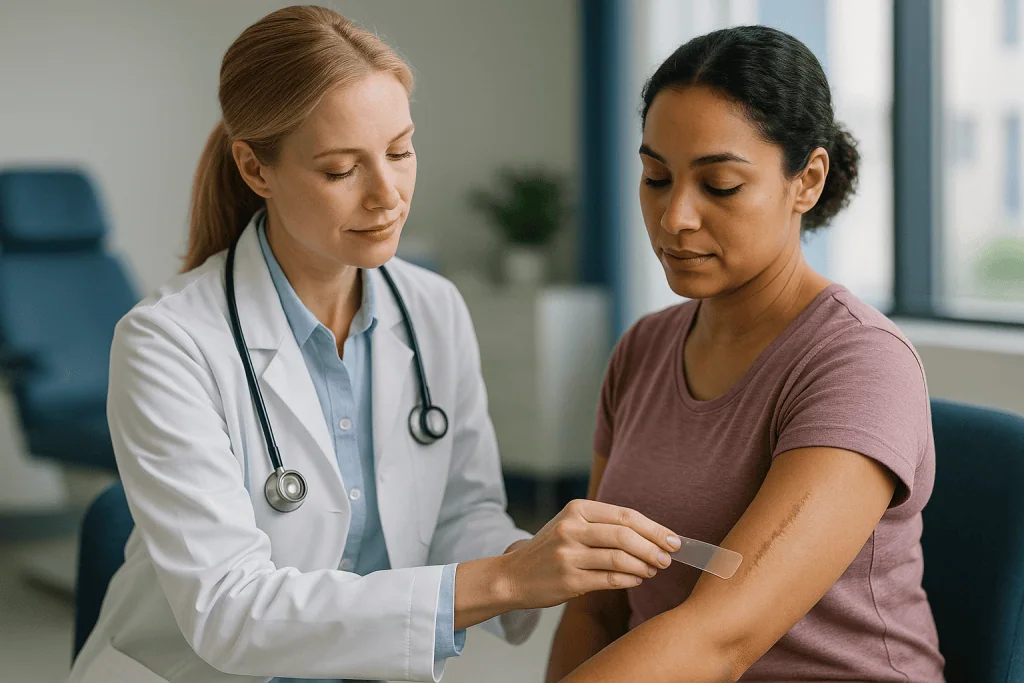
The anchor remains the Cochrane systematic review on silicone gel sheeting for preventing and treating hypertrophic and keloid scars, published in September 2013. A systematic review is a study that gathers every trial on a question and judges them by preset rules. The reviewers found 20 randomized trials and concluded that silicone sheeting probably reduces the incidence of raised scars in people at high risk and may improve the thickness and color of existing ones, while rating the trials as small, poorly blinded and at high risk of bias. That verdict has not been overturned by newer work; later reviews have tightened the methods and arrived at similar, cautious conclusions.
What has shifted since then:
- Guideline language has stabilized. International scar-management recommendations from plastic surgery and dermatology groups continue to name silicone products as first-line for hypertrophic scars and as a reasonable preventive measure after surgery in people with a history of poor scarring.
- Consumer availability has exploded. Sheets, gels and tapes once sold mainly through clinics now sit beside adhesive bandages, which is why the search curve has steepened.
- The claims have inflated. The 2013 reviewers measured scar height, color and pliability. Current videos promise disappearance, a word that appears in no trial.
In short, the science is older and steadier than the trend suggests, and the trend has outrun it. The rest of this piece maps where each sits.
How a scar forms, and why the first year matters
A scar is not damaged skin. It is replacement tissue, built mostly from collagen, the protein that gives skin its strength. Understanding the build sequence explains almost everything about when silicone scar sheets and scar massage can help.
In the first few days after a wound closes, the body clears debris and lays down a temporary matrix. Over the next three to six weeks, cells called fibroblasts (the skin’s collagen factories) churn out new fibers quickly and in a disorganized, basket-weave pattern. Blood vessels crowd in to feed the work, which is why a young scar is pink, raised and warm.
Then comes remodeling, the long middle act. From roughly six weeks to twelve or even twenty-four months, the body slowly swaps that rushed collagen for fibers aligned along the lines of tension, trims excess bulk and lets the extra blood vessels close. The scar flattens, softens and pales. Even untreated, a healthy scar reaches only about 70 to 80 percent of the original skin’s strength and never fully regains hair follicles or sweat glands.
Two things can go wrong. If fibroblasts keep overproducing but stay within the wound’s borders, the result is a hypertrophic scar: raised, red, sometimes itchy, and often improving on its own over a year or two. If they push beyond the borders and keep growing, the result is a keloid, which rarely regresses without treatment and tends to recur.
Every evidence-based scar treatment, silicone included, is really an attempt to nudge that remodeling phase toward flat, pale and soft. The window is wide, but it is not infinite, and that is the key to the “too late” question below.
How do silicone scar sheets actually work?
For a product this simple, the mechanism took a surprisingly long time to pin down, and parts of it remain educated inference rather than proof.
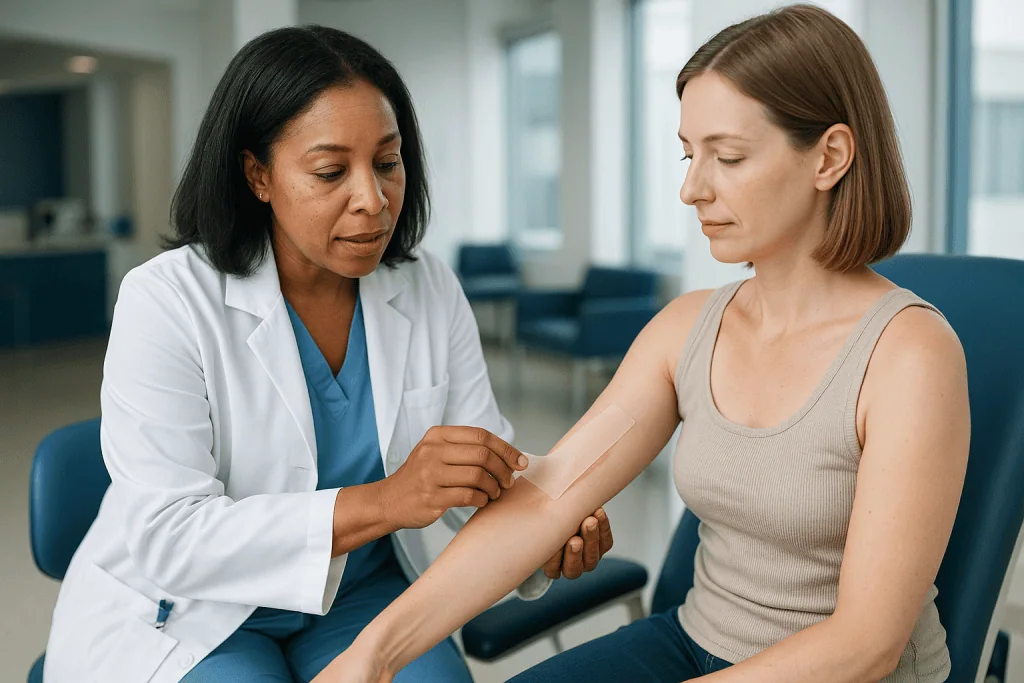
The leading explanation is hydration. The outermost skin layer, the stratum corneum, forms more slowly and less completely over a scar, so water evaporates through it faster than through normal skin. Dehydration appears to signal the skin’s deeper cells to keep fibroblasts active and keep collagen production high. A sheet of silicone is occlusive, meaning it blocks water loss without smothering the skin; it traps moisture at the surface, lowers that evaporative loss and, in laboratory studies, dials down the chemical signals that drive collagen overproduction.
Secondary mechanisms get proposed in most reviews:
- Temperature. The sheet warms the scar by a degree or two, which may speed the enzymes that break down excess collagen.
- Mechanical protection. A thin, slightly tacky layer shields a fresh scar from stretching and friction, and tension is one of the strongest known drivers of hypertrophic scarring.
- Static charge. Silicone generates a small negative electrical field; some researchers think this influences collagen alignment, though the evidence here is weakest.
Notably absent from that list: any active drug. Silicone does not penetrate the skin in meaningful amounts and does not “dissolve” scar tissue. That is why the product works as well on a cheap generic strip as on a premium one, provided the silicone is medical grade and the sheet stays in contact. It is also why the sheets do nothing for a scar that is already flat, pale and mature: there is no overactive collagen to calm.
What the evidence actually says about silicone scar sheets
Grading the evidence honestly means separating three claims that get blurred together.
Claim one: silicone sheeting reduces the risk of a raised scar after surgery. Evidence grade: moderate to low, from randomized trials. The Cochrane review pooled studies in people at high risk of hypertrophic scarring and found fewer raised scars in those treated with silicone. But the trials were small, participants and assessors usually knew who had worn the sheets, and several were funded by manufacturers. The direction of effect is consistent; the size is uncertain.
Claim two: silicone sheeting improves existing hypertrophic scars. Evidence grade: low to moderate, randomized trials plus substantial clinical experience. Treated scars tended to be thinner, less red and more pliable than untreated ones after two to six months. Improvements were measured in millimeters of height and points on color scales, not in scars vanishing.
Claim three: silicone sheeting treats keloids. Evidence grade: low, and mainly as an add-on. Keloids respond poorly to silicone alone; guidelines position it as support for clinician-delivered treatments such as corticosteroid injections or surgery, chiefly to lower recurrence.
Why the caution? Scar studies are hard to blind, since everyone can see a silicone sheet, and scars improve naturally, so untreated control groups shrink the apparent benefit. The honest summary is this: silicone is the best-supported self-care option for raised scars, the effect is real but moderate, and the quality of proof is weaker than the confidence of the marketing. That is still a better position than almost any other product on the shelf next to it.
When is it too late for silicone scar sheets?
This is the most searched question about the product, and the answer depends on what the scar is doing, not just how old it is.
The best window is the remodeling phase: from the day the wound has fully closed (no scabs, no weeping, stitches removed or dissolved) through roughly the first 12 months. Most trials started silicone within two to four weeks of surgery and continued for two to six months. A scar that is still pink, raised or firm is, by definition, still remodeling, and silicone can influence that process whether the scar is three months or fourteen months old.
The window closes when the scar matures: flat, pale or white, soft, and no longer changing month to month. At that point there is little overactive collagen left to calm, and silicone has essentially nothing to work with. A mature, flat surgical scar from five years ago will not be improved by sheets; a clinician might discuss laser or other options for its color or texture instead.
Two caveats stretch the rule. Hypertrophic scars can stay active for two years or more, and keloids remain active indefinitely, so “old” does not automatically mean “mature.” Conversely, starting too early is a real mistake. Applying silicone over an open or crusted wound traps bacteria and moisture against tissue that is not ready, raising infection risk.
A practical test: if the scar is still red, raised or itchy, it is not too late. If it is flat and pale, the sheets are probably a waste of effort, and a dermatologist is the better next step.
Which scars respond, and which do not: a comparison
Not every mark on the skin is the same kind of scar, and the viral videos rarely say which type they are showing. The table below summarizes where the evidence for silicone scar sheets and scar massage sits for each.
| Scar type | What it looks like | Silicone sheets | Scar massage | Evidence strength |
|---|---|---|---|---|
| Fresh surgical scar (healed, under 6 weeks) | Pink, slightly raised line | Reasonable for prevention in people prone to raised scars | Only once cleared by the surgeon | Randomized trials, small, biased |
| Hypertrophic scar | Raised, red, within wound borders | First-line self-care option; improves height, color, pliability | May improve pliability and itch | Trials for silicone; mostly observational for massage |
| Keloid | Grows beyond wound borders, firm, often itchy | Add-on to clinician treatment, not standalone | Not recommended without specialist advice | Low |
| Mature flat scar (over 12–24 months, pale) | Flat, white or skin-toned | Little to no benefit | Little benefit | Expert opinion |
| Atrophic scar (acne pits, stretch marks) | Depressed below skin surface | Not indicated | Not indicated | None |
| Burn scar (healed) | Often raised, tight, over large areas | Commonly used alongside pressure garments | Standard part of burn rehabilitation | Observational, some trials |
Two patterns stand out. Silicone earns its reputation on raised scars and nothing else. And the strongest massage evidence comes from burn rehabilitation, where therapists use it mainly to keep scars supple over joints rather than to change their color. A reader with acne pitting or stretch marks who buys sheets based on a cesarean-scar video is not being misled by the product; they are being misled by the mismatch.
Does scar massage work? What the evidence supports
Scar massage is the quieter half of the trend, and its evidence is thinner than its popularity suggests.
The idea is sound in principle. Firm pressure and gentle movement across a healing scar may help realign collagen fibers, discourage the scar from sticking to tissues beneath it, improve local blood flow and desensitize nerve endings that make a scar feel tight, numb or oddly tingly. Hand therapists and burn rehabilitation teams have used it for decades, and patients consistently report that scars feel softer and itch less.
Measured against trial standards, the picture is modest. Systematic reviews of scar massage find a handful of small studies, most in burn patients, with inconsistent methods: different pressures, durations and start dates. Several report improved pliability, reduced pain and itch, and better patient-rated appearance. Few show a convincing change in scar height or color beyond what occurred in untreated comparison scars, and blinding is impossible. The fair grade is low-quality evidence with consistent subjective benefit and little proof of visible change.
Where massage clearly earns its place is function. A scar crossing a joint, running along the abdomen after cesarean or abdominal surgery, or sitting over the chest after breast surgery can tether and restrict movement. Keeping it mobile matters even if its color never shifts.
The practical rule from surgical teams is consistent: wait until the wound is fully closed and the surgeon has cleared you, typically two to three weeks or later, then use firm but comfortable pressure for a few minutes once or twice a day. Pain, blanching that does not recover, or any opening of the scar means stop and call the clinic.
How to use silicone scar sheets and massage after surgery
The product is simple; the discipline is not. Trials that showed benefit shared a few habits worth copying, and the biggest predictor of disappointment is skipping them.
Start only on a closed wound. No scabs, no sutures still in place, no drainage. For most clean surgical incisions that means about two weeks, but your surgical team’s clearance overrides any general timeline, especially after procedures where the skin was under tension.
Wear it for most of the day. The studies that reported improvement used sheets for 12 to 24 hours daily. A few hours in the evening is unlikely to reproduce the hydration effect that drives the benefit. Many people wear the sheet overnight and through the day under clothing, removing it to wash.
Keep the skin and sheet clean. Wash the scar with mild soap, pat dry, and apply the sheet to dry skin without lotion underneath; oils ruin adhesion. Rinse the sheet in lukewarm water, air-dry it, and reuse until it no longer sticks.
Build tolerance gradually if needed. Starting with a few hours and increasing over several days reduces the rash and maceration (skin turning soft and white from trapped moisture) that make people quit.
Commit for months, not weeks. Two to six months of daily use was the range in the trials. Photograph the scar monthly under the same light; day-to-day comparisons are useless and discouraging.
Fit massage around the sheet. Take the sheet off, massage for a few minutes, wash, dry and reapply. Keep the scar out of direct sun for the first year, since ultraviolet exposure darkens immature scars; a sheet under clothing helps, but sunscreen on exposed scars is the standard advice.
What are the disadvantages of silicone scar sheets?
Silicone sheeting has one of the gentler side-effect profiles in dermatology, which is part of why guidelines are comfortable recommending it before anything invasive. Still, the drawbacks are real, and knowing them up front prevents the most common reasons people stop.
The most frequent problem is skin irritation under the sheet: redness, itching, a fine rash or small pimples. This is usually irritation from occlusion and sweat rather than a true silicone allergy, which is rare. Maceration, the pale soggy look skin takes on when wet too long, happens when a sheet is worn through heavy sweating or over skin that was not fully dry. Taking the sheet off for a few hours and letting the skin breathe generally fixes it.
Adhesion is the second complaint. Sheets slide off joints, curved areas and anywhere clothing rubs. Some people cut the sheet to size or secure the edges with paper tape, which also protects the surrounding skin.
Infection is uncommon but matters, because it is the one disadvantage that becomes serious. Applying silicone over a wound that has not closed traps bacteria in a warm, moist pocket. Any increasing pain, spreading redness, warmth, pus or odor under a sheet warrants removing it and contacting the surgical team.
Then there are the undramatic disadvantages: the sheets are visible on exposed skin, they require months of daily commitment, and they do nothing for flat, pitted or mature scars. The real cost is effort, and the real risk is expecting a result the evidence does not promise. Nobody in the trials developed a worse scar from silicone. Plenty of people online have given up at week three, which is before anything measurable was ever expected to happen.
Which silicone scar sheets are the best? Features that matter
The honest answer is that brand matters less than three or four physical features, because the mechanism depends on silicone contact and wear time rather than on any proprietary ingredient. No head-to-head trial has shown one brand of sheet outperforming another.
What to look for:
- Medical-grade silicone as the contact layer. Products that are mostly fabric or adhesive with a thin silicone coating may not hydrate the scar as effectively.
- A thin, flexible profile for joints and curves; a thicker, more durable sheet for flat areas like the abdomen or chest where it will be worn for months.
- Self-adhesive without added fragrance, vitamin E or botanical extracts. Those additives have no evidence for scars and are the usual culprits when a rash appears.
- Washable and reusable, which keeps cost manageable over a multi-month course and signals a sturdier material.
- Appropriate size: long strips for surgical incisions, patches for smaller scars. Cutting to shape is fine.
Sheets versus gels versus tapes is a related question. Silicone gel, which dries to a thin film, has trials of its own suggesting similar benefit and is far easier on the face, hands and hairy skin, though it is harder to be sure it stayed on. Sheets give more consistent occlusion and some mechanical protection. Silicone tape is essentially a narrow sheet and suits long linear scars. The 2013 Cochrane reviewers found no convincing evidence that one format beats another; the format you will actually wear for 12 hours a day is the best one.
Products that pair silicone with lightening agents, retinoids or “active” compounds are a different category. Some of those ingredients have evidence for pigmentation; combining them in an occlusive dressing has not been tested in good trials, and a clinician should guide their use on a healing scar.
Common myths about silicone scar sheets and scar massage
The viral clips recycle a short list of claims. Here is what the evidence says about each.
Myth: silicone sheets make scars disappear. No treatment removes a scar. Trials measured reductions in height, redness and firmness over months. A faded scar is still a scar; the sheets aim for “hard to notice,” not “gone.”
Myth: you will see results in a week. Studies ran for two to six months before measuring change, and most of the visible improvement in any scar happens over the first year regardless. One-week comparisons mostly show lighting.
Myth: the more expensive the sheet, the better it works. No trial has demonstrated a brand effect. Medical-grade silicone, adequate contact and wear time are what the evidence rewards.
Myth: silicone works on any scar. It is indicated for raised scars. Acne pits, stretch marks and mature flat scars have no supporting data.
Myth: the earlier you start, the better, even on the incision. Silicone belongs on closed skin only. Applying it over an open or crusted wound raises infection risk and is a reason surgeons give a start date.
Myth: hard scar massage breaks down scar tissue. Pressure that hurts or leaves the area blanched can inflame a young scar and may worsen it. The massage evidence, such as it is, used firm but comfortable pressure, and the clearest benefit was suppleness and reduced itch, not visible fading.
Myth: vitamin E oil is the proven version of scar massage. The small randomized trial most often cited found topical vitamin E did not improve surgical scars and caused contact dermatitis in about a third of users. If you want a lubricant for massage, a plain unscented moisturizer carries less risk.
Treatments a clinician might add when sheets are not enough
Silicone and massage are the self-care tier. When a scar keeps thickening, itches intensely or clearly extends beyond the original wound, dermatologists and plastic surgeons have a ladder of further options. Knowing the names helps you have a better conversation; the choice, sequence and any medicine involved belong to the treating clinician.
Corticosteroid injections into the scar are the most established treatment for hypertrophic scars and keloids. They reduce inflammation and collagen production and are often repeated over several visits, usually alongside silicone to lower recurrence. Pressure therapy, using fitted garments or clips, is standard in burn care and for ear keloids; it works mechanically and requires many hours of wear daily.
Laser treatments come in two broad types: vascular lasers that target the redness of immature scars, and fractional lasers that create microscopic columns of injury to prompt remodeling of texture. Evidence is growing but varies by scar type and skin tone, and multiple sessions are typical. Cryotherapy, which freezes scar tissue, is used mainly for small keloids. Surgical revision can reposition or narrow a scar but, for keloids, is combined with other treatments because removal alone has a high recurrence rate.
What about the products trending alongside silicone? Topical onion-extract gels have mixed trial results and no clear advantage over silicone. Microneedling has early evidence for texture. Oral or injectable agents promoted online for scars without a prescription fall outside any guideline and should not be self-administered.
The pattern across all of these is the same: silicone usually stays in the plan as the low-risk foundation, and the clinician layers on what the particular scar needs.
When to see a doctor about a scar
Most surgical scars never need more than patience, sun protection and, if you choose, silicone sheets and gentle scar massage. A few signs mean the wound or the scar needs professional eyes, and some of them need them promptly.
Contact your surgical team or a doctor the same day if you notice:
- Spreading redness, increasing warmth or swelling around the wound or under a silicone sheet
- Pus, cloudy drainage or a foul odor
- The wound edges reopening or a gap appearing in the incision
- Fever or chills in the weeks after surgery
- Sudden sharp pain in a scar that had been settling
Book a routine appointment with your doctor or a dermatologist if:
- The scar keeps thickening or widening after three months rather than flattening
- It grows beyond the borders of the original wound, which suggests a keloid
- Itching, burning or tenderness disrupt sleep or daily life
- The scar restricts movement of a joint, your neck, or your abdomen
- A rash, blistering or persistent skin breakdown develops under a sheet and does not settle within a few days off it
- A scar changes color unevenly, develops a lump, bleeds or ulcerates, particularly a long-standing scar, since any change in old scar tissue deserves examination
- You have a personal or family history of keloids and are planning surgery; a pre-operative plan can lower the risk
Nothing in this article substitutes for the instructions you were given at discharge. If your surgeon told you to wait longer before using sheets or massage, that advice reflects your incision, your skin and your procedure, and it wins. Any decision about injections, laser or other treatments, and any change to a medicine you are already taking, belongs with the clinician who knows your case.
Frequently asked questions
Do silicone scar sheets actually work?
Yes, for raised scars, with modest effects. Randomized trials summarized in a Cochrane review found that silicone sheeting worn most of the day for several months reduced scar thickness and redness and lowered the risk of hypertrophic scarring in people prone to it. The trials were small and often biased, so the true benefit may be smaller than reported, and no study showed scars disappearing.
When is it too late for silicone scar sheets?
It is too late once a scar is mature: flat, pale and no longer changing, usually after 12 to 24 months. If a scar is still pink, raised or firm, it is still remodeling and silicone can still influence it, even if it is more than a year old. Starting too early, on an open or scabbed wound, is the more common mistake.
What are the disadvantages of silicone scar sheets?
The main drawbacks are skin irritation, rash or softened, soggy skin under the sheet, poor adhesion on joints and curves, and the months of daily wear required. Infection can occur if a sheet is applied over a wound that has not closed. Silicone also does nothing for flat, pitted or mature scars, which is where most disappointment comes from.
Which silicone scar sheets are the best?
No trial has shown one brand beating another, because the effect depends on silicone contact and wear time rather than a proprietary ingredient. Look for medical-grade silicone as the contact layer, a thickness suited to the body area, no added fragrances or botanical extracts, and a washable, reusable design. The best sheet is the one you will wear for 12 or more hours a day.
How long should you wear silicone scar sheets each day?
The studies that found benefit used 12 to 24 hours of wear daily for two to six months, removing the sheet only to wash the skin and the sheet. Many people build up from a few hours a day over the first week to reduce irritation. Shorter wear has not been shown to reproduce the hydration effect that drives the benefit.
Does scar massage help fade scars?
Scar massage has low-quality evidence, mostly from burn rehabilitation, showing softer, more pliable scars and less itch and pain. Few studies show a visible change in color or height beyond natural healing. Its strongest case is function: keeping a scar over a joint or the abdomen from tethering. Start only after the wound is closed and your surgeon has cleared it.
Can you use silicone scar sheets on a cesarean scar?
Yes, a healed cesarean incision is one of the most common uses. Wait until the wound is fully closed with no scabs or drainage and your obstetric team has cleared you, typically about two weeks or later. The abdomen is a good site because the sheet stays put under clothing. Sheets can be combined with gentle scar massage once cleared.
Do silicone scar sheets work on keloids?
Not well on their own. Keloids, which grow beyond the original wound, respond poorly to silicone alone, and guidelines position sheets as a supporting measure alongside clinician treatments such as corticosteroid injections, pressure or surgery, mainly to reduce recurrence. Anyone with a keloid or a history of keloids should see a dermatologist or plastic surgeon.
Is silicone gel as good as silicone sheets for scars?
The available trials suggest similar benefit, and the Cochrane reviewers found no convincing evidence that one format outperforms the other. Gel suits the face, hands and hairy skin where sheets will not stick; sheets give steadier occlusion and some protection from friction. Choose the format you will actually use consistently for months.
Should you massage a scar with vitamin E oil?
The evidence argues against it. A frequently cited randomized trial found topical vitamin E did not improve the appearance of surgical scars and caused contact dermatitis in about a third of participants. If you want a lubricant for scar massage, a plain unscented moisturizer carries less risk. Any product applied to a healing scar should be cleared by your surgical team.
References
This article is for general information only and is not a substitute for professional medical advice. Please consult a qualified doctor about your individual situation.

More from the Blog
Hypertrophic Scars vs Keloids: The Difference and the Treatments
A hypertrophic scar is a raised, firm, often red scar that stays within the edges of the original wound and usually softens and flattens…

BMI and Body Contouring: Why Surgeons Set Weight Criteria for Tummy Tucks and Lipo
Most plastic surgeons prefer a BMI below 30 for a standard tummy tuck, and many set an upper limit around 35 to 40, because…

Seroma After Surgery: Why Fluid Collects and How It Is Managed
A seroma is a pocket of clear or straw-colored fluid that collects under the skin after surgery, most often where tissue was lifted or…

Fasting Before Surgery: The Real Rules on Food and Water, and Why They Exist
Most adults must stop eating solid food six to eight hours before anesthesia, while small amounts of clear fluids such as plain water are…

General Anaesthesia: How It Works, How Safe It Is and How You Recover
General anesthetics are medicines, given through a vein or as an inhaled gas, that temporarily quiet communication between brain cells so you feel nothing…

Tonsillectomy: How Long It Takes and What to Expect
The tonsillectomy operation itself usually takes about 20 to 30 minutes under general anesthesia, and most people go home the same day after a…