

Sleep Apnea Testing: In-Lab vs At-Home: Which You Need
Key Takeaways
- A clearly positive home sleep apnea test is reliable, but a negative one in a symptomatic person should be confirmed with an in-lab study, because home devices tend to underestimate severity.
- An AHI of 5–14 events per hour is classified as mild sleep apnea, 15–29 as moderate, and 30 or more, one breathing disturbance roughly every two minutes, as severe.
- Home tests measure breathing but not sleep itself; without brain-wave data they divide events by total recording time, which is why their reports often say REI rather than AHI.
- Even two to four hours of recorded sleep in the lab is usually enough to score a study, so a restless first night rarely wastes the test.
- A STOP-Bang score of 3 or more, or an Epworth Sleepiness Scale above 10, signals risk worth raising with a clinician, but no questionnaire or smartwatch can diagnose sleep apnea.
- Children, people with heart failure or chronic lung disease, and anyone with suspected central sleep apnea should be tested in a lab, not at home.
Most adults with classic obstructive sleep apnea symptoms, loud snoring, witnessed breathing pauses, and daytime sleepiness, can start with a physician-ordered at-home sleep apnea test. An in-lab sleep study is the better choice if you have significant heart or lung disease, suspected central sleep apnea, another sleep disorder, or a negative home test despite ongoing symptoms. Both tests require a clinician's order and professional interpretation.
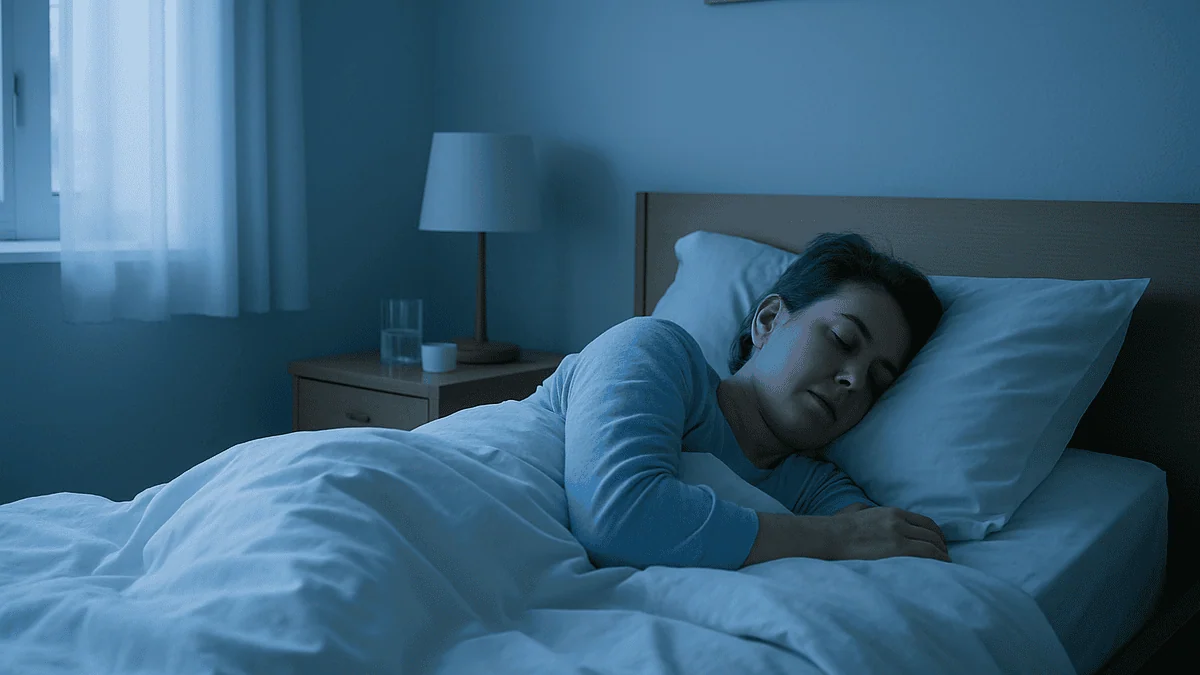
The elbow to the ribs usually comes around 2 a.m. A snore builds, stops cold for ten or fifteen seconds, long enough for a bed partner to sit up and stare, then breaks with a snort that sounds like someone surfacing from underwater. In the morning, the snorer remembers none of it. The partner remembers all of it.
That silence between snores is the part that matters. It can happen five times an hour or a hundred, and each pause nudges oxygen down and blood pressure up while the sleeper stays blissfully unaware. Roughly 30 million American adults are estimated to have obstructive sleep apnea, and most have never been tested.
The good news: getting an answer no longer automatically means a night wired to machines in an unfamiliar room. The honest news: sometimes it still should. Here is how to tell which test fits your situation.
Why a Few Seconds Without Air Matters More Than the Snoring
Snoring is noise. Apnea is physiology. In obstructive sleep apnea, the muscles of the throat relax during sleep until the airway narrows or collapses entirely. Breathing stops or shallows for at least 10 seconds at a time, sometimes 30 or more, and blood oxygen dips. The brain notices, fires a burst of stress signaling, and jolts the body just enough to reopen the airway. Heart rate jumps. Blood pressure spikes. Then the cycle restarts, sometimes dozens of times per hour, all night, for years.
The sleeper rarely wakes fully, which is why so many people with severe apnea insist they sleep fine. Their cardiovascular system disagrees. Untreated obstructive sleep apnea is consistently linked to high blood pressure, atrial fibrillation, stroke, and type 2 diabetes, and the daytime sleepiness it causes is a well-documented factor in drowsy-driving crashes. The American Heart Association treats it as a cardiovascular risk factor in its own right, not a mere annoyance.
There is also a quieter cost. Fragmented sleep erodes memory consolidation, mood regulation, and attention. People describe it as living behind glass, present, but dulled. Testing exists because none of this is visible from the outside, and because the fix begins with a number: how many times per hour your breathing actually stops. That number is what both the lab study and the home test are built to find.
What Are 5 Symptoms of Sleep Apnea?
Five signs come up again and again in the clinical literature:
- Loud, chronic snoringoften loud enough to be heard through a closed door, though not everyone who snores has apnea, and not everyone with apnea snores.
- Witnessed pauses in breathing, or waking with gasping or choking. This is the single most telling symptom, and it usually takes a bed partner to spot it.
- Excessive daytime sleepinessdozing during meetings, movies, or worst of all, at red lights, despite spending a full night in bed.
- Morning headaches, typically dull and frontal, fading within an hour or two of waking. Overnight oxygen dips and carbon dioxide buildup are the suspected mechanism.
- Poor concentration, irritability, or low mood that improves when sleep improves.
Two caveats deserve space. First, waking repeatedly to urinate and waking with a dry mouth are common companions that people rarely connect to breathing. Second, the textbook picture skews toward middle-aged men. Women with sleep apnea more often report insomnia, fatigue, and morning headaches rather than dramatic snoring, one reason their diagnoses lag years behind. If several of these sound familiar, that pattern is precisely what screening questionnaires and sleep tests were designed to sort out, and it belongs in front of a clinician rather than a search bar.
How Can I Test Myself for Sleep Apnea?
You can screen yourself. You cannot diagnose yourself: that distinction is worth keeping crisp.
The most validated self-screen is the STOP-Bang questionnaire, eight yes-or-no items: loud Snoring, daytime Tiredness, Observed breathing pauses, high blood Pressure, Body mass index over 35, Age over 50, Neck circumference above roughly 16 inches (40 cm), and male Gender. Three or more yes answers signal elevated risk; five or more suggest a high probability of moderate-to-severe apnea. The Epworth Sleepiness Scale is its companion: it scores how likely you are to doze in eight everyday situations, from reading to sitting in traffic, on a 0-to-24 scale. Scores above 10 point to excessive daytime sleepiness.
Beyond questionnaires, low-tech observation helps. Ask a partner to note pauses and gasps, or leave a phone recording running for an hour after you fall asleep. Consumer smartwatches and rings now flag possible breathing disturbances, and while they are not diagnostic tools, a persistent alert is a reasonable prompt to seek real testing.
What none of these can do is produce an apnea-hypopnea index, distinguish obstructive from central apnea, or qualify you for treatment. Think of self-screening as the referral letter you write to yourself, useful precisely because of where it sends you next.
How Does an At-Home Sleep Apnea Test Work?
A home sleep apnea test is a stripped-down study focused on one question: is your breathing disturbed during sleep, and how badly? The standard kit, a type III monitor, in sleep-medicine shorthand, includes three components. A small nasal cannula rests under your nostrils to track airflow. An elastic belt around the chest measures breathing effort, which is how the test distinguishes an airway blocked from the outside (effort continues) from a brain that briefly stops sending the signal to breathe (effort stops). A finger clip records blood oxygen and pulse all night.
Some newer devices shrink the whole apparatus onto a fingertip or wrist, using peripheral arterial signals to infer breathing events; a few are single-use disposables mailed to your door. Whatever the hardware, the choreography is the same: your clinician orders the test, you sleep in your own bed for one to three nights, and the device’s data goes back to a sleep specialist for scoring and interpretation.
The appeal is obvious. You sleep where you always sleep, on your own pillow, at a fraction of the cost of a lab night. The trade-off is subtler: most home devices measure breathing, not sleep itself. Without brain-wave data, the machine cannot tell whether you were asleep for six hours or lying awake for three of them, which means it divides your breathing events by total recording time and can understate how severe the problem really is.
What Happens During an In-Lab Sleep Study?
Polysomnography, the in-lab study, is the full orchestra. You arrive at a sleep center in the evening, usually to a room that looks more like a modest hotel than a hospital ward. A technologist spends 30 to 45 minutes applying sensors: electrodes on the scalp to record brain waves, near the eyes to track eye movements, on the chin and legs to catch muscle activity, and on the chest for heart rhythm. Add the airflow sensor, two effort belts, a finger oximeter, and often a small microphone for snoring, and you are wearing roughly two dozen channels of data.
It sounds impossible to sleep through. Most people manage, and the technologist monitoring from the next room needs only a few hours of sleep, not a perfect night, to score the study. Because the lab records brain waves, it knows exactly when you slept, which sleep stage you were in, whether events cluster in REM sleep or when you lie on your back, and whether something other than apnea is fragmenting your night, such as periodic limb movements.
One feature has no home equivalent: the split-night study. If the first half of the night shows clearly severe apnea, the technologist can wake you, fit a positive airway pressure mask, and spend the second half calibrating it, diagnosis and treatment setup compressed into a single night. Results are typically interpreted by a sleep physician within one to two weeks.
In-Lab vs At-Home: The Honest Side-by-Side
Neither test is simply better; they answer questions of different sizes. The comparison below reflects how sleep specialists actually weigh them.
| At-home sleep apnea test | In-lab polysomnography | |
|---|---|---|
| What it measures | Airflow, breathing effort, oxygen, pulse | All of that, plus brain waves, sleep stages, heart rhythm, leg movements, body position |
| Detects sleep itself | No, estimates from recording time | Yes, brain-wave confirmed |
| Best for | Uncomplicated suspected moderate-to-severe obstructive apnea | Complex cases, other sleep disorders, central apnea, children |
| Risk of missing mild apnea | Meaningful, may underestimate severity | Low |
| Setting | Your own bed, 1–3 nights | Sleep center, usually 1 night |
| Same-night treatment setup | Not possible | Possible via split-night study |
| Relative cost | Typically a small fraction of the lab study | Higher, though often covered when medically indicated |
The pattern worth internalizing: a clearly positive home test is trustworthy, because the test’s main weakness runs toward underestimating, not inventing, disease. A negative or borderline home test in a symptomatic person is the result you should trust least, professional guidelines direct exactly those patients to the lab for confirmation.
Who Should Skip the Home Test and Go Straight to the Lab?
Home testing was validated for a specific patient: an adult with a high likelihood of moderate-to-severe obstructive sleep apnea and no major complicating conditions. Step outside that profile and the shortcut stops being one.
An in-lab study is generally the right first move if any of the following apply:
- Significant heart or lung diseaseheart failure, serious rhythm disorders, or chronic lung conditions can alter overnight breathing in ways a three-channel device misreads.
- Suspected central sleep apnea, in which the brain intermittently stops signaling the breathing muscles. This pattern is more common after stroke, with heart failure, and in people taking certain long-term pain medicines that suppress breathing, and it requires the lab’s fuller picture to characterize.
- Another suspected sleep disordernarcolepsy, significant insomnia, periodic limb movement disorder, or sleepwalking, since home devices are blind to all of them.
- Children and teens, for whom home tests are not recommended; pediatric apnea is scored differently and demands lab-grade data.
- Neuromuscular conditions that weaken breathing muscles.
- A prior negative or technically failed home test with symptoms that have not budged.
There is also a practical category: people with safety-critical jobs, commercial drivers, pilots, heavy-equipment operators, where a definitive answer matters enough that many clinicians and regulators prefer lab-grade certainty. When in doubt, this is a decision to make with a clinician, not a checkout cart.
What Do Sleep Apnea Test Results Mean? Understanding Your AHI
Every sleep test ultimately compresses your night into one headline number: the apnea-hypopnea index, or AHI: the average number of times per hour your breathing stopped (apnea) or shallowed significantly with an oxygen dip or arousal (hypopnea). The standard adult thresholds:
- Under 5 events per hour: within the normal range
- 5 to 14: mild sleep apnea
- 15 to 29: moderate sleep apnea
- 30 or more: severe sleep apnea
Context sharpens the number. Someone with an AHI of 40 is stopping or restricting their breathing roughly every 90 seconds, all night. Home test reports often label the figure REI, respiratory event index, a quiet admission that it was calculated against recording time rather than confirmed sleep, and may therefore run low.
Good reports go beyond the headline. The oxygen desaturation profile shows how far your levels fell: a night grazing the low 80s tells a different story than one holding at 93 percent, even at identical AHIs. Positional data may reveal that events triple when you sleep on your back, which opens treatment options of its own. Lab studies add whether events concentrate in REM sleep and how badly they fragment sleep architecture.
Resist grading yourself in isolation. A mild AHI with severe sleepiness can matter more than a moderate AHI in someone who feels well, which is why interpretation belongs to a sleep physician weighing the whole clinical picture.
What Happens If I Can't Sleep During a Sleep Apnea Test?
This is the most common fear about lab studies, and the most overblown. Sleep researchers even have a name for the phenomenon, the first-night effect, because nearly everyone sleeps somewhat worse in an unfamiliar bed festooned with sensors. The test is designed with that in mind.
Technologists do not need a beautiful night; they need a scoreable one. In practice, even two to four hours of recorded sleep is usually enough to establish a diagnosis, particularly since apnea tends to announce itself early and often. People also routinely misjudge their own night: patients who swear they barely dozed frequently turn out, on the brain-wave record, to have slept several hours in fragments. That misperception is itself common in disturbed sleep.
You can stack the odds. Keep your normal schedule that day rather than sleeping in, skip naps, cut caffeine after midday, and bring your own pillow, most labs encourage it. If a health condition or severe anxiety makes sleeping away from home genuinely unrealistic, say so beforehand; your clinician may adjust the plan, and any question of a short-term sleep aid is a conversation for that appointment, not a decision to make solo on test night.
And if the night truly yields too little data? The study is repeated or converted to a home test. An inconclusive night is an inconvenience, not a verdict, and it does not go on any permanent record of failure.
My Home Test Was Negative, but I Still Feel Terrible: Now What?
A negative home test in someone with real symptoms is not the end of the road. It is, according to standard sleep-medicine practice, the trigger for an in-lab study.
The reasons are baked into the technology. A home device dividing breathing events by total recording time will dilute your AHI if you lay awake for two of your seven recorded hours. A nasal sensor that shifted at 3 a.m. records clean air where there was none. Mild apnea, real enough to cause morning headaches and afternoon fog, sits precisely in the zone these devices are most likely to miss. Studies comparing the two approaches consistently show home tests underestimating severity relative to polysomnography.
There is a second possibility worth taking seriously: your breathing may genuinely be fine, and something else is stealing your sleep. Periodic limb movements, circadian rhythm disorders, insomnia, restless legs, thyroid problems, low iron, and depression can all produce the same exhausted mornings. A home apnea test cannot see any of them; a lab study catches several, and a thoughtful clinician screens for the rest.
The practical script is short. Bring the negative result back to your doctor, restate your symptoms concretely, nodding off at your desk twice daily is more useful than feeling tired, and ask directly whether an in-lab study is the logical next step. In symptomatic patients, it usually is.
Can Sleep Apnea Be Cured?
The evidence-honest answer: for most adults, obstructive sleep apnea is a chronic condition that can be controlled very well, rather than cured outright. That distinction disappoints people, but it should not, controlled apnea and no apnea feel remarkably similar from inside a rested body.
Some situations genuinely can resolve. Children whose apnea stems from enlarged tonsils and adenoids often improve substantially after those are removed. Adults whose apnea is driven largely by excess weight sometimes see their AHI fall into the normal range after significant, sustained weight change, studies document this, though results vary widely and the airway anatomy that predisposed them usually remains. Selected adults with specific structural issues, such as a markedly recessed jaw, may benefit from surgery, with outcomes that depend heavily on anatomy and case selection.
For everyone else, management is the game, and it works. Positive airway pressure therapy remains the most effective and best-studied option, splinting the airway open with gently pressurized air. Custom oral appliances that hold the lower jaw forward help many people with mild-to-moderate disease. Positional therapy suits those whose events cluster on their back. Limiting alcohol in the evening matters more than most people expect, since alcohol relaxes exactly the throat muscles that need tone.
Be wary of anything marketed as a cure. The credible endpoint is a follow-up test showing your AHI controlled: a claim that can be measured, not merely promised.
When to See a Doctor About Snoring or Daytime Sleepiness
Make an appointment, a routine one, with your primary care clinician, if any of these describe your nights or days:
- A partner has witnessed you stop breathing, gasp, or choke during sleep, even once or twice.
- Snoring loud enough to disturb someone in another room, most nights.
- Sleepiness that intrudes on daily life: dozing in meetings, while reading, or during conversations despite adequate time in bed.
- Morning headaches several times a week, or waking chronically unrefreshed.
- High blood pressure that stays stubborn despite treatment, sleep apnea is one of the most common hidden contributors, and guidelines recommend considering it.
- An Epworth score above 10 or a STOP-Bang score of 3 or higher on self-screening.
Treat one scenario with real urgency: drowsiness behind the wheel. If you have caught yourself nodding off while driving, or drifted from your lane without remembering the preceding seconds, stop driving drowsy and seek evaluation promptly. Untreated sleep apnea multiplies crash risk, and this is the symptom with the power to harm someone else.
Seek same-day care for symptoms that go beyond apnea’s usual script, waking with chest pain or pressure, severe shortness of breath that does not settle within minutes, or a partner unable to rouse you normally. Those warrant emergency evaluation, not a sleep-study referral. For everything else, an ordinary appointment starts the process, and most of the workup now moves faster than its reputation suggests.
How to Get the Most Accurate Result From Your Test
A sleep test measures one specific night, so the goal is to make that night representative, not your best sleep, not your worst, just your normal.
In the days before, keep your usual schedule. Do not bank extra sleep or push through an all-nighter to guarantee exhaustion; both distort the picture. On test day, skip naps and cut caffeine after midday. Follow your clinician’s guidance on evening alcohol, many advise keeping habits typical rather than artificially abstaining, since the test should capture the sleep you actually get, but this is worth asking about explicitly.
For a lab study: wash your hair and arrive without conditioner, gels, or heavy lotions, which interfere with electrode adhesion. Remove nail polish or acrylics from at least one finger so the oximeter reads cleanly. Pack as if for a spartan hotel night, comfortable sleepwear, your own pillow, toiletries, and whatever book usually precedes sleep.
For a home test: watch the setup video twice, position the effort belt snugly at the level your provider specifies, and check that the recording light behaves as described before turning in. If a sensor comes loose overnight, note the time; scorers can work around a documented gap. Jot a brief morning log, roughly when you fell asleep, how often you woke, because that context helps whoever interprets a device that cannot see sleep itself. Small diligence here regularly saves people from a repeat night.
Frequently asked questions
How can I test myself for sleep apnea?
You can screen yourself, but not diagnose yourself. The STOP-Bang questionnaire (snoring, tiredness, observed pauses, blood pressure, BMI, age, neck size, gender) and the Epworth Sleepiness Scale are validated screens; a STOP-Bang score of 3 or more or an Epworth above 10 suggests elevated risk. A partner’s observations or a phone recording of pauses and gasps adds useful evidence. Actual diagnosis requires a physician-ordered home or in-lab sleep test.
What are 5 symptoms of sleep apnea?
The five classic symptoms are loud chronic snoring, witnessed pauses in breathing or waking with gasping, excessive daytime sleepiness despite a full night in bed, morning headaches, and trouble with concentration or mood. Frequent nighttime urination and waking with a dry mouth are common companions. Women more often present with insomnia and fatigue rather than dramatic snoring, which contributes to delayed diagnosis.
Can sleep apnea be cured?
For most adults, obstructive sleep apnea is managed rather than cured, though management can eliminate symptoms almost entirely. Some cases do resolve: children often improve after tonsil and adenoid removal, and significant sustained weight change can lower the AHI into the normal range for some adults. Positive airway pressure, oral appliances, positional therapy, and selected surgeries are the evidence-based options. Treat any product marketed as a guaranteed cure with skepticism.
What happens if I can't sleep during a sleep apnea test?
Usually nothing dire: the study is designed around imperfect nights. Technologists typically need only two to four hours of recorded sleep to score a diagnostic study, and people often sleep more than they think they did. The first-night effect in an unfamiliar lab is well documented and expected. If the night genuinely yields too little data, the test is simply repeated or converted to a home study.
Do I need a doctor's order for a home sleep apnea test?
Yes. A home sleep apnea test is a medical diagnostic that requires a clinician’s order, and the raw data must be scored and interpreted by a sleep specialist. This is not bureaucratic friction: the ordering visit determines whether a home test is even appropriate for you, since heart or lung disease, suspected central apnea, and other sleep disorders all point to lab testing instead. Insurance coverage also generally depends on that order.
Can a smartwatch or ring diagnose sleep apnea?
No. Consumer wearables can flag patterns, oxygen variation, restless sleep, breathing irregularities, that make sleep apnea more likely, and a persistent alert is a legitimate reason to seek testing. But they are not validated diagnostic devices, cannot produce a clinically usable AHI, and cannot distinguish obstructive from central apnea. Bring the data to your doctor as a conversation starter, then get a proper physician-ordered test.
Can thin people have sleep apnea?
Yes. Excess weight is the strongest risk factor, but airway anatomy matters independently: a recessed lower jaw, large tonsils, a thick neck, nasal obstruction, and family history all raise risk at any body size. Age and menopause also increase risk. Clinicians see plenty of lean patients with significant apnea, so a normal weight should never be the reason symptoms like witnessed pauses or severe daytime sleepiness go uninvestigated.
What AHI is considered sleep apnea?
In adults, an apnea-hypopnea index of 5 or more events per hour, together with symptoms, meets the threshold for diagnosis. Five to 14 events per hour is mild, 15 to 29 is moderate, and 30 or more is severe. Home test reports may call the figure REI, which tends to run lower than a lab-measured AHI because it is calculated against total recording time rather than confirmed sleep.
How many nights does a home sleep apnea test take?
Most home tests run one to three nights, depending on the device and your clinician’s order. A single technically successful night is often sufficient, but multiple nights reduce the chance that one unrepresentative or sensor-troubled night skews the result, night-to-night variability in apnea severity is real. If sensors slip or the recording fails, the test is simply repeated, usually with the same kit.
Are home sleep apnea tests appropriate for children?
No. Home sleep apnea tests are not recommended for children; pediatric sleep apnea is scored with different thresholds and typically requires in-lab polysomnography with full brain-wave monitoring. Childhood apnea also has different common causes, enlarged tonsils and adenoids chief among them, and different signs, including restless sleep, mouth breathing, bedwetting, and daytime behavior problems rather than obvious sleepiness. A pediatrician can direct the appropriate workup.
References
This article is for general information only and is not a substitute for professional medical advice. Please consult a qualified doctor about your individual situation.

More from the Blog
Whole Genome Sequencing and Polygenic Risk Scores: What Consumer Genomics Can Predict
Whole genome sequencing reads nearly all 3 billion letters of a person's DNA and can reliably identify rare single-gene variants linked to conditions such…
Protein in Urine: What a Urinalysis Finding Means for Your Kidneys
Protein in urine, called proteinuria, means the kidneys' filters are letting protein such as albumin leak through. A single positive result on a urinalysis…
Lynch Syndrome: The Inherited Cancer Risk Worth Knowing About
Lynch syndrome is an inherited condition, caused by a change in one of the DNA mismatch repair genes, that raises lifetime risk of colorectal,…
Genetic Testing: What It Can Detect and How Long Results Take
Genetic testing can detect single-gene conditions such as cystic fibrosis, sickle cell disease and Huntington disease, chromosome differences such as Down syndrome, inherited cancer…
Pap Smear vs HPV Test: What Each Detects and the New Screening Intervals
A Pap smear examines cervical cells under a microscope for abnormal changes, while an HPV test looks for the genetic material of high-risk human…
A Short History of DNA Testing, and How Long a Test Takes Today
Modern DNA testing began in September 1984, when British geneticist Alec Jeffreys developed DNA fingerprinting at the University of Leicester; the first criminal conviction…