

Snoring and Sleep Apnea in Children: Why It Affects Behavior and Growth
Key Takeaways
- About one child in ten snores habitually, but only an estimated 1 to 5 percent of children have obstructive sleep apnea, and sound alone cannot separate the two.
- A pediatric apnea-hypopnea index of 1 or more events per hour is considered abnormal, five times stricter than the adult threshold of 5.
- In the CHAT trial, 46 percent of children assigned to watchful waiting had a normal sleep study after seven months, compared with 79 percent after surgery.
- Both CHAT (2013) and PATS (2023) found that surgery improved caregiver-rated behavior and quality of life but did not change laboratory tests of attention and executive function.
- Growth hormone's largest daily pulse occurs in slow-wave sleep, which is why fragmented sleep is linked to lower IGF-1 and slowed weight gain in some children with apnea.
- Bedwetting that returns after months of dry nights is a recognized sign of sleep-disordered breathing, driven by pressure changes that increase overnight urine production.
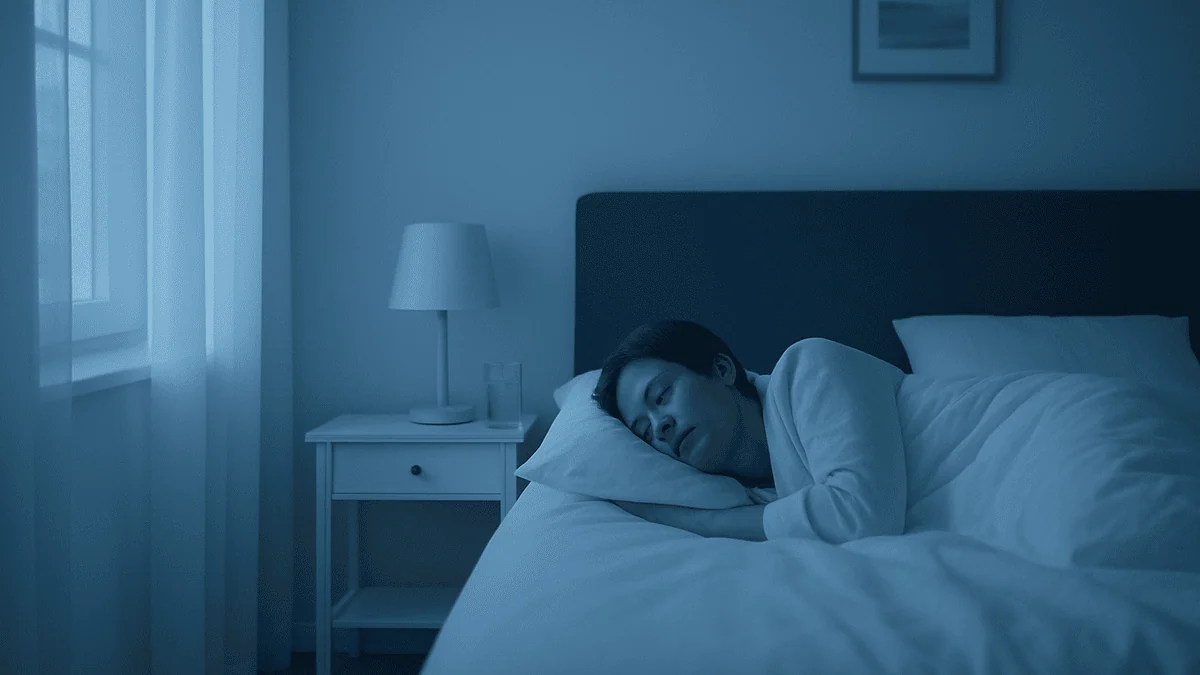
Sleep apnea in children is a condition in which the airway repeatedly narrows or closes during sleep, most often because of enlarged tonsils and adenoids. The broken sleep and brief dips in oxygen tend to show up by day as hyperactivity, poor attention and irritability, and in some children as slowed weight gain or growth. Loud, regular snoring with pauses, gasps or very restless sleep warrants a pediatric evaluation, often including an overnight sleep study.
Scroll through parenting forums as of April 2026 and you will find the same clip reposted with new captions: a toddler asleep on a car seat, head tilted back, mouth open, each breath a small sawing sound. The caption usually claims that snoring is the hidden cause of ADHD, and that a single surgery fixes it. The clip is doing numbers because it lands on something real. A large federally funded trial published in JAMA in December 2023 found that even mild snoring, the kind that does not meet the threshold for sleep apnea in children, was linked to measurable gains in behavior, sleep quality and blood pressure when treated. The internet took that nuance and flattened it.
The honest version is more interesting. Snoring sits on a spectrum, children react to lost sleep differently from adults, and growth is wired to the deepest stage of sleep in ways most parents never hear about. This piece walks through what the evidence shows, how strong it is, and which signs should prompt a call to the pediatrician rather than another night of watching and worrying.
What changed recently: the trial that reframed snoring in children
For a decade, the reference point was the Childhood Adenotonsillectomy Trial (CHAT), published in 2013. It randomized 464 children aged 5 to 9 with confirmed obstructive sleep apnea to early surgery or seven months of watchful waiting. The headline finding surprised many: formal tests of attention and executive function did not differ between the groups. Secondary outcomes told a different story. Parent-rated behavior, quality of life and the overnight sleep recording all improved more with surgery.
In December 2023, the Pediatric Adenotonsillectomy Trial for Snoring (PATS) extended the question to the far larger group of children who snore but whose sleep study shows few or no breathing pauses. Across 459 children aged 3 to 12, the primary outcomes again came out neutral: executive function and attention scores were similar at 12 months whether or not the tonsils and adenoids came out. Yet behavior as rated by caregivers, daytime sleepiness, sleep-related symptoms, quality of life and systolic blood pressure percentile all moved in favor of surgery.
That pairing is what changed the conversation. Snoring without apnea, long filed under ‘primary snoring, no action needed’, now has randomized evidence of modest but real downstream effects. It does not mean every snoring child needs surgery; the trials also showed that many children improved with time alone. It does mean the American Academy of Pediatrics guidance to ask about snoring at every well-child visit, first issued in 2012, carries more weight than it did. Guideline bodies have not yet rewritten their criteria in response, so the current standard remains the same: evaluate habitual snoring, test when indicated, and decide case by case.
How common is snoring in children, and when does it stop being harmless?
Roughly one child in ten snores most nights. That figure comes from population surveys across several countries and holds fairly steady between preschool and the early school years. Obstructive sleep apnea, the stage where snoring is accompanied by repeated partial or complete blockage of the airway, affects an estimated 1 to 5 percent of children. In other words, most snorers do not have apnea, but a meaningful minority do, and you cannot reliably tell them apart by sound alone.
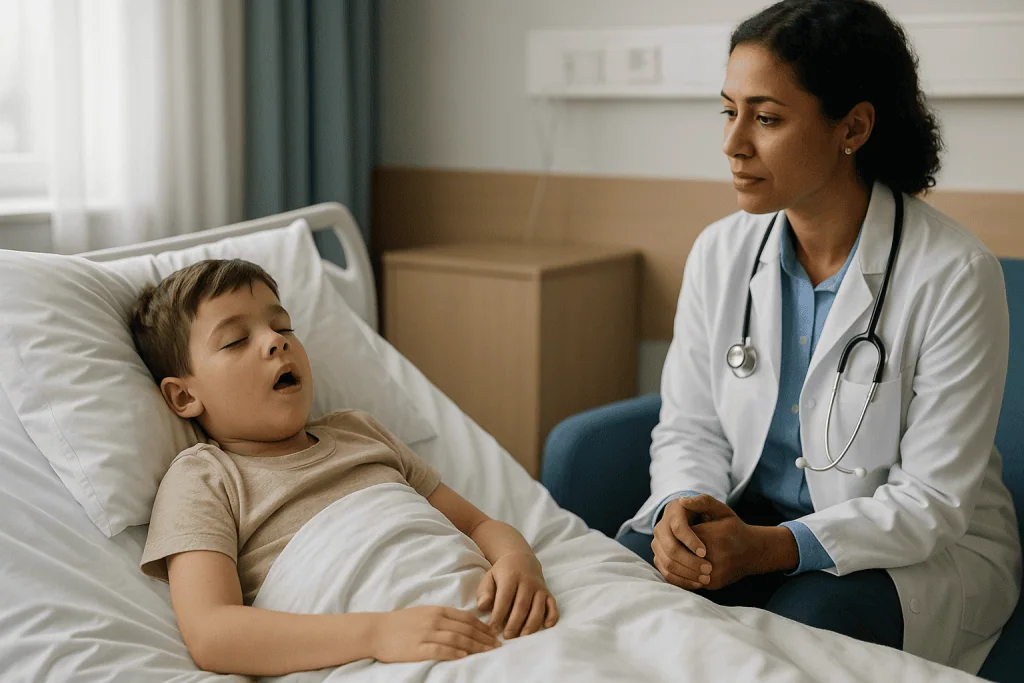
Clinicians talk about ‘sleep-disordered breathing’, an umbrella term covering everything from occasional snoring to severe apnea. At the mild end sits primary snoring: noisy breathing without pauses, oxygen dips or disrupted sleep. In the middle is upper airway resistance, where the child works hard to pull air past a narrowed passage and wakes briefly without an obvious pause. At the severe end, the airway closes for ten seconds or longer, several times an hour.
The anatomy explains the timing. Tonsils and adenoids, the lymphoid tissue at the back of the throat and behind the nose, grow fastest between ages 2 and 8, while the bony airway around them has not yet caught up. The result is a temporary mismatch: a lot of soft tissue in a small tube. Add a cold, seasonal allergies or lying flat on the back, and a snorer can tip into apnea for a few weeks before settling again.
Snoring that appears only with a cold and vanishes within a fortnight is a different animal from snoring heard three or more nights a week across a season. The second pattern is what pediatricians mean by ‘habitual’, and it is the pattern worth raising at an appointment.
How to tell if a child has sleep apnea: signs at night and clues by day
Parents often expect a sleepy child. What they usually get is the opposite. Children with disrupted sleep tend to run wired rather than drowsy, which is one reason the condition hides in plain sight.
At night, the signs cluster around effort. Watch for loud snoring with pauses followed by a snort or gasp, as though the child has to restart breathing. Chest and belly moving in opposite directions, a sign the diaphragm is pulling against a blocked airway, is another marker. Mouth breathing, heavy sweating, sleeping with the neck arched back or propped on a pile of pillows, and frequent position changes all suggest the body is hunting for a clearer airway. Bedwetting that returns after months of dry nights is a classic and underappreciated clue; the pressure swings in the chest alter hormones that regulate urine production overnight.
By day, the picture shifts to behavior and function:
- Difficulty waking, morning headaches, or a dry mouth and sore throat on waking.
- Trouble concentrating at school, with teachers describing a child who is ‘in another world’.
- Hyperactivity, impulsivity or emotional outbursts that seem out of proportion.
- Nasal-sounding speech, chronic mouth breathing and recurrent ear or sinus infections.
- Slower weight gain than siblings, or a growth curve that has flattened.
No single sign confirms the diagnosis, and several, hyperactivity especially, overlap with other conditions. The useful habit is to keep a simple two-week log: how many nights the child snored, whether pauses were heard, how the morning went. A short phone recording of the snoring is more informative to a clinician than a description. These details turn a vague worry into a specific question that a pediatrician can act on.
Why sleep apnea in children affects behavior more than it causes sleepiness
Every time the airway narrows, the brain registers a problem and issues a micro-wake-up, called an arousal, that reopens the throat. The child rarely remembers these, but they can occur dozens of times an hour, slicing sleep into fragments too short to be restorative. Two other insults ride along: brief drops in blood oxygen, and surges in heart rate and blood pressure as the body fights for air.

The developing prefrontal cortex, the region behind the forehead that handles impulse control, planning and sustained attention, appears especially sensitive to this combination. Adults with the same fragmentation tend to fall asleep at their desks. Children, whose drive to stay alert is stronger, compensate with movement and stimulation-seeking. The behavioral result can look remarkably like attention-deficit hyperactivity disorder (ADHD): fidgeting, interrupting, losing focus, melting down over small frustrations.
The evidence for the association is strong and consistent across observational studies: children who snore habitually score worse on standardized behavior scales than non-snorers, and the gap widens with more severe breathing disturbance. Evidence that treatment reverses the problem is more nuanced. In both CHAT and PATS, caregiver ratings of behavior and emotional regulation improved more after surgery than with waiting, a difference parents and teachers could see. Formal neuropsychological tests, however, moved little in either trial over 7 to 12 months. One interpretation is that the tests were not sensitive to real-world change; another is that some effects on cognition take longer to recover, or do not fully recover at all.
What this means in practice: a child with ADHD-type behavior who also snores deserves to have the snoring evaluated before anyone settles on a single explanation. It does not mean snoring causes ADHD, and it does not mean a sleep study replaces a developmental assessment.
Does sleep apnea stunt growth? The hormone and calorie mechanisms
Growth hormone is released in pulses, and the largest pulse of the 24-hour cycle arrives during slow-wave sleep, the deep stage that dominates the first half of the night. Repeated arousals shorten and fragment that stage, and several studies have measured lower levels of insulin-like growth factor 1 (IGF-1), the hormone that carries growth hormone’s signal to bone and muscle, in children with untreated apnea.
Breathing against a narrowed airway also costs energy. Pulling air through a nearly closed throat all night is physical work, and researchers have documented higher nighttime energy expenditure in affected children. When very large tonsils make swallowing uncomfortable, mealtimes get slower and intake drops. Three small leaks in the system add up: fewer growth signals, more calories burned, fewer calories eaten.
The clinical pattern is well described. A subset of children with significant apnea, perhaps one in ten in older series, shows faltering weight gain or a flattening height curve, historically labeled ‘failure to thrive’. After adenotonsillectomy, pooled analyses of pre- and post-surgery data report catch-up gains in both weight and height over the following 6 to 12 months, along with rises in IGF-1. The evidence here is observational and before-and-after rather than randomized, so it cannot fully separate the effect of surgery from the effect of time, but the consistency across studies and the plausible biology make most sleep specialists comfortable calling the link real.
There is a twist. Growth can also run the other way. In children who are overweight, the same catch-up mechanism can accelerate weight gain after surgery, and obesity itself is now a leading cause of apnea in older children and teenagers. Clinicians tracking growth therefore watch both tails of the curve.
What is the 3% rule for sleep apnea, and why does it matter for children?
The phrase comes from the technical scoring rules used in sleep laboratories. An apnea is a near-complete stop in airflow. A hypopnea is a partial reduction, and scoring one requires evidence that it actually mattered. Under the current American Academy of Sleep Medicine standard used for children, a hypopnea is counted when airflow falls by at least 30 percent for the duration of two breaths and is accompanied either by a drop in blood oxygen saturation of at least 3 percentage points or by an arousal on the brain-wave recording. That 3 percent threshold is the ‘rule’.
Why the fuss? Because the number of apneas plus hypopneas per hour of sleep, the apnea-hypopnea index (AHI), is the figure that defines severity, and a looser or stricter desaturation cutoff can move a child across a diagnostic line. Pediatric thresholds are far stricter than adult ones. An AHI of 1 or more per hour is considered abnormal in a child, where an adult would need 5. Many centers describe 1 to 5 as mild, 5 to 10 as moderate and above 10 as severe, though laboratories vary slightly.
Parents sometimes hear about the 3% rule and reach for a fingertip pulse oximeter or a smartwatch. These devices are not built to catch brief, shallow desaturations in a wriggling child, they cannot detect arousals at all, and consumer trackers have not been validated against laboratory sleep studies in children. A reassuring overnight reading from a wearable does not rule out apnea, and a worrying one is not a diagnosis.
The takeaway is simply that the 3% figure describes how experts count events, not a target families should chase at home. Interpretation belongs with the sleep physician reading the full study.
How is sleep apnea in children diagnosed?
The reference test is overnight polysomnography, a sleep study in which sensors record brain waves, eye movements, muscle tone, airflow at the nose and mouth, chest and abdominal effort, oxygen saturation, heart rhythm and body position while the child sleeps in a laboratory. It sounds daunting. In practice, a parent stays in the room, the sensors are taped rather than needled, and most children sleep well enough to produce a usable recording.
The study answers questions no history can: how many events occur per hour, how low the oxygen drops, whether the pattern is obstructive (a blocked airway) or central (the brain briefly failing to signal a breath), and how badly sleep architecture is fragmented. Results guide not only whether to treat but how. A child with a very high event count or deep desaturations is managed differently from one with mild findings, and a study after treatment can confirm the airway has opened.
Before the laboratory comes the office. A pediatrician will ask about snoring frequency, witnessed pauses, mouth breathing, bedwetting, school reports and growth, then examine the nose, mouth and throat, grading tonsil size and looking for a high arched palate, small jaw or allergic swelling in the nasal passages. Validated questionnaires help structure the conversation but, like physical examination, they predict apnea only modestly; large tonsils do not guarantee apnea and small ones do not exclude it.
Home sleep apnea tests, widely used for adults, are not recommended as a routine substitute in children. They lack brain-wave recording, so they miss arousals and underestimate hypopneas, and the equipment is easily dislodged by a sleeping child. Where laboratory access is limited, some centers use overnight oximetry as a screening step, accepting that a normal result does not rule the condition out.
What the evidence actually says, graded by strength
Not every claim about childhood sleep apnea rests on the same footing. Here is how the main ones stack up.
Randomized trial evidence (strongest). Two large trials, CHAT (2013) and PATS (2023), compared adenotonsillectomy with watchful waiting. Both found that surgery improved caregiver-rated behavior, sleep symptoms and quality of life, and both found no significant difference on laboratory tests of attention and executive function over 7 to 12 months. CHAT showed sleep-study normalization in 79 percent of surgical children versus 46 percent of those who waited. PATS added a lower systolic blood pressure percentile in the surgical group. These are robust, replicated findings in children aged roughly 3 to 12 without severe apnea or major comorbidities; they say less about toddlers, teenagers or children with Down syndrome.
Observational evidence (moderate). The link between habitual snoring and worse behavior scores, lower school performance and higher blood pressure is consistent across dozens of cohort and cross-sectional studies. Growth effects, including lower IGF-1 before treatment and catch-up gains afterwards, come from before-and-after series and meta-analyses of those series. Association is well established; causation is likely but not proven to the same standard.
Expert consensus (weakest, but still useful). Guidance to screen for snoring at every well-child visit, to refer habitual snorers for evaluation, and to treat an AHI above 1 as abnormal reflects professional judgment built on the above data rather than head-to-head trials of screening strategies. The same applies to the belief that earlier treatment protects long-term cognition, which remains plausible and unproven.
A fair summary: treatment reliably helps children sleep, behave and feel better; whether it changes measured thinking skills or long-term development is still an open question.
What to do if a kid has sleep apnea: the main treatment paths
The first step is always the same: a pediatric evaluation and, where indicated, a sleep study. Treatment is then matched to the cause and severity, and the decision rests with the treating clinician and family together. The options below are described so parents know the landscape, not as a menu to self-select from.
| Option | What it involves | Strength of evidence in children | Typically considered when |
|---|---|---|---|
| Adenotonsillectomy | Surgical removal of tonsils and adenoids | Randomized trials (CHAT, PATS) | Enlarged tonsils or adenoids with confirmed apnea or troublesome snoring |
| Watchful waiting | Monitoring with repeat assessment, usually over 6–12 months | Randomized trials (control arms) | Mild findings, no growth or behavior concerns |
| Intranasal corticosteroid or montelukast | Prescription anti-inflammatory medicines to shrink adenoid and nasal tissue | Small randomized trials, short follow-up | Mild apnea, especially with allergic rhinitis; prescriber weighs regulator warnings |
| CPAP | A mask delivering gentle air pressure to hold the airway open during sleep | Observational and small trials | Apnea persisting after surgery, obesity, craniofacial or neuromuscular conditions |
| Weight management | Family-based nutrition and activity support | Observational | Overweight or obesity contributing to airway narrowing |
| Orthodontic or myofunctional approaches | Palate expansion or tongue and mouth muscle exercises | Limited, mostly small studies | Narrow palate or persistent mouth breathing, as an adjunct |
Adenotonsillectomy remains the most common first-line treatment when tonsils and adenoids are the obstacle, and the trial data back that position. Montelukast carries a regulator-mandated warning about mood and behavior side effects, which is one reason prescribers weigh it carefully; any medicine decision, including whether to start, continue or stop, belongs with the prescribing clinician. Whatever the path, a follow-up visit to confirm that symptoms have settled is part of good care, because apnea can persist or return.
Can kids outgrow sleep apnea? What the trials found about waiting
Yes, many do, and the best estimate of how many comes from the children who were randomized to wait. In CHAT, 46 percent of children assigned to seven months of watchful waiting had a normal sleep study at the end, with no treatment beyond observation. Behavior and quality of life also improved in that group, just less than in the surgical group. PATS, following milder children for a full year, saw a similar pattern.
The biology supports the numbers. Tonsils and adenoids reach their largest size relative to the airway around ages 4 to 6, then begin to shrink while the face and jaw keep growing. A child who snores at 4 may breathe quietly at 8 without anyone intervening. Seasonal allergies calm, colds become less frequent, and sleeping positions change.
Spontaneous improvement is less likely in certain groups. Children who are overweight showed lower rates of normalization in CHAT. Those with Down syndrome, craniofacial differences, neuromuscular conditions or very high event counts rarely resolve without treatment, and their apnea can return years after surgery as weight or anatomy shifts. Teenagers who develop apnea are more likely to follow the adult pattern, where obesity rather than tonsil size drives the problem.
Watchful waiting is therefore a legitimate, evidence-based choice, not a failure to act, provided it is structured. That means a defined review point, usually within 6 to 12 months, a plan for what would trigger earlier reassessment, such as falling off the growth curve or worsening school reports, and attention to things that make snoring worse in the meantime, including untreated nasal allergy and secondhand smoke. Waiting without a plan is where children get lost.
Which children are at higher risk, and why
Enlarged tonsils and adenoids account for most cases in young children, but several factors raise the odds or change the picture.
Obesity is the fastest-growing contributor. Fat deposits in the neck and around the throat narrow the airway, and extra abdominal weight reduces lung volume when lying flat, which makes the airway easier to collapse. Among adolescents with apnea, excess weight is now the dominant cause, mirroring adults.
Down syndrome carries one of the highest risks of any condition: studies estimate that half to three-quarters of affected children have obstructive sleep apnea, driven by a smaller midface, relatively large tongue and low muscle tone. Pediatric guidance in several countries recommends a sleep study for every child with Down syndrome by around age 4, whether or not parents have noticed snoring, because symptoms are frequently missed.
Other recognized risk factors include:
- Craniofacial differences such as a small or recessed lower jaw, cleft palate repair, or a narrow high-arched palate.
- Neuromuscular conditions, including cerebral palsy, that reduce the tone of throat muscles during sleep.
- Allergic rhinitis and chronic nasal congestion, which force mouth breathing and add swelling to an already crowded airway.
- Prematurity, with an increased risk persisting into school age.
- Exposure to secondhand smoke, which inflames airway tissue.
- A family history of snoring or apnea, reflecting inherited facial structure.
- Sickle cell disease, where apnea and oxygen dips can carry additional complications.
Black children have been found in several US cohorts to have higher rates of sleep-disordered breathing, a pattern researchers attribute to a mix of environmental exposures, access to care and other factors rather than to biology alone. Knowing the risk profile helps clinicians decide who needs a sleep study even when the story at home is ambiguous.
Beyond behavior: blood pressure, bedwetting and everyday life
Behavior gets the attention, but the strain of obstructed breathing reaches other systems, and some of the clearest evidence concerns the heart and circulation.
Each airway event triggers a burst of sympathetic nervous activity, the body’s alarm response, pushing heart rate and blood pressure up. Repeated hundreds of times a week, that pattern leaves a mark. Observational studies have linked childhood apnea to higher daytime and nighttime blood pressure and, in more severe cases, to thickening of the heart’s main pumping chamber. The PATS trial offered randomized support: children who had surgery ended the year with a lower systolic blood pressure percentile than those who waited. The absolute difference was modest, and nobody is suggesting a child’s cardiovascular future is sealed by snoring, but the finding fits a long-standing concern that early, repeated pressure surges may set habits the circulation carries forward.
Bedwetting is the symptom families most often fail to connect. Obstructed breathing increases the release of a heart hormone that signals the kidneys to make more urine overnight, while arousals disrupt the deep sleep in which children usually learn to hold on. Several series report that nighttime wetting improves or stops in a majority of affected children after apnea is treated, a change that matters enormously to a seven-year-old facing a sleepover.
Quality-of-life scores in both trials improved across domains parents care about: fewer sick-day visits, easier mornings, better mood, more energy for play. Headaches on waking tend to fade. Appetite often picks up once swollen tonsils no longer make swallowing a chore. None of these are reasons on their own to rush a decision, but together they explain why many families describe treatment as getting their child’s personality back rather than fixing a noise.
Common myths about snoring and sleep apnea in children
Myth: snoring in children is cute and harmless. Occasional snoring with a cold is harmless. Snoring three or more nights a week across a season is a symptom, and roughly one in ten children with that pattern has apnea. Loud, regular snoring in a child is worth mentioning at a check-up every time.
Myth: snoring is the real cause of ADHD. The viral version overstates a genuine overlap. Sleep-disordered breathing can produce ADHD-like behavior, and children with both snoring and attention problems should have the snoring evaluated. Trials show caregiver-rated behavior improves after treatment, but formal attention tests did not change, and ADHD remains a distinct condition with its own evidence base. Treating one does not substitute for assessing the other.
Myth: a sleepy child would be the giveaway. Most children with apnea are not visibly sleepy. They are wired, irritable and hard to settle, which is the opposite of what parents expect.
Myth: if the tonsils are not huge, it cannot be apnea. Tonsil size predicts apnea only weakly. Adenoids, hidden behind the nose, cannot be seen in the mirror, and children with small tonsils but a narrow jaw or low muscle tone can have severe apnea.
Myth: every snoring child needs surgery. About half of children with mild apnea in the CHAT waiting group normalized within seven months. Structured observation is an evidence-based option for mild cases without growth or behavior concerns.
Myth: a smartwatch or pulse oximeter can diagnose it. Consumer devices are not validated in children and cannot detect the brief arousals that define many events. A normal reading provides false reassurance; only a proper sleep study settles the question.
Myth: once treated, it is gone for good. Apnea can recur, particularly with weight gain, Down syndrome or craniofacial conditions. Follow-up is part of treatment, not an optional extra.
When to see a doctor: red flags parents should not wait on
Bring snoring up at any routine visit if it happens most nights. Book an appointment sooner, rather than waiting for the next check-up, if you notice any of the following:
- Snoring on three or more nights a week for more than a month, with or without other symptoms.
- Witnessed pauses in breathing, gasping, choking or snorting during sleep.
- Chest and belly moving in opposite directions, or visible struggling to breathe while asleep.
- Bedwetting that returns after six months or more of dry nights.
- A growth curve that has flattened, or weight gain noticeably slower than expected.
- New or worsening hyperactivity, inattention, aggression or school difficulties, especially when a teacher raises it.
- Persistent mouth breathing, nasal speech or recurrent ear and sinus infections.
- A child with Down syndrome, a craniofacial condition, a neuromuscular disorder or significant obesity, even if snoring seems mild, because risk is high and symptoms are easily missed.
Seek urgent care the same day if a child turns blue or grey around the lips during sleep, has pauses lasting longer than 15 to 20 seconds, is extremely difficult to rouse, or has noisy, labored breathing while awake. These are not typical apnea symptoms and need immediate assessment.
If your child is already on a treatment plan, do not stop or change any prescribed medicine, mask therapy or follow-up schedule without speaking to the prescribing clinician, even if symptoms seem to have resolved; apnea can settle and return. New side effects from any medicine, including changes in mood, sleep or behavior, should be reported to the prescriber promptly. Every decision about testing, surgery, medicines or waiting is one for the treating team, informed by a sleep study and your observations at home.
Frequently asked questions
How to tell if a child has sleep apnea?
Look for loud, regular snoring with pauses, gasps or snorts, restless sleep, mouth breathing, heavy sweating and bedwetting at night, paired with hyperactivity, poor focus, morning headaches or slowed growth by day. None of these confirms apnea on their own. A pediatrician will take a history, examine the tonsils and airway, and refer for an overnight sleep study, which is the only test that can diagnose the condition.
What is the 3% rule for sleep apnea?
It is a laboratory scoring rule, not a home test. Sleep technicians count a hypopnea, a partial reduction in airflow, only when airflow falls by at least 30 percent for two breaths and is accompanied by a 3 percentage point drop in oxygen saturation or a brief arousal. The resulting event count per hour defines severity. Consumer oximeters and smartwatches cannot apply this rule reliably in children.
What to do if a kid has sleep apnea?
Start with a pediatric evaluation and, where indicated, an overnight sleep study to confirm severity and cause. Treatment is then matched to the child: adenotonsillectomy when enlarged tonsils and adenoids are the obstacle, structured watchful waiting for mild cases, prescription anti-inflammatory nasal treatment in selected children, or CPAP when apnea persists. The choice belongs to the treating clinician and family, with a follow-up check to confirm improvement.
Can kids outgrow sleep apnea?
Many do. In the CHAT trial, 46 percent of children who were simply observed for seven months had a normal sleep study by the end, because tonsils and adenoids shrink while the airway grows between roughly ages 6 and 10. Children with obesity, Down syndrome, craniofacial differences or severe apnea are much less likely to improve without treatment, so waiting should always include a defined review date.
Is snoring in children ever normal?
Occasional snoring during a cold or allergy flare is common and usually harmless. Snoring on three or more nights a week across a season is considered habitual and is a symptom worth raising with a pediatrician, because around one in ten habitual snorers has obstructive sleep apnea. The 2023 PATS trial also found that even mild snoring without apnea was linked to measurable effects on behavior and blood pressure.
Can sleep apnea be mistaken for ADHD in children?
Yes, the overlap is well documented. Fragmented sleep and oxygen dips affect the brain regions that control attention and impulses, and children respond with hyperactivity rather than sleepiness. Trials show caregiver-rated behavior improves after apnea is treated, though formal attention tests changed little. A child with attention problems who also snores should have the snoring evaluated; this complements rather than replaces a developmental assessment.
Does sleep apnea affect a child's growth?
It can. Growth hormone is released mainly during deep slow-wave sleep, which apnea disrupts, and the effort of breathing against a blocked airway burns extra energy. Studies report lower IGF-1 levels in affected children and catch-up gains in weight and height after treatment. This evidence is observational rather than randomized, so it shows a strong association rather than proof, but the biology is consistent.
What age is sleep apnea most common in children?
Obstructive sleep apnea peaks between ages 2 and 8, when tonsils and adenoids are at their largest relative to the still-small airway. A second rise appears in adolescence, where excess weight rather than tonsil size tends to be the main driver, mirroring the adult pattern. Infants can also be affected, particularly those born prematurely or with craniofacial or neuromuscular conditions.
Do all snoring children need their tonsils removed?
No. Adenotonsillectomy is the most common treatment when enlarged tonsils and adenoids cause confirmed apnea, and randomized trials support it, but roughly half of children with mild apnea normalized within seven months of observation alone. Structured watchful waiting, nasal anti-inflammatory treatment or weight management may be appropriate depending on severity, growth and behavior. The decision is made with the treating clinician after a sleep study.
Can a home sleep test diagnose sleep apnea in children?
Home sleep apnea tests are not recommended as a routine substitute for laboratory polysomnography in children. They lack brain-wave recording, so they miss the brief arousals that define many pediatric events, and sensors are easily dislodged by a sleeping child. Overnight oximetry is sometimes used as a screening step where laboratory access is limited, but a normal result does not rule apnea out.
References
This article is for general information only and is not a substitute for professional medical advice. Please consult a qualified doctor about your individual situation.

More from the Blog

Bedwetting: When It Is Normal, When to Investigate and the Treatments
Bedwetting, medically called nocturnal enuresis, is common and usually harmless in children under 7, affecting about 1 in 5 five-year-olds and 1 in 20…
What Does Long-Term Eye Follow-Up After ROP Treatment Involve for Premature Babies?
Long-term eye follow-up after ROP treatment means scheduled checks that begin within days of laser or injection, continue every one to two weeks until…

How Long Does Whooping Cough Recovery Take? Why the Cough Outlasts Treatment Week by Week
Whooping cough typically lasts six to ten weeks, and sometimes longer. The mild cold-like first stage runs one to two weeks, the coughing-fit stage…

Growth Spurts and Height Prediction: What Decides How Tall a Child Will Be
Growth spurts are short periods when a child grows noticeably faster than usual, most dramatically in the first year of life and again during…
Nosebleeds in Kids: Why They Happen and How to Stop Them Properly
Nosebleeds in kids are common and usually harmless. Most start from small blood vessels at the front of the nasal septum that are irritated…

Wilms Tumor Survival: What It Means, What to Expect and When to See a Specialist
Most children diagnosed with Wilms tumor survive it. Across all stages, roughly 9 in 10 children are alive five years after diagnosis, and for…