

Surgery or Targeted Radiotherapy for Early-Stage Lung Cancer: How the Choice Is Weighed
Key Takeaways
- Surgery to remove the affected lobe or segment is the standard first option for medically fit people with stage I non-small cell lung cancer, and stereotactic radiotherapy is the standard for those who cannot safely have an operation.
- Two randomized trials comparing SABR with lobectomy in people fit for surgery closed early because too few people agreed to be randomly assigned, so the two have never been fairly compared in that group.
- A lobectomy removes one of the lungs' five lobes permanently, which is why lung function tests, not age, are the main gatekeeper for surgery.
- SABR is typically completed in a few outpatient sessions over about one to two weeks, with no anesthetic and usually no hospital stay.
- Surgery produces a full pathology report on the tumor and lymph nodes, which can change the stage and lead to a recommendation for additional treatment; radiotherapy relies on the pre-treatment biopsy and scans instead.
- After radiotherapy the treated area leaves scar tissue that can persist on CT for months, so follow-up scans are read for specific features rather than judged on whether the shadow has vanished.
For early-stage non-small cell lung cancer, surgery to remove the affected lobe or segment is the standard first option for people who are fit enough for an operation, while stereotactic ablative radiotherapy is the usual alternative when surgery is judged too risky or is declined. The choice weighs lung function, overall health, tumor size and position, and personal priorities, and it is made with a multidisciplinary team.
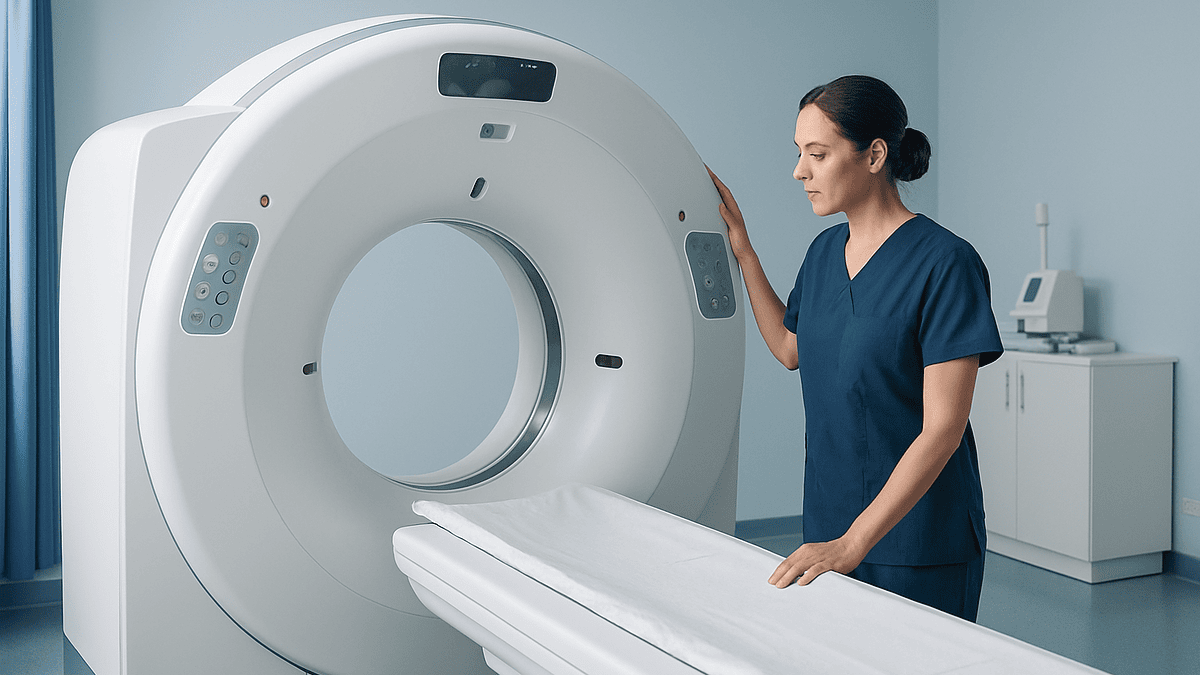
The nodule was found by accident. A CT scan ordered for a stubborn cough picked up a small shadow in the upper right lung, and within a few weeks a retired schoolteacher was sitting across from two specialists, a thoracic surgeon and a radiation oncologist, who each explained a different way to treat the same tumor. She left with two leaflets and one question she could not put down: which one should I choose?
The surgery vs radiation early stage lung cancer conversation is happening more often, partly because lung screening and incidental scans are finding tumors while they are still small and contained. That is good news. It also means more people are handed a genuine decision rather than a single prescribed path.
This explainer walks through what each treatment involves, what the evidence actually shows about how they compare, who tends to be offered which, and how to hold your own in the conversation with your care team.
What does early-stage lung cancer mean, and why does the choice come up now?
Early-stage lung cancer, in the sense used here, means a tumor that is confined to the lung, has not spread to the lymph nodes in the center of the chest, and has not traveled elsewhere in the body. Doctors describe this as stage I, and sometimes stage II when a slightly larger tumor or a nearby node is involved. The term almost always refers to non-small cell lung cancer, which is the most common type; small cell lung cancer behaves differently and is usually managed with chemotherapy and radiotherapy rather than an operation (National Cancer Institute).
Twenty years ago, a person with a small, contained lung tumor who was fit for surgery had one realistic route: an operation. Those who could not safely have surgery, often because of emphysema or heart disease, were offered conventional radiotherapy spread over many weeks, with modest results. Two developments changed the landscape. Screening with low-dose CT began finding tumors at a size where both treatments are feasible. At the same time, radiotherapy machines became precise enough to deliver very high doses to a target smaller than a walnut while sparing most of the surrounding lung. That technique, called stereotactic ablative radiotherapy, or SABR in the UK and SBRT in the US, is now a standard option (NHS).
So the question in the title is not a sign that doctors disagree wildly. It is a sign that two effective tools exist and that the best fit depends on the person, not only the tumor. Most cancer centers now run the decision through a multidisciplinary team meeting, where surgeons, radiation oncologists, lung physicians, radiologists and pathologists look at the same scans and reach a joint recommendation. The patient’s own preferences are meant to carry real weight in that discussion, and the rest of this article is designed to help you bring informed ones.
How lung cancer surgery works: what actually happens in the operating room
Lung surgery for early-stage cancer removes the tumor together with a margin of healthy tissue and, in most cases, samples the nearby lymph nodes. The lungs are divided into five lobes, three on the right and two on the left, and the traditional operation, a lobectomy, removes the entire lobe containing the tumor. A segmentectomy takes out a smaller anatomical portion of a lobe, and a wedge resection removes just the tumor and a small rim of tissue without following the natural divisions of the lung (MedlinePlus).
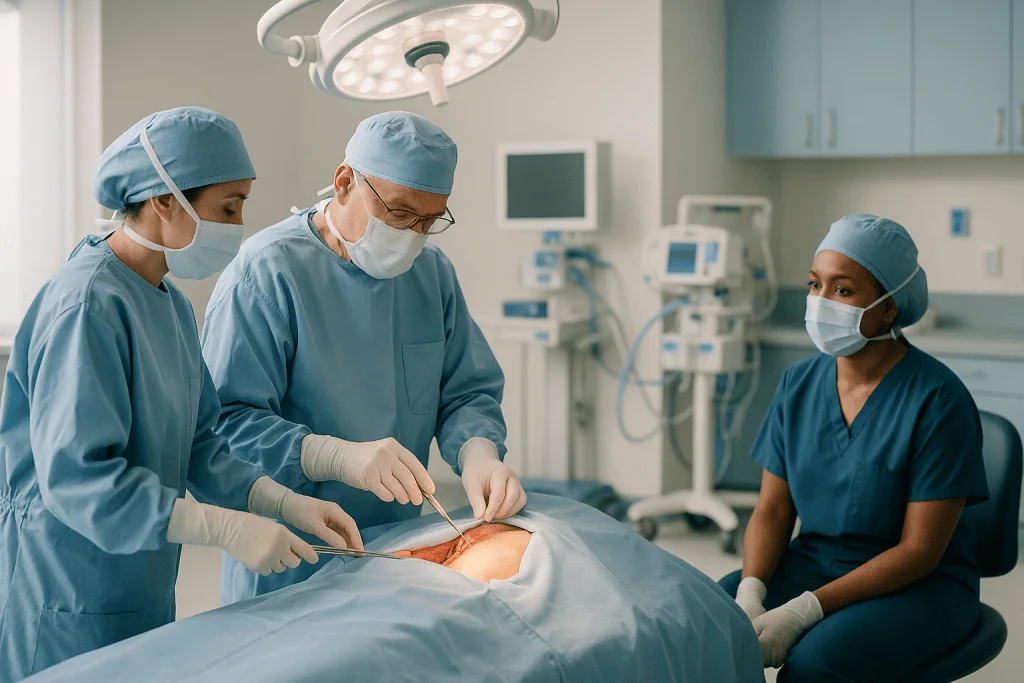
The operation is performed under general anesthetic. Access is either through a single larger incision between the ribs, called a thoracotomy, or through several small incisions using a camera and long instruments, known as video-assisted or robot-assisted thoracoscopic surgery. The minimally invasive approach is now widely used for early-stage tumors because it generally means less pain and a shorter hospital stay, though the surgeon decides based on the tumor’s location and the person’s anatomy (Johns Hopkins Medicine).
Once the lobe or segment is removed, the surgeon closes the airway and blood vessels that supplied it, places a drain to remove air and fluid from the chest, and closes the incisions. The remaining lung gradually expands to fill some of the space. A pathologist then examines the removed tissue and lymph nodes under a microscope, which produces the most accurate stage available and can reveal features that were invisible on scans.
That pathology report is one of surgery’s quiet advantages. If cancer cells are found in a lymph node that looked normal on imaging, the team may recommend additional treatment such as chemotherapy after recovery. Without surgery, that information has to be inferred from scans and needle biopsies, which are good but not perfect.
How targeted radiotherapy (SABR or SBRT) works
Stereotactic ablative radiotherapy delivers a very high dose of radiation to a precisely mapped tumor in a small number of sessions, with the aim of destroying the cancer cells while the surrounding lung receives far less. The word stereotactic refers to the three-dimensional coordinate system used to aim the beams; ablative means the dose is intended to eliminate the tissue it targets rather than merely shrink it (National Cancer Institute).
The process begins with a planning scan. You lie in a custom mold or on a firm support so that your position can be reproduced exactly at each visit. Because the lungs move with every breath, the team also maps how the tumor travels during breathing, sometimes using a four-dimensional CT scan or a breath-hold technique. Physicists and the radiation oncologist then design a plan in which many narrow beams converge on the tumor from different angles. Each beam on its own carries a modest dose; where they intersect, the dose is intense.
Treatment itself is painless. You lie still on the machine’s table while it rotates around you, and each session commonly lasts well under an hour including set-up, with most of that time spent on positioning checks. The full course is typically completed in about one to two weeks, in a few sessions rather than the daily visits over several weeks that conventional radiotherapy requires (NHS; National Cancer Institute). There is no anesthetic, no incision and usually no hospital stay.
Radiation does not remove the tumor. It damages the DNA of cancer cells so they can no longer divide, and the treated area slowly shrinks and scars over months. On follow-up scans, that scar can look like a persistent shadow, which is one reason radiotherapy follow-up relies on careful imaging over time rather than a single confirmatory picture.
Surgery vs radiation early stage lung cancer: what the evidence actually shows
The honest summary is this: surgery remains the standard of care for people who can safely have it, SABR is the standard for those who cannot, and for the group in between, the evidence is thinner than anyone would like. Most guidelines, including those summarized by the National Cancer Institute and the NHS, describe surgery as the preferred first-line treatment for medically fit people with stage I non-small cell lung cancer, with stereotactic radiotherapy recommended when a person is not a surgical candidate or declines an operation.
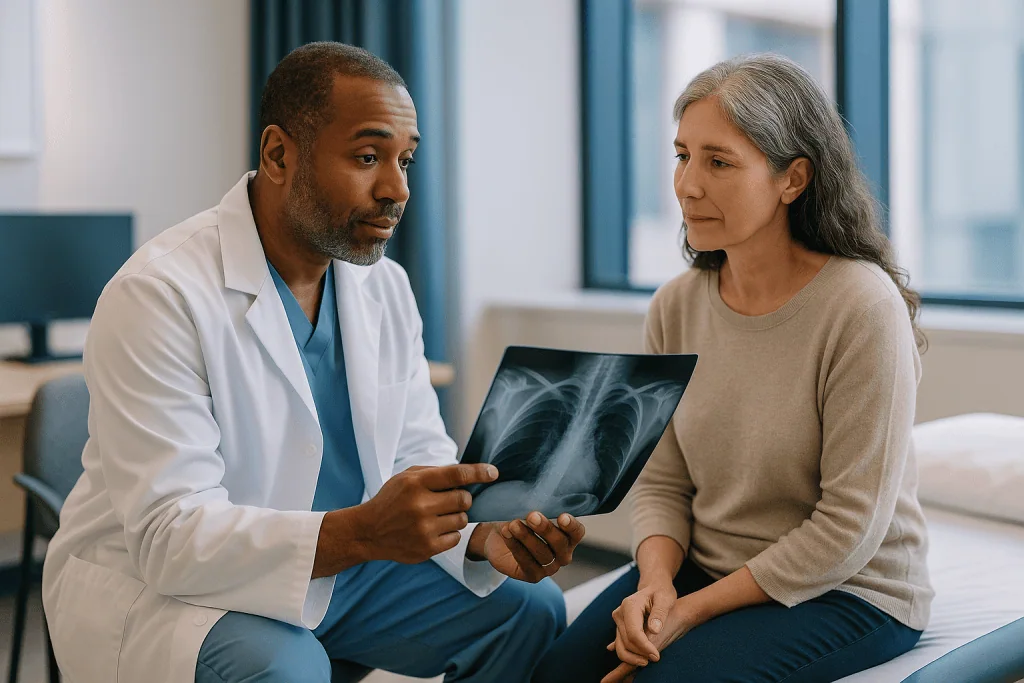
Why not simply run a head-to-head trial? Researchers tried. Two randomized trials that set out to compare SABR directly with lobectomy in people fit for surgery both closed early because too few participants agreed to be randomly assigned. Understandably, many people had a strong preference one way or the other. A pooled analysis of the small number who did enroll suggested SABR held up well over the follow-up period, but the authors and subsequent commentators were clear that the sample was far too small to overturn the surgical standard (PubMed, pooled analysis of two randomized trials).
Large observational studies, which compare people who happened to receive one treatment or the other, have generally found that surgery is associated with better long-term outcomes. Those comparisons are hard to interpret, because people sent for radiotherapy tend to be older and sicker to begin with. Statistical adjustment narrows the gap but cannot fully remove it. Newer randomized trials are under way, and until they report, the appropriate language is that surgery has the longer and stronger track record, that SABR is highly effective at controlling the treated tumor, and that neither has been proven superior in a fair comparison among people eligible for both.
Stage 1 lung cancer treatment options: who is usually offered surgery, and who is asked to consider radiotherapy instead
Suitability for surgery comes down to whether a person can withstand an operation and live comfortably with less lung afterward. Lung function tests are central. A lobectomy removes one of five lobes, and if breathing is already limited by emphysema or chronic bronchitis, losing that much reserve may leave someone breathless with everyday activity. Heart health matters too, since general anesthesia and the stress of a chest operation place demands on the cardiovascular system (Mayo Clinic).
People most often offered surgery first have a small, peripheral tumor, adequate lung function, no serious heart or kidney disease, and the ability to walk and climb stairs without much difficulty. Age on its own is not a barrier; fitness is what the team assesses.
People commonly steered toward SABR fall into a few groups:
- Those whose lung function is too poor to tolerate losing a lobe or segment.
- Those with significant heart disease or other conditions that make anesthesia risky.
- Those who have already had part of a lung removed for an earlier cancer.
- Those who, after hearing both options, decide they do not want an operation.
A third group is sometimes asked to wait rather than treat immediately. Very small, faint nodules that look like ground-glass on CT can grow so slowly that surveillance with repeat scans is reasonable, and treating them straight away might mean an operation for something that would never have caused harm. Waiting in this sense is active, with scans at set intervals, and it is a recommendation the team makes only when the imaging features are reassuring (Mayo Clinic).
Being told you are not a surgical candidate can feel like being handed a second-best option. In practice, it means the team judged that the risks of an operation outweighed its advantages for you specifically, and that a well-established alternative is available.
Which tests shape the decision, and why staging is not a formality
Before either treatment is recommended, the team wants to be confident the cancer really is confined to the lung. Treating a tumor as early-stage when it has already reached the central lymph nodes leads to the wrong plan, so staging tests carry real weight.
A PET-CT scan combines a CT picture with a tracer that highlights metabolically active tissue. Cancer cells tend to take up the tracer, so the scan helps show whether lymph nodes or distant organs are involved. When nodes in the center of the chest look suspicious, the team may sample them directly with a needle passed through a bronchoscope, a thin camera tube guided into the airways, in a procedure called endobronchial ultrasound. A brain scan is often added because lung cancer can spread there quietly (National Cancer Institute).
A tissue biopsy confirms the diagnosis. For people heading to surgery, the operation itself can sometimes serve as the biopsy, since the whole tumor is removed and examined. For SABR, a needle biopsy beforehand is preferred wherever it is safe, because radiotherapy leaves no specimen to check. Occasionally a nodule sits somewhere a needle cannot reach safely, and the team may proceed on strong imaging evidence alone after discussing the uncertainty with the patient.
Fitness tests round out the picture. Spirometry measures how much air you can move and how fast. A gas transfer test measures how well oxygen crosses into the blood. Some centers add a walking test or an exercise test on a bike to see how the heart and lungs perform under load. The results are not pass-or-fail marks; they are numbers the team weighs against the expected loss of lung tissue from the planned operation (Mayo Clinic).
SBRT vs surgery lung cancer: the two options side by side
A table cannot capture everything that goes into an individual decision, but it does make the practical differences easier to hold in mind. The rows below draw on general descriptions from the NHS, MedlinePlus and the National Cancer Institute.
| Question | Surgery (lobectomy or segmentectomy) | SABR or SBRT |
|---|---|---|
| What is done | Tumor and surrounding lobe or segment removed; lymph nodes sampled | High-dose radiation focused on the tumor; nothing removed |
| Anesthetic | General anesthetic | None |
| Hospital stay | Usually several days to about a week | Usually none; outpatient visits |
| Treatment duration | One operation | A few sessions over about one to two weeks |
| Tissue for pathology | Yes, full tumor and nodes examined | Only the pre-treatment biopsy |
| Effect on lung capacity | Permanent loss of the removed tissue | Localized scarring; modest change for most |
| Main short-term risks | Air leak, infection, bleeding, heart rhythm changes, pain | Fatigue, cough, skin redness, chest wall soreness |
| Main longer-term risks | Chronic incision pain, breathlessness if reserve was limited | Radiation pneumonitis, rib fracture, chest wall pain |
| Follow-up imaging | Scans look for new disease | Scans must distinguish scar from regrowth |
| Who it usually suits | People fit enough for an operation | People not fit for surgery or who decline it |
Two rows deserve a second look. The pathology row explains why surgeons argue their approach gives the most complete information; the anesthetic and hospital rows explain why radiation oncologists point out that SABR can be offered to people surgery would leave behind. Both are right, which is exactly why the decision is made jointly.
What are the risks and side effects of each treatment?
Every effective treatment carries risk, and the useful question is not which option is risk-free but which set of risks fits your situation. Surgery’s risks are concentrated in the first days and weeks. Air can leak from the cut edge of the lung into the chest and delay removal of the drain. Pneumonia, wound infection, bleeding and irregular heart rhythms can occur, and blood clots in the legs or lungs are a recognized hazard after any major operation. Pain around the incision is expected and is managed with a planned combination of medicines and, often, a nerve block placed during the operation; the anesthetic team, not this article, decides what is appropriate. A small proportion of people experience longer-lasting discomfort along the ribs where the instruments passed (MedlinePlus; Johns Hopkins Medicine).
The most important surgical risk is death in the period around the operation. It is uncommon after lobectomy in fit people, and lower still with minimally invasive approaches, but it is not zero, and surgeons discuss it openly during consent. It rises with age, poorer lung function and heart disease, which is precisely why those factors push a recommendation toward radiotherapy.
SABR’s side effects tend to be milder and arrive on a slower schedule. Fatigue and a dry cough during and shortly after treatment are common. Over the following months, some people develop radiation pneumonitis, an inflammation of lung tissue around the treated area that causes cough, breathlessness or low-grade fever and is usually treated with anti-inflammatory medicines prescribed by the team. Tumors close to the chest wall can lead to rib soreness or, occasionally, a rib fracture. Tumors near the large central airways or the heart are treated more cautiously, sometimes with more sessions, because those structures tolerate high doses poorly (National Cancer Institute).
Neither list is exhaustive, and your own team will tailor the discussion to the location of your tumor and your health.
What do the following days and weeks usually look like?
After surgery, most people wake in a recovery area with a chest drain, an oxygen mask and a drip. Nurses and physiotherapists encourage sitting up, deep breathing and walking within the first day, because moving air into the lower lungs and moving blood through the legs are the best defenses against pneumonia and clots. The drain comes out once air and fluid stop collecting, often within a few days. Hospital stays after lobectomy typically run several days to about a week, shorter for minimally invasive operations and longer if complications arise (MedlinePlus).
At home, expect tiredness and soreness that ease week by week. Walking is encouraged from the start; lifting heavy loads and vigorous exercise wait until the team clears you. Many people return to desk work within a few weeks and to more physical roles over a longer period, though these are typical ranges rather than targets, and the surgical team sets the pace for each person (Johns Hopkins Medicine). Breathlessness on hills or stairs is common at first and usually improves as the remaining lung adapts.
SABR looks entirely different. You go home after each session, and most people continue normal routines throughout the one to two weeks of treatment. Fatigue often builds toward the end and lingers for a few weeks afterward. A cough or mild skin redness over the treated area may appear. The first follow-up scan is usually scheduled a few months later, because changes in the treated lung take time to settle and an earlier picture can be misleading (National Cancer Institute).
In both cases, the first follow-up appointment is where the team confirms the plan for surveillance, usually a CT scan at regular intervals for several years, and discusses whether any additional treatment is advised based on the final pathology or imaging.
Why the pathology report can change what happens next
One reason surgeons place such weight on removing the tumor is the information that comes back from the laboratory. The pathologist measures the tumor precisely, examines its edges to confirm the margin is clear, notes how aggressive the cells look, and checks every lymph node that was sampled. Roughly one in several people whose scans suggested stage I disease turn out, on the pathology bench, to have a higher stage because a node contained cancer cells too few to show on PET-CT. Exact proportions vary between studies and populations, and your team can quote figures relevant to your case (National Cancer Institute).
That upstaging matters because it changes the recommendation. When nodes are involved, or when the tumor is larger than a certain threshold, guidelines generally advise a course of chemotherapy after recovery, known as adjuvant treatment, to reduce the chance of the cancer returning elsewhere. For some tumors with particular genetic changes, targeted oral medicines or immunotherapy may be discussed. These decisions rest entirely with the oncology team, and the point here is simply that surgery generates the data on which they are based.
With SABR, the team relies on the pre-treatment biopsy, the PET-CT and any node sampling done through the bronchoscope. Those tools are good, and in most people with small peripheral tumors they are accurate enough. Where suspicion about the nodes lingers, the team may recommend sampling them before radiotherapy so that nothing is missed. If a person cannot have surgery, the absence of a full pathology report is accepted as part of the trade-off, and surveillance imaging carries more of the load in detecting any problem early.
The molecular tests that guide newer medicines can be run on a needle biopsy, so choosing radiotherapy does not close the door to those options if they are ever needed.
Does age alone decide surgery vs radiation for early-stage lung cancer?
Older adults are more likely to be offered SABR, and it is fair to ask whether that reflects biology or assumption. The evidence supports fitness, not birth date, as the deciding factor. A person in their late seventies who walks daily, has good lung function and no significant heart disease can and often does have a lobectomy safely. A person a decade younger with severe emphysema and a previous heart attack may be far better served by radiotherapy (Mayo Clinic).
What does change with age is the likelihood of other conditions and the amount of physiological reserve available for recovery. That is why formal assessment matters more than a number. Some centers use structured frailty screening, which looks at walking speed, grip strength, unintended weight loss and how independently a person manages daily tasks, to identify who might struggle after surgery. Others use exercise testing. The goal is the same: to predict how the individual, not the average patient of that age, will fare.
Preferences also shift with age and circumstance, and they are legitimate inputs. Someone caring for a partner at home may reasonably weigh a week in hospital and several weeks of restricted activity differently from someone with no dependents. Someone with a strong wish to know exactly what was removed may lean toward surgery even at a slightly higher short-term risk. Teams are trained to elicit these priorities, and if yours has not asked, it is worth raising them.
A final point about time. Lung cancer treatment decisions are rarely emergencies, but they should not drift either. Guidelines encourage completing staging and starting treatment within a matter of weeks of diagnosis, and if you feel the process is stalling, asking your team for a timeline is entirely appropriate (NHS).
What people often get wrong
Myth: radiotherapy is only for people who are too sick for anything else. That was closer to true when radiotherapy meant weeks of low-dose treatment with limited effect. Modern SABR is a precise, high-dose technique that controls the treated tumor in the large majority of cases, and guidelines list it as a standard option for early-stage disease, not a consolation prize (National Cancer Institute).
Myth: surgery removes the cancer, so nothing more is ever needed. Surgery removes what can be seen and felt. Whether further treatment is advised depends on the pathology report, and some people are recommended chemotherapy or other therapy afterward. Follow-up scans continue for years regardless of the treatment chosen.
Myth: if a trial did not prove surgery is better, the two must be equal. Absence of a completed randomized comparison is not the same as proof of equivalence. Surgery has decades of outcome data; SABR has strong but shorter follow-up. The most accurate statement is that they have not been fairly compared in people eligible for both, and ongoing trials are addressing that gap (PubMed, pooled analysis of two randomized trials).
Myth: a keyhole operation is a minor procedure. Smaller incisions reduce pain and speed recovery, but the same amount of lung is removed and the same internal work is done. It is major surgery under general anesthetic.
Myth: the shadow still visible on the scan after radiotherapy means the treatment failed. Radiation leaves scar tissue that can persist or even appear to enlarge for a time. Radiologists use specific features and, when needed, PET scans to tell scar from regrowth, which is why the team asks for patience with early images.
Myth: choosing radiotherapy closes the door on surgery. If a tumor does regrow after SABR, surgery is sometimes still possible, and the reverse is also true. Neither choice necessarily ends the conversation.
Questions to ask your care team
Consultations move fast, and it helps to arrive with questions written down. Bring someone with you if you can, and ask whether the meeting can be recorded or summarized in writing. The following are the questions that tend to unlock the most useful answers.
- What stage do you believe this cancer is, and how confident are you? Which tests support that?
- Have my lymph nodes been sampled directly, or is the assessment based on imaging alone?
- Am I considered a good candidate for surgery? If not, which specific findings led to that judgment?
- If surgery is recommended, would it be a lobectomy or a segmentectomy, and by open or keyhole approach? Why that choice for my tumor?
- If radiotherapy is recommended, how many sessions are planned and why? Is my tumor near any structure that makes the plan more cautious?
- What are the main risks of each option for someone with my lung function and medical history, in numbers if you have them?
- How will my breathing change after each option, day to day?
- What would follow-up look like, and how would you tell scar tissue from regrowth after radiotherapy?
- If the pathology after surgery shows something unexpected, what might you recommend next?
- Was my case discussed at a multidisciplinary meeting? Can I hear the radiation oncologist’s view as well as the surgeon’s, or the reverse?
- Is there a clinical trial comparing these treatments that I could consider?
- How long can I reasonably take to decide without affecting the outcome?
You are entitled to ask for a second opinion and to meet both specialists before deciding. Good teams welcome the request, because a decision made with full understanding is one people tend to feel settled about afterward, whichever way it goes (NHS).
When to call your doctor
Both treatments come with a contact number for the team, and using it is expected, not a nuisance. After surgery, call the same day if you develop a fever, new or worsening shortness of breath, a rapid or irregular heartbeat, increasing redness, swelling or discharge around the incision, or pain that is escalating rather than easing. Swelling, warmth or pain in one calf can signal a blood clot in the leg. Sudden chest pain with breathlessness, coughing up blood, fainting, or lips and fingertips turning blue are emergencies: call your local emergency number rather than waiting for the clinic to open (MedlinePlus).
During and after radiotherapy, contact the team if you develop a cough that is getting worse over days, breathlessness that is new or limits ordinary activity, a temperature, chest pain that is sharp or worsening, or pain in the ribs over the treated area severe enough to affect sleep. These may indicate radiation pneumonitis or other complications that respond better when treated early. Coughing up blood at any point should prompt a same-day call (National Cancer Institute).
In the longer term, whichever treatment you had, report new persistent cough, unexplained weight loss, hoarseness, bone pain, headaches or changes in vision or balance, or a return of symptoms that resemble those before diagnosis. These do not mean the cancer has returned, but they are the signs your team wants to hear about between scheduled scans.
Every threshold in this article is a general guide. Your own team may set stricter or more specific instructions based on your operation, your radiotherapy plan and your other conditions, and their written guidance takes precedence. When in doubt, call; the team would rather hear from you unnecessarily than not at all.
Frequently asked questions
Is radiotherapy as good as surgery for lung cancer that is caught early?
Not proven equal, and not proven worse, in people eligible for both. Surgery has the longer track record and guidelines list it first for fit patients, while stereotactic radiotherapy controls the treated tumor very effectively and is standard when surgery is too risky. The head-to-head trials in surgical candidates closed early for lack of participants, and new ones are ongoing. Your team weighs the available evidence against your own fitness and priorities.
What is the typical lobectomy recovery time?
Hospital stays after lobectomy usually run several days to about a week, shorter with keyhole approaches, according to MedlinePlus and Johns Hopkins Medicine. Most people are walking within a day, return to light activity over a few weeks, and build back to more strenuous exercise over a longer period set by their surgical team. Breathlessness on stairs is common early on and usually improves as the remaining lung adapts.
What is the difference between SBRT and SABR?
They are two names for the same technique. SBRT, stereotactic body radiation therapy, is the term generally used in the United States; SABR, stereotactic ablative radiotherapy, is used in the UK and much of Europe. Both describe a very high dose of precisely aimed radiation delivered to a small tumor in a few sessions, with the intention of destroying it while sparing surrounding lung.
Why was I told I am not a candidate for lung surgery?
Most often because lung function tests suggested that losing a lobe or segment would leave you significantly breathless, or because heart disease or another condition makes general anesthesia and a chest operation unusually risky. It is a judgment about your safety, not about the seriousness of the cancer. Ask the team which specific results drove the decision and whether anything, such as a segmentectomy, could change it.
Can I have a segmentectomy instead of a lobectomy?
For small peripheral tumors, some surgeons offer segmentectomy, which removes less lung and preserves more breathing capacity. Whether it is appropriate depends on the tumor’s size, position and appearance on scans, and the surgeon’s assessment of whether a clear margin and adequate lymph node sampling can be achieved. It is a reasonable question to raise, and the team will explain why one operation suits your tumor better than the other.
Do I need a biopsy before radiotherapy?
Wherever it is safe, yes. Because radiotherapy does not produce tissue for the pathologist, a needle biopsy beforehand confirms the diagnosis and allows molecular testing that may matter later. Occasionally a nodule sits where a needle cannot reach safely, and the team may proceed on strong imaging evidence after explaining the uncertainty. Lymph nodes may also be sampled through a bronchoscope if scans raise any doubt about them.
Will I need chemotherapy after surgery for early-stage lung cancer?
Not always. The recommendation depends on the pathology report, particularly the tumor’s size and whether any sampled lymph nodes contained cancer cells. Many people with small, node-negative tumors need no further treatment beyond surveillance scans. When features suggest a higher risk of recurrence, the oncology team may advise adjuvant chemotherapy or other therapies. That decision sits with them and is made after you have recovered from the operation.
How do doctors know radiotherapy worked if the shadow is still there?
Radiation leaves scar tissue that can persist, and sometimes appears to enlarge, for months after treatment. Radiologists look for specific patterns on repeat CT scans and, when needed, use PET imaging to distinguish inactive scar from active regrowth. That is why the first follow-up scan is usually scheduled a few months after treatment rather than immediately, and why early images are interpreted cautiously.
Can surgery still be done if the cancer comes back after SBRT?
Sometimes. If a tumor regrows in the treated area and the person is fit enough, surgery can be considered, though scarring from radiation can make the operation more complex. Repeat radiotherapy or other treatments may also be options depending on the location and extent. Choosing radiotherapy first does not permanently rule out surgery, and the reverse is also true; each situation is reassessed by the multidisciplinary team.
How quickly do I need to decide between stage 1 lung cancer treatment options?
Early-stage lung cancer is not an emergency, but decisions should not drift for months. Guidelines encourage completing staging tests and starting treatment within weeks of diagnosis. Taking a couple of weeks to meet both specialists, seek a second opinion and think it through is generally reasonable. Ask your team for a specific timeline for your case so you can weigh the options without unnecessary pressure or delay.
References
This article is for general information only and is not a substitute for professional medical advice. Please consult a qualified doctor about your individual situation.

More from the Blog

When Targeted Therapy Stops Working: Resistance, Repeat Biopsies and the Next Options
When targeted therapy stops working, it usually means the cancer has found a way around the drug, a process called acquired resistance. The care…
Why Cystoscopy Surveillance Continues for Years After Bladder Cancer Treatment
Cystoscopy surveillance after bladder cancer continues for years because the disease has one of the highest recurrence rates of any solid tumor, and new…

Radiation Precautions After Radioiodine Treatment: Distance, Sleeping Alone and Hygiene
Radiation precautions after radioactive iodine usually mean keeping extra distance from other people, sleeping alone, and taking care with urine, saliva and sweat for…

How Acute Lymphocytic Leukemia Treatment Runs in Phases, From Induction to Maintenance
Acute lymphoblastic leukemia is treated in sequential phases rather than one course. Induction, usually about four weeks, aims to clear leukemia cells from the…

What Sarcoma Follow-Up Involves: Scheduled Imaging, Wound Review and Function Checks
Sarcoma follow-up combines scheduled imaging, wound checks and function assessments. Guideline consensus suggests chest imaging by CT or X-ray, plus MRI or ultrasound of…

Flying Home After Radioiodine Treatment: Airport Detectors, Timing and What to Carry
Flying after radioactive iodine treatment is usually possible once your treating team confirms your radiation level has fallen enough for close contact with other…