

Telehealth: What Can Be Diagnosed on a Video Call and What Cannot
Key Takeaways
- A video call transmits sight and sound but not touch, amplified chest sounds or instrument views, so conditions diagnosed by palpation, stethoscope, otoscope or lab test remain in-person work.
- Telehealth visits in a large US practice sample rose 154 percent in the last week of March 2020 versus 2019, according to CDC data, and most were for conditions other than COVID-19.
- A Cochrane review of randomized trials found moderate-certainty evidence that telemedicine modestly lowers glycated hemoglobin in diabetes, with no signal of harm compared with usual care.
- Video-delivered psychotherapy has repeatedly matched in-room therapy in randomized trials, which is why home-based mental health telehealth was made permanent in US Medicare.
- Ordinary medicines can be prescribed after a video evaluation, but controlled substances generally require an in-person exam under federal law, with temporary exceptions that have been extended since 2023.
- A still photo of a rash taken in daylight often gives a clinician more diagnostic detail than compressed live video, so upload images before the call.
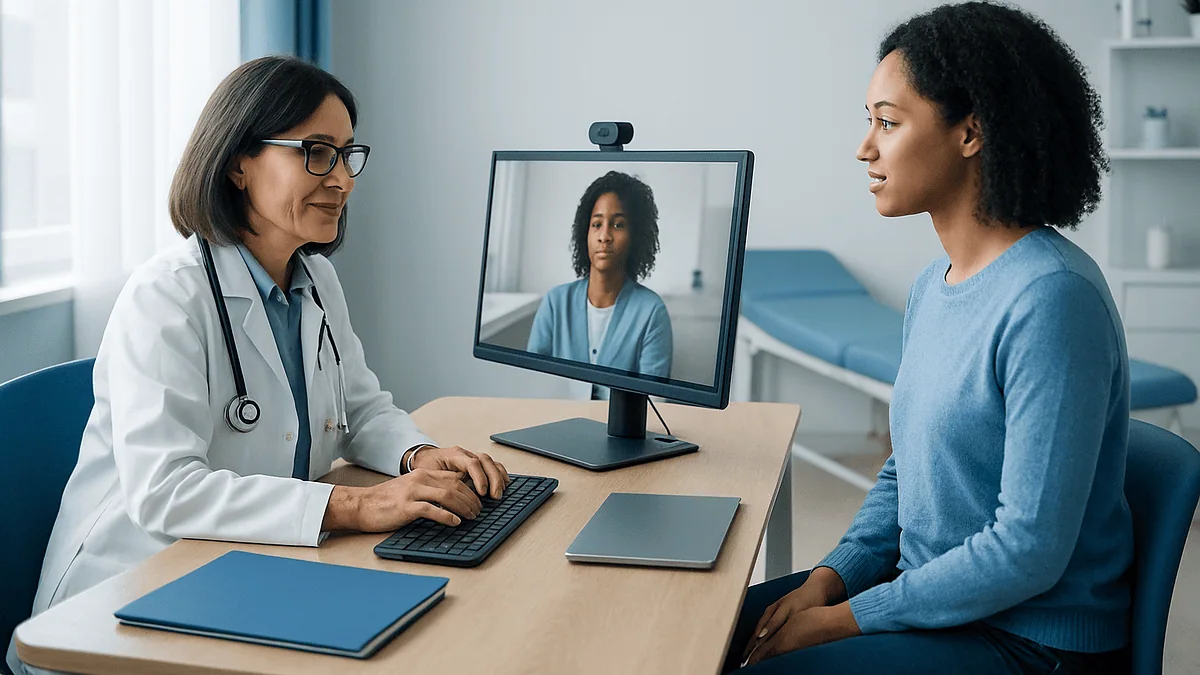
Telehealth can reliably assess conditions a clinician diagnoses mostly by history and by looking: many rashes, mental health concerns, medication follow-ups, chronic disease check-ins and minor infections such as pink eye or uncomplicated urinary symptoms. It cannot replace hands-on examination, imaging or laboratory tests, so ear infections, strep throat, abdominal pain, chest pain, injuries and anything needing a physical exam still call for in-person care.
A father holds his phone up to his toddler’s ear at 9 p.m., tilting it toward the lamp, while a pediatrician on the screen squints and says, gently, that she cannot see the eardrum this way. That small scene, repeated in living rooms across the country, explains why telehealth is back at the top of search results as of January 2026: the temporary US Medicare rules that let most people take video visits from home have entered another expiry-and-extension cycle, and viral posts claim that a phone camera plus an app can now diagnose ear infections, strep throat and pneumonia without a clinic.
Both stories hide the same question. A video call is a remarkably good window for some kinds of medicine and a poor one for others, and the difference is not about how modern the software is. It is about what a diagnosis actually requires.
Here is what a camera can carry, what it cannot, and how strong the evidence behind each answer really is.
What is meant by telehealth?
Telehealth is the use of phones, video, secure messaging and connected devices to deliver health care and health information at a distance. The word covers more than a face-to-face video appointment. MedlinePlus groups several activities under it: live video or phone visits, remote patient monitoring (a home blood pressure cuff or glucose meter that sends readings to a clinic), patient portals for messages and results, and store-and-forward care, in which you send a photo or recording that a clinician reviews later.
Telemedicine is the narrower term. It usually means a licensed clinician diagnosing or treating a specific patient remotely, which is the part of telehealth this article is about. Telecare, a phrase more common in the UK than the US, refers to alarms and sensors that help people live safely at home, such as fall detectors.
The distinction matters because the evidence differs. Remote monitoring of blood pressure has randomized trial support. A live video visit for a new, undiagnosed symptom is a different exercise, and its limits are physical rather than technical. A camera transmits sight and sound. It does not transmit the feel of a swollen lymph node, the sound of crackles through a stethoscope, the reading on a pulse oximeter you do not own, or the result of a throat swab.
Clinicians describe an in-person encounter as history, examination and investigation. Telehealth delivers the first of these almost completely, the second only partially, and the third not at all unless you already have a device or a test at home. Everything that follows flows from that simple accounting.
What changed recently
The current surge of interest sits on top of a longer timeline. According to the CDC’s Morbidity and Mortality Weekly Report, telehealth visits at a large sample of US practices rose 154 percent in the last week of March 2020 compared with the same week in 2019, as clinics closed their doors during the first wave of COVID-19. That report also documented what those visits were for: mostly conditions other than COVID-19, which is the first large-scale hint that video care had found a permanent role.
The federal COVID-19 public health emergency ended on May 11, 2023, and with it several rules quietly reverted. Some flexibilities were written into law only temporarily, so US Medicare coverage for home-based video visits outside mental health has been extended in short increments since then rather than made permanent. Each approaching deadline produces headlines, and each headline sends people to search engines asking whether telehealth is going away. The short answer, for most services, has so far been no, with the details set by Congress and by individual insurers.
Prescribing rules moved on a parallel track. Under the Ryan Haight Act, controlled medicines normally require an in-person examination before a clinician prescribes them remotely; the Drug Enforcement Administration has extended pandemic-era exceptions several times since 2023 while it drafts permanent rules.
What has not changed is the underlying medicine. Mayo Clinic’s consumer guide still lists the same strengths (convenience, access for people far from specialists, follow-up care) and the same limits (no hands-on examination, technology gaps for some patients) that clinicians described before the pandemic. The policy calendar keeps shifting. The eardrum stays where it always was.
What can be diagnosed on a video call?
Some diagnoses are made almost entirely from the story a patient tells and from what a trained eye can see. Those travel well over video.
Skin is the clearest example. A rash’s color, distribution, borders and texture are visible if lighting is decent and the camera is steady. Clinicians routinely assess contact dermatitis, eczema flares, acne, hives, shingles in its typical band-like pattern, and many insect bites this way. Photographs sent ahead of time often help more than live video, because a still image can be enlarged.
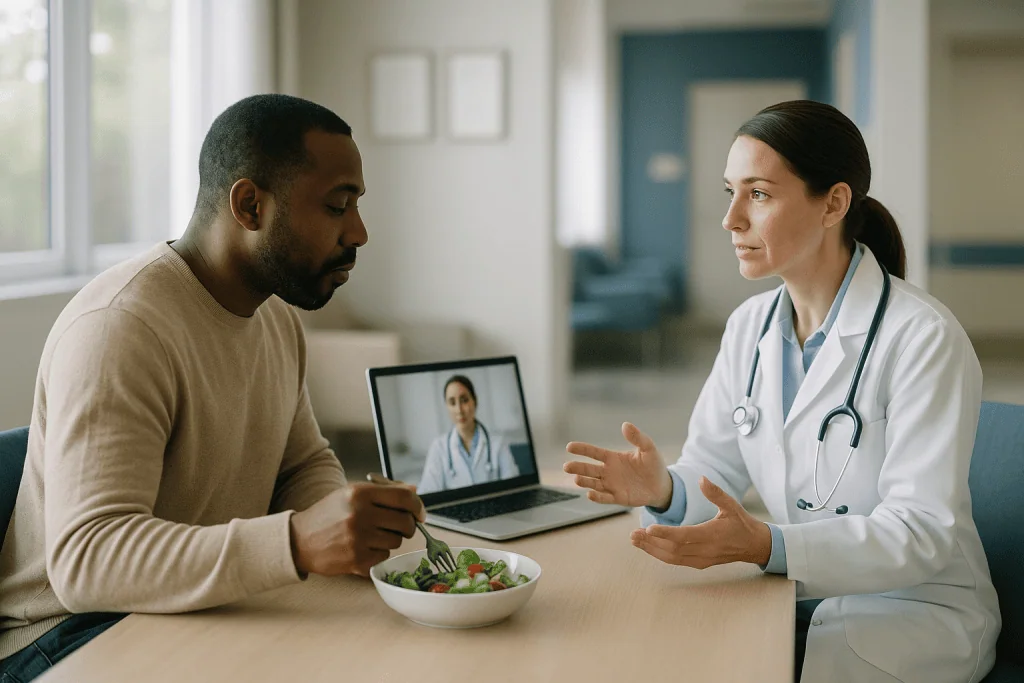
Mental health is the second large category. Depression, anxiety, insomnia and attention concerns are diagnosed through structured conversation and validated questionnaires, none of which needs a room. Follow-up for stable, ongoing conditions is the third: reviewing blood pressure readings from a home cuff, checking glucose logs, adjusting inhaler technique, discussing lab results that were drawn at a clinic.
Common minor infections form a fourth group when the presentation is typical. Uncomplicated urinary symptoms in an otherwise healthy adult, viral conjunctivitis (pink eye), cold sores, a straightforward upper respiratory infection and a first assessment of COVID-19 or influenza symptoms can all be triaged and often managed remotely, especially if a home test result is available.
Notice what these share. In each case the physical exam adds little that the history and a camera cannot supply, or the condition is being followed rather than discovered. That is the honest boundary of a virtual visit: not a list of diseases, but a class of diagnostic tasks.
What cannot be diagnosed over video, and why
The failures of video care cluster around three missing senses: touch, amplified sound, and instrumented sight.
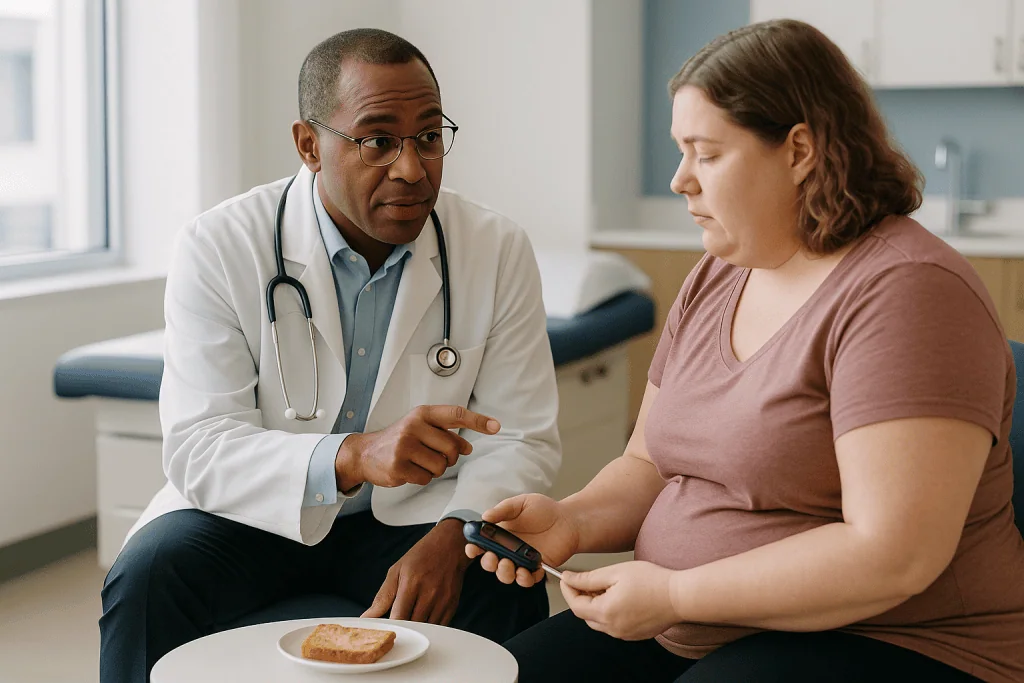
Touch first. Abdominal pain is the classic case. A clinician distinguishing appendicitis from a stomach virus presses on specific points, watches your face, and feels for guarding, the involuntary tensing of muscles over an inflamed area. None of that exists on a screen. The same applies to a possible fracture, a swollen joint, a breast lump, a suspected blood clot in the calf, or the neck stiffness of meningitis.
Amplified sound second. Pneumonia, asthma severity and heart murmurs are assessed with a stethoscope. Video can show labored breathing, and a home pulse oximeter (a fingertip clip measuring blood oxygen) can add a number, but neither replaces auscultation, the act of listening to the chest.
Instrumented sight third. A middle-ear infection is diagnosed by looking at the eardrum through an otoscope, a lit magnifying scope. A phone held at the ear canal shows skin and wax, not the drum. Strep throat looks much like viral pharyngitis; guidelines recommend a rapid antigen test or culture because appearance alone misclassifies a large share of cases. Retinal problems, inner-ear vertigo and most eye injuries need instruments too.
Anything requiring a test on the spot rounds out the list: an electrocardiogram for chest pain, a urine dipstick in a child, blood work for new fatigue. A good telehealth clinician will say so within minutes and redirect you. That redirection is not a failure of the visit. It is the visit working as designed.
Telehealth or in person: a condition-by-condition guide
The table below summarizes where common concerns usually land. It reflects mainstream guidance from sources such as MedlinePlus and Mayo Clinic, and it describes typical, uncomplicated presentations. Your own clinician may reasonably decide differently based on your history.
| Concern | Usual setting | What decides it |
|---|---|---|
| Rash, eczema flare, acne | Video or photo review | Visible features carry the diagnosis |
| Depression, anxiety, insomnia | Video | History and questionnaires; no exam needed |
| Blood pressure or diabetes follow-up | Video with home readings | Data already exist; visit is interpretation |
| Uncomplicated urinary symptoms, adult | Often video | Typical story; in person if fever, flank pain or pregnancy |
| Pink eye | Video | In person if vision change, severe pain or contact lens use |
| Sore throat | Hybrid | Video triage; swab needed to confirm strep |
| Ear pain, child | In person | Eardrum must be seen with an otoscope |
| Cough with fever, shortness of breath | In person | Chest must be listened to; oxygen measured |
| Abdominal pain | In person | Palpation and often imaging or blood tests |
| Injury, possible fracture | In person | Examination and X-ray |
| Chest pain, stroke signs | Emergency services | Time-critical; call 911 |
Two patterns stand out. Conditions in the top rows are either visual or conversational, or the diagnostic work has already been done by a device at home. Conditions further down require a hand, a scope or a test. The middle rows, marked hybrid, are where telehealth adds the most value as a triage step: a short video call that decides whether you need to travel at all.
How a virtual doctor visit actually works
A virtual doctor visit follows the same arc as a clinic appointment, compressed and rearranged. Before the call, most systems ask you to complete an intake form and, ideally, to upload photos or recent home readings. This step is worth taking seriously; a sharp photo of a rash taken in daylight is frequently more useful than the live video feed, which compresses color and detail.
The visit itself opens with identity checks and confirmation of your location. That last part is not bureaucratic fussiness. Clinicians are licensed by state, and most must be licensed where the patient is physically sitting at the time of the call. It also matters for emergencies: if you deteriorate mid-visit, the clinician needs to know where to send help.
Then comes the history, which in a well-run video visit is often longer and more detailed than in person, precisely because the exam options are fewer. Expect to be asked to do things: press on your own belly and report tenderness, walk across the room, show the inside of your mouth under a flashlight, read a thermometer aloud, breathe deeply while the clinician watches your chest and counts.
The visit ends with one of three outcomes. A diagnosis and plan, which may include a prescription sent electronically to a pharmacy you choose. A referral for a test or an in-person exam, sometimes the same day. Or an instruction to seek urgent care now. Mayo Clinic notes that this triage function is one of telehealth’s real strengths: it moves the decision about whether you need to be seen from your kitchen table to a clinician’s screen, without anyone having to guess.
What the evidence actually says about telehealth
Telehealth research is uneven, and a reader deserves to know which claims rest on randomized trials and which on weaker ground.
Strongest: chronic disease monitoring. A Cochrane systematic review of interactive telemedicine (Flodgren and colleagues, 2015, indexed in PubMed) pooled dozens of randomized trials and found that telemedicine for diabetes produced modestly lower glycated hemoglobin, a three-month average of blood sugar, than usual care, with moderate-certainty evidence. Blood pressure telemonitoring showed similar small benefits. The review found no evidence that remote care caused harm compared with in-person care in the conditions studied.
Also strong: mental health. Multiple randomized trials have compared video-delivered psychotherapy with in-room therapy for depression, anxiety and post-traumatic stress and found comparable symptom improvement. This is the most consistent body of evidence in the field.
Moderate: dermatology. Studies comparing teledermatology with in-person diagnosis are largely observational, meaning they compare what actually happened rather than randomizing patients. They generally find good agreement between the two, with agreement highest for inflammatory rashes and lower for pigmented lesions, which is why a suspicious mole usually earns an in-person look.
Weakest: acute new symptoms. There are few rigorous trials of video-only diagnosis for ear pain, sore throat or cough. What exists comes from audit data and expert consensus, and the recurring concern is not missed danger but overtreatment, particularly antibiotics prescribed without a confirming test. Harvard Health’s review of telehealth’s advantages and disadvantages makes the same point: convenience is real, and so is the risk of prescribing on incomplete information.
In short, the evidence supports telehealth most where the diagnosis is already known or where no exam was ever needed.
Can you be prescribed medicine through telehealth?
Yes, in most cases. A licensed clinician who evaluates you by video can send an electronic prescription to a pharmacy for the great majority of ordinary medicines: antibiotics when a bacterial infection is judged likely, inhalers, blood pressure tablets, antidepressants, contraception, topical treatments for skin conditions and refills of long-term medicines. The prescription carries the same legal weight as one written in a clinic.
Controlled substances are the exception, and the rules are stricter for good reason. Under US federal law, medicines with potential for misuse, including many stimulants, sedatives and opioid pain relievers, normally require at least one in-person examination before they can be prescribed remotely. Temporary exceptions introduced during the pandemic have been extended more than once while permanent regulations are finalized, so the practical position depends on the date and on your state’s own rules. A clinician will tell you plainly if your situation requires an in-person visit first.
Two principles apply regardless of the medicine. First, a prescription follows an evaluation, not a request. Reputable telehealth clinicians decline to prescribe when the video visit cannot establish a diagnosis, and a service that promises a specific medicine before anyone has assessed you is a warning sign, not a convenience. Second, the decision to start, change or stop any medicine rests with the clinician who knows your history, and telehealth does not alter that. If you are already taking something prescribed elsewhere, mention it; drug interactions do not care which screen you used.
This article deliberately omits doses, quantities and sourcing. Those belong in a conversation with your prescriber and your pharmacist.
Are insurances still paying for telehealth?
Broadly yes, though the details are a moving target and vary by payer. This section describes the landscape as of January 2026 without figures, because coverage rules change more often than medical evidence does.
Medicare, the US federal program for people 65 and older and some younger people with disabilities, expanded telehealth dramatically in 2020. Two pieces were made permanent: video and audio visits for mental and behavioral health from home, and telehealth in rural settings under long-standing rules. Coverage for other home-based video visits has continued through a series of time-limited extensions passed by Congress, each with its own end date. Whenever one approaches, coverage questions spike online. So far, each has been followed by a renewal, but the pattern is not a guarantee.
Medicaid is administered by states, and most states cover live video visits, with variation in whether audio-only calls are included. Many private insurers cover telehealth, and a number of states have laws requiring parity, meaning a video visit is covered on similar terms to an office visit. Parity laws differ in what they require, so the safest step is a direct question to your plan.
Three questions clarify most situations. Is this specific service covered by video for my plan? Does the clinician need to be in my network? Is an audio-only call covered if my video fails? Your insurer’s member line and the clinic’s billing staff can answer all three before you book.
One neutral observation: coverage debates concern how care is paid for, not whether the care works. A video visit that could not diagnose an ear infection in 2020 still cannot, whatever the reimbursement rules say.
Who is the best telehealth provider?
There is no single best, and any ranking that names one should be read with care. What can be said with confidence is which features predict a safe, useful visit.
The most important is continuity. Evidence on chronic disease management consistently favors care from a team that knows your history and can see your records. A video visit with your own primary care practice, or with a specialist who already treats you, starts from a fuller picture than a one-off call with a stranger. Many practices now offer video slots alongside in-person ones, and that is often the strongest option.
For stand-alone services, look for these markers:
- Clinicians licensed in the state where you will be during the call, with credentials you can verify through your state medical board.
- A clear statement that a prescription is not guaranteed and that some conditions will be redirected to in-person care.
- The ability to send a record of the visit to your regular clinician, so your history stays in one place.
- A platform that complies with US health privacy law, usually stated in plain language on the site.
- A pathway for follow-up if you do not improve, rather than a single closed transaction.
Be cautious of services that advertise a specific medicine by name before any assessment, that promise diagnosis of conditions in the in-person column of the table above, or that discourage you from involving your usual doctor. Johns Hopkins Medicine’s overview of telemedicine’s benefits stresses coordination with your existing care as a core advantage; a service that undermines coordination is trading away the very thing that makes telehealth work.
The best provider, in other words, is the one that fits into your care rather than beside it.
Mental health telehealth: the strongest case
If telehealth has a flagship use, it is psychiatry and psychotherapy. The reasons are both practical and scientific.
Practically, mental health assessment was never a hands-on discipline. A clinician evaluating depression asks about mood, sleep, appetite, concentration, energy and thoughts of self-harm, and uses standardized questionnaires whose scores are as valid typed into a portal as circled on paper. Eye contact, speech rhythm, facial expression and hygiene, the observational elements of a mental status exam, all survive a video connection reasonably well.
Scientifically, this is where randomized trials are most plentiful. Head-to-head studies of cognitive behavioral therapy delivered by video versus in a room have repeatedly found similar reductions in symptom scores and similar rates of completing treatment. Medication follow-up for stable conditions shows equivalent outcomes in most comparisons. US policymakers evidently found this evidence persuasive: home-based mental health telehealth was among the first pandemic-era expansions written permanently into Medicare.
Access is the quieter argument. MedlinePlus and Mayo Clinic both note that telehealth reaches people in areas with few specialists, and psychiatry has some of the widest geographic gaps in US medicine. A rural patient who once faced a three-hour drive for a 45-minute appointment can now be seen from home, and evidence suggests attendance improves when travel disappears.
Limits remain. Someone in acute crisis, with active suicidal intent or psychosis, needs in-person or emergency evaluation, and video clinicians are trained to arrange it. Certain medications used in psychiatry are controlled substances and fall under the prescribing rules described earlier. Within those boundaries, though, this is the corner of telehealth where a patient can expect care that the evidence says is as good as the alternative.
Common myths about telehealth
Viral claims about video care tend to overstate in both directions. Here are the ones circulating most, with what the evidence actually supports.
Myth: a phone camera can diagnose an ear infection. It cannot. The eardrum sits at the end of a curved canal and is visible only with a lit otoscope. Some consumer attachments exist, and photos taken with them can be reviewed remotely, but an ordinary phone camera shows ear canal skin and wax. Guidelines for childhood ear infections still rest on direct visualization.
Myth: telehealth is second-rate care. For the right task, randomized trials find equivalent outcomes, most clearly in mental health and in monitoring diabetes and blood pressure. For the wrong task, it is not second-rate care; it is no diagnosis at all, which is why good clinicians redirect.
Myth: you can get any prescription online. Ordinary medicines, often yes after evaluation. Controlled substances have federal and state requirements, including in-person examination in many situations. Any service promising a named medicine before assessment is operating outside mainstream practice.
Myth: apps can now diagnose pneumonia or strep from a recording. Research prototypes exist for cough analysis and throat images, but none has replaced a stethoscope or a swab in clinical guidelines. The published accuracy studies are small and mostly observational.
Myth: telehealth is ending. Some temporary US payment rules have expiry dates and are renewed in increments. That is a coverage question. The clinical service continues, and mental health coverage from home is permanent under Medicare.
Myth: video visits lead to fewer antibiotics because they are quicker. Audit data point the other way for respiratory infections, with a tendency toward more prescribing without a confirming test. A careful clinician counters this by insisting on a swab when one matters.
How to get the most out of a video visit
A video visit rewards preparation more than an in-person one, because you are supplying half the examination yourself.
Start with light and lens. Sit facing a window or lamp, not with it behind you. Clean the camera. For a skin concern, take two or three photos in daylight beforehand, one wide enough to show location and one close enough to show texture, and upload them or have them ready to share. A coin or ruler beside a lesion gives scale.
Gather your numbers. If you own a thermometer, blood pressure cuff, glucose meter, pulse oximeter or scale, take readings within the hour before the call and write them down. These devices are the closest telehealth gets to a physical exam, and a clinician can do a great deal with a temperature, an oxygen saturation and a heart rate that a camera alone would never reveal.
Write a one-minute version of your story: when it started, what it feels like, what makes it better or worse, what you have tried. Keep your medicine list and allergy list beside you, including supplements. Have a pen for instructions.
Choose the setting. A quiet room with a door gives privacy and lets the clinician hear your breathing. Wear clothing that allows you to show the relevant area without an awkward pause. If a child is the patient, a second adult to hold the phone frees you to hold the child.
Finally, ask the closing question that matters most: what should make me seek in-person care, and how soon? A clear answer to that turns a video visit from a one-time transaction into a safety plan.
When to see a doctor in person, and when to call 911
Telehealth is a front door, not a fortress. Certain signs mean the video call should end and in-person or emergency care should begin, no matter how convenient the screen is.
Call 911 or your local emergency number for:
- Chest pain or pressure, especially with sweating, nausea or pain spreading to the arm or jaw.
- Sudden face drooping, arm weakness or trouble speaking, the warning signs of stroke that the American Heart Association summarizes as FAST.
- Severe difficulty breathing, blue lips, or inability to speak in full sentences.
- Sudden severe headache described as the worst of your life, confusion, seizure or fainting.
- Heavy bleeding that will not stop, a serious injury, or signs of a severe allergic reaction such as throat or tongue swelling.
- Thoughts of harming yourself or others; in the US, the 988 Suicide and Crisis Lifeline is available by call or text.
Seek same-day in-person care for abdominal pain that is severe, localized or accompanied by fever or vomiting; a high fever in an infant under three months; ear pain with discharge or in a child under two; a stiff neck with fever; a swollen, hot or very painful joint; calf swelling and pain on one side; sudden vision loss or eye pain; a possible broken bone; urinary symptoms with fever, back pain or during pregnancy; or any new symptom in someone with a weakened immune system.
Return for in-person assessment if a condition managed by video does not improve within the time your clinician gave you, or worsens at any point. Bring a record of the video visit if you can.
Every decision about testing, treatment and medicines belongs to the clinician evaluating you. A video visit that ends with an instruction to go in has not wasted your time. It has done exactly what the evidence says telehealth does best: sorting what can wait from what cannot.
Frequently asked questions
What is meant by telehealth?
Telehealth is health care delivered at a distance using phones, video, secure messaging and connected devices such as home blood pressure cuffs. It includes live video visits, remote monitoring of readings, patient portals and reviewing photos sent ahead of time. Telemedicine is the narrower term for a licensed clinician diagnosing or treating a specific patient remotely, which is the part most people mean when they book a video appointment.
Is a virtual doctor visit as accurate as an in-person one?
It depends on the task. For mental health assessment, medication follow-up and monitoring diabetes or blood pressure, randomized trials show comparable outcomes. For rashes, observational studies show good agreement with in-person diagnosis. For new symptoms that need a hands-on exam, a scope or a test, such as ear pain, abdominal pain or a cough with fever, video cannot reach a reliable diagnosis and a clinician will redirect you.
Are insurances still paying for telehealth?
Most do, with variation by payer. US Medicare permanently covers home-based mental health telehealth and continues other home video visits through time-limited extensions renewed by Congress. State Medicaid programs and private insurers generally cover live video visits, with differences in audio-only coverage and network rules. Because these rules change, ask your plan directly whether the specific service is covered by video before booking.
Can you be prescribed medicine through telehealth?
Yes, for most ordinary medicines, once a licensed clinician has evaluated you and judged a prescription appropriate; it is sent electronically to a pharmacy of your choice. Controlled substances such as many stimulants, sedatives and opioids follow stricter federal and state rules that often require an in-person examination first. Any decision to start, change or stop a medicine rests with your prescribing clinician.
Who is the best telehealth provider?
No single service is best for everyone. Evidence favors continuity, so a video visit with your own practice is often the strongest option. For stand-alone services, look for clinicians licensed in your state, a clear statement that prescriptions are not guaranteed, records shared with your regular doctor, privacy compliance and a follow-up pathway. Avoid services that advertise specific medicines before any assessment.
Can an ear infection be diagnosed over video?
Not with an ordinary phone camera. A middle-ear infection is diagnosed by viewing the eardrum through an otoscope, and a phone held at the ear shows only canal skin and wax. Some consumer otoscope attachments allow images to be reviewed remotely, but standard guidance still relies on direct visualization, especially in young children. Ear pain with fever, discharge or in a child under two warrants an in-person exam.
Can strep throat be diagnosed by telehealth?
Only partially. A video visit can assess your symptoms and estimate the likelihood of strep, but bacterial and viral sore throats look alike, and guidelines recommend a rapid antigen test or throat culture before antibiotics. Many clinicians use video to triage and then arrange a swab at a clinic or pharmacy. Sore throat with drooling, difficulty breathing or inability to swallow needs urgent in-person care.
What conditions can be treated through telehealth?
Commonly managed conditions include eczema, acne and other visible rashes; depression, anxiety and insomnia; follow-up of high blood pressure, diabetes, asthma and thyroid conditions using home readings; uncomplicated urinary symptoms in healthy adults; pink eye; cold sores; and typical colds, flu or COVID-19 symptoms, particularly with a home test result. The common thread is that the diagnosis rests on history and visual findings rather than hands-on examination.
Is telehealth safe for children?
For many concerns, yes: rashes, behavioral and mental health questions, feeding or sleep advice, and follow-up of known conditions work well by video. Young children more often need in-person exams because ear infections, chest infections and urinary infections in this age group require an otoscope, stethoscope or urine test. Any fever in an infant under three months should be assessed in person without delay.
What should I do if my symptoms get worse after a video visit?
Seek in-person care, and treat the timeline your clinician gave you as the limit. Worsening pain, a rising fever, trouble breathing, confusion or new symptoms mean the original assessment needs updating with an examination and possibly tests. For chest pain, stroke signs, severe breathing difficulty or heavy bleeding, call 911 rather than rebooking a video slot. Bring a record of the earlier visit if you can.
References
- MedlinePlus: Telehealth
- CDC MMWR: Trends in the Use of Telehealth During the Emergence of the COVID-19 Pandemic, United States, January–March 2020
This article is for general information only and is not a substitute for professional medical advice. Please consult a qualified doctor about your individual situation.

More from the Blog

Recovering from Radiotherapy: How Long Until You Feel Better
Most people start to feel noticeably better within a few weeks of their last radiotherapy session, although side effects such as fatigue and skin…
Patient Portals: How to Read Your Own Lab Results Without Panicking
A patient portal is the secure website or app your health system uses to show you appointments, messages, and test results, and since 2021…

Over-the-Counter CGMs: What Glucose Data Means for People Without Diabetes
Over-the-counter continuous glucose monitors such as Stelo and Lingo show adults without diabetes how blood sugar rises and falls through the day. For most…

Smart Rings Compared: Galaxy Ring, Ultrahuman and Oura: What They Measure Well
The Samsung Galaxy Ring, Oura Ring and Ultrahuman Ring Air all use an optical sensor on the finger to track resting heart rate, nighttime…

Palliative Chemotherapy: What the Term Means
Palliative chemotherapy is chemotherapy given with the aim of controlling a cancer rather than curing it. Its goals are to shrink or slow tumors,…
How Radiotherapy Works and How Long Sessions Take
A single external radiotherapy session usually takes about 10 to 30 minutes, and the beam itself is switched on for only a few minutes…