

Total or Partial Thyroidectomy: How Do Surgeons Decide Whether the Whole Gland Comes Out?
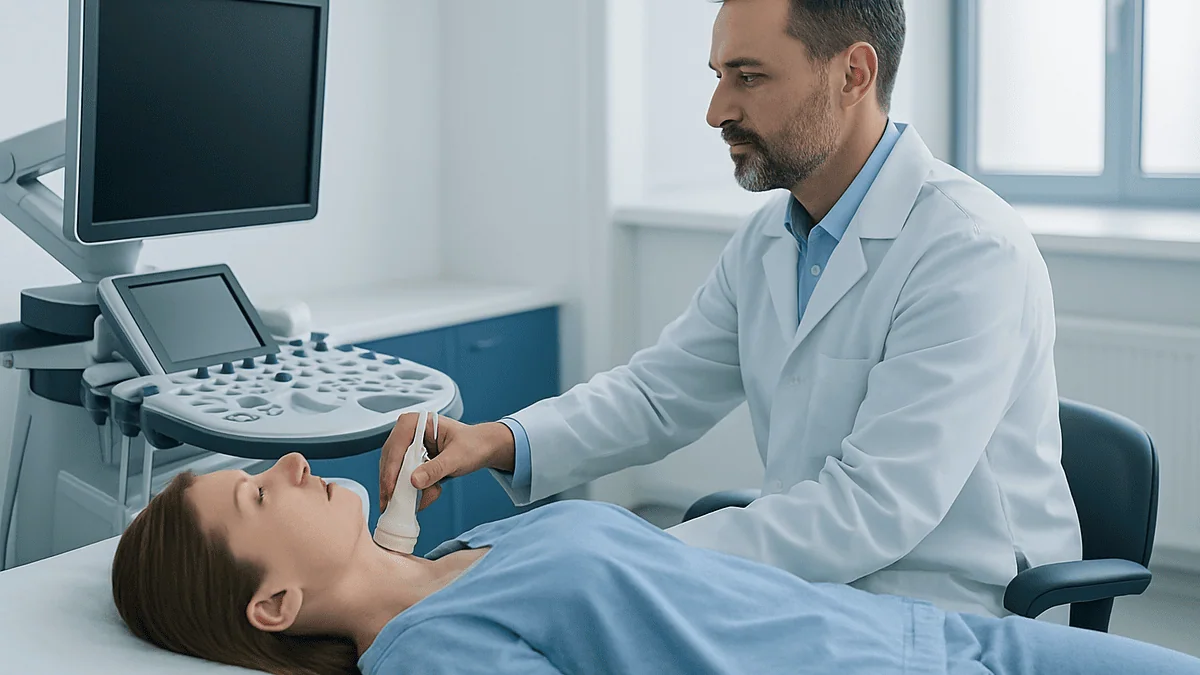
Key Takeaways
- A hemithyroidectomy leaves one nerve and two parathyroid glands entirely untouched, which is why its permanent complication rate is lower than for total thyroidectomy.
- For small differentiated thyroid cancers confined to one lobe, international guidelines now accept lobectomy as an alternative to total thyroidectomy because long-term outcomes are comparable.
- Planned radioactive iodine or thyroglobulin monitoring requires total thyroidectomy, since both depend on almost no normal thyroid tissue remaining.
- The remaining lobe does not regrow a removed lobe; it enlarges modestly to compensate, and a minority of people still end up needing thyroid hormone replacement.
- Temporary low calcium with tingling or cramps is the most common significant complication after total thyroidectomy, and permanent low calcium is uncommon.
- Final pathology, available one to two weeks after a lobectomy, can lead to a recommendation for completion surgery to remove the other lobe.
Surgeons choose between total and partial thyroidectomy mainly on what the gland is doing and why it needs surgery. Removing one lobe (hemithyroidectomy) is often considered for a single benign nodule, an indeterminate biopsy, or a small, contained cancer. Removing the whole gland is more likely with larger or bilateral cancers, Graves disease, or a large goiter affecting both sides. The treating team makes the final call with the patient.
The scan report says a single nodule, 2.3 centimeters, left lobe, biopsy indeterminate. The surgeon draws a butterfly on the back of a leaflet and shades in one wing. “We could take this half,” she says, “or we could take the whole thing. There are good arguments both ways.” The patient nods, and then, in the car park, realizes they have no idea which argument should win.
That conversation is repeated in clinics every day, and the total vs partial thyroidectomy question rarely has a single right answer printed on a scan. It depends on the diagnosis, the size and position of what was found, how the rest of the gland looks, what the parathyroid glands and voice nerves are likely to tolerate, and what the person in the chair values most: fewer operations, or the chance of keeping their own hormone supply.
This explainer walks through how surgeons reason, what the evidence actually supports, and where honest uncertainty remains, so that the next version of that car-park moment comes with better questions.
What total vs partial thyroidectomy actually means
The thyroid is a butterfly-shaped gland low in the front of the neck, wrapped around the windpipe, with two lobes joined by a narrow bridge called the isthmus. In an adult it weighs roughly as much as a few coins, yet it sets the pace for nearly every cell in the body by releasing thyroid hormone. The parathyroid glands, four rice-grain structures that regulate blood calcium, sit on its back surface, and the recurrent laryngeal nerves that move the vocal cords run alongside it.
Thyroidectomy is the surgical removal of some or all of this gland. The main versions are:
- Hemithyroidectomy (thyroid lobectomy): one lobe is removed, usually together with the isthmus. The other lobe stays and keeps working.
- Isthmusectomy: only the central bridge is removed, an option for a small nodule sitting exactly there.
- Total thyroidectomy: the entire gland is removed. Hormone replacement is then needed for life.
- Near-total or subtotal thyroidectomy: a sliver of tissue is left, usually to protect a parathyroid gland or nerve. Many surgeons now use this term rarely, because the remnant seldom produces enough hormone to matter.
Whatever the extent, the operation itself follows a similar shape. Under general anesthesia, the surgeon makes a horizontal incision low on the neck, often in a natural skin crease, separates the thin strap muscles, identifies the nerves and parathyroid glands, and frees the gland from the windpipe. Mayo Clinic describes the whole procedure as typically taking a few hours, and most people spend a night in hospital, with some going home the same day after a lobectomy.
The physical difference between the two operations is a second lobe. The biological difference is far larger, which is why the choice deserves a real conversation rather than a default.
Why would you need a partial thyroidectomy?
Removing half the gland is a deliberately conservative operation, chosen when the problem is confined to one side and the remaining lobe is healthy enough to carry the hormonal load alone. The commonest reasons fall into a few groups.

A benign nodule that is causing trouble. Most thyroid nodules are not cancer, and most need no surgery. A lobectomy enters the picture when a nodule is large enough to press on the windpipe or food pipe, visibly distorts the neck, or has grown steadily across follow-up scans.
An indeterminate biopsy. Fine-needle aspiration, a thin-needle sample of cells examined under a microscope, cannot always say benign or malignant. Certain follicular patterns look identical whether or not they are cancer, because the distinction depends on whether cells have breached the nodule’s capsule or invaded blood vessels, something a needle cannot show. Removing the affected lobe is both the treatment and the final diagnostic test.
A toxic adenoma. A single “hot” nodule that over-produces hormone can be removed with its lobe, leaving the quiet side to resume normal function once the excess hormone has cleared.
A small, contained cancer. The NHS notes that if a thyroid cancer is small and limited to one part of the gland, removing only that half may be all that is needed. International guidelines generally reserve this option for differentiated cancers under about 4 centimeters with no spread beyond the gland and no suspicious lymph nodes on imaging.
The appeal of a lobectomy is practical. One nerve and two parathyroid glands remain entirely untouched, so the risk of permanent voice change or low calcium is lower, and many people avoid daily medication. The trade-off is that pathology occasionally reveals something more extensive than expected, and a second operation may follow.
When is total thyroidectomy usually recommended?
Taking the entire gland is the more definitive path, and surgeons tend to recommend it when the disease process involves both lobes, when the diagnosis demands follow-up that only works without thyroid tissue, or when leaving any gland behind would leave the underlying problem unsolved.
Cancer that is larger, bilateral or already spreading. Tumors above the guideline size threshold, cancer in both lobes, visible growth through the thyroid capsule into neighboring tissue, or lymph node involvement all push toward total removal. The NHS describes total thyroidectomy as the usual approach for larger thyroid cancers and for those that have spread to nearby nodes.
Planned radioactive iodine. Radioactive iodine treatment uses the thyroid’s own hunger for iodine to deliver radiation to leftover thyroid cells after surgery. It only works properly if almost no normal gland remains to soak it up first, so a plan that includes it requires total thyroidectomy.
Monitoring with thyroglobulin. Thyroglobulin is a protein made only by thyroid tissue, so after the whole gland is gone it becomes a sensitive blood marker for recurrence. With half a gland in place, the test is far harder to interpret.
Graves disease. This autoimmune condition drives the entire gland to overproduce hormone. Removing part of it rarely controls the problem for long, so when surgery is chosen over medication or radioactive iodine, total thyroidectomy is standard.
Large multinodular goiter. When nodules fill both lobes and the gland is compressing the airway or extending behind the breastbone, a one-sided operation leaves half the problem behind and sets up a second, technically harder surgery later.
Medullary thyroid cancer and inherited syndromes. These arise from different cells and often affect both lobes, so total removal is routine.
In every one of these situations the surgeon is weighing certainty of treatment against the lifelong consequence of living without a thyroid.
Hemithyroidectomy vs total thyroidectomy for thyroid cancer: how surgeons weigh the evidence
Thyroid cancer is where the total vs partial thyroidectomy debate is sharpest, and where the thinking has shifted most over the past generation. Earlier practice favored removing the whole gland for nearly every papillary cancer. Large registry studies then showed that for small, contained differentiated cancers, people who had a lobectomy did about as well over the long term as those who had total thyroidectomy, while carrying fewer surgical complications. Major guidelines widened the lobectomy option accordingly.
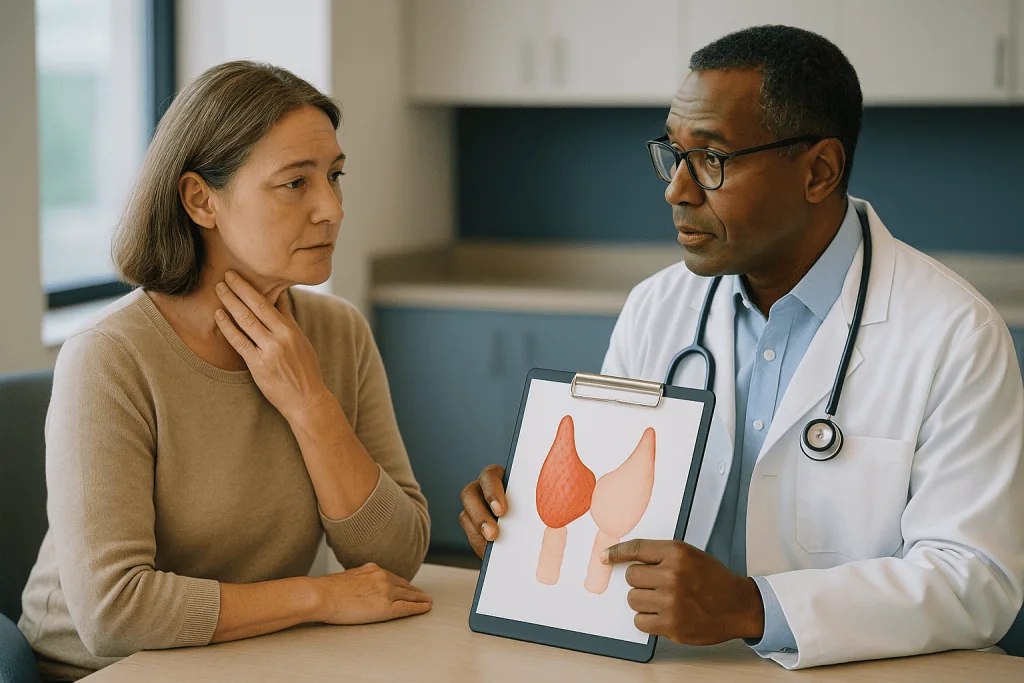
What a surgeon is really asking is a series of questions, usually in this order:
- What type of cancer is it? Papillary and follicular cancers, the most common forms, are slow-growing and often suitable for a lobectomy when small. Medullary and anaplastic cancers behave differently and are treated more aggressively.
- How big is the tumor, and where? Size matters, but so does position. A small cancer sitting against the windpipe or near the nerve may change the plan more than a slightly larger one in the middle of the lobe.
- Is there disease on the other side? Ultrasound of the opposite lobe is scrutinized. Suspicious nodules there argue for total removal.
- Are the lymph nodes clean? Enlarged or abnormal nodes on imaging shift the balance toward total thyroidectomy with node dissection.
- Will radioactive iodine or thyroglobulin monitoring be needed? If yes, total removal is required to make them work.
- What about the person? Prior neck radiation, a strong family history, a background thyroid condition, or a frank preference for avoiding a second operation all legitimately move the decision.
No scan answers all of these before surgery. The final pathology report, available a week or two after the operation, can upgrade a lobectomy into a recommendation for completion surgery, or confirm that the smaller operation was enough. Patients are told this in advance precisely because it happens.
Who is usually asked to wait rather than operate?
Not every thyroid finding leads to a theater booking, and a good surgical consultation spends real time on the option of doing nothing yet. Several groups are commonly steered toward monitoring first.
Small, low-risk papillary cancers. Cancers under about a centimeter with no spread, no suspicious nodes, and no high-risk features may be offered active surveillance: scheduled ultrasounds rather than surgery, with an operation held in reserve if the nodule grows or changes. This approach rests on evidence that many such tumors stay stable for years.
Benign nodules that cause no symptoms. MedlinePlus and Mayo Clinic both describe watchful waiting with periodic ultrasound as standard for nodules confirmed benign on biopsy. Surgery is reconsidered only if the nodule grows meaningfully or begins to press on something.
Hyperthyroidism not yet controlled. Operating on an overactive gland is riskier, because high hormone levels strain the heart and can trigger a dangerous surge during surgery. Antithyroid medicines are usually used first to bring hormone levels toward normal, and the surgery date waits on the blood tests. Decisions about those medicines rest entirely with the prescribing clinician.
Pregnancy. Unless a cancer is aggressive, surgery is frequently deferred until after delivery, or planned for the middle trimester when anesthesia risk to the pregnancy is lowest.
Significant other illness. Severe heart or lung disease may tilt the balance toward non-surgical treatment or toward the shorter, less extensive operation.
Waiting is not the same as neglect. It means the team has judged that the known risks of the operation currently outweigh the known risks of the condition, and that this balance will be checked again at every follow-up. Anyone under surveillance who notices rapid growth, a new lump in the neck, or a change in voice should bring the appointment forward.
Total vs partial thyroidectomy at a glance
The table below gathers the practical differences people most often ask about. Figures for risk and recovery are typical ranges reported by mainstream sources; an individual’s numbers depend on anatomy, diagnosis and the experience of the surgical team.
| Question | Hemithyroidectomy (one lobe) | Total thyroidectomy |
|---|---|---|
| Typical reasons | Single benign nodule, indeterminate biopsy, toxic adenoma, small contained cancer | Larger or bilateral cancer, node involvement, Graves disease, large bilateral goiter, medullary cancer |
| Lifelong thyroid hormone | Not required for most; a minority develop an underactive remnant and need replacement | Required for everyone, started soon after surgery |
| Parathyroid glands at risk | Two on the operated side; the other two untouched | All four exposed; temporary low calcium common, permanent low calcium uncommon |
| Voice nerves at risk | One | Both |
| Hospital stay | Same day or one night | Usually one night, sometimes longer while calcium is checked |
| Radioactive iodine possible afterward | No | Yes, if the team recommends it |
| Thyroglobulin monitoring | Limited value | Reliable marker for recurrence |
| Chance of a second operation | Possible if pathology shows higher-risk cancer | Rare, limited to recurrence |
| Scar | Same low neck incision, sometimes slightly shorter | Same low neck incision |
Two points deserve emphasis. First, the “lifelong hormone” row is often what tips a decision, yet it is not all-or-nothing; some lobectomy patients will still need replacement because the remaining lobe cannot keep up, particularly if it harbors autoimmune thyroiditis. Second, the risk rows describe exposure, not inevitability. Experienced surgeons routinely finish total thyroidectomies with every parathyroid gland and nerve intact. The extra exposure simply means the margin for error is narrower, which is one reason the extent of surgery is matched to the extent of disease rather than defaulted to the maximum.
Thyroid lobectomy side effects compared with total thyroidectomy
Complications of thyroid surgery cluster around the three structures the surgeon must protect: the parathyroid glands, the recurrent laryngeal nerves, and the blood vessels of the neck. The extent of surgery changes how many of each are in the operating field.
Low calcium (hypoparathyroidism). Parathyroid glands are small and share a blood supply with the thyroid. Bruising or disturbing them during a total thyroidectomy often causes a temporary dip in parathyroid hormone and calcium, felt as tingling around the mouth and fingertips or muscle cramps in the first days. The NHS describes this as the most common significant complication of total thyroidectomy, usually temporary, with a smaller proportion of people needing calcium and vitamin D long term. After a lobectomy, the two untouched glands on the other side almost always cover the gap, so clinically significant low calcium is rare.
Voice change. A stretched or bruised recurrent laryngeal nerve can leave the voice hoarse, breathy, or easily tired for weeks. Mayo Clinic lists permanent hoarseness or voice weakness as an uncommon but recognized risk; it is considerably rarer than temporary change. Injury to both nerves, possible only in total thyroidectomy, can affect breathing and is very rare. Many surgeons use nerve monitoring during the operation to reduce this risk.
Bleeding. A hematoma, a collection of blood under the wound, is uncommon but can compress the airway. It is the reason most people are observed in hospital for at least a few hours after surgery, whatever the extent.
Infection, scar and numbness. Wound infection is uncommon in the neck’s rich blood supply. Some numbness of the skin above the scar is normal and usually fades over months.
Across these categories the pattern is consistent: a lobectomy halves the exposure of nerves and parathyroid glands, which is its main safety advantage, while a total thyroidectomy removes the possibility of residual disease and the need for a second operation.
Will I need thyroid hormone tablets after surgery?
After a total thyroidectomy, the answer is yes, for life. The body has no backup source of thyroid hormone, so a synthetic version of the main hormone, levothyroxine, is started soon after surgery. It works by supplying the same molecule the gland used to make; the body converts it into the active form as needed. Blood levels are checked at intervals in the first months and the prescribing clinician adjusts the amount until thyroid-stimulating hormone (TSH), the pituitary signal that rises when hormone is low, sits where the team wants it. For cancer patients the target is sometimes set lower than normal for a period, because TSH can stimulate any remaining cancer cells. These decisions belong entirely to the endocrinology and surgical team.
After a hemithyroidectomy the picture is more nuanced. The remaining lobe usually enlarges slightly and increases its output, a process called compensatory hypertrophy, and for most people hormone levels settle into the normal range without medication. A meaningful minority, however, develop a sluggish remnant and a rising TSH over the following months. Pre-existing autoimmune thyroiditis, a TSH already toward the upper end of normal before surgery, and older age make this more likely. Blood tests are therefore repeated after a lobectomy even when everything feels fine.
Cleveland Clinic and Mayo Clinic both stress that once the right amount of replacement is found, people living without a thyroid can expect normal energy, weight regulation and metabolism. The hormone itself is identical in effect to the body’s own; what changes is that a daily tablet rather than a gland is doing the supplying, and that life events such as pregnancy, significant weight change, or new medicines may require the clinician to recheck levels.
Nobody should start, stop or alter thyroid medication on their own. If symptoms of over- or under-replacement appear, the right step is a blood test and a conversation, not a change made at home.
Partial thyroidectomy recovery time: the first days and weeks
Recovery from thyroid surgery is gentler than many people fear, and the difference between a lobectomy and a total thyroidectomy in the early weeks is modest. The main distinction is calcium monitoring after total removal.
The first 24 hours. Most people wake with a sore throat from the breathing tube, a stiff neck, and a dressing or skin glue over the incision. Swallowing is uncomfortable but possible. After a lobectomy, discharge the same day or the next morning is common; after total thyroidectomy, a night in hospital allows calcium to be checked and tingling or cramps to be treated promptly if they appear.
Days two to seven. Pain usually eases with simple analgesics and settles into stiffness. Voice may be husky or weak and tires quickly; speaking in short stretches helps. Gentle walking and neck movement are encouraged from the first day to prevent stiffness and reduce clot risk. Showering is generally allowed once the dressing permits, and most people are driving again when they can turn their head comfortably without strong painkillers.
Weeks one to three. Mayo Clinic advises that strenuous activity and heavy lifting are typically avoided for about two weeks, with a return to usual activities within a few weeks for most. Desk work often resumes within one to two weeks; physical jobs take longer. The pathology report usually arrives within this window and may prompt a second appointment to discuss results.
Weeks three to twelve. The scar fades from red to pink to pale over months, and sun protection helps it blend. Residual swelling above the incision softens gradually. Thyroid blood tests are scheduled, typically around six to eight weeks after surgery, to confirm the remaining lobe is coping or to fine-tune replacement.
These are typical ranges from mainstream sources, not promises. Older age, other health conditions and the extent of any lymph node surgery can lengthen every stage.
Life after total thyroidectomy: what actually changes day to day
The fear many people carry into a total thyroidectomy consultation is of a diminished life: constant tiredness, unmanageable weight, a body permanently out of tune. The evidence does not support that picture for most, though it would be dishonest to call the adjustment trivial.
Medication becomes a daily anchor. Thyroid hormone replacement is usually taken once each morning, ideally on an empty stomach because food, coffee, calcium and iron can reduce absorption. The routine matters more than the timing being perfect every day, and the clinician’s blood tests will catch drift. Many people find that pairing the tablet with an existing habit, such as before brushing teeth, makes it automatic within weeks.
Energy and mood settle once levels are right. The first few months can feel uneven while the amount is adjusted, since the hormone takes several weeks to reach a steady state in the blood. Johns Hopkins and Mayo Clinic both note that once stable, people without a thyroid generally feel and function as they did before, and that persistent fatigue or low mood should prompt a check of levels rather than be accepted as the new normal.
Calcium may or may not be an issue. If the parathyroid glands recovered fully, nothing changes. If function is reduced, calcium and active vitamin D supplements become part of the routine, with periodic blood tests, and the team will explain the signs of calcium running low or high.
Follow-up has a rhythm. For cancer, this often includes neck ultrasound and thyroglobulin blood tests at intervals that lengthen as the years pass without recurrence. For benign disease, follow-up may shrink to an annual blood test.
Pregnancy and other transitions need planning. Hormone needs rise early in pregnancy, so anyone planning a family should tell their clinician in advance so monitoring can be arranged.
In short, the gland’s job is handed to a tablet and a lab. Most people describe life afterward as normal, with a pill and a few more blood tests than before.
Can your thyroid grow back after a partial thyroidectomy, and what is completion surgery?
Two questions follow nearly every lobectomy: will the rest regrow, and might I need the other half out later? They are related but distinct.
Regrowth. A removed lobe does not regenerate. The thyroid has no capacity to rebuild a lobe the way the liver regrows tissue. What does happen, in most people, is compensatory hypertrophy: the remaining lobe enlarges modestly and increases its hormone output to take over the whole job. On ultrasound it may look larger than before, which sometimes alarms people who read the report, but it is the gland doing what it should. Separately, if the original condition was a multinodular goiter or an autoimmune disease, new nodules can form in the remaining lobe over years, because the underlying tendency has not been removed. That is disease recurrence in remaining tissue, not regrowth of what was taken.
Completion thyroidectomy. This is a second operation to remove the remaining lobe. The commonest trigger is the final pathology report after a lobectomy for an indeterminate nodule or a presumed small cancer: if the tumor turns out to be larger, to have aggressive features, or to have breached the capsule or reached blood vessels, guidelines may call for total removal so that radioactive iodine and thyroglobulin monitoring become possible. Completion surgery can also follow the discovery of significant nodules on the opposite side years later.
The second operation is performed through the same incision. Because the first side has already healed, scarring makes the dissection somewhat harder on that side, which is one reason surgeons prefer to get the extent right first time when the evidence allows. People who have a lobectomy are told the likelihood of completion surgery before they consent; for most indeterminate nodules it is the minority outcome, but it is real, and the decision to proceed rests with the treating team once pathology is known.
What people often get wrong about total and partial thyroidectomy
“Total is always safer because it removes all the risk.” Removing the whole gland removes thyroid tissue, not surgical risk. Both parathyroid pairs and both nerves are exposed, and the permanent-complication rate is higher than for a lobectomy. For small, contained cancers, long-term outcomes with a lobectomy are comparable, which is exactly why guidelines widened that option.
“Partial is always better because I keep my thyroid.” Keeping half a gland is a genuine advantage, but it rules out radioactive iodine, blunts thyroglobulin monitoring, and carries a chance of a second operation. For bilateral disease or Graves disease it simply leaves the problem in place.
“I will gain a lot of weight after thyroid surgery.” Untreated hypothyroidism does cause weight gain, mostly from fluid and a slower metabolism, and Mayo Clinic notes the gain is usually modest. With half a healthy gland, or with properly adjusted replacement, metabolism is normal. People who gain weight after surgery usually do so for the same reasons as everyone else, with the added factor of weeks of reduced activity during recovery. Persistent gain with tiredness and cold intolerance is a reason to have levels checked, not a fixed consequence of the operation.
“Replacement hormone is a weaker substitute.” Synthetic levothyroxine is the same molecule the gland makes. The challenge is finding the right amount, not the quality of the hormone.
“My voice will never be the same.” Temporary huskiness is common; permanent change is uncommon. Most voices recover fully within weeks.
“The scar will be obvious.” Placed in a natural neck crease and cared for, most thyroid scars fade to a faint line within a year.
“Nodules mean cancer.” Most thyroid nodules are benign. Surgery is proposed for a minority, and only after imaging and usually a biopsy.
Questions to ask your care team before choosing
A surgeon who has had this conversation hundreds of times will not mind being asked to slow down. The questions below help turn a general recommendation into one that fits the person in the chair.
- Based on my scans and biopsy, what exactly are you recommending, and what is the main reason you lean that way?
- Is a lobectomy a reasonable option for me? If not, which specific finding rules it out?
- If I have a lobectomy, how likely is it that the pathology report would lead you to recommend completion surgery?
- Would I be a candidate for active surveillance instead of surgery now, and what would trigger a change of plan?
- Do you expect radioactive iodine to be part of my treatment? Does that depend on the pathology?
- How do you protect the parathyroid glands and voice nerves during the operation? Do you use nerve monitoring?
- What are your own rates of temporary and permanent low calcium and voice change? How many of these operations does your team perform each year?
- After a lobectomy, how likely am I to need thyroid hormone anyway, given my current blood tests and whether I have thyroiditis?
- What will the first month look like for someone with my job and home responsibilities?
- Who do I call out of hours if something worries me after discharge?
- How and when will I be followed up, and for how many years?
- If I were your relative, which option would you suggest, and why?
Writing the answers down, or bringing someone to listen, is worth the slight awkwardness. The decision is rarely urgent to the day, and many people benefit from a second appointment after the initial shock of a diagnosis has settled. A reasonable surgeon welcomes a second opinion for a decision that is this personal, and the final choice belongs to the patient and the treating team together.
When to call your doctor after thyroid surgery
Most recoveries are uneventful, and most of what people notice in the first fortnight, such as stiffness, a tired voice and a tight, numb patch above the scar, is expected. A short list of signs is different and warrants a prompt call to the surgical team or, if severe, emergency care.
Call emergency services or go to an emergency department immediately if:
- the neck swells rapidly, feels tight, or the skin over the wound bulges or turns purple, especially within the first day or two; this can signal bleeding under the wound that may press on the airway
- breathing becomes difficult, noisy or wheezy, or swallowing suddenly becomes impossible
- severe muscle spasms occur, particularly in the hands or face, or there is confusion or a seizure, which can accompany very low calcium
Contact the surgical team the same day if:
- tingling or numbness develops around the lips, in the fingertips or toes, or muscles cramp; the NHS lists these as the early signs of low calcium after thyroidectomy and they usually respond quickly to treatment the team will direct
- the voice loses volume further after initially improving, or liquids go down the wrong way when swallowing
- a temperature of 38°C (100.4°F) or higher develops, or the wound becomes increasingly red, hot, swollen or leaks fluid
- pain escalates rather than easing after the first few days
Raise at the next appointment, or sooner if troubling:
- persistent fatigue, feeling cold, constipation or weight gain weeks after surgery, which may reflect the remaining lobe or the replacement amount needing attention
- palpitations, heat intolerance, tremor or anxiety, which can suggest hormone levels running high
- a new lump in the neck at any point in follow-up
Written discharge instructions should include an out-of-hours number. Keep it somewhere obvious, and use it. Thyroid surgeons would far rather hear about a neck that feels wrong at two in the morning than read about it later.
Frequently asked questions
Which is better, partial or total thyroidectomy?
Neither is better in the abstract; each fits different situations. A partial thyroidectomy suits a single benign nodule, an indeterminate biopsy, or a small cancer confined to one lobe, and it carries lower risk to the parathyroid glands and voice nerves. A total thyroidectomy is preferred for larger or bilateral cancers, Graves disease, large goiters, and whenever radioactive iodine or thyroglobulin monitoring is planned. The treating team weighs these factors with the patient.
Will I gain weight after having half my thyroid removed?
Not as a direct result of the surgery, for most people. The remaining lobe usually takes over hormone production, and a normally functioning half-gland keeps metabolism normal. Weight gain tends to follow if the remnant becomes underactive and this goes untreated, which is why blood tests are repeated after surgery. Persistent tiredness, cold intolerance and weight gain months later are a reason to ask for a thyroid blood test rather than an inevitable consequence.
Can your thyroid grow back after a partial thyroidectomy?
No, a removed lobe does not regenerate. The remaining lobe commonly enlarges slightly, a normal response called compensatory hypertrophy, so an ultrasound may describe it as larger than before. If the original problem was a multinodular goiter or autoimmune disease, new nodules can develop in the remaining tissue over years, which is recurrence of the condition in what was left, not regrowth of what was removed.
Why would you need a partial thyroidectomy?
The usual reasons are a benign nodule large enough to cause pressure symptoms or cosmetic concern, a biopsy that cannot distinguish benign from malignant cells, a single overactive nodule driving hyperthyroidism, or a small cancer confined to one lobe without spread. In each case the problem sits on one side and the other lobe is healthy, so removing half treats the issue while preserving the body’s own hormone supply for most people.
What is the difference between hemithyroidectomy and total thyroidectomy in terms of risk?
A hemithyroidectomy exposes one recurrent laryngeal nerve and two parathyroid glands; a total thyroidectomy exposes both nerves and all four parathyroid glands. As a result, temporary and permanent low calcium are considerably more common after total removal, and permanent voice change, though uncommon in both, is rarer after a lobectomy. Bleeding and infection risks are similar. The NHS and Mayo Clinic both describe these as recognized but uncommon complications.
How long is partial thyroidectomy recovery time compared with total?
The early recovery is similar for both. People typically go home the same day or after one night, with total thyroidectomy patients more often staying overnight so calcium can be checked. Mayo Clinic advises avoiding strenuous activity for about two weeks, with most people back to usual activities within a few weeks. Desk work often resumes within one to two weeks. Thyroid blood tests are usually checked around six to eight weeks after either operation.
What are the main thyroid lobectomy side effects?
Most are temporary: a sore throat from the breathing tube, neck stiffness, a husky or tired voice, numbness of the skin above the scar, and bruising. Low calcium is rare after a lobectomy because two parathyroid glands remain untouched. The longer-term possibilities are an underactive remaining lobe that eventually needs hormone replacement, and a second operation if the pathology report shows higher-risk disease than expected.
What is life after total thyroidectomy like?
Once the right amount of thyroid hormone replacement is established, most people report normal energy, weight regulation and daily function. The lasting changes are a once-daily tablet, periodic blood tests, and, for cancer, scheduled ultrasounds and thyroglobulin checks that become less frequent over time. A minority need ongoing calcium and vitamin D if parathyroid function is reduced. Pregnancy and major life changes call for closer monitoring by the prescribing clinician.
Do I need radioactive iodine after a partial thyroidectomy?
No, and it is not possible after a lobectomy. Radioactive iodine relies on nearly all normal thyroid tissue being gone so that the dose concentrates in any remaining cancer cells. With a whole lobe still present, the healthy tissue would absorb the iodine instead. If pathology after a lobectomy suggests radioactive iodine would be beneficial, the team may recommend completion thyroidectomy first.
Can I choose a partial thyroidectomy even if my surgeon recommends total?
The decision is shared, and patient preference carries real weight for cancers in the gray zone where guidelines permit either operation. When a surgeon recommends total removal for bilateral disease, node involvement, Graves disease or a large goiter, a lobectomy would likely leave the problem incompletely treated. Asking exactly which finding rules out the smaller operation, and seeking a second opinion if unsure, are reasonable steps before deciding.
References
- NHS: Thyroid cancer, treatment
- MedlinePlus: Thyroid gland removal
- Cleveland Clinic: Thyroidectomy
- NHS: Hypoparathyroidism
This article is for general information only and is not a substitute for professional medical advice. Please consult a qualified doctor about your individual situation.

More from the Blog

Surgery, Medication or Radiotherapy for Acromegaly: How Do Specialists Combine the Three?
Specialists usually start with transsphenoidal surgery to remove the pituitary tumor when it can be reached safely, then add medicines such as somatostatin analogs,…

How Is Androgen Insensitivity Syndrome (AIS) Diagnosed? Karyotype, Hormone Tests and Imaging
Androgen insensitivity syndrome is diagnosed by combining three lines of evidence: a karyotype (chromosome test) that typically shows 46,XY, blood hormone tests showing testosterone…

Living With Thyroid Disease: Monitoring, Medication Routines and Symptoms Worth Reporting
Living with thyroid disease usually means a steady routine rather than constant crisis: taking prescribed medicine consistently, having thyroid blood tests about every 6–8…

Who Is a Longevity Program Designed For? Age, Family History and Risk Factors Considered
A longevity program is generally designed for adults who want structured, evidence-based prevention: typically people in midlife or beyond, anyone with a strong family…

Questions to Ask Your Endocrinologist Before Starting Cushing Syndrome Treatment
Before starting Cushing syndrome treatment, ask your endocrinologist how certain the diagnosis is, which tests confirmed excess cortisol, where the cortisol is coming from,…

Questions to Ask Your Team Before Pheochromocytoma Surgery: Genetics, Timing and the Plan
Before pheochromocytoma surgery, the most useful questions cover three areas: whether you will have genetic testing and how the result could change the operation;…