

TURBT for Bladder Cancer: How the Endoscopic Tumor Removal Is Performed
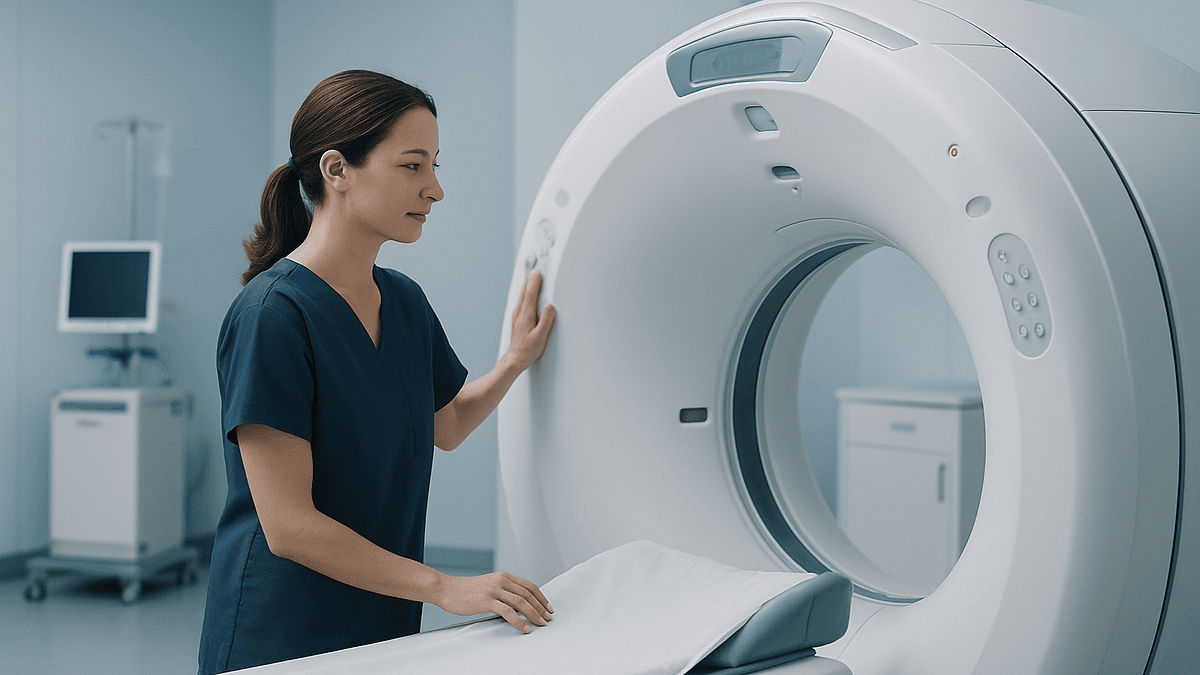
Key Takeaways
- TURBT removes a bladder tumor through the urethra with an electrified wire loop, so there is no external incision, but it is done under general or spinal anesthesia and is genuine cancer surgery.
- The tissue removed is the only way to learn the tumor's grade and depth, and whether muscle is present in the specimen decides whether the cancer is called non-muscle-invasive or muscle-invasive.
- Chemotherapy is often placed directly into the bladder shortly after surgery to kill loose cells released by cutting, and it is withheld if the surgeon suspects the wall was breached.
- A brief return of bleeding around the second week is a normal stage of healing as the cauterized crust lifts, not a sign the operation failed.
- Non-muscle-invasive bladder cancer recurs often enough that a first check cystoscopy at around three months, followed by risk-based intervals, is standard practice.
- A planned second TURBT a few weeks after a high-grade or T1 result is a guideline-backed staging step that finds residual tumor in a meaningful share of cases.
A TURBT (transurethral resection of bladder tumor) removes a bladder growth through the urethra with a thin telescope and an electrified wire loop, so there is no external cut. It is done under general or spinal anesthesia, usually with a same-day or overnight stay, a short-term catheter, and pink urine for a week or two. The tissue removed tells the team the cancer's stage and grade, which decides what happens next.
The appointment lasted twelve minutes. A flexible camera, a warm gel, a screen she could not quite see, and then the urologist saying, gently, that there was something on the bladder wall that needed to come out. Back in the car, she read the leaflet twice. It said no incision. It also said cancer. Those two facts did not sit comfortably side by side, and the question that followed her home was the one thousands of people type into a search bar every week: for a TURBT procedure, what to expect, honestly?
This article is the long answer. It walks through what the surgeon actually does inside the bladder, why the operation doubles as the most important test you will have, what the catheter and the pink urine mean, how the weeks afterward usually unfold, and where the real uncertainties lie. Where evidence is firm, it says so. Where it is not, it says that too.
TURBT procedure: what to expect, explained without the jargon
Start with the name, because it is doing a lot of work. Transurethral means through the urethra, the tube that carries urine out of the body. Resection means cutting tissue out. Bladder tumor is any abnormal growth on the bladder’s inner lining, whether or not it later proves to be cancer. Put together, TURBT is an operation that removes a bladder growth from the inside, using the body’s own plumbing as the entry route.
The instrument is a resectoscope: a rigid telescope with a light, a camera, channels for fluid, and a working end that carries a fine wire loop. When the loop is energized with electrical current it shaves tissue and seals small blood vessels at the same time. The surgeon watches on a monitor and works in a bladder filled with clear fluid so the walls stay open and visible.
Because nothing is cut on the outside, recovery is faster than for open abdominal surgery, and many people go home the same day or after one night, according to the Mayo Clinic’s overview of bladder cancer treatment. You will be asleep or numbed from the waist down; the NHS notes that TURBT is carried out under general or spinal anaesthetic, never with you awake and aware inside the bladder.
One idea matters more than any other for the rest of this article. TURBT is not only a way of removing a tumor. It is also the biopsy that tells your team what the tumor is, how aggressive its cells look, and how deep it has grown. Nearly every decision that follows, from a single chemotherapy instillation to a plan for a second operation, depends on what the pathologist sees in the tissue that comes out.
How the endoscopic tumor removal is performed, step by step
Once you are anesthetized and positioned with your legs supported, the team cleans the area and passes the resectoscope gently along the urethra into the bladder. Sterile fluid flows in through one channel and out through another, keeping the view clear and washing away blood and tissue fragments.
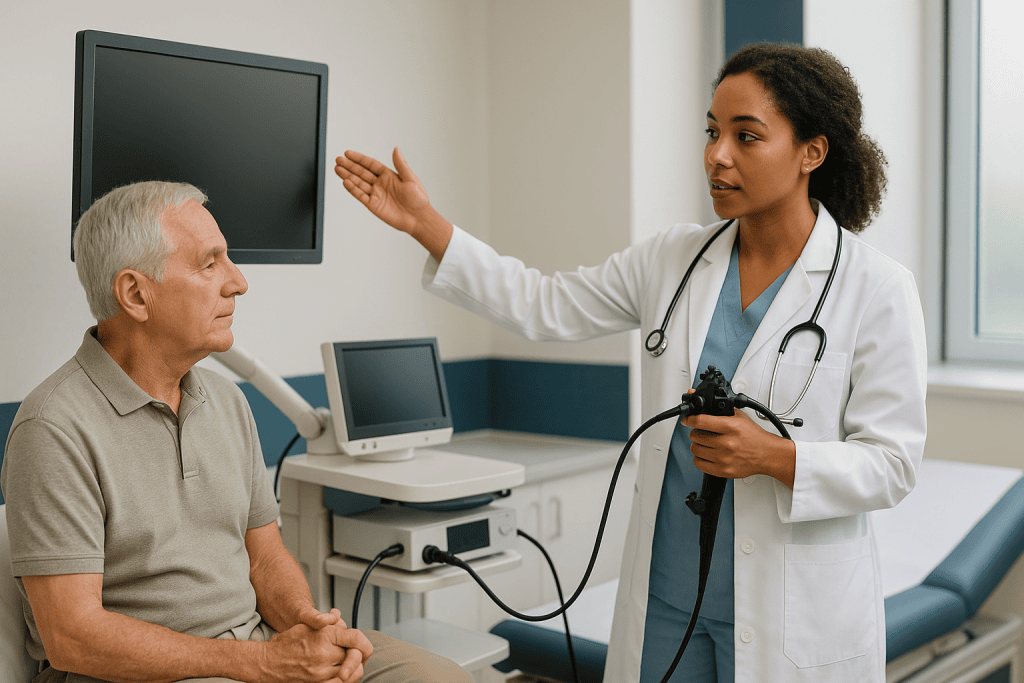
The surgeon first maps the whole bladder. Every wall, the dome, the neck near the urethra, and the openings of the two ureters (the tubes bringing urine down from the kidneys) are inspected, and any additional suspicious patches are noted. Tumors can be single or multiple, and small flat areas are easy to miss, which is why this survey is not rushed.
Then the resection itself. Larger growths are shaved down in layers, with each pass of the loop removing a strip of tissue that is collected for the laboratory. Smaller tumors may be lifted off in one piece. The critical moment is the base: the surgeon deliberately takes a sample from the tumor’s root that includes the detrusor, the bladder’s muscle layer. Whether cancer has reached that muscle is the single most important staging question, and the pathologist can only answer it if muscle is in the specimen. The National Cancer Institute’s treatment summary explains that depth of invasion into the bladder wall is what separates non-muscle-invasive from muscle-invasive disease.
After resection, the raw area is cauterized to stop bleeding. Some surgeons perform a bimanual examination, feeling the bladder between a gloved finger and a hand on the abdomen while you are relaxed under anesthesia, to judge whether there is a palpable mass. Enhanced imaging techniques, which use a dye or filtered light to make abnormal tissue stand out, are available in some operating rooms; they are an aid to the eye, not a different operation.
Finally a urinary catheter, a soft tube that drains the bladder, is placed, and you are taken to recovery.
Why a TURBT is both a diagnosis and a treatment at the same time
People are often surprised that nobody can tell them the stage of their cancer before the operation. The reason is simple: the tumor is inside the bladder wall, and imaging cannot reliably see how deep its roots go. A cystoscopy, the camera test that found the growth, shows the surface only.
The tissue removed at TURBT goes to a pathologist, a doctor who examines cells under a microscope. Two things are reported. Grade describes how abnormal the cells look, broadly low grade or high grade, with high grade cells more likely to grow and spread. Stage describes depth. In the shorthand your team will use, Ta means the tumor is confined to the lining, T1 means it has entered the connective tissue just beneath the lining, and T2 means it has reached the muscle. A separate finding called carcinoma in situ, or CIS, describes flat, high grade cells that sit in the lining without forming a lump; it is easy to overlook and matters a great deal.
Most bladder cancers are found while still confined to the lining or the layer just below it, which the NCI summary groups as non-muscle-invasive disease. For these, TURBT may be the main treatment, often paired with medicine placed directly into the bladder. If cancer has reached muscle, TURBT has done its diagnostic job but is not sufficient on its own, and the conversation shifts to more extensive options such as removal of the bladder, or chemotherapy and radiation, as MedlinePlus outlines.
This is why a pathology report that takes a week or more is not a sign of bad news. It is the point of the exercise. The operation removes what can be seen; the report reveals what the operation means.
Who is usually offered TURBT, and who is usually asked to wait
Almost anyone with a growth seen on cystoscopy or strongly suspected on a CT or ultrasound scan will be offered a TURBT, because there is no other way to know what it is. That includes people whose only symptom was a single episode of visible blood in the urine, and people whose tumor was found by chance during tests for something else. It also includes people who have had bladder cancer before and whose surveillance camera check has found a new lesion.

Waiting is different from refusing. A team may postpone TURBT for a short period when something needs sorting first. An active urinary tract infection is the classic reason, since operating through infected urine raises the risk of a serious blood infection. A recent heart attack, stroke, or unstable angina may mean the anesthesia team asks for time or further assessment. People taking anticoagulants (blood thinners) or antiplatelet medicines need a plan; the decision about whether and how to pause them belongs entirely to the prescribing clinician, who weighs the risk of clotting against the risk of bleeding from the resection bed. Never change these medicines on your own account.
Very large tumors, or tumors that imaging already suggests have grown through the bladder wall, are still resected, but the goal may be primarily to obtain tissue rather than to clear every fragment, with the wider treatment plan decided after staging. In frailty or advanced age, the question is rarely whether the operation is technically possible and more often whether the anesthesia and the findings would change what a person wants to do. Those are conversations to have openly, with the team and with the people close to you.
Is TURBT major surgery? An honest answer
The truthful reply is that TURBT sits in an awkward middle ground, and both extremes of description mislead.
By the usual yardsticks of surgery it is modest. There is no incision, no organ is removed, blood loss is normally small, and the Mayo Clinic describes it as a procedure often done on an outpatient basis or with a brief hospital stay. Most people are eating and walking within hours and back to desk work within a couple of weeks.
By other yardsticks it is not minor at all. It requires general or spinal anesthesia, with everything that entails for the heart and lungs. It involves cutting into the wall of a hollow organ that is only a few millimeters thick in places, so perforation is a recognized risk. It is cancer surgery, and the emotional weight of that is real regardless of how small the scar. And it is frequently the first of several procedures rather than a one-off.
A helpful phrase is minimally invasive, not minor. Minimally invasive describes the route and the recovery. It says nothing about the seriousness of the reason for doing it or the care needed afterward.
Practical consequences follow from this framing. Treat the anesthesia assessment seriously and answer questions about breathing, sleep apnea, and previous reactions fully. Arrange for someone to take you home and, ideally, to stay the first night. Plan for a genuine pause in physical work rather than a token day off. And expect the follow-up conversation about pathology to be at least as significant as the operation itself. People who go in expecting a quick camera test tend to feel blindsided; people who go in expecting a small operation with a large purpose tend to cope better.
Preparing for the day: anesthesia, medicines, and practical steps
Preparation for a TURBT is largely about safety at the anesthesia end and clarity at the medicine end.
You will usually attend a pre-assessment visit. Expect blood tests, a urine sample to rule out infection, sometimes an ECG (a tracing of the heart’s electrical rhythm), and a detailed medication history. Bring an up-to-date list of everything you take, including supplements and over-the-counter painkillers, because some affect bleeding. This is the moment for the anesthesia team to decide between a general anesthetic, where you are fully asleep, and a spinal, where a numbing injection into the lower back leaves you awake but without sensation below the waist. Both are standard for TURBT, as the NHS describes, and the choice depends on your health and the team’s judgment.
Fasting instructions will be specific to your hospital and should be followed exactly; they exist to prevent stomach contents entering the lungs during anesthesia. If you take medicines for the heart, blood pressure, diabetes, or clotting, the pre-assessment team will tell you which to take on the morning and which to hold. Do not guess, and do not stop any prescribed medicine without that instruction.
On the day, wear loose clothing. Bring reading glasses, a phone charger, and something to occupy waiting time. Leave jewelry at home. You will not be allowed to drive yourself home after either form of anesthesia, and most centers require a responsible adult to collect you.
Two questions worth settling in advance: who will pick you up, and who can you phone if something worries you at 2 a.m. in the first week? Write both down.
The first 24 hours: waking up with a catheter, bladder chemotherapy, going home
You will wake with a catheter in place. This is normal, not a sign of trouble. It keeps the bladder empty so the raw resection area is not stretched, and it lets the nurses watch the color of your urine. Some people also have irrigation running, where fluid is trickled through the catheter to prevent clots forming. Bladder spasms, a sudden cramping urge to pass urine even though the catheter is draining, are common and can be treated; tell the nurses rather than enduring them.
Urine is usually pink or rosé colored at first. Bright red urine, or urine with clots that block the flow, is something the ward will manage before you leave. Mild burning is expected. Severe pain is not, and should be reported.
Many people receive a single treatment of chemotherapy placed directly into the bladder shortly after surgery. Generic names you may hear include mitomycin or gemcitabine. The idea is mechanical as much as pharmacological: cutting a tumor releases loose cancer cells into the bladder, and those cells can settle on the freshly injured wall and seed a new growth. Chemotherapy sitting in the bladder for a period aims to kill those floating cells before that happens. The medicine is then drained and does not circulate through the body in meaningful amounts. It is withheld if the surgeon suspects the bladder wall was breached or if bleeding is heavy, because the medicine must stay inside the bladder. Whether you receive it is the surgeon’s call.
The catheter often comes out before you go home, or within a day or two if the resection was large, and the team will confirm you can pass urine on your own first. Discharge usually comes with written instructions, a follow-up date, and a number to call.
TURBT recovery time: what the following days and weeks usually look like
Recovery from TURBT is less a straight line than a series of plateaus, and knowing the shape helps. The ranges below are typical, drawn from NHS and Mayo Clinic patient information, and your own course may be shorter or longer depending on how much tissue was removed.
| Timeframe | What is common | What usually helps |
|---|---|---|
| Day 0 to 1 | Catheter, pink urine, bladder spasms, drowsiness from anesthesia | Rest, fluids as advised, report heavy bleeding or clots |
| Days 2 to 7 | Burning on urination, urgency, passing urine often, tiredness | Steady fluid intake, gentle walking, avoid constipation and straining |
| Week 2 | Fresh bleeding may return briefly as the scab over the resection area lifts | Keep drinking, rest; call if clots block flow or bleeding is heavy |
| Weeks 2 to 6 | Urinary symptoms settling, energy returning, pathology results discussed | Gradual return to activity as your team advises |
| Around 3 months | First surveillance cystoscopy for most people | Keep the appointment even if you feel entirely well |
Two details deserve emphasis. First, the second-week bleeding is the one that frightens people most, because they thought they were healed. It happens because the cauterized surface forms a crust that eventually separates, much as a scab on skin does. Second, the fatigue is real and out of proportion to the size of the operation, partly anesthesia, partly disrupted sleep from frequent urination, partly the weight of waiting for results.
Return to work varies with the job. Desk-based roles commonly resume within one to two weeks; physically demanding work waits longer, per NHS guidance. Ask your team rather than assume.
How long does it take for the bladder to heal after a TURBT?
The honest answer separates two kinds of healing that run on different clocks.
The surface heals first. Where the tumor was, the bladder now has a raw patch, cauterized to stop bleeding. Over the following weeks, new lining cells migrate across it from the edges, in the same way skin grows back over a graze. NHS patient information describes urinary symptoms and mild bleeding settling over a few weeks, and most people find the burning and urgency fade within that window. A larger or deeper resection, or several sites treated at once, means a bigger surface to cover and a slower timeline.
The bladder as an organ takes longer to feel normal. Even after the lining has regrown, the muscle beneath may remain irritable for a while, producing a sense of urgency or needing to pass urine more often than before. This is not damage; it is a bladder that has been operated on and is recalibrating. Caffeine, alcohol, and carbonated drinks tend to aggravate it in the short term.
Hydration is the most useful thing in your control. Dilute urine is less irritating to the healing surface and less likely to form clots, and steady drinking across the day is better than large volumes at once. Your team may advise otherwise if you have heart or kidney conditions, so follow their instruction.
What does not help is judging healing by urine color alone. Clear urine on day five does not mean the lining is complete, and a return of pink urine in week two does not mean something has gone wrong. Healing inside a hollow organ is not visible, which is precisely why the surveillance cystoscopy exists.
What not to do after TURBT
Aftercare advice varies between centers, and your written instructions take priority. But several themes recur across NHS and Mayo Clinic guidance, and they share a single logic: for a few weeks, nothing should raise pressure inside the bladder or pull on its healing wall.
- Do not lift heavy objects, dig, vacuum vigorously, or return to strenuous exercise until your team clears you. Straining raises pressure in the abdomen and can restart bleeding from the resection site.
- Do not let constipation build. Straining on the toilet has the same effect as lifting. Fluids, fiber, and movement help; ask about a stool softener if you are prone to it, and take only what your clinicians recommend.
- Do not drive until the anesthesia has fully worn off and you can brake sharply without pain, usually a matter of days rather than hours; your insurer and your team may both have a view.
- Do not resume sexual activity until bleeding has fully stopped and your team has said it is safe; many advise waiting a few weeks.
- Do not stop, start, or alter blood thinners or any other prescribed medicine on your own. If you were told to pause something before surgery, ask exactly when to restart it.
- Do not ignore a fever, an inability to pass urine, or urine that looks like red wine rather than rosé. These belong in the red-flag section below.
- Do not smoke. Tobacco is the largest modifiable risk factor for bladder cancer according to the Mayo Clinic, and continuing to smoke after diagnosis raises the chance of new tumors forming. This is the single change with the most evidence behind it.
None of these is about being fragile. They are about giving a thin, freshly cauterized wall an uneventful few weeks to knit.
TURBT side effects and complications in neutral clinical language
Every operation carries risk, and the useful thing is to know which risks are expected, which are uncommon, and which are emergencies.
Expected effects include blood-tinged urine, burning, frequency, urgency, and bladder spasms in the first days. These are consequences of the resection itself and of the catheter, and they resolve as the lining heals.
Bleeding heavy enough to need attention is the most frequent complication. Occasionally clots block the flow of urine, requiring a catheter to be replaced or the bladder to be washed out. Rarely, a return to the operating room is needed to control a bleeding vessel.
Urinary tract infection can follow any instrumentation of the bladder. It presents as fever, cloudy or foul-smelling urine, worsening pain, or feeling generally unwell, and it is treated with antibiotics chosen by your team.
Perforation, a hole in the bladder wall, is a recognized risk because the wall is thin and the loop cuts precisely where the tumor is rooted. Small perforations are usually managed by leaving the catheter in longer so the bladder stays empty while it seals. Larger ones may need surgical repair. A related event, the obturator reflex, is a sudden leg jerk triggered when current stimulates a nerve running near the bladder’s side wall; anesthetists have techniques to prevent it, and it is a reason side-wall tumors are approached with care.
Urethral stricture, a narrowing of the urethra from scar tissue, can develop months later, especially after repeated procedures, and shows itself as a weaker urine stream.
Incomplete resection is less a complication than a limitation. Tumors can be missed or under-resected, which is one reason a second-look operation is sometimes planned deliberately. Anesthesia carries its own small risks, discussed with you at pre-assessment.
Can bladder cancer come back after TURBT? Pathology, second look, and surveillance
Yes, it can, and pretending otherwise does nobody a service. Non-muscle-invasive bladder cancer is notable among cancers for how often it recurs in the same organ, which the National Cancer Institute’s treatment summary states plainly. Recurrence does not mean the operation failed. The whole bladder lining has been exposed to the same causes, most often years of tobacco carcinogens filtered by the kidneys and stored in the urine, and new tumors can arise at new sites.
Three things follow from this reality.
The first is the pathology conversation, usually one to three weeks after surgery. You will learn the grade, the stage, and whether muscle was present in the specimen. If the tumor was high grade and had reached the layer under the lining (T1), or if no muscle was seen and the depth is therefore uncertain, urology guidelines commonly recommend a second TURBT a few weeks later. Studies summarized by the NCI show that a repeat resection finds residual tumor in a meaningful share of such cases and sometimes changes the stage. A second operation is a safety measure, not a verdict.
The second is intravesical therapy, medicine placed into the bladder over a series of visits. For higher-risk disease this is often BCG, a live, weakened bacterium that provokes an immune response in the bladder lining aimed at destroying remaining cancer cells. Chemotherapy agents such as mitomycin are the alternative for some risk groups. Whether, which, and for how long are decisions for your treating team.
The third is surveillance. The NHS describes a first check cystoscopy at around three months, then intervals set by risk category, sometimes stretching to years. Each camera check is the mechanism by which recurrences are caught small.
What people often get wrong about TURBT
Myths cluster around this operation because it looks small and means a lot. Here are the ones clinicians hear most, with what the evidence actually supports.
No incision means it was not really cancer surgery. The route through the urethra changes the recovery, not the purpose. The tissue removed is what confirms and stages the cancer.
Clear urine means the bladder has healed. The lining takes weeks to regrow, and a second bout of bleeding in week two is a normal stage of that process, not a setback.
If pathology takes a long time, the news must be bad. Turnaround reflects laboratory workload and the need for special stains, not the result.
Once the tumor is out, you are finished. For most people TURBT is the first step in a plan that includes bladder medicines and years of camera checks, precisely because recurrence is common.
Cutting the tumor spreads the cancer. Resection releases loose cells within the bladder, which is why chemotherapy is often placed into the bladder immediately afterward, but there is no evidence that TURBT causes spread beyond the bladder.
A second TURBT means the surgeon made a mistake. A planned re-resection for high-risk tumors is a guideline-backed strategy that improves staging accuracy, as the NCI summary explains.
You will lose bladder control. Temporary urgency and frequency are expected; lasting incontinence after TURBT alone is uncommon.
Blood in the urine after surgery always means recurrence. Early on it means healing. Later on it warrants a call and a camera check, but many causes are benign.
The thread through all of these is the same: judge the operation by what it is for, not by how it looks.
Questions to ask your care team before and after the procedure
Consultations are short and the questions arrive later, usually at the kitchen table. Writing yours down beforehand changes the quality of the conversation. Some that patients and clinicians both find useful:
- Based on the cystoscopy and scans, how many tumors did you see, and roughly how large were they?
- Will I have a general or spinal anesthetic, and why that choice for me?
- Do you plan to give chemotherapy into the bladder straight after the operation? What would make you decide not to?
- How long do you expect the catheter to stay in, and will it come out before I go home?
- Which of my regular medicines should I take on the day, and who confirms when to restart anything that was paused?
- When will the pathology results be available, and will we discuss them in person, by phone, or in writing?
- What are the chances I will need a second TURBT, and what would trigger that decision?
- If the report shows high-grade or T1 disease, what treatments would you be likely to discuss next?
- What is the surveillance plan, and how often will I have a cystoscopy over the first two years?
- What symptoms should make me call you, and what is the out-of-hours number?
- Is there anything about my lifestyle, including smoking, that would change my risk of new tumors?
Bring someone with you if you can. Two sets of ears catch more than one, and the person accompanying you often asks the question you were too preoccupied to voice. And if an answer is that the team does not yet know, that is a truthful answer for a disease whose next step depends on tissue not yet examined.
When to call your doctor after TURBT: red-flag signs
Most of what you feel in the first weeks is expected and settles on its own. A small number of signs need same-day contact with your urology team or, out of hours, emergency care. Do not wait to see whether they pass.
- You cannot pass urine at all, or you pass only drops with a growing, painful fullness in the lower abdomen. This suggests a clot or swelling is blocking the outflow and needs a catheter.
- Urine that is bright red or the color of red wine rather than pink, or that contains clots larger than a pea, especially if it is not clearing with fluids.
- Fever, shaking chills, or feeling suddenly and markedly unwell, which may indicate a urinary infection spreading to the blood.
- Severe or worsening pain in the lower abdomen, back, or side, particularly if the abdomen feels rigid or swollen, which can point to a perforation or a blocked kidney.
- Vomiting that prevents you keeping fluids down.
- Chest pain, sudden breathlessness, or a swollen, painful calf. These are not bladder symptoms but can follow any operation and need urgent assessment for a blood clot in the lung or leg.
- Confusion or unusual drowsiness in the days after surgery, especially in older adults.
The NHS and Mayo Clinic both list heavy bleeding, retention, and fever among the reasons to seek prompt care. If you are unsure whether something counts, call anyway; urology teams would far rather field an unnecessary call than miss a preventable admission.
Later, after the immediate recovery, a new episode of visible blood in the urine at any point in your surveillance years deserves a call and usually a camera check. It is frequently benign, but in someone with a history of bladder cancer it is never dismissed without a look. Every decision along this path, from the first anesthetic to the last cystoscopy, rests with your treating team, and this article is a companion to those conversations, not a substitute for them.
Frequently asked questions
How long does it take for the bladder to heal after a TURBT?
The bladder lining typically regrows over several weeks, with burning, urgency and mild bleeding settling within that window according to NHS patient information. Larger or multiple resections take longer. A brief return of pink urine in the second week is common as the cauterized surface separates. The bladder can remain irritable for a while after the lining is complete, and healing cannot be judged by urine color alone.
Is TURBT major surgery?
TURBT is best described as minimally invasive rather than minor. There is no incision, blood loss is usually small, and the Mayo Clinic notes it is often outpatient or a short stay. It still requires general or spinal anesthesia, carries a recognized risk of bladder perforation, and is cancer surgery whose pathology result shapes everything that follows. Treat the anesthesia assessment and the recovery period seriously.
What not to do after TURBT?
Avoid heavy lifting, strenuous exercise, straining with constipation, and sexual activity until your team clears you, because raised abdominal pressure can restart bleeding from the resection site. Do not drive until anesthesia has fully worn off. Never stop or restart blood thinners or other prescribed medicines on your own. Do not ignore fever or inability to pass urine. And do not smoke, the largest modifiable risk factor for new bladder tumors.
Can bladder cancer come back after TURBT?
Yes. Non-muscle-invasive bladder cancer recurs frequently within the bladder, as the National Cancer Institute’s treatment summary states, because the whole lining has been exposed to the same causes. Recurrence does not mean the operation failed. It is why chemotherapy is often given into the bladder afterward, why some people have a planned second resection, and why surveillance cystoscopy continues for years at risk-based intervals.
What is the typical TURBT recovery time before returning to work?
Desk-based work commonly resumes within one to two weeks, while physically demanding jobs wait longer, according to NHS guidance. Fatigue often outlasts the urinary symptoms, partly from anesthesia and partly from broken sleep caused by frequent urination. Your team’s advice depends on how much tissue was removed, whether bleeding has settled, and whether a second procedure is planned, so confirm the timing with them rather than assuming.
What are the most common TURBT side effects?
Expected effects are blood-tinged urine, burning when passing urine, urgency, frequency and bladder spasms in the first days, all consequences of the resection and the catheter. Less common complications include bleeding heavy enough to need a washout, urinary infection, perforation of the bladder wall, and later narrowing of the urethra from scar tissue. Anesthesia carries its own small risks discussed at pre-assessment.
How long does the catheter stay in after TURBT?
Often the catheter is removed before you leave hospital, or within a day or two if the resection was large or bleeding needs monitoring, per Mayo Clinic and NHS descriptions. If the surgeon suspects a small perforation, it may stay longer so the bladder remains empty while the wall seals. The team confirms you can pass urine on your own before discharge.
Why would I need a second TURBT a few weeks later?
A planned repeat resection is commonly recommended when the first report shows high-grade tumor that reached the layer beneath the lining, or when no muscle was present in the specimen so depth is uncertain. Studies summarized by the National Cancer Institute show residual tumor is found in a meaningful share of such cases and the stage sometimes changes. It is a staging safety measure, not a sign of error.
Does a TURBT hurt?
You are under general or spinal anesthesia during the operation itself, so you feel nothing. Afterward, expect burning on urination, cramping bladder spasms, and soreness for several days rather than severe pain. Spasms can be treated, so tell the nurses. Severe or worsening pain, particularly with a rigid or swollen abdomen or fever, is not expected and should be reported to your team the same day.
When is it safe to drive or travel after TURBT?
Driving waits until anesthesia has fully cleared and you can brake hard without pain, usually a matter of days. Longer journeys are better postponed until bleeding has settled and the first follow-up plan is clear, since the second-week bleeding episode and retention are the events most likely to need care. Any operation raises clot risk, so keep mobile and follow your team’s guidance on timing.
References
This article is for general information only and is not a substitute for professional medical advice. Please consult a qualified doctor about your individual situation.

More from the Blog

Surgery or Radiation for Prostate Cancer? How Specialists Compare the Two Paths
For localized prostate cancer, surgery and radiation therapy are both standard treatments, and the largest long-term randomized trial found deaths from prostate cancer were…

How Is HIPEC Performed? Tumor Removal Followed by Heated Chemotherapy Inside the Abdomen
HIPEC is performed in two stages during a single operation. Surgeons first carry out cytoreductive surgery, removing every visible tumor deposit from the abdominal…

Life After Bladder Removal Surgery: Urinary Diversion Options and Daily Adjustments
After bladder removal (cystectomy), urine must leave the body by a new route called a urinary diversion: an ileal conduit draining into an external…

Getting a Second Opinion on a Melanoma Diagnosis: Pathology Review and Plan Questions
A second opinion on a melanoma diagnosis usually has two parts: a fresh read of the original biopsy slides by a pathologist who specializes…
Eating After Colon Cancer Surgery: How Diet Is Rebuilt With Your Care Team’s Guidance
Diet after colon cancer surgery is rebuilt in stages guided by your surgical team and dietitian: clear liquids in the first day or two,…
Colonoscopy Surveillance After Colon Cancer: Why Follow-Up Continues After Treatment Ends
Colonoscopy surveillance after colon cancer continues because the remaining colon can grow new polyps or a second cancer, and the surgical join can occasionally…