

What Happens When You Get a Dental Filling: Numbing, Removing Decay and Shaping the Tooth
Key Takeaways
- Enamel cannot regrow once a cavity has broken through, which is why a filling replaces rather than repairs the lost tooth structure.
- Dentists deliberately remove softened dentin beyond the visible brown spot because a filling bonded to decayed tissue fails quickly.
- Local anesthetic blocks nerve signals without sedation, and lower molar injections often numb the lip and half the tongue for a few hours afterward.
- Composite fillings are hardened by light before you leave, while amalgam continues to set and is usually protected from hard chewing for the rest of the day.
- Cleveland Clinic reports average lifespans of roughly 5 to 10 years for composite and 10 to 15 years for amalgam, though chewing habits and cavity size move those numbers in both directions.
- Mainstream guidance finds no reliable evidence that removing intact amalgam fillings improves health, and removal itself briefly raises mercury vapor exposure.
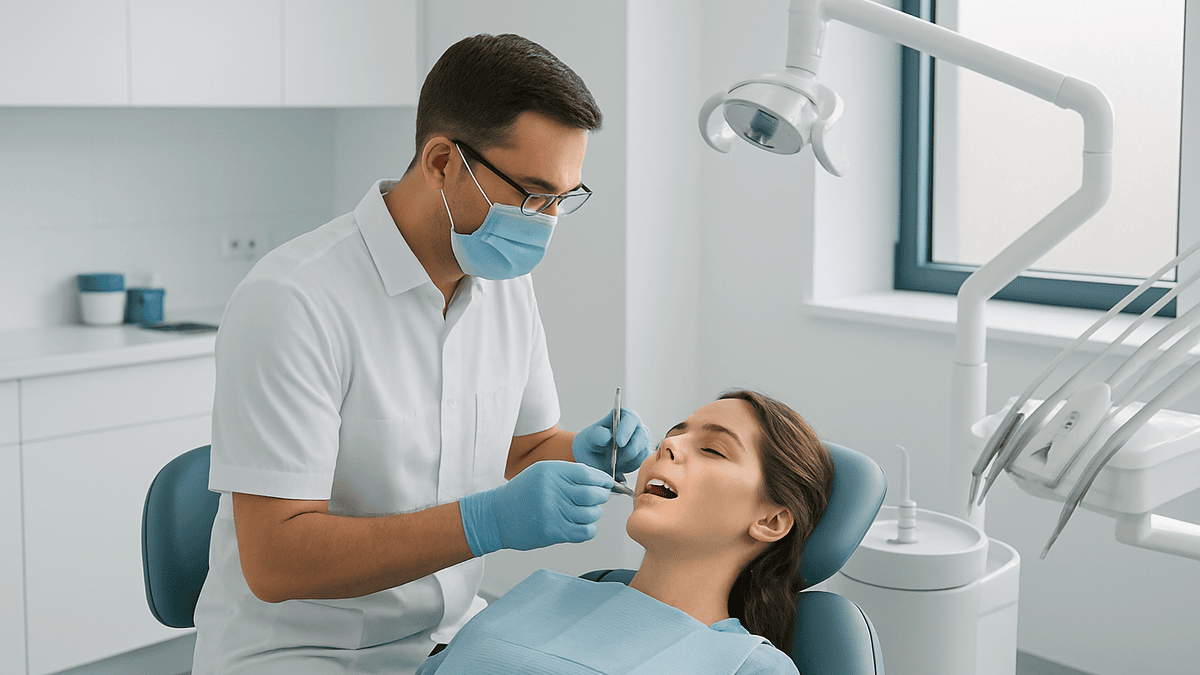
A dental filling procedure usually has three stages. The dentist numbs the area with a local anesthetic, removes the softened, decayed part of the tooth with a small drill or hand instrument, then fills and shapes the cleaned space with a material such as composite resin, amalgam or glass ionomer. Most single fillings are completed in one visit, and any decision about material or timing rests with your dental team.
The receptionist says it lightly, almost as an aside: the small dark spot on your X-ray needs a filling. You nod, book the appointment, and then spend the drive home thinking about the drill. Not the tooth. The drill.
That reaction is nearly universal, and it deserves a straight answer rather than a shrug. A dental filling procedure is one of the most common treatments in all of medicine, yet most people walk in knowing only that it involves numbness and noise. What the numbing actually does, why the dentist removes healthy-looking tooth along with the brown bit, how the material is shaped so your bite still meets cleanly: these are the details that make the chair feel less mysterious.
This explainer walks through the whole sequence, from the moment you sit down to the strange rubbery lip you carry out to the car, using mainstream dental evidence and no promises.
What a dental filling procedure actually does
A filling repairs a hole. That sounds obvious, but the reasoning behind it explains almost everything the dentist does. Tooth decay, which dentists call caries, begins when bacteria in plaque feed on sugars and release acids that dissolve minerals from enamel, the hard outer shell of the tooth. Left alone, the acid works through the enamel into dentin, the softer, more porous layer beneath, and from there toward the pulp, the living core of nerves and blood vessels. MedlinePlus describes this progression as the reason small cavities become painful ones.
Enamel cannot grow back once a true hole has formed. Very early mineral loss can sometimes be slowed or reversed with fluoride and cleaner habits, according to the NIH’s National Institute of Dental and Craniofacial Research, but a cavity that has broken through the surface needs a physical repair. The dental filling procedure does two jobs at once: it takes out the infected, softened tissue that would otherwise keep spreading, and it replaces the missing structure with a material that seals the tooth against bacteria and restores a surface you can chew on.
Think of it as patching a leak in a roof. Pulling off the rotten shingles is as important as laying the new ones, because a patch placed over damp wood fails quickly. The same logic drives a dentist to remove slightly more tooth than the visible brown spot: decay spreads sideways under enamel, and a filling bonded to soft dentin will not hold.
Everything else in the appointment, the numbing, the shaping, the checking of your bite, exists to make that repair comfortable, durable and invisible to your tongue.
Who is usually offered a filling, and who is asked to wait
Not every dark mark on an X-ray earns a filling. Dentists weigh how deep the decay reaches, whether it has broken through the enamel surface, and whether the tooth is causing symptoms. Mayo Clinic notes that fillings are the main treatment once decay has progressed beyond the earliest stage, while very early lesions confined to enamel may be monitored and treated with fluoride instead.

Common reasons a dentist recommends filling a tooth:
- A cavity visible on an X-ray or during examination that has penetrated the enamel.
- A tooth that catches food or feels rough where a small hole has formed.
- Sensitivity to sweet, hot or cold that points to exposed dentin.
- A chipped or worn tooth edge that needs rebuilding, since the same materials are used.
- An old filling that has cracked or developed a gap at its margin.
Some people are asked to wait or are steered toward a different approach. If decay has reached the pulp and the nerve is inflamed or infected, a filling alone will not settle the pain; the treating dentist may discuss root canal treatment or other options instead. When a large part of the tooth is missing, a crown, which is a cap covering the whole tooth, may be judged more durable than a filling.
Children with baby teeth close to falling out, adults with very early enamel changes, and people with an active infection or uncontrolled bleeding disorder may also have treatment sequenced differently. None of these decisions is automatic. The dentist looks at the tooth, the X-ray, your history and your preferences, and the plan belongs to that conversation rather than to any general rule.
What should you not do before a filling?
The preparation for a routine filling is refreshingly light, but a few habits can make the visit harder than it needs to be.
Skipping a meal is the first mistake. Local anesthetic numbs your lip, cheek and sometimes tongue for a few hours afterward, and Cleveland Clinic advises waiting until sensation returns before eating to avoid biting yourself. Eating a normal meal beforehand means you are not hungry and clumsy at the same time. Very sugary or acidic foods right before the appointment are unhelpful only because they leave a film the dentist has to clear; brushing and flossing in the morning is the better plan.
Arriving with an untold medical history is the second. Dentists need to know about heart conditions, bleeding disorders, diabetes, pregnancy, allergies and every medicine you take, including blood thinners and supplements, because these can affect how the anesthetic is chosen and how much the gum bleeds. Never stop or adjust a prescribed medicine on your own before dental work; if anything needs changing, that decision sits with the prescribing clinician and the dentist together.
Alcohol the night before is worth avoiding, since it can leave you dehydrated and can interact with sedatives if any are planned. Smoking in the hours before treatment irritates the gums and slows healing. If you have dental anxiety, say so when booking rather than in the chair; the NHS notes that dentists can talk through pacing, breaks and sedation options when they know in advance.
Finally, do not arrive expecting to leave and give a presentation. A drooping lip and slightly slurred speech are normal for a few hours, and planning around them removes an avoidable stress.
Step one: how the numbing works
Most of the fear about fillings is really fear of the injection, so it helps to know exactly what is happening. A local anesthetic is a medicine that temporarily blocks nerve fibers from sending pain signals to the brain. It does not put you to sleep and it does not affect your ability to think or breathe; it simply switches off sensation in a small region.

Many dentists begin with a topical gel or spray on the gum. This numbs the surface so the needle itself is felt as pressure rather than a sharp sting. The injection is then placed near the nerve that supplies the tooth. For upper teeth this is often directly beside the tooth; for lower back teeth the dentist may aim for a larger nerve at the back of the jaw, which is why the whole lower lip and half the tongue can go numb for a lower molar.
The medicine needs a few minutes to soak into the nerve, and dentists test the area before drilling. You may feel vibration, pressure and water spray during the procedure, but sharp pain should not be part of it. If it is, raise a hand; more anesthetic can be added, and no one should simply push through.
The numbness typically wears off over the following few hours, according to Cleveland Clinic, which is why the after-care advice about not chewing until feeling returns matters. Some people feel a fast heartbeat for a minute after the injection. That usually comes from a small amount of adrenaline mixed into many dental anesthetics to keep the medicine in place longer, and it passes quickly. Tell your dentist if you have a heart rhythm condition, because anesthetic choice can be adjusted.
Step two: removing the decay
Once the tooth is numb, the dentist clears the damage. The tool is usually a high-speed drill with a tiny rotating tip cooled by a water spray, sometimes joined by a slower drill or a hand instrument shaped like a small spoon. The whine you hear is the drill spinning, not a sign of anything going wrong. The water keeps the tooth from heating up and washes away debris, which is why an assistant holds a suction tube.
Decayed dentin is soft, almost leathery, and the dentist can feel the difference between it and healthy tooth with a probe. The goal is to remove everything that is infected and unstable while keeping as much sound tooth as possible. This is a judgment call made tooth by tooth. Modern practice leans toward conserving structure, since every millimeter removed is gone for good.
Some practices use additional aids to check their work, such as dyes that stain infected dentin or magnification loupes. Air abrasion, which uses a fine stream of particles, and laser instruments exist for selected small cavities, but they are not suitable for every tooth and the evidence for them does not show clear superiority over conventional drilling. If your dentist offers one, ask what makes it a good fit for your tooth rather than assuming it is better.
The cleared space is then shaped. Different materials need different shapes: a bonded composite can sit in a shallow, rounded cavity, while amalgam needs a slightly undercut shape so it locks in mechanically. If decay has crept near the pulp, the dentist may place a protective lining before the filling itself. Occasionally, decay turns out to be deeper than the X-ray suggested, and the dentist will pause to explain a change of plan.
Step three: shaping and finishing the filling
The final stage turns a hole into a tooth again. What happens depends on the material.
For a composite resin, which is a tooth-colored plastic and glass mixture, the dentist first etches the cavity with a mild acid gel for a few seconds to roughen the surface, then paints on a bonding agent. The composite is added in small layers, each shaped with a fine instrument and hardened with a blue light for a matter of seconds. Building in layers reduces shrinkage as the material sets and lets the dentist sculpt the ridges and grooves that make a molar look like a molar.
For dental amalgam, a metal alloy of silver, tin, copper and mercury, the mixed material is packed firmly into the cavity, carved to shape while still soft, and left to harden over the next hours. Glass ionomer, a material that sets chemically and releases small amounts of fluoride, is placed in a similar single step and is often used near the gumline or in baby teeth.
Then comes the part patients remember: the dentist asks you to bite on a thin colored paper. Marks show where the new filling stands proud of your other teeth, and those high spots are trimmed away. A filling that is even a fraction too tall can make the tooth ache under chewing pressure for days, so this checking is not fussiness. Finally, the surface is polished smooth so plaque has fewer places to cling and your tongue stops noticing it.
Once sensation returns, chew on the side and notice whether the tooth meets its partner cleanly. If it feels like the tooth is hitting first, tell the office; a quick adjustment fixes what a week of waiting will not.
How long does a filling take?
People searching this question usually want to know whether to book a half day off work. For a single, uncomplicated cavity, they generally do not need to. Cleveland Clinic describes a typical filling appointment as taking roughly an hour or less, and much of that is spent waiting for the anesthetic to take effect and checking the bite at the end.
Several things stretch or shorten the visit:
- Number of teeth: dentists often treat two or three neighboring fillings in one sitting, since the same area is already numb.
- Location: a small cavity on a front tooth is quicker to reach than one between two back molars.
- Material: composite is placed in layers and cured step by step, so it usually takes longer to place than amalgam, though the difference is minutes rather than hours.
- Depth: if the dentist finds decay closer to the pulp than expected, placing a protective liner adds time, and occasionally the plan changes toward a different treatment.
- Patient factors: breaks for a sore jaw, a strong gag reflex or anxiety all lengthen the appointment, and dentists expect this.
The time you spend numb is a separate matter. Depending on the anesthetic and where it was placed, lip and cheek sensation commonly returns over a few hours, so a lunchtime appointment may mean a late lunch.
Composite fillings are fully hardened by the light before you leave, so you can chew on them as soon as the numbness fades. Amalgam continues to set for a while afterward, and dentists often ask patients to avoid hard chewing on that side for the rest of the day. Ask which material was used and what timeline applies to you; the dentist who placed it is the right source for that answer.
Types of dental fillings: what are the three main options?
When people ask about the three types of fillings, they usually mean the three direct materials placed in a single visit: composite resin, dental amalgam and glass ionomer. Gold and ceramic restorations also exist, but these are typically made in a laboratory from an impression and fitted at a second visit, which puts them in a different category.
| Material | What it is | Commonly used for | Typical lifespan reported by Cleveland Clinic | Trade-offs in plain terms |
|---|---|---|---|---|
| Composite resin | Tooth-colored plastic and glass mixture bonded to enamel | Front teeth, small to medium back-tooth cavities | About 5 to 10 years | Matches tooth color; needs a dry field; can stain over time |
| Dental amalgam | Silver-colored alloy of metals bound with mercury | Large back-tooth cavities under heavy chewing | About 10 to 15 years | Very durable; visible color; requires a locking cavity shape |
| Glass ionomer | Acid-base cement that bonds chemically and releases fluoride | Gumline cavities, baby teeth, temporary repairs | Generally shorter than composite | Fluoride release; weaker under chewing force |
| Gold or ceramic inlay | Laboratory-made insert cemented into the cavity | Medium cavities where longevity or appearance is a priority | Often longer than direct materials | Two visits; highly durable; ceramic can be brittle in thin sections |
Lifespan figures are averages from large populations and say nothing certain about your tooth. How you chew, whether you grind, how well you clean, and the size of the cavity move those numbers in either direction. A small composite in a well-cared-for mouth can outlast a large amalgam in a mouth that grinds at night.
Which material is used is a shared decision. Dentists weigh the size and position of the cavity, how much chewing load it will take, whether they can keep the area dry, and what you care about most. Ask why one material is being suggested over another; a good answer will reference your tooth, not a general preference.
What is the healthiest tooth filling to get?
This question hides two separate worries: whether any filling material is harmful, and whether one is better for the tooth. The honest answer to both is more measured than most online articles suggest.
On safety, dental amalgam draws the most concern because it contains mercury bound into the alloy. The NIH’s dental research institute and the NHS both describe amalgam as a long-used, effective material, while noting that regulators in several countries recommend avoiding new amalgam placement in specific groups, such as pregnant or breastfeeding women and young children, mainly as a precaution and to reduce environmental mercury. There is no reliable evidence that removing sound amalgam fillings improves health, and removal itself briefly releases more mercury vapor than leaving them in place. Composite resins contain plastics and, in some formulations, chemicals that have raised questions in laboratory studies; current mainstream guidance does not classify them as unsafe, but the evidence base is younger than amalgam’s.
On what is best for the tooth, no single winner exists. Composite bonds to enamel, so it often requires less drilling and reinforces thin walls. Amalgam tolerates moisture and heavy chewing better, which is why it persists in large back-tooth cavities. Glass ionomer releases fluoride, useful at the gumline or in children, but wears faster. Gold and ceramic can last long but need more tooth removed and two appointments.
The healthiest filling, then, is arguably the smallest one placed in a tooth that was caught early, whatever it is made of. That shifts the emphasis toward regular checkups, fluoride toothpaste and reducing how often sugar hits the teeth, which the NHS lists as the core of preventing decay. Ask your dentist which material suits your specific tooth and circumstances, and expect a reasoned answer rather than a slogan.
Does getting a filling hurt? An honest account
The short version: the injection is usually the most uncomfortable moment, and it lasts seconds. The drilling itself, done under working anesthetic, is felt as pressure and vibration rather than pain. The afterward can bring mild soreness. Anyone who tells you a filling is painless in every case is overselling, and anyone who describes it as agony is describing either an untreated toothache or a bad experience that should have been stopped and fixed.
Where discomfort genuinely comes from:
- The needle: topical gel and a slow injection reduce this. A brief sting and a feeling of pressure are typical.
- The jaw: holding the mouth open is tiring, and a small rubber block can rest the muscles.
- The gum: if the cavity sits near the gumline, the gum may be tender for a day or two after the instruments pass by.
- The tooth afterward: sensitivity to cold, pressure or sweet is common for a short period, which Cleveland Clinic describes as lasting from a few days to a couple of weeks as the tooth settles.
Some situations make anesthesia harder. An acutely inflamed tooth, a lower molar with a nerve that is difficult to reach, or a person who metabolizes anesthetics quickly may need a second injection or a different technique. Anxiety also lowers pain tolerance; the heart races, the muscles tense, and pressure reads as pain. Dentists know this, and raising your hand is expected, not embarrassing.
If pain from a filled tooth grows worse over days rather than fading, or if it throbs without any trigger, that is not a normal settling period and merits a call to the practice. The tooth may need adjustment or further assessment, and the dentist who placed the filling should be the one to look.
What to do after a filling: the first hours, days and weeks
Recovery from a filling is mostly a matter of patience and attention rather than instructions.
The first few hours. While numb, avoid chewing, hot drinks and anything that requires precise lip control. People bite cheeks and burn tongues in this window without feeling it. Soft, cool food once sensation begins to return is a reasonable compromise. If amalgam was placed, your dentist may ask you to avoid hard chewing on that side for the remainder of the day while it finishes setting.
The first few days. Mild sensitivity to cold, pressure or sweetness is common and usually eases on its own. Brush and floss normally around the tooth; a new filling is not fragile in that sense, and skipping cleaning allows plaque to gather at the margins. If the tooth feels high when you bite, or if your jaw clicks into a slightly different position, contact the office for a bite check rather than waiting for it to settle. Over-the-counter pain relievers are sometimes used for soreness; which one and whether it suits you is a question for a pharmacist or your clinician, especially if you take other medicines.
The first few weeks. Sensitivity that persists but is gradually improving is within the expected range. Composite fillings may show a slightly different translucency until the tooth rehydrates over a few days. Some people notice a metallic taste briefly with amalgam.
Going forward, the filling needs the same care as the tooth around it. Fluoride toothpaste twice daily, cleaning between teeth, and limiting how often sugary foods and drinks hit the mouth are the measures the NHS lists to slow new decay. Regular checkups let the dentist spot a chipped margin early, when repair is simpler than replacement.
Risks, complications and alternatives in plain language
Fillings are low-risk, but not risk-free, and a fair explainer names the possibilities.
Post-operative sensitivity is the most frequent issue and usually fades. A high bite, where the filling sits slightly above neighboring teeth, causes aching on chewing and is fixed with a small adjustment. Pulp irritation can follow a deep filling; if the nerve had already begun to die from the decay, pain may emerge weeks later and the tooth may then need root canal treatment. This is not a failure of the filling so much as the disease having gone further than any X-ray could show. Fracture of the filling or the surrounding tooth happens over years, particularly in large restorations under heavy grinding. Allergic reaction to filling materials is rare but recorded. Anesthetic side effects, such as prolonged numbness or a bruise at the injection site, are uncommon and usually resolve.
Alternatives depend on what the tooth needs:
- Monitoring with fluoride, for very early enamel changes that have not cavitated, as described by the NIH dental research institute.
- A crown, when too little tooth remains to support a filling.
- An inlay or onlay, a laboratory-made restoration for medium-sized cavities.
- Root canal treatment, when the pulp is inflamed or infected.
- Extraction, when a tooth cannot be saved, followed by a discussion of replacement options.
Silver diamine fluoride, a liquid applied to arrest decay without drilling, is used in some settings, particularly for children and people who cannot tolerate treatment; it stains the decayed area black and does not restore shape, so it is a management tool rather than a substitute for a filling in most adult cases.
Choosing among these is a clinical judgment shaped by the tooth, your health and your priorities. The right person to weigh them is the dentist examining you.
What people often get wrong about fillings
Dental folklore is stubborn. A few corrections, each grounded in mainstream evidence.
Myth: if it does not hurt, it does not need filling. Decay confined to enamel and outer dentin often causes no pain at all. By the time a tooth aches spontaneously, the pulp is frequently involved, and the treatment has become more involved. Mayo Clinic lists this silent early phase as the reason for routine checkups.
Myth: white fillings are always better than silver. Composite matches tooth color and bonds to enamel, but amalgam tolerates moisture and heavy chewing and, on average, lasts longer in large back-tooth cavities according to Cleveland Clinic. Better depends on the tooth.
Myth: old amalgam fillings should be removed for health. The NHS and the NIH describe no reliable evidence that removing intact amalgam improves general health, and the removal itself briefly increases mercury vapor exposure. Replacement is warranted when a filling is broken, leaking or has decay beneath it.
Myth: a filled tooth is fixed for life. Every filling has a lifespan, and the tooth around it can still decay. The margin where filling meets tooth is a favorite hiding place for plaque.
Myth: sensitivity afterward means the dentist did something wrong. Short-term sensitivity is expected and usually fades. Worsening or spontaneous pain is the signal to call, not the initial tenderness.
Myth: you cannot brush the tooth for a day. Normal brushing and flossing can resume once the numbness passes; clean margins protect the work.
Myth: baby teeth do not need fillings because they fall out. Decayed baby teeth can cause pain, infection and space loss for adult teeth, and treatment decisions depend on how soon the tooth is due to be shed.
Each of these misunderstandings tends to delay care or drive unnecessary treatment. Knowing them turns a routine filling into a shared decision rather than a leap of faith.
Questions to ask your care team before and after the filling
A dentist explaining a filling has answered these questions hundreds of times. Asking them yourself changes nothing about the clinical picture, but it changes how much of the plan you understand and consent to.
Before the procedure:
- How deep is the decay, and how close is it to the nerve?
- Which material are you suggesting for this tooth, and what makes it a good fit here?
- Is there a reason to consider a crown, inlay or a different approach instead?
- Will you need to remove much healthy tooth to place this material?
- Which anesthetic will you use, and does anything in my medical history or medicine list affect that choice?
- What happens if you find the decay is deeper than the X-ray shows?
After the procedure:
- How long should I avoid chewing on this side, and does the material need time to set?
- What kind of sensitivity is expected, and for roughly how long?
- What signs should make me call rather than wait?
- Is my bite even, and what should I notice if it is not?
- How can I reduce the chance of decay around the edges of this filling?
- When do you want to see the tooth again?
For parents accompanying a child, add questions about how the visit will be paced, whether a parent can stay in the room, and what words the team will use to describe the numbing and the drill, since calm, honest language shapes how the child remembers the day.
If any answer relies on a sweeping claim, such as a material being universally superior or a filling being guaranteed, ask for the reasoning. Good clinicians welcome that question and will anchor their answer to your tooth and your circumstances. Every decision about what is placed and when remains with you and the treating team.
When to call your doctor or dentist after a filling
Most fillings settle without incident, and short-lived tenderness is part of the expected course. Certain signs, though, warrant a call to the practice or, in a few cases, urgent medical care, and it is safer to ring than to wait.
Contact your dentist promptly if you notice:
- Pain that increases over several days instead of fading, or a throbbing ache that arrives without a trigger such as cold or biting.
- The tooth feeling high or hitting first when you close, especially if your jaw or other teeth begin to ache from it.
- Lingering pain after hot or cold that lasts more than a few seconds each time, which may suggest an irritated nerve.
- A piece of filling that breaks off, a rough edge, or a sharp corner that cuts your tongue or cheek.
- Swelling of the gum next to the tooth, a bad taste, or a small pimple-like bump on the gum, which can indicate infection.
- Numbness that persists well beyond the expected few hours after the anesthetic.
Seek urgent medical care, through emergency services or an urgent care setting, if you develop:
- Rapidly spreading facial swelling, particularly if it affects the eye, the floor of the mouth or the neck.
- Difficulty swallowing or breathing, or a sensation that the throat is closing.
- Fever with facial swelling.
- Signs of an allergic reaction to the anesthetic or material, such as hives, wheezing or lip and tongue swelling.
The NHS describes these features as reasons to seek immediate help for dental problems because a spreading infection can progress quickly. Do not attempt to manage a spreading facial infection at home. Whatever the symptom, the dentist who placed the filling is the first person to call for anything that feels wrong, and the treating team decides the next step.
Frequently asked questions
Is dental filling a painful procedure?
For most people the injection is the most uncomfortable part, and it lasts seconds. Once the local anesthetic works, drilling is felt as pressure and vibration rather than pain. Mild sensitivity to cold or pressure is common for a few days to a couple of weeks afterward. Pain that worsens over days, or throbs without a trigger, is not typical and should prompt a call to the dentist who placed the filling.
What is the healthiest tooth filling to get?
No single material is best for every tooth. Composite bonds to enamel and needs less drilling; amalgam withstands heavy chewing and moisture; glass ionomer releases fluoride but wears faster. Regulators advise avoiding new amalgam in certain groups as a precaution, but mainstream evidence does not show intact amalgam harms health. Arguably the healthiest filling is the smallest one placed early, so regular checkups matter more than material choice.
What are the three types of fillings?
The three direct materials placed in a single visit are composite resin, a tooth-colored plastic and glass mix; dental amalgam, a silver-colored metal alloy; and glass ionomer, a fluoride-releasing cement often used near the gumline or in baby teeth. Gold and ceramic restorations also exist but are usually made in a laboratory and fitted at a second appointment, so they belong to a separate category.
What should you not do before a filling?
Do not skip a meal, since you will be numb for a few hours afterward and unable to eat comfortably. Do not hide medical conditions or medicines, including blood thinners and supplements, because they can affect anesthetic choice. Do not stop or change a prescribed medicine on your own. Avoid alcohol the night before and smoking beforehand. If you are anxious, say so when booking rather than in the chair.
How long does a filling take from start to finish?
A single uncomplicated filling is typically completed within about an hour, according to Cleveland Clinic, with much of that time spent waiting for the anesthetic and checking the bite. Multiple neighboring cavities, deep decay, or layered composite placement add minutes rather than hours. Numbness commonly persists for a few hours after you leave, which is a separate timeline worth planning around.
Does getting a filling hurt more on a back tooth?
Back teeth are not more painful once numb, but they can be harder to anesthetize, particularly lower molars, where the nerve sits deep in the jaw. A second injection is sometimes needed. Holding the mouth open wide for longer can tire the jaw muscles, and a rubber bite block helps. Cavities near the gumline may leave the gum tender for a day or two afterward.
What to do after a filling if my tooth feels high?
Call the dental office and ask for a bite check rather than waiting for it to settle. A filling that sits even slightly above neighboring teeth takes the full force of chewing, which can make the tooth ache and strain the jaw. The adjustment is quick and painless, involving a small amount of polishing. Tolerating a high bite for weeks can lead to lingering sensitivity that would otherwise have been avoided.
Can I brush my teeth after a filling?
Yes, normal brushing and flossing can resume as soon as the numbness fades, and cleaning around the new filling is encouraged. Plaque tends to collect at the margin where filling meets tooth, so leaving the area alone works against you. Use fluoride toothpaste as usual. If the gum next to the tooth is tender from the procedure, brush gently for a day or two, but do not skip it.
Why does my tooth still hurt weeks after a filling?
Gradually improving sensitivity over a few weeks is within the expected range, especially after a deep filling. Pain that is getting worse, waking you at night, or occurring without hot, cold or biting may indicate that the nerve was already damaged by the decay or that the bite is uneven. Contact the dentist who placed the filling for an assessment; further treatment, if needed, is their decision to discuss with you.
Are fillings safe during pregnancy?
Routine dental care, including fillings with local anesthetic, is generally considered appropriate during pregnancy, and untreated decay carries its own risks. Several health authorities recommend avoiding new amalgam placement in pregnant and breastfeeding women as a precaution, so composite or glass ionomer is often used instead. Tell your dentist you are pregnant so anesthetic choice, X-ray shielding and timing can be planned with your maternity team.
References
- MedlinePlus: Dental cavities
- NHS: Tooth decay
- Cleveland Clinic: Dental Fillings
- NIH National Institute of Dental and Craniofacial Research: Tooth Decay
This article is for general information only and is not a substitute for professional medical advice. Please consult a qualified doctor about your individual situation.

More from the Blog

Tooth Extraction Healing Timeline: The Socket From the First Day to the Fourth Week
After a tooth extraction, a blood clot forms in the socket within the first day, soft granulation tissue replaces it over the following week,…
Bringing Old X-Rays and Records to a Dental Anatomy Assessment: Why History Helps Planning
Bringing old X-rays and records to a dental anatomy assessment gives the clinician a timeline rather than a single snapshot. Prior radiographs, periodontal charts,…
How Periodontal Disease Develops Below the Gumline and Why SRP Deep Cleaning Is Planned
Periodontal disease begins when bacterial plaque collects along the gumline, inflames the gums (gingivitis) and, if it persists, spreads below the gum to destroy…

Before Clear Aligners Start: Digital Scans, Cavities to Treat and the Aligner Plan
Before starting clear aligners, an orthodontist or dentist usually completes a full dental exam, X-rays, photographs and a digital scan of both jaws. Any…

Canker Sore vs Cold Sore: How to Tell Them Apart in Ten Seconds
Location is the fastest clue. Canker sores are shallow, round ulcers with a white or yellow center that form inside the mouth, on the…
Is a Dental Spa Right for Anxious Patients? Comfort Care Without Cutting Corners
A dental spa can suit many anxious patients when the comfort features sit on top of standard clinical care rather than replacing it. Warm…