

When Is Thymectomy Considered for Myasthenia Gravis? How Neurologists and Surgeons Decide

Key Takeaways
- A thymoma, found in roughly one in ten people with myasthenia gravis, makes surgery advisable on its own, whatever the level of weakness.
- The randomized MGTX trial studied adults aged 18–65 with generalized, acetylcholine receptor antibody-positive disease of under five years; benefit outside that profile is extrapolated, not proven.
- In that trial, 9 percent of the surgery group versus 37 percent of the medicine-only group were hospitalized for worsening weakness over three years.
- Thymectomy is generally not recommended for MuSK antibody disease, where the thymus is usually normal, and evidence is weak for eye-only disease.
- Any improvement in myasthenia after thymectomy typically emerges over months to years, and continued medicine afterward is expected rather than a sign of failure.
- In adults the thymus has largely turned to fat by the twenties, so removing it is not known to cause meaningful immune deficiency; children are assessed more cautiously.
Thymectomy is usually recommended for anyone with myasthenia gravis who also has a thymoma, a tumor of the thymus gland, regardless of how mild the weakness is. Without a thymoma, surgeons and neurologists generally consider it for adults under about 65 with generalized, acetylcholine receptor antibody-positive disease of fewer than five years, because a randomized trial showed better symptom control and lower steroid needs. The final decision always rests with the treating team.
The scan report arrives before the appointment does, and one word sits in the middle of it: thymus. Most people cannot point to the gland, let alone say what it does. Yet here it is, being discussed as something that might be removed to help a droopy eyelid, a voice that fades by dinner, and arms that give out halfway through drying hair.
That is the moment many people with myasthenia gravis meet the question in this article. When is thymectomy recommended, and when is it simply one option among several? The honest answer is that the evidence is stronger for some groups than others, and a good care team will say so plainly.
What follows is the reasoning neurologists and thoracic surgeons actually use: the antibody result, the age, the years since symptoms began, and above all whether a tumor is present. Understanding that logic will not make the decision for you, but it will make the conversation with your team a far more equal one.
What a thymectomy actually involves
A thymectomy is an operation to remove the thymus, a small gland tucked behind the breastbone and in front of the heart. In a child it is roughly the size of a walnut and busy training immune cells. By adulthood it has mostly shrunk and turned to fatty tissue, which is one reason surgeons can take it out without leaving a hole in a person’s daily life.
Surgeons reach the gland in one of several ways. The traditional route opens the breastbone, a sternotomy, and gives a wide view of the chest. Minimally invasive routes use a few small cuts between the ribs with a camera and long instruments, either hand-held (video-assisted thoracoscopic surgery, or VATS) or robot-assisted. A transcervical approach works through a short incision at the base of the neck. Whatever the route, the goal in myasthenia gravis is an extended thymectomy: removing not just the gland but also the fatty tissue around it, because stray islands of thymus can hide in that fat.
The operation is done under general anesthesia and usually takes a few hours, according to Cleveland Clinic. Anesthesia teams plan carefully for myasthenia gravis, because the muscle-relaxing medicines used during surgery can act more strongly and last longer in someone whose neuromuscular signaling is already impaired. That is not a reason to avoid surgery; it is a reason the team wants your disease as stable as possible beforehand, a point returned to later.
Nothing about the operation fixes the immune system on the day. Removing the gland is an attempt to slow the production of the antibodies that cause the weakness, and that effect, when it comes, arrives over months rather than hours.
Why the thymus matters in myasthenia gravis
Myasthenia gravis is an autoimmune condition in which antibodies block or destroy the receptors that let nerve signals reach muscle. In most people those antibodies target the acetylcholine receptor, the docking site for the chemical messenger that tells a muscle to contract. Fewer signals land, so muscles tire quickly and recover with rest, which is why weakness classically worsens through the day.

The thymus is where the body teaches young immune cells to tell self from non-self. In many people with myasthenia gravis the gland does not look normal. The National Institute of Neurological Disorders and Stroke notes that some have an enlarged, overactive gland (thymic hyperplasia) and roughly one in ten have a thymoma, a tumor of thymus tissue. Researchers believe the abnormal gland may be a training ground where immune cells learn to attack the acetylcholine receptor, and may keep supplying fresh antibody-producing cells for years.
That is the theory behind removing it. Take away the nursery, and over time the antibody supply may fall. The idea has been around for close to a century, but for most of that period it rested on observation rather than proof, because surgeons could not ethically randomize people for decades and the natural course of the disease fluctuates on its own.
Two facts shape everything that follows. First, the thymus link is strongest in acetylcholine receptor antibody-positive disease; other antibody types behave differently. Second, the gland has largely finished its work by early adulthood, which is why removing it in a 35-year-old raises fewer concerns than in a small child. Both facts feed directly into who is offered surgery.
When is thymectomy recommended? The trial that changed practice
For decades neurologists offered thymectomy on faith plus experience. Then came a randomized trial, published in the New England Journal of Medicine and known as MGTX, that finally tested the question properly.
The trial enrolled 126 adults aged 18 to 65 with generalized myasthenia gravis, acetylcholine receptor antibodies, no thymoma, and symptoms for less than five years. Half had an extended thymectomy through the breastbone plus a corticosteroid; half took the corticosteroid alone. Everyone was followed for three years.
The results, reported in the trial paper indexed on PubMed, were clear on several counts. People who had surgery had lower average weakness scores over the three years. They needed a lower average steroid dose to stay controlled, which matters because long-term steroid exposure carries its own weight of harm. Fewer of them needed a second immune-suppressing medicine (17 percent versus 48 percent), and fewer were hospitalized for worsening weakness (9 percent versus 37 percent). An extension study following participants to five years reported that the differences persisted.
Those numbers are why guidance shifted. For someone who matches the trial profile, thymectomy moved from a reasonable gamble to an evidence-supported option that the care team should at least raise.
The trial also drew the boundaries of what is known. It says nothing directly about people over 65, about children, about ocular-only disease, or about people whose antibodies target something other than the acetylcholine receptor. It tested one surgical approach, the open one. Everything outside those lines is extrapolation, and honest clinicians label it as such when they sit down with you.
What is the primary indication for thymectomy? Thymoma comes first
Before any discussion of antibodies and trial criteria, one situation overrides the rest. If imaging shows a thymoma, removal of the tumor is recommended on its own merits, whether the myasthenia is mild, severe, or, in some people, entirely absent.
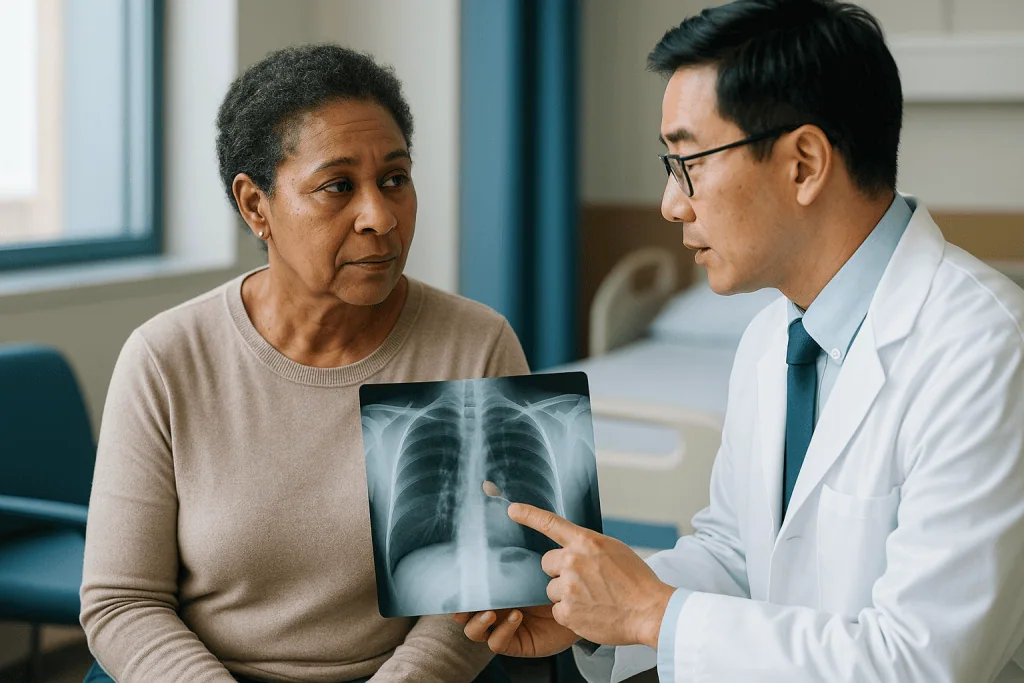
A thymoma is a tumor arising from the cells of the thymus. Most grow slowly and stay within a capsule, but some invade neighboring structures in the chest, and a smaller group are frankly cancerous (thymic carcinoma). Because a biopsy through the chest wall can be difficult and can risk spreading cells, surgeons often remove the whole mass and let the pathologist grade it afterward. That is why the operation is both diagnosis and treatment.
The NHS notes that about one in ten people with myasthenia gravis have a thymoma, and the reverse link is strong too: a sizeable share of people found to have a thymoma turn out to have myasthenia or develop it later. A chest CT scan is therefore a routine part of the workup after diagnosis, not an optional extra.
People often ask about life expectancy after thymoma removal. The truthful answer is that outlook depends on the tumor’s stage, whether it was removed completely, and its type under the microscope; general averages mean little for an individual. What the evidence does support is that follow-up imaging continues for many years, because thymomas can recur late, sometimes a decade or more after surgery. Your surgical and oncology team will set that schedule based on your pathology report, and they are the right people to talk through what your specific findings mean.
Who is usually offered surgery, and who is usually asked to wait
Putting the evidence together, clinicians tend to sort people into three broad groups. The table simplifies a nuanced conversation, but it reflects how most neuromuscular specialists frame the decision.
| Situation | Usual stance | Why |
|---|---|---|
| Thymoma on imaging, with or without weakness | Surgery generally recommended | Tumor removal is needed in its own right |
| Generalized disease, acetylcholine receptor antibodies, age 18–65, symptoms under 5 years, no thymoma | Surgery generally considered | Matches the randomized trial population |
| Same profile but symptoms beyond 5 years, or age over 65 | Case by case | Outside trial evidence; possible but less certain benefit |
| Ocular-only disease | Usually watchful | Limited evidence; many stay ocular |
| MuSK antibody disease | Generally not recommended | Thymus rarely abnormal; no demonstrated benefit |
| No detectable antibodies (seronegative) | Selective | Some have unmeasured receptor antibodies; discussed individually |
Being asked to wait is not a refusal. Someone newly diagnosed and still unstable will typically be told to get symptoms controlled first, because operating on an uncontrolled myasthenic raises the risk of a breathing crisis afterward. Someone with purely eye symptoms may be asked to give it time, since a meaningful share of ocular cases never generalize and the Mayo Clinic notes surgery has not shown consistent benefit in that setting.
People who fall into the case-by-case rows often feel stuck. The useful move is to ask the team which factor is tipping their advice and what would change it. Sometimes a repeat antibody test, an updated scan, or a few more months of stability answers the question better than any table.
Thymectomy for myasthenia gravis when the antibodies are different
Antibody type is one of the first things a neurologist checks when weighing surgery, and it changes the advice more than most people expect.
Roughly four in five people with generalized disease have acetylcholine receptor antibodies, the group the trial studied and the group where the thymus is most often abnormal. For them, the reasoning above applies directly.
A smaller group has antibodies against muscle-specific kinase, usually shortened to MuSK, a protein that helps organize the receptor cluster at the nerve-muscle junction. MuSK disease looks different in several ways: it often affects the face, throat and breathing muscles prominently, it responds less predictably to the standard symptom-relieving medicines, and the thymus is usually normal on examination. Because the gland does not seem to be the engine of the disease, thymectomy is generally not recommended, a position reflected in mainstream guidance summarized by the National Institute of Neurological Disorders and Stroke.
Then there are people whose standard tests show no antibodies at all, often called seronegative. More sensitive laboratory methods reveal that many of them do carry low levels of acetylcholine receptor antibodies that routine assays miss, which is why some specialists treat them much like the antibody-positive group. Others may have rarer antibodies, such as those against a protein called LRP4. Evidence for surgery here is limited to smaller observational series, so the decision leans heavily on individual factors: how generalized the weakness is, how young the person is, what the thymus looks like on CT, and how much medicine is needed to stay controlled.
Ocular myasthenia, where only the eye muscles are affected, is its own case. Some ocular cases generalize within the first couple of years, but many do not, and the case for a chest operation to treat double vision is correspondingly weaker. Most teams watch, treat the eyes, and revisit if the disease spreads.
Children, teenagers and adults over 65: the age question
Age sits at both ends of the decision like a pair of bookends.
In juvenile myasthenia gravis, the disease that begins before adulthood, the thymus is still active. It is the place where the immune system builds its repertoire of T cells, the white blood cells that coordinate immune defenses, and that work is largely complete by the teenage years. Removing the gland in a young child therefore raises theoretical concerns about long-term immunity that do not apply to adults. In practice, pediatric neurologists still consider thymectomy for children with generalized, acetylcholine receptor antibody-positive disease that is hard to control, and observational series suggest meaningful improvement in many. Where possible the team may prefer to wait until after puberty, but severe disease can justify earlier surgery. Any thymoma, though rare in children, changes the calculation immediately.
Children also present a specific nuance: some who appear seronegative are found antibody-positive on more sensitive tests, and a few have a non-autoimmune condition, congenital myasthenic syndrome, caused by gene changes rather than antibodies. Surgery has no role there, which is why careful diagnosis comes before any operation.
At the other bookend, adults over 65 fall outside the trial evidence. Late-onset disease is increasingly common as populations age, and the thymus in an older adult is almost entirely fat, which some argue means less to gain. Others point out that older adults suffer more from long-term steroid exposure, so anything that lowers medicine needs carries extra value. Surgical risk also rises modestly with age and other conditions. Most specialists describe this as a genuinely individual decision, best made with a surgeon comfortable with minimally invasive approaches and an anesthesia team experienced in myasthenia.
How surgeons choose the approach: open, keyhole, robotic or through the neck
Once the decision to operate is made, the next conversation is about the route in. Each has a logic, and the choice depends on the surgeon’s experience, the anatomy on your scan, and whether a tumor is present.
The transsternal approach, splitting the breastbone, is the one the trial used and the one with the longest track record. It gives the widest view, which matters when a thymoma is large or may have grown into nearby structures. Its costs are a longer hospital stay, more pain, and weeks of restriction while the bone knits.
Video-assisted and robotic thoracoscopic approaches work through small incisions between the ribs. Cleveland Clinic describes these as typically involving less pain and shorter hospital stays. Surgeons who use them argue the magnified camera view lets them clear the surrounding fat as thoroughly as an open operation. The randomized evidence for equivalence in myasthenia outcomes does not yet exist, but observational comparisons have generally not shown a disadvantage for well-performed minimally invasive surgery, and it has become the common choice for non-tumor cases and small, well-contained thymomas.
The transcervical approach, through a short incision above the collarbone, avoids the chest wall entirely and is favored by a small number of centers. Critics question whether it reliably removes all the surrounding fat.
For thymoma removal surgery specifically, completeness of removal is the priority, and the surgeon will pick whichever route most reliably achieves it for your tumor. Ask directly how many thymectomies your surgeon performs and which approach they favor for cases like yours. Neither answer should be taken as a judgment on any institution, only as information you are entitled to have.
Getting stable before surgery: why timing matters as much as eligibility
A surprising amount of the planning happens before anyone books an operating room, and it centers on one goal: arriving at surgery with the weakness as well controlled as it can be.
The reason is the risk of myasthenic crisis, a sudden worsening severe enough to weaken the breathing muscles and require ventilator support. Surgery, anesthesia, pain, and infection can all trigger it, and a person whose swallowing and breathing muscles are already borderline has little margin. Neurologists therefore typically optimize treatment first. That may mean adjusting the symptom-relieving medicines that boost the signal at the nerve-muscle junction, settling a corticosteroid regimen, or, for people who remain unstable, using a short-acting treatment beforehand. Intravenous immunoglobulin, pooled antibodies from donors that dampen the immune attack for a few weeks, and plasma exchange, which filters antibodies out of the blood, are the two tools commonly described for this purpose in guidance from the NHS and Mayo Clinic. Whether either is needed, and when, is a decision for the prescribing neurologist based on your examination and breathing measurements.
Anesthesia consultation is not a formality here. Muscle relaxants act unpredictably in myasthenia, some medicines used for other purposes can worsen weakness, and the team will plan monitoring accordingly. Expect questions about swallowing, night-time breathing, and how far you can walk.
People sometimes read urgency into a surgical recommendation and worry that waiting a few months to stabilize means losing benefit. The evidence does not support that fear. The trial enrolled people up to five years from onset, and benefit accrued over years afterward. A short delay to make surgery safer is the norm, not a compromise.
Thymectomy recovery time: what the following days and weeks usually look like
Recovery unfolds in two separate timelines, and confusing them causes a great deal of disappointment.
The first is surgical recovery. After a minimally invasive thymectomy, Cleveland Clinic describes a hospital stay of a few days, with a chest drain removed before discharge and a gradual return to ordinary activity over the following weeks. After a sternotomy the stay is longer and the restrictions firmer: no heavy lifting or pushing until the surgeon confirms the breastbone has healed, a process that takes weeks. Pain is real in either case and usually well managed. Most people are walking the day after surgery, and the team will want you doing breathing exercises early to keep the lungs clear, because shallow breathing after chest surgery invites pneumonia.
The second timeline is the myasthenia itself. Here the frank message from the National Institute of Neurological Disorders and Stroke is that any improvement from thymectomy typically emerges over months to years, not weeks. Some people notice nothing different for a long stretch; others find that over the following one to three years their neurologist can gradually lower their medicines. A smaller group experiences a temporary worsening in the weeks after surgery as the body deals with the stress of the operation, which is why the team watches closely and why medicines are not usually reduced right away.
Practical points that recur in patient forums deserve a mention. Coughing, sneezing and laughing hurt for a while; a folded pillow held against the chest helps. Driving waits until you can brake hard without pain and are off strong painkillers. Return to work depends on the job and the approach, and your surgeon’s guidance on your specific case beats any general range.
Thymectomy side effects and risks, described plainly
Every operation carries risk, and this one sits in a crowded neighborhood: the heart, the great vessels, the lungs and the nerves that move the diaphragm and the voice box all lie close to the thymus.
The general risks are those of any chest surgery under general anesthesia: bleeding, infection at the wound or in the lung, blood clots in the legs that can travel to the lungs, and reactions to anesthesia. Chest-specific risks include a collapsed or leaking lung that prolongs the need for a drain, and injury to the phrenic nerve, which supplies the diaphragm; damage on one side can leave a person more breathless on exertion. Injury to the recurrent laryngeal nerve can cause a hoarse voice, usually temporary. Cleveland Clinic and Johns Hopkins both list these among the recognized complications.
The myasthenia-specific risk is postoperative crisis, discussed above, which is why preoperative stabilization is emphasized so heavily. With modern preparation it is uncommon, but the team will monitor breathing capacity after surgery and keep a low threshold for intervention.
Longer term, the gland’s absence itself causes few known problems in adults, a topic the next section takes up. Some people report ongoing chest wall discomfort or numbness around incisions for months. After a sternotomy the wires holding the bone stay in permanently and occasionally cause irritation.
A candid conversation about risk should also include the alternative: staying on medical therapy alone. That path avoids surgery but, based on the trial, tends to mean higher long-term steroid exposure and a greater likelihood of adding a second immune-suppressing medicine, each with its own cumulative harms. Neither route is risk-free; the question is which set of risks fits your circumstances.
Is it bad to have your thymus removed? What happens to the immune system
This is the question that keeps people up the night before, and it deserves a careful rather than a reassuring-by-default answer.
Two organ systems are directly affected by a thymectomy. The first is the immune system, of which the thymus is a part: it is where T cells mature during childhood. The second, in myasthenia gravis, is the neuromuscular system, because the whole purpose of the operation is to reduce the antibodies attacking the junction between nerve and muscle. The chest wall and lungs are affected too, but as bystanders of the surgical route rather than as targets.
For adults, the reassuring core is anatomical. By the twenties the thymus has largely involuted, meaning it has shrunk and been replaced by fat, and the body’s T cell population is maintained by long-lived cells that no longer depend on it. The National Institute of Neurological Disorders and Stroke states that thymectomy in adults does not appear to cause meaningful immune deficiency, and decades of surgical experience in myasthenia patients support that.
What the evidence does not settle is whether there are subtle long-term effects. Recent observational studies have reported associations between adult thymectomy and later illnesses, but those studies compared people who had chest surgery for various reasons against people who did not, and the groups differed in ways that are hard to fully correct. An association in that kind of study is a signal for further research, not proof of harm. Specialist societies have not changed their recommendations on the basis of it.
In children the concern is more concrete because the gland is still working, which is why pediatric teams weigh surgery more cautiously and often prefer to wait until after puberty when the disease allows. If you are worried about this, ask your team to tell you what is established, what is uncertain, and how they weigh it for someone your age.
What people often get wrong about thymectomy
Online forums are full of good peer support and a few persistent misunderstandings. These are the ones worth correcting.
Surgery fixes the disease. It does not, at least not reliably or quickly. Thymectomy is a treatment that, for the right people, improves control and lowers medicine needs over time. Some people eventually reach a state where symptoms are minimal on little or no medicine; many do not, and the trial measured better averages, not guaranteed outcomes.
If I still need medicine afterward, the surgery failed. The trial’s success was measured partly by how much less medicine people needed, not by whether they stopped entirely. Continued treatment after surgery is expected.
The weakness should improve within weeks. Improvement, when it comes, typically unfolds over months to years. Early on, some people feel worse from the stress of surgery.
Everyone with myasthenia should have it. Antibody type, age, disease pattern and thymus findings all matter. MuSK disease and ocular-only disease are generally not surgical.
Keyhole surgery is a lesser operation. It is a different route to the same goal. Whether a given surgeon can clear the surrounding fat as completely through small incisions is a fair question; whether the approach is inherently inferior is not settled by evidence.
Removing the thymus wrecks your immunity. In adults the gland has largely retired. The uncertainty that remains concerns subtle long-term associations, not everyday infection risk.
You can tell from the scan alone whether it will help. Some people with a normal-looking gland improve; some with obvious enlargement do not. Imaging identifies tumors and guides the surgeon; it does not predict response.
Questions to ask your care team before deciding
A decision this consequential goes better when you arrive with questions written down. These are the ones that tend to unlock the most useful conversations.
- Which antibody do I have, and how does that change your advice about surgery?
- Did my chest scan show a thymoma, an enlarged gland, or a normal-looking gland? Does that matter for your recommendation?
- How closely do I match the profile of people in the randomized trial, and where do I fall outside it?
- Is my disease stable enough for surgery now? If not, what needs to happen first, and roughly how long might that take?
- Which surgical approach do you recommend for me, and why that one?
- How many thymectomies does the surgical team perform, and how experienced is the anesthesia team with myasthenia gravis?
- What are the specific risks in my case, including the risk of a breathing crisis afterward, and how will you watch for it?
- What would recovery look like for someone with my job, home situation and other health conditions?
- If I choose not to have surgery, what does the medical path look like over the next five years, and what are its risks?
- When and how will you decide whether to adjust my medicines after surgery?
- If a thymoma is found, what follow-up will I need and for how long?
- Is there anything about my age or other conditions that makes you more or less inclined to recommend this?
Two habits help. Bring someone to listen and take notes, because these visits carry a lot of information. And ask the team to say out loud which parts of their advice rest on strong evidence and which rest on judgment. Good clinicians welcome that question. It does not challenge their expertise; it lets you share the decision with a clear view of what is known.
When to call your doctor
Myasthenia gravis can change quickly, and the period around surgery deserves particular vigilance. Contact your care team promptly, or seek emergency care, if any of the following develop, whether before or after an operation.
- Breathlessness at rest, difficulty taking a full breath, or a feeling that you cannot clear your throat; these can signal weakening of the breathing muscles and are an emergency.
- Trouble swallowing, choking on liquids or saliva, or a voice that has become very nasal or faint over hours.
- Weakness that is clearly worse than your usual pattern and not improving with rest, especially if it affects the neck, face or breathing.
- After surgery: fever, a wound that is red, hot, leaking or opening, or increasing chest pain rather than the expected slow easing.
- Sudden chest pain with breathlessness, or a painful swollen calf, which can point to a blood clot.
- A new infection of any kind, since infections are a common trigger for worsening weakness.
- Any new medicine prescribed by another clinician, because several common drug classes can aggravate myasthenia and your neurologist should be aware.
Speed matters most with breathing and swallowing. The Mayo Clinic advises that difficulty breathing or swallowing in someone with myasthenia gravis warrants emergency care, not a routine appointment. If you are unsure whether what you are feeling is your usual fluctuation, call and ask; teams would far rather hear from you early.
Keep a written note of your baseline: how far you can normally walk, how long you can hold your arms up, whether you usually have trouble with liquids. It gives you and your clinicians a reference point when something shifts, and it turns a vague worry into information they can act on.
Frequently asked questions
What is the primary indication for thymectomy?
The primary indication is a thymoma, a tumor of the thymus gland, which is removed for its own sake regardless of how severe the myasthenia gravis is. The second major indication is generalized myasthenia gravis with acetylcholine receptor antibodies in adults under about 65 with fewer than five years of symptoms, based on randomized trial evidence of better symptom control and lower steroid requirements.
Is it bad to have your thymus removed?
For adults, removal is not known to cause meaningful immune problems, because the gland has largely shrunk and turned to fat by early adulthood and the immune system no longer depends on it. Some observational studies have raised questions about subtle long-term associations, but they compared very different groups and are not considered proof of harm. In young children the gland is still active, so pediatric teams weigh surgery more cautiously.
What is the life expectancy after thymoma removal?
Outlook depends on the tumor’s stage, whether it was removed completely, and its type under the microscope, so general figures mean little for an individual and your surgical and oncology team are the right people to interpret your pathology report. Most thymomas grow slowly, but they can recur many years after surgery, which is why long-term follow-up imaging is standard even after a successful operation.
Which two organ systems are affected by a thymectomy?
The immune system, of which the thymus is a part, and in myasthenia gravis the neuromuscular system, because the operation aims to reduce the antibodies attacking the junction between nerve and muscle. The chest wall and lungs are also affected temporarily as the route of surgery, which is why breathing exercises and activity restrictions feature in recovery.
How long is thymectomy recovery time?
Surgical recovery after a minimally invasive thymectomy typically means a hospital stay of a few days and a return to ordinary activity over the following weeks, while recovery after a breastbone-splitting operation takes longer because the bone must heal. Improvement in the myasthenia itself is a separate, slower timeline that usually unfolds over months to years. Your surgeon’s advice for your specific case should override any general range.
What are the common thymectomy side effects?
Expected effects include chest or incision pain for several weeks, fatigue, and temporary discomfort when coughing or laughing. Recognized complications include bleeding, infection, lung problems requiring a longer drain, blood clots, and injury to nerves near the thymus that can cause breathlessness or a hoarse voice. In myasthenia gravis there is also a risk of worsening weakness after surgery, which is why stabilizing the disease beforehand is emphasized.
Does thymectomy for myasthenia gravis work if I have MuSK antibodies?
It is generally not recommended. In MuSK antibody disease the thymus is usually normal, and studies have not shown a benefit from removing it, so neurologists usually focus on medical treatment instead. If you have MuSK antibodies and surgery has been raised, ask your team specifically why they think your case differs from the usual guidance.
Can children with juvenile myasthenia gravis have a thymectomy?
Yes, it is considered for children with generalized, acetylcholine receptor antibody-positive disease that is hard to control with medicine, and observational series describe improvement in many. Because the thymus is still active in childhood, teams often prefer to wait until after puberty when the disease allows. Careful testing first is essential, since some children have a genetic, non-autoimmune myasthenic syndrome in which surgery has no role.
Is thymoma removal surgery different from a thymectomy for myasthenia alone?
The operation is the same in principle, but the priority shifts to complete removal of the tumor with a margin of surrounding tissue, and the surgeon may favor an open approach if the tumor is large or may have grown into nearby structures. The tumor is examined by a pathologist afterward to determine its type and stage, which then guides follow-up and any further treatment.
How soon after thymectomy can medicines be reduced?
Usually not right away. Because any benefit develops gradually and some people are temporarily weaker after surgery, neurologists typically keep treatment steady for a period and then reduce it slowly as symptoms allow, often over one to several years. Any change is a decision for your prescribing neurologist based on your examination, and you should never adjust or stop a medicine on your own.
References
- Randomized Trial of Thymectomy in Myasthenia Gravis (MGTX), New England Journal of Medicine, via PubMed
- Myasthenia Gravis, National Institute of Neurological Disorders and Stroke (NIH)
- Myasthenia gravis: Treatment, NHS
- Myasthenia Gravis, MedlinePlus
This article is for general information only and is not a substitute for professional medical advice. Please consult a qualified doctor about your individual situation.

More from the Blog

Is Everyday Life With HSP Manageable? Stairs, Driving, Work and Pacing Strategies
For most people, daily life with HSP (hereditary spastic paraplegia) is manageable, though it usually needs adjusting over time. HSP causes gradually increasing stiffness…

Trigger Assessment Before Migraine Treatment: What Your Neurologist Wants Tracked
A migraine trigger assessment is a structured period, usually several weeks to a few months, of recording attacks alongside sleep, meals, stress, menstrual cycle,…

What to Ask Your Neurologist When an Autonomic Neuropathy Plan Involves Several Specialists
When several specialists share an autonomic neuropathy plan, ask your neurologist who coordinates the whole plan, which symptom each clinician owns, how test results…

Spinal Cord Disorder Follow-Up: Which Bladder, Bowel or Weakness Changes Need an Urgent Call
After a spinal cord disorder, call your care team the same day for any new loss of bladder or bowel control, difficulty passing urine,…

Fetal Surgery or Repair After Birth for Spina Bifida: What Does Each Pathway Involve?
Fetal surgery for spina bifida closes the spinal opening before birth, usually between about 19 and 26 weeks of pregnancy, through an incision in…
Daily Life With ALS: Assistive Devices, Nutrition and Energy Conservation Explained
Daily life with ALS changes gradually as motor neurons weaken muscles, but much of it can be planned for and managed. Assistive devices such…