

Which Female Infertility Treatment Comes First? Medication, IUI, Surgery or IVF in Order

Key Takeaways
- The World Health Organization estimates that about 1 in 6 adults worldwide experience infertility at some point, so a stepped treatment plan is a well-mapped path rather than a rare one.
- Ovulation disorders account for infertility in roughly 1 in 4 infertile couples according to the Mayo Clinic, which is why oral ovulation medication is the usual first rung for women who do not ovulate regularly.
- Intrauterine insemination only works when at least one fallopian tube is open; when both are blocked, IVF moves to the front of the line regardless of age.
- A full IVF cycle runs about six weeks from the first stimulation injection to the pregnancy test, with egg retrieval scheduled roughly 34 to 36 hours after the trigger injection.
- NHS-published live birth rates per embryo transferred fall from about 32% under age 35 to around 4% over 44, so age reshapes the treatment order more than any single test result.
- Hormonal treatments for endometriosis pain do not improve the chance of conceiving while they are being taken, because they work by suppressing ovulation.
For most people, female infertility treatment follows a stepped order: a full evaluation of both partners first, then the least invasive option that matches the cause. Ovulation problems usually begin with oral ovulation induction medicine; mild or unexplained cases may move to intrauterine insemination; blocked tubes, fibroids or endometriosis may call for surgery; IVF comes first when tubes are blocked, egg reserve is low or earlier steps have not worked. The treating team sets the sequence.
The folder on the kitchen table is already thick. Two semen analyses, a calendar with small circles on it, a printout from a blood test with a hormone name nobody at home can pronounce. What the woman holding it wants is not another test. She wants to know what happens next, and in what order: pills, a procedure with a catheter, an operation, or the thing everyone calls IVF.
That question about the female infertility treatment options order is one of the most common ones asked in a first fertility consultation, and the honest answer is that there is a ladder, but it is not the same ladder for everyone. The rungs shift with age, with what the fallopian tubes look like, with how the ovaries respond and with what the partner’s sperm analysis shows.
This explainer walks through the usual sequence, who typically starts on which rung, what each step involves week by week, and where the popular version of the story gets it wrong.
Female infertility treatment options order: why there is a ladder at all
Infertility is common enough to have its own well-trodden pathway. The World Health Organization estimates that roughly 1 in 6 adults worldwide experience infertility at some point in their lives, and in the United States the Centers for Disease Control and Prevention defines it as not conceiving after one year of regular unprotected intercourse, or after six months when the woman is 35 or older.
Because so many people travel this road, clinicians have converged on a principle rather than a rigid script: treat the identified cause with the least invasive effective option first, then escalate only if that option is not appropriate or does not work within a reasonable window. In practice the female infertility treatment options order usually reads like this: evaluation, then timing and general health measures, then ovulation induction medication, then intrauterine insemination (IUI, in which prepared sperm is placed directly inside the uterus), with surgery slotted in wherever anatomy demands it, and in vitro fertilization (IVF, in which eggs are fertilized in a laboratory and an embryo is transferred to the uterus) as the most intensive rung.
Two things bend that ladder. The first is cause. A woman who does not ovulate but has open tubes and a partner with a normal semen analysis has a very different starting point from a woman whose tubes are both blocked; the second woman may go straight to IVF because nothing lower on the ladder can help her. The second is time. Egg quantity and quality decline with age, so a 41-year-old is usually not asked to spend a year on steps that a 29-year-old might reasonably try.
The opinion worth holding onto is simple: the diagnosis is the treatment plan. Everything that follows depends on how carefully the first step is done.
What happens in the fertility workup before any treatment begins
No one should start fertility medication without knowing three things: whether ovulation is happening, whether at least one fallopian tube is open, and whether sperm are present in adequate numbers. The workup exists to answer those questions, and it involves both partners from the outset.
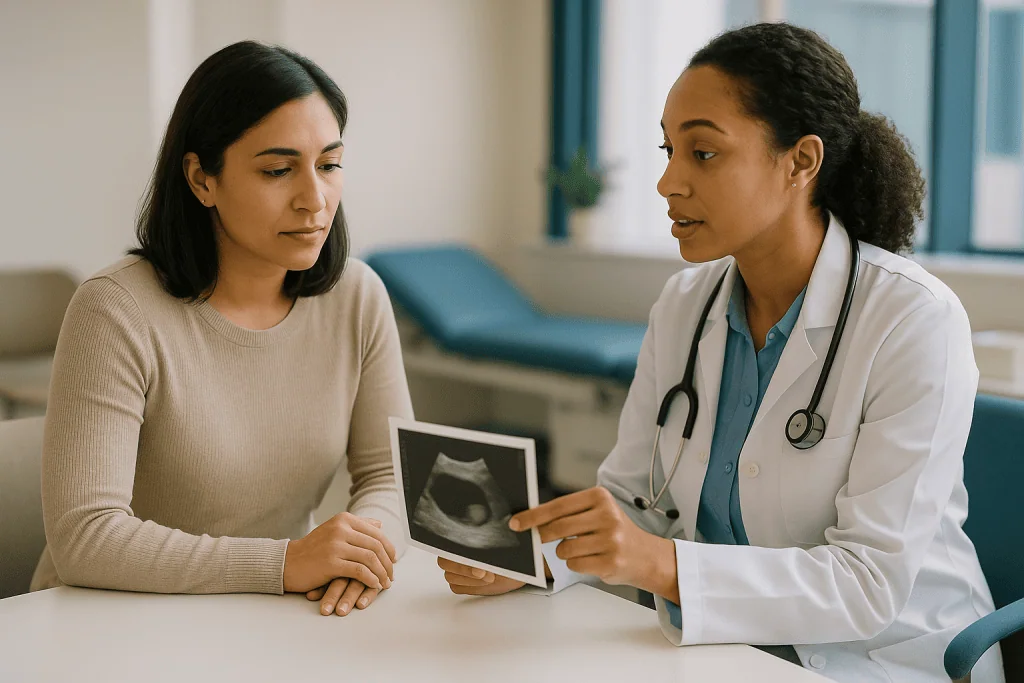
For the woman, the Mayo Clinic describes a fairly standard set of tests. A cycle history plus a mid-cycle progesterone blood test checks that an egg is actually being released. Ovarian reserve testing estimates how many eggs remain; this typically pairs an anti-Müllerian hormone (AMH) blood test, a hormone produced by small ovarian follicles, with an antral follicle count, an ultrasound tally of those follicles. Thyroid and prolactin levels are checked because both hormones can quietly switch ovulation off.
Tubal patency is assessed with a hysterosalpingogram (HSG), an X-ray taken while contrast dye flows through the uterus and tubes, or with a saline ultrasound. When endometriosis or scarring is suspected, a laparoscopy, keyhole surgery under general anesthetic to look directly inside the pelvis, may be recommended, though it is not routine for everyone.
For the male partner a semen analysis measures sperm count, movement and shape. Roughly a third of infertility cases involve a male factor, a third a female factor and a third both or unexplained causes, according to MedlinePlus, so skipping this test can send a couple up the wrong ladder entirely.
Several of these tests are timed to specific cycle days, which is why a thorough evaluation often spans a menstrual cycle or more. That feels slow when the calendar is already full of circles. It is also the single best protection against months spent on a treatment that never matched the problem.
Ovulation induction medication: how it works and what a cycle looks like
Ovulation disorders account for infertility in about 1 in 4 infertile couples, according to the Mayo Clinic, and polycystic ovary syndrome (PCOS), a hormonal condition in which the ovaries develop many small follicles but release eggs irregularly, is the most frequent reason. For these women, medication is almost always step one.
The oral medicines work by nudging the brain rather than the ovary. Letrozole, an aromatase inhibitor, briefly lowers estrogen so the pituitary gland responds by releasing more follicle-stimulating hormone (FSH), the signal that ripens an egg. Clomiphene, a selective estrogen receptor modulator, achieves a similar effect by blocking estrogen’s feedback at the brain. Both are taken for a few days early in the cycle; the prescribing clinician decides which, and for how many cycles. Where insulin resistance is part of PCOS, the NHS notes that metformin, a diabetes medicine, is sometimes used to help restore ovulation.
Injectable gonadotropins are the stronger option. These are FSH and luteinizing hormone given directly, bypassing the brain entirely. They are more powerful, require closer ultrasound and blood monitoring, and carry a higher chance of releasing several eggs at once.
A typical medicated cycle looks like this: tablets or injections in the first week or so, an ultrasound around mid-cycle to count and measure follicles, sometimes a trigger injection to time ovulation precisely, then intercourse or IUI timed to that window, followed by the wait for a period or a pregnancy test.
The main risks named by the Mayo Clinic are multiple pregnancy, which raises the odds of prematurity and other complications, and ovarian hyperstimulation syndrome (OHSS), in which the ovaries swell and fluid shifts into the abdomen. Clinicians review response after a limited number of cycles rather than continuing indefinitely; that review, and any change of plan, belongs with them.
Who is usually offered medication first, and who is asked to wait or skip ahead
The medication rung is designed for one profile: a woman who ovulates rarely or not at all, whose tubes are open, and whose partner’s sperm are adequate. Tick those three boxes and most clinicians will start with oral ovulation induction rather than anything more involved.

Some people are asked to wait before treatment begins at all. The NHS points out that more than 8 in 10 couples where the woman is under 40 will conceive within a year of regular unprotected intercourse, and about half of those who have not conceived by twelve months do so in the second year. A 30-year-old who has been trying for seven months with regular cycles and no known problem will often be counseled on timing and general health and asked to return if nothing has happened by the one-year mark. Waiting can also be advised when a treatable condition needs sorting first: an underactive thyroid, a raised prolactin level, or uncontrolled diabetes can each interfere with ovulation and are usually managed before fertility drugs are added.
Others are moved up the ladder without trying the lower rungs. Common reasons include:
- Both fallopian tubes blocked or removed, because medication and IUI both depend on an open tube.
- Markedly low ovarian reserve, where each month carries more weight.
- Age 40 or older, for the same reason.
- A severe male factor, where IVF with laboratory-assisted fertilization is the realistic route.
- A history of cancer treatment or surgery that has damaged the ovaries or tubes.
None of these are judgments about a person. They are statements about which tools can physically reach the problem. The team weighs them together with how long a couple has already been trying and what they are prepared to take on.
IUI vs IVF: which comes first, and when the order flips
Intrauterine insemination is the middle rung, and it is far less dramatic than its acronym suggests. A semen sample is washed and concentrated in the laboratory, then placed through a thin catheter into the uterus at the moment ovulation is predicted or triggered. The Mayo Clinic describes the procedure itself as taking only a few minutes, usually without anesthesia, and most people go back to their normal day afterward. It is often combined with oral or injectable ovulation medication to improve timing and, in some cases, to encourage more than one follicle.
The logic of doing IUI before IVF is that it removes two obstacles, distance and timing, while leaving fertilization to happen where it normally does. The Mayo Clinic lists its usual uses as unexplained infertility, mild male factor infertility, cervical mucus problems, and situations involving donor sperm. It cannot help when both tubes are blocked, because the sperm and egg still have to meet inside a tube.
Guidance differs by country. In the United Kingdom, the NHS explains that IUI is generally offered in specific situations such as difficulty with vaginal intercourse, a need for donor sperm, or when a health condition makes unprotected sex unsafe, rather than as a routine step for unexplained infertility. In much of US practice, several medicated IUI cycles are commonly tried before IVF in younger women with unexplained or mild causes.
The order flips, with IVF first, when tubes are blocked, when sperm quality is severely reduced, when ovarian reserve is low, when the woman is in her late thirties or forties, or when a set number of IUI cycles has already failed. The deciding question is not which treatment is more impressive but which one gives this particular couple a realistic chance in the time they have.
When surgery moves up the list: tubes, fibroids, polyps and endometriosis
Surgery is the rung that refuses to stay in one place. For some women it comes before any medication; for others it is skipped entirely in favor of IVF. What decides it is anatomy.
Two operations do most of the work. Laparoscopy uses a camera and instruments through small abdominal incisions to treat problems around the ovaries and tubes. Hysteroscopy passes a thin telescope through the cervix to treat problems inside the uterine cavity itself, without any incision.
The NHS lists the situations where surgery is commonly considered:
- Blocked or scarred fallopian tubes, which can sometimes be repaired, though scarring may return.
- A hydrosalpinx, a tube swollen with trapped fluid; removing or clipping it before IVF is often advised because the fluid can leak into the uterus and hinder implantation.
- Endometriosis deposits and cysts, which can be removed or destroyed during laparoscopy.
- Fibroids or polyps that distort the uterine cavity, treated hysteroscopically.
- Ovarian drilling for PCOS that has not responded to medication, in which small areas of the ovary are treated with heat to restore ovulation.
Surgery has a cost that is not financial. Recovery takes days to weeks depending on the procedure, operating on the ovary can reduce egg reserve, and any operation carries risks of bleeding, infection and anesthesia. For that reason a team weighing a 39-year-old with a large endometriotic cyst may reasonably conclude that IVF offers a shorter route than an operation followed by months of trying naturally. The same lesion in a 27-year-old might tip the other way. Neither choice is wrong in the abstract; each is right or wrong for a specific person, which is why it is made in a consultation and not in an article.
Can endometriosis cause secondary infertility?
Yes. Secondary infertility means difficulty conceiving after at least one previous pregnancy, and endometriosis is one of its recognized causes. Endometriosis is a condition in which tissue similar to the uterine lining grows outside the uterus, most often on the ovaries, the tubes and the pelvic lining. According to the Mayo Clinic, roughly one-third to one-half of women with endometriosis have difficulty getting pregnant.
A first pregnancy does not rule the condition out; it may simply have occurred before the disease progressed. Endometriosis can advance over years, and a woman who conceived easily at 28 may find that by 34 she has adhesions binding a tube, an endometrioma (a blood-filled cyst) on an ovary, or pelvic inflammation that alters the environment eggs and sperm need. Age adds its own decline on top.
Mechanisms are several. Scar tissue can distort or block the tubes so the egg cannot travel. Inflammatory chemicals in pelvic fluid may impair sperm movement and egg quality. Endometriomas can reduce the number of healthy eggs in the affected ovary. Some research points to changes in the uterine lining that affect implantation, though that evidence is less settled.
Where does this leave the treatment order? Two points matter. First, hormonal treatments used to control endometriosis pain, such as combined contraceptives or progestogens, do not improve fertility while they are being taken, because they work by suppressing ovulation; the NHS is explicit on this. Second, the choice between laparoscopic surgery and moving directly to IVF depends on the extent of disease, the woman’s age and reserve, and how long she has been trying. Mild disease with pain may favor surgery; extensive disease in an older woman often favors IVF. That balance is a conversation for the treating team, ideally one that involves both a gynecologist experienced with endometriosis and a fertility specialist.
What an IVF cycle actually involves, step by step
IVF is the top rung, and understanding it in plain terms removes much of its intimidation. The NHS describes a full cycle as taking around six weeks, and the Mayo Clinic breaks the process into stages that unfold roughly like this:
- Suppression or baseline: the natural cycle may be quieted so the team controls timing.
- Stimulation: daily injections of gonadotropins encourage many follicles to grow at once instead of the usual one.
- Monitoring: ultrasounds and blood tests every few days track follicle size and hormone levels.
- Trigger: a final injection matures the eggs; retrieval is scheduled about 34 to 36 hours later.
- Egg retrieval: a needle guided by ultrasound through the vaginal wall collects eggs under sedation, typically in a short procedure.
- Fertilization: eggs are combined with sperm in the laboratory, or a single sperm is injected into each egg (intracytoplasmic sperm injection, ICSI) when sperm quality is low.
- Embryo culture: embryos develop for two to five days.
- Transfer: one embryo, occasionally two, is placed in the uterus through a catheter; remaining good-quality embryos can be frozen.
- Luteal support and waiting: progesterone supports the lining until a pregnancy test about two weeks after transfer.
The risks the Mayo Clinic highlights are OHSS from the stimulation drugs, multiple pregnancy when more than one embryo is transferred, bleeding or infection at retrieval, and the emotional and physical toll of a demanding schedule. Ectopic pregnancy, where an embryo implants outside the uterus, remains possible even after transfer.
Variations exist. Some women use their own eggs, others donor eggs; some transfer fresh, others freeze everything and transfer in a later, unstimulated cycle. Which version fits, and whether to proceed at all, is a decision that belongs with the woman and her team after reviewing her specific results.
Female infertility treatment options order at a glance
Laid side by side, the rungs make more sense than they do one at a time. The table below summarizes who is usually offered each step, what it involves and how long a single attempt typically takes, with timeframes drawn from NHS and Mayo Clinic descriptions rather than promises about any individual.
| Step | Usually offered to | What it involves | Typical length of one attempt | Main risks |
|---|---|---|---|---|
| Evaluation | Everyone, both partners | Ovulation, tubal, reserve and semen tests | Often one menstrual cycle or more | Minor discomfort from HSG or blood draws |
| Ovulation medication | Anovulation or PCOS with open tubes and adequate sperm | Oral or injectable hormones, monitoring, timed intercourse | One menstrual cycle per attempt | Multiple pregnancy, OHSS, mood and hot-flush side effects |
| IUI | Unexplained or mild male factor, donor sperm, intercourse difficulties; needs one open tube | Washed sperm placed in uterus at ovulation, often with medication | One menstrual cycle per attempt | Multiple pregnancy if stimulated, mild cramping, rare infection |
| Surgery | Blocked tubes, hydrosalpinx, fibroids, polyps, endometriosis, resistant PCOS | Laparoscopy or hysteroscopy | Procedure plus recovery of days to weeks | Bleeding, infection, anesthesia, reduced ovarian reserve after ovarian surgery |
| IVF | Blocked tubes, low reserve, older age, severe male factor, failed earlier steps | Stimulation, retrieval, lab fertilization, embryo transfer | About six weeks per full cycle (NHS) | OHSS, multiple pregnancy, procedure complications, emotional strain |
Read across the rows and a pattern appears: each step down the table asks more of the body and the calendar, but also reaches problems the step above cannot. The order is not a hierarchy of quality. Medication is not a lesser treatment than IVF; it is the right treatment for a different problem. What the treating team does is match the row to the diagnosis, then move down only when the match no longer holds.
What the following weeks usually look like after each step
Fertility treatment lives in fortnights. Whatever rung you are on, the rhythm tends to be the same: act in the first half of the cycle, wait in the second, and learn the outcome around the time a period is due.
After starting oral ovulation medication, the first week may bring hot flushes, headaches or mood changes as hormone levels shift; these typically settle when the tablets stop. A mid-cycle ultrasound follows, then a window for intercourse or IUI, then roughly two weeks of waiting. Many women describe this stretch as the hardest part, not because anything hurts but because nothing can be done.
After IUI, the Mayo Clinic notes that mild cramping and light spotting for a day or two are common and that normal activities can resume immediately. A home pregnancy test is usually advised about two weeks later; testing earlier risks a false result, particularly if a trigger injection was used, because that hormone can linger in the urine.
After laparoscopy or hysteroscopy, recovery depends on what was done. Shoulder-tip pain from the gas used to inflate the abdomen is a well-known oddity of keyhole surgery and fades over a few days. Most people are advised to avoid strenuous activity until incisions have healed, and the team will say when trying to conceive can resume; after some tubal or uterine procedures they may ask for a short pause.
After IVF egg retrieval, bloating and pelvic heaviness are expected for several days as the ovaries settle. Transfer itself is brief and usually painless. Progesterone support follows, then the wait to a blood test. If embryos were frozen, the following weeks may instead involve preparing the lining for a later transfer.
Across all of these, the emotional load is real and recognized. Counseling is a standard part of fertility care, not an add-on, and asking for it is not a sign of not coping.
What is the most successful treatment for infertility? An honest answer
People ask this hoping for one name. The evidence gives a more useful reply: the most effective treatment is the one that fits the cause, and the single largest factor in whether any treatment works is the woman’s age.
For a woman who does not ovulate, oral ovulation induction carries a real chance of pregnancy each month with far less intervention than IVF; putting her straight into an IVF cycle would be using a crane to lift a chair. For a woman with both tubes blocked, no amount of medication or IUI will help, and IVF is not the most successful option so much as the only relevant one.
IVF does offer the highest chance of pregnancy per attempt across the widest range of diagnoses, which is why it sits at the top of the ladder. But the numbers illustrate how much age reshapes that. The NHS, drawing on data from the UK fertility regulator, has published live birth rates per embryo transferred of roughly 32% for women under 35, about 25% at 35 to 37, around 19% at 38 to 39, about 11% at 40 to 42, and falling to roughly 5% at 43 to 44 and about 4% over 44. These are population averages from one country’s registry, not a forecast for any individual, and they change as techniques and reporting evolve.
Two more nuances matter. Per-cycle figures understate the cumulative chance over several attempts, which is what most people actually experience. And a higher per-cycle chance comes bundled with more injections, more procedures and more risk, so the most effective option is not automatically the right first one. The treating team’s job is to hold those trade-offs alongside a person’s history, values and stamina, and to say plainly what the evidence does and does not show for someone in her situation.
What people often get wrong about the order of treatment
The folklore around fertility treatment is thick, and some of it actively slows people down. A few corrections, grounded in what the major sources actually say.
IVF is always the last resort. Not so. For blocked tubes, severe male factor or low reserve, IVF is often the first recommended step, because lower rungs cannot address those problems and time is limited.
Everyone does three rounds of IUI before IVF. There is no universal rule. UK guidance summarized by the NHS reserves IUI for specific situations, while US practice often tries medicated IUI first in younger women with unexplained infertility. The number of attempts, if any, is individualized.
Surgery fixes the anatomy, so it fixes fertility. Removing a fibroid or freeing a tube can help when that lesion was the barrier, but scarring can recur, ovarian surgery can reduce egg reserve, and some anatomical findings are incidental rather than causal. The decision to operate weighs those trade-offs.
If you had a baby once, you cannot be infertile. Secondary infertility is common, and endometriosis, age, new tubal damage or a change in a partner’s sperm can all appear after a first pregnancy.
Hormonal treatment for endometriosis will help me conceive. Treatments that suppress ovulation to control pain do not improve fertility while taken; they pause it.
Just relax and it will happen. Stress is unpleasant and worth addressing for its own sake, but it is not a diagnosis, and the NHS lists specific medical causes, not anxiety, as the drivers of most infertility.
Supplements can replace the workup. No over-the-counter product substitutes for knowing whether ovulation is occurring and tubes are open. Anyone taking supplements should tell the team, because some interact with prescribed treatment.
Questions to ask your care team
The best consultations are the ones where the patient arrives with questions written down. These are the ones that tend to move a plan forward rather than simply reassure.
- What diagnosis, or combination of factors, are you basing this plan on, and which of my results carried the most weight?
- Which rung of the ladder are you recommending first, and what would make you move me up or down it?
- If this step does not work, how many cycles will we try before reviewing, and what is the next option?
- Are there tests we have not done yet that could change the order, such as tubal imaging or a fuller semen analysis for my partner?
- What are the specific risks of this step for me, including multiple pregnancy and ovarian hyperstimulation?
- If surgery is being considered, what would happen to my ovarian reserve, and how does the recovery time compare with going to IVF directly?
- Roughly how many weeks from today until we know whether this first step has worked?
- How will my age and reserve results change the recommendation a year from now if we are still trying?
- What lifestyle factors in my situation actually have evidence behind them, and which ones can I stop worrying about?
- Is counseling or a support service part of the care here, and how do I access it?
Two habits help. Ask for the reasoning, not just the recommendation; a good team will explain why medication before IUI, or IVF before surgery, makes sense for you specifically. And ask what the evidence shows for someone with your profile, then listen for honest uncertainty. A clinician who says the data are limited for your exact situation is being truthful, not evasive.
Bring your partner where there is one. Infertility evaluation involves both people, and treatment decisions usually go better when both hear the same explanation at the same time.
When to call your doctor
Most fertility treatment is uneventful, and most side effects are mild and expected. A short list of symptoms, however, should prompt a same-day call to the treating team or, in some cases, emergency care. Ovarian hyperstimulation syndrome, ectopic pregnancy and post-procedure complications are uncommon but need prompt attention.
Contact your team urgently, or seek emergency care, if you notice any of the following during or after treatment:
- Rapid abdominal swelling, sudden weight gain over a day or two, nausea with vomiting, or passing much less urine than usual after ovulation medication or IVF stimulation; these can signal OHSS.
- Shortness of breath or chest pain, which can accompany severe OHSS or a blood clot.
- Pain, redness or swelling in one calf or leg.
- Severe or one-sided pelvic pain, shoulder-tip pain, dizziness or fainting, especially with a positive pregnancy test; these can indicate an ectopic pregnancy.
- Heavy vaginal bleeding that soaks through a pad in an hour, or bleeding with large clots after a procedure or transfer.
- Fever, chills, foul-smelling discharge, or worsening pain at incision sites in the days after laparoscopy, hysteroscopy or egg retrieval.
- Sudden visual disturbance, severe headache or blurred vision while taking ovulation medication.
- Signs of an allergic reaction to an injected medicine, such as facial swelling, hives or difficulty breathing.
Call during working hours, without needing to treat it as an emergency, for persistent low mood, anxiety that interferes with daily life, side effects that make it hard to continue a prescribed medicine, or any question about whether a symptom is expected. Never stop, skip or change a fertility medicine on your own; ring the prescribing clinician first. Most clinics run a nurse line for exactly these calls, and using it is part of the treatment, not an interruption to it.
Frequently asked questions
What are the treatment options for female infertility?
The main female infertility treatment options are ovulation induction medication, intrauterine insemination, surgery for anatomical problems and in vitro fertilization, usually in roughly that order after a full evaluation. Medication suits women who do not ovulate; IUI suits mild or unexplained cases with an open tube; surgery addresses blocked tubes, fibroids, polyps or endometriosis; IVF is used for blocked tubes, low reserve, older age, severe male factor or when earlier steps have not worked.
How much do 3 rounds of IUI cost?
This article does not give prices, because costs vary widely by region, insurance coverage and whether medication, monitoring and sperm preparation are included in a quoted figure. The useful step is to ask the treating clinic for an itemized written estimate for one cycle, check what your insurer covers before starting, and ask whether guidance in your area supports IUI for your diagnosis at all, since some guidelines reserve it for specific situations.
Can endometriosis cause secondary infertility?
Yes, endometriosis can cause difficulty conceiving after a previous pregnancy. The Mayo Clinic reports that roughly one-third to one-half of women with endometriosis have trouble getting pregnant, and the condition can progress over years, forming adhesions, ovarian cysts and pelvic inflammation that were not present at the time of an earlier conception. Age adds to the effect. Treatment order depends on disease extent, ovarian reserve and how long you have been trying.
What is the most successful treatment for infertility?
There is no single most successful treatment; the effective option is the one matched to the cause, and age is the strongest predictor of whether any treatment works. IVF offers the highest chance per attempt across the widest range of diagnoses, but for a woman who simply does not ovulate, oral medication may achieve pregnancy with far less intervention. NHS-published IVF live birth rates per embryo transferred range from about 32% under 35 to around 4% over 44.
IUI vs IVF: which should come first?
IUI usually comes before IVF when the woman is younger, has at least one open tube, and the cause is unexplained or a mild male factor. IVF comes first when both tubes are blocked, sperm quality is severely reduced, ovarian reserve is low, the woman is in her late thirties or forties, or several IUI cycles have already failed. Guidance differs between countries, so the treating team decides based on your results and time frame.
How long does fertility treatment take from the first visit to IVF?
The evaluation alone often spans a menstrual cycle or more because several tests are timed to specific cycle days. Each medication or IUI attempt then takes one cycle, and a full IVF cycle takes around six weeks according to the NHS. A couple who try several medicated cycles and a few IUIs before IVF may therefore spend many months on the ladder, while someone who goes straight to IVF may reach a pregnancy test within a couple of months of starting.
Do I always have to try medication before IVF?
No. Medication is the first step when the problem is ovulation and the tubes are open, but it is skipped when it cannot address the cause. Women with both tubes blocked, a very low ovarian reserve, a severe male factor in their partner, or who are 40 or older are often advised to move directly to IVF. The decision rests with the treating team after reviewing test results, age and how long you have been trying.
When should I see a doctor about not getting pregnant?
The CDC and Mayo Clinic advise seeking evaluation after one year of regular unprotected intercourse if you are under 35, and after six months if you are 35 or older. See a doctor sooner, without waiting, if your periods are absent or very irregular, you have known endometriosis, pelvic inflammatory disease, fibroids, previous cancer treatment, or your partner has a known sperm problem. Early evaluation does not commit you to treatment; it simply starts the clock with information.
Does surgery for fibroids or endometriosis always improve fertility?
Not always. Surgery helps most when a specific lesion is clearly the barrier, such as a polyp or fibroid distorting the uterine cavity, a fluid-filled blocked tube before IVF, or endometriosis causing adhesions. Scarring can return after tubal surgery, operating on the ovary can reduce egg reserve, and some findings are incidental. The team weighs the likely gain against recovery time and the alternative of moving to IVF, and that balance differs by age and diagnosis.
What are the risks of ovulation induction medication?
The main risks named by the Mayo Clinic are multiple pregnancy, which increases the chance of premature birth and other complications, and ovarian hyperstimulation syndrome, in which the ovaries swell and fluid shifts into the abdomen. Injectable gonadotropins carry higher risk than oral tablets and need closer monitoring. Common milder side effects include hot flushes, headaches, bloating and mood changes. Report rapid abdominal swelling, vomiting, breathlessness or reduced urination to your team the same day.
References
- WHO: Infertility fact sheet
- CDC: Infertility Frequently Asked Questions
- NHS: Infertility – Treatment
- NHS: IVF
This article is for general information only and is not a substitute for professional medical advice. Please consult a qualified doctor about your individual situation.

More from the Blog

Which Artificial Fertilisation Method Fits Your Case? IUI, IVF and ICSI Compared by Specialists
IUI, IVF and ICSI are not rungs on a ladder that everyone climbs in order. IUI places prepared sperm in the uterus around ovulation…

How Male Infertility Treatment Is Chosen: From Lifestyle Changes to Sperm Retrieval
Male infertility treatment options are chosen by working backward from the cause found on semen analysis, hormone tests, a physical exam and sometimes genetic…

IVF Success Rates by Age: What the Registries Report, Cycle by Cycle
IVF success rates fall with the age of the person providing the eggs. Registry data show roughly one in three embryo transfers leads to…

Endometriosis and Fertility: What the Diagnosis Changes, and the Options Step by Step
Most people with endometriosis can conceive, though roughly 30 to 50 percent experience some difficulty. The diagnosis mainly changes timing: it is a reason…

IUD Insertion Pain: Why the Guidance Changed and What Pain Relief You Can Ask For
IUD insertion pain ranges from mild cramping to severe, and updated US guidance now tells clinicians to counsel every patient about it and to…

After IUI Insemination: The Same-Day Return to Routine and the Two-Week Wait Explained
After IUI, most people rest on their back for a few minutes and then return to ordinary activities the same day; bed rest has…