

Who Is a Candidate for a Brow Lift? Heavy Brows, Forehead Lines and Hairline Position
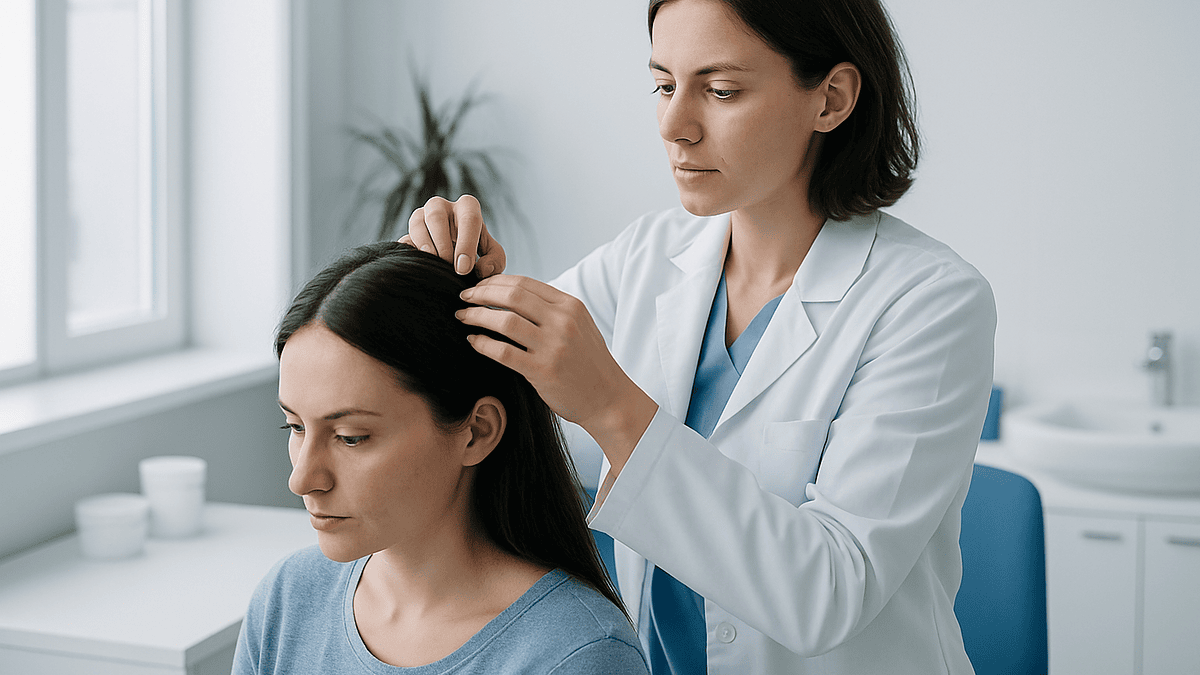
Key Takeaways
- A brow lift and a forehead lift are the same operation; the meaningful differences lie in technique, which determines scar location and hairline effect.
- The clinic thumb test, lifting the brow by hand and seeing what eyelid skin remains, is how surgeons separate brow descent from surplus eyelid skin and from ptosis.
- Hairline height decides technique: coronal lifts raise the hairline, hairline-edge lifts lower it, and endoscopic lifts move it very little, per Cleveland Clinic and Mayo Clinic descriptions.
- Mayo Clinic reports stitches or clips are typically removed in about seven to ten days and most people return to public settings around two weeks, with full results taking months.
- Botulinum toxin injections relax the muscles that pull the brows down for roughly three to four months, according to Mayo Clinic, but they cannot reposition tissue or remove skin.
- Smoking and uncontrolled blood pressure are the two most common reasons a surgeon asks a candidate to wait, because both raise bleeding and wound-healing risk.
A brow lift candidate is usually an adult whose eyebrows have settled low enough to crowd the upper eyelids or add a tired or stern look, whose forehead skin can be repositioned without tension, and who is in good general health. Surgeons also weigh hairline height, skin quality, smoking status, realistic expectations and whether the real problem sits in the eyelid rather than the brow.
The photograph was taken at a wedding, mid-laugh, and still she looked tired. That is the sentence a lot of people say in a consultation room: friends keep asking if they slept, the mirror shows a ledge of skin resting on the lashes, and the eyebrow pencil now draws a line where the brow used to sit on its own.
Some of those people turn out to be a good brow lift candidate. Others learn that the heaviness comes from the eyelid, not the brow, or that a high hairline, a smoking habit or a wish for a dramatically arched result makes a different plan wiser. The distinction matters, because a lift placed on the wrong problem fixes nothing and can create a new one.
This guide walks through how surgeons actually decide: what a brow lift changes, how it differs from eyelid surgery, why your hairline dictates the incision, and which questions to carry into the room.
What is eyebrow lift surgery, and what actually happens?
A brow lift, also called a forehead lift, is an operation that raises the soft tissue of the forehead so that the eyebrows sit higher and the skin between the brows and lashes relaxes. The Mayo Clinic describes it as a procedure that improves the appearance of the forehead, brow and area around the eyes by raising the soft tissue and skin of the forehead and brow.
The anatomy is simple to picture. The eyebrow is a strip of hair-bearing skin held in place by a sheet of tissue over the forehead bone and pulled downward by small muscles between the brows and around the eyes. With age, that sheet loosens, the muscles keep pulling, and the brow drifts toward the eye. The upper eyelid skin, which has not necessarily changed, now looks like it has too much fabric.
During surgery the tissue sheet is freed from the bone through small incisions, repositioned a few millimeters higher, and anchored so it heals in the new position. Some techniques also weaken the muscles that pull the brows down, which softens the vertical frown crease. Surgeons choose between an endoscopic approach, which uses a thin camera through several short incisions behind the hairline, and open approaches that use one longer incision across the scalp or along the hairline. Mayo Clinic notes the procedure is generally performed under sedation or general anesthesia and takes roughly one to two hours.
What the operation does not do is equally important. It does not remove eyelid skin, tighten the cheeks, or erase every forehead line. Those belong to other procedures, and a candid consultation will separate them clearly.
Brow lift vs forehead lift: is there any difference?
People search both phrases and expect two procedures. In mainstream usage they are the same operation; Mayo Clinic and Cleveland Clinic both treat “brow lift” and “forehead lift” as interchangeable names. The confusion comes from emphasis. “Brow lift” describes the visible goal, higher eyebrows. “Forehead lift” describes where the work is done.

Where terminology does carry real meaning is in the technique, and that is worth asking about in plain words:
- An endoscopic brow lift uses a thin lighted camera, called an endoscope, inserted through several short incisions hidden in the hair. The tissue is lifted and fixed to the bone with small anchors or sutures.
- A coronal lift uses one long incision running over the top of the head from ear to ear, behind the hairline, with a strip of scalp removed before closing.
- A hairline (pretrichial) lift places the incision along the front edge of the hair rather than behind it, so the forehead can be shortened instead of lengthened.
- A temporal or lateral lift works only on the outer third of each brow through incisions above the temples.
- A direct brow lift removes a sliver of skin immediately above the eyebrow, leaving a scar at the brow edge; it is reserved for selected cases, often where function matters more than a hidden scar.
Each name tells you something about the scar, the amount of lift and the effect on hairline position. The temporal lift, for instance, corrects a drooping outer brow but leaves the central brow and frown lines alone. So when a friend says their “forehead lift” left a long scar and yours involves three small cuts, you are comparing techniques, not procedures.
Who is usually a good brow lift candidate?
Surgeons tend to look for a specific cluster of findings rather than an age or a photo. Based on guidance from Mayo Clinic and Cleveland Clinic, a typical brow lift candidate shows most of the following:
- True brow descent. The eyebrows, especially the outer thirds, sit at or below the bony rim above the eye socket, so the upper lids look crowded even though the eyelid skin itself may be fairly normal.
- A tired, sad or stern expression at rest that friends comment on and that the person feels does not match their mood.
- Compensation habits. Many people unconsciously raise their forehead to lift a heavy brow, which deepens horizontal lines and can cause end-of-day forehead fatigue. A surgeon may ask you to close your eyes and relax so the brows settle to their resting height.
- Good general health. Stable blood pressure, no bleeding disorder, no uncontrolled diabetes, and no recent cardiac or respiratory illness that would complicate anesthesia.
- Non-smoking status. Nicotine narrows the small vessels that keep lifted skin alive, and both Mayo Clinic and the NHS advise stopping smoking before and after facial surgery.
- Realistic expectations. A wish to look rested and more like oneself, not a wish to look like someone else or to erase every line.
Age itself is a weak criterion. Most patients fall between their forties and sixties, as Cleveland Clinic notes, but a person in their thirties with inherited low-set brows can be a reasonable candidate, and a healthy person in their seventies may be too. What matters is tissue, health and goals, and those are judged in person by the treating team, never from a description or a selfie.
Who is usually asked to wait, and why
Being told to wait is not a judgment on appearance. It usually means one of a handful of risks has not yet been managed, or that another procedure would address the complaint better.

Current smokers and heavy vapers are the most common group asked to pause. Nicotine reduces blood flow to the forehead flap, raising the chance that skin at the incision edges heals poorly or that hair follicles near the scar are lost. Surgeons generally want a nicotine-free window before and after surgery; the length of that window is set by the operating team, not by a magazine.
People with uncontrolled high blood pressure face a higher risk of bleeding beneath the lifted tissue, which can collect as a hematoma and need drainage. Blood thinners, certain supplements such as high-dose fish oil or vitamin E, and some over-the-counter pain relievers also raise bleeding risk. The decision to pause any prescribed medicine belongs to the prescribing clinician; patients should never stop a medicine on their own ahead of surgery.
A third group is told, gently, that the brow is not the problem. If the eyebrows sit at a normal height and the heaviness comes from surplus eyelid skin or from a weak eyelid-lifting muscle, raising the brow will leave the complaint unchanged and may produce a surprised look. Those people are steered toward eyelid surgery or evaluation for ptosis, a drooping of the eyelid itself.
Finally, surgeons listen for expectations that no operation can meet. Someone who hopes a lift will fix a relationship, a job search or a low mood is usually asked to hold off, and that pause is a form of care rather than rejection. Active skin infection on the scalp, recent chemotherapy or a planned pregnancy are additional reasons to defer.
Can a brow lift fix hooded eyes, or is it an eyelid problem?
“Hooded eyes” is a description, not a diagnosis, and it can come from three different sources that need three different answers. Sorting them is the single most useful thing a consultation does.
The first source is brow descent: the eyebrow has dropped and is pushing the eyelid skin downward like a curtain rod that has slipped. Lift the brow and the hood lifts with it. This is the person who benefits from a brow lift.
The second is dermatochalasis, a term meaning loose surplus skin of the upper eyelid itself. The brow sits where it should, but the lid skin has stretched and folded over the lash line. The Mayo Clinic explains that upper blepharoplasty, surgery to remove excess eyelid skin and sometimes fat, is the procedure that addresses this, and a brow lift alone would not.
The third is ptosis, a drooping of the eyelid margin because the muscle that raises the lid has weakened or detached. Cleveland Clinic notes ptosis can narrow the field of vision and is treated by repairing or tightening that muscle. A brow lift does nothing for it, and raising the brow can even make the sleepy look more obvious.
In clinic, the test is straightforward. The surgeon gently lifts your brow with a thumb to its ideal position and looks at what remains. If the eyelid still has a fold of extra skin, you may need eyelid surgery as well, or instead. If the lid margin still hangs low over the pupil, ptosis is in play. Many people fall into more than one category, and combining a brow lift with eyelid surgery is common precisely because the two problems so often arrive together.
Forehead lines and frown lines: what a brow lift does and does not change
Forehead lines come in two families, and a brow lift treats them unevenly. Knowing which family you have avoids disappointment.
Horizontal lines across the forehead are made by the frontalis, the broad muscle that raises the eyebrows. Many people with heavy brows are lifting them all day without noticing, and the constant pull etches those lines deeper. When a brow lift moves the eyebrows to a resting position where the muscle no longer has to work, the lines often soften because the habit that made them has been removed. Any line that has already become a fixed crease in the skin, visible even when the forehead is fully relaxed, will fade only partly; the lift repositions tissue, it does not resurface skin.
Vertical lines between the brows, the “elevens,” are made by the corrugator and procerus muscles that pull the brows down and inward. Some brow lift techniques, particularly endoscopic ones, release or thin these muscles so the frown crease relaxes. Cleveland Clinic lists softening of frown lines among the typical aims. Other techniques, such as a temporal lift that only addresses the outer brow, leave the frown muscles untouched.
The non-surgical comparison is worth stating plainly. Botulinum toxin injections, a class of medicine that temporarily blocks the nerve signal to a muscle, relax those same frown and forehead muscles. Mayo Clinic notes the effect typically lasts around three to four months before repeat treatment is needed. The injection relaxes muscle but does not move tissue; a lift moves tissue and may or may not relax muscle. Some people use the injections first as a kind of preview of how their forehead looks when the muscles are quiet, then decide with their clinician whether a permanent repositioning is what they really want.
Hairline position: the detail that decides the technique
Ask any surgeon what they measure first, and many will say the distance from the eyebrows to the front edge of the hair. That number, together with hair density and the direction of hair growth, determines where the incision can hide and whether the forehead will look longer or shorter afterward.
A coronal lift removes a strip of scalp behind the hairline, which pulls the whole forehead upward and inevitably moves the hairline back. For someone with a short forehead and a low, dense hairline, that shift is invisible. For someone whose hairline is already high or receding, the same operation can leave an unusually tall forehead and a scar that becomes visible as hair thins. A hairline-edge incision does the opposite: skin is removed in front of the hair, the forehead shortens, and the scar runs along the hairline where it must be closed carefully to stay fine. Endoscopic techniques remove little or no skin and move the hairline only slightly, which is one reason they are often favored for people with high hairlines or thinning hair.
| Technique | Incision | Effect on hairline | Usually considered when |
|---|---|---|---|
| Endoscopic | Several short cuts behind hairline | Minimal change | Mild to moderate descent; high or thinning hairline |
| Coronal | Ear-to-ear behind hairline | Raises hairline | Marked descent; low, dense hairline |
| Hairline (pretrichial) | Along front edge of hair | Lowers hairline | Tall forehead; marked descent |
| Temporal | Short cuts above temples | Minimal change | Outer brow droop only |
| Direct | Just above each eyebrow | None | Selected cases, often functional, where a visible scar is acceptable |
Male pattern hair loss deserves its own conversation. A scar placed behind a hairline that later recedes may end up exposed, so surgeons weigh family history and current thinning before choosing.
Which brow lift technique looks most natural?
The honest answer is that no technique is inherently natural or unnatural; the result depends on how far the brow is moved, where the lift is concentrated, and whether the surgeon respects the shape a brow should have for that face.
Two principles matter more than the name of the operation. The first is restraint. A brow lifted a few millimeters, back to roughly the bony rim where it sat in youth, reads as rested. A brow lifted well above that rim reads as startled, and no amount of time softens an over-elevated inner brow. The second is distribution. The outer third of the brow usually droops first and furthest, so a well-planned lift raises the tail more than the head. Lifting the inner brow as much as the outer one is the quickest route to an unnatural arch.
Sex and face shape change the target. A gently arched brow sitting just above the orbital rim suits many women; a flatter brow sitting at the rim is typical for many men, and raising it into an arch can feminize a male face in a way the patient did not request. Good surgeons study old photographs to see where your brows used to sit rather than aiming at a generic ideal.
Minimal-incision endoscopic lifts and temporal lifts are often described as producing subtle results because they move tissue modestly and remove little skin; that subtlety is a feature for most candidates and a limitation for the few with severe descent, who may be better served by an open approach. When someone asks which procedure gives the most natural look, the better question is what degree of lift and what brow shape the surgeon is planning, and whether that plan can be sketched on your own photograph before anything is decided.
Endoscopic brow lift recovery: what the first days and weeks usually look like
Timelines below are typical ranges reported by Mayo Clinic and Cleveland Clinic, not guarantees, and your team’s instructions always override a general article.
The first two or three days are about swelling and pressure. The forehead feels tight and sometimes numb, the eyelids may puff, and bruising can track down around the eyes even though nothing was cut there. Mayo Clinic advises keeping the head elevated and using cold compresses in the early period to limit swelling. A light dressing or a soft wrap may be in place, and some surgeons leave a small drain for a day. Pain is usually described as moderate and manageable with the medicine the team prescribes.
Days four to ten bring the removal of sutures, clips or dissolvable anchors, depending on technique. Mayo Clinic notes that stitches or clips are commonly removed within about seven to ten days. Hair washing is usually permitted once the team says so, often gently and with lukewarm water. Itching along incisions is normal as nerves wake up.
Weeks two to three are when many people return to desk work and public life; Mayo Clinic suggests most people can be back in public settings in around two weeks, with makeup covering residual bruising. Strenuous exercise, bending and heavy lifting are typically restricted for longer because raised blood pressure can provoke bleeding under the healed flap.
Beyond a month, swelling continues to settle and scalp numbness slowly resolves, though patches can persist for months. Cleveland Clinic reports that final results may take several months to fully appear as tissue softens into its new position. Hair near endoscopic incisions can shed temporarily and typically regrows.
Risks of brow lift surgery, explained without alarm
A brow lift is generally considered a lower-risk facial operation, but it carries the risks of any surgery plus a few specific to the forehead. Both Mayo Clinic and Cleveland Clinic list the following.
Scarring. Every technique leaves scars; the question is where. Scalp scars hide under hair unless hair thins later. Hairline and direct-brow scars are nearer the surface and depend on meticulous closure and skin type. Scars can widen or become raised, especially in people prone to thick scarring.
Changes in skin sensation. Numbness or tingling of the forehead and scalp is almost universal early on because small sensory nerves are stretched or cut. It usually improves over months; in a minority it persists.
Asymmetry. Brows were rarely level before surgery and may not be perfectly level after. Minor differences are common and sometimes settle; noticeable ones occasionally need revision.
Hair loss. Hair at or near incisions can thin, usually temporarily. Permanent loss along a scar is uncommon but possible.
Elevated hairline after coronal lifts, discussed above.
Bleeding, infection and poor wound healing are the general surgical risks; smoking, diabetes and blood-thinning medicines raise them.
Nerve injury to the muscles of expression. The branch of the facial nerve that lifts the eyebrow runs close to the surgical plane in the temple. Injury is rare and usually temporary, but permanent weakness of one brow is a recognized complication and should be part of any informed consent.
Anesthesia reactions and, rarely, blood clots in the legs after any procedure under sedation or general anesthesia.
Risk is not evenly spread. A healthy non-smoker with a straightforward endoscopic lift sits at the low end; a smoker with high blood pressure having a coronal lift sits higher. That is why candidacy screening exists.
Alternatives to a brow lift: non-surgical and surgical options
A good consultation presents a brow lift as one option among several, not the only road. The alternatives split by what the real problem is.
For muscle-driven lines and a mild outer-brow droop, botulinum toxin injections relax the muscles that pull the brows down, allowing the lifting muscle to raise them slightly. Mayo Clinic describes the effect as temporary, typically lasting about three to four months. It is a reasonable first step for someone unsure whether they want surgery, and it does nothing for surplus skin.
Dermal fillers, injectable gels that add volume, are sometimes placed in the temple or beneath the outer brow to support a hollowed area. They do not lift a brow that has truly descended, and evidence for brow elevation specifically is limited; any clinician should say so plainly.
Energy-based skin tightening, such as ultrasound or radiofrequency devices that heat deeper tissue to stimulate collagen, is marketed widely for the brow. The measured lift in studies is modest, generally a millimeter or two, and results vary. These devices can suit someone with early laxity who does not want surgery, with the understanding that the change is subtle.
Upper blepharoplasty, removal of excess eyelid skin, is the surgical alternative for the person whose brow is fine but whose lid is heavy. It involves a scar hidden in the eyelid crease and a shorter recovery than a brow lift. For hooding caused by both brow and lid, surgeons often combine the two procedures.
Ptosis repair tightens the eyelid-lifting muscle when the lid margin itself droops, and is sometimes a medical necessity for vision rather than a cosmetic choice; the NHS notes that eyelid surgery for functional problems may be considered within publicly funded care.
Choosing nothing is also an option, and a surgeon who makes that feel acceptable is usually one worth listening to.
What people often get wrong about brow lifts
“A brow lift gives you a surprised look.” Over-elevation does, and it was more common with older techniques that removed large strips of scalp. Modern planning aims for the brow’s original position, and a surgeon can show the intended height on your photograph before surgery. The startled look is a sign of too much lift, not a built-in feature of the operation.
“If my upper eyelids are heavy, I need an eyelid lift.” Sometimes. Often the heaviness is a brow that has dropped onto an eyelid that is otherwise fine, and removing lid skin in that situation can pull the brow even lower. The thumb test in clinic sorts this out in seconds.
“It erases forehead wrinkles.” It removes the reason for many of them, which is constant brow-raising, and it can relax frown muscles. Deep creases that have already set into the skin fade only partly. Skin resurfacing is a separate conversation.
“Results are permanent.” Aging continues after any lift. Cleveland Clinic notes that results commonly last many years, and a decade or more is often quoted, but gravity, sun and genetics keep working. The brow will not return to its pre-surgery position, because the clock was reset, but it will continue to move slowly from the new starting point.
“Endoscopic means minor.” The incisions are small; the dissection beneath the forehead is as extensive as an open lift. Recovery and risks are similar in kind, if somewhat reduced in scale.
“It is only for older people.” Brow position is partly inherited. Someone in their thirties with naturally low brows can be a candidate, while a seventy-year-old with high brows and loose eyelid skin may need something else entirely. The anatomy decides, not the birth certificate.
Questions to ask your care team before deciding
Bring these to the consultation, and bring a photograph of yourself from ten or fifteen years ago. A surgeon who welcomes the questions and the photo is already telling you something useful.
- Which part of my complaint comes from the brow, which from the eyelid skin, and which from the eyelid muscle? Can you show me with the thumb test?
- Which technique are you recommending for me, and why that one rather than the others given my hairline, hair density and degree of descent?
- Exactly where will the scars be, and what happens to them if my hair thins later?
- How many millimeters do you plan to raise the brow, and can you mark that on a photograph so I can see the shape you intend?
- Will the inner and outer brow be lifted equally? How will you avoid an arched or startled look?
- Do you plan to release the frown muscles, and what does that change?
- What are your specific recommendations for stopping nicotine and for my prescribed medicines, and who makes the final call on each one?
- What is the realistic timeline for returning to my particular job and my particular exercise?
- What is your approach if one brow heals higher than the other?
- What would you expect to see in ten years, and what might need revision?
- Are you board certified in plastic surgery, facial plastic surgery or oculoplastic surgery, and is the facility accredited for the anesthesia you plan to use?
- Who do I call at night or on a weekend if something worries me?
Write the answers down. A second opinion is normal in elective surgery and no reasonable surgeon objects to it. The decision, when it comes, should feel like yours and your team’s together, reached without pressure and without a deadline.
When to call your doctor after a brow lift
Most recovery is uneventful, and the usual tightness, bruising, numbness and itching are expected. A short list of signs, drawn from Mayo Clinic and Cleveland Clinic after-care guidance, should prompt a call to your surgical team the same day, or an urgent visit if you cannot reach them.
- Swelling that increases rapidly on one side, feels hard or tense, or is accompanied by escalating pain; this can indicate bleeding beneath the flap that may need draining.
- Fever, spreading redness, warmth along incisions, or thick discharge, all of which suggest infection.
- Any sudden change in vision, double vision or severe eye pain.
- Bleeding from an incision that does not stop with gentle pressure within a few minutes.
- A brow that does not move at all on one side when you try to raise it, especially if it was moving in the first day or two.
- Skin at the incision edges turning dark, dusky or black, or an incision opening.
- Calf pain, swelling or warmth in one leg, or sudden shortness of breath or chest pain, which can signal a blood clot and warrant emergency care.
- A rash or widespread itching after starting any new medicine.
Before surgery, there is also a moment to speak up. If you develop a cold, a skin infection on the scalp, a new medical diagnosis or a change in prescribed medicines in the days before the operation, tell the team; it may be safer to reschedule. Never stop a prescribed medicine, including a blood thinner or a blood pressure drug, on your own in preparation; that decision belongs to the prescribing clinician, who will coordinate with the surgeon.
When in doubt, call. Surgical teams would rather hear from ten worried patients than miss one who needed help.
Frequently asked questions
What is eye brow lift surgery?
Eyebrow lift surgery, properly called a brow lift or forehead lift, repositions the soft tissue of the forehead so that the eyebrows sit higher and the upper eyelids look less crowded. It is done through small hidden incisions in the hair with a camera, or through a longer scalp or hairline incision, under sedation or general anesthesia. Mayo Clinic notes the operation typically takes one to two hours.
What is the difference between a brow lift and a forehead lift?
There is no difference in mainstream medical usage; both names describe the same procedure. The terms that actually matter are the technique names, such as endoscopic, coronal, hairline, temporal or direct, because each one places the scar in a different location, moves the hairline differently and suits a different degree of brow descent. Ask your surgeon which technique is planned rather than which label.
Can a brow lift fix hooded eyes?
Only when the hooding is caused by eyebrows that have dropped onto the eyelid. If the hood comes from stretched eyelid skin, upper eyelid surgery is the answer; if the eyelid margin itself droops because of a weak lifting muscle, ptosis repair is needed. Many people have a combination, and surgeons frequently pair a brow lift with eyelid surgery after examining which factor dominates.
What is the most natural-looking eyebrow procedure?
Naturalness depends on restraint and shape rather than on a particular technique. Lifting the brow modestly back to the bony rim, raising the outer third more than the inner, and respecting the flatter brow typical of many male faces all matter more than the name of the operation. Endoscopic and temporal lifts are often subtle because they move tissue modestly, which suits most candidates.
Is there an ideal brow lift age?
No specific age qualifies or disqualifies anyone. Cleveland Clinic notes most patients are in their forties to sixties, but brow position is partly inherited, so a healthy person in their thirties with low-set brows can be a candidate, while an older person with loose eyelid skin may need a different procedure. Health, tissue quality and expectations carry more weight than years.
How long does endoscopic brow lift recovery usually take?
Mayo Clinic describes stitches or clips being removed within about seven to ten days and most people returning to public activities around two weeks, with makeup covering residual bruising. Strenuous exercise is restricted longer, and numbness of the scalp can persist for months. Final results appear gradually over several months as swelling settles. These are typical ranges, and your team’s timeline overrides them.
Does a brow lift get rid of forehead wrinkles?
Partly. Horizontal lines often soften because the lift removes the habit of constantly raising the brows, and some techniques release the frown muscles between the eyebrows. Creases that have already set into the skin fade only to a degree, because a lift repositions tissue rather than resurfacing it. Skin treatments or botulinum toxin injections address lines through different mechanisms and may be discussed alongside.
Who should not have a brow lift?
People who currently smoke or use nicotine, have uncontrolled high blood pressure or diabetes, take blood thinners that cannot be safely managed, have an active scalp infection, or whose heaviness comes from the eyelid rather than the brow are usually asked to wait or offered something else. Unrealistic expectations are another reason to pause. The treating team makes the call after an in-person assessment.
How long do brow lift results last?
Results commonly last many years, and a decade or more is often quoted by Cleveland Clinic, but aging continues from the new starting point. Sun exposure, genetics, weight changes and smoking all influence how quickly the brow settles again. The brow does not fall back to its original pre-surgery position; it simply resumes its slow descent from a higher baseline.
Will a brow lift make my hairline higher?
It depends on technique. A coronal lift removes scalp behind the hairline and raises it, which suits people with low, dense hairlines. A hairline-edge incision lowers the forehead instead. Endoscopic lifts move the hairline very little. Surgeons also consider future hair thinning, because a scar placed behind a receding hairline can become visible later.
This article is for general information only and is not a substitute for professional medical advice. Please consult a qualified doctor about your individual situation.

Planning This Treatment in Turkey
Our full guide for international patients: techniques, hospital stay, recovery and cost.
More from the Blog
Are You a Candidate for Facial Aesthetic Surgery? Health, Skin Quality and Expectations
A good facial aesthetic surgery candidate is generally a non-smoking adult in stable physical and mental health, with well-controlled medical conditions, realistic goals about…
Revision Neck Lift: When Loose Skin or Bands Return and What a Second Surgery Involves
A revision neck lift is a second operation performed when loose skin, vertical neck bands or fat return, or when the first result was…
Liquid Rhinoplasty After a Previous Nose Job: Why Injectors Are Cautious About Scarred Noses
Nose filler after rhinoplasty is possible for some people, but injectors treat a previously operated nose with extra caution. Surgery leaves scar tissue and…

Is Genioplasty Painful? General Anesthesia, Chin Tightness and What Helps in the First Days
Genioplasty is usually described as uncomfortable rather than severely painful. Because it is performed under general anesthesia, nothing is felt during the operation itself.…
Forehead Lift for Men: Hairline, Brow Shape and Why the Plan Differs for Male Faces
A forehead lift for men lifts sagging brows and softens deep forehead lines by repositioning the tissue beneath the skin, but the plan usually…

Lip Lift vs Corner Lip Lift vs Italian Lip Lift: How the Incision Patterns Differ
The main types of lip lift differ by where the surgeon places the cut. A standard subnasal lip lift removes a strip of skin…