

Who Is a Candidate for Selective Dorsal Rhizotomy? What the Multidisciplinary Team Assesses

Key Takeaways
- Selective dorsal rhizotomy cuts a chosen fraction of sensory nerve rootlets in the lower spine to quiet overactive stretch reflexes; it reduces spasticity but does nothing for weakness, dystonia, contractures or bony deformity.
- The typical candidate has spastic diplegia, walks with or without aids (usually GMFCS levels II–III), shows genuine underlying strength and selective motor control, and has joints that are still mobile.
- Strength and the ability to move one joint in isolation predict how a child will function after surgery far better than how severe the spasticity is, which is why teams spend so long on those tests.
- Instrumented gait analysis, with cameras, force plates and muscle electrodes, lets the team separate what spasticity is doing to a child's walk from what weakness and structure are doing.
- SDR is permanent and specific to spasticity, whereas an intrathecal baclofen pump is adjustable, removable and also helps dystonia, which is the main reason the two suit different children.
- The NHS describes rehabilitation after SDR as lasting many months; walking often gets worse before it gets better, and the family's capacity to sustain that program is a formal part of the candidacy assessment.
Selective dorsal rhizotomy is usually considered for children with spastic cerebral palsy, most often the diplegic pattern affecting both legs, who walk independently or with a mobility aid, have reasonable underlying leg strength and selective control, no major fixed contractures, and a family able to commit to months of intensive physical therapy afterward. Candidacy is decided by a multidisciplinary team through gait analysis, strength testing, imaging and functional assessment, never by spasticity alone.
The physical therapist kneels on the mat and asks a six-year-old to lift one leg without the other one following. He tries. Both legs rise together, knees pulling inward, feet pointing down like a dancer who cannot relax. His mother watches from a plastic chair, holding a folder that has grown thick over two years: clinic letters, brace fittings, a video of him walking down a hallway, and a printout about a spinal operation that a neighbor’s child had.
That printout is why she is here. Somebody said the surgery “takes the stiffness away.” Somebody else said it is only for a handful of children. Neither answer felt complete. Questions about SDR candidacy in cerebral palsy tend to arrive exactly this way, carried into a room by a parent who has already done the reading and wants someone to tell them honestly whether their child fits.
The honest answer is that fit is judged on far more than stiffness. It is judged on strength, control, walking pattern, joint range, imaging, age, temperament and what happens after the operating room lights go off. This article walks through what the team is actually looking at, and why.
What selective dorsal rhizotomy actually does inside the spine
Selective dorsal rhizotomy, shortened to SDR, is a neurosurgical operation that cuts a carefully chosen fraction of the sensory nerve rootlets entering the lower spinal cord, with the aim of reducing spasticity in the legs. Every part of that sentence carries weight, so it is worth slowing down.
Nerve roots leave and enter the spinal cord in pairs at each level. The front, or ventral, root carries movement commands out to muscles. The back, or dorsal, root carries sensation in, including the stretch signals that muscles send constantly to report their length. Each dorsal root fans out into smaller strands called rootlets, and it is these strands the surgeon works on.
During the operation, the child is under general anesthesia and lying face down. The surgeon opens a small window in the lower spine, often across one or two vertebral levels, to reach the roots that serve the legs. Each rootlet is then stimulated with a tiny electrical current while electrodes on the leg muscles record the response. This is called intraoperative electromyography, a way of listening to muscles electrically. Rootlets that trigger an exaggerated, spreading response are the ones judged to be feeding the spasticity. A portion of them is divided; the rest are left intact so that sensation and bladder control are preserved.
The NHS describes the procedure plainly as an operation to cut some of the nerves in the spine to reduce leg stiffness, one that is followed by many months of physiotherapy. That last clause is not an afterthought. SDR removes a brake; it does not install an engine. Whether a child walks better afterward depends on the strength and control that were already there and on the training that follows.
Why spasticity happens in cerebral palsy, and why the spine is the target
Cerebral palsy is a group of permanent movement disorders caused by injury to or abnormal development of the brain before, during or shortly after birth. The CDC notes it is the most common motor disability of childhood, affecting roughly 1 in 345 children in the United States. The brain injury does not progress, but the way it shows up in muscles and joints changes as a child grows.
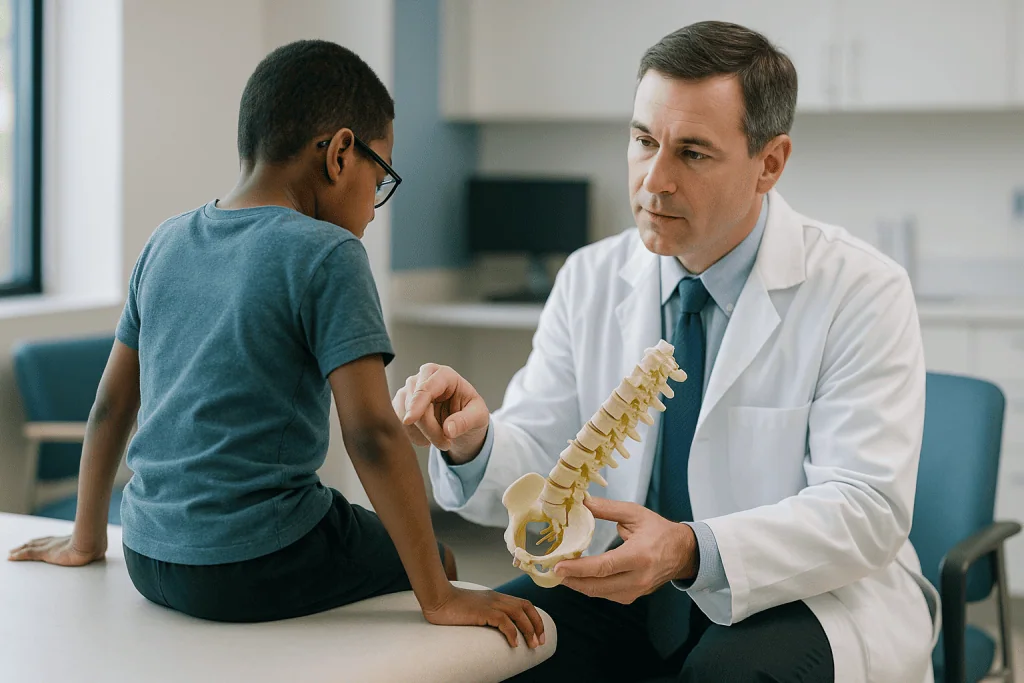
Spasticity is the most frequent motor pattern. It means muscles that resist stretch too strongly, and the faster you stretch them, the harder they fight back. Here is the mechanism in one breath: a healthy brain sends steady calming signals down the spinal cord that keep stretch reflexes in check; when the pathways carrying those signals are damaged, the reflex arc in the spinal cord runs unopposed, so an ordinary tap on a tendon or a normal step produces an oversized contraction.
This explains why a surgeon would operate on the spine to treat a problem that began in the brain. The brain injury itself cannot be repaired. The overactive loop, though, has a physical location, the sensory rootlets carrying stretch information into the cord, and that loop can be quieted by removing part of its input. Fewer stretch signals in, less reflex contraction out.
It also explains the limits. Spasticity is only one contributor to a difficult walking pattern. Weakness, poor balance, tightness that has become fixed in the muscle tissue itself, bones that have twisted as they grew, and difficulty isolating one joint from another all play their parts, and none of those is a reflex. The National Institute of Neurological Disorders and Stroke lists SDR among options for severe spasticity, but the team’s central task is to work out how much of a particular child’s difficulty is actually spasticity, because that is the only part the operation touches.
SDR candidacy in cerebral palsy: the profile teams look for
Ask a spasticity team to sketch the child who tends to do well and a consistent picture emerges. It is not a rule book, and every program applies its own judgment, but the pattern is recognizable.
The child has spastic cerebral palsy rather than the dyskinetic, ataxic or mixed forms. Spasticity is the dominant problem, not involuntary writhing movements or poor coordination. The legs are affected far more than the arms, the pattern known as spastic diplegia, which most often follows premature birth and injury to the white matter near the ventricles of the brain.
The child already walks, either independently or with a walker, crutches or canes, and is somewhere in the middle of the functional spectrum. Beneath the stiffness there is genuine strength: when the therapist positions a limb to take spasticity out of the equation, the child can push, pull and hold. There is at least some selective motor control, meaning the ability to move one joint on purpose without the whole leg joining in.
The joints are still mobile. Tightness that can be stretched out on the examination table is spasticity; tightness that will not budge under any circumstances is a contracture, a permanent shortening of muscle and tendon, and SDR does nothing for contractures. Bones have not yet twisted or dislocated in ways that would need orthopedic surgery first.
Then there are the factors that have nothing to do with the legs. The child can understand and cooperate with instructions well enough to work in therapy. The family has the time, transport and stamina for an intensive rehabilitation program that the NHS describes in terms of months. Motivation counts, on both sides of the parent-child relationship.
Where a child ticks most of these boxes, the team will look deeper. Where several are missing, the conversation usually turns to alternatives, and that is not a failure of the child; it is the team matching a tool to a problem.
Who is usually asked to wait, or steered toward a different option
The mirror image of the ideal profile is just as informative, and families deserve to hear it early rather than after weeks of hope.

Children whose main movement disorder is dystonia, involuntary sustained muscle contractions that twist the limbs, or athetosis, slow writhing movements, are generally not candidates. Cutting sensory rootlets calms stretch reflexes; it does not calm a brain that is generating abnormal movement commands. In mixed-tone cerebral palsy, where spasticity and dystonia coexist, teams weigh which component dominates, and often lean away from SDR when dystonia is prominent.
Children with significant underlying weakness are a particular concern. Spasticity can be a crutch. A child with weak hip and knee extensors may be standing partly because stiff muscles hold the leg straight. Remove that stiffness and the leg may buckle. Teams sometimes describe this as “unmasking weakness,” and it is one of the reasons strength testing sits at the heart of the assessment.
Fixed contractures, established bony deformities such as severe hip subluxation or twisted femurs, and previous spinal surgery all complicate matters. Some children are sequenced instead: orthopedic procedures first, or SDR first followed by orthopedic work later, depending on what is driving the gait problem.
Very young children who are not yet walking may simply be asked to wait, because the team cannot yet judge strength, control or walking pattern with confidence. Children whose spasticity is mild and well managed with therapy, orthotics and occasional focal treatments may be told the risks of surgery are not justified.
The Mayo Clinic frames SDR as an option when other treatments have not helped severe spasticity. Being asked to wait is not being turned away. It is the team keeping a door open until the picture is clearer.
GMFCS levels for SDR: what the five-level scale tells the team
Nearly every discussion about SDR candidacy in cerebral palsy uses a shorthand called GMFCS, the Gross Motor Function Classification System. It is a five-level scale that describes how a child usually moves in everyday life, from Level I, where a child walks and climbs stairs without limitation, to Level V, where a child is transported in a wheelchair and needs support to hold the head and trunk. It was designed to describe, not to grade, and it has become the common language of pediatric rehabilitation.
Here is a plain-language sketch of the levels as they relate to legs and walking:
- Level I: walks indoors and outdoors and climbs stairs without a railing; speed, balance and coordination are reduced but independence is not.
- Level II: walks in most settings but may need a railing on stairs, tires on long distances and struggles on uneven ground or in crowds.
- Level III: walks with a hand-held mobility aid such as a walker or crutches indoors; often uses a wheelchair for longer distances.
- Level IV: stands and transfers with help; relies on powered mobility or a pushed wheelchair for most movement.
- Level V: requires extensive support for posture and all mobility.
SDR programs have historically concentrated on children in Levels II and III, sometimes Level I with troublesome spasticity, because these children walk and have the capacity to walk better once reflexive stiffness is reduced. In Levels IV and V the goal of surgery shifts. Walking is not on the table; the aims become comfort, easier sitting, less pain, simpler dressing and hygiene, and the prevention of contractures. Some centers do offer SDR to selected children at those levels with those goals in mind, while others favor an intrathecal baclofen pump. Either way, the team will state the goal before it states the procedure, and families should hold them to that order.
What the multidisciplinary team assesses, appointment by appointment
A single consultation does not decide candidacy. Most programs run the child through a set of assessments, usually spread over one or several visits, and then meet as a group to reach a shared view. The cast typically includes a pediatric neurosurgeon, a physiatrist or pediatric neurologist, an orthopedic surgeon, physical and occupational therapists, and often a social worker or psychologist.
The history comes first. When did the child first sit, crawl, stand, walk? Is walking getting harder, easier or staying the same? What has already been tried: stretching, casting, orthotics, oral medicines, injections into tight muscles? Have there been hip X-rays, and what did they show?
The physical examination measures three different things that families often lump together as “stiffness.” Spasticity is graded by how strongly a muscle resists a quick stretch. Range of motion is measured with a goniometer, a protractor for joints, to separate stretchable tightness from fixed contracture. Strength is tested muscle group by muscle group, and selective motor control is scored by asking the child to move a single joint in isolation.
Instrumented gait analysis is the centerpiece at many centers. Reflective markers are placed on the legs, cameras track them as the child walks, force plates in the floor measure how weight moves through each foot, and surface electrodes record when each muscle switches on. The output is a set of graphs that show, joint by joint and moment by moment, where the walking pattern deviates and why.
Brain MRI is reviewed to confirm the pattern of injury is consistent with spastic diplegia and to rule out anything that would change the plan. Spine imaging checks the anatomy the surgeon will work through. The MedlinePlus overview notes that treatment planning in cerebral palsy relies on this kind of team approach precisely because no single specialty sees the whole child.
Why strength and selective control matter more than how tight the legs feel
If one idea from this article changes how a family thinks about the decision, it should be this: the amount of spasticity is the least useful number in the file.
Spasticity is what parents notice. It is what makes dressing a struggle and turns bath time into a wrestling match. It is natural to assume that more stiffness means more to gain from an operation that reduces stiffness. The team sees it differently. Spasticity is the thing SDR reliably reduces; that part is fairly predictable. What is uncertain, and what determines whether the child ends up walking better, is what remains once the spasticity is gone.
Picture two children with identical spasticity scores. The first has strong hip extensors, can stand on one leg briefly when the stiffness is worked out, and can wiggle a foot up and down without the knee moving. The second cannot straighten the knee against gravity when positioned to neutralize the reflex, and every attempt to move the ankle drags the whole leg along. Both would leave the operating room with looser muscles. Only the first has the raw materials to turn looser muscles into a better gait.
This is why the assessment spends so long on tests that can look, to a parent, like odd little games. Lift this leg. Now just the foot. Push against my hand. Hold it. The therapist is mapping what lies beneath the reflex.
It is also why teams sometimes recommend a period of dedicated strengthening before revisiting the question. Building a base of strength does not close the door on surgery; it may open it. And in some children a program of therapy, orthotics and targeted focal treatment produces enough improvement that the operation is no longer the right question to be asking. The NHS is explicit that surgery is reserved for children whose stiffness has not responded to other approaches.
SDR vs baclofen pump, injections and orthopedic surgery: how the options differ
Spasticity management is a toolbox, not a ladder. The team’s job is to match the tool to the problem, and families find it easier to follow the reasoning when the tools are laid side by side. The table below compares the main approaches in neutral terms; none is “better,” and many children receive several over the course of childhood.
| Approach | How it works | Typical fit | Reversible? | Main trade-offs |
|---|---|---|---|---|
| Physical therapy, stretching, orthotics | Maintains length and strength; braces hold joints in better positions | Every child, at every stage, alongside any other option | N/A | Requires sustained effort; cannot abolish spasticity on its own |
| Oral antispasticity medicines | Act on the nervous system to dampen reflex activity throughout the body | Generalized spasticity; often a first step | Yes, when stopped under supervision | Effects spread beyond the legs; drowsiness and weakness can limit use |
| Focal injections (botulinum toxin) | Temporarily block nerve signals to specific overactive muscles | A few troublesome muscles; buying time for growth or casting | Yes, wears off over months | Needs repeating; limited number of muscles per session |
| Intrathecal baclofen pump | Implanted device delivers medicine into spinal fluid to reduce spasticity | Severe, widespread spasticity, often GMFCS IV–V; mixed tone with dystonia | Yes, dose adjustable and device removable | Requires refills, device checks and carries infection and malfunction risks |
| Selective dorsal rhizotomy | Permanently reduces reflex input by cutting selected sensory rootlets | Spastic diplegia, ambulatory, good strength and control | No | One-time surgery; irreversible; demands months of intensive rehab |
| Orthopedic surgery | Lengthens tendons, realigns bones, stabilizes joints | Fixed contractures and bony deformity | No | Addresses structure, not spasticity; may be staged with other options |
Two points stand out. SDR and the baclofen pump are often discussed together because both target severe spasticity, but they suit different children: the pump can be adjusted and removed and works for dystonia as well, while SDR is permanent and specific to spasticity. And orthopedic surgery is not an alternative to SDR so much as a companion; many children who have SDR will still need tendon or bone procedures later, because growth does not stop.
SDR surgery age: why timing is a judgment, not a cutoff
Parents often ask for a number. “What is the right age?” The team’s honest answer is that age is a proxy for other things, and it is those other things that matter.
The case for operating earlier rests on how spasticity shapes a growing body. Muscles that are held short by constant reflex contraction fail to lengthen as bones grow, and over years this turns stretchable tightness into fixed contracture and pulls joints out of alignment. Reduce spasticity before those secondary changes set in and the child may avoid some orthopedic surgery later. Younger children also tend to have more adaptable nervous systems and fewer ingrained compensations in their walking pattern.
The case for waiting is equally practical. A toddler cannot reliably perform the strength and selective control tests the team depends on, cannot cooperate with formal gait analysis, and cannot participate in the goal-directed therapy that follows. The team also needs to see the child’s walking pattern stabilize enough to judge what is spasticity and what is simply developing motor skill. Operating before the picture is clear risks treating the wrong problem.
Most programs therefore assess children in early to mid childhood, once walking with or without aids is established but before adolescence brings rapid growth and heavier bodies. Teenagers and adults with spastic diplegia are sometimes considered, but by then contractures and bony changes are more common, expectations shift toward pain and ease of care rather than gait, and the assessment weighs those factors accordingly.
The NINDS notes that treatment in cerebral palsy is tailored to the individual and changes as needs change. Age enters that tailoring as one thread among many. A child who is “too young” this year is simply a child the team wants to see again.
The commitment families are asked to make before anyone agrees to operate
Here is the part of the assessment that has nothing to do with rootlets and everything to do with the kitchen calendar.
SDR is unusual among operations in that its success depends heavily on what happens in the months afterward. The child comes out of surgery with muscles that no longer resist stretch the way they used to, which sounds like pure gain until you remember that those stiff muscles were part of how the child stood and moved. In the early weeks, walking is often worse, not better. The nervous system has to relearn how to stand and step without the old reflexive scaffolding, and that relearning happens only through repetition.
Programs therefore describe the rehabilitation phase in detail before surgery is agreed, and the NHS is clear that intensive physiotherapy continues for many months. In practice that can mean daily sessions in an inpatient or day rehabilitation setting at first, tapering to several sessions a week with home exercises in between. Someone has to drive. Someone has to do the home program on the evenings when the child is tired and tearful. Someone has to liaise with school about missed days and adapted physical education.
The team will ask about all of this, and families sometimes feel judged. That is not the intent. The questions exist because a child whose family cannot sustain the program is a child who may end up weaker and less mobile than before surgery, and the team has an obligation to prevent that outcome.
A social worker or psychologist often meets the family separately to talk about siblings, work arrangements, distance from the rehabilitation center and the emotional load of a long recovery. Where gaps exist, the team may help bridge them or may suggest delaying until support is in place. Delay, in this context, is protective.
Risks, complications and what the evidence does and does not show
Any operation on the spine carries risks, and families deserve them stated plainly rather than buried in a consent form.
Short-term risks include those of any general anesthetic and any surgical wound: bleeding, infection, and reactions to anesthesia. Specific to SDR, opening the covering of the spinal cord raises the possibility of spinal fluid leaking from the wound, which may need a further procedure to close. Headache while lying flat is common in the first days as the fluid balance settles. Temporary changes in sensation in the legs, tingling or heightened sensitivity to touch, are expected as the sensory system adjusts and usually fade.
Longer-term concerns are the reason rootlet selection is so careful. Cutting too much can cause permanent numbness, weakness or bladder and bowel disturbance. The intraoperative monitoring exists to minimize these, but no monitoring eliminates risk entirely. Some studies have raised questions about later spinal curvature or slippage of one vertebra on another, particularly with techniques that remove bone across several levels, which is one reason many surgeons now use a smaller opening.
On effectiveness, the evidence is reasonably consistent that SDR reduces spasticity in the legs, and that reduction is durable. The evidence on walking, participation and quality of life is more mixed and varies by how carefully candidates were selected and how much rehabilitation followed. The Mayo Clinic presents SDR as an option for severe spasticity unresponsive to other treatment, not as a routine intervention, and that framing reflects where the evidence sits. Families should be wary of any account, online or in person, that quotes a tidy percentage of children who “walk normally” afterward. No guideline supports such a figure, and the honest position is that outcomes depend on the child, the selection and the work.
What the days and weeks after SDR usually look like
Recovery has a shape, and knowing it in advance takes some of the fear out of the hard early days.
The first stretch is spent in hospital. The child typically lies flat for a period after surgery so the wound in the spinal covering can seal, then is gradually allowed to sit up as headache and dizziness permit. Pain is managed by the anesthesia and surgical teams; families are involved in comfort measures such as positioning, distraction and familiar routines, but medicine decisions sit entirely with the clinicians. Many children are surprised by how different their legs feel, floppy and unfamiliar, and some are frightened by it. Therapists usually begin gentle movement while the child is still in bed.
Once the wound is stable, the emphasis shifts to standing and stepping, first in parallel bars or with substantial support. This is the phase when families most need reassurance, because the child often walks less well than before. Legs that were held straight by spasticity now bend, and the child has to build the strength and motor pattern to hold them straight on purpose. Progress is measured in small steps: standing a few seconds longer, taking weight through a heel, keeping a knee from collapsing.
Over the following weeks and months the program becomes more functional: stairs, uneven ground, getting up from the floor, walking at school. Orthotics are often refitted because the old braces were made for a different leg. Home exercises become part of daily life. The NHS describes this rehabilitation as lasting many months, and most teams talk about the first year as the window in which the bulk of change happens.
Follow-up visits with the team continue through growth, often with repeat gait analysis. Growth spurts can bring new tightness, and orthopedic questions may resurface in adolescence even in children who did well.
What people often get wrong about selective dorsal rhizotomy criteria
Several beliefs circulate widely enough that they deserve direct correction.
“SDR treats cerebral palsy.” It does not. Cerebral palsy is a brain injury; SDR is a spinal procedure that reduces one of its consequences, spasticity in the legs. Weakness, balance problems, arm involvement, speech, vision and learning are untouched by it.
“The stiffer the child, the better the candidate.” As earlier sections explain, strength and selective control predict outcome far more than spasticity does. Severe spasticity in a weak child is a reason for caution, not enthusiasm.
“If a child does not qualify now, they never will.” Candidacy is reassessed. Children grow, get stronger, learn to cooperate with testing. Being asked to wait is a routine part of the pathway.
“Once the surgery is done, the hard part is over.” Surgeons would say the opposite. The operation is a few hours; the rehabilitation is months of daily effort, and the outcome tracks the rehabilitation.
“SDR means no more orthopedic surgery.” Reducing spasticity early may lessen the need for later tendon or bone procedures, but it does not remove it. Bones keep growing and some children need orthopedic work regardless.
“There is a fixed age window and after that it is too late.” Age is a proxy for cooperation, walking maturity and the absence of fixed deformity. Older children and even adults are sometimes assessed, with different goals.
“The results are guaranteed.” No responsible team promises a particular walking outcome. Reduced spasticity is expected; improved function is the goal, worked toward, not assured.
“Any child with cerebral palsy can be considered.” Children with dystonia, ataxia, hypotonia or severe weakness are usually steered elsewhere. The MedlinePlus overview emphasizes that cerebral palsy is a group of disorders, and treatments that fit one type may be wrong for another.
Questions to ask your care team before deciding
A good assessment invites questions, and the quality of the answers tells you a great deal about the team. These are the ones worth bringing in writing.
- Which type of cerebral palsy does my child have, and how confident are you that spasticity, rather than dystonia or weakness, is the main barrier to walking?
- What did the gait analysis show, joint by joint, and which of those findings would SDR be expected to change? Which would it not change?
- How did my child score on strength and selective motor control, and how do those scores compare with children you have found to do well?
- Are there fixed contractures or bony changes now, and if so, should orthopedic surgery come first, later or instead?
- What is the specific goal of surgery for my child: walking pattern, endurance, comfort, ease of care? How will we measure whether it has been met?
- What alternatives did the team consider, including an intrathecal baclofen pump or continued focal treatment, and why did you weigh them the way you did?
- What would make you recommend waiting a year and reassessing?
- What does the rehabilitation program look like week by week, where does it happen, and what will my family need to provide?
- What complications have you seen, how often, and how were they handled?
- What follow-up will my child have through adolescence, and who coordinates it?
Notice that none of these asks the team to guarantee anything. They ask for reasoning. A team that explains its thinking clearly, acknowledges uncertainty and describes the alternatives without dismissing them is one whose recommendation, whichever way it falls, a family can trust. The NINDS describes cerebral palsy care as individualized and ongoing; these questions simply hold the team to that standard. A second opinion from another multidisciplinary program is a reasonable request, not an insult.
When to call your doctor
Two sets of warning signs matter: those that apply while a child is being assessed for SDR, and those that apply after surgery has taken place. The decision about what any of them means, and what to do, belongs to the treating team, and families should never delay contacting them out of worry about overreacting.
During the assessment period, contact the team promptly if the child’s walking suddenly worsens over days rather than months, if there is new or increasing pain in a hip, knee or back, if a leg appears to be turning in or out more than before, or if there is any change in bladder or bowel control. Cerebral palsy itself does not progress, so a rapid decline points to something else that needs looking at, such as hip displacement or an unrelated illness.
After surgery, call the surgical team the same day, or go to an emergency department if you cannot reach them, for any of the following:
- Clear fluid or increasing drainage from the wound, or a soft swelling forming under the skin near the incision
- Fever, spreading redness, warmth or foul-smelling discharge at the wound
- Severe headache that does not ease with lying flat, especially with vomiting, stiff neck or sensitivity to light
- New numbness, weakness or loss of movement in the legs beyond what the team told you to expect
- Difficulty passing urine, loss of bladder or bowel control, or no urine for many hours
- Calf pain, swelling or redness in one leg, or sudden breathlessness or chest pain, which can signal a blood clot
- A child who is unusually drowsy, confused or hard to rouse
Less urgent but still worth a call: pain that is not controlled by the plan you were given, persistent vomiting, or a child who is refusing to take weight several days after being cleared to stand. The Mayo Clinic and other mainstream sources are consistent on one principle: after any spinal procedure, wound changes and new neurological symptoms are never something to watch and wait on at home.
Frequently asked questions
What are the main selective dorsal rhizotomy criteria a team uses?
Teams look for spastic cerebral palsy, usually the diplegic pattern, in a child who walks with or without aids, has good underlying leg strength and some selective motor control, has no major fixed contractures or bony deformity, can cooperate with therapy, and has a family able to commit to months of rehabilitation. No single criterion decides it; the multidisciplinary team weighs them together after examination, gait analysis and imaging.
Which GMFCS levels for SDR are most commonly considered?
Children at GMFCS levels II and III, who walk independently or with a hand-held aid, have historically been the main group considered, with some level I children whose spasticity interferes with function. At levels IV and V, where walking is not the goal, some programs offer SDR for comfort, positioning and ease of care, while others favor a baclofen pump. The team states the goal before choosing the procedure.
Is there a right SDR surgery age?
There is no fixed age; age stands in for other factors. Teams generally assess children in early to mid childhood, once walking is established and the child can cooperate with strength testing, gait analysis and therapy, but before adolescence brings rapid growth and more fixed deformity. Older children and adults are sometimes assessed with goals focused on pain and ease of care rather than walking.
How does the team decide between SDR vs baclofen pump?
The two target different children. SDR is permanent, addresses spasticity only, and suits ambulatory children with spastic diplegia and good strength. An intrathecal baclofen pump is adjustable and removable, also helps dystonia, and is more often used for severe widespread spasticity or mixed tone, particularly at GMFCS levels IV and V. The team weighs movement type, functional level, goals and the family’s ability to manage refills and rehabilitation.
Will my child walk normally after selective dorsal rhizotomy?
No responsible team promises that, and no guideline supports a fixed figure. The evidence is fairly consistent that SDR reduces leg spasticity durably; evidence on walking and quality of life is more mixed and depends on how carefully candidates were selected and how much rehabilitation followed. Walking often worsens in the early weeks before improving. The realistic aim is better function toward specific goals agreed in advance.
Why does the team test strength when the problem is stiffness?
Because spasticity can hide weakness. A child may be standing partly because stiff muscles hold the legs straight; remove that stiffness and weak legs may buckle. Strength and selective motor control are what remain after surgery reduces the reflexes, so they predict outcome far better than the amount of spasticity. Children found to be weak are sometimes asked to strengthen first and be reassessed.
Can a child with dystonia or mixed cerebral palsy have SDR?
Usually not as a first choice. SDR quiets stretch reflexes in the spinal cord, but dystonia comes from abnormal movement commands generated in the brain and is not reduced by cutting sensory rootlets. In mixed tone the team judges which component dominates and often leans away from SDR when dystonia is prominent, considering a baclofen pump or other approaches instead.
What does rehabilitation after SDR involve for the family?
It is intensive and prolonged. The NHS describes physiotherapy continuing for many months after surgery. Early on this can mean daily sessions in an inpatient or day rehabilitation setting, later tapering to several weekly sessions plus a home exercise program. Families need transport, time and stamina, and schools need to be involved. Teams assess this capacity before agreeing to operate because outcomes track the rehabilitation.
Does SDR mean my child will never need orthopedic surgery?
No. Reducing spasticity early may lessen the risk of later contractures and joint problems, but bones keep growing and some children still need tendon lengthening or bony realignment afterward. Some children have orthopedic surgery first because fixed deformity is driving their gait problem. The team plans the sequence; SDR and orthopedic surgery are companions rather than alternatives.
What if the team says my child is not a candidate?
It usually means the tool does not fit the problem right now, not that nothing can be done. The team should explain which factor weighed most, whether reassessment later is sensible, and which alternatives such as therapy, orthotics, focal injections, oral medicines, a baclofen pump or orthopedic surgery they recommend. Asking for a second opinion from another multidisciplinary program is reasonable.
References
- NHS: Cerebral palsy: Treatment
- NINDS (NIH): Cerebral Palsy
- CDC: About Cerebral Palsy
- MedlinePlus: Cerebral Palsy
This article is for general information only and is not a substitute for professional medical advice. Please consult a qualified doctor about your individual situation.

More from the Blog

Can a Brain Tumor Be Monitored Rather Than Treated Right Away? When Surveillance Is Chosen
Yes. Many brain tumors, especially small, slow-growing, benign types such as meningiomas, acoustic neuromas and some pituitary tumors, can be monitored with repeat MRI…

Neuromuscular Disease Care: How Diagnosis, Rehabilitation and Breathing Support Fit Together
A neuromuscular disease care plan brings three strands together: a careful diagnosis that names which part of the nerve-to-muscle pathway is failing, rehabilitation that…

When Do Memory or Behavior Changes Call for a Dementia Assessment Rather Than Waiting?
Book a dementia assessment when memory or behavior changes are new, have persisted for weeks to months, and are starting to affect everyday tasks…

Second Opinions in Neurodegenerative Diseases: When a Diagnosis Deserves Another Look
A neurodegenerative disease second opinion is a fresh review of your history, examination and test results by another neurologist, often one who focuses on…

Neuroinfectious Diseases Treatment: How Meningitis and Encephalitis Care Is Planned
A meningitis encephalitis treatment plan starts within minutes of suspicion, usually before tests confirm the cause. Doctors give intravenous antibiotics, and often an antiviral,…

Who May Be a Candidate for Peripheral Nerve Surgery? Injury, Compression and Tumor Cases
Peripheral nerve surgery is considered for three groups: people with a nerve that has been cut, torn or crushed and shows no sign of…