

Who Suits E-Max Crowns? Front Teeth, Translucency Needs and When Bite Force Argues Against Them
Key Takeaways
- Lithium disilicate, the glass-ceramic sold under the e-max name, owes its natural look to a glassy matrix that transmits light, which also means a dark tooth or metal post underneath can show through.
- Front teeth and premolars carry lower, more vertical bite forces than molars, which is why the material's moderate strength is usually adequate there and more debatable on back teeth.
- Bruxism, the grinding or clenching that Mayo Clinic notes often happens during sleep, is the single habit most likely to chip a glass-ceramic crown and most likely to shift the recommendation toward zirconia.
- Because lithium disilicate bonds chemically to enamel with resin cement, it can often be made thinner than a metal-based crown, conserving more natural tooth.
- Cleveland Clinic gives 5 to 15 years as the typical range for crowns in general, and a published systematic review reports lithium disilicate single-crown survival above 95 percent at 5 years in selected study populations.
- Decay at the margin where crown meets tooth is a leading reason crowns are replaced, and it is largely preventable with daily flossing and routine check-ups.
A lithium disilicate glass-ceramic crown, widely called an e-max crown, generally suits people restoring a front tooth or premolar where matching the translucency of natural enamel matters more than raw toughness. Dentists usually weigh it more cautiously for molars, for people who grind or clench heavily, and for teeth with dark cores, where a stronger or more opaque material may be advised. The treating dentist makes the final call.
It usually starts with a photograph. Someone zooms in on a picture from a family dinner and notices that one front tooth looks a shade grayer than its neighbor, or that an old crown catches the light like a piece of porcelain dinnerware while the teeth beside it glow softly from within. The tooth has done its job for years. It just no longer looks like it belongs.
That is the moment many people first hear the phrase “e-max crown” and start wondering whether they are an e max crown candidate. The name, borrowed from one manufacturer’s product line, has become shorthand for a whole class of glass-ceramic crowns made from lithium disilicate. Dentists reach for it often, and for good reasons. Yet the same qualities that make it beautiful on a front tooth can make it a questionable choice on a back one.
This explainer walks through how the material behaves, where it earns its reputation, where a stronger or more forgiving option is usually wiser, and what to ask before anyone picks up a drill.
What is an e-max crown in dentistry, in plain language?
A crown is a custom cap that covers a damaged or weakened tooth down to the gumline, restoring its shape and protecting what remains underneath. Crowns can be made from metal, from porcelain fused to a metal base, or from all-ceramic materials, and lithium disilicate is one of the all-ceramic options. Cleveland Clinic describes crowns as a routine treatment for teeth that are cracked, heavily filled, worn or have had root canal treatment.
Lithium disilicate is a glass-ceramic: a material that starts as a glass and is heat-treated so that tiny needle-like crystals grow inside it. The crystals give it strength; the glassy matrix between them lets light pass through. That combination is the whole story. Metal blocks light completely. Zirconia, another popular ceramic, is denser and tougher but historically more opaque. Lithium disilicate sits in the middle, closer to the way real enamel behaves when light hits it.
“E-max” is a brand name for one widely used lithium disilicate system, and the term has drifted into everyday use the way people say “tissue” for any facial tissue. When a dentist says e-max, they usually mean a lithium disilicate crown of some kind, either pressed from a heated ingot or milled from a block by a computer-guided machine, then finished by a technician who adds surface color and glaze.
Because the material bonds chemically to tooth structure with a resin cement, a lithium disilicate crown can sometimes be made thinner than a metal-based crown, which means less of the natural tooth needs to be trimmed away. That is one of its quieter advantages, and one reason it is often discussed for front teeth where conserving tooth is a priority.
Who is usually an e max crown candidate, and who is usually asked to wait?
The most typical candidate is an adult with a single front tooth or premolar that needs a crown, healthy gums, a stable bite, and a strong wish for the result to be invisible. A tooth with a large old filling, a fracture through the enamel, a discolored root canal-treated tooth that is still structurally sound, or a worn edge that has already been repaired several times fits this picture well.

People are commonly asked to pause when something upstream needs attention first. Active gum disease changes the shape of the tissue around the tooth, so a crown margin placed today may show a dark line or gap as the gums heal. An untreated cavity beneath the planned crown, an infection at the root tip, or a tooth that has too little sound structure left to hold any crown all need to be dealt with before material choice even comes up.
Age matters at the young end. Adolescents whose jaws are still growing and whose gumlines are still settling are often steered toward provisional solutions until growth is complete, because a permanent crown placed too early can end up sitting visibly high a few years later. The NHS notes that the choice of crown material depends on the tooth’s position and the load it carries, which is exactly the judgment call a dentist makes here.
Habits shape candidacy too. Someone who wakes with a sore jaw, whose partner hears grinding at night, or who has chipped previous ceramics may still be offered lithium disilicate on a front tooth, but with a protective night guard and a frank conversation about risk. On a molar, that same history often tips the decision toward a tougher material.
Why front teeth are where an emax crown front teeth case makes the most sense
Front teeth are thin. Upper incisors taper to an edge only a millimeter or two thick, and along that edge natural enamel is almost transparent, with a faint bluish or grayish halo. Any crown that ignores this reads as a solid tile in the smile. Lithium disilicate can be layered or pressed with graded translucency so that the biting edge lets light through while the body of the crown stays warmer and more opaque, mimicking the way dentin (the softer, yellower layer under enamel) sits inside a natural tooth.
Bite forces on front teeth are also modest compared with molars. Incisors slice and tear; they do not crush. Because the load is lower and directed more along the length of the tooth, the material’s moderate strength is usually more than adequate in this position, provided the bite is balanced and the person does not grind heavily.
The bonding advantage matters most here as well. A resin-bonded glass-ceramic crown on a front tooth can be made with a conservative preparation, preserving more of the natural tooth. Preserving tooth structure is not cosmetic vanity. Every millimeter of enamel left in place is structural insurance for the decades ahead, since teeth that lose too much structure are more prone to fracture and less likely to hold a future replacement crown.
Front teeth are also where the neighbors are on display. If one central incisor is crowned and the other is natural, the crowned one must match its partner under office light, daylight and camera flash. Glass-ceramics tend to shift color with the light in a way that resembles enamel, which is why many dentists consider this the material’s home turf.
Translucency needs: when a see-through crown helps and when it betrays you
Translucency is the property that lets light travel partway into a material before scattering back out. In a natural tooth, light enters the enamel, bounces around inside the dentin, and returns with the warm color of the tooth’s interior. A crown that copies this behavior looks alive; one that blocks or reflects all light at the surface looks flat.
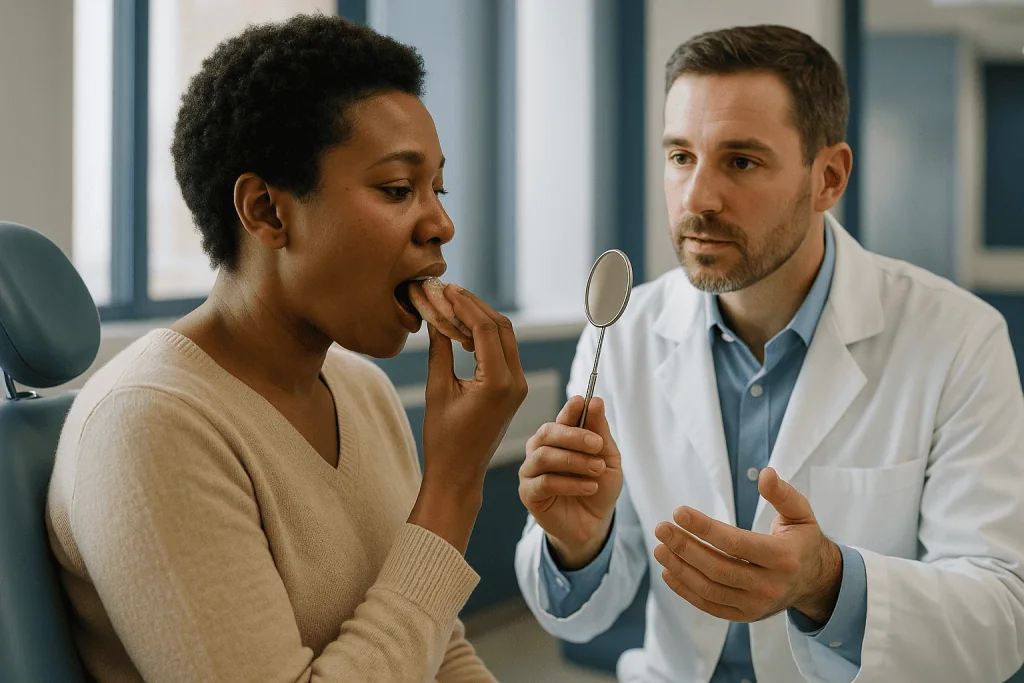
Lithium disilicate comes in several opacity grades, from highly translucent to fairly opaque. A skilled technician chooses the grade based on what lies beneath. This is the part of the decision people rarely hear about: a translucent crown does not create color, it transmits the color that is behind it. Placed over a bright, healthy tooth stump, it glows the way enamel does. Placed over a dark, root canal-treated tooth, a metal post, or a gray amalgam core, it shows that darkness through like a lampshade over a dim bulb.
Dentists manage this in a few ways. They may select a more opaque grade of the same ceramic, mask the dark core with an opaque material before cementing, or decide that a different crown type with a built-in masking layer is the safer route. None of these are failures; they are matching the tool to the tooth.
Neighboring teeth set the target. A person with naturally dense, chalky enamel actually needs a less translucent crown, or the new tooth will look eerily glassy next to the others. Someone with thin, translucent incisors needs the opposite. Good planning starts with photographs, shade tabs held against wet teeth, and sometimes a trial crown in tooth-colored resin so the person can see the intended shape and value before the final ceramic is made.
When bite force argues against them: bruxism, clenching and molars
Molars grind. The last teeth in the arch sit closest to the jaw joint and the chewing muscles, and they absorb the greatest load during a meal and during sleep. Bruxism, the medical term for grinding or clenching the teeth, magnifies this. Mayo Clinic notes that bruxism often happens during sleep, when people cannot control the force, and that it can damage teeth, crowns and restorations over time.
Glass-ceramics are strong in compression but comparatively brittle in tension and prone to chipping at thin edges under repeated cyclic load. A crown that survives years of ordinary chewing may develop a hairline crack when subjected night after night to the far higher forces of clenching. Zirconia, a polycrystalline ceramic without the glassy phase, tolerates this kind of load better, which is why many dentists favor it on molars and for people with a grinding history.
Clues that push a dentist toward caution include flattened, shiny wear facets on existing teeth, chipped enamel on several fronts, previously fractured fillings or crowns, enlarged chewing muscles, morning jaw fatigue, and a missing tooth elsewhere that has shifted extra load onto the tooth being restored. Cleveland Clinic lists worn or fractured teeth among the common signs of the condition.
None of this means a person who grinds can never have a glass-ceramic crown. It means the conversation should include where the tooth sits, how much space there is for the crown’s thickness, whether a night guard will realistically be worn, and whether a tougher material would sacrifice too much appearance for the location. On a lower second molar that no one will ever see, most dentists will argue that toughness wins. On an upper incisor, the balance often flips.
Emax vs zirconia crowns: how the choice actually gets made
The most common question people bring in is “which is better, zirconia or e-max?” The honest answer is that neither is better in the abstract; each is better for particular teeth. The table below summarizes how dentists commonly weigh the main all-ceramic and metal-based options. It reflects general properties described in mainstream dental sources rather than a ranking.
| Factor | Lithium disilicate (e-max type) | Zirconia | Porcelain fused to metal |
|---|---|---|---|
| Translucency | High; closest to enamel | Lower; newer grades improved | Low; metal blocks light |
| Resistance to heavy load | Moderate; edges can chip | High | High core; porcelain can chip |
| Typical positions | Front teeth, premolars, some first molars | Molars, bridges, heavy bite | Molars, long-span bridges |
| Bonding to tooth | Strong resin bond | Usually cemented, weaker bond | Cemented |
| Masking dark cores | Limited unless opaque grade | Good | Good |
| Wear on opposing teeth | Low when glazed | Low when polished | Porcelain can wear opposing enamel |
Newer, more translucent zirconia formulations have narrowed the appearance gap, and some dentists now use them on front teeth. Yet increased translucency in zirconia generally comes at the cost of some strength, so the trade-off does not disappear; it moves. Lithium disilicate remains the more predictable choice when a technician needs to build subtle internal color effects and edge translucency into a single crown.
What settles the choice in a real appointment is usually a combination of four questions: Where is the tooth? What lies underneath it? How hard does this person bite? How much room is there for the crown’s thickness? Answer those and the material tends to choose itself.
What are the downsides of emax crowns that people should hear before saying yes?
Every material has a bill to pay, and the emax crown downsides are real even if they are manageable.
The first is chipping and fracture under heavy load. Glass-ceramics are brittle compared with zirconia and metal, and the thin biting edges and cusps that make them look natural are also their weak points. A person who grinds, chews ice, opens packaging with their teeth or has a crossbite that loads the crown at an odd angle carries a higher risk.
The second is the translucency problem already described. A dark tooth underneath can shine through, and correcting this after cementation is not possible; the crown has to be remade or an alternative chosen.
Third, lithium disilicate depends on good bonding. The tooth surface must be kept dry and clean during cementation, and the cement chemistry must be handled correctly. Teeth that sit well below the gumline or bleed easily are harder to bond reliably, which can shorten the crown’s life.
Fourth, thickness. The material needs a certain minimum bulk to be strong, so on a tooth with very little vertical space (a common problem with worn back teeth) it may not fit without excessive drilling of the tooth or the opposing one.
Repairs are limited. A chipped glass-ceramic crown can sometimes be smoothed or patched with composite resin, but a significant fracture usually means replacement. And like any crown, it can come loose, trap plaque at the margin if not cleaned well, or sit over a tooth that later needs root canal treatment. Cleveland Clinic lists sensitivity, chipping, loosening and, rarely, allergic reaction among the general risks of crowns of any type.
What is the average emax crown lifespan, and what shortens it?
People want a number, and the honest one comes with a range. Cleveland Clinic states that dental crowns in general last about 5 to 15 years on average, with the range depending on the material, the person’s habits and how well the crown is cared for. Published research on lithium disilicate specifically is encouraging within that window: a systematic review of clinical studies by Pieger and colleagues, indexed on PubMed, reported single-crown survival above 95 percent at 5 years across the pooled studies, with most failures related to fracture or loss of retention.
Three cautions attach to that figure. Study populations are selected; people with severe bruxism are often excluded or given night guards. Follow-up periods in the pooled research are mostly 2 to 5 years, so long-term data beyond a decade remain thinner than for metal-ceramic crowns. And survival in a study means the crown was still in the mouth, not that it still looked perfect or had never needed a polish.
What shortens lifespan is predictable. Grinding without a guard is the biggest factor. Decay creeping in at the margin is the second, and it is largely under the person’s control through daily brushing, flossing under the crown edge, and regular check-ups. Poor bonding conditions at placement, a crown made too thin to fit a tight bite, and trauma from sports or falls round out the list.
The realistic way to think about it: a well-planned lithium disilicate crown on a front tooth in a person with a calm bite is expected to serve for many years, but it is a durable medical device, not a lifetime guarantee, and no dentist can promise a specific span for an individual tooth.
What actually happens at the appointments
Most crown treatment unfolds over two visits, though some offices with in-house milling complete it in one long appointment. The NHS outlines the standard sequence: the tooth is shaped, an impression or digital scan is taken, a temporary crown is fitted, and the permanent crown is cemented at a later visit once the laboratory has made it.
At the first visit, the dentist numbs the tooth with local anesthetic, removes any decay or failing old filling, and trims the tooth to a slightly smaller version of itself so the crown can fit over it without looking bulky. For a bonded glass-ceramic crown this reduction is often less than for a metal-based one, though the exact amount depends on the bite and the shade change needed. If the tooth lacks enough structure, a core build-up in filling material is placed first.
Shade selection happens before drilling, while the tooth is still moist, because teeth lighten temporarily when they dry out. Photographs with shade tabs go to the technician. A digital scan or putty impression records the shape of the prepared tooth, its neighbors and the opposing teeth. A temporary crown, usually acrylic, protects the tooth in the meantime.
At the second visit the dentist removes the temporary, cleans the tooth, tries the ceramic crown for fit, contact with neighbors and bite, and checks the color against the adjacent teeth in more than one light. Small color or shape adjustments can be made; large ones mean sending the crown back. Cementation of lithium disilicate typically involves etching the inside of the crown, applying a bonding agent to the tooth, seating the crown with resin cement, curing it with a light, and removing excess. The bite is then checked again and polished.
What the following days and weeks usually look like
The first evening after either visit, the numbness fades over a few hours and the gum around the tooth may feel bruised where the dentist worked. Some soreness on chewing for a day or two is ordinary. With a temporary crown in place, sticky foods, hard nuts and chewing gum are usually best avoided on that side, and flossing is done by sliding the floss out sideways rather than pulling it up, so the temporary does not lift.
Once the permanent crown is bonded, sensitivity to cold is the most common short-term complaint. Cleveland Clinic describes this sensitivity as common in the days after placement and notes it usually settles as the tooth adjusts. If the tooth had a living nerve and was drilled significantly, that settling can take a few weeks. A crown that feels “high,” so the person hits it first when biting, is not something to wait out; a quick adjustment at the office fixes it and prevents chipping or soreness.
The bite itself often feels foreign for a few days. The tongue explores the new edge, the neighboring teeth adjust to a slightly different contact, and the sensation of a smooth glazed surface differs from natural enamel. This fades quickly for most people.
Care from then on is unglamorous. Brushing twice daily with fluoride toothpaste, cleaning between teeth every day, and attending routine check-ups protect the margin where crown meets tooth, which is where problems begin. Anyone advised to wear a night guard should treat it as part of the crown, not an optional extra. A follow-up visit within a few weeks to check the gum tissue and bite is common practice and worth keeping.
Crowns on dental implants: is lithium disilicate still the right pick?
A dental implant is a titanium or ceramic post placed in the jawbone to act as an artificial root, and the crown that sits on top faces a different set of demands from a crown on a natural tooth. Understanding the difference explains why lithium disilicate is one option among several here rather than the default.
Natural teeth are suspended in the bone by a thin ligament that acts as a shock absorber and provides a sense of pressure. Implants fuse directly to bone and have no such cushion. That means an implant crown receives chewing forces without the dampening a natural tooth enjoys, and the person has less sensory feedback about how hard they are biting. Materials that tolerate load without chipping tend to be favored, especially on molars, which often means zirconia or a metal-based crown.
The gum around an implant also behaves differently. Because there is no natural root, the tissue can look thinner or grayer, and the metal connector between implant and crown can show through if the ceramic is too translucent. Dentists often address this with a tooth-colored abutment, the connecting piece, and by choosing a ceramic grade that masks metal while still transmitting some light.
On a single front-tooth implant, where appearance is paramount and load is lower, a lithium disilicate crown over a ceramic abutment is a widely used approach because it can match the neighboring natural teeth closely. On implants replacing multiple teeth, on molars, or in people with a grinding history, a tougher material is usually recommended. Implant crowns can also be screwed rather than cemented, and the location of the screw access channel influences which ceramic can be used. The implant team weighs all of this alongside bone quality and gum thickness; the crown material is the final piece of a larger plan.
What people often get wrong about being an e max crown candidate
The first misconception is that e-max is simply the best crown and anyone who is not offered one is being short-changed. A material is only as good as its match to the tooth. A glass-ceramic on a heavily loaded second molar in someone who grinds is a poorer choice than a plain metal or zirconia crown, no matter how it looks in a brochure.
The second is that a translucent crown will brighten a dark tooth. It does the opposite. Translucency reveals what is beneath. Whitening a discolored tooth from the inside, masking the core, or selecting a more opaque ceramic are the real tools for this problem.
Third, people assume all-ceramic means metal-free and therefore automatically better for health. Metal-based crowns have decades of safety data; the choice between them and ceramics is about appearance, bonding and tooth conservation, not toxicity. True metal allergy affecting dental alloys exists but is uncommon, and a dentist will ask about it.
Fourth, that a crown protects the tooth from decay. The crown covers the tooth above the gum; the junction where it meets the tooth is exactly where plaque collects. Decay at a crown margin is one of the leading reasons crowns need replacing, and it is preventable with daily cleaning.
Fifth, that a crown is forever. Cleveland Clinic gives a typical range of 5 to 15 years for crowns in general. Lifespan depends on habits, hygiene and bite as much as on material.
Finally, that the material choice is a shopping decision. Two people with the same tooth may sensibly receive different crowns because their bites, gum thickness, neighboring teeth and habits differ. The treating dentist, who has examined the mouth, is the only person positioned to weigh those factors.
Questions to ask your care team before choosing a crown material
A good consultation is a two-way conversation, and arriving with specific questions helps the dentist explain the reasoning rather than just the recommendation. These are the ones that tend to surface the most useful answers.
- Which material do you recommend for this particular tooth, and what about its position, load and color led you there?
- What lies under the crown: is the tooth bright or dark, and does it have a post or a metal core that could show through a translucent ceramic?
- Do you see signs of grinding or clenching in my mouth, and if so, how does that change the material choice or the need for a night guard?
- How much of my natural tooth will need to be removed, and would a different material need more or less?
- How will the color be matched, and will I be able to see the crown against my other teeth in natural light before it is bonded?
- If I have a single front tooth crowned, how will you handle the fact that natural teeth may change color over time while the ceramic will not?
- What is your plan if the crown chips: can it be repaired in the mouth, or would it need remaking?
- Will the crown be bonded or cemented, and does the position of the tooth below the gum make bonding harder?
- How often should I return for the margin to be checked, and what should I watch for between visits?
- Are there alternatives to a full crown, such as an onlay or veneer, that would conserve more of my tooth?
The answers should be specific to the tooth in question. If a recommendation cannot be explained in terms of position, load, color and remaining tooth structure, it is reasonable to ask for a second opinion, which is a normal part of dental care and not a sign of distrust.
When to call your doctor: red-flag signs after crown treatment
Most crown treatment settles quietly, but a few signs warrant a call to the dental office rather than waiting for the next scheduled visit.
Contact the dentist promptly if the crown feels high or makes the bite uneven, because an unbalanced load can chip the ceramic or bruise the tooth’s supporting tissues within days. Call if sharp pain occurs on biting or releasing, if cold sensitivity worsens rather than eases over the first couple of weeks, or if a dull ache develops spontaneously, especially at night; these can signal an inflamed nerve that needs assessment. A crown or temporary that comes loose should be kept and brought in, and the tooth should not be left uncovered for long.
Seek same-day care if there is swelling of the gum, face or jaw, a bad taste or pus near the tooth, or fever, since these may indicate infection. MedlinePlus lists persistent pain, swelling and fever among signs of dental infection that need professional attention. Difficulty swallowing or breathing, or swelling spreading toward the eye or neck, is an emergency and should be treated as such.
Bleeding that does not stop with gentle pressure, a numb lip or tongue that persists many hours after the anesthetic should have worn off, or a sharp ceramic edge cutting the tongue or cheek are also reasons to be seen quickly. If a piece of the crown is swallowed, this is rarely harmful, but the office should know so the crown can be assessed.
Between visits, watch the gumline. Redness, bleeding on brushing that does not improve with better cleaning, or a dark line appearing at the crown margin are worth mentioning at the next appointment. The treating team decides what needs adjusting; the person’s job is simply to report changes early.
Frequently asked questions
What is an e-max crown in dentistry?
An e-max crown is a lithium disilicate glass-ceramic crown; the name comes from one manufacturer’s product line and is now used as shorthand for the material. Lithium disilicate is a glass reinforced with tiny crystals, giving it enough strength for many single teeth while letting light pass through like natural enamel. It is pressed or milled to fit a prepared tooth and bonded in place with resin cement.
Which crown is better, zirconia or emax?
Neither is better for every tooth; each suits different situations. Lithium disilicate is generally favored for front teeth and premolars where translucency matters most, while zirconia is tougher and often chosen for molars, bridges and people who grind. Newer translucent zirconia has narrowed the appearance gap but at some cost in strength. The dentist weighs position, bite force, remaining tooth structure and the color beneath the crown.
What is the average emax crown lifespan?
Cleveland Clinic gives 5 to 15 years as the typical range for dental crowns in general, and a systematic review indexed on PubMed reports lithium disilicate single-crown survival above 95 percent at 5 years in the pooled clinical studies. Individual results vary widely with grinding habits, oral hygiene, how well the crown was bonded, and where the tooth sits. No dentist can promise a specific span for one tooth.
What are the downsides of emax crowns?
The main emax crown downsides are brittleness under heavy load, especially at thin edges, and translucency that can reveal a dark tooth or metal post beneath. The material also needs a minimum thickness to stay strong, depends on careful dry bonding, and is hard to repair once fractured. Like any crown, it can loosen, cause temporary sensitivity, or trap plaque at the margin if cleaning is neglected.
Who is a good e max crown candidate?
A typical candidate has a single front tooth or premolar needing a crown, healthy gums, a balanced bite, enough remaining tooth to bond to, and a strong wish for a natural appearance. People with active gum disease, untreated decay, or jaws still growing are usually asked to wait. Heavy grinders may still qualify on front teeth, often with a night guard, but are frequently steered elsewhere for molars.
Are emax crowns good for front teeth?
Front teeth are where lithium disilicate makes its strongest case. Incisors are thin, translucent at the edge and carry modest bite forces, so the material’s light-transmitting quality is an asset and its moderate strength is usually sufficient. The crown can be bonded with a conservative preparation, preserving enamel. The exception is a very dark underlying tooth, where a more opaque grade or masking step is needed.
Can I get an emax crown if I grind my teeth?
Sometimes, depending on where the tooth is and how heavy the grinding is. Bruxism, which Mayo Clinic notes often occurs during sleep, raises the risk of chipping any glass-ceramic. On a front tooth, dentists may still offer lithium disilicate alongside a night guard; on a molar, they more often recommend zirconia or metal. Signs of wear on existing teeth strongly influence this judgment.
Do emax crowns stain or change color over time?
The glazed ceramic itself resists staining and does not change color, which is a benefit and a drawback. Natural neighboring teeth may yellow gradually or lighten with whitening, while the crown stays the same, so a perfect match today can drift. Surface stain can collect on rough or worn spots and is usually removable at a cleaning. Deep color cannot be adjusted after bonding.
How much tooth is removed for an emax crown?
Because lithium disilicate bonds strongly with resin cement, it can often be made somewhat thinner than a porcelain-fused-to-metal crown, so less tooth is trimmed. The exact amount depends on the bite space available, the shade change needed and the tooth’s shape; a large color correction needs more thickness. The dentist decides this after examining the tooth and, for a bonded crown, aims to leave as much enamel as possible.
What is the difference between an emax crown and a veneer?
A crown covers the entire tooth down to the gumline; a veneer is a thin shell bonded only to the front surface. Both can be made from lithium disilicate. Veneers conserve more tooth but need enough healthy enamel to bond to and cannot protect a weakened or heavily filled tooth. Crowns are chosen when the tooth is cracked, heavily restored or structurally compromised. The dentist recommends based on how much sound tooth remains.
References
- Cleveland Clinic: Dental Crowns: What They Are, Types, Procedure & Care
- Cleveland Clinic: Teeth Grinding (Bruxism)
- PubMed (NIH): Systematic reviews of lithium disilicate single crown survival, including Pieger et al.
- MedlinePlus: Tooth Disorders
This article is for general information only and is not a substitute for professional medical advice. Please consult a qualified doctor about your individual situation.

More from the Blog

Living With Mini Implant Dentures: Snapping In, Cleaning the Posts and Replacing the O-Rings
Caring for mini implant dentures means three habits: snapping the denture on and off along the line of the posts with even thumb pressure,…
What Follows Peri-Implantitis Treatment: Interdental Brushes, Rinses and Maintenance Visits
After peri-implantitis treatment, the aim is to keep the implant surface free of plaque so inflammation does not return. That usually means brushing twice…
Zirconium Crown Treatment Step by Step: Tooth Shaping, Digital Design and the Fitting Visit
A zirconium crown procedure usually unfolds over two visits. At the first, the dentist numbs the tooth, removes decay or old filling material, and…
Which Dental Bone Graft Material Is Used? Your Own Bone, Donor, Animal-Derived and Synthetic
Dental bone graft material comes in four families: autograft (your own bone, usually taken from the jaw), allograft (processed human donor bone), xenograft (processed…
Are Zirconium Teeth Right for You? Bite Force, Smile Goals and When Another Ceramic Fits Better
A good zirconium teeth candidate usually needs a strong restoration for a back tooth, an implant crown, or a bridge, especially with a heavy…

All-on-4 vs All-on-6: When Two More Implants Make Sense
All-on-4 and All-on-6 both anchor a full arch of fixed replacement teeth; the difference is how many implants carry the load. Four implants suit…