

Why Do People Go to Turkey for Hair Transplants? The Real Reasons, Without the Hype
Key Takeaways
- All-inclusive Turkish packages commonly run $2,000–$5,000 versus $10,000–$25,000+ quoted in the US: a gap explained mostly by labor costs, currency, and competition rather than quality.
- Most people have only about 4,000–6,000 usable donor grafts in a lifetime, so a promised single session of 5,000 grafts is usually marketing math, not sound surgery.
- Transplanted follicles typically keep resisting pattern baldness for decades, but the native hair around them keeps thinning, which is why hairline design matters more than graft count.
- In many high-volume clinics, technicians perform most of the extraction and graft placement; asking in writing who performs each stage is the single most revealing screening question.
- The standard stay is three to four nights, but grafts are most fragile in the first several days, and the CDC advises building recovery time in before long flights, which raise clot risk.
- Fever, spreading redness, pus, or worsening pain after surgery warrants prompt local medical care, so arrange a home-based clinician and carry complete written records before you ever fly.
People travel to Turkey for hair transplants mainly because of price: all-inclusive packages often cost 50 to 80 percent less than comparable procedures in the United States or Western Europe. High surgical volume, streamlined clinics, favorable exchange rates, and government-backed medical tourism add to the appeal. Lower cost does not guarantee equal safety or results, so researching credentials, aftercare, and follow-up options remains essential.
Stand in the arrivals hall of a major Istanbul airport on any weekday and you will spot them within minutes: men in their thirties and forties wearing soft headbands or loose bucket hats, foreheads dotted with tiny scabs, moving carefully so nothing brushes the top of the head. Locals barely glance up. The bandaged traveler has become as much a part of the city’s scenery as the ferries on the Bosphorus.
Behind each of those headbands is a decision that started, usually, with a mirror and a search engine. Somewhere between the shock of a receding hairline and the sticker shock of a domestic surgery quote, Turkey entered the conversation, and for hundreds of thousands of people a year, it won.
What follows is the honest version of that story: the economics that actually drive it, the trade-offs the glossy packages rarely mention, and what the medical evidence says about the surgery itself, ten days and ten years down the line.
Why do so many people go to Turkey for hair transplants? The short answer
Four forces converge, and money is the loudest of them. A hair transplant quoted at $15,000 or more in a large American city can be booked in Istanbul as a flat package for a fraction of that, flights and a hotel included. For a procedure that insurance almost never covers, because pattern hair loss is treated as cosmetic, that gap decides most decisions.
The second force is volume. Turkey has spent two decades building a medical tourism industry, and hair restoration became its flagship export. Estimates from Turkish tourism authorities and industry groups put the number of hair-transplant visitors in the hundreds of thousands per year, which means some clinics perform more procedures in a month than a typical Western practice does in a year.
Third is packaging. Turkish clinics sell the whole experience, airport pickup, translator, hotel, procedure, aftercare kit, as one price, removing the friction that usually makes surgery abroad feel daunting.
The fourth force gets less attention: normalization. Once enough people came home with believable results and posted about it, the social risk of flying abroad for scalp surgery collapsed. What looked eccentric in 2010 now reads as a savvy consumer move. Whether it always is one: that depends on details the brochures skip, and those details fill the rest of this article.
How much cheaper is Turkey, really?
Price is the headline, so let’s put real numbers on it, with the caveat that these are commonly advertised market ranges, not medical facts, and they shift with exchange rates and graft counts.
| Turkey | United States | United Kingdom | |
|---|---|---|---|
| Typical quoted cost | $2,000–$5,000 (flat package) | $10,000–$25,000+ | £5,000–£15,000 |
| Pricing model | All-inclusive package | Per graft, often $3–$8 each | Per graft or per session |
| Usually includes | Procedure, hotel, transfers, translator | Procedure only | Procedure only |
| In-person follow-up | Rarely practical after you fly home | Built into local care | Built into local care |
Two things jump out of that table. The obvious one is the gap: even after airfare and a few nights away, many travelers pay a quarter of the domestic quote. The subtler one sits in the bottom row. When your surgeon is a four-hour flight away, the routine parts of surgical care: a quick look at a graft that worries you, a hairline tweak, an honest conversation about density at month six, turn into photo exchanges over a messaging app.
Price comparisons also flatten quality into a single number, and surgery does not work that way. Turkey has excellent surgeons and it has assembly lines; the United States has both, too. The table tells you what you will spend, not what you will get.
How much do 5,000 hair grafts cost in Turkey, and is 5,000 even realistic?
Because most Turkish clinics charge a flat package rate rather than per graft, a large session often costs the same $2,000 to $5,000 as a modest one, which is exactly why ‘maximum grafts’ became a marketing hook. The better question is whether 5,000 grafts in one sitting makes anatomical sense.
Here is the arithmetic clinics rarely walk you through. Each graft is a follicular unit containing one to four hairs, harvested from the ‘safe’ donor zone at the back and sides of the head: the hair genetically resistant to pattern balding. For most people, that zone yields roughly 4,000 to 6,000 usable grafts over a lifetime, not per session. Extract too aggressively in one marathon procedure and you risk a visibly thinned, moth-eaten donor area, permanently reduced reserves for future work, and lower graft survival, since follicles kept outside the body for many hours are more fragile.
Experienced surgeons tend to cap single sessions well below the numbers splashed across promotional sites, or split large cases across two visits. So when a package promises 5,000-plus grafts in a day at a bargain rate, treat the number as a red flag to interrogate, not a bonus to celebrate. Ask how many grafts your donor area can actually support, who counts them, and whether you can verify the count, because you are the one living with the balance of that account for the rest of your life.
Why are hair transplants in Turkey so inexpensive?
Nothing sinister is required to explain the price gap, ordinary economics does most of the work.
Labor costs sit at the center. A hair transplant is extraordinarily labor-intensive: thousands of grafts extracted, sorted under magnification, and placed one by one over four to eight hours, typically by a team of several people. In a country where clinical wages, rent, and operating costs run far below Western levels, that labor bill shrinks dramatically. A weak lira against the dollar and euro widens the gap further for foreign patients.
Then comes competition and scale. Istanbul alone hosts hundreds of clinics competing for the same searches, which pushes prices toward the floor, while high daily case volumes spread fixed costs across many patients. The Turkish government has actively promoted health tourism for years: a deliberate national strategy, not an accident of geography.
Some savings, though, can come from places you would not choose. Thinner physician involvement per case, larger simultaneous caseloads, and shorter consultations all lower costs invisibly. The honest summary: a low Turkish price is mostly explained by economics that have nothing to do with quality, but at the cheapest end of the market, corner-cutting becomes part of the equation too. Your job as a consumer is figuring out which kind of cheap you are looking at.
Does high volume actually make surgeons better?
Partly, and this is one of Turkey’s genuinely defensible advantages. Across surgical fields, repetition builds skill; teams that perform a procedure daily tend to be faster and smoother at it than teams that perform it monthly. A Turkish surgeon who has designed thousands of hairlines has seen more variations of scalp laxity, hair caliber, and curl than most Western counterparts will encounter in a career. Pattern recognition like that is real and valuable.
But volume cuts both ways. A clinic running six or ten cases a day cannot have its lead surgeon meaningfully present at all of them. In practice, high throughput often means the surgeon designs the hairline and perhaps makes the recipient-site incisions, while technicians handle extraction and graft placement for hours at a time. Sometimes those technicians are superbly practiced. Sometimes the person operating the punch on your scalp has been doing it for a few months.
The distinction that matters is not Turkey versus elsewhere; it is surgeon-led versus production-line, and both models exist in every country that does this surgery. Useful screening questions: How many procedures does the clinic run per day? Who performs each stage of mine, by name and credential? Will I meet the surgeon before the day of surgery, not just in the operating room? A clinic proud of its process answers those questions readily. Evasion is itself an answer.
What does an all-inclusive package actually include, and leave out?
The package model is Turkey’s quiet masterstroke, because it solves the problem that kills most medical-travel plans: logistics. A typical bundle covers airport transfers, three or four nights in a hotel, a translator, the procedure itself, a post-operative kit with cleansing products and any prescribed medications, and the first supervised hair wash a day or two after surgery. For a first-time medical traveler, having every step arranged is genuinely reassuring.
What the packages tend not to include deserves equal billing:
- In-person follow-up. Once you fly home, examination becomes a photograph. Subtle problems, early folliculitis, patchy graft loss, are harder to catch on a phone screen.
- A revision policy with teeth. Some clinics offer touch-ups, but returning means another international trip on your own dime and time.
- Legal recourse. Pursuing a malpractice claim across borders is slow, expensive, and rarely successful, a point the CDC raises in its general medical-tourism guidance.
- Complication coverage. Standard travel insurance frequently excludes complications of elective procedures abroad; specific medical-travel policies exist and are worth pricing before you book anything.
None of these gaps is a dealbreaker by itself. Together, they are the real cost hiding inside the flat fee, payable only if something goes wrong, which is precisely when you will care most.
What actually happens during a hair transplant?
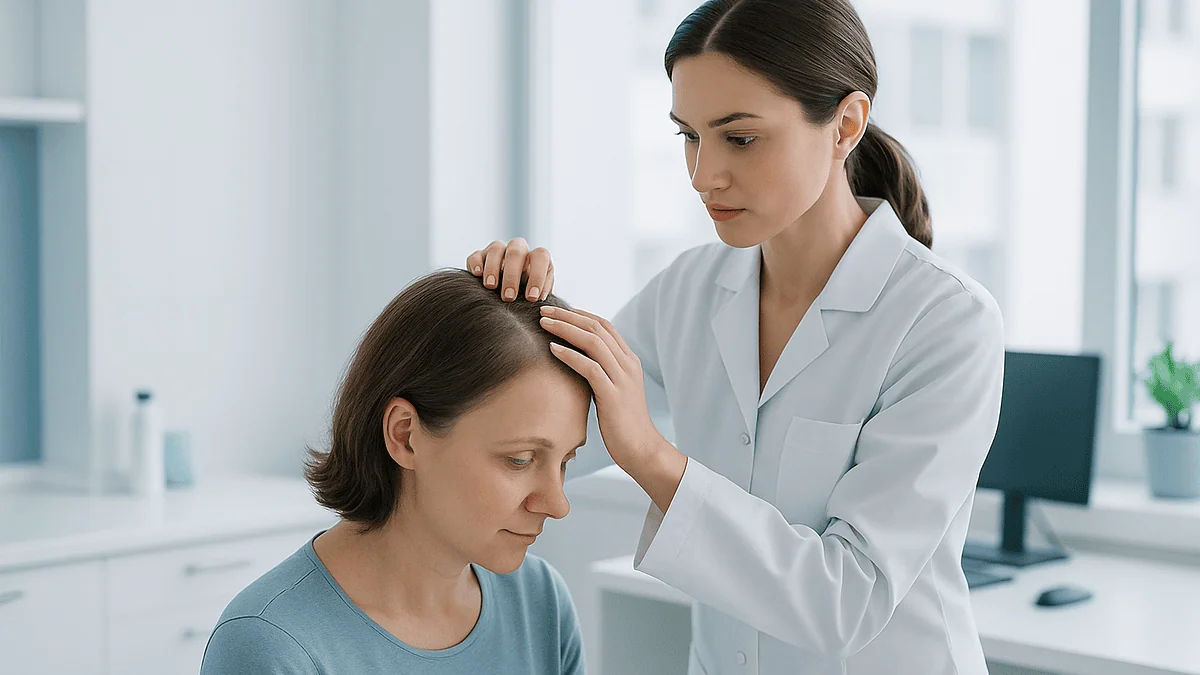
Strip away the marketing and the operation is elegant, tedious, and surprisingly old-fashioned handwork. According to MedlinePlus, hair transplantation moves healthy follicles from a donor area, usually the back of the scalp, to thinning or bald areas, under local anesthetic, in sessions that commonly run four hours or more.
Two harvesting methods dominate. In follicular unit excision (FUE), the method most Turkish clinics advertise, individual follicular units are punched out one at a time with a small circular instrument, leaving scattered dot scars that shaved hair can reveal but longer hair hides well. In the strip method (FUT), a ribbon of scalp is removed and dissected into grafts under microscopes, leaving a linear scar but often allowing efficient harvest of many grafts in one pass. Neither method is universally superior; the right choice depends on your hair, your donor supply, and how short you plan to wear it.
After harvest, the team makes thousands of tiny recipient incisions: this stage sets the angle, direction, and density of the result, which is why the hairline design matters more than the graft count, and places grafts into them one by one. You are awake throughout, usually watching movies or dozing. Scabs form and shed over about two weeks, most transplanted hairs fall out in the first month (this is expected), and new growth emerges from around month three, maturing over twelve to eighteen months.
Who is really holding the punch? The technician question
If one issue deserves more scrutiny than price, it is this one. In much of the high-volume market, in Turkey and, increasingly, elsewhere, the physician’s hands touch the patient for a small fraction of the procedure. Technicians perform extraction, technicians place grafts, and in the worst-run operations, technicians do nearly everything while a doctor’s name anchors the paperwork.
Turkish health regulations require physician oversight of these procedures, and reputable clinics comply visibly: the surgeon consults with you, designs the hairline, performs or directly supervises the critical stages, and is identifiable and accountable. The problem is the gray market that flourishes around any boom, unlicensed facilities, borrowed credentials, teams assembled for the season. International hair-restoration professional societies have repeatedly warned patients about exactly this pattern, and it is the strongest argument for slowing down your research rather than chasing the lowest quote.
Concrete verification steps: confirm the surgeon’s name and check it against Turkish medical registries; ask what stages the surgeon personally performs and get the answer in writing; look for facility licensing rather than just glossy interior photos; and be wary of any clinic that quotes a price and a date before anyone medical has examined your scalp, even by detailed photos and a video consultation. Real surgical planning starts with your donor area, not your credit card.
What are the risks, in Turkey or anywhere else?
Hair transplantation is generally considered a low-risk procedure when performed by trained teams, but low-risk is not no-risk, and the risks split into two categories worth keeping separate.
The surgical risks travel with the procedure, not the passport. MedlinePlus and Mayo Clinic list infection, bleeding, scarring, and temporary numbness among the recognized complications. Add the field-specific ones: folliculitis (inflamed follicles that look like acne across the grafts), ‘shock loss’ where native hairs near the surgical zone shed temporarily, poor graft survival, an overharvested donor area, and the hardest one to fix: an unnatural hairline, placed too low or too straight, that ages badly as surrounding hair keeps thinning.
The travel risks are the ones the CDC flags for all medical tourism: care standards and infection-control practices that vary between facilities, language barriers that blur informed consent, difficulty obtaining complete medical records, limited legal recourse, and the physiologic stress of flying soon after a procedure. Long flights already raise the risk of blood clots in the legs; the CDC generally advises building recovery time into any medical trip rather than boarding a plane at the first opportunity.
Notice what is absent from both lists: any claim that Turkish surgery is inherently more dangerous. The published complication picture depends on the clinic, not the country. The travel layer simply means that if a complication does occur, managing it is harder, and that asymmetry should shape how carefully you choose.
How long do I stay in Turkey after a hair transplant?
Most packages are built around three to four nights, and there is real logic in that schedule rather than mere convenience. Day one is consultation, final design, and blood work; day two is the procedure itself; day three or four brings the follow-up visit where the team removes the donor-area bandage, inspects the grafts, and performs or demonstrates the first gentle hair wash: the step patients fear most and clinics rightly insist on supervising.
Can you fly home after that? Physically, yes, and thousands do every week. Medically, a little patience pays. Freshly placed grafts are most vulnerable to dislodging in the first several days, so anything pressing on the recipient area, a headrest, an overhead-bin scramble, a heavy carry-on hoisted overhead, deserves caution. Swelling of the forehead often peaks around days two to four, which is why so many arrivals-hall travelers look faintly puffy behind their headbands. And the CDC’s general medical-travel advice favors allowing recovery time before long flights, partly because prolonged immobility on planes raises clot risk after any procedure.
A practical itinerary: budget four to five nights if your schedule allows, request an aisle seat, keep the scalp untouched by seat and strap, walk the cabin periodically, and carry your written medical records, procedure details, graft count, medications given, in your hand luggage. Your home physician will thank you for that folder later.
What happens 10 years after a hair transplant?
This is the question that should shape the surgery more than any other, and it rarely makes the brochures. The transplanted hairs themselves usually endure. The principle, called donor dominance, is the entire foundation of the field: follicles from the balding-resistant zone at the back of the head keep their genetic resistance after relocation, which is why a well-done transplant can still look convincing decades later.
The rest of your scalp did not get the memo. Pattern hair loss is progressive, the NHS notes it typically advances with age, so the native hair around and behind your grafts keeps thinning on its own schedule. Ten years on, the classic problem is not failed grafts but geography: a solid transplanted hairline standing in front of a retreating original one, sometimes leaving a halo of thinness that announces the surgery it was meant to hide.
Good surgeons plan for this from the first consultation. They design hairlines conservatively, placed where a mature hairline sits, not where an eighteen-year-old’s did, ration donor grafts so reserves remain for future sessions, and talk frankly about medical therapy to slow ongoing native loss, since two medications carry regulatory approval for pattern hair loss and are commonly discussed alongside surgery. A discussion worth having with a dermatologist, not a sales coordinator.
Ask any clinic this single question: what will my head look like at fifty-five if my native loss continues? The quality of the answer tells you most of what you need to know.
A safer-shopping checklist for surgery abroad
The CDC publishes practical guidance for anyone considering medical care in another country, and nearly all of it maps neatly onto hair transplants. Distilled and adapted:
- See a clinician at home first. Confirm you actually have pattern hair loss and are a surgical candidate before any clinic abroad evaluates you: the clinic has a financial stake in saying yes.
- Verify, don’t vibe. Check the surgeon’s license and the facility’s accreditation through official channels, not the clinic’s own website. International accreditation bodies and Turkish health-ministry licensing both leave paper trails.
- Get everything in writing, in a language you read: who performs each surgical stage, the planned graft count, included medications, and the complication protocol.
- Price complication insurance. Ordinary travel policies often exclude elective-procedure complications; specific medical-travel coverage exists.
- Plan the aftercare before the flight out. Identify a dermatologist or physician at home willing to see you post-operatively, and carry complete records back for them.
- Build in recovery days rather than flying at the earliest possible moment.
One meta-rule sits above the list: the cheaper the quote relative to the local market, the more of this verification you should do, not less. Bargains exist in Istanbul. So does everything else. The checklist is how you tell them apart while you still have the choice.
When to see a doctor, before you book and after you're home
Before anyone quotes you a graft count, see a doctor about the hair loss itself. Not every thinning scalp is pattern baldness. The NHS and Mayo Clinic both note that hair loss can stem from thyroid disease, iron deficiency, autoimmune conditions such as alopecia areata, scalp disorders, significant stress or illness, and medication effects. Several of these causes are treatable without surgery, and transplanting into some of them, particularly scarring or autoimmune scalp disease, can waste irreplaceable donor grafts or fail outright. Sudden shedding, patchy circular loss, an itchy or scaly scalp, or hair loss alongside fatigue or other symptoms all warrant a medical workup first, not a flight.
After surgery, most recovery is unglamorous and uneventful: scabbing, mild swelling, some numbness, pinkness that fades over weeks. Seek prompt medical care, locally, without waiting to consult the overseas clinic, if you notice:
- Fever, chills, or feeling systemically unwell
- Spreading redness, warmth, or swelling around the grafts or donor area
- Pus or foul-smelling discharge
- Bleeding that does not stop with gentle pressure
- Severe or worsening pain days after the procedure, when discomfort should be easing
These can signal infection, which is uncommon but time-sensitive. This is exactly why arranging a home-based clinician before you travel is not paranoia: it is the difference between a same-day appointment and an emergency-room guessing game with no records in hand.
The evidence-based alternatives nobody flies anywhere for
Surgery gets the headlines because it is dramatic and photogenic, but the evidence base for slowing pattern hair loss starts elsewhere, and honesty requires saying so, even in an article about transplants.
Two medications hold regulatory approval for pattern hair loss, one topical and one oral for men, and Mayo Clinic and the NHS describe them as the established first-line options. Neither is a cure; both work only while used, results vary considerably between people, and each carries potential side effects worth discussing with a clinician rather than a forum. For many people in the early stages of thinning, medication alone, started sooner rather than later, preserves enough hair to make surgery unnecessary for years, or forever.
Beyond medication, the evidence gets murkier, and this is where the honest answers live. Low-level laser devices have some supportive studies but modest, inconsistent effects. Platelet-rich plasma injections show promise in small trials, yet protocols vary so widely that major medical sources still describe the evidence as evolving rather than settled. Supplements help only when a genuine deficiency exists. And on the perennial celebrity question, no public figure’s hairline, however famous, constitutes evidence; the plausible explanation behind most dramatic celebrity regrowth is the unglamorous combination of transplant surgery plus approved medication, and none of it is verifiable from photographs.
The practical takeaway: a transplant relocates hair, medication defends it, and the strongest long-term results usually come from planning both together with a dermatologist.
The honest bottom line
Turkey earned its position the ordinary way: it made a labor-intensive procedure dramatically cheaper, wrapped it in frictionless logistics, and did it at a scale that built genuine expertise in its best clinics. Those are real advantages, and pretending otherwise insults the intelligence of the hundreds of thousands who have weighed the trade and come home satisfied.
The trade-offs are equally real. Follow-up by photograph. Thin legal recourse. A market where world-class surgeons and anonymous production lines advertise with identical stock photos and near-identical prices. Graft-count promises that outrun human anatomy. And a procedure whose success is measured not at the two-week photo shoot but at year ten, when your native hair has kept its own agenda.
So the fair verdict is neither the influencer’s rave nor the cynic’s sneer. Going to Turkey for a hair transplant is a rational decision that rewards irrationally careful research. Verify the surgeon, not the skyline view from the clinic. Ask who holds the punch. Plan for the head you will have at fifty-five, not the photos you will post at thirty-five. Do that, and geography becomes what it should have been all along: a detail, not a gamble.
Frequently asked questions
How much do 5,000 hair grafts cost in Turkey?
Because most Turkish clinics charge flat package rates rather than per graft, a large session typically falls in the same $2,000–$5,000 range as a smaller one, including hotel and transfers. Be cautious with the number itself: most people have roughly 4,000–6,000 usable donor grafts for a lifetime, so 5,000 in one session often signals aggressive overharvesting or inflated counting rather than a bargain. Ask how the clinic counts grafts and how many your donor area can actually support.
What did Elon Musk use to regrow hair?
He has never publicly confirmed the details, so any specific answer is speculation. Comparing early and later photographs, hair-restoration specialists widely believe transplant surgery played a role, likely alongside medical therapy. Two medications hold regulatory approval for pattern hair loss and are the standard evidence-based options a dermatologist would discuss. Celebrity hairlines are not evidence: the same combination of surgery plus approved medication explains most dramatic public transformations, and none of it can be verified from photos.
What happens 10 years after a hair transplant?
The transplanted hairs usually persist, because follicles taken from the balding-resistant donor zone keep that resistance after relocation. The surrounding native hair, however, typically continues thinning as pattern loss progresses with age. Ten years on, the common issue is not failed grafts but a transplanted hairline sitting in front of receding original hair. Conservative hairline design, preserved donor reserves, and medical therapy to slow ongoing loss are how good surgeons plan for that decade in advance.
How long do I stay in Turkey after a hair transplant?
Most packages schedule three to four nights: consultation and blood work, the procedure itself, then a follow-up visit for bandage removal and the first supervised hair wash a day or two later. Staying four to five nights is gentler on healing if you can manage it. Grafts are most vulnerable to dislodging in the first several days, and general CDC medical-travel advice favors allowing recovery time before long flights, which also carry blood-clot risk after any procedure.
Is it safe to get a hair transplant in Turkey?
It can be, at a properly licensed, surgeon-led clinic: the surgical risks of hair transplantation are the same worldwide and are generally low with trained teams. The added risks are travel-specific: variable facility standards, language barriers, limited follow-up after you fly home, and weak legal recourse if something goes wrong. Verifying the surgeon’s license, confirming who performs each surgical stage, and arranging home-based aftercare before departure closes most of that gap.
Why are hair transplants so cheap in Turkey?
Mostly ordinary economics. The procedure is extremely labor-intensive, and clinical wages and operating costs in Turkey run far below Western levels, while a weak lira amplifies savings for foreign patients. Intense competition among hundreds of clinics and deliberate government promotion of medical tourism push prices down further. High daily volumes spread fixed costs across many patients. At the very cheapest end, thinner physician involvement can also be part of the price, which is worth screening for.
What is the success rate of a hair transplant?
In experienced hands, the large majority of transplanted grafts, commonly cited as around 85–95 percent, survive and grow, though no clinic can guarantee a specific figure for an individual. Success also depends on factors beyond graft survival: realistic density expectations, natural hairline design, adequate donor supply, and whether ongoing native hair loss is managed. Results emerge slowly, with new growth starting around month three and the mature outcome visible at twelve to eighteen months.
Can transplanted hair fall out again?
Almost all transplanted hairs shed in the first month after surgery: this is expected, and the follicles then regrow starting around month three. Long term, grafts taken from the genetically resistant donor zone usually keep growing for decades. Rarely, if grafts were harvested outside the safe zone, they can thin later. The more common issue is that untreated native hair around the grafts keeps receding, which changes the overall look even though the transplanted hair remains.
Who is not a good candidate for a hair transplant?
People with limited donor hair, diffuse unstable shedding, or hair loss from causes other than pattern baldness, such as autoimmune conditions like alopecia areata, scarring scalp disorders, thyroid disease, or nutritional deficiency, are generally poor candidates, because grafts may fail or the underlying condition needs treatment first. Very young patients with early, unpredictable loss are often advised to wait. That is why a medical evaluation at home should precede any overseas booking.
Can you fly home the day after a hair transplant?
Physically you usually can, but it is not ideal. Grafts are most easily dislodged in the first several days, swelling often peaks around days two to four, and most clinics want to perform the first supervised wash and check the grafts before you leave. General CDC medical-travel guidance also favors recovery time before long flights, which raise clot risk after procedures. Staying through the first follow-up visit, typically day three or four, is the sensible minimum.
References
This article is for general information only and is not a substitute for professional medical advice. Please consult a qualified doctor about your individual situation.

More from the Blog

Who Suits Scalp Micropigmentation for Scars and Thinning, and Who Needs Another Approach?
Scalp micropigmentation for scars usually suits adults whose scar is fully healed and flat, whose skin does not tend to form raised keloids, and…

Failed Hair Transplants: Why They Happen and How Repair Works
A hair transplant can fail when grafts don't survive relocation, when the design ignores future hair loss, or when healing is disrupted by infection…
Who Is a Candidate for Robotic Hair Surgery? Why Hair Color, Curl and Contrast Matter
A typical robotic hair surgery candidate has stable, pattern-type hair loss, a dense donor area at the back and sides of the scalp, and…
Eyebrow Transplant Recovery: Healing, Scabbing and the Trimming Routine
Eyebrow transplant recovery typically follows a predictable arc: redness and tiny scabs for the first 5 to 10 days, a shedding phase between roughly…
Afro Hair Transplant for Traction Alopecia: Why Stopping the Pull Comes Before Surgery
An afro hair transplant can restore a hairline thinned by traction alopecia, but only after the pulling has fully stopped and the scalp has…

Norwood 6: What Advanced Loss Means for Donor Supply and Expectations
Norwood 6 is advanced male pattern hair loss: the frontal and crown bald areas have merged into one, leaving only a horseshoe of hair…