

Why New Molluscum Bumps Can Appear After Treatment: What to Expect and When to Return

Key Takeaways
- The molluscum virus has an incubation period of about 2 to 7 weeks and occasionally up to 6 months, so bumps invisible on treatment day can surface afterward, according to the CDC.
- Each individual molluscum bump lasts about 2 months, while the whole infection typically resolves within 6 to 12 months, sometimes longer, without any treatment.
- Treatments such as cryotherapy, curettage and clinician-applied blistering agents remove existing bumps but do not reach virus still incubating in normal-looking skin.
- Blisters after cryotherapy or a blistering agent are part of how those treatments act; spreading redness, heat and pus are the signs that point to bacterial infection instead.
- Red, swollen, tender bumps appearing together partway through the infection often signal that the immune system has recognized the virus and is clearing it.
- Molluscum is caused by a poxvirus, not HPV, does not go dormant and return after clearing, and is no longer contagious once every bump has gone.
New molluscum bumps after treatment are common and usually do not mean the treatment failed. The molluscum virus has an incubation period of about 2 to 7 weeks, so bumps that were invisible on treatment day can surface afterward, and scratching can seed new spots. Most cases resolve within 6 to 12 months. Contact your care team if bumps become painful, hot, or rapidly multiply.
Bath time, two weeks after the clinic visit. The three pearly bumps on your son’s inner arm are gone, replaced by faint pink dots, and you feel a small surge of relief. Then you lift his elbow and see four more, tiny and shiny, in a place that looked perfectly clear a fortnight ago. New molluscum bumps after treatment have a way of arriving exactly when you thought the story was over.
Nobody warned you this could happen, or if they did, it was buried in a hurried sentence at the door. So the questions pile up quickly. Was the treatment a waste? Did you spread it with the towel? Should you go straight back, or wait?
The honest answer is more reassuring than the moment feels. What you are seeing is written into how this virus behaves, and understanding that timeline changes almost everything about what you do next.
Why do new molluscum bumps appear after treatment?
Molluscum contagiosum is a common viral skin infection that produces small, firm, dome-shaped bumps, often with a tiny dimple in the center. The bumps you can see are only part of the picture. The virus responsible has an incubation period, meaning the stretch of time between infection of a patch of skin and the appearance of a visible bump, of roughly 2 to 7 weeks, and the CDC notes it can occasionally run as long as 6 months.
That single fact explains most cases of new molluscum bumps after treatment. On the day a clinician froze, scraped or painted the visible spots, other areas of skin were already carrying virus that had not yet produced anything you could see or feel. Treatment addresses bumps that exist. It cannot reach bumps that are still forming beneath a normal-looking surface, because there is nothing there to target yet.
Think of it like weeding a garden bed on a spring morning. You pull every weed you can see, and the soil looks tidy. Seeds that fell weeks earlier are still down there, and they sprout on their own schedule.
A second route matters too. Scratching or rubbing an existing bump can carry virus to nearby skin, a process called autoinoculation, and those spots then need their own incubation time before they appear. A child who picked at a bump the week before the appointment may only show the results of that picking a month later.
Neither route means the treatment did nothing. The bumps that were treated are usually gone or fading. What you are watching now is the tail end of infection that began before the appointment, not a fresh start.
How the molluscum virus works in the skin
The culprit is the molluscum contagiosum virus, a member of the poxvirus family. It is not related to the human papillomavirus that causes warts, and it is not related to the herpes viruses, although it is often mistaken for both. It infects only the outermost layer of skin and does not travel through the bloodstream, which is why it never causes fever or illness in an otherwise healthy person.

Once the virus settles into skin cells, it makes them multiply into a small, organized mound. The result is the characteristic bump: usually 2 to 5 millimeters across according to the CDC, about the size of a pencil eraser or smaller, pearly or flesh-colored, with a central dimple that doctors call umbilication. Inside sits a waxy core packed with virus particles, which is why a squeezed or scratched bump is so efficient at seeding neighbors.
Here is the part that shapes everything about recovery. The virus is skilled at staying quiet. It produces proteins that dampen the local immune response, so for months the immune system may barely notice the bumps are there. Eventually it catches on. When it does, the bumps often become red and inflamed for a while, then flatten and disappear, and the same immune awareness usually clears the other bumps too.
Treatments work partly by removing infected tissue and partly by irritating it enough to draw the immune system’s attention. They do not kill virus in skin that has not yet formed a bump, and they do not make the immune system faster than it is ready to be.
Once every bump has gone, the virus has gone with it. The CDC is clear that molluscum does not lie dormant and reactivate the way cold sores do, and a person is no longer contagious once the skin is clear.
Is molluscum spreading after treatment, or were the bumps already there?
Parents often assume that molluscum spreading after treatment means the procedure stirred the virus up. It is a natural fear, but the evidence points the other way. Bumps that appear in the first several weeks after a visit fall squarely inside the incubation window the CDC describes, so most were already on their way before anyone touched the skin.
Genuine new spread does happen, and it usually has a recognizable pattern. Bumps that line up along a scratch mark, cluster around a spot a child has been picking, or appear on skin that rubs against an existing bump (inner thighs, the fold of an elbow, under a waistband) suggest autoinoculation. Bumps scattered in a new region with no obvious connection are more likely the late arrivals of the original infection.
Either way, the practical steps are the same, and they matter more than any procedure for limiting fresh spots. The CDC and NHS guidance boils down to a handful of habits:
- Keep bumps covered with clothing or a small waterproof dressing when they are in areas that get scratched or that touch other people.
- Discourage scratching and picking; short fingernails help, and a cool compress can settle an itchy patch.
- Do not share towels, washcloths, razors or clothing while bumps are present.
- Use a separate towel for the affected area if the bumps are in one region, and wash it regularly.
- Cover bumps before swimming and avoid sharing kickboards, goggles and pool toys.
None of these need to be done perfectly. Molluscum is a low-stakes infection, and the goal is to reduce the seed count, not to achieve a sterile household. Children do not need to stay home from school or daycare, and the NHS specifically says there is no reason to keep a child away from swimming as long as bumps are covered where practical.
How long does molluscum last, with or without treatment?
Understanding the natural course removes much of the anxiety about new bumps. The CDC states that each individual molluscum bump generally lasts about 2 months, and that the infection as a whole typically resolves within 6 to 12 months without any treatment. It also acknowledges the frustrating exceptions: some cases take 2 years, and a small number linger for up to 4 years. The NHS puts it slightly differently, noting that most people find the condition clears within about 18 months.

Those numbers describe the whole infection, not any single bump. A bump that appears in month eight is not resetting the clock to zero. It is one more lesion working through its own 2-month arc while the overall infection winds down.
Treatment changes this picture less than most people expect. Removing visible bumps shortens the life of those particular bumps, and for some people that is exactly what they want: a bump on the face gone before a school photo, or a cluster on the thigh that keeps getting scratched. What treatment does not reliably do is shorten the total duration of infection, because the bumps still to come were never in reach.
Mayo Clinic and the NHS both make the same point in plain terms: molluscum usually goes away on its own, and treatment is a choice rather than a necessity for most otherwise healthy children and adults. That is why clinicians so often suggest watchful waiting first.
A useful mental model is a wave that has already crested. You can flatten the parts of the wave in front of you, but the water behind it is still coming. The good news is that it recedes on its own, and every month that passes brings a healthy immune system closer to recognizing and clearing the virus everywhere at once.
Who is usually offered treatment, and who is usually asked to wait?
The decision to treat molluscum is a judgment call rather than a medical necessity in most cases, and the reasoning is consistent across mainstream guidance. Because the infection resolves on its own and treatments can be uncomfortable or leave marks, the NHS notes that treatment is not usually recommended for young children, and Mayo Clinic frames removal as an option chosen for specific reasons rather than a default.
Situations where a clinician may lean toward active treatment include:
- Bumps in the genital or anal area in adults, where sexual transmission is possible and treating visible lesions is generally advised.
- Bumps that are repeatedly scratched, bleeding or becoming infected with bacteria.
- Bumps on the face, eyelids or other visible areas causing distress, particularly in older children and teenagers.
- Widespread or unusually large bumps in someone with a weakened immune system, where the infection may not resolve without help.
- Coexisting eczema that keeps flaring around the bumps and driving more scratching.
People commonly asked to wait are toddlers and young children with a modest number of bumps in covered areas, who are otherwise well and not bothered. In that group the discomfort of freezing or scraping, and the small risk of scarring, can outweigh a benefit that amounts to removing bumps that were going to fade anyway.
Waiting is not the same as doing nothing. Covering, not sharing towels and managing itch are all active steps, and a follow-up plan lets the family return if the picture changes. Clinicians also tend to reassess when new bumps keep appearing for many months, when a child becomes self-conscious, or when a parent’s confidence in waiting has run out. That conversation is entirely legitimate, and the treating team is the right place to have it.
What do molluscum treatments involve, and why can new bumps still appear?
Every established approach shares the same limitation: it acts on bumps that are already visible. Knowing what each one does helps set expectations for the weeks that follow. The table below summarizes the options most often described by the NHS, Mayo Clinic and Cleveland Clinic.
| Approach | What actually happens | What it can and cannot do |
|---|---|---|
| Watchful waiting | Bumps are covered and left to resolve while itch and spread are managed at home. | Avoids pain and scarring; requires patience over months. |
| Cryotherapy | Liquid nitrogen is applied to freeze each bump; a clinician defines the technique and depth. | Removes treated bumps; can sting, blister and occasionally leave a lighter mark. |
| Curettage | The waxy core is scraped out with a small instrument, sometimes after numbing cream. | Immediate removal; carries a small scarring risk and is often avoided in young children. |
| Clinician-applied blistering agents | A compound such as cantharidin is painted onto bumps in clinic and washed off later; a blister lifts the bump away. | Painless on application; the blister phase looks alarming but is expected. |
| Prescription topical treatments | Creams or gels applied at home over weeks to irritate the bump or stimulate a local immune response. | Slower; suitability and use are decided by the prescribing clinician. |
None of these appear on the list because they prevent future bumps. A bump that emerges three weeks after cryotherapy was incubating during the appointment. The frozen bumps are gone; the new one is a separate event.
This is also why clinicians often plan a series of visits rather than a single one. Treating whatever has surfaced every few weeks, until nothing new arrives, mirrors the incubation cycle rather than fighting it. Whether that series is worthwhile, and which method suits a particular skin type, age and body site, is a decision for the person or parent together with the treating team.
Are molluscum blisters after treatment normal?
Molluscum blisters after treatment are one of the most searched worries, and in most cases the answer is yes, this is expected. Two of the common approaches are designed to produce a blister. A blistering agent such as cantharidin works precisely by separating the top layer of skin under the bump so that the infected tissue lifts away with the blister roof. Cryotherapy freezes the bump and the skin immediately beneath it, and a small blister, sometimes tinged with blood, frequently forms as the tissue thaws.
Cleveland Clinic and Mayo Clinic both describe blistering as part of how these treatments act rather than a complication. The blister usually appears within the first day or so, may look surprisingly large compared with the original bump, and then dries into a crust that falls away over the following days, taking the bump with it.
What you can do while it heals is straightforward. Leave the blister intact where possible, since the roof protects the raw skin underneath. If it breaks on its own, keep the area clean with plain water, pat dry and cover lightly. Do not deliberately pop or peel it, and keep the area away from other people’s skin and shared towels, because fluid from a blister over a molluscum bump can still contain virus.
A blister crosses the line from expected to concerning when the surrounding skin becomes increasingly red, hot, swollen or painful over 24 to 48 hours, when yellow or green pus develops, or when the person feels unwell. Those are signs of possible bacterial infection, not the treatment working, and they warrant a call to the clinic. Very large blisters that interfere with movement, or blisters in the eye area, also deserve prompt advice rather than waiting.
Why do children with eczema get more molluscum bumps?
If your child has atopic dermatitis, the medical name for eczema, you may have noticed molluscum behaving more stubbornly than in classmates. The CDC identifies atopic dermatitis as a risk factor for more numerous molluscum bumps, and the reasons are mechanical as much as immunological.
Eczema-prone skin has a weaker barrier. Tiny breaks in the surface give the virus easy entry, and the itch that defines eczema drives exactly the scratching that carries virus from one bump to the next. A child who scratches an itchy eczema patch that happens to hold two molluscum bumps can seed a dozen more along the scratch line, each of which will surface weeks later. From the outside it looks as if treatment failed or the infection accelerated. In reality, the itch did the spreading.
There is a second wrinkle. Molluscum bumps themselves can trigger an eczema-like rash in the surrounding skin, sometimes called molluscum dermatitis, which adds to the itch and repeats the cycle. Cleveland Clinic and the NHS both note this association.
The practical implication is that controlling eczema is part of managing molluscum. Regular moisturizing, avoiding known triggers and using whatever eczema treatment the child’s clinician has already prescribed all reduce scratching. Clinicians sometimes hesitate to apply irritating molluscum treatments to inflamed eczematous skin, and may prefer to settle the eczema first, so it is worth raising both conditions together at the same visit.
People with a weakened immune system, whether from a medical condition or from medicines that suppress immunity, form a separate group. The CDC describes larger, more numerous and more persistent bumps in that setting, and the infection may not clear without medical help. Anyone in this situation who notices new bumps after treatment should let their specialist team know rather than waiting it out.
What do the days and weeks after molluscum treatment usually look like?
The rhythm after a treatment visit is fairly predictable once you know it. In the first few days, treated bumps look worse before they look better. Frozen spots redden and may blister; scraped spots show a small raw dot; painted spots lift into a blister and then crust. This phase is uncomfortable but brief, and mild soreness is typical.
Over the next one to two weeks, crusts fall away and the treated sites settle into flat pink or slightly darker marks. This is the moment many families first spot new molluscum bumps after treatment on untreated skin, and it is worth remembering that the CDC’s incubation window of 2 to 7 weeks is doing exactly what it says.
Somewhere in the middle of the course, often after a few months of the infection rather than a few weeks, comes a phase that alarms almost everyone. Untreated bumps turn red, swollen and tender, sometimes all at once, sometimes with a small crust on top. Cleveland Clinic describes this inflammation as a common sign that the immune system has finally recognized the virus and is clearing it. Bumps that go through this phase usually flatten and vanish over the following weeks, and the whole infection often follows.
Distinguishing this from infection takes a little care. Immune-driven inflammation tends to affect several bumps at once, stays confined to the bumps themselves, and does not produce spreading redness or pus. Bacterial infection more often involves one bump, spreads outward, feels hot, and may weep yellow fluid.
Follow-up visits, if planned, are usually spaced a few weeks apart to catch new arrivals. Between visits, the job is simple: cover, avoid scratching, keep towels separate, and take a photo every week or two so you and the clinician can see the actual trend rather than relying on memory.
What does healed molluscum look like?
People searching for what healed molluscum looks like are often trying to tell a fading bump from a new one, and the two are quite different once you know the signs.
A resolving bump loses its shine first. The pearly, slightly translucent quality flattens into a dull pink or red spot, the central dimple disappears, and the spot becomes level with the surrounding skin. Over weeks the color drifts toward the person’s normal skin tone. In lighter skin the mark may stay faintly pink for a while; in darker skin it more often leaves a temporary darker patch, called post-inflammatory hyperpigmentation, which fades over months. The NHS notes that molluscum does not normally leave scars.
Where marks do persist, they tend to follow a pattern. The CDC points out that small pitted scars are more likely when bumps have been scratched, picked, secondarily infected or treated with methods that remove tissue, such as scraping. A shallow, pale dent about the size of the original bump is the most common lasting trace, and even that often softens with time. Frank raised scars are unusual.
A new bump, by contrast, is raised, firm and shiny, usually flesh-colored or slightly pink, and develops its dimple as it matures. It feels like a tiny bead under the fingertip. If a spot is flat and fading, it is finishing. If it is raised and glossy, it is arriving.
Once the last bump has flattened and no new ones have appeared for several weeks, the infection is over, and the CDC states clearly that the person can no longer pass it on. Faded marks are not contagious; they are just skin remembering.
What gets mistaken for molluscum?
Not every new bump after treatment is molluscum, and misidentifying one can lead to unnecessary worry or unnecessary freezing. Several common skin findings share the small, dome-shaped look.
- Common warts are caused by human papillomavirus, feel rougher and drier on the surface, and lack the smooth central dimple. They often have tiny black dots inside.
- Milia are firm white cysts of trapped keratin, common on the face, with no dimple and no tendency to spread along scratch lines.
- Folliculitis, inflamed hair follicles, produces red bumps or small pustules centered on a hair, often after shaving or sweating.
- Skin tags are soft, floppy and attached by a narrow stalk, usually in skin folds.
- Chickenpox spots blister quickly, itch intensely and arrive in crops over a few days alongside fever.
- Keratosis pilaris gives a sandpaper texture of many tiny bumps on the upper arms and thighs, without pearly individual lesions.
In adults, MedlinePlus and Mayo Clinic both note a more serious lookalike: basal cell carcinoma, a slow-growing skin cancer, can present as a pearly bump with a central depression, especially on sun-exposed skin. A single persistent pearly bump in an adult, particularly one that bleeds or fails to change over months, deserves examination rather than assumptions. In people with weakened immunity, certain fungal infections can also mimic molluscum, which is another reason that group should be seen rather than self-managed.
Clinicians usually diagnose molluscum by appearance alone. When there is doubt, a small sample of the waxy core examined under a microscope settles the question. If the new bumps look different from the earlier ones, that is worth mentioning at the next visit; the answer may be simpler, or more important, than another round of molluscum.
What people often get wrong about new molluscum bumps after treatment
Some misconceptions are so widespread that they shape decisions. Here are the ones that cause the most trouble.
“Molluscum means I have HPV.” It does not. Molluscum is caused by a poxvirus; HPV is a completely different virus family. The confusion arises because both cause small skin bumps and both can spread through skin-to-skin contact, including sexual contact in adults. Having molluscum says nothing about HPV status, and the two are not tested for or treated the same way.
“New bumps mean the treatment failed.” The treated bumps are usually gone. New bumps reflect the incubation period, which the CDC places at 2 to 7 weeks, not a shortcoming of the procedure.
“The virus is now in the blood and will keep coming back for life.” Molluscum stays in the outer skin, does not go dormant in nerves, and does not recur once cleared. A person can be reinfected from someone else, which is a different event.
“Red, swollen bumps mean infection.” Often they mean the opposite: the immune system clearing the virus. Spreading heat, pus and feeling unwell are the signs that separate true infection from this phase.
“If it goes away on its own, treating is pointless.” Treatment does not shorten the whole infection, but it can remove bumps that are being scratched, are in visible places, or are in the genital area. Whether that trade-off is worth the discomfort is a personal decision made with the clinician.
“Children must be kept out of school and pools.” Neither the NHS nor the CDC recommends exclusion. Covering bumps and not sharing towels is enough.
“Home remedies from the internet work as well as clinic treatment.” No mainstream guideline endorses tape, essential oils or kitchen acids for molluscum, and irritant home methods can cause the very scratching and infection that spread it.
Questions to ask your care team
A short list, brought to the next appointment, turns a rushed visit into a useful one. These are the questions that tend to change what a family actually does.
- Are these new bumps molluscum, or could some of them be something else, such as warts, milia or folliculitis?
- Given my child’s age and where the bumps are, would you recommend treating, waiting, or a mix of the two?
- What is the plan if new bumps keep appearing: repeat visits every few weeks, or a pause to let the immune response catch up?
- What should the treated areas look like over the next week, and what would make you want to see them sooner?
- Are blisters expected with this method, and how should I care for them if they break?
- My child has eczema. Should we settle the eczema first, and does that change which molluscum treatment is sensible?
- Which lasting marks are possible with this approach, and how do they compare with leaving the bumps alone?
- Do you want photos between visits, and how often?
- Is there anything about our family situation, such as a newborn, a pregnant household member or someone on immune-suppressing medicine, that changes your advice?
- For adults with genital bumps: should a partner be examined, and is any other testing appropriate?
Write down the answers, or ask permission to record them. It is also reasonable to ask how the clinician judges whether a course of treatment is still worthwhile. Some will suggest stopping active treatment once bumps become inflamed on their own, since that often signals clearance is underway; others prefer to keep clearing new arrivals. Neither is wrong, and hearing the reasoning helps you feel like a participant rather than a bystander. The final call on any medicine or procedure rests with the treating team, who can see the skin in front of them.
When to call your doctor
Most new bumps after treatment need nothing more than a note in your phone and a mention at the next planned visit. A few situations warrant a call sooner, and a handful should not wait for office hours.
Contact your clinician within a day or two if:
- A treated site or a bump becomes increasingly red, hot, swollen or painful, with redness spreading outward rather than staying on the bump.
- Yellow or green pus, honey-colored crusting, or a foul smell develops at any site.
- Bumps appear on or very near the eyelids, where irritation of the eye is possible.
- New bumps are appearing rapidly, in large numbers or unusually large in size, particularly in anyone with a weakened immune system or on immune-suppressing medicines.
- An adult notices bumps in the genital or anal area, since sexual transmission and other conditions need to be considered.
- The bumps look different from the earlier ones, bleed without being touched, or a single pearly bump in an adult has persisted for months.
- A blister from treatment is very large, or the skin around it is breaking down.
Seek urgent care the same day if a child or adult with a red, swollen area also develops fever, feels generally unwell, has a rapidly enlarging patch of hot skin, or shows red streaks running away from the site. These can signal a spreading skin infection that needs prompt assessment. Anyone with a known immune condition who develops fever alongside skin changes should follow the emergency guidance their specialist team has already given them.
Everything in this article is general information drawn from mainstream medical sources. It cannot see the skin in front of you. Your treating team can, and every decision about whether, when and how to treat molluscum belongs with them.
Frequently asked questions
Do new bumps mean my molluscum treatment failed?
No. The bumps that were treated are usually gone or fading; the new ones were incubating in skin that looked normal at the time. The CDC describes an incubation period of 2 to 7 weeks, so bumps appearing in that window after a visit are expected. Treatment removes what is visible; it cannot act on bumps that have not yet formed.
Is molluscum getting worse before getting better a real thing?
Yes, in two senses. Treated bumps look worse for a few days as they blister and crust. Separately, untreated bumps often turn red, swollen and tender partway through the infection, which Cleveland Clinic describes as a common sign that the immune system is clearing the virus. Spreading heat, pus or feeling unwell are different and should prompt a call.
Does molluscum mean I have HPV?
No. Molluscum contagiosum is caused by a poxvirus, an entirely different virus family from human papillomavirus, which causes warts. The two are often confused because both produce small skin bumps and both can spread by skin contact, including sexual contact in adults. Having molluscum tells you nothing about HPV status, and the conditions are assessed separately.
Is it normal for molluscum to develop blisters after treatment?
Usually, yes. Cryotherapy and clinician-applied blistering agents such as cantharidin are designed to lift the bump away by forming a blister, which then crusts and falls off over days. Leave the blister intact where possible and keep it clean if it breaks. Increasing redness, warmth, pus or pain around the blister is not expected and warrants a call to the clinic.
What does healed molluscum look like?
A healed bump loses its pearly shine, flattens level with the skin and becomes a dull pink or slightly darker mark that fades over weeks to months. The NHS notes molluscum does not normally scar, although the CDC says small pitted marks can follow scratching, infection or tissue-removing treatments. A raised, glossy, beaded bump is new; a flat, fading spot is finishing.
Is molluscum spreading after treatment my fault for not covering it?
Almost certainly not. Most bumps appearing in the weeks after a visit were already incubating before the appointment. Covering bumps, avoiding scratching and not sharing towels genuinely reduce new spread, but they cannot stop bumps that were seeded earlier. Think of these measures as lowering the seed count going forward, not as something that failed.
Can molluscum come back after it has completely cleared?
The same infection does not return. The molluscum virus lives only in the outer skin, does not go dormant in nerves the way cold-sore viruses do, and the CDC states a person is no longer contagious once all bumps are gone. A new case is possible if someone is exposed to the virus again from another person, which is a separate infection rather than a relapse.
Should I go back to the doctor every time new bumps appear?
Not necessarily. Many clinicians schedule visits a few weeks apart to treat new arrivals in batches, and families who have chosen watchful waiting can simply note new bumps and photograph them. Return sooner if bumps become hot, painful or pus-filled, appear near the eyes or genitals, multiply rapidly, or if the person has a weakened immune system.
Can my child swim or go to school with molluscum bumps?
Yes. Neither the NHS nor the CDC recommends keeping children out of school, daycare or swimming. Covering bumps with clothing or a waterproof dressing where practical, not sharing towels, goggles or pool toys, and discouraging scratching are considered sufficient. Molluscum is a mild skin infection and does not cause illness in otherwise healthy children.
How long after treatment will new molluscum bumps stop appearing?
There is no fixed date, because it depends on when the immune system recognizes the virus. The CDC notes the whole infection usually resolves within 6 to 12 months, though some cases take 2 years and a few up to 4. New bumps typically taper off before the last existing ones fade. Several weeks with no new arrivals usually means the infection is ending.
References
- CDC: About Molluscum Contagiosum
- NHS: Molluscum contagiosum
- MedlinePlus: Molluscum contagiosum
- Cleveland Clinic: Molluscum Contagiosum
This article is for general information only and is not a substitute for professional medical advice. Please consult a qualified doctor about your individual situation.

More from the Blog

Ultherapy vs Morpheus8: Ultrasound and Radiofrequency Tightening Compared
Ultherapy uses microfocused ultrasound to heat deep tissue layers from the outside, prompting new collagen and a modest lift, usually in one session. Morpheus8…
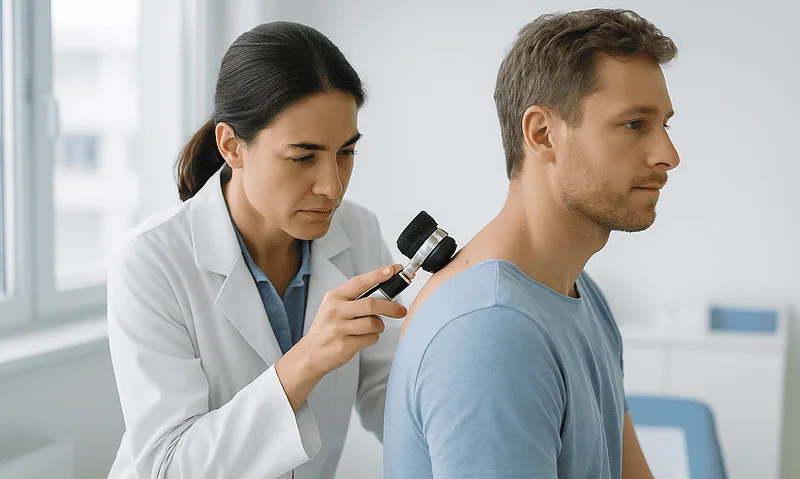
How to Start a Skincare Routine: The Dermatologist Version, in Four Steps
To start a skincare routine, dermatologists generally suggest four steps: a gentle cleanser, one targeted treatment chosen for your main concern, a moisturizer suited…
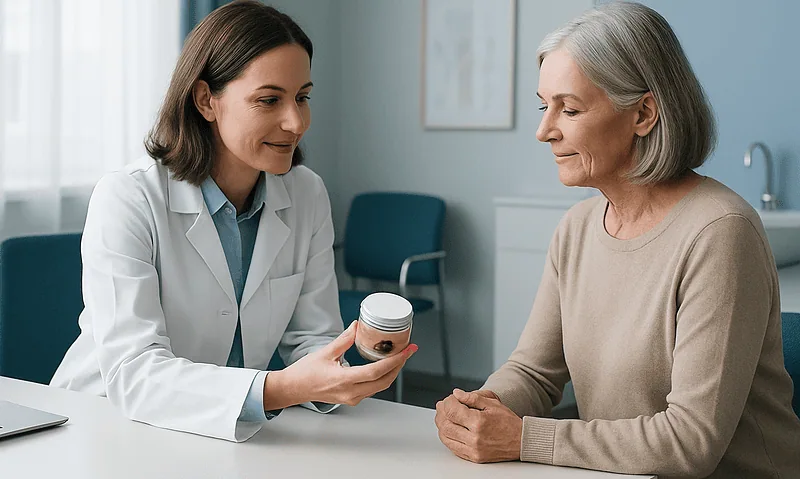
Snail Mucin: The K-Beauty Staple Examined
Snail mucin is the filtered secretion of garden snails, used in Korean skincare as a moisturizer. Small clinical studies and laboratory work suggest it…

What to Expect From Psoriasis Treatment: How Improvement Is Measured and Why Care Continues
Psoriasis treatment aims to control, not eliminate, an overactive immune response in the skin. Creams and ointments usually take several weeks to show benefit,…

Sebaceous Filaments vs Blackheads: The Difference and Why Squeezing Backfires
Sebaceous filaments are the normal, thread-like columns of oil and skin cells that line every pore, most visibly on the nose; blackheads are blocked…
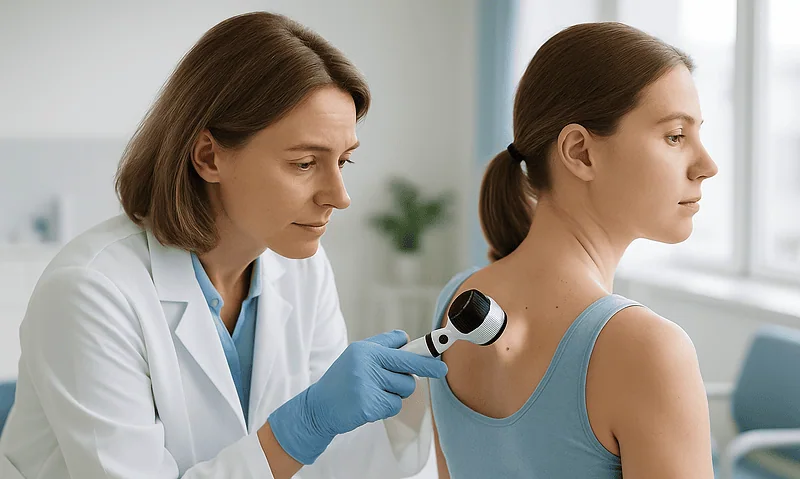
Skincare Alongside Rosacea Treatment: Gentle Cleansers, Daily Sunscreen and Tracking Triggers
A rosacea skincare routine works alongside prescribed treatment, not instead of it. Guidance from the NHS and Mayo Clinic centers on three habits: washing…