

Celebrity Health Health News
Blake Lively and Nose Job: Why Searches Are Surging
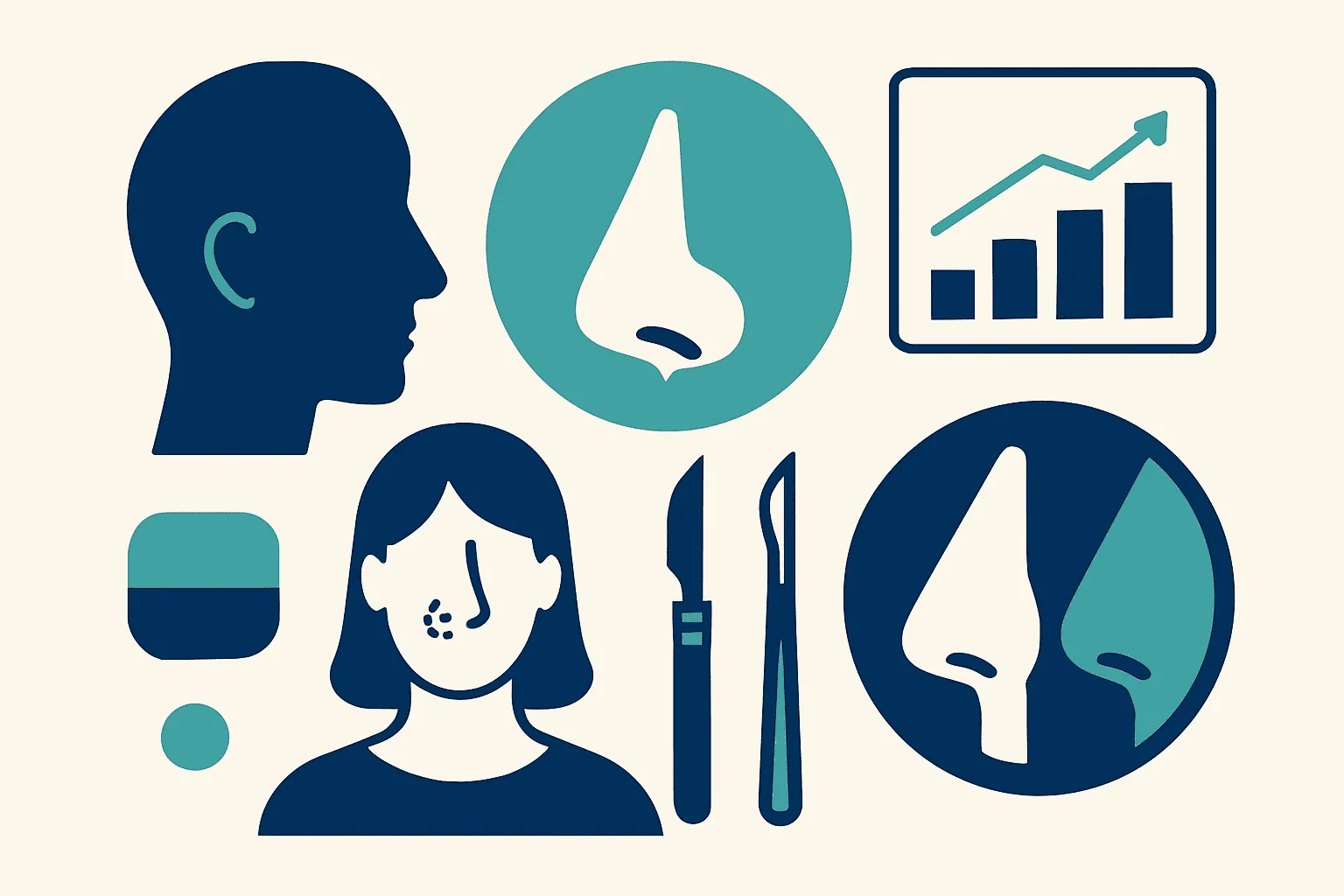
- Rhinoplasty can change nose shape, improve breathing, or both.
- A "nose job" may be cosmetic, functional, or a combination procedure.
- Recovery is gradual, and final results can take up to a year or longer.
- Non-surgical fillers cannot make the nose smaller or fix airflow problems.
- Revision rhinoplasty is usually more complex than first-time surgery.
Why do searches for a celebrity and a “nose job” suddenly spike? Recent headlines and online discussions can send people looking for answers fast, even when little is confirmed publicly. In moments like this, the most useful question is often not whether a specific person had a procedure, but what a nose job actually involves.
A nose job is the everyday term for rhinoplasty, a surgery that changes the shape of the nose, improves breathing, or both. It is one of the best-known facial procedures, but it is also one of the most individualized. Small changes in cartilage, bone, skin thickness, and facial balance can make a meaningful difference in both appearance and function. Understanding how rhinoplasty works can help separate internet speculation from real medical information.
What a nose job is — and what it can and cannot do
Rhinoplasty is surgery performed to reshape the nose. Some people seek it for cosmetic reasons, such as smoothing a hump, refining the tip, changing nostril shape, or improving overall facial harmony. Others need surgery to address structural problems that affect breathing, such as a deviated septum, collapse of the nasal valve, or changes after an injury.
In many cases, cosmetic and functional goals overlap. A person may want a straighter profile while also hoping to breathe more comfortably through the nose. That is why rhinoplasty is often planned with both appearance and airway function in mind.
It is also important to know what rhinoplasty cannot reliably do. It cannot create a “perfect” nose, erase every asymmetry, or guarantee that someone will look like another person. Surgeons work within the limits of a patient’s anatomy, skin quality, healing patterns, and overall facial structure. The best outcomes tend to come from realistic goals and careful planning.
There are different procedural approaches:
- Open rhinoplasty: A small incision is made across the tissue between the nostrils, allowing the surgeon to lift the skin and see the structures more directly.
- Closed rhinoplasty: Incisions are hidden inside the nostrils, with no external incision.
- Functional rhinoplasty: Focuses on correcting internal structures to improve airflow.
- Revision rhinoplasty: A more complex operation done to improve the result or function after a previous nose surgery.
Some people also ask about non-surgical “nose jobs,” which usually involve injectable fillers. These can camouflage small irregularities temporarily, but they do not make the nose smaller or improve breathing, and they carry their own risks.
Why people consider rhinoplasty
People seek rhinoplasty for many reasons, and they are not all cosmetic. For some, the concern begins after a broken nose or sports injury. For others, nasal obstruction, chronic mouth breathing, snoring, or difficulty exercising points to a structural issue inside the nose. Some have disliked a prominent hump or bulbous tip for years and want a change that still looks natural.
Common reasons include:
- A hump or bump on the bridge of the nose
- A drooping, broad, boxy, or asymmetrical nasal tip
- A nose that seems out of proportion with the rest of the face
- Nostril asymmetry or width concerns
- A deviated septum causing blocked airflow
- Breathing difficulty related to internal nasal valve collapse
- Visible changes after trauma
- Dissatisfaction after a previous rhinoplasty
Good candidates are usually people in overall stable health who have a clear idea of what bothers them and understand that subtle improvement is often the goal. Emotional readiness matters too. Because the nose sits at the center of the face, even small changes can feel significant, and final results take time to appear.
Teenagers sometimes ask about rhinoplasty as well. In younger patients, timing matters because the nose and face need to be sufficiently developed before surgery is considered.
How specialists evaluate the nose before surgery
Rhinoplasty planning starts with a thorough consultation and exam. This is not just a conversation about appearance. A specialist also evaluates breathing, past injuries, prior surgeries, allergies, sinus symptoms, and whether the patient has trouble sleeping or exercising because of nasal obstruction.
The assessment often includes:
- External exam: Looking at the bridge, tip, symmetry, skin thickness, and how the nose fits the face from multiple angles
- Internal exam: Checking the septum, turbinates, lining of the nose, and signs of valve collapse or obstruction
- Breathing history: Asking when obstruction occurs, whether it switches sides, and what makes it better or worse
- Photographs: Standardized images help with planning and before-and-after comparison
- Review of goals: Clarifying what changes are desired and which are anatomically realistic
Sometimes imaging is used, especially after trauma or when other sinus or facial issues are suspected, but not every person needs a scan. What matters most is an experienced facial and airway evaluation.
One key part of the consultation is understanding skin thickness. Thin skin may show tiny irregularities more easily, while thicker skin can limit how sharply the tip can be refined. Cartilage strength matters too, especially if the nose needs support to improve breathing as well as shape.
Treatment options: cosmetic, functional, and revision approaches
The exact technique depends on the person’s anatomy and goals. There is no single “standard” nose job. A surgeon may reduce bone on the bridge, reshape cartilage at the tip, narrow the nasal bones, correct septal deviation, or reinforce weakened areas with cartilage grafts.
Cosmetic rhinoplasty
This focuses on visible changes. A surgeon might smooth a dorsal hump, refine a rounded tip, or adjust projection so the nose appears more balanced in profile. In many modern rhinoplasty approaches, surgeons aim to preserve support and avoid an over-operated appearance.
Functional rhinoplasty
This is designed to improve airflow through the nose. Structural issues such as a twisted septum, enlarged internal tissues, or weakness in the sidewalls can all contribute to obstruction. Surgery may straighten the septum, reduce tissue that blocks airflow, or use grafts to widen and support the airway.
Septorhinoplasty
This term is often used when both the septum and outer nose are addressed in one operation. It is common when breathing and appearance are both concerns.
Revision rhinoplasty
Secondary or revision surgery is typically more challenging than a first procedure. Scar tissue, altered anatomy, and loss of structural support can make planning more complex. Cartilage from the septum, ear, or occasionally rib may be needed to rebuild support or contour.
Non-surgical nose reshaping
Injectable fillers can sometimes smooth a small depression or make the bridge look straighter temporarily. However, fillers cannot reduce size, fix a deviated septum, or improve nasal obstruction. They also require careful technique because the nose contains blood vessels that can make injection complications serious.
Any discussion of treatment should also include risks. Rhinoplasty can involve bleeding, infection, persistent swelling, asymmetry, contour irregularities, numbness, breathing changes, scarring, and the possibility that a person may want further revision. These risks vary with anatomy, surgical complexity, and healing.
What recovery is like after a nose job
Recovery after rhinoplasty is a process, not a single moment. Many people are surprised by how long subtle swelling can last, even when they look socially presentable much sooner.
In the early period after surgery, it is common to have swelling, congestion, mild bleeding or oozing, bruising around the eyes, and tenderness. An external splint is often used for the first week, and internal support may be placed depending on the procedure.
Typical milestones often include:
- First week: Splint and dressings may be removed; bruising and swelling are usually most visible
- Two to four weeks: Many people feel comfortable returning to normal social activities, though swelling persists
- Several months: The bridge and tip continue to settle
- Up to a year or longer: Final refinement, especially of the tip, may take this long
The nose can also feel stiff, numb, or unfamiliar for a while. That does not necessarily mean something is wrong. It often reflects normal healing. Still, persistent pain, worsening asymmetry, fever, heavy bleeding, or significant breathing problems after recovery should be reviewed by the treating team.
Recovery can be emotionally challenging too. Swelling changes from week to week, and the result may look uneven early on. That is one reason surgeons emphasize patience. A nose that appears too full at three weeks may look very different several months later.
Results, long-term outlook, and when to seek specialist care
When performed for the right reasons and with careful planning, rhinoplasty can improve both appearance and nasal function. The goal is usually not to create a dramatically different face, but to bring the nose into better balance and, when needed, support easier breathing.
Long-term results depend on several factors:
- The person’s starting anatomy
- Skin thickness and cartilage strength
- Whether the surgery is first-time or revision
- The presence of trauma or breathing problems
- How the tissues heal over time
Specialist evaluation is especially important when a person has ongoing nasal blockage, a history of injury, previous nasal surgery, obvious asymmetry after trauma, or cosmetic goals that involve major change. In those situations, expertise in both the external shape of the nose and the internal airway matters.
It is also worth remembering that online celebrity discussions can blur the line between observation and fact. Public curiosity about appearance changes is common, but from a health education perspective, the more valuable takeaway is that rhinoplasty is a real surgical procedure with specific indications, limitations, risks, and a recovery timeline that should not be underestimated.
For anyone exploring the topic, the key questions are practical ones: Is the concern mainly cosmetic, functional, or both? What changes are realistic for this anatomy? What trade-offs come with surgery versus non-surgical options? And how much healing time is needed before judging the result? Those answers matter far more than speculation.
Explore ENT Surgery at Acibadem →
Who is Blake Lively?
Blake Lively is an American actress known for television and film roles, including Gossip Girl and The Age of Adaline. She is also recognized for her work as a producer and for her high-profile presence in fashion and popular culture.
Frequently asked questions
What is the difference between rhinoplasty and septoplasty?
Rhinoplasty reshapes the outer nose and may also address function, while septoplasty focuses on straightening the septum inside the nose to improve airflow. Some patients have both done together.
How long does it take to recover from a nose job?
Initial recovery usually takes a few weeks, but swelling can continue to improve for many months. Final definition, especially at the tip, may take up to a year or longer.
Can a nose job help breathing problems?
Yes, if breathing difficulty is caused by structural issues such as a deviated septum or nasal valve collapse. A functional rhinoplasty or septorhinoplasty may address these problems.
Are non-surgical nose jobs permanent?
No. Injectable fillers are temporary and mainly camouflage minor contour issues. They do not reduce nose size, correct internal obstruction, or provide the same results as surgery.
Is revision rhinoplasty more difficult than first-time rhinoplasty?
Often, yes. Previous surgery can leave scar tissue and alter the normal support structures of the nose, which can make planning and reconstruction more complex.
✔ Reviewed by the Acibadem medical team
This article is general health information inspired by publicly reported news. It is not a statement about any individual’s private medical care, nor medical advice. Always consult a qualified clinician.