

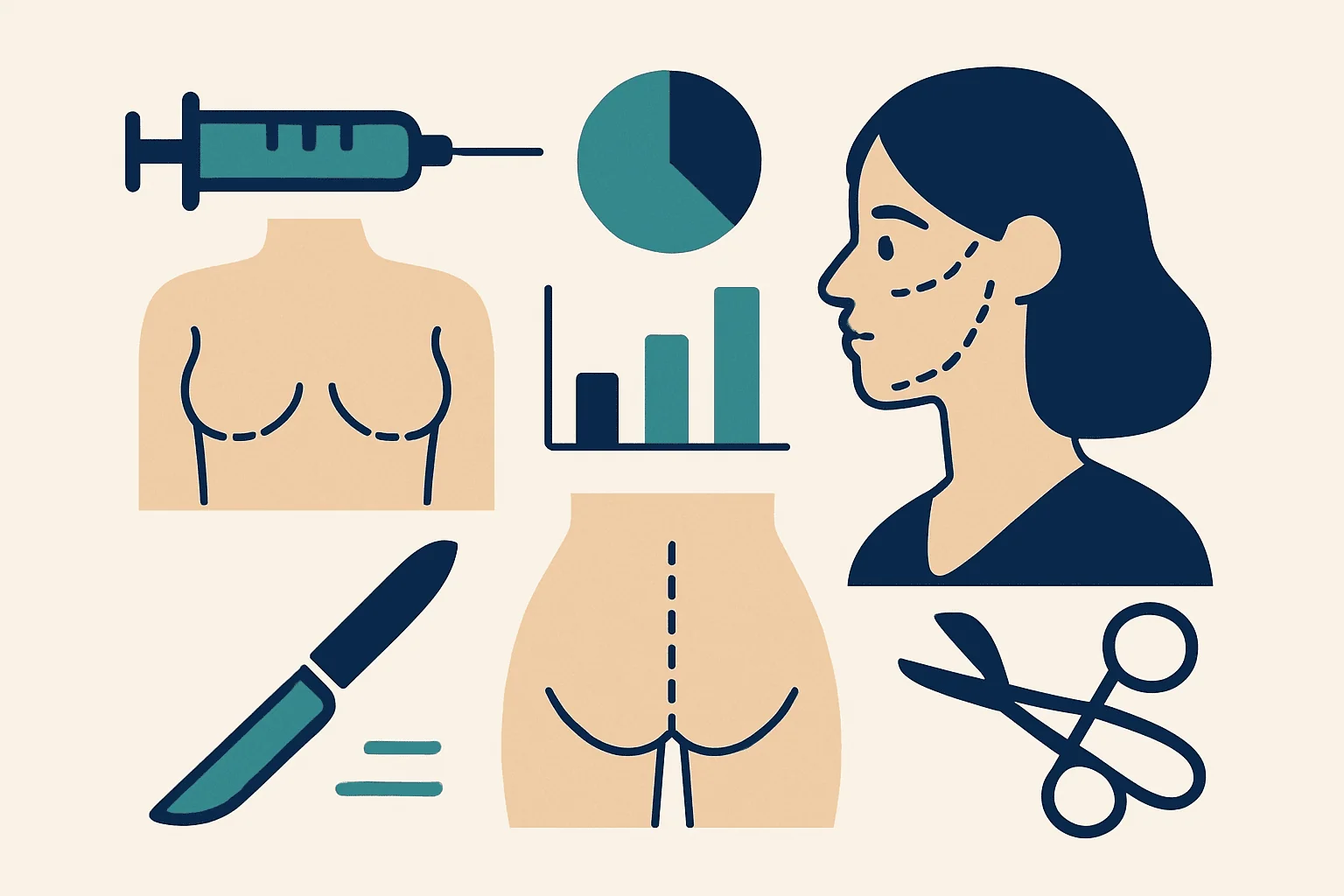
- Plastic surgery includes both reconstructive and cosmetic procedures; they are not the same thing.
- Aesthetic procedures can be surgical or nonsurgical, with different recovery times and risk profiles.
- Good candidates need realistic expectations, informed consent, and a careful medical evaluation.
- Recovery is a significant part of treatment and may involve swelling, bruising, activity limits, and follow-up care.
- Safety depends on qualified clinicians, appropriate facilities, and clear discussion of benefits, alternatives, and risks.
Celebrities with plastic surgery often attract intense public attention, but the more meaningful story is what happens when well-known people talk about their own choices plainly and respectfully. Those conversations can reduce stigma, challenge secrecy, and remind audiences that appearance-related decisions are personal, varied, and often more medically complex than headlines suggest.
Public disclosures also help separate myth from reality. Some people describe reconstructive goals, some discuss aging, and others reflect on regret, revision procedures, or the pressure to look a certain way on camera. What matters in each case is that the disclosure came from the person themselves and entered the public record clearly enough to support a factual, respectful discussion.
Below is a roundup of public figures who have personally spoken about plastic surgery or cosmetic procedures. Their comments do not endorse any treatment, but they do illustrate how openness can make conversations about body image, expectations, and recovery more informed.
1. Jane Fonda
Jane Fonda has spoken publicly about having cosmetic work, including discussing a facelift in later-life interviews while reflecting on aging in Hollywood. She has framed the decision in a candid, mixed way, acknowledging both the pressures that shaped it and the fact that she participated in that culture. Her openness mattered because she neither glamorized nor denied the experience, instead presenting plastic surgery as a personal choice tied to image, work, and self-perception.
2. Tyra Banks
Tyra Banks shared in her memoir that she had a nose job early in her career and wrote about the tension between natural beauty ideals and the realities of modeling. She has said she dislikes rigid rules about what people should or should not do with their bodies, emphasizing autonomy rather than shame. That public disclosure was influential because it challenged simplistic narratives and acknowledged that appearance industries can shape deeply personal decisions.
3. Cardi B
Cardi B has spoken openly on multiple occasions about cosmetic procedures including breast augmentation and liposuction, often discussing recovery and the fact that the process is not effortless. She has also publicly described having to slow down physically after surgery, pushing back against the idea that aesthetic procedures are minor or consequence-free. Her candor has resonated because it combines body autonomy with realism about pain, healing, and limits.
4. Kaley Cuoco
Kaley Cuoco has openly said that she had a nose job and breast augmentation when she was younger, describing those choices as among the best things she had done for herself. At the same time, she has framed the topic as a matter of personal confidence rather than something others should feel pressured to pursue. Her comments stood out because they were direct, unsensational, and rooted in her own experience rather than rumor.
5. Ashley Tisdale
Ashley Tisdale publicly shared that she underwent rhinoplasty after learning she had a deviated septum and breathing problems, explaining that the procedure also had a cosmetic dimension. She addressed the subject early and directly, making clear that the decision related to her own health and comfort as well as appearance. Her openness helped audiences understand that some surgeries can sit at the intersection of function and aesthetics.
6. Heidi Montag
Heidi Montag has spoken extensively about undergoing multiple cosmetic procedures in a short period when she was in her early twenties, and she later reflected publicly on the physical and emotional consequences. In subsequent interviews, she described regret about the extent of the surgery and the pressure she felt at the time. Her case is frequently cited because it shifted from spectacle to a more serious conversation about expectations, risk, and vulnerability.
7. Courteney Cox
Courteney Cox has publicly discussed cosmetic fillers and her decision to have them dissolved, speaking candidly about how perceptions can change gradually over time. While fillers are not surgery, her comments have been part of a broader, highly visible conversation about aesthetic intervention and the difficulty of seeing changes objectively. Her openness mattered because it highlighted that even common cosmetic treatments can lead people to reassess what feels natural or right for them.
8. Kylie Jenner
Kylie Jenner has publicly acknowledged breast augmentation, saying she had her breasts done before becoming pregnant with her daughter and later reflecting on the decision. She has also spoken about the emotional complexity of looking back on cosmetic choices made at a young age. Because of her enormous cultural influence, that admission drew attention to how age, confidence, and social pressure can intersect in aesthetic decision-making.
9. Dolly Parton
Dolly Parton has long spoken openly and humorously about having cosmetic procedures, including breast surgery and facial work, while remaining clear that these were her own choices. Her comments have generally emphasized self-expression and the idea that if a person wants to make a change and understands it, that can be their decision. Her frankness mattered because she normalized straightforward conversation without pretending that public image played no role.
10. Iggy Azalea
Iggy Azalea has openly discussed getting breast implants and later speaking publicly about a nose job, choosing to address the subject directly rather than let speculation dominate. She has said that she did not think people should feel ashamed of making changes to their bodies, while also acknowledging the scrutiny that follows such admissions. Her transparency contributed to a more direct public conversation about cosmetic surgery and body ownership.
What plastic surgery is
Plastic surgery is a broad medical field that includes both reconstructive and cosmetic procedures. Reconstructive surgery aims to restore function or appearance after injury, congenital differences, cancer treatment, or other medical conditions. Cosmetic surgery focuses on altering appearance in areas such as the face, nose, breasts, abdomen, or body contour. Although everyday conversation often uses “plastic surgery” to mean cosmetic enhancement alone, the specialty is wider and includes medically necessary care as well.
Common cosmetic operations include rhinoplasty, facelift surgery, eyelid surgery, breast augmentation or reduction, liposuction, abdominoplasty, and revision procedures. There are also nonsurgical aesthetic treatments such as fillers, neuromodulators, laser procedures, and skin resurfacing, which are often discussed alongside surgery even though they are different in technique, recovery, and risk profile. The best approach depends on the person’s anatomy, goals, health status, and expectations.
It is also important to understand that plastic surgery is not a single event but a process. That process can involve consultations, photography, lab work, anesthesia planning, recovery restrictions, follow-up visits, scar care, and in some cases revision surgery. Results may evolve gradually over weeks or months as swelling improves. Public discussion sometimes compresses all of that into a quick visual transformation, but medically, these procedures require planning and healing time.
Diagnosis and treatment landscape
Evaluation usually starts with a detailed consultation. A qualified surgeon reviews medical history, medications, smoking status, prior procedures, healing tendencies, and the patient’s goals. The conversation typically includes what can realistically be changed, what cannot be changed, where scars may be placed, what risks exist, and what recovery may involve. For reconstructive cases, imaging, pathology, or multidisciplinary planning may also be part of the workup.
Psychological readiness and expectation-setting are central. Ethical care means identifying whether a person understands the trade-offs of surgery and whether the planned procedure matches their concerns. In aesthetic practice, surgeons often discuss proportions, skin quality, asymmetry, and the difference between improvement and perfection. A strong consultation is meant to clarify limits as much as possibilities.
Treatment options vary widely. Some people are candidates for surgery, while others may be better served by nonsurgical treatments or by postponing intervention. Surgical procedures may be done under local anesthesia, sedation, or general anesthesia depending on the operation. Recovery can include swelling, bruising, pain control, limited activity, compression garments, wound care, and temporary restrictions on exercise or travel. Every procedure carries potential complications, including infection, bleeding, poor scarring, anesthesia-related issues, asymmetry, implant concerns where relevant, and dissatisfaction with the result.
Modern plastic surgery also places strong emphasis on safety systems: accredited facilities, careful patient selection, informed consent, and follow-up care. For patients considering any cosmetic procedure, credentials, communication, and a realistic understanding of risks are as important as the technique itself. Media discussions often focus on outcomes, but from a health perspective, the more important issues are appropriate indication, evidence-based planning, and safe postoperative care.
Because the field covers both medically necessary reconstruction and elective aesthetic procedures, public conversations benefit from nuance. Plastic surgery can address function, confidence, comfort, or recovery after illness or trauma. At the same time, it is still real medicine, not simply a beauty trend. Thoughtful, informed discussions help people understand that complexity.
Explore Facelift at Acibadem →
Frequently asked questions
Is plastic surgery the same as cosmetic surgery?
No. Plastic surgery is the broader specialty. It includes reconstructive surgery, which addresses function or appearance after injury, illness, or congenital differences, and cosmetic surgery, which focuses on appearance-related change.
Are nonsurgical aesthetic treatments considered plastic surgery?
Not exactly. Treatments such as fillers, neuromodulators, and some laser procedures are aesthetic interventions, but they are not surgery. They are often discussed alongside plastic surgery because they also alter appearance.
How do doctors decide whether someone is a candidate for cosmetic surgery?
They usually assess overall health, medical history, smoking status, medications, anatomy, healing factors, and goals. Just as important, they evaluate whether expectations are realistic and whether the benefits are likely to outweigh the risks.
Does plastic surgery always require a long recovery?
Recovery varies widely by procedure. Some treatments involve days of downtime, while others require weeks of restricted activity and months for final results to settle. The recovery plan depends on the type of procedure, the area treated, and the individual patient.
✔ Reviewed by the Acibadem medical team
This article is general health information inspired by publicly reported news. It is not a statement about any individual’s private medical care, nor medical advice. Always consult a qualified clinician.