

Celebrity Health Health News
Kris Jenner and Facelift: Why Searches Are Surging — and What Facelift Really Involves
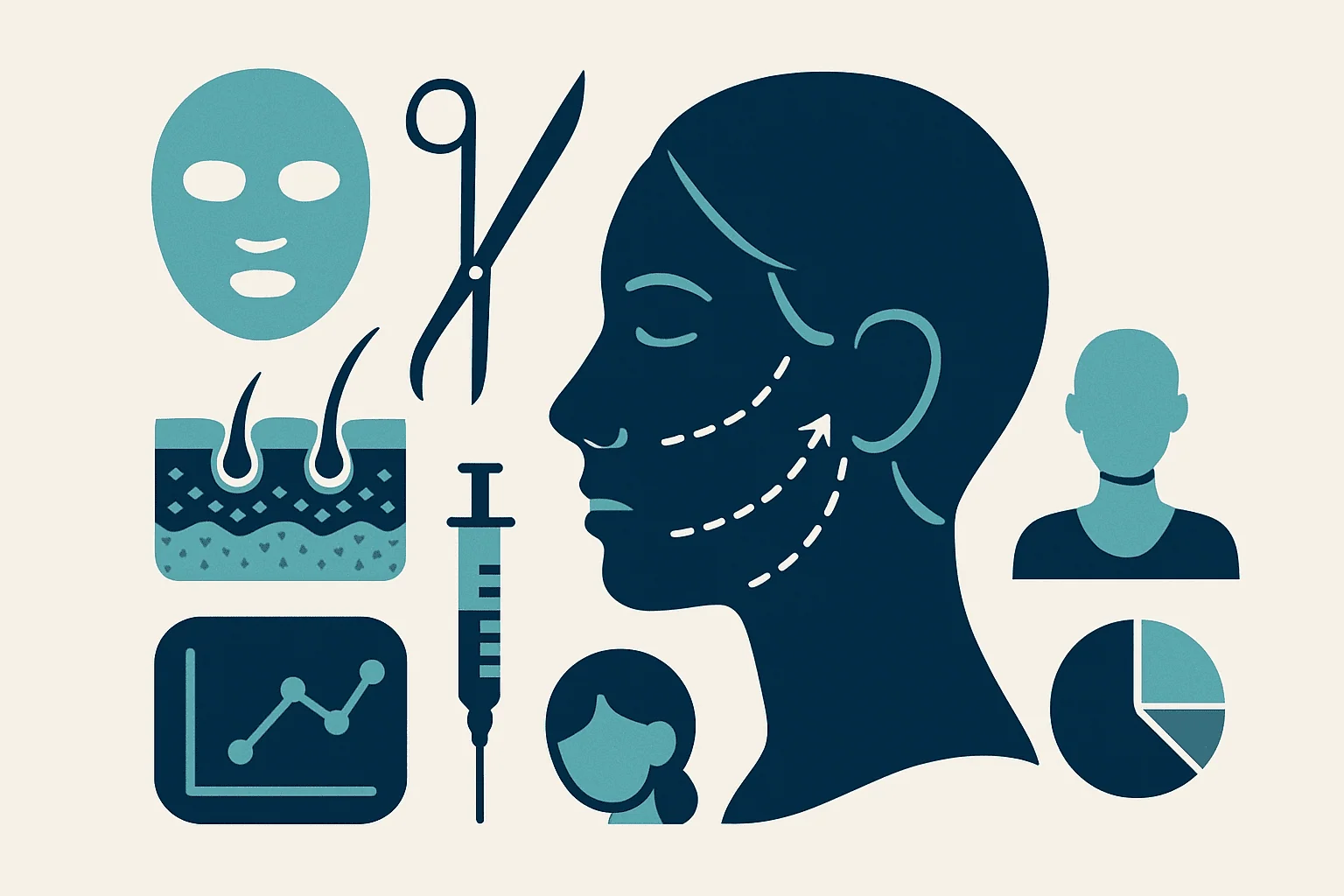
- A facelift targets sagging in the lower face and neck, not every wrinkle.
- Modern facelifts often reposition deeper tissues, not just tighten skin.
- Non-surgical treatments cannot fully replace surgery for significant laxity.
- Recovery takes weeks, and final results may continue settling for months.
- Good candidates need realistic goals, healthy healing, and expert assessment.
Why are so many people suddenly searching for facelifts? Recent headlines and online discussion tied to Kris Jenner have sparked fresh curiosity about facial rejuvenation procedures, but the larger public-interest question is less about any one person and more about what a facelift actually is, who may consider it, and what recovery truly involves.
A facelift is one of the best-known cosmetic facial surgeries, yet it is also one of the most misunderstood. Many people imagine it simply “pulls the skin tight,” but modern techniques are usually far more nuanced. The goal is typically to address deeper facial tissues, improve jawline and neck definition, and create a refreshed appearance that still looks natural and balanced.
Because the term is used loosely in everyday conversation, it can also be confused with non-surgical treatments such as fillers, skin tightening, lasers, or thread lifts. In reality, a facelift is a surgical procedure with specific indications, benefits, limitations, and recovery considerations. Understanding those basics can help people make sense of the topic when celebrity-related searches surge.
What a facelift is — and what it is not
A facelift, also called a rhytidectomy, is a cosmetic operation designed to reduce visible signs of facial aging, especially in the lower face and neck. Depending on the technique, it may address sagging cheeks, deep folds around the mouth, jowls along the jawline, and loose skin or banding in the neck.
Importantly, a facelift does not stop aging. It can reposition tissues and remove excess skin, but it does not change skin quality on its own, erase every wrinkle, or permanently freeze the face in time. People continue to age naturally after surgery.
Modern facelift surgery usually focuses on more than the skin alone. Many procedures involve deeper structural layers, often referred to as the SMAS (superficial musculoaponeurotic system), to support longer-lasting and more natural-looking results. This deeper approach can help avoid the overly tight or windswept look that many people fear.
Facelift surgery may be performed alone or combined with related procedures, depending on a person’s goals and anatomy. These may include:
- Neck lift to improve loose skin or neck bands
- Eyelid surgery for heavy or puffy lids
- Brow lift for forehead or brow descent
- Fat grafting to restore lost facial volume
- Laser or chemical resurfacing to improve skin texture and fine lines
That combination matters because facial aging is rarely caused by just one change. Skin laxity, volume loss, sun damage, and changes in facial fat and bone structure can all contribute.
Who might consider a facelift?
A facelift is generally considered by adults who are bothered by visible facial aging that non-surgical options may not adequately correct. There is no single “right age” for the procedure. Some people explore it earlier because of genetics, significant skin laxity, or early jowl formation, while others wait until changes are more advanced.
Common reasons someone may seek evaluation include:
- Jowls or loss of a sharp jawline
- Deep creases from the nose to the corners of the mouth
- Sagging in the midface or cheeks
- Loose skin in the lower face
- Excess neck skin or prominent neck bands
- A tired or heavy appearance despite feeling well
Candidacy depends on more than appearance alone. Surgeons also consider overall health, skin quality, smoking status, healing ability, prior facial procedures, and whether expectations are realistic. Emotional readiness matters too. Cosmetic surgery tends to be best approached as a personal choice rather than a response to outside pressure or a fleeting trend.
A facelift is not always the first or best step. In earlier stages of aging, some people may benefit more from non-surgical treatments or from a smaller operation, such as a mini facelift or isolated neck procedure. A thorough consultation helps sort out which concern is truly structural, which is related to skin quality, and which is caused by volume loss.
How facelift assessment and planning work
Before surgery, a specialist typically evaluates the whole face rather than just one feature. This is because a natural result depends on proportion and harmony. The consultation often includes a discussion of medical history, previous cosmetic treatments, medications, and any factors that could affect anesthesia or healing.
Physical assessment may focus on:
- Skin elasticity and the degree of looseness
- Facial volume in the cheeks, temples, and under-eye area
- Jawline and neck contour
- Position of deeper facial tissues
- Hairline and ear shape, which affect incision planning
- Scarring tendency and skin tone considerations
The surgeon may also discuss where surgery can realistically help and where it cannot. For example, a facelift usually improves sagging in the lower face and neck better than it improves very fine wrinkles or significant pigmentation. Those may require skin-focused treatments instead.
Photographs are often part of planning. They help document starting anatomy, guide operative design, and support careful discussion of goals. Many consultations also include a conversation about the difference between looking “different” and looking “rested.” The most successful cosmetic planning often aims for improvement that respects the person’s natural features rather than trying to create a completely new face.
Types of facelift procedures and non-surgical alternatives
There is no single facelift technique that suits everyone. The best approach depends on anatomy, aging pattern, and desired outcome.
Traditional facelift
A traditional facelift generally addresses moderate to advanced aging in the midface, jawline, and neck. Incisions are often placed around the ears and sometimes into the hairline to allow lifting and redraping of tissues with scar placement designed to be as discreet as possible. This option can provide substantial improvement when skin laxity and deeper tissue descent are more pronounced.
Mini facelift
A mini facelift is usually a less extensive procedure for people with earlier or milder jowling and lower-face laxity. It may involve shorter incisions and a somewhat quicker recovery, though “mini” should not be mistaken for trivial. It is still surgery and still requires expert planning.
Neck lift
Some people are most concerned about the neck rather than the cheeks. A neck lift may target loose skin, extra fullness beneath the chin, or visible vertical bands. In selected patients, it can be done alone; in others, it is combined with a facelift for balance.
Deep plane and SMAS-based approaches
These terms refer to methods that work on deeper support layers of the face. They are often discussed because they may create more natural contour changes in appropriate candidates. However, technique names alone do not guarantee a better result. Surgical judgment, anatomy, and experience remain crucial.
Non-surgical options
Not everyone who asks about a facelift needs surgery right away. Depending on the concern, alternatives may include:
- Dermal fillers to restore volume
- Neuromodulators for expression lines
- Energy-based skin tightening for mild laxity
- Laser resurfacing or peels for texture and sun damage
- Skincare plans focused on photodamage and maintenance
These can help selected patients, especially when volume loss or surface aging is the main issue. But when skin and deeper tissues have significantly descended, non-surgical treatments generally cannot reproduce the lifting effect of surgery.
What surgery and recovery usually involve
Facelift surgery is typically performed in an operating-room setting under anesthesia. The exact steps vary by technique, but the general process often includes incision placement, lifting and repositioning deeper tissues, removal or adjustment of excess skin, and careful closure to minimize visible scarring.
Immediately after surgery, swelling and bruising are expected. Some people also notice temporary tightness, numbness, or a feeling of pressure around the face and neck. These are common parts of the early healing phase. Recovery unfolds over weeks, not days, and final refinement can take longer than many expect.
In broad terms, recovery may include:
- Early swelling and bruising in the first days to weeks
- Gradual improvement in comfort and facial mobility
- Temporary changes in sensation around the ears, cheeks, or neck
- Scar maturation over months
- A slow settling of tissues into their final position
People are often surprised that social recovery and biologic healing are not the same thing. Someone may feel ready to be seen in public before all swelling has resolved, yet subtle internal healing continues for much longer.
Because healing is gradual, patience is important. The early postoperative period rarely represents the final result. Swelling can temporarily mask contour improvements, and one side of the face may settle at a slightly different pace than the other before symmetry improves.
Benefits, risks, outlook, and when to seek specialist care
The main potential benefit of a facelift is a more defined and refreshed lower face and neck. For appropriate candidates, results can be long-lasting and often more dramatic than what non-surgical treatments can achieve for sagging tissues. Many people value that the procedure can improve contour while still allowing them to look like themselves.
At the same time, a facelift is still surgery, and every surgical procedure carries risk. Possible complications can include bleeding, infection, poor wound healing, visible scarring, asymmetry, prolonged swelling, fluid collection, hairline changes, skin loss, or temporary or rarely longer-lasting nerve-related weakness or numbness. The exact risk profile varies based on health status, anatomy, and the extent of surgery.
Outlook is usually best when expectations are realistic. A facelift can turn back some visible signs of aging, but it cannot guarantee perfection or permanently halt future change. Lifestyle factors such as sun exposure, smoking, weight fluctuations, and general skin care can influence how results age over time.
It may be time to seek specialist assessment when:
- Non-surgical treatments no longer address sagging effectively
- Jowls or neck laxity are a main concern
- You want to understand the difference between surgical and non-surgical options
- You have had prior facial procedures and want expert planning
- You are looking for a balanced, anatomy-based opinion rather than trend-driven information
Celebrity-related search spikes often reflect a broader curiosity about how facial rejuvenation works. The useful takeaway is not whether a rumor is true, but that a facelift is a complex, individualized procedure. Done thoughtfully, it is less about chasing a dramatically altered look and more about restoring support, contour, and facial harmony in a way that fits the person’s features.
Explore Facelift at Acibadem →
Who is Kris Jenner?
Kris Jenner is an American television personality, producer, and businesswoman. She is widely known for her role in the reality television franchise centered on her family and for managing several high-profile entertainment and business careers.
Frequently asked questions
What does a facelift actually improve?
A facelift mainly improves sagging in the lower face and neck, including jowls, loose skin, and deeper folds. It is less effective for fine surface wrinkles, pigmentation, or skin texture changes on its own.
Is a facelift the same as fillers or Botox?
No. Fillers restore volume and neuromodulators soften certain expression lines, while a facelift is surgery that repositions tissues and removes excess skin. They can complement each other, but they are not interchangeable.
How long does facelift recovery usually take?
Initial recovery often takes a few weeks, but swelling, numbness, and scar maturation can continue improving for months. Social recovery and complete tissue healing are not the same timeline.
Who is a good candidate for a facelift?
Good candidates are typically adults bothered by facial or neck sagging who are in suitable general health, understand the limits of surgery, and want structural improvement rather than surface-only treatment.
Are facelift results permanent?
A facelift can provide long-lasting improvement, but it does not stop the aging process. The face continues to age naturally, and long-term appearance is influenced by skin quality, sun exposure, weight changes, and other factors.
Can a facelift look natural?
Yes, when the procedure is carefully matched to the person’s anatomy and goals. Modern techniques often aim to restore contour and support without creating an overly tight or obviously operated appearance.
✔ Reviewed by the Acibadem medical team
More on Kris Jenner
This article is general health information inspired by publicly reported news. It is not a statement about any individual’s private medical care, nor medical advice. Always consult a qualified clinician.