Bow Legs (Genu Varum)
Learn about bow legs (genu varum): why toddlers often have them, when they resolve naturally, possible causes like rickets or Blount disease, and treatment.
Quick answer
Bow legs, or genu varum, is an outward curving of the legs at the knees so the knees stay apart when the feet touch. It is normal in most babies and toddlers and usually straightens by age 2 to 3. Persistent, worsening, or one-sided bowing may signal Blount disease or rickets and warrants medical evaluation.
What is bow legs (genu varum)?
Bow legs, known medically as genu varum, is a condition in which the legs curve outward at the knees while the feet and ankles stay together. When a person with bow legs stands with their feet touching, a visible gap remains between the knees. The word “genu” means knee, and “varum” describes an angle that points away from the midline of the body.
Bow legs are extremely common in babies and toddlers. In fact, most infants are born with a mild degree of outward curving because of the way the legs are folded in the womb. This is called physiologic genu varum, meaning it is a normal part of growth rather than a disease. In most children the legs gradually straighten as they begin to stand and walk, and the curve usually corrects itself by around 2 to 3 years of age.
In a smaller number of children, bow legs persist, worsen, or affect only one leg. This may point to an underlying problem such as a growth-plate disorder or a bone-softening condition. Bow legs can also develop in adults, most often as a result of knee joint wear over time. This page explains the symptoms, causes, diagnosis, and treatment of bow legs, and describes when the curve is likely to be harmless and when it deserves medical attention.
Symptoms of bow legs
Bow legs are usually recognized by their appearance rather than by pain or discomfort. In a bow legged toddler, the shape of the legs is often the only sign, and the child typically walks, runs, and plays normally. Common features include:
- A visible outward curve of one or both legs at the knee.
- A gap between the knees when standing with the ankles together.
- Both legs affected in a similar, symmetrical way (typical of the harmless form).
- A toddler’s characteristic wide-based, waddling walk.
- Feet that turn inward while walking (in-toeing), which sometimes accompanies bow legs.
Certain features are less typical of normal development and may suggest another cause. These include a curve that affects only one leg, a curve that becomes more pronounced after the age of 2, a very sharp angle just below the knee, or one leg that appears shorter than the other. Children with bow legs caused by a bone-softening condition may also have delayed growth, bone tenderness, muscle weakness, or swelling at the wrists and ankles.
In older children, teenagers, and adults, symptoms can differ. Longstanding bow legs change how weight passes through the knee, placing extra load on the inner part of the joint. Over time this may lead to knee pain, stiffness, a sense of instability, difficulty with long walks or sports, and, in adults, symptoms of early cartilage wear (osteoarthritis). Not everyone with bow legs develops these problems, and many adults with a mild curve never notice any symptoms.
Causes and risk factors
Bow legs have several possible causes, and the likely cause depends largely on age.
- Normal development (physiologic genu varum): The most common cause in bow legs in babies and toddlers. The curve is a leftover of the folded position in the womb and typically resolves on its own.
- Blount disease: A growth disorder of the shinbone (tibia) in which the growth plate on the inner side of the upper tibia develops abnormally. This causes the leg to bow progressively below the knee. It can appear in toddlers or in adolescents and often affects one leg more than the other.
- Rickets: A childhood condition in which bones become soft and weak, most often because of a lack of vitamin D, calcium, or phosphate. Soft bones bend under the weight of the body, producing bowing. Some forms of rickets are inherited and are not related to diet.
- Skeletal dysplasias: A group of inherited conditions that affect the growth of bone and cartilage. Some, such as achondroplasia, are associated with bow legs.
- Injury or infection: A fracture or bone infection that damages a growth plate can disturb growth on one side and lead to angular deformity.
- Osteoarthritis (in adults): Wear of cartilage on the inner side of the knee can allow the joint to tilt into a bowed position. Conversely, existing bow legs increase load on the inner knee and can speed up this wear.
- Other bone conditions: Paget disease of bone, bone tumors, or poorly healed fractures may occasionally lead to bowing in adults.
Factors that may raise the risk of persistent or pathologic bow legs include early walking (before about 1 year of age), obesity in childhood, low vitamin D intake or limited sun exposure, exclusively breast-fed infants who do not receive vitamin D supplementation, a family history of bone growth disorders, and certain ethnic backgrounds where Blount disease appears to be more frequent. In adults, previous knee injury, excess body weight, and heavy physical work are associated with inner-knee cartilage wear.
Diagnosis
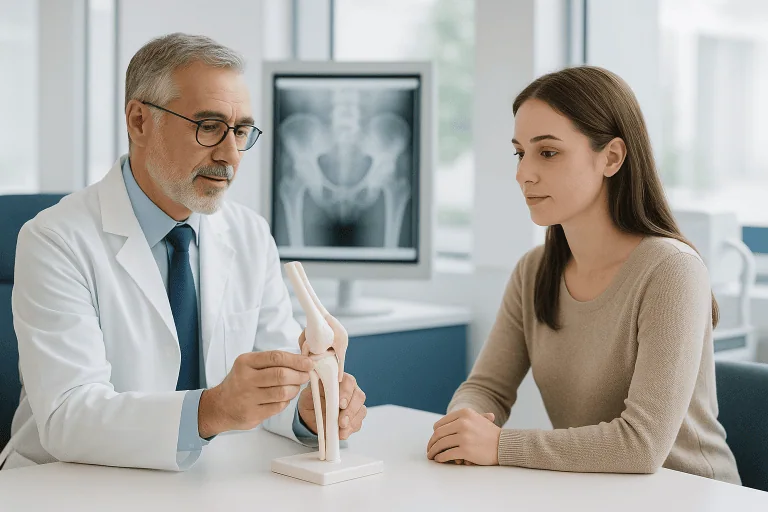
Doctors usually begin by taking a history and examining the child or adult. A pediatrician or orthopedic specialist (a doctor who treats bones and joints) will ask when the curve was first noticed, whether it is improving or worsening, when the child started walking, and whether there is any family history of bone problems. They will also ask about diet, vitamin D supplementation, and any pain or limping.
During the physical examination, the doctor observes the child standing and walking, checks that both legs are the same length, and may measure the distance between the knees when the ankles are together. The angle of the leg may be measured with a simple tool called a goniometer. The doctor also looks for signs suggesting rickets, such as widened wrists, a prominent breastbone, or delayed tooth development, and checks the rotation of the hips and feet.
For a typical bow legged toddler under 2 years old with symmetrical curves and no other concerns, no tests are usually needed, and the doctor may simply arrange a follow-up visit to confirm that the legs are straightening as expected. Further investigation is generally considered when:
- The bowing is severe, or is getting worse rather than better.
- Only one leg is affected, or the two legs look clearly different.
- The curve is still present after about age 2 to 3.
- The child has pain, limping, short stature, or other signs of illness.
Investigations that may be used include:
- Standing X-rays of both legs from hip to ankle. These allow the doctor to measure the alignment of the bones and to look for changes at the growth plates typical of Blount disease or rickets.
- Blood tests to check levels of vitamin D, calcium, phosphate, and alkaline phosphatase (an enzyme that rises when bone is turning over rapidly), which help identify rickets or other metabolic bone problems.
- Kidney function tests in some cases, because certain kidney conditions affect mineral balance and bone strength.
- Genetic testing when a skeletal dysplasia or inherited form of rickets is suspected.
- MRI or CT scans occasionally, to examine growth plates in detail before surgery is planned.
In adults, standing X-rays are also the main tool, and the doctor may assess the knee joint for signs of osteoarthritis at the same time.
Treatment options for bow legs
Bow legs treatment depends on the cause, the age of the person, the severity of the curve, and whether it is changing over time. Many people need no treatment at all.
Observation
For bow legs in babies and young toddlers with the normal physiologic form, doctors usually recommend simply watching and waiting. The legs are expected to straighten gradually as the child grows, and follow-up visits every several months allow the doctor to confirm that this is happening. Special shoes, shoe inserts, or exercises have not been shown to speed up this natural correction, and they are generally not recommended for the physiologic form.
Treating an underlying condition
When bow legs are caused by nutritional rickets, treatment focuses on correcting the deficiency, usually with vitamin D and calcium supplements under medical supervision, alongside dietary advice. Bones often strengthen and legs frequently straighten over time once the deficiency is treated, although severe deformity may persist and require further care. Inherited forms of rickets require specialized medication and long-term follow-up with a pediatric bone or hormone specialist.
Bracing
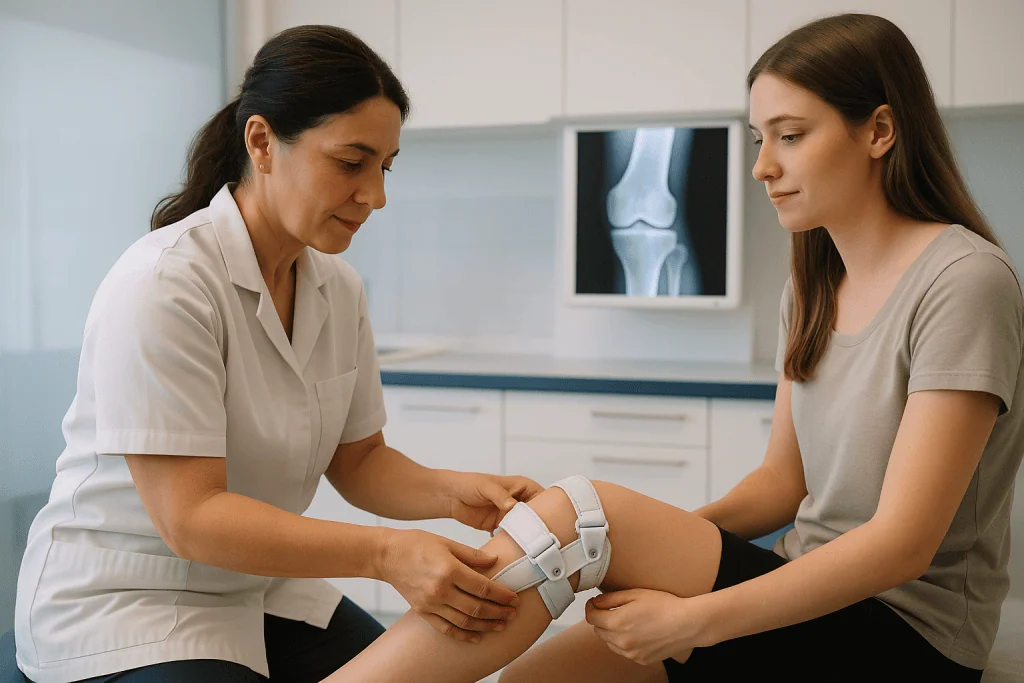
In young children with early Blount disease, a doctor may recommend a leg brace (an external support worn on the leg) that applies gentle pressure to guide the bone as it grows. Braces are typically used in children under about 3 to 4 years of age and are worn for many months. Bracing is not effective in all cases, and it is not used for physiologic bow legs or in adolescents.
Bow legs surgery
Surgery is considered when the deformity is severe, is worsening despite other treatment, affects walking or causes pain, or when bracing has not worked. The main types of bow legs surgery include:
- Guided growth (hemiepiphysiodesis): A small metal plate or staple is placed across the growth plate on the outer side of the knee. This slows growth on that side while the inner side continues to grow, allowing the leg to straighten gradually over months to years. It is only suitable for children who still have significant growth remaining, and the implant is usually removed once the leg is straight.
- Osteotomy: The bone is cut and realigned to a straighter position, then held in place with plates, screws, or an external frame while it heals. This is used in older children and adolescents who are close to finishing growth, in adults, and in cases where guided growth is not appropriate. Some external frames allow the correction to be adjusted gradually over several weeks.
- Knee replacement: In adults with advanced osteoarthritis on the inner side of the knee, the surgeon may correct the alignment as part of a partial or total knee replacement.
All surgery carries risks, including infection, bleeding, nerve or blood vessel injury, delayed bone healing, under- or over-correction, and the possibility that the curve returns as the child grows. Your surgeon will discuss the specific benefits and risks that apply to your situation.
Rehabilitation
After surgery, physical therapy is commonly needed to restore knee movement, strength, and normal walking. Recovery times vary widely depending on the procedure, the age of the patient, and how quickly bone heals. Children often return to full activity sooner than adults. In many hospitals, including Acibadem, the diagnosis and treatment of bow legs is managed within the Orthopedics & Joint Center, often in coordination with pediatric and endocrinology teams when a metabolic cause is suspected.
Living with bow legs (genu varum) and outlook
For the great majority of babies and toddlers, the outlook is very good. Physiologic bow legs correct themselves without any treatment, and the child grows up with normally aligned legs. Parents are often reassured simply by learning that the curve is a normal stage of development. Between ages 3 and 5, many children actually pass through a phase of mild knock knees (the opposite alignment, called genu valgum) before settling into adult alignment.
When bow legs are caused by rickets or early Blount disease and are treated promptly, many children also do well, although some need long-term monitoring to make sure the correction is maintained as they grow. Untreated or severe deformity can lead to differences in leg length, walking difficulties, and an increased risk of knee arthritis later in life. Blount disease in particular tends to progress if it is not addressed, which is why early recognition matters.
Adults with mild bow legs often live without limitation. If knee pain develops, general measures such as maintaining a healthy body weight, choosing low-impact exercise like swimming or cycling, strengthening the muscles around the knee and hip, and wearing supportive footwear may help reduce symptoms. Some adults benefit from realignment surgery to delay or avoid joint replacement, but the decision depends on age, activity level, the condition of the cartilage, and personal preferences. Outcomes cannot be guaranteed, and it is reasonable to discuss expectations openly with your orthopedic team.
Frequently asked questions
Are bow legs in babies normal?
Yes, in most cases. Nearly all newborns have some outward curve in their legs because of their position in the womb, and this often looks more noticeable when a toddler first starts to stand and walk. In the typical pattern both legs are affected equally, the child is otherwise healthy, and the legs straighten by around age 2 to 3. A doctor can confirm whether a baby’s leg shape fits this normal pattern.
At what age should a bow legged toddler see a specialist?
Routine checkups with a pediatrician are usually enough for a young toddler with symmetrical bow legs. Referral to an orthopedic specialist is generally considered if the curve is still clearly present after about age 2 to 3, if it is getting worse instead of better, if only one leg is affected, if the child limps or complains of pain, or if the child is unusually short for their age.
What is the best bow legs treatment for children?
There is no single best treatment because it depends on the cause. Physiologic bow legs need no treatment other than time. Rickets is treated by correcting the vitamin or mineral deficiency. Early Blount disease in young children may be managed with bracing, while more severe or persistent cases may require guided growth surgery or an osteotomy. Your child’s doctor will recommend an approach based on the diagnosis, age, and X-ray findings.
Can bow legs be corrected in adults without surgery?
Once the bones have stopped growing, the shape of the leg cannot be changed with exercises, braces, or shoe inserts. These measures may help ease knee symptoms in some people, but they do not straighten the bone. Realignment surgery is the only way to change the actual angle of an adult leg, and it is generally reserved for people with pain, joint wear, or functional problems rather than for appearance alone.
Does bow legs surgery leave a child with normal legs?
Surgery aims to bring the leg into a normal alignment and, in many cases, achieves this. However, results vary. Some children may need a second procedure if the curve returns during growth, and there is a small risk of over-correction or complications. Regular follow-up until the end of growth is important so that any change can be addressed early.
Is genu varum the same as knock knees?
No. Genu varum (bow legs) means the knees angle outward and stay apart when the feet are together. Knock knees, or genu valgum, is the opposite: the knees touch or angle inward while the feet stay apart. Both are common phases of normal childhood growth, with bow legs typical in toddlers and knock knees typical in preschool children.
Can bow legs be prevented?
The physiologic form cannot be prevented, and it does not need to be. Bow legs caused by nutritional rickets may be prevented by ensuring babies and children receive enough vitamin D and calcium, which for many infants means a daily vitamin D supplement as advised by their pediatrician. Maintaining a healthy weight in childhood may lower the risk of Blount disease, although it does not remove it completely.
When to see a doctor
Mild, symmetrical bow legs in a baby or young toddler can usually be discussed at a routine checkup. However, some signs suggest that bow legs may have an underlying cause and should be evaluated promptly. Seek medical assessment if you notice any of the following:
- Bowing that affects only one leg, or one leg that looks clearly different from the other.
- Bowing that is getting worse over time, or is still obvious after about age 3.
- A sudden change in the shape of a child’s leg, especially after a fall or injury.
- Limping, refusal to walk, or a child who complains of knee, leg, or hip pain.
- One leg that appears shorter than the other.
- Signs of rickets, such as bone tenderness, swollen wrists or ankles, delayed growth, muscle weakness, or delayed teeth.
- A child who is not meeting expected growth or movement milestones.
- In adults, new or worsening knee pain, swelling, locking, giving way, or increasing difficulty walking.
Sudden severe pain, an inability to bear weight, a visibly deformed limb after trauma, or fever with a hot, swollen joint may indicate a fracture or infection and require urgent medical care. If you are unsure whether a child’s leg shape is normal, a doctor’s examination can usually provide clear reassurance or arrange the appropriate tests.
Medically reviewed by the Acıbadem International Medical Board September 8, 2026
See our medical review board →
Update history
- PublishedSeptember 8, 2026
- Medical review approvedSeptember 8, 2026
- Last content updateSeptember 8, 2026