Demyelinating Diseases
Learn what demyelinating diseases are, their symptoms and causes, how doctors diagnose them, and the treatment options that may help manage these conditions.
Quick answer
Demyelinating diseases are conditions in which myelin, the protective coating around nerve fibers, is damaged, slowing or blocking nerve signals. Multiple sclerosis is the most common example; others include neuromyelitis optica, ADEM and Guillain-Barré syndrome. Symptoms may include vision loss, numbness, weakness and fatigue. Diagnosis uses MRI and other tests; treatment aims to control inflammation and manage…
What are demyelinating diseases?
Demyelinating diseases are a group of conditions in which the protective covering of nerve fibers, called myelin, becomes damaged or destroyed. Myelin is a fatty layer that wraps around nerve fibers in much the same way that insulation wraps around an electrical wire. It allows electrical signals to travel quickly and smoothly between the brain, the spinal cord and the rest of the body. When myelin is lost, a process doctors call demyelination, these signals slow down, become distorted or stop altogether. The result can be a wide range of problems with movement, sensation, vision, balance and thinking.
People asking "what is demyelinating disease?" are often surprised to learn that it is not a single illness. It is an umbrella term. The best-known example is multiple sclerosis (MS), a long-term condition in which the immune system repeatedly attacks myelin in the brain and spinal cord. Other demyelinating diseases of the central nervous system (the brain and spinal cord) include neuromyelitis optica spectrum disorder (NMOSD), which mainly affects the optic nerves and spinal cord; acute disseminated encephalomyelitis (ADEM), a usually one-time attack of widespread inflammation that often follows an infection, especially in children; optic neuritis, inflammation of the nerve that carries signals from the eye to the brain; and transverse myelitis, inflammation across a section of the spinal cord. Some demyelinating conditions affect the peripheral nervous system (the nerves outside the brain and spinal cord), such as Guillain-Barré syndrome and chronic inflammatory demyelinating polyneuropathy (CIDP).
Demyelinating diseases can occur at any age, but many of them are first diagnosed in young and middle-aged adults. Multiple sclerosis, for example, is most often diagnosed between the ages of 20 and 40 and is more common in women than in men. ADEM is seen more often in children. Because these conditions involve the nervous system, they are usually managed by neurologists, doctors who specialize in disorders of the brain, spinal cord and nerves.
Symptoms of demyelinating diseases
Demyelinating diseases symptoms depend on where in the nervous system myelin has been damaged. Because nerves control almost every function of the body, the possible symptoms are broad. They may appear suddenly over hours or days, or build up gradually over weeks. In some conditions they come and go in episodes called relapses or attacks, while in others they progress steadily.
Common symptoms include:
- Vision problems, such as blurred or dim vision, loss of color vision, pain when moving the eye or double vision
- Numbness or tingling, often in the face, arms, legs or trunk
- Weakness in one or more limbs, sometimes affecting one side of the body
- Balance and coordination problems, including unsteady walking, clumsiness and dizziness
- Fatigue that feels out of proportion to activity and does not improve much with rest
- Muscle stiffness or spasms, known as spasticity
- Bladder and bowel changes, such as urgency, frequency or difficulty emptying
- Pain, including nerve pain that feels like burning, stabbing or electric shocks
- Problems with thinking, such as slowed processing, poor concentration or memory difficulties
- Slurred speech or trouble swallowing
The pattern of symptoms often gives doctors clues about the type of demyelinating disease. In relapsing forms of multiple sclerosis, symptoms typically flare for days to weeks and then partly or fully settle, with periods of stability in between. Over years, some people develop a progressive form in which disability builds slowly without clear attacks. In neuromyelitis optica spectrum disorder, attacks tend to be more severe, often involving marked vision loss in one or both eyes or significant weakness and numbness below a certain level of the spinal cord, and recovery between attacks may be incomplete. Acute disseminated encephalomyelitis usually begins abruptly, often with fever, headache, drowsiness or confusion in addition to weakness and vision changes, and in many cases it does not recur. Peripheral demyelinating conditions such as Guillain-Barré syndrome tend to cause weakness and tingling that start in the feet and legs and move upward, sometimes rapidly.
Some people also notice that symptoms briefly worsen with heat, fever or exercise. This is thought to happen because damaged nerves conduct signals less reliably when body temperature rises. It is temporary and is not the same as a new attack.
Causes and risk factors
The exact demyelinating diseases causes are not fully understood, and they differ between conditions. In most cases, however, the underlying problem is inflammation driven by the immune system. Normally the immune system protects the body from infection. In autoimmune demyelinating diseases, it mistakenly identifies myelin, or the cells that make myelin, as a threat and attacks it. Multiple sclerosis, neuromyelitis optica spectrum disorder and CIDP are all considered immune-mediated conditions.
Other recognized causes and triggers include:
- Infections. Viral or bacterial infections can trigger an immune reaction that damages myelin. ADEM and Guillain-Barré syndrome frequently follow a recent infection. Some viruses have also been linked to an increased risk of developing multiple sclerosis later in life.
- Specific antibodies. In neuromyelitis optica spectrum disorder, many people have antibodies against a protein called aquaporin-4. Others have antibodies against myelin oligodendrocyte glycoprotein (MOG), which defines a related condition often called MOG antibody-associated disease.
- Genetic factors. Demyelinating diseases are not directly inherited in a simple way, but having a close relative with multiple sclerosis modestly increases a person's risk. Certain rare inherited disorders, called leukodystrophies, affect the formation or maintenance of myelin from childhood.
- Lack of oxygen or blood flow, toxins, severe vitamin B12 deficiency and some medications can also damage myelin, although these are less common causes.
Several risk factors have been identified, mainly from research on multiple sclerosis. Women are affected more often than men. Onset is most common in early adulthood. Low vitamin D levels and limited sun exposure have been associated with higher risk, as has smoking. People who live farther from the equator appear to have a somewhat higher rate of multiple sclerosis, although the reasons for this are still being studied. Obesity in adolescence has also been linked to increased risk. Having one autoimmune condition can raise the chance of developing another. It is important to remember that having a risk factor does not mean a person will develop a demyelinating disease, and many people who are diagnosed have no obvious risk factors at all.
Diagnosis of demyelinating diseases
There is no single test that confirms every demyelinating disease. Instead, demyelinating diseases diagnosis is based on a combination of the person's history, a careful neurological examination and several supporting tests. Because early symptoms can be vague and can overlap with many other conditions, diagnosis may take time and sometimes requires repeat testing.
Tests and steps doctors commonly use include:
- Medical history and neurological examination. The doctor asks about the timing and pattern of symptoms and checks vision, eye movements, strength, reflexes, sensation, coordination and walking.
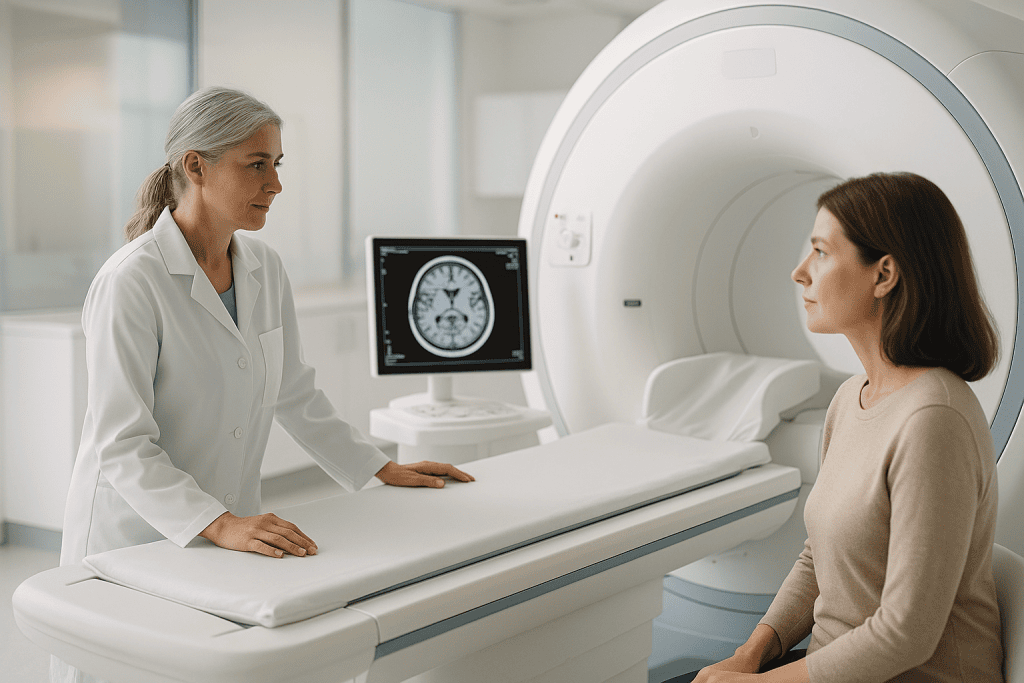
- Magnetic resonance imaging (MRI). MRI is a scan that uses magnets and radio waves to produce detailed images of the brain and spinal cord. It is the most important tool for detecting areas of demyelination, known as lesions or plaques. A contrast dye may be injected to show which lesions are actively inflamed. MRI can also help rule out other explanations such as tumors or stroke.
- Lumbar puncture, also called a spinal tap. A small sample of cerebrospinal fluid, the fluid surrounding the brain and spinal cord, is taken from the lower back with a needle. Laboratory testing may show signs of inflammation or specific proteins, called oligoclonal bands, that support a diagnosis of multiple sclerosis.
- Blood tests. These are used to look for antibodies such as aquaporin-4 or MOG antibodies, and to exclude other conditions that can mimic demyelination, including infections, vitamin deficiencies and other autoimmune diseases.
- Evoked potential tests. These measure how quickly the nervous system responds to visual, sound or touch stimulation. Slowed responses can indicate damaged myelin even when symptoms are mild.
- Optical coherence tomography (OCT), a painless eye scan that measures the thickness of the nerve layer at the back of the eye and can reveal damage from optic neuritis.
- Nerve conduction studies, which measure electrical signals in peripheral nerves and are used when a condition such as Guillain-Barré syndrome or CIDP is suspected.
For multiple sclerosis in particular, doctors use internationally agreed criteria that require evidence of damage in more than one area of the nervous system and at more than one point in time. This is why a person with a single episode may be told they have a "clinically isolated syndrome" and be monitored with follow-up scans rather than being given a definite diagnosis right away. Getting the diagnosis right matters, because treatments differ considerably between conditions; some medications that help in multiple sclerosis may worsen neuromyelitis optica spectrum disorder.
Treatment options for demyelinating diseases
Demyelinating diseases treatment options vary depending on the specific condition, how active it is and how much it is affecting daily life. There is currently no cure for most demyelinating diseases, but treatment can often shorten attacks, reduce how frequently they happen, slow the buildup of damage and ease symptoms. Care is usually coordinated by a neurologist, and at hospitals such as Acibadem this falls under the Neurology department, often working alongside eye specialists, rehabilitation teams and nurses.
Treatment generally falls into several categories:
- Treating acute attacks. High-dose corticosteroids, anti-inflammatory medicines given by vein or by mouth for a few days, are commonly used to calm inflammation and speed recovery from a relapse. If steroids do not help enough, or in severe attacks, doctors may use plasma exchange, a procedure that filters harmful antibodies out of the blood, or intravenous immunoglobulin (IVIG), an infusion of antibodies from donated blood. IVIG and plasma exchange are also standard treatments for Guillain-Barré syndrome and CIDP.
- Disease-modifying therapies. For relapsing forms of multiple sclerosis, a range of long-term medications is available as injections, tablets or infusions. They work in different ways to reduce immune activity and are intended to lower the number of relapses and the appearance of new lesions on MRI. Neuromyelitis optica spectrum disorder is treated with different immune-suppressing medicines, including several targeted antibody therapies. The choice depends on disease activity, other health conditions, plans for pregnancy and personal preference, and it is reviewed regularly.
- Symptom management. Medications may be prescribed for muscle stiffness, nerve pain, bladder problems, fatigue, depression or tremor. These do not change the course of the disease but can meaningfully improve comfort and function.
- Rehabilitation. Physical therapy helps maintain strength, balance and mobility. Occupational therapy focuses on managing daily tasks and conserving energy. Speech and language therapy can help with speech and swallowing difficulties. Rehabilitation is especially important after an attack, when the nervous system is recovering.
- Observation. In some situations, such as a mild first episode or a condition like ADEM that is not expected to return, doctors may recommend monitoring with regular check-ups and MRI rather than starting long-term medication straight away.
Surgery is not a treatment for demyelination itself. Procedures are occasionally considered for specific complications, for example an implanted pump to deliver muscle-relaxing medicine for severe spasticity, but these are decisions made case by case. Lifestyle measures are also part of care: staying physically active as ability allows, not smoking, maintaining adequate vitamin D as advised by a doctor, managing weight and treating other health conditions may all support overall wellbeing. Your doctor may also discuss vaccination, since some immune-suppressing treatments affect how the body responds to vaccines and to infections.
Living with demyelinating diseases and outlook
The long-term outlook for demyelinating diseases varies widely, and it is not possible to predict any individual's course with certainty. Some conditions, such as ADEM or a single episode of optic neuritis, often resolve with good recovery and do not come back. Others, such as multiple sclerosis and neuromyelitis optica spectrum disorder, are lifelong and require ongoing management. Within multiple sclerosis alone, the range is enormous: some people have very few relapses over decades and remain fully independent, while others develop significant disability over time. In general, outcomes for many demyelinating diseases have improved as more effective treatments have become available, and starting treatment early is thought to help preserve function.
Living with a demyelinating disease usually means learning to manage uncertainty. Regular follow-up with a neurology team, taking prescribed medication consistently and reporting new or changing symptoms promptly all help doctors adjust treatment before problems become established. Many people find it helpful to plan around fatigue, keep cool during hot weather, build regular gentle exercise into their routine and pay attention to sleep and mood. Depression and anxiety are common alongside these conditions and are treatable; mentioning them to a doctor is worthwhile.
Practical support matters too. Occupational therapists can suggest ways to adapt work and home environments, and social workers or patient organizations can help with questions about employment, driving and financial planning. Family members and caregivers often benefit from information and support of their own. Demyelinating diseases do not usually shorten life dramatically, especially with modern care, and most people continue to work, raise families and pursue their interests, sometimes with adjustments along the way.
Frequently asked questions
What is the difference between demyelinating diseases and multiple sclerosis?
Multiple sclerosis is the most common demyelinating disease, but it is only one of several. "Demyelinating diseases" is a broad term for any condition in which myelin is damaged, including neuromyelitis optica spectrum disorder, ADEM, optic neuritis, transverse myelitis and peripheral nerve conditions such as Guillain-Barré syndrome. Doctors use imaging, fluid analysis and antibody tests to work out which specific condition a person has, because the treatments differ.
What are the first demyelinating diseases symptoms people usually notice?
Early symptoms often include blurred or painful vision in one eye, numbness or tingling in a limb or on one side of the face, unexplained weakness, unsteadiness or unusual fatigue. These symptoms are not specific and can have many other causes, so they do not mean a person has a demyelinating disease. However, if they persist for more than a day or two, or come back, they should be discussed with a doctor.
What are the main demyelinating diseases causes?
Most demyelinating diseases are thought to result from the immune system mistakenly attacking myelin. Infections can trigger this reaction, and in some conditions specific antibodies are involved. Genetics play a modest role, and factors such as smoking, low vitamin D and geography have been linked to risk in multiple sclerosis. In many cases no single cause can be identified, and researchers believe several factors usually act together.
How is demyelinating diseases diagnosis confirmed?
Diagnosis relies on a neurological examination together with MRI scans of the brain and spinal cord, which show areas of demyelination. A lumbar puncture to test spinal fluid, blood tests for specific antibodies and to exclude other diseases, and tests of nerve conduction or evoked potentials may also be used. For multiple sclerosis, doctors apply established criteria that look for damage in more than one location and at more than one time.
What are the demyelinating diseases treatment options if I am diagnosed?
Treatment depends on the specific condition. Acute attacks are often treated with corticosteroids, and sometimes plasma exchange or intravenous immunoglobulin. Long-term disease-modifying medications are available for multiple sclerosis and neuromyelitis optica spectrum disorder to reduce relapses. Symptom-focused medicines, rehabilitation therapies and lifestyle measures are also important. Your doctor may recommend observation in mild or single-episode cases.
Can demyelinating diseases be cured or reversed?
At present there is no cure for most demyelinating diseases, and existing treatments aim to control inflammation, reduce relapses and manage symptoms rather than repair myelin. The body can partially repair myelin on its own, which is one reason symptoms often improve after an attack. Research into treatments that promote myelin repair is ongoing, but these are not yet part of standard care.
Are demyelinating diseases hereditary?
Most demyelinating diseases are not passed directly from parent to child. Having a close relative with multiple sclerosis increases risk somewhat, suggesting that inherited factors contribute, but the majority of people with the condition have no affected family members. A small group of rare inherited disorders called leukodystrophies do affect myelin and are usually diagnosed in childhood.
When to see a doctor
Anyone who develops new neurological symptoms that last more than a day, keep returning or steadily worsen should arrange to see a doctor. This includes persistent numbness or tingling, weakness in a limb, changes in vision, problems with balance or walking, or new bladder difficulties. A person already diagnosed with a demyelinating disease should report any new or worsening symptoms to their neurology team, as this may indicate a relapse that benefits from prompt treatment.
Seek emergency medical care immediately if any of the following occur:
- Sudden loss of vision in one or both eyes
- Sudden severe weakness, paralysis or inability to stand or walk
- Weakness that is spreading rapidly upward from the legs over hours or days
- Difficulty breathing or swallowing
- Sudden confusion, extreme drowsiness, seizures or loss of consciousness
- Severe headache with fever, stiff neck or vomiting
- Sudden loss of bladder or bowel control together with weakness or numbness in the legs
- Fever or signs of serious infection while taking immune-suppressing medication
These signs can indicate a severe attack, spinal cord involvement or a different emergency such as a stroke or infection, all of which need urgent assessment.
Medically reviewed by the Acıbadem International Medical Board September 9, 2026
See our medical review board →
Update history
- PublishedSeptember 9, 2026
- Medical review approvedSeptember 9, 2026
- Last content updateSeptember 9, 2026