Quick answer
Eczema is a chronic inflammatory skin condition that causes dry, itchy, red, and sometimes cracked or oozing skin, often in recurring flare-ups. At Acibadem in Turkey, evaluation focuses on identifying triggers, confirming the type and severity of eczema, and managing symptoms with individualized treatment such as skin-care measures, topical therapies, and specialist follow-up when needed.
What is eczema?
Eczema is a common, non-contagious skin condition that makes the skin dry, itchy, and inflamed. The word “eczema” is often used to describe a group of related skin problems, but most of the time it refers to atopic dermatitis, the most frequent form. “Dermatitis” simply means inflammation of the skin. In medical coding systems, unspecified eczema is listed under the code L30.9.
To understand what is eczema at its core, it helps to think of the skin as a protective barrier. In people with eczema, this barrier does not work as well as it should. The skin loses moisture more easily and lets irritants, allergens (substances that can trigger an allergic reaction), and microbes pass through more readily. The immune system then reacts with inflammation, which produces the redness, itching, and rash that people recognize as eczema symptoms.
Eczema affects people of all ages, skin types, and backgrounds. It often begins in infancy or early childhood, and many children improve or outgrow it as they get older. However, eczema can also start for the first time in adulthood, and some people live with it on and off throughout their lives. It tends to follow a pattern of flare-ups, when symptoms worsen, followed by calmer periods when the skin looks and feels closer to normal.
Although eczema is not dangerous in most cases, persistent itching and visible rashes can affect sleep, concentration, mood, and self-confidence. Effective eczema treatment and good daily skin care can reduce symptoms substantially for many people, even though there is currently no permanent cure.
Symptoms of eczema
Eczema symptoms vary from person to person and can change over time. The hallmark symptom is itching, which is often intense and may come before any visible rash appears. Doctors sometimes describe eczema as “the itch that rashes,” because scratching the itchy skin frequently makes the rash worse.
Common eczema symptoms include:
- Dry, sensitive skin that may feel rough or scaly
- Intense itching, often worse at night
- Red, inflamed patches on lighter skin; on darker skin, patches may look brown, purple, gray, or ashen
- Small raised bumps that may leak fluid or crust over when scratched
- Thickened, leathery skin (called lichenification) in areas that have been scratched or rubbed for a long time
- Swelling of the affected skin during flare-ups
- Changes in skin color (lighter or darker patches) that can linger after a flare heals
Symptoms often differ by stage. In the acute stage, the skin is typically red, weepy, and very itchy, and small blisters may form. In the subacute stage, the skin becomes drier, scaly, and cracked. In the chronic stage, after months or years of scratching, the skin often thickens and its natural lines become more pronounced.
The location of the rash often varies by age. In infants, eczema commonly appears on the cheeks, scalp, and the outer surfaces of the arms and legs. In older children and adults, it more often affects the creases of the elbows and knees, the neck, the wrists, the ankles, and the hands. Some types of eczema have their own patterns: for example, dyshidrotic eczema causes small, deep, itchy blisters on the palms and soles, while nummular eczema produces coin-shaped patches, often on the arms and legs.
Because scratching breaks the skin, people with eczema are more prone to skin infections. Signs of infection include increasing pain, warmth, honey-colored crusts, pus, or spreading redness, and these warrant medical attention.
Causes and risk factors
There is no single cause of eczema. Instead, eczema causes involve a combination of genetic, immune, and environmental factors that come together in each individual.
Key factors that are widely accepted include:
- Genetics. Eczema often runs in families. Changes in certain genes, including one that helps make a skin protein called filaggrin, can weaken the skin barrier and make the skin drier and more permeable.
- Immune system overactivity. In eczema, the immune system responds too strongly to minor irritants or allergens, producing inflammation in the skin.
- A weakened skin barrier. When the outer layer of skin cannot hold moisture in and keep irritants out, the skin becomes dry and vulnerable to flare-ups.
- The “atopic” tendency. Eczema frequently occurs alongside asthma, hay fever (allergic rhinitis), and food allergies. Having a personal or family history of any of these conditions increases the likelihood of developing eczema.
In addition to these underlying causes, many everyday factors can trigger flare-ups in people who already have eczema. Common triggers include:
- Dry air, cold weather, or sudden temperature changes
- Harsh soaps, detergents, fragrances, and certain skin-care products
- Rough or scratchy fabrics such as wool
- Sweating and overheating
- Emotional stress
- Allergens such as dust mites, pet dander, pollen, and mold
- Certain foods, in some people (particularly young children)
- Skin infections, including bacterial and viral infections
- Hormonal changes, which may affect some adults
Triggers vary widely from one person to another. Identifying and reducing exposure to personal triggers is an important part of managing eczema, and a doctor can help you work out which factors are most relevant in your case.
It is worth repeating that eczema is not contagious. You cannot catch it from, or pass it to, another person through touch.
Diagnosis
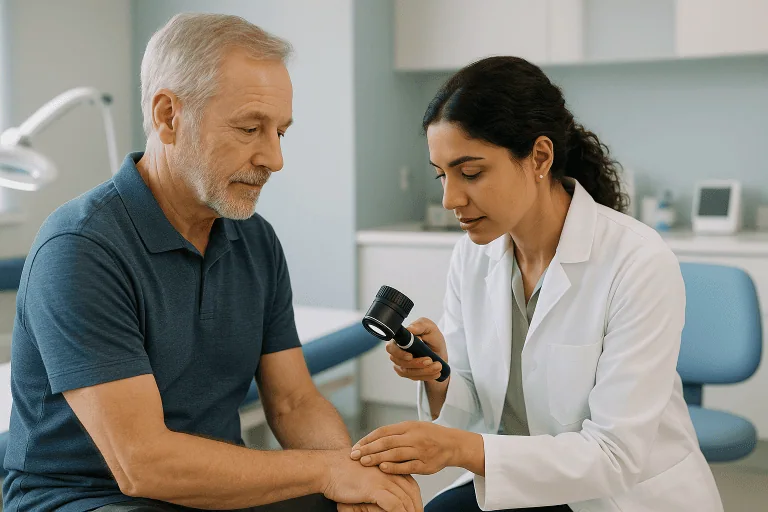
Eczema diagnosis is usually clinical, meaning doctors confirm it mainly by examining the skin and asking about your health history rather than by running a single definitive test. There is no blood test or scan that proves someone has eczema on its own.
During the evaluation, a doctor, often a dermatologist (a physician who specializes in skin conditions), will typically:
- Examine the skin, looking at the appearance, texture, and distribution of the rash
- Ask about your symptoms, including when the itching and rash started, how they behave over time, and what seems to make them better or worse
- Review your personal and family history of eczema, asthma, hay fever, and allergies
- Ask about exposures such as soaps, cosmetics, occupational chemicals, jewelry, and new products, which can point toward irritant or allergic contact dermatitis
Doctors often use established clinical criteria for atopic dermatitis, which generally require the presence of itching plus a typical rash pattern and history features such as early age of onset, dry skin, and a personal or family history of atopic conditions.
In some situations, additional tests may be used, mainly to identify triggers or rule out other conditions:
- Patch testing. Small amounts of common allergens are applied to the skin under adhesive patches for about two days to check for allergic contact dermatitis, a form of eczema caused by a delayed allergic reaction to a substance touching the skin.
- Allergy testing. Skin prick tests or blood tests that measure allergy-related antibodies may be considered when allergies to foods or airborne substances are suspected as triggers, though results must be interpreted carefully.
- Skin swabs or scrapings. If infection is suspected, a sample may be taken to identify bacteria, viruses, or fungi. A scraping can also help exclude fungal infections such as ringworm, which can look similar to eczema.
- Skin biopsy. Rarely, a small sample of skin is removed and examined under a microscope when the diagnosis is uncertain, mainly to rule out conditions such as psoriasis or other skin diseases.
Imaging tests such as X-rays or scans are not used to diagnose eczema. At many hospitals, including those in the Acibadem group, eczema is evaluated and managed within the dermatology department.
Treatment options for eczema
Eczema treatment aims to relieve itching, calm inflammation, repair and protect the skin barrier, and prevent flare-ups and infections. Because eczema is a long-term condition for many people, treatment is usually an ongoing plan rather than a one-time fix, and it is adjusted according to how severe the symptoms are.
Daily skin care and self-management
Good skin care is the foundation of all eczema treatment, regardless of severity:
- Moisturizers (emollients). Applying a fragrance-free moisturizer generously and regularly, often several times a day and especially after bathing, helps restore the skin barrier and reduce dryness and itching.
- Gentle bathing. Short, lukewarm baths or showers with mild, fragrance-free cleansers are usually recommended, followed by patting the skin dry and moisturizing promptly.
- Trigger avoidance. Reducing exposure to known personal triggers, such as harsh soaps, wool, or overheating, can help prevent flares.
For very mild eczema, this careful skin care combined with a period of monitoring, a form of watchful waiting, may be enough, with medications added only if symptoms persist or worsen.
Topical medications
- Topical corticosteroids. These anti-inflammatory creams and ointments are the most commonly prescribed eczema treatment for flare-ups. They come in different strengths, and doctors match the strength to the severity of the eczema and the body area being treated. Used correctly, they are generally safe; overuse, particularly of stronger products on delicate skin, can cause side effects such as skin thinning, which is why medical guidance matters.
- Topical calcineurin inhibitors. These are non-steroid anti-inflammatory creams and ointments that may be used on sensitive areas such as the face and eyelids, or for longer-term maintenance.
- Other topical medications. Additional non-steroid prescription creams are available in some countries and may be options for certain patients; your doctor can explain what is appropriate for you.
Treating itch and infection
- Antihistamines. Sedating antihistamines are sometimes used short term at night to help with sleep disrupted by itching, although they do not treat the eczema itself.
- Antibiotics, antivirals, or antifungals. If the skin becomes infected, your doctor may prescribe medication to treat the infection alongside the eczema care.
- Wet wrap therapy. For significant flares, damp bandages may be applied over moisturizer or medication to soothe the skin and improve absorption, usually under medical guidance.
Treatments for moderate to severe eczema
- Phototherapy. This procedure uses controlled doses of ultraviolet light, given in a medical setting over a series of sessions, to reduce inflammation in the skin. It may be considered when creams alone are not enough.
- Systemic medications. For severe eczema, doctors may prescribe medicines that work throughout the body, including immunosuppressants (drugs that dampen the immune system) and newer targeted therapies such as biologic injections or oral medications that block specific inflammation pathways. These require monitoring and are prescribed and supervised by specialists.
Surgery is not a treatment for eczema; the condition is managed with skin care, medications, and procedures such as phototherapy rather than operations. More detail about how this condition is managed in a hospital setting is available on the Acibadem eczema treatment page.
Because eczema differs so much between individuals, the best plan is the one developed with your own doctor, who can take your age, skin type, symptom severity, and medical history into account.
Living with eczema and outlook
Eczema is a chronic (long-lasting) condition for many people, but its course is highly variable. Many children see their symptoms improve considerably or resolve as they grow older, although their skin may remain somewhat dry and sensitive. Others continue to have flare-ups into adulthood, and some adults develop eczema for the first time later in life. Honest medical advice acknowledges that no one can promise the condition will disappear permanently.
The encouraging reality is that eczema can usually be controlled well. Consistent moisturizing, sensible bathing habits, trigger awareness, and appropriate use of prescribed treatments allow many people to keep symptoms mild and flares infrequent. Practical steps that often help in daily life include:
- Keeping nails short and, for young children, using mittens at night to limit scratching damage
- Choosing soft, breathable fabrics such as cotton and avoiding rough materials
- Using a humidifier in dry indoor air, particularly in winter
- Managing stress with techniques that work for you, since stress is a common flare trigger
- Keeping a simple diary of flares to help identify personal triggers
Eczema can affect emotional well-being. Persistent itching disturbs sleep, and visible rashes can cause embarrassment or anxiety for some people. If eczema is affecting your mood, sleep, work, or relationships, it is reasonable to raise this with your doctor, because better skin control and, where needed, additional support can improve quality of life.
Frequently asked questions
What is eczema in simple terms?
Eczema is an inflammatory skin condition that makes the skin dry, itchy, and prone to red or discolored, scaly rashes. It happens when the skin’s protective barrier is weakened and the immune system overreacts to irritants and allergens. It most often refers to atopic dermatitis and is not contagious, so it cannot be passed from person to person.
Can eczema be cured or heal completely?
There is currently no permanent cure for eczema. However, many children improve or outgrow it over time, and in people of all ages symptoms can often be well controlled with regular skin care and appropriate eczema treatment. Even during long symptom-free periods, the skin may remain sensitive, so gentle care usually remains worthwhile.
How serious is eczema?
For most people, eczema is not life-threatening, but its seriousness varies. Mild cases cause occasional dryness and itching, while severe cases can involve widespread rashes, broken skin, infections, and significant sleep loss. Rarely, complications such as extensive skin infections need urgent care. If eczema is interfering with your daily life, it deserves proper medical attention rather than being dismissed as “just a rash.”
What triggers eczema flare-ups most often?
Common triggers include dry or cold air, harsh soaps and detergents, fragrances, wool and rough fabrics, sweating, stress, and allergens such as dust mites, pollen, and pet dander. In some people, particularly young children, certain foods may play a role. Triggers differ from person to person, so identifying your own pattern, sometimes with a doctor’s help, is one of the most useful steps in prevention.
How do doctors diagnose eczema?
Eczema diagnosis is based mainly on a physical examination of the skin and a detailed discussion of your symptoms, triggers, and personal and family history of allergic conditions. There is no single confirmatory test. Doctors may sometimes use patch testing, allergy tests, skin swabs, or rarely a small skin biopsy, mostly to identify triggers or rule out conditions that can look similar.
Is eczema contagious?
No. Eczema cannot be spread through skin contact, sharing towels, or any other form of exposure to an affected person. It develops from a combination of genetic and environmental factors within the individual. However, eczema-affected skin can sometimes become infected, and certain infections on that skin can be transmissible, which is one reason infected-looking eczema should be checked by a doctor.
How long does it take for eczema to clear up with treatment?
This varies widely. A mild flare may settle within days to a couple of weeks with moisturizers and a prescribed anti-inflammatory cream, while more severe or long-standing eczema can take longer and may need stronger or additional treatments. Because eczema tends to come and go, ongoing maintenance care is often needed even after the visible rash improves. Your doctor can give you a realistic expectation based on your situation.
When to see a doctor
It is reasonable to see a doctor whenever a rash is persistent, worsening, or affecting your sleep or daily life, or when over-the-counter moisturizers and gentle skin care are not enough. Seek medical advice promptly if you notice any of the following warning signs:
- Signs of skin infection: increasing pain, warmth, swelling, pus, honey-colored crusting, or red streaks spreading from the rash
- Fever or feeling generally unwell alongside a worsening rash
- Clusters of painful blisters or punched-out sores, especially in someone with eczema who has been exposed to cold sores, as this can indicate a serious viral skin infection (eczema herpeticum) that needs urgent treatment
- Rapidly spreading or widespread rash covering large areas of the body
- Eczema near the eyes causing swelling, pain, or changes in vision
- Severe itching that prevents sleep night after night, in adults or children
- A rash in an infant that is weeping, crusted, or accompanied by poor feeding or fever
- No improvement after using treatments as prescribed, or symptoms that keep returning quickly after treatment stops
A doctor can confirm whether your symptoms are due to eczema or another condition, identify likely triggers, and build a treatment plan suited to your skin and lifestyle. Early, consistent care often prevents small flares from becoming larger problems.
Medically reviewed by the Acıbadem International Medical Board September 2, 2026
See our medical review board →
Update history
- PublishedJune 14, 2026
- Medical review approvedSeptember 2, 2026
- Last content updateSeptember 2, 2026