Folliculitis
Folliculitis is an inflammation of hair follicles that causes small red or pus-filled bumps. Learn about symptoms, causes, diagnosis and treatment.
Quick answer
Folliculitis is inflammation of hair follicles, the small pockets in the skin from which hairs grow. It typically causes clusters of small red or pus-filled bumps that may itch or feel tender. Bacterial infection, ingrown hairs, friction, and yeast are common causes. Mild cases often clear on their own; persistent cases may need medication.
What is folliculitis?
Folliculitis is inflammation of one or more hair follicles. A hair follicle is the tiny pocket in the skin from which each hair grows. When a follicle becomes irritated, blocked, or infected, the skin around it can become red, swollen, tender, and sometimes filled with pus. The result is a small bump that can look a lot like a pimple, often with a hair visible in the center.
Folliculitis can occur almost anywhere on the body where hair grows, but it is most common on the scalp, face, neck, chest, back, buttocks, thighs, and armpits. It does not occur on the palms of the hands or soles of the feet, because these areas do not have hair follicles.
People of any age, sex, or skin type can develop folliculitis. It is very common, and in many cases it is mild and clears on its own within a few days to a couple of weeks. Some people, however, experience repeated episodes or a longer-lasting form. Understanding what is folliculitis, why it happens, and how it is managed can help you recognize it early and know when medical advice is sensible.
Folliculitis symptoms
Folliculitis symptoms vary depending on how deep the inflammation goes and what is causing it. Most people notice one or more of the following:
- Clusters of small red or pink bumps around hair follicles
- Bumps filled with white or yellow pus (these are sometimes called pustules)
- A hair visible in the center of some bumps
- Itching, stinging, or burning of the affected skin
- Tenderness or mild pain when the area is touched
- Crusting after a bump breaks open
- Skin that feels rough or looks like a rash
Doctors often divide folliculitis into two broad groups. Superficial folliculitis affects only the upper part of the follicle. It usually causes small, itchy bumps and pustules that heal without leaving marks. Deep folliculitis involves the whole follicle and the surrounding tissue. It can produce larger, painful, swollen lumps. When a deep infection forms a single large pus-filled lump, it is called a boil (furuncle). A group of connected boils is called a carbuncle. Deep folliculitis is more likely to leave scars or dark spots after healing.
Symptoms can also differ by type. For example, folliculitis linked to poorly maintained hot tubs often appears as an itchy, bumpy rash on areas that were covered by a swimsuit, typically one to two days after exposure. Folliculitis from shaving tends to appear along the beard line, neck, legs, or bikini area shortly after hair removal. Some forms caused by yeast appear as small, uniform, very itchy bumps on the chest, back, or upper arms.
Causes and risk factors
The most common of the folliculitis causes is bacterial infection. The bacterium usually involved is Staphylococcus aureus (often shortened to "staph"), which lives harmlessly on the skin of many people but can enter a follicle through a small break in the skin. Other causes include:
- Other bacteria, such as Pseudomonas, which can thrive in warm water that is not adequately chlorinated (the source of so-called "hot tub folliculitis")
- Fungi and yeasts, including the yeast Malassezia that naturally lives on the skin and sometimes overgrows
- Viruses, less commonly, such as the herpes simplex virus
- Ingrown hairs, where a hair curls back into the skin after shaving or waxing and triggers inflammation
- Physical blockage or friction from tight clothing, sports equipment, heavy creams, or oils
- Non-infectious inflammation, such as the type seen in some people with weakened immune systems or as a reaction to certain medications
Certain situations make folliculitis more likely. Common risk factors include:
- Frequent shaving, waxing, or plucking, especially against the direction of hair growth
- Curly or coarse hair, which is more prone to becoming ingrown
- Wearing tight or non-breathable clothing that traps sweat and heat
- Heavy sweating, hot humid climates, or occupations that involve prolonged contact with oils and greases
- Using hot tubs, whirlpools, or pools that are not properly maintained
- Existing skin conditions such as acne or eczema (dermatitis) that damage the skin barrier
- A weakened immune system, for example from diabetes, HIV, cancer treatment, or long-term steroid use
- Recent use of antibiotics, which can allow yeast or resistant bacteria to become more prominent
- Being overweight, which increases skin folds where moisture and friction build up
It is worth noting that many people develop folliculitis without any obvious risk factor. Having one or more of these factors does not mean you will definitely develop the condition, and not having any does not rule it out.
Folliculitis diagnosis
In most cases, folliculitis diagnosis is made clinically. This means a doctor can usually identify it by looking at the affected skin and asking about your symptoms, recent activities, and medical history. Questions may cover recent shaving or hair removal, hot tub use, new skin products, medications, and whether you have had similar episodes before.
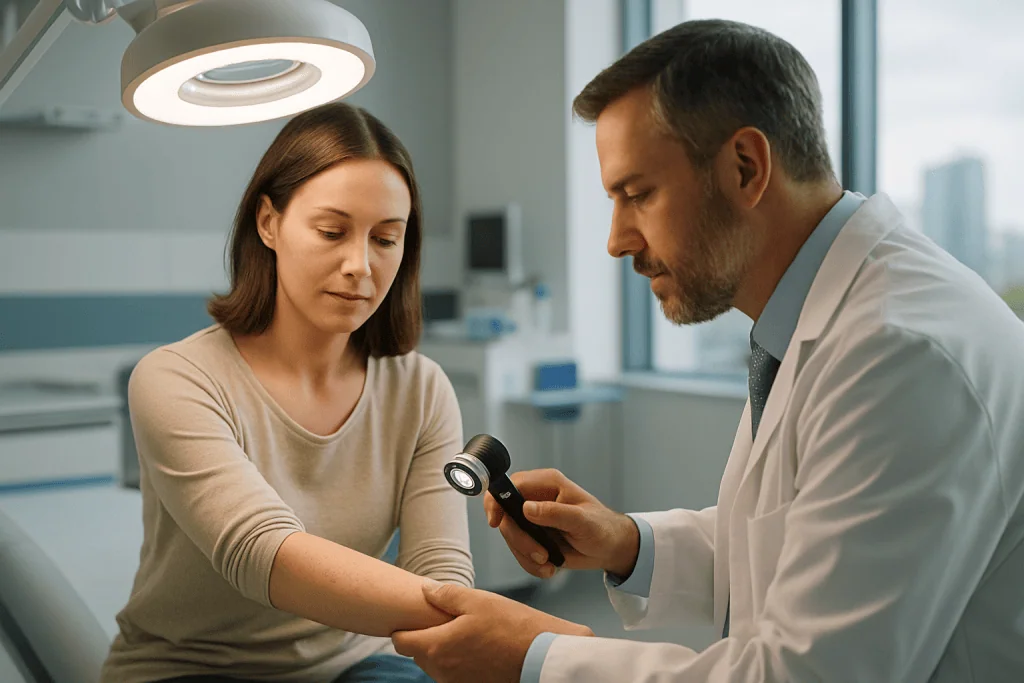
The doctor may use a handheld magnifying device called a dermatoscope to look more closely at the bumps and confirm that they are centered on hair follicles. This helps distinguish folliculitis from other conditions that can look similar, such as acne, keratosis pilaris (a harmless roughness caused by keratin plugs), heat rash, insect bites, or an allergic skin reaction.
Additional tests are not usually needed for mild, first-time cases. Your doctor may recommend them if the condition is severe, keeps returning, does not respond to initial treatment, or if the cause is unclear. Possible tests include:
- Bacterial swab and culture: a sample of pus or fluid is taken from a bump and sent to a laboratory to identify the germ responsible and check which antibiotics it responds to
- Fungal scraping or culture: a small sample of skin is examined for yeast or fungus
- Skin biopsy: a tiny piece of skin is removed under local anesthetic and examined under a microscope; this is reserved for persistent or unusual cases
- Blood tests: occasionally used to check for underlying conditions such as diabetes or immune problems when folliculitis is recurrent or widespread
Imaging tests such as X-rays or scans are not part of a standard folliculitis assessment, because the condition is confined to the skin. Folliculitis is usually managed in a dermatology setting; at Acibadem, the Dermatology department handles evaluation and care of hair follicle and skin infections.
Folliculitis treatment options
Folliculitis treatment options depend on the cause, how deep and widespread the inflammation is, and whether it keeps coming back. Many mild cases need little more than time and simple self-care. More stubborn or severe cases may require medication, and in a small number of cases a minor procedure.
Observation and self-care
For mild superficial folliculitis, doctors often suggest a period of watchful waiting combined with home measures. These may include applying a warm, moist cloth to the area several times a day to ease discomfort and encourage drainage, washing gently with a mild soap or an antibacterial cleanser, avoiding shaving the affected area until it has healed, and wearing loose, breathable clothing. Over-the-counter anti-itch creams or oral antihistamines may help with itching. It is generally advised not to squeeze or pick at the bumps, because this can push infection deeper and increase the risk of scarring.
Medications
If self-care is not enough, your doctor may prescribe medication based on the likely cause:
- Topical antibiotics, applied as a cream, gel, or lotion, are commonly used for bacterial folliculitis limited to a small area
- Oral antibiotics may be recommended for deeper, more widespread, or recurrent bacterial infection; the choice may be guided by culture results
- Antifungal treatments, in the form of shampoos, creams, or tablets, are used when yeast or fungus is the cause
- Antiviral medication is used in the uncommon cases caused by a virus
- Mild corticosteroid creams are sometimes prescribed for short periods to reduce inflammation and itching in non-infectious forms
- Oral retinoids or other longer-term medicines may be considered by a dermatologist for severe, persistent folliculitis that has not responded to other approaches
All medications carry potential side effects, and antibiotics should be used only when a doctor judges they are needed, to reduce the risk of resistance.
Procedures
Large, painful boils or carbuncles that do not drain on their own may need a minor procedure called incision and drainage. The doctor numbs the area, makes a small cut, and releases the pus. This is usually done in a clinic and does not require a hospital stay. For people with recurrent folliculitis caused by ingrown hairs, laser hair removal may be discussed as a longer-term option. It works by reducing hair growth in the affected area, although it usually requires several sessions and results vary from person to person.
Surgery and rehabilitation
Surgery is not a standard treatment for folliculitis. It is generally considered only for complications such as very large abscesses or, rarely, for scarring conditions of the scalp. Rehabilitation in the traditional sense is not needed, but follow-up visits may be arranged to check that the infection has cleared and to address any scarring or skin discoloration.
Living with folliculitis and outlook
The outlook for most people with folliculitis is good. Superficial folliculitis usually clears within one to two weeks, often without leaving any lasting marks. Deeper infections can take longer to heal and may leave small scars or areas of darker or lighter skin, particularly in people with darker skin tones. These marks often fade gradually over months, though they do not always disappear completely.
Some people find that folliculitis returns from time to time, especially if a trigger such as shaving, sweating, or tight clothing is hard to avoid. In these cases, the focus shifts toward managing triggers and treating flare-ups early. Practical steps that many people find helpful include:
- Shaving less often, using a clean sharp razor, shaving in the direction of hair growth, and rinsing the blade after each stroke
- Considering electric trimmers or alternative hair removal methods if razor shaving repeatedly causes problems
- Showering soon after heavy exercise and changing out of sweaty clothing
- Avoiding sharing towels, razors, or washcloths
- Only using hot tubs and pools that appear clean and well maintained
- Keeping any underlying condition, such as diabetes, under good control with your doctor’s help
Chronic or recurrent folliculitis can be frustrating and may affect confidence, particularly when it involves visible areas such as the face or scalp. If it is having an impact on your daily life, this is a reasonable thing to raise with your doctor, as longer-term management strategies are available.
Frequently asked questions
What is folliculitis and is it contagious?
Folliculitis is inflammation of hair follicles, most often caused by bacteria, yeast, or irritation from hair removal. Most forms are not considered highly contagious. However, infectious types caused by bacteria such as staph can, in some cases, spread to other parts of your own body or to other people through direct skin contact or shared items like razors and towels. Good hygiene reduces this risk.
What are the first folliculitis symptoms to look for?
The earliest folliculitis symptoms are usually small red bumps or pus-filled spots around hair follicles, often accompanied by itching or mild tenderness. They frequently appear in areas that have been shaved, rubbed, or exposed to heat and sweat. If the bumps enlarge, become very painful, or are accompanied by fever, this suggests a deeper infection that should be assessed by a doctor.
What are the most common folliculitis causes?
The single most common cause is infection with Staphylococcus aureus bacteria that enter follicles through tiny breaks in the skin. Other frequent causes include ingrown hairs after shaving or waxing, friction from tight clothing, exposure to poorly chlorinated hot tubs, and overgrowth of yeast on the skin. In some people, no specific cause is found.
How is folliculitis diagnosis made without tests?
Doctors can usually recognize folliculitis by its typical appearance: small bumps centered on hair follicles, often with a hair in the middle. They will also ask about recent shaving, hot tub use, and other possible triggers. Laboratory tests such as swabs or cultures are generally reserved for cases that are severe, recurrent, or not responding to standard care.
What are the main folliculitis treatment options at home?
For mild cases, home care often includes warm compresses, gentle cleansing, avoiding shaving the area, and wearing loose clothing. Over-the-counter anti-itch products may ease discomfort. If the bumps do not improve within a week or two, or if they worsen, your doctor may recommend prescription creams or oral medication.
Can folliculitis leave scars?
Superficial folliculitis usually heals without scarring. Deeper forms, including boils, can leave small scars or changes in skin color, particularly if the bumps are squeezed or picked. These marks often fade over time, though not always completely. Early treatment and avoiding manipulation of the bumps may reduce this risk.
Does folliculitis go away on its own?
In many cases, yes. Mild folliculitis frequently resolves within a few days to two weeks without specific treatment. Persistent, spreading, or painful folliculitis is less likely to clear on its own and may need medication. A doctor can help determine which situation applies to you.
When to see a doctor
Most cases of folliculitis are mild and can be managed at home. However, it is sensible to seek medical advice if the condition is widespread, keeps returning, or has not improved after about a week of self-care. You should seek prompt medical attention if you notice any of the following warning signs:
- Fever, chills, or feeling generally unwell alongside the skin bumps
- Rapidly spreading redness, warmth, or swelling around the affected area
- Red streaks extending from a bump, which can indicate infection spreading through the lymph channels
- A large, very painful lump or boil that is growing or not draining
- Severe pain out of proportion to the appearance of the skin
- Folliculitis on the face near the eyes or nose that is worsening
- Symptoms in someone with diabetes, a weakened immune system, or who is taking medication that suppresses immunity
- Recurrent episodes despite treatment, or bumps that leave persistent scars or hair loss
A doctor can confirm the diagnosis, rule out conditions that look similar, and recommend the most appropriate treatment for your situation.
Medically reviewed by the Acıbadem International Medical Board September 9, 2026
See our medical review board →
Update history
- PublishedSeptember 9, 2026
- Medical review approvedSeptember 9, 2026
- Last content updateSeptember 9, 2026