Neurofibromatosis
Neurofibromatosis is a genetic condition that causes nerve-related tumors and skin, eye, hearing, bone or learning problems.
Quick answer
Neurofibromatosis is a genetic condition that causes tumors to grow along nerves and can also affect the skin, bones, eyes, and nervous system. In Turkey, Acibadem manages neurofibromatosis with specialist evaluation, imaging, genetic assessment, and individualized treatment such as monitoring, symptom control, surgery, or other supportive care depending on the type and extent of disease.
What is neurofibromatosis?
Neurofibromatosis is the name for a group of genetic conditions that cause tumors to grow along nerves. In most cases these tumors are benign, which means they are not cancer, but they can still cause health problems depending on where they grow and how large they become. Understanding what is neurofibromatosis begins with knowing that it is not a single disease. Doctors recognize several types, and the two most widely known are neurofibromatosis type 1 (often shortened to NF1) and neurofibromatosis type 2 (NF2). A third, rarer condition called schwannomatosis is closely related.
Neurofibromatosis type 1 is the most common form. It usually appears in childhood and often causes changes in the skin, such as light brown patches, along with soft lumps called neurofibromas, which are tumors that grow from the cells that surround nerves. Neurofibromatosis type 2 is much less common. It typically causes tumors on the nerves responsible for hearing and balance, and symptoms often first appear in the teenage years or early adulthood.
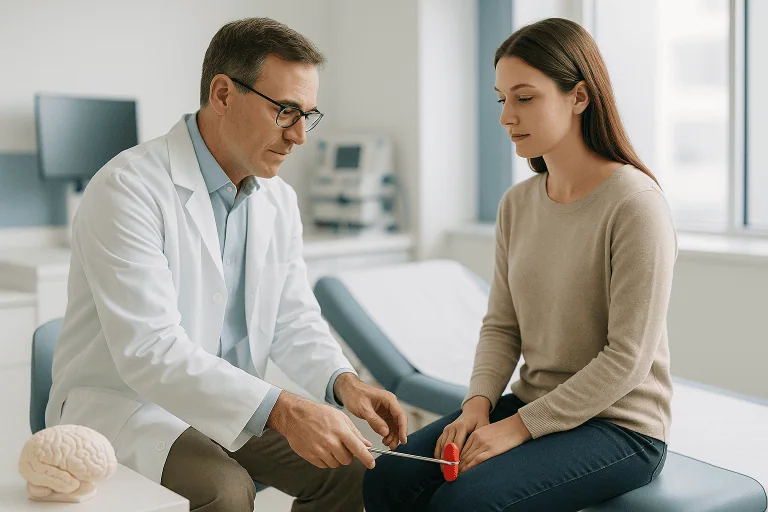
Neurofibromatosis affects people of all backgrounds and both sexes. It is a lifelong condition. There is currently no cure, but many people with the condition live full lives, and treatments exist to manage symptoms and complications. Because the condition can involve the skin, nerves, bones, eyes, and hearing, care is often shared among several specialists, with a neurologist (a doctor who focuses on the brain and nervous system) frequently coordinating care.
Symptoms of neurofibromatosis
Neurofibromatosis symptoms vary widely from person to person, even within the same family. Some people have only mild skin changes and never develop serious problems, while others experience complications that affect vision, hearing, movement, or learning. Symptoms also differ depending on the type of neurofibromatosis a person has.
Common symptoms of neurofibromatosis type 1
- Café-au-lait spots: flat, light brown patches on the skin. Many healthy people have one or two, but having six or more is a hallmark of NF1. These often appear in infancy or early childhood.
- Freckling in unusual places: small freckle-like spots in the armpits or groin, areas where ordinary sun-related freckles do not usually appear.
- Neurofibromas: soft, painless lumps on or under the skin. They often become more noticeable during the teenage years and may increase in number over time.
- Lisch nodules: tiny, harmless bumps on the colored part of the eye (the iris). They do not affect vision but help doctors confirm the diagnosis.
- Bone changes: such as curvature of the spine (scoliosis) or bowing of the lower leg, which can appear in early childhood.
- Larger head size: some children with NF1 have a head circumference above average, which by itself is usually not harmful.
- Learning differences: learning difficulties and attention problems are common in children with NF1, though intelligence is usually in the normal range.
Common symptoms of neurofibromatosis type 2
- Gradual hearing loss, often in both ears, caused by tumors on the hearing and balance nerves (these tumors are called vestibular schwannomas).
- Ringing in the ears (tinnitus).
- Balance problems or dizziness.
- Headaches, facial numbness, or facial weakness if tumors press on nearby nerves.
- Early cataracts, a clouding of the lens of the eye, which can occur at a younger age than usual.
How symptoms change over time
In NF1, symptoms often follow a rough pattern by age. Café-au-lait spots are usually the first sign and may be present at birth or appear in the first years of life. Freckling in the armpits or groin tends to develop in early childhood. Skin neurofibromas commonly appear around puberty and may increase during pregnancy or with age. Some children with NF1 develop a tumor on the nerve of the eye called an optic pathway glioma, which is usually slow growing but can sometimes affect vision, so regular eye exams in childhood are important.
A less common type of tumor in NF1, called a plexiform neurofibroma, involves multiple nerve branches and can grow large, sometimes causing pain, disfigurement, or pressure on nearby structures. In a small proportion of people, a plexiform neurofibroma can change over time into a cancerous tumor. New, persistent pain or rapid growth in an existing lump should always be checked by a doctor.
In NF2, symptoms usually begin later, most often in the late teens or twenties, and hearing-related problems tend to dominate the picture. In schwannomatosis, chronic pain is often the main symptom, and hearing is usually not affected.
Causes and risk factors
Neurofibromatosis causes come down to changes, called mutations, in specific genes. Genes are instructions inside our cells that tell the body how to grow and function. In NF1, the change is in a gene called NF1, which normally helps control cell growth along nerves. When this gene does not work properly, nerve-sheath cells can multiply more than they should, forming tumors. NF2 is caused by changes in a different gene, called NF2, which plays a similar growth-controlling role.
There are two main ways a person can develop neurofibromatosis:
- Inherited from a parent: Neurofibromatosis follows what geneticists call an autosomal dominant pattern. In plain terms, this means that a parent who has the condition has roughly a one-in-two chance of passing it on to each child.
- A new (spontaneous) gene change: In roughly half of cases, the gene change happens for the first time in the affected person, with no family history at all. This is not caused by anything the parents did or did not do.
The main risk factor is therefore having a parent with the condition. Lifestyle, diet, infections, and environmental exposures are not known to cause neurofibromatosis. Because the condition is genetic and present from birth, it cannot be prevented, but genetic counseling (a discussion with a specialist about inherited conditions and family planning) can help affected families understand their options.
It is also worth knowing that the severity of the condition does not reliably pass from parent to child. A parent with mild symptoms can have a child with more significant complications, and the reverse is also true.
Diagnosis
Neurofibromatosis diagnosis is usually based on a combination of a careful physical examination, the person’s medical and family history, and, when needed, imaging and genetic testing. For NF1 in particular, doctors use well-established clinical criteria, meaning a checklist of characteristic findings. A diagnosis of NF1 is generally made when a person has two or more of the following features:
- Six or more café-au-lait spots of a certain size.
- Freckling in the armpits or groin.
- Two or more neurofibromas, or one plexiform neurofibroma.
- Lisch nodules on the iris, or certain eye findings identified by an eye specialist.
- An optic pathway glioma (tumor of the visual nerve pathway).
- Characteristic bone changes, such as bowing of the shin bone.
- A parent, sibling, or child with confirmed NF1.
- A confirmed change in the NF1 gene on genetic testing.
Tests and evaluations that may be part of the diagnostic process include:
- Skin examination, sometimes with a special lamp that makes light brown patches easier to see.
- Eye examination by an ophthalmologist (eye doctor), including a check for Lisch nodules and an assessment of vision.
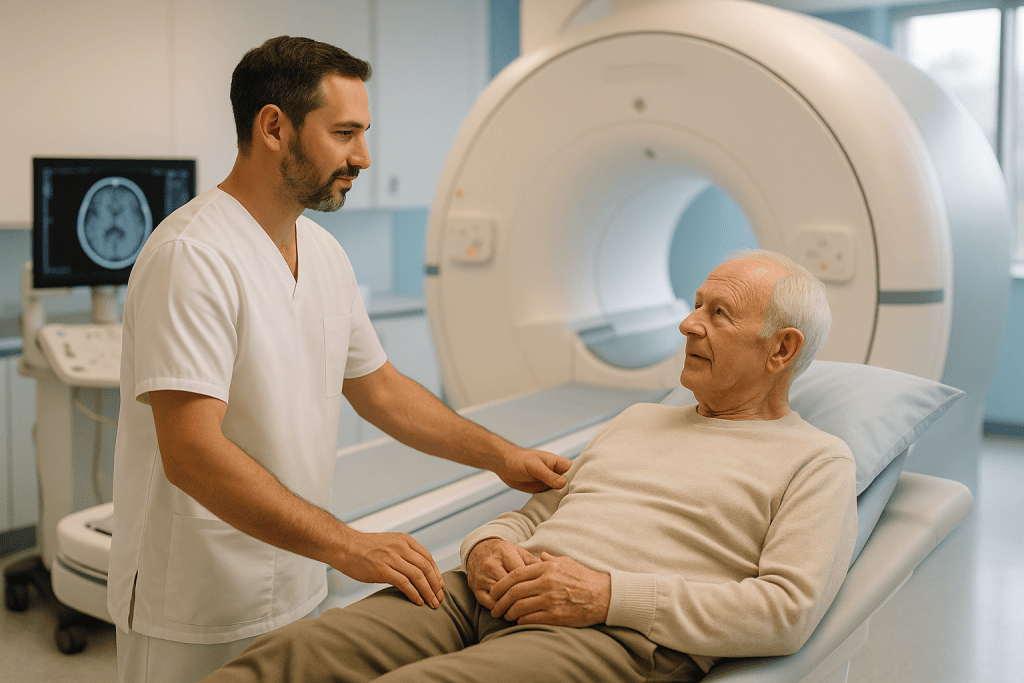
- Magnetic resonance imaging (MRI), a scan that uses magnets rather than radiation to create detailed pictures of the brain, spine, or other areas. MRI is especially important in NF2 to look for tumors on the hearing and balance nerves.
- Hearing tests (audiometry) when NF2 is suspected or hearing symptoms are present.
- Genetic testing, a blood test that looks for changes in the NF1 or NF2 gene. This can confirm the diagnosis, help distinguish between types, and inform family planning, though it is not always required when the clinical picture is clear.
- Biopsy, the removal of a small tissue sample for laboratory examination, in selected cases where a tumor’s nature is uncertain.
Because some features of NF1 appear gradually during childhood, a definite diagnosis may take time in a young child who initially has only café-au-lait spots. Doctors may recommend regular follow-up visits to watch for other signs before confirming the diagnosis.
Treatment options
There is currently no treatment that can correct the underlying gene change, so neurofibromatosis treatment focuses on monitoring the condition, managing symptoms, and addressing complications when they arise. Care is usually individualized, because the condition affects each person differently. Many people are followed by a multidisciplinary team, and specialty departments such as neurology often play a central role in coordinating this care; at hospitals such as Acibadem, neurofibromatosis is typically managed through such multidisciplinary teams.
Watchful waiting and regular monitoring
For many people, especially those with mild disease, the main approach is careful observation. This usually includes regular physical examinations, annual eye checks in children with NF1, monitoring of blood pressure (which can be affected in NF1), assessment of growth and spine development in children, and periodic hearing tests or MRI scans in people with NF2. Monitoring allows doctors to detect changes early, when problems are usually easier to manage.
Medication
In recent years, a class of medicines known as MEK inhibitors has been approved in a number of countries for certain children with NF1 who have plexiform neurofibromas that cannot be safely removed by surgery. These medicines can shrink or slow the growth of such tumors in many cases, though they do not cure the condition and can have side effects that require monitoring. Other medications may be used to manage specific symptoms, such as pain medicines for nerve-related pain or standard treatments for high blood pressure, headaches, or attention difficulties. Your doctor may also refer you to a pain specialist if chronic pain is a significant problem, as is common in schwannomatosis.
Surgery and procedures
Surgery may be considered when a tumor causes pain, presses on important structures, affects function, or is suspected of becoming cancerous. Skin neurofibromas can be removed if they are painful, catch on clothing, or cause significant distress, although new ones may still develop elsewhere. Plexiform neurofibromas are more challenging to remove because they weave through nerve tissue, and surgery is planned carefully to protect nerve function. In NF2, surgery or, in selected cases, focused radiation treatment may be used for tumors on the hearing and balance nerves; decisions weigh the tumor’s size and growth against the risks to hearing and facial nerve function. Orthopedic surgery may be needed for significant scoliosis or leg bone problems in children with NF1.
Supportive therapies
Treatment often extends beyond tumors themselves. Children with learning differences may benefit from educational support and, where appropriate, evaluation for attention difficulties. Hearing rehabilitation, including hearing aids or specialized implants in some cases of NF2, can help maintain communication. Physical therapy can support balance and mobility, and psychological support can help people cope with the visible and unpredictable aspects of the condition. Genetic counseling is commonly offered to affected individuals and their families.
Cancer surveillance
Although most tumors in neurofibromatosis are benign, people with NF1 have a somewhat higher lifetime chance of developing certain cancers than the general population. For this reason, doctors take new or changing symptoms seriously, particularly rapid growth of a lump, persistent pain, or new neurological problems such as weakness or numbness. Prompt evaluation of such changes is an important part of long-term care.
Living with neurofibromatosis and outlook
The outlook for people with neurofibromatosis varies considerably. Many people with NF1 have mild disease, remain in good general health, and have a lifespan close to that of the general population, although serious complications can shorten life expectancy in some cases. People with NF2 often face more predictable challenges related to hearing and balance, and long-term follow-up with an experienced team is important.
Living well with neurofibromatosis usually involves a few consistent habits: attending scheduled check-ups even when feeling well, reporting new lumps, pain, vision changes, or hearing changes without delay, and keeping a personal record of findings over time so that changes are easier to spot. For children, coordination between the medical team and the school can help address learning needs early. Because visible skin tumors can affect self-image, emotional and psychological support is a legitimate and valuable part of care, not an afterthought.
Family planning is another common concern. Because each child of an affected parent has roughly a one-in-two chance of inheriting the condition, many families choose to speak with a genetic counselor before or during pregnancy to understand testing options. It is honest to say that no one can predict how severe the condition will be in any individual, but it is equally honest to say that many people with neurofibromatosis study, work, form families, and lead active lives.
Frequently asked questions
What is neurofibromatosis in simple terms?
Neurofibromatosis is a genetic condition in which tumors, usually benign, grow along nerves. The most common form, NF1, often shows up in childhood as light brown skin patches and soft lumps on or under the skin. A rarer form, NF2, mainly affects the nerves for hearing and balance. The condition is caused by a change in a gene and is present from birth, even if signs appear later.
Can neurofibromatosis be cured or heal on its own?
No. There is currently no cure for neurofibromatosis, and it does not go away on its own, because the underlying gene change is present in the body’s cells for life. However, treatments can manage symptoms and complications, some medicines can shrink certain tumors in many cases, and regular monitoring helps catch problems early. Many people with mild disease need little more than routine follow-up.
How serious is neurofibromatosis?
Severity ranges from very mild to significant, and it cannot be reliably predicted in advance, even within the same family. Many people with NF1 experience mainly cosmetic skin changes, while a smaller number develop complications affecting vision, bones, blood pressure, or, rarely, cancer. NF2 more often leads to hearing loss over time. Regular check-ups are the best way to keep track of how the condition is behaving in any individual.
Is neurofibromatosis a type of cancer?
Neurofibromatosis itself is not cancer. The tumors it causes are usually benign, meaning they do not spread through the body the way cancer does. That said, people with NF1 have a somewhat increased chance of developing certain cancers during their lifetime, so doctors monitor for warning signs such as rapid growth of a lump or new, persistent pain, and investigate these promptly.
Are neurofibromatosis symptoms always visible on the skin?
Not always. Skin findings such as café-au-lait spots and neurofibromas are typical of NF1, but NF2 often has few or no skin signs and instead causes hearing loss, ringing in the ears, or balance problems. Even in NF1, some important features, such as tumors on the optic nerve or spine, are internal and can only be detected through eye exams or imaging. This is one reason routine specialist follow-up matters.
Will my child inherit neurofibromatosis?
If a parent has neurofibromatosis, each child has approximately a one-in-two chance of inheriting the gene change. However, about half of all people with the condition have no affected parent at all; their gene change arose spontaneously. A genetic counselor can explain testing options and what a result would and would not tell you about how severe the condition might be.
What does recovery look like after surgery for a neurofibroma?
Recovery depends on the size and location of the tumor and the type of operation. Removal of a small skin neurofibroma is often a minor procedure with a short recovery, while surgery on tumors near major nerves, the spine, or the hearing nerves is more complex and may involve a hospital stay and rehabilitation. Your surgical team can explain the expected recovery and the specific risks for your situation, since these vary from case to case.
When to see a doctor
Make an appointment with a doctor if you or your child has six or more café-au-lait spots, freckling in the armpits or groin, multiple soft lumps on or under the skin, gradual hearing loss or persistent ringing in the ears, or a family history of neurofibromatosis with any new symptoms. If you already have a diagnosis, keep your scheduled monitoring visits even when you feel well.
Seek prompt medical attention, without waiting for a routine visit, if any of the following red flags occur:
- A lump that is growing quickly or has changed from soft to hard.
- New, persistent, or worsening pain in or around an existing tumor, especially pain that wakes you at night.
- New weakness, numbness, or tingling in an arm, leg, or the face.
- Sudden or progressive changes in vision, such as blurring, loss of side vision, or a visibly bulging or crossed eye in a child.
- Rapidly worsening hearing loss, severe dizziness, or new facial weakness.
- Severe or unusual headaches, particularly with vomiting, confusion, or seizures, seizures need emergency care.
- Loss of bladder or bowel control, which can signal pressure on the spinal cord and requires urgent evaluation.
- Very high blood pressure readings, or symptoms such as pounding headaches with sweating and a racing heart.
These signs do not necessarily mean something serious is happening, but they should always be evaluated by a medical professional so that any complication of neurofibromatosis can be identified and treated as early as possible.
Medically reviewed by the Acıbadem International Medical Board September 3, 2026
See our medical review board →
Update history
- PublishedJune 8, 2026
- Medical review approvedSeptember 3, 2026
- Last content updateSeptember 2, 2026