Preeclampsia
Preeclampsia is high blood pressure in pregnancy that needs specialist monitoring. Learn symptoms, diagnosis, treatment and when to seek help.

Quick answer
Preeclampsia is a pregnancy-related condition marked by high blood pressure and signs of organ stress, usually after mid-pregnancy, and it requires close monitoring to protect both mother and baby. At Acibadem in Turkey, evaluation includes maternal and fetal assessment, and treatment focuses on blood pressure control, monitoring for complications, and planning the safest timing and method of delivery.
What is preeclampsia?
Preeclampsia is a complication of pregnancy that involves high blood pressure (hypertension) together with signs that one or more organs, most often the kidneys or the liver, are not working normally. It usually develops after the 20th week of pregnancy, although in some cases it appears later in pregnancy, during labor, or even in the first days or weeks after the baby is born. Understanding what is preeclampsia, and how it is monitored and managed, is important for every expectant parent, because the condition can develop quietly and progress quickly.
Preeclampsia affects pregnant people of all ages and backgrounds. It is more common in first pregnancies, in people who had preeclampsia before, in twin or other multiple pregnancies, and in those with certain long-term health conditions such as chronic high blood pressure, diabetes, or kidney disease. However, it can also occur in pregnancies with no obvious risk factors, which is one reason routine prenatal checkups always include blood pressure measurement and, in many settings, urine testing.
The condition exists on a spectrum. Some people have milder forms that can be watched closely, while others develop severe features that threaten the health of both mother and baby. Related conditions include eclampsia, in which preeclampsia progresses to seizures, and HELLP syndrome, a severe variant that affects the blood and the liver. Because preeclampsia can change from stable to serious in a short time, it is managed by obstetric teams with experience in high-risk pregnancy. In hospital groups such as Acibadem, this care is coordinated through the Gynecology & Obstetrics department, often together with specialists in maternal-fetal medicine and, when needed, internal medicine and neonatal care.
Symptoms of preeclampsia
One of the most challenging aspects of this condition is that preeclampsia symptoms can be subtle or completely absent, especially early on. Many people feel entirely well and only learn something is wrong when their blood pressure is checked at a routine prenatal visit. This is why attending all scheduled appointments matters, even when a pregnancy feels normal.
When symptoms do occur, they may include:
- Persistent headache that does not improve with rest or usual pain relief recommended by your doctor.
- Vision changes, such as blurred vision, seeing flashing lights or spots, or temporary loss of vision.
- Pain in the upper abdomen, typically under the ribs on the right side, which can reflect liver involvement.
- Nausea or vomiting that appears in the second half of pregnancy, after early-pregnancy sickness has usually settled.
- Sudden swelling of the face, hands, or feet, or rapid weight gain over a few days caused by fluid retention. Mild swelling is common in normal pregnancy, so this sign is judged together with others.
- Shortness of breath, which can occur if fluid builds up in the lungs.
- Reduced urine output, meaning you pass noticeably less urine than usual.
- A general feeling of being unwell that is new and hard to explain.
Symptoms often differ by stage and severity. In milder preeclampsia, the only findings may be elevated blood pressure and protein in the urine (proteinuria), both detected at checkups rather than felt by the patient. As the condition progresses to what doctors call preeclampsia with severe features, warning signs such as severe headache, visual disturbances, and upper abdominal pain become more likely. In eclampsia, seizures occur, sometimes with little warning. In HELLP syndrome, symptoms may include right-sided upper abdominal pain, nausea, vomiting, and profound fatigue; because these can be mistaken for a stomach bug or heartburn, doctors take such complaints seriously in the second half of pregnancy.
Preeclampsia can also appear after delivery, usually within the first week but occasionally later. Postpartum preeclampsia symptoms are the same red flags: severe headache, vision changes, upper abdominal pain, breathlessness, or marked swelling. New parents are sometimes so focused on the baby that they overlook their own warning signs, so it helps for partners and family members to know them too.
A separate but related concern is the baby. Preeclampsia can reduce blood flow through the placenta, the organ that supplies the baby with oxygen and nutrients. This may lead to slower fetal growth or reduced fetal movements. A noticeable decrease in your baby’s movements should always be reported to your care team promptly.
Causes and risk factors
The exact preeclampsia causes are not fully understood, and research is ongoing. The condition is widely believed to begin with the placenta. In many affected pregnancies, the blood vessels that supply the placenta do not develop or remodel normally in early pregnancy. As a result, the placenta may not receive enough blood flow, and it is thought to release substances into the mother’s circulation that damage the lining of her blood vessels. This vessel dysfunction raises blood pressure and can affect the kidneys, liver, brain, and blood clotting system.
Although the underlying cause cannot usually be pinpointed in an individual pregnancy, several factors are known to increase the risk:
- A previous pregnancy with preeclampsia, which is one of the strongest risk factors.
- First pregnancy, or a first pregnancy with a new partner.
- Chronic high blood pressure present before pregnancy.
- Diabetes, whether type 1, type 2, or in some cases gestational diabetes.
- Kidney disease or certain autoimmune conditions, such as lupus or antiphospholipid syndrome.
- Multiple pregnancy (twins, triplets, or more).
- Obesity, generally defined as a body mass index of 30 or higher.
- Age, with risk somewhat higher in pregnancies at age 35 or older and in very young mothers.
- Family history of preeclampsia in a mother or sister.
- Pregnancy through in vitro fertilization (IVF), which has been associated with a modestly increased risk.
- A long interval (many years) since a previous pregnancy.
It is important to understand that having risk factors does not mean you will develop preeclampsia, and having no risk factors does not mean you are protected. For people at higher risk, doctors often recommend low-dose aspirin starting in the late first trimester, because it has been shown to reduce the likelihood of developing the condition in many cases. This is a decision your doctor makes with you based on your individual history; you should not start aspirin in pregnancy on your own.
Diagnosis
Preeclampsia diagnosis rests on a combination of blood pressure measurements, urine tests, blood tests, and assessment of the baby. There is no single test that rules the condition in or out; instead, doctors apply established clinical criteria.
Blood pressure measurement is the starting point. Doctors generally consider a reading of 140/90 mmHg or higher, confirmed on more than one occasion after 20 weeks of pregnancy in someone whose blood pressure was previously normal, to be abnormal. Readings of 160/110 mmHg or higher are treated as severe and prompt urgent evaluation.
Urine testing looks for protein. Healthy kidneys keep most protein in the blood; when preeclampsia affects the kidneys, protein leaks into the urine. This may be checked with a simple dipstick at a clinic visit, and confirmed with a laboratory test such as a protein-to-creatinine ratio on a single sample or a 24-hour urine collection. Importantly, current criteria recognize that preeclampsia can be diagnosed even without protein in the urine, if high blood pressure occurs together with other signs of organ involvement.
Blood tests help assess how the body is coping. Typical tests include a platelet count (platelets are blood cells involved in clotting, and low levels can signal severe disease), liver enzymes (elevated levels suggest liver strain), and creatinine (a marker of kidney function). In some centers, blood tests measuring placental proteins, such as the ratio of certain angiogenic factors, may be used to help predict or rule out preeclampsia in uncertain cases; availability varies by country and hospital.
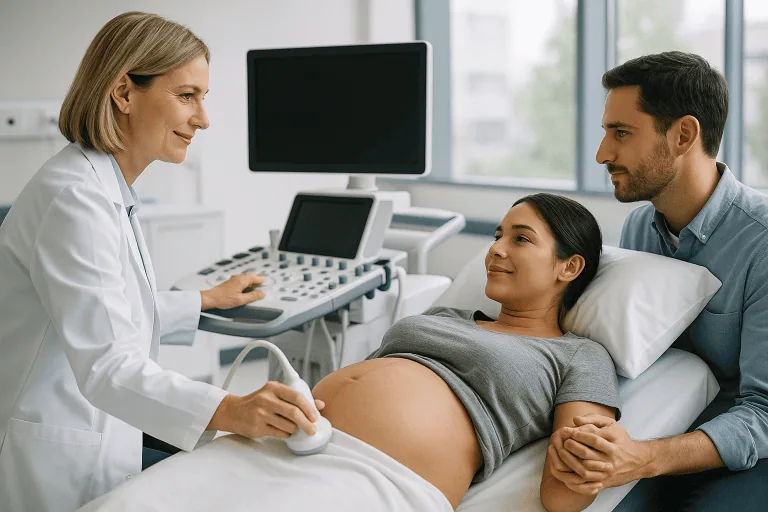
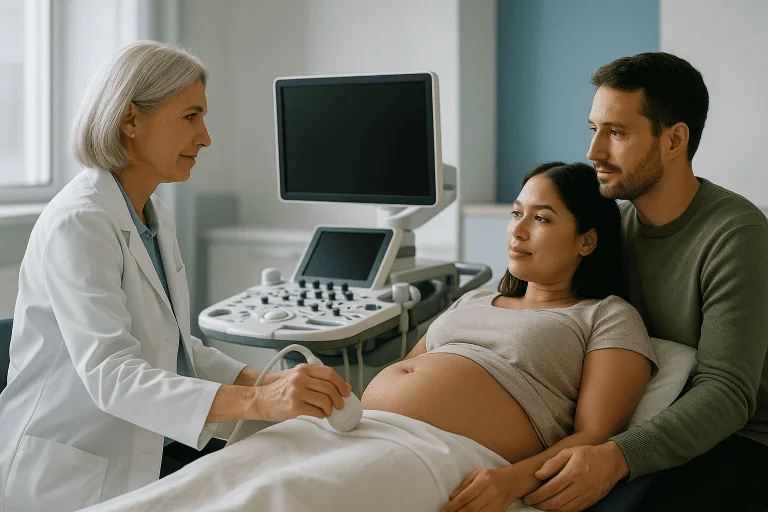
Fetal assessment is an essential part of the workup. This usually includes ultrasound to measure the baby’s growth and the amount of amniotic fluid, Doppler ultrasound to evaluate blood flow in the umbilical cord and placenta, and cardiotocography (often called a nonstress test), which records the baby’s heart rate pattern to check well-being.
Doctors also distinguish preeclampsia from related conditions. Gestational hypertension is high blood pressure after 20 weeks without signs of organ involvement; chronic hypertension is high blood pressure that existed before pregnancy; and chronic hypertension with superimposed preeclampsia means preeclampsia developing on top of pre-existing high blood pressure. These distinctions matter because monitoring and management differ.
Treatment options
The only definitive preeclampsia treatment is delivery of the baby and the placenta, because the placenta is believed to drive the disease. Until delivery is appropriate, treatment focuses on protecting the mother from complications, controlling blood pressure, and monitoring the baby closely. The right approach depends on how far along the pregnancy is, how severe the condition is, and how mother and baby are doing.
Close monitoring and watchful waiting
When preeclampsia is diagnosed before term and there are no severe features, doctors often aim to prolong the pregnancy safely so the baby can mature. This typically involves more frequent visits or hospital admission, regular blood pressure checks, repeated blood and urine tests, and frequent fetal monitoring with ultrasound and heart-rate tracings. You may be asked to monitor your blood pressure at home and to report warning symptoms immediately. Strict bed rest is no longer routinely recommended, but your doctor may advise reduced activity in some situations.
Medications
Several medications are commonly used, always under medical supervision:
- Antihypertensive drugs lower blood pressure to reduce the risk of stroke and other complications for the mother. Medicines considered safe in pregnancy, such as labetalol, nifedipine, or methyldopa, are typically used. These drugs control blood pressure but do not cure the underlying condition.
- Magnesium sulfate is given by intravenous infusion to prevent or treat seizures (eclampsia) in people with severe features. It is a well-established protective treatment, usually given around the time of delivery and for a period afterward.
- Corticosteroids (a course of steroid injections) may be given if early delivery is anticipated before about 34 weeks, to help the baby’s lungs mature.
- Low-dose aspirin is a preventive measure for future or ongoing high-risk pregnancies rather than a treatment for established preeclampsia, and is used only on a doctor’s advice.
Timing and mode of delivery
Deciding when to deliver is the central judgment in preeclampsia care. In general, if preeclampsia is diagnosed at or near term (around 37 weeks), delivery is usually recommended rather than continued waiting. Before term, doctors weigh the risks of prematurity for the baby against the risks of worsening disease for the mother. Severe features, uncontrollable blood pressure, signs of organ damage, eclampsia, HELLP syndrome, or evidence that the baby is not doing well typically lead to delivery regardless of gestational age.
Delivery itself may be by induced vaginal birth or by cesarean section, depending on the urgency of the situation, the baby’s condition and position, the state of the cervix, and other obstetric factors. Preeclampsia by itself does not always require a cesarean; many people with the condition deliver vaginally after induction. Care around delivery is provided by obstetric teams, such as those in a hospital Gynecology & Obstetrics department, working with anesthesiologists and neonatal specialists when preterm birth is expected.
Care after delivery
Preeclampsia does not always end at birth. Blood pressure can remain high, or even rise, in the days after delivery, and postpartum preeclampsia can develop for the first time during this period. Monitoring usually continues in the hospital and often at home, blood pressure medication may be continued or adjusted, and magnesium sulfate may be given for a period after delivery in severe cases. Follow-up visits to check blood pressure and recovery are an important part of treatment.
Living with preeclampsia and outlook
For most people, preeclampsia resolves in the days to weeks after delivery, and blood pressure gradually returns to normal. Recovery time varies: some feel back to normal quickly, while others need weeks of blood pressure monitoring and medication adjustment. Attending postpartum checkups is essential, because complications can still occur after leaving the hospital.
Preeclampsia can be serious, and honesty about that matters. Without appropriate care, it can lead to eclampsia, stroke, organ damage, placental abruption (early separation of the placenta), and, for the baby, growth restriction or the consequences of preterm birth. With modern prenatal care, close monitoring, and timely delivery, most mothers and babies do well, although outcomes cannot be guaranteed in any individual case, especially when the condition develops very early or with severe features.
Looking further ahead, a history of preeclampsia is associated with a higher long-term risk of high blood pressure, heart disease, and stroke later in life. This does not mean these problems are inevitable; it means that regular blood pressure checks, a heart-healthy lifestyle, not smoking, and routine medical care are especially worthwhile after an affected pregnancy. If you plan another pregnancy, tell your doctor about your history early, since preventive steps such as low-dose aspirin and closer monitoring are often recommended.
Frequently asked questions
What is preeclampsia in simple terms?
Preeclampsia is a pregnancy complication in which blood pressure becomes high and organs such as the kidneys or liver show signs of strain, usually after 20 weeks of pregnancy or shortly after birth. It is thought to start in the placenta and can affect both mother and baby, which is why it is monitored closely and, when necessary, managed with medication and timely delivery.
Can preeclampsia go away on its own?
Preeclampsia does not resolve while the pregnancy continues, because the placenta is believed to drive the condition. It typically improves after the baby and placenta are delivered, although blood pressure can take days or weeks to return to normal and sometimes needs medication in the meantime. Until delivery, treatment focuses on careful monitoring and controlling blood pressure rather than curing the condition.
How serious is preeclampsia?
Seriousness varies widely. Many cases are mild and managed with monitoring until a safe delivery, while others develop severe features that can threaten the mother’s organs or the baby’s well-being. Because the condition can worsen quickly and sometimes without symptoms, doctors treat every case with caution. With regular prenatal care and prompt treatment, serious complications can often be prevented or managed.
What are the first preeclampsia symptoms I might notice?
Often there are none, and the first sign is a high blood pressure reading at a checkup. When symptoms do appear, common early ones include a persistent headache, vision changes such as blurring or flashing lights, pain under the ribs on the right side, sudden swelling of the face or hands, and nausea in the second half of pregnancy. Any of these should be reported to your care team promptly.
How is preeclampsia diagnosed?
Doctors confirm preeclampsia using repeated blood pressure measurements, urine tests for protein, and blood tests that check platelets, liver enzymes, and kidney function. Ultrasound and fetal heart-rate monitoring assess the baby’s growth and well-being. A diagnosis generally requires new high blood pressure after 20 weeks together with protein in the urine or other signs of organ involvement, based on established clinical criteria.
Does preeclampsia treatment always mean early delivery?
Not always. When the condition is mild and the pregnancy is preterm, doctors often monitor closely and try to prolong the pregnancy so the baby can mature, using blood pressure medication when needed. Delivery is generally recommended at or near term, or earlier if severe features develop or the baby shows signs of distress. The timing is an individualized decision made with your obstetric team.
How long does recovery take after preeclampsia?
Many people recover within days to weeks after delivery, but the course varies. Blood pressure may stay elevated for a while and can even rise in the first postpartum days, so monitoring and follow-up visits continue after you go home. Some people need blood pressure medication temporarily. If symptoms such as severe headache or vision changes appear after delivery, they should be evaluated urgently.
When to see a doctor
Contact your prenatal care team promptly if you notice new swelling of the face or hands, headaches that keep returning, rapid weight gain over a few days, or a general sense that something is not right in the second half of pregnancy. Do not wait for your next scheduled visit if you are worried.
Seek urgent medical care, going to a hospital emergency department if needed, if you experience any of the following during pregnancy or in the weeks after giving birth:
- Severe or persistent headache that does not respond to rest or recommended pain relief.
- Vision changes such as blurring, flashing lights, spots, or loss of vision.
- Severe pain in the upper abdomen, especially under the ribs on the right side.
- Difficulty breathing or chest pain.
- Sudden, marked swelling of the face, hands, or feet.
- Nausea or vomiting that appears suddenly in later pregnancy.
- A blood pressure reading of 160/110 mmHg or higher if you monitor at home.
- Noticeably reduced or absent fetal movements.
- Vaginal bleeding with abdominal pain, which can signal placental problems.
- A seizure, confusion, or loss of consciousnessthis is an emergency requiring immediate care.
Preeclampsia can progress quickly, and early evaluation gives you and your baby the best chance of a safe outcome. When in doubt, it is always reasonable to have your symptoms checked.
Medically reviewed by the Acıbadem International Medical Board September 2, 2026
See our medical review board →
Update history
- PublishedJune 8, 2026
- Medical review approvedSeptember 2, 2026
- Last content updateSeptember 2, 2026