Quick answer
Pulmonary hypertension is high blood pressure in the arteries of the lungs, which strains the right side of the heart and can cause breathlessness, fatigue, chest discomfort, and fainting. Treatment depends on the underlying cause and may include medicines to relax or widen lung blood vessels, therapies for related heart or lung disease, oxygen support, and careful monitoring by a…
What is pulmonary hypertension?
Pulmonary hypertension is a condition in which the blood pressure inside the arteries of the lungs is higher than normal. These vessels, called the pulmonary arteries, carry blood from the right side of the heart into the lungs so it can pick up oxygen. When the pressure in these arteries rises, the right side of the heart has to work harder to push blood through the lungs. Over time, this extra workload can strain and weaken the heart muscle.
Many people first ask, “what is pulmonary hypertension, and how is it different from ordinary high blood pressure?” The two are not the same. Ordinary high blood pressure (also called systemic hypertension) affects the arteries throughout the body and is measured with a cuff on your arm. Pulmonary hypertension affects only the vessels between the heart and the lungs, and it cannot be detected with a standard blood pressure cuff. It requires specialized tests to identify.
Pulmonary hypertension can affect people of any age, including children, but it is more commonly diagnosed in adults. It occurs in both men and women, although some forms are more frequent in women. In many cases it develops as a complication of another condition, such as heart disease, lung disease, or blood clots in the lungs. Less commonly, it arises on its own without a clear underlying cause. Because it develops gradually and its early signs are easy to mistake for being out of shape, pulmonary hypertension is often diagnosed later than doctors would prefer.
Symptoms of pulmonary hypertension
Pulmonary hypertension symptoms often begin subtly and worsen slowly over months or years. In the early stages, many people notice symptoms only during physical effort, such as climbing stairs or walking uphill. As the condition progresses and the right side of the heart comes under more strain, symptoms may appear during light activity or even at rest.
Common pulmonary hypertension symptoms include:
- Shortness of breath, especially during exertion, which is usually the first and most common symptom
- Fatigue or unusual tiredness that does not improve with rest
- Dizziness or lightheadedness, particularly during activity
- Fainting spells (called syncope), which can signal more advanced disease
- Chest pain or pressure, sometimes similar to angina (chest pain from the heart)
- A racing or pounding heartbeat (palpitations)
- Swelling in the ankles, legs, or abdomen, caused by fluid buildup when the right heart weakens
- A bluish tint to the lips or skin (cyanosis) in some people, reflecting low oxygen levels
How symptoms appear can depend on the type and stage of the disease. In people whose pulmonary hypertension is caused by a lung condition such as chronic obstructive pulmonary disease (COPD, a long-term lung disease that makes breathing difficult), the symptoms of the lung disease itself, such as cough and wheezing, may dominate at first. In people whose pulmonary hypertension is linked to left-sided heart disease, symptoms may include breathlessness when lying flat or waking at night short of breath. In advanced stages of any type, swelling, fainting, and breathlessness at rest become more prominent because the right side of the heart is struggling to keep up.
Because these symptoms overlap with many other conditions, including asthma, anxiety, anemia, and general deconditioning, pulmonary hypertension is sometimes overlooked for a long time. Persistent, unexplained breathlessness on exertion deserves medical evaluation rather than being dismissed as normal aging or lack of fitness.
Causes and risk factors
Pulmonary hypertension causes vary widely, and doctors group the condition into several categories depending on what is driving the high pressure. Understanding the underlying cause matters, because it directly shapes the treatment plan.
The main recognized groups of causes include:
- Pulmonary arterial hypertension (PAH): a form in which the small arteries of the lungs themselves become narrowed, stiff, or thickened. PAH may occur without a known cause (called idiopathic), run in families due to inherited gene changes, or be associated with conditions such as connective tissue diseases (for example scleroderma), congenital heart defects (heart problems present from birth), HIV infection, liver disease, or exposure to certain drugs and toxins.
- Pulmonary hypertension due to left-sided heart disease: the most common overall cause. When the left side of the heart does not pump or fill properly, for example because of heart failure or valve disease, pressure backs up into the lung circulation.
- Pulmonary hypertension due to lung disease or low oxygen: long-standing lung conditions such as COPD, pulmonary fibrosis (scarring of the lungs), and untreated sleep apnea (repeated pauses in breathing during sleep) can raise lung artery pressure over time.
- Chronic thromboembolic pulmonary hypertension (CTEPH): caused by old blood clots that remain in the lung arteries and block or narrow them. This form is important to identify because it can sometimes be treated with surgery or a catheter procedure.
- Pulmonary hypertension with unclear or multiple causes: a smaller group linked to blood disorders, metabolic diseases, and other conditions.
Risk factors that may increase the chance of developing pulmonary hypertension include a family history of the disease, existing heart or lung conditions, a history of blood clots in the lungs, connective tissue disease, chronic liver disease, living at high altitude for long periods, and the use of certain appetite-suppressant drugs or stimulants. Age itself is a factor, since some forms become more common in older adults. Having a risk factor does not mean a person will develop the condition, but it may prompt doctors to look for it earlier when symptoms appear.
Diagnosis of pulmonary hypertension
A pulmonary hypertension diagnosis is made in stages, because no single symptom proves the condition and several other diseases can look similar. Doctors typically begin with a careful medical history and physical examination, listening for abnormal heart sounds and checking for swelling or signs of low oxygen.
Tests commonly used in the diagnostic process include:
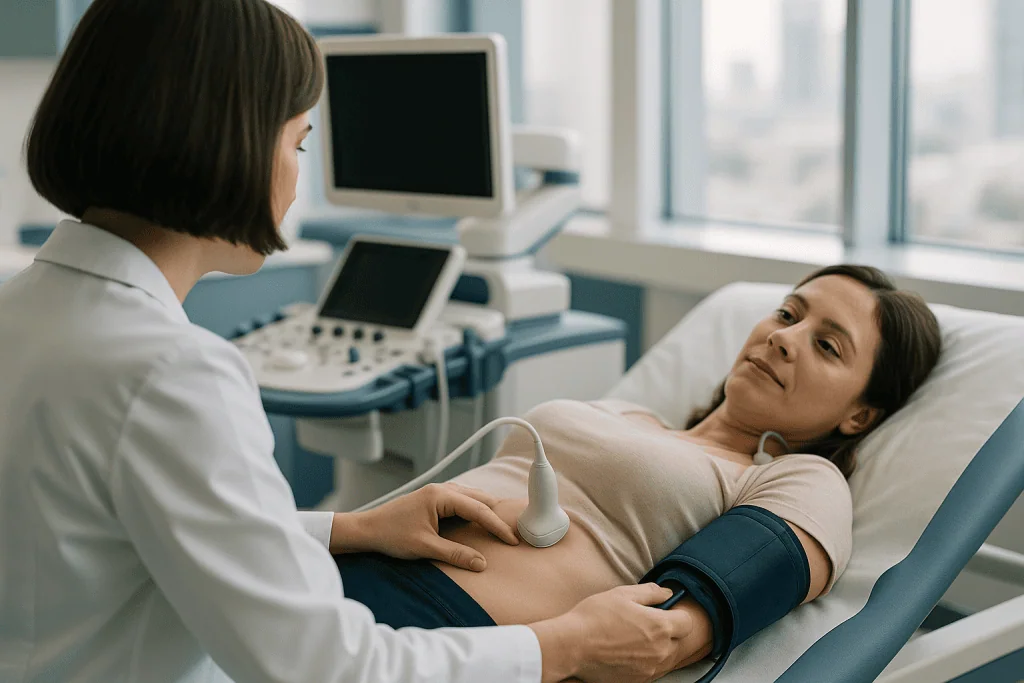
- Echocardiogram: an ultrasound scan of the heart. This is usually the first key test. It allows doctors to estimate the pressure in the lung arteries and to see how the right side of the heart is coping. It is painless and noninvasive.
- Electrocardiogram (ECG): a recording of the heart’s electrical activity, which may show strain on the right side of the heart.
- Chest X-ray and CT scan: imaging that can show enlarged lung arteries, an enlarged heart, or underlying lung disease.
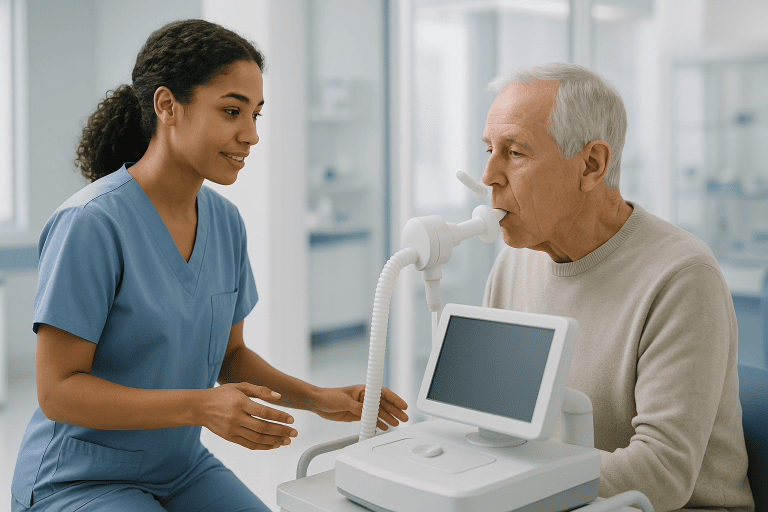
- Lung function tests: breathing tests that measure how well the lungs move air and transfer oxygen, helping identify lung disease as a cause.
- Ventilation-perfusion (V/Q) scan: a nuclear medicine scan that checks whether old blood clots are blocking parts of the lung circulation, which is important for detecting CTEPH.
- Blood tests: to look for connective tissue disease, liver disease, HIV, and markers of heart strain.
- Six-minute walk test: a simple test of how far you can walk in six minutes, used to gauge how much the condition limits daily activity and to track change over time.
- Right heart catheterization: the definitive test. A thin, flexible tube (catheter) is guided through a vein into the right side of the heart and the lung arteries to measure the pressures directly. This is the only way to confirm the diagnosis with certainty and to classify the type of pulmonary hypertension. It is performed by specialists and is generally considered safe when done in experienced centers.
Doctors confirm pulmonary hypertension when the average (mean) pressure in the pulmonary artery, measured during right heart catheterization, is above the accepted normal threshold. The catheterization results, combined with the other tests, allow the care team to determine which category the disease falls into and how advanced it is. This classification step is essential, because treating the wrong type, or missing an underlying cause such as old blood clots or a heart valve problem, can lead to ineffective or even harmful therapy.
Treatment options for pulmonary hypertension
Pulmonary hypertension treatment depends heavily on the underlying cause, the severity of the disease, and the person’s overall health. There is currently no simple cure for most forms, but treatment can often relieve symptoms, slow the progression of the disease, and improve quality of life. Care is usually coordinated by specialists in lung and heart medicine; in hospital settings such as Acibadem, this condition is typically managed through the pulmonology department together with cardiology.
Treating the underlying condition
When pulmonary hypertension is caused by another disease, treating that disease is the foundation of care. This may mean optimizing heart failure therapy, repairing or replacing a diseased heart valve, treating sleep apnea with a breathing device, or managing COPD and other lung diseases. In many of these cases, targeted pulmonary hypertension drugs are not the main answer; improving the root problem is.
Watchful monitoring and lifestyle measures
In mild cases, or while the cause is being clarified, doctors may recommend regular monitoring with echocardiograms, walk tests, and clinic visits rather than immediate aggressive treatment. General measures often advised include supervised, gentle physical activity, limiting salt intake if fluid retention is a problem, avoiding smoking, receiving recommended vaccinations to reduce lung infections, and discussing pregnancy plans with a specialist, since pregnancy carries significant risks for women with certain forms of the disease.
Medications
Several classes of medication are used, chosen according to the type of pulmonary hypertension:
- Targeted PAH therapies: for pulmonary arterial hypertension, drugs that relax and widen the lung arteries are the mainstay. These include endothelin receptor antagonists, phosphodiesterase-5 inhibitors, and prostacyclin-pathway drugs, which may be taken as tablets, inhaled, or given by infusion in advanced disease. Doctors often combine more than one of these medicines.
- Diuretics: “water tablets” that reduce fluid buildup and swelling and ease the workload on the heart.
- Anticoagulants: blood thinners, which are essential in CTEPH and may be considered in selected other cases.
- Oxygen therapy: supplemental oxygen for people whose blood oxygen levels are low, particularly those with underlying lung disease.
- Calcium channel blockers: effective for a small subgroup of PAH patients who respond to a specific test during catheterization.
These medicines require specialist supervision, regular follow-up, and sometimes dose adjustments over time. It is important not to stop them suddenly without medical advice.
Procedures and surgery
For certain forms of the disease, procedures can make a substantial difference. In CTEPH, an operation called pulmonary endarterectomy removes old clot material from the lung arteries and, in suitable patients, can greatly improve or in some cases largely resolve the condition. When surgery is not possible, a catheter-based technique called balloon pulmonary angioplasty may widen narrowed lung arteries. In severe, progressive disease that no longer responds to medication, lung transplantation, or in some cases combined heart-lung transplantation, may be considered for carefully selected patients. A procedure called atrial septostomy, which creates a small opening between the heart’s upper chambers to relieve pressure, is occasionally used as a bridge to transplant in advanced cases.
An overview of how this condition is evaluated and managed in a hospital setting is available on the pulmonary hypertension treatment page. Whatever the treatment path, decisions are made jointly between the patient and a multidisciplinary team, weighing the type of disease, its severity, and the person’s goals and overall health.
Living with pulmonary hypertension and outlook
Pulmonary hypertension is generally a long-term condition that requires ongoing care rather than a one-time fix. The outlook varies widely. Some people, particularly those whose disease is caught early or whose underlying cause can be treated effectively, remain stable for many years with medication and monitoring. Others have a more progressive course despite treatment. For CTEPH, successful surgery can dramatically change the outlook. Because outcomes differ so much from person to person, no one can promise a specific result, and honest, individualized discussion with your care team is the best source of information about your own situation.
Day to day, many people with pulmonary hypertension continue to work, travel, and stay active within their limits. Helpful habits often include pacing activities to avoid overexertion, taking medications consistently, monitoring weight to detect fluid buildup early, avoiding very high altitudes without medical advice, and keeping all follow-up appointments so treatment can be adjusted as needed. Emotional health matters too; living with a chronic heart-lung condition can be stressful, and support from family, patient organizations, or counseling is often valuable. Advances in targeted therapies over recent decades have meaningfully improved how the condition is managed, and research into new treatments continues.
Frequently asked questions
What is pulmonary hypertension in simple terms?
Pulmonary hypertension means the blood pressure in the arteries that carry blood from the heart to the lungs is too high. This forces the right side of the heart to work harder than normal, which over time can weaken it. It is different from ordinary high blood pressure measured with an arm cuff, and it needs specialized tests, ultimately a right heart catheterization, to confirm.
Can pulmonary hypertension be cured?
In most cases pulmonary hypertension cannot be completely cured, but it can often be managed effectively with medication and treatment of the underlying cause. One important exception is chronic thromboembolic pulmonary hypertension, where surgery to remove old clots can greatly improve or, in some patients, largely resolve the condition. Your doctor can explain which category your disease falls into and what realistic goals of treatment look like.
How serious is pulmonary hypertension?
It is a serious condition that should not be ignored, because untreated high pressure in the lung arteries can lead to right-sided heart failure. However, severity varies widely. Some people have mild, stable disease for many years, while others have a more aggressive course. Early diagnosis and appropriate treatment generally improve the outlook, which is why persistent unexplained breathlessness deserves proper evaluation.
What are the early symptoms of pulmonary hypertension?
The earliest and most common symptom is shortness of breath during physical effort, often accompanied by fatigue. Because these signs are vague, they are frequently attributed to aging, weight, or lack of fitness. Dizziness during activity, chest discomfort, palpitations, and later fainting or ankle swelling may follow as the disease progresses. Symptoms that steadily worsen over months are a signal to seek medical assessment.
How is pulmonary hypertension diagnosed?
Doctors usually start with an echocardiogram, an ultrasound of the heart that can estimate lung artery pressure. Supporting tests may include an ECG, chest imaging, lung function tests, a V/Q scan to look for old clots, blood tests, and a six-minute walk test. The diagnosis is confirmed by right heart catheterization, in which a thin tube measures the pressures inside the heart and lung arteries directly.
Can you live a normal life with pulmonary hypertension?
Many people with well-managed pulmonary hypertension continue to work, care for their families, and enjoy activities, though often with some adjustments such as pacing themselves and taking daily medication. How close to “normal” life feels depends on the type and stage of the disease and how well it responds to treatment. Regular follow-up allows the care team to adjust therapy and help maintain the best possible quality of life.
Does exercise help or harm pulmonary hypertension?
Gentle, regular activity is often encouraged and may improve stamina and well-being, but heavy exertion, straining, or exercising to the point of dizziness can be risky. The safe level of activity differs from person to person, so it is important to discuss an exercise plan with your care team, and in some cases a supervised rehabilitation program may be recommended.
When to see a doctor
See a doctor promptly if you have shortness of breath during activity that is new, unexplained, or gradually getting worse, especially if it comes with fatigue, chest discomfort, palpitations, or swelling in your legs. If you have already been diagnosed with pulmonary hypertension, contact your care team whenever your symptoms change or your usual activities become noticeably harder.
Seek emergency medical care immediately if you experience any of the following red-flag warning signs:
- Fainting or near-fainting, particularly during or just after physical effort
- Severe or sudden shortness of breath, including breathlessness at rest
- Chest pain or pressure that is new, severe, or does not go away
- Coughing up blood
- A rapid, irregular, or pounding heartbeat that does not settle
- Blue or gray discoloration of the lips, face, or fingertips
- Rapidly increasing swelling of the legs or abdomen, or sudden weight gain over a few days
- Confusion, extreme dizziness, or collapse
These signs can indicate that the heart is under dangerous strain or that a complication such as a new blood clot has developed, and they require urgent evaluation. Even when symptoms seem mild, early assessment gives doctors the best chance to identify pulmonary hypertension and its cause before the heart is significantly affected.
Medically reviewed by the Acıbadem International Medical Board September 2, 2026
See our medical review board →
Update history
- PublishedJune 14, 2026
- Medical review approvedSeptember 2, 2026
- Last content updateSeptember 2, 2026