Varicose Veins
Varicose Veins are enlarged, twisted veins often in the legs. Learn symptoms, causes, diagnosis, treatment options and when to seek care.
Quick answer
Varicose veins are enlarged, twisted veins, usually in the legs, caused by weakened valves that allow blood to pool, leading to visible bulging, heaviness, swelling, or discomfort. Treatment depends on symptoms and vein severity, and at Acibadem in Turkey it may include evaluation by vascular specialists, lifestyle guidance, compression therapy, and minimally invasive procedures to close or remove affected veins.
What is varicose veins?
Varicose veins are enlarged, twisted veins that you can often see bulging under the skin, most commonly on the legs and feet. To understand what varicose veins are, it helps to know how veins normally work. Veins are the blood vessels that carry blood back to the heart. The veins in your legs have to move blood upward, against gravity, and they rely on small one-way valves inside them to keep blood flowing in the right direction. When these valves weaken or become damaged, blood can flow backward and pool in the vein. Over time, this pooling stretches the vein wall, and the vein becomes swollen, lengthened, and twisted: a varicose vein.
Varicose veins are very common, particularly in adults over the age of 50, though they can develop earlier in life. They affect people of all backgrounds, but they occur more often in women than in men, and they tend to run in families. Pregnancy, long periods of standing, and excess body weight are among the situations that make them more likely to appear.
For many people, varicose veins are mainly a cosmetic concern. For others, they cause aching, heaviness, swelling, and discomfort that interferes with daily life. In a smaller number of cases, varicose veins are a sign of a broader problem called chronic venous insufficiencya long-term condition in which the leg veins do not return blood to the heart efficiently, and they can lead to complications such as skin changes, ulcers (open sores), or blood clots. Smaller, thread-like visible veins near the skin surface are called spider veins; these are related but usually milder and rarely cause medical problems.
Symptoms
Varicose veins symptoms vary widely. Some people have visibly bulging veins with no discomfort at all, while others have significant leg symptoms even when the veins themselves are not very prominent. Common varicose veins symptoms include:
- Visible veins that appear dark blue or purple and look twisted, rope-like, or bulging under the skin, usually on the legs.
- Aching or heaviness in the legs, often worse after long periods of standing or sitting and toward the end of the day.
- Burning, throbbing, or cramping in the lower legs.
- Swelling around the ankles and lower legs, typically increasing during the day and improving overnight.
- Itching around one or more of the affected veins.
- Restless or uncomfortable legs, particularly at night.
- Skin changes near the ankle in more advanced cases, such as darkening, dryness, hardening of the skin, or inflammation.
Symptoms often follow a pattern related to how advanced the underlying vein problem is. In early stages, people may notice only spider veins or mildly visible varicose veins with little or no discomfort. As the condition progresses, aching, heaviness, and swelling become more common. In later stages of chronic venous insufficiency, the skin around the ankle may become discolored (often brownish), thickened, or fragile, and in the most advanced stage an open sore called a venous ulcer can form, usually near the inner ankle. Venous ulcers can be slow to heal and often need medical care.
Two symptoms deserve special mention. If a varicose vein becomes suddenly hard, red, warm, and tender, this may indicate superficial thrombophlebitis: a blood clot with inflammation in a vein near the skin surface. If a varicose vein bleeds, the bleeding can be surprisingly heavy because the vein is under pressure. Both situations should prompt medical attention, as described at the end of this article.
Causes and risk factors
The main cause of varicose veins is failure of the one-way valves inside the leg veins. When these valves no longer close properly, blood flows backward, doctors call this reflux, and pressure builds up in the vein. Sustained high pressure stretches the vein wall, which further damages the valves and creates a cycle that gradually worsens. Why the valves fail in the first place is not always clear, but weakening of the vein wall and valve tissue over time plays a central role.
Several factors increase the risk of developing varicose veins:
- Family history: Varicose veins often run in families, which suggests an inherited tendency toward weaker vein walls or valves.
- Age: Vein walls and valves lose elasticity as we get older, so the risk increases with age.
- Sex: Women develop varicose veins more often than men. Hormonal changes related to menstruation, pregnancy, and menopause are thought to relax vein walls, and some hormonal medications may contribute.
- Pregnancy: Pregnancy increases the volume of blood in the body and the pressure on leg veins from the growing uterus. Varicose veins that appear during pregnancy often improve after delivery, though they do not always disappear completely.
- Excess body weight: Extra weight puts additional pressure on the leg veins.
- Prolonged standing or sitting: Jobs or habits that involve staying in one position for long periods make it harder for blood to move up the legs, because the calf muscles that normally help pump blood are not being used.
- Previous blood clots or leg injury: A prior deep vein thrombosis (a clot in a deep leg vein) or trauma can damage vein valves and lead to varicose veins later.
It is worth noting that varicose veins are not caused by crossing your legs, and while lifestyle factors can influence the condition, many people develop varicose veins despite being active and maintaining a healthy weight, simply because of inherited vein characteristics.
Diagnosis
Varicose veins diagnosis usually begins with a physical examination. Your doctor will look at your legs while you are standing, because varicose veins fill and become more visible in this position. The doctor will ask about your symptoms, pain, heaviness, swelling, itching, as well as your medical history, family history, pregnancies, occupation, and any previous blood clots or leg injuries.
The key test used to confirm the diagnosis and plan treatment is a duplex ultrasound. This is a painless, noninvasive scan that uses sound waves to create images of the veins and to measure how blood is flowing through them. Duplex ultrasound allows the doctor to:
- See the structure of the superficial and deep veins in the leg.
- Detect reflux, blood flowing backward through faulty valves, and identify exactly which veins are affected.
- Check for blood clots in the deep veins, which is important because a deep vein blockage changes which treatments are safe and appropriate.
During the ultrasound, the technician or doctor moves a small handheld probe over the skin, sometimes while you are standing or while you perform simple maneuvers such as squeezing the calf, to see how the valves respond. No needles or radiation are involved.
Doctors often classify the severity of vein disease using standardized systems that describe what is visible on the leg, from spider veins, to varicose veins, to swelling, skin changes, and ulcers. This staging helps guide treatment decisions and allows progress to be tracked over time. In most cases, a physical exam and duplex ultrasound are all that is needed; additional imaging is reserved for unusual or complex situations. At hospital groups such as Acibadem, varicose veins are typically evaluated and managed by cardiovascular surgery or vascular surgery departments, sometimes together with interventional radiology.
Treatment options
Varicose veins treatment depends on how severe the veins are, how much they bother you, whether complications are present, and your overall health. Not everyone needs a procedure. Your doctor may recommend starting with conservative measures and moving to procedures only if symptoms persist or complications develop.
Self-care and watchful waiting
For mild varicose veins, doctors often begin with lifestyle measures aimed at improving blood flow and easing symptoms:
- Regular movement and exercise, especially walking, which activates the calf muscles that help pump blood back toward the heart.
- Avoiding long periods of standing or sitting; when this is unavoidable, shifting weight, flexing the ankles, or taking short walking breaks can help.
- Elevating the legs above heart level for short periods during the day to reduce swelling.
- Maintaining a healthy weight to reduce pressure on the leg veins.
- Avoiding tight clothing around the waist or upper legs that may restrict blood flow.
Compression stockings
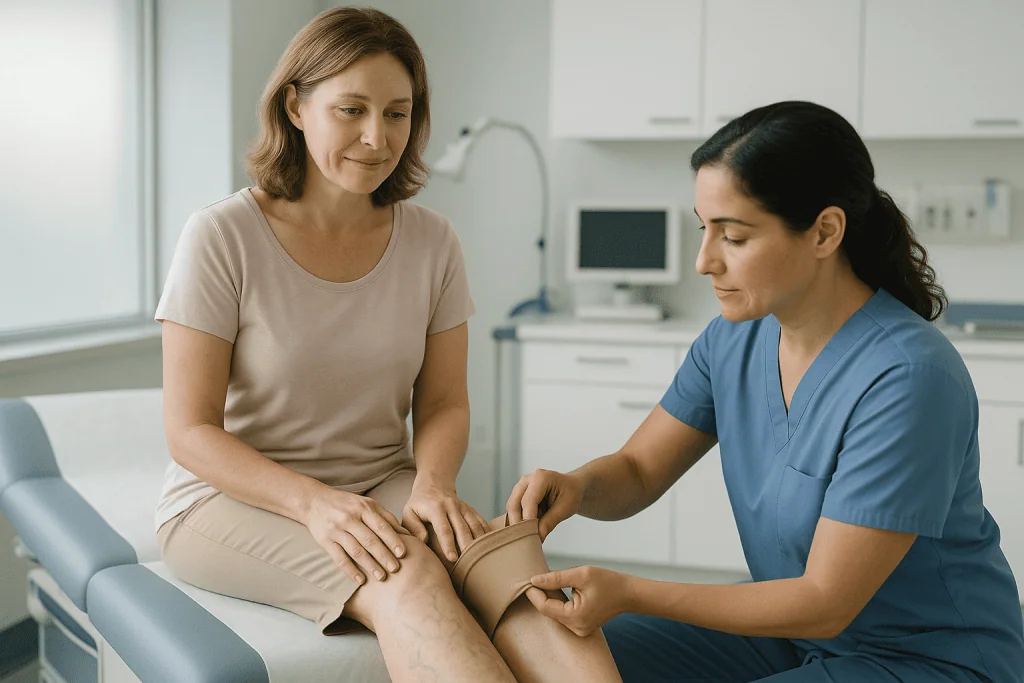
Compression stockings are specially fitted elastic stockings that squeeze the legs gently, more strongly at the ankle than higher up, helping veins move blood upward. They are frequently the first treatment doctors recommend. Compression can reduce aching, heaviness, and swelling, though it does not remove existing varicose veins or repair damaged valves. Stockings come in different compression strengths, and your doctor can advise which strength and length suit your situation. People with certain circulation problems in the arteries of the legs may need to avoid compression, which is one reason a proper assessment matters.
Medications
There is no medication that cures varicose veins. Some doctors may suggest certain plant-derived supplements or prescription agents, sometimes called venoactive drugs, to help with symptoms such as swelling and heaviness in selected patients; the evidence for these varies, and they are not a substitute for other treatment. Pain relievers may be used for temporary discomfort, and if a superficial clot with inflammation develops, your doctor may recommend anti-inflammatory medication or, in some cases, blood thinners. Always discuss any supplement or medication with your doctor first.
Minimally invasive procedures
When varicose veins cause persistent symptoms or complications, several office-based or day-case procedures can close or remove the faulty veins. Once a diseased superficial vein is closed, blood reroutes through healthy veins.
- Sclerotherapy: The doctor injects a solution or foam into the vein, which irritates the vein lining and causes it to scar and close. It is often used for smaller varicose veins and spider veins, and may require more than one session.
- Endovenous thermal ablation (laser or radiofrequency): A thin tube called a catheter is inserted into the faulty vein through a small puncture, usually under local anesthesia and ultrasound guidance. Heat from a laser fiber or radiofrequency device seals the vein shut from the inside. These techniques are widely used for larger veins with valve reflux and generally allow a quick return to normal activities.
- Nonthermal closure techniques: Newer catheter-based methods close the vein using medical adhesive or a combination of mechanical injury and a sclerosing solution, without heat. Your doctor can explain whether these are appropriate and available for your situation.
- Ambulatory phlebectomy: Bulging surface veins are removed through a series of tiny skin punctures under local anesthesia. This is often combined with an ablation procedure.
Surgery
Traditional surgery, known as vein ligation and stripping, involves tying off and removing the affected vein through small incisions, usually under general or spinal anesthesia. It was once the standard treatment and is still used in selected cases, for example, when the anatomy of the veins makes catheter-based procedures unsuitable. Recovery generally takes longer than with minimally invasive options. Removing or closing superficial veins does not harm overall circulation, because the deep veins carry the majority of blood back to the heart.
Whatever treatment is chosen, it is important to understand that treating existing varicose veins does not change the underlying tendency to develop vein disease. New varicose veins can appear in other veins over time, and some people need additional treatment in the future.
Living with varicose veins and outlook
Varicose veins are a chronic, generally slowly progressing condition. For most people, the outlook is good: the veins are uncomfortable or unsightly rather than dangerous, and symptoms can usually be managed well with a combination of self-care, compression, and, when needed, procedures. Modern minimally invasive treatments relieve symptoms in many cases and typically involve short recovery times, although results vary from person to person and no treatment can guarantee that new varicose veins will never form.
Living well with varicose veins usually means building vein-friendly habits into daily life: staying physically active, keeping a healthy weight, elevating the legs when resting, wearing compression stockings if your doctor recommends them, and paying attention to the skin on your lower legs. Moisturizing dry skin near the ankles and protecting the area from injury can help prevent skin breakdown in people with more advanced vein disease.
It also helps to know the possible complications so you can act early. These include superficial thrombophlebitis (a painful clot in a surface vein), bleeding from a varicose vein, skin discoloration and hardening around the ankle, eczema-like skin irritation, and venous ulcers. Complications are more likely in long-standing, untreated venous insufficiency, which is one reason doctors monitor skin changes over time. Deep vein thrombosisa clot in the deep veins, is a separate and more serious condition; people with varicose veins should be aware of its warning signs, such as sudden swelling and pain in one leg.
Frequently asked questions
What is varicose veins in simple terms?
In simple terms, varicose veins are leg veins whose internal one-way valves have stopped working properly. Blood pools in the vein instead of flowing steadily back to the heart, and the vein stretches, twists, and bulges under the skin. They are very common, especially with increasing age, and range from a purely cosmetic issue to a source of aching, swelling, and skin problems.
Can varicose veins heal or go away on their own?
Established varicose veins do not usually disappear on their own, because the valve damage inside the vein is permanent. One notable exception is pregnancy: veins that enlarge during pregnancy often improve in the months after delivery. Self-care measures such as exercise, leg elevation, and compression stockings can ease symptoms and may slow progression, but removing or closing the affected veins generally requires a procedure.
How serious are varicose veins?
For most people, varicose veins are not dangerous. However, they can be a sign of chronic venous insufficiency, and over years some people develop complications such as skin changes, venous ulcers, superficial blood clots, or bleeding from a vein. Because the severity varies so much between individuals, an evaluation with a duplex ultrasound is the most reliable way to find out how significant your vein disease is.
What is the best treatment for varicose veins?
There is no single best treatment for everyone. The right varicose veins treatment depends on which veins are affected, how severe the reflux is, your symptoms, and your overall health. Options range from compression stockings and lifestyle changes to sclerotherapy, catheter-based ablation with heat or adhesive, phlebectomy, and, less commonly today, surgical stripping. Your doctor will usually base the recommendation on your ultrasound findings and your goals.
What is recovery like after varicose vein procedures?
Recovery is generally quick after minimally invasive treatments such as sclerotherapy or endovenous ablation. Many people walk immediately afterward and return to routine activities within a day or two, though bruising, tightness, or mild soreness along the treated vein is common for a while. Doctors often recommend wearing compression stockings for a period after treatment and avoiding strenuous exercise briefly. Traditional surgery usually involves a longer recovery. Your care team will give you instructions specific to your procedure.
Do varicose veins come back after treatment?
Treated veins that have been successfully closed or removed do not come back, but new varicose veins can develop in other veins over time, because treatment does not change your underlying tendency to vein disease. In many cases people remain comfortable for years after treatment; some eventually need touch-up procedures. Regular follow-up and vein-friendly habits may help reduce the chance of recurrence, although nothing can prevent it entirely.
Can I prevent varicose veins from getting worse?
You may not be able to prevent varicose veins completely, especially if they run in your family, but several habits can help limit progression and control symptoms: staying active, avoiding long uninterrupted periods of standing or sitting, elevating your legs when resting, maintaining a healthy weight, and using compression stockings if your doctor advises them. If symptoms are worsening despite these steps, it is reasonable to ask about procedural options.
When to see a doctor
Consider making a routine appointment if your varicose veins are painful, if your legs feel heavy or swollen most days, if symptoms interfere with sleep or daily activities, or if you simply want an assessment of your options. At Acibadem and similar hospital settings, this evaluation typically includes a duplex ultrasound and a discussion of conservative and procedural treatments.
Seek prompt or urgent medical care if you notice any of the following red-flag warning signs:
- Bleeding from a varicose vein. Apply firm pressure, lie down, raise the leg above heart level, and get medical help, bleeding from these veins can be heavy.
- A vein that suddenly becomes hard, red, warm, and painful, which may indicate a clot in a surface vein (superficial thrombophlebitis).
- Sudden swelling, pain, or tenderness in one leg, especially in the calf, which can be a sign of deep vein thrombosis: a clot in a deep vein that needs urgent evaluation.
- Sudden shortness of breath or chest pain, which can signal a clot traveling to the lungs (pulmonary embolism) and is a medical emergency.
- An open sore or ulcer on the lower leg or ankle that is not healing.
- Rapidly worsening skin changes near the ankle, such as spreading redness, darkening, hardening, or signs of infection like warmth and fever.
Trust your own sense of your body: if something about your legs changes suddenly or worries you, it is always reasonable to have it checked by a healthcare professional.
Medically reviewed by the Acıbadem International Medical Board September 2, 2026
See our medical review board →
Update history
- PublishedJune 9, 2026
- Medical review approvedSeptember 2, 2026
- Last content updateSeptember 2, 2026