22 Things to Bring to Chemo: How It Works, Results and What to Expect

A chemotherapy bag should include essential medical information, prescribed medicines, hydration supplies and comfort items. Patients should ask their oncology team before bringing food, supplements, over-the-counter medicines or devices to the infusion center.
Key Takeaways
- A chemotherapy bag should include essential medical information, prescribed medicines, hydration supplies and comfort items.
- Patients should ask their oncology team before bringing food, supplements, over-the-counter medicines or devices to the infusion center.
- Chemotherapy schedules and side effects vary widely, so there is no single ‘hardest’ week for everyone.
- Treatment response is assessed through symptoms, examinations, blood tests and imaging—not side effects alone.
- A fever or other possible signs of infection during chemotherapy may need urgent medical advice.
Preparing a small, personalized chemotherapy bag can make treatment days more comfortable, organized and less stressful. The best items support hydration, nutrition, warmth, communication and the care team’s instructions, while allowing for individual needs and treatment-center rules.
Overview: 22 Things to Bring to Chemo
For many people, chemotherapy day involves waiting, an infusion or injection, monitoring and travel home. Packing in advance can remove some uncertainty. The most useful bag contains practical health items, familiar comforts and activities that help pass the time, without becoming too heavy or difficult to manage.
Before the first visit, the oncology team can explain how long appointments usually take, whether a support person may attend, what food is permitted and whether the center provides blankets, drinks or Wi-Fi. Some chemotherapy medicines are given as tablets at home, while others are delivered in an infusion unit; preparation needs may therefore differ.
A practical list of 22 things to bring to chemo is:
- Photo identification and insurance or registration documents, if needed
- A list of current medicines, allergies and supplements
- Your treatment schedule and oncology contact numbers
- A notebook or notes app for questions and instructions
- A charged mobile phone
- A phone charger or power bank
- Headphones
- A book, magazine, puzzle or tablet
- Comfortable layered clothing
- A cardigan, zip-up top or light jacket that allows access to the arm or chest port
- Warm socks
- A small blanket or shawl, if permitted
- A water bottle, if the team has not advised fluid restriction
- Approved easy-to-digest snacks
- Ginger sweets, plain crackers or another approved item for nausea
- Lip balm
- Fragrance-free moisturizer
- Tissues
- Hand sanitizer, if permitted by the center
- A small reusable bag for personal items
- A face covering if recommended by the care team or required locally
- A trusted companion, where the center permits one
Patients should not feel obliged to bring every item. The goal is to select what is useful for their treatment plan, comfort and travel arrangements.
How Chemotherapy Works and Who May Receive It
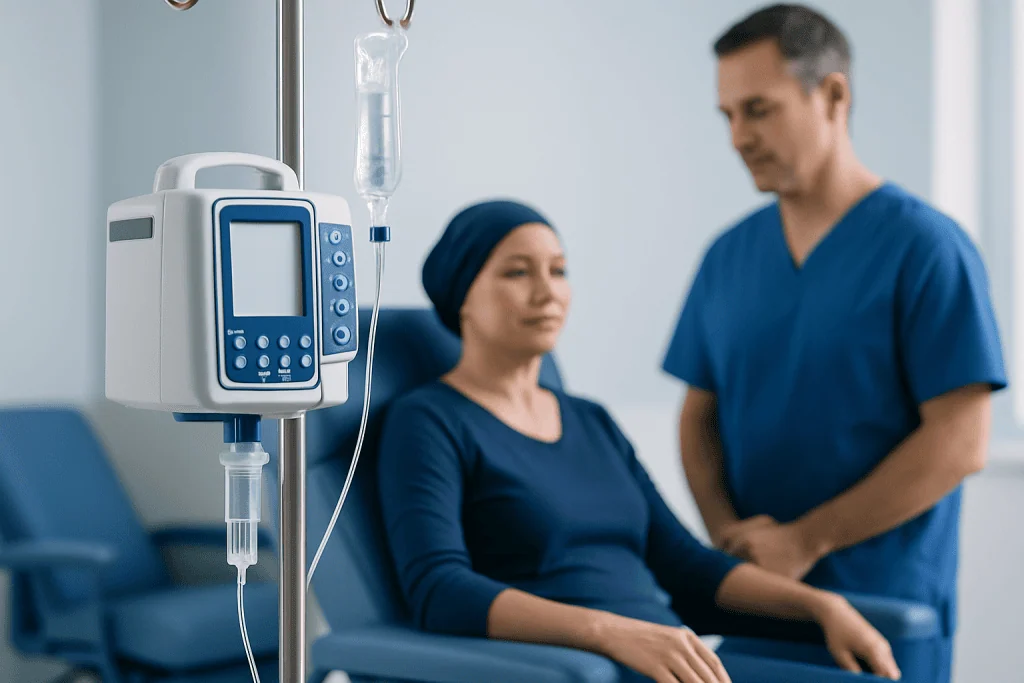
Chemotherapy is a group of medicines that damage or slow the growth of rapidly dividing cells. It is most often used to treat cancer, but the exact medicines, route and schedule are chosen according to the cancer type, stage, molecular features, general health and treatment goals. It may be given alone or alongside surgery, radiotherapy, immunotherapy, targeted therapy or hormone treatment.
Depending on the situation, chemotherapy may aim to cure cancer, lower the chance of cancer returning after surgery, shrink a tumor before another treatment, control cancer growth or ease cancer-related symptoms. The decision is individualized. An oncology team weighs expected benefits against possible risks and considers a person’s blood counts, kidney and liver function, other medical conditions, previous treatments and personal priorities.
Some patients receive chemotherapy through a vein in the arm. Others use a central venous catheter or implanted port, which can reduce repeated needle sticks and allow certain medicines to be administered more safely. Oral chemotherapy is taken at home but still requires careful monitoring. Patients can learn more about chemotherapy treatment options and the monitoring involved from their oncology team.
Not every person with cancer needs chemotherapy, and not every chemotherapy plan produces the same side effects. A clear discussion of the purpose of treatment and likely day-to-day impact can help patients and families plan ahead.
What Happens on Chemotherapy Day: Step by Step

Before chemotherapy begins, patients commonly have a consultation and baseline tests. These may include blood tests, a review of heart, kidney or liver function when relevant, and imaging or pathology review. The team explains the treatment plan, how often treatment will occur, possible side effects and who to contact between appointments.
On infusion day, staff usually check identification, current symptoms, temperature, blood pressure and weight. Blood results may be reviewed before treatment is approved, because chemotherapy may need to be postponed or adjusted if blood counts or organ-function results are not within a safe range. Patients should mention new symptoms, medicines, infections, pregnancy concerns or changes in how they have been feeling.
Many treatment plans include medicines before chemotherapy to help prevent nausea, allergic reactions or other treatment-related effects. Chemotherapy is then administered by infusion, injection or another route according to the prescribed protocol. Nurses monitor the patient and can respond quickly if discomfort, burning, itching, breathlessness, dizziness or other symptoms develop.
After treatment, staff provide instructions for the days ahead and arrange the next appointment. Some people feel well enough to travel home independently, while others prefer a companion, especially after a first session or after medicines that cause drowsiness. It is helpful to keep the written instructions somewhere easy to find.
What Are Some Must-Haves to Have During Chemotherapy?
The true must-haves are the items that help the patient receive treatment safely: identification or clinic documents, an up-to-date medicine list, the oncology team’s contact details and a way to get home. A phone and charger are especially useful for communicating with family or calling the care team if plans change.
For comfort, many patients value water, permitted snacks, warm layers, lip balm, tissues and entertainment. Infusion rooms can feel cool, and treatment times may be longer than expected. A shirt or top with easy access to the infusion site can make the visit more convenient, particularly for people with a port in the chest.
Food choices should be discussed with the oncology team, especially for people with diabetes, kidney disease, mouth sores, swallowing difficulty or infection-related precautions. Food safety matters when immunity is low: snacks should be fresh, properly stored and prepared hygienically. Raw or unpasteurized foods may not be appropriate for some patients.
Patients should avoid starting vitamins, herbal products, cannabis products or over-the-counter medicines without professional advice. Some products can interfere with chemotherapy, increase bleeding risk or affect liver metabolism. The safest approach is to bring a complete list of all products already being used and ask the oncology pharmacist or doctor to review it.
What Are Good Signs That Chemo Is Working?
Good signs that chemotherapy is working depend on why it is being given and cannot be judged reliably from side effects alone. For example, pain, cough, pressure symptoms, bleeding or fatigue related to cancer may improve in some people. However, symptoms may also fluctuate for reasons unrelated to whether treatment is controlling the cancer.
Oncologists usually evaluate response using a combination of clinical examination, blood tests, tumor markers when appropriate, and imaging such as CT, MRI, PET or ultrasound scans. The timing of these assessments varies by cancer type and treatment plan. In some settings, surgery or pathology results provide important information after treatment.
Hair loss, nausea, tiredness or low blood counts do not prove that chemotherapy is working, and having few side effects does not mean it is ineffective. Side effects reflect how the body responds to medicines, while treatment response is determined through planned medical assessment.
Patients should ask their oncologist when response will be reviewed and what measures will be used. Knowing this in advance can reduce the understandable urge to interpret each symptom or each treatment day as a definite sign of success or failure.
What Week of Chemo Is the Hardest?
There is no universal hardest week of chemotherapy. Some people find the first cycle most challenging because everything is unfamiliar and it is difficult to predict their individual reaction. Others notice cumulative fatigue, neuropathy, appetite changes or emotional strain after several cycles, particularly with longer treatment schedules.
Many side effects follow a pattern within each cycle. For certain regimens, tiredness or nausea may be more noticeable in the first few days after treatment. White blood cell levels may reach their lowest point, called the nadir, at a later point in the cycle, which can increase infection risk. The timing differs by medicine, dose and individual circumstances, so patients should follow their own team’s instructions rather than a general timeline.
Keeping a simple symptom diary can be helpful. It may record appetite, fluid intake, bowel changes, temperature, sleep, pain, numbness or tingling, emotional wellbeing and the dates symptoms occur. This information helps the team tailor supportive care and decide whether treatment adjustments are needed.
Supportive medicines, nutrition advice, exercise guidance and symptom-management strategies can often make treatment more manageable. Patients should report symptoms early rather than waiting for the next scheduled appointment.
What I Wish I Knew Before Chemo
Many patients later say they wish they had known that chemotherapy is highly individual. Experiences described by friends, family members or online communities may be helpful for emotional support, but they cannot predict a person’s own response. Treatment plans, doses, cancer types and available supportive medicines differ.
It can also help to know that planning support is part of care. Patients may need help with transport, meals, childcare, work arrangements or household tasks during some cycles. Giving friends and relatives specific, manageable ways to help can be easier than trying to manage all practical demands alone.
Before treatment starts, it is reasonable to ask about fertility preservation, contraception, sexual health, dental care, vaccinations, travel, work, exercise and eating. Some chemotherapy treatments can affect fertility or pregnancy, and decisions are ideally addressed before the first dose when possible. Emotional support from a counselor, oncology social worker, support group or mental health professional can also be valuable.
Acibadem International’s multidisciplinary specialists and JCI-accredited hospitals diagnose and treat cancer for international patients, with treatment planning and supportive care tailored to individual clinical needs.
Recovery, Benefits, Risks and When to Seek Medical Care
Recovery between chemotherapy treatments varies. Some people return to many usual activities quickly, while others need extra rest for several days or longer. Gentle movement, regular fluids when allowed, nourishing meals, sleep and accepting practical help can support recovery. The care team may recommend blood tests between cycles and will adjust the plan if side effects become difficult or unsafe.
Potential benefits include shrinking or controlling cancer, reducing recurrence risk, making surgery or radiotherapy more effective, or relieving symptoms. Possible risks include fatigue, nausea, vomiting, appetite changes, mouth sores, diarrhea or constipation, hair loss, skin or nail changes, low blood counts, infection risk, bruising or bleeding, nerve symptoms and effects on fertility. Certain medicines may also affect organs such as the heart, kidneys, liver or lungs, which is why monitoring is important.
When to seek medical care: Patients should contact their oncology team promptly for a fever or chills, particularly if the team has given a temperature threshold; signs of infection; new shortness of breath; chest pain; severe or persistent vomiting or diarrhea; inability to drink fluids; confusion; unusual bleeding or bruising; severe pain; a rash or swelling; or redness, pain or discharge around a line or port. Emergency services should be used for severe symptoms or whenever urgent help is needed.
Patients should use the specific emergency instructions supplied by their oncology unit, as these take priority over general advice. Early contact allows the team to assess symptoms and provide appropriate treatment, which may include supportive medicines, tests or a change in the chemotherapy schedule.
Frequently asked questions
Can a patient eat before chemotherapy?
In many cases, patients can eat a light meal before chemotherapy, and having food in the stomach may help with nausea. However, instructions vary when tests, sedation or certain procedures are planned. The oncology team should provide individualized advice about eating and drinking before each visit.
Should someone bring a caregiver to chemotherapy?
A caregiver can provide reassurance, help remember information and assist with transport after treatment. Whether a companion can stay in the infusion area depends on local infection-control and space policies. Patients should check with the treatment center before the appointment.
How long does a chemotherapy appointment take?
Appointment length depends on the medicines, route of treatment, pre-treatment tests and observation requirements. Some visits take less than an hour, while others last several hours. The first treatment may take longer because education, consent and monitoring are often more extensive.
Can chemotherapy side effects be prevented?
Not all side effects can be prevented, but many can be reduced or treated with supportive care. Antinausea medicines, mouth care, nutrition support, infection precautions and treatment adjustments may help. Patients should report side effects early so the oncology team can respond.
Is it safe to exercise during chemotherapy?
For many people, gentle activity such as walking is safe and may support mood, sleep and energy. The appropriate amount depends on blood counts, treatment effects, balance, pain, heart or lung health and other factors. An oncology clinician should advise on a suitable exercise plan.
When should a patient call the oncology team during chemotherapy?
Patients should call promptly for fever, chills, symptoms of infection, severe vomiting or diarrhea, dehydration, unusual bleeding, severe pain, breathing problems or a sudden change in condition. The oncology unit may provide a 24-hour number and specific temperature guidance. Those instructions should always be followed.
References
- National Cancer Institute
- American Cancer Society
- American Society of Clinical Oncology
- Centers for Disease Control and Prevention
- European Society for Medical Oncology
This article is for general information only and is not a substitute for professional medical advice. Please consult a qualified doctor about your individual situation.
Oncology care in Turkey — second opinion and treatment plan
JCI-accredited · board-certified surgeons · reply within 24h
Add us as a Preferred Source to see more of our trusted health content across Google Search, AI Overviews and Discover.
Check your numbers in seconds
BMI, calories, due date, blood pressure and 30+ more clinical calculators — free, instant, doctor-reviewed ranges.

More from the Health Library



Related Specialists

Dr. Mürüvvet Ayten Tüzünalp
Ophthalmology
Dr. Perviz Paşaoğlu
Otorhinolaryngology
Fzt. İrfancan Velioğlu
Physical Medicine & Rehabilitation
Dr. Aynur Eken
Medical Oncology