Abrasion: An Evidence-Based Guide for Patients

An abrasion is usually a shallow scrape affecting the outer skin layers. Cleaning the wound early is the most important step in reducing infection risk.
Key Takeaways
- An abrasion is usually a shallow scrape affecting the outer skin layers.
- Cleaning the wound early is the most important step in reducing infection risk.
- Medical care is important for large, deep, dirty, or slow-healing abrasions.
- Signs of infection include increasing redness, swelling, warmth, pus, and fever.
- Tetanus vaccination status should be checked after some skin injuries.
An abrasion is a superficial injury in which the top layers of skin are scraped away, often causing pain, mild bleeding, and tenderness. Most abrasions heal well with prompt cleaning and simple wound care, but some need medical attention to prevent infection, scarring, or hidden deeper injury.
Overview
An abrasion is a type of skin injury caused by friction or scraping against a rough surface. It removes part of the outer skin, often leaving a raw, tender area that may ooze a small amount of blood or clear fluid. Common examples include scraped knees, road rash after a fall, and minor sports-related skin injuries.
In most cases, an abrasion is considered a minor wound and can be managed with careful cleaning, protection, and observation at home. The main concerns are pain, contamination with dirt or debris, and the possibility of infection if the skin barrier is not cared for properly.
Abrasion is different from a cut, puncture, or deeper tear. A cut usually has cleaner edges, while a puncture goes deeper into the tissue through a small opening. Some abrasions also occur alongside bruises, sprains, or fractures after trauma, so the surrounding area should always be checked for swelling, loss of movement, or severe pain.
How an Abrasion Looks and Feels

The appearance of an abrasion depends on how much skin has been scraped away and whether the wound contains debris such as dirt, gravel, or fabric fibers. The area often looks pink or red at first, then may form a crust or scab as healing begins. Mild swelling and stinging are common, especially during washing.
Many abrasions are painful because the outer skin normally protects sensitive nerve endings. Even a small scrape can hurt more than expected, particularly on joints, hands, elbows, or the face. If the skin loss is broad, the wound may leak fluid for a day or two before it starts to dry.
People may notice:
- Surface skin loss or a scraped patch
- Stinging or burning pain
- Mild bleeding or oozing
- Redness and tenderness
- Visible dirt, sand, or small particles in the wound
If an abrasion is much more painful than it looks, or if movement is difficult, there may be a deeper injury underneath. In these situations, a clinician may need to assess for tendon, joint, nerve, or bone damage.
Causes and Risk Factors
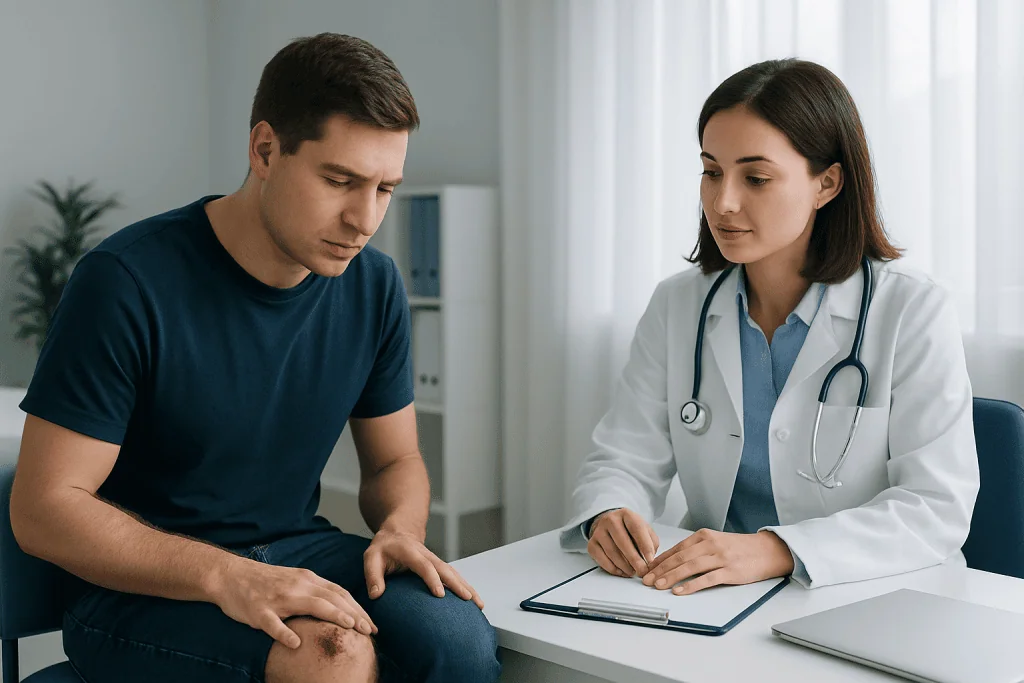
Abrasion happens when skin rubs forcefully against a rough surface. This is common in children during play, in adults after trips and falls, and in sports, cycling, running, or workplace accidents. Road rash from sliding on pavement can create a large abrasion, even if the wound is still technically superficial.
Some factors increase the chance of getting an abrasion or make healing more difficult. These include poor balance, high-impact activity, not using protective clothing, and delayed cleaning after an injury. People with diabetes, poor circulation, weakened immunity, or certain skin conditions may also heal more slowly and need closer follow-up.
Risk factors for complications include:
- Contaminated wounds with dirt, glass, or gravel
- Large skin surface area involved
- Injuries over joints, hands, feet, or the face
- Older age or fragile skin
- Underlying medical conditions that impair healing
- Inadequate tetanus protection
Repeated friction can also cause abrasion-like skin injury, such as chafing from clothing, footwear, or sports equipment. Although these injuries may seem mild, damaged skin still needs protection to avoid worsening irritation or secondary infection.
First Aid and Early Home Care
The first priority is to stop active bleeding, although many abrasions bleed only lightly. Gentle pressure with a clean cloth or sterile gauze is usually enough. After that, the wound should be rinsed thoroughly with clean running water to remove dirt and lower the bacterial load. Mild soap can be used on the surrounding skin, but harsh scrubbing inside the wound should be avoided.
If visible debris remains, careful removal is important because trapped particles can delay healing and increase infection risk. Small particles may sometimes be removed with clean tweezers, but if gravel or dirt is embedded deeply, medical cleaning may be safer. Keeping the abrasion moist with an appropriate protective ointment and covering it with a non-stick dressing can support healing and reduce pain from friction.
Simple home care often includes:
- Rinsing the abrasion well as soon as possible
- Removing loose debris if it can be done gently and safely
- Applying a clean dressing and changing it regularly
- Protecting the area from further rubbing or trauma
- Watching for increasing redness, swelling, or discharge
Most superficial abrasions improve steadily over several days. It is usually best not to pick at the scab or healing surface, as this can reopen the wound and increase the chance of scarring. If a person has a more extensive injury, associated swelling, or significant pain, doctors may assess whether imaging or more advanced diagnostic imaging is needed to rule out deeper damage.
Diagnosis and When a Wound Needs Medical Assessment
Abrasion is usually diagnosed by physical examination. A clinician checks the size and depth of the wound, how much contamination is present, and whether there are signs of infection or injury to nearby structures. They may also ask how the injury happened, when it occurred, and whether tetanus vaccination is up to date.
Medical assessment is especially helpful when the abrasion is on the face, near the eye, over a joint, or across the hands and feet, where function and cosmetic healing are important. A wound that appears to be only a scrape may still hide a deeper soft-tissue injury, especially after a bicycle crash, sports trauma, or high-speed fall.
Doctors may consider further tests if there is concern about fracture, foreign bodies, or other trauma-related problems. For example, if the injury occurred during a major fall or collision and there is lingering severe pain, related conditions such as fracture or joint injury may need evaluation. In selected cases, X-ray or other imaging can help look for hidden damage or retained material.
Wounds should be reviewed urgently if they cannot be cleaned properly, if bleeding does not stop, or if there is spreading redness or fever. People with conditions that affect healing may need earlier professional advice even for injuries that seem minor at first.
Treatment Options and Healing
Treatment depends on the size, location, and cleanliness of the abrasion. Small superficial scrapes often need only irrigation, dressing, and routine follow-up at home. Larger or more contaminated abrasions may require professional wound cleaning, removal of embedded debris, and a plan for pain relief and dressing changes.
Antibiotics are not necessary for every abrasion, but they may be considered if there is established infection, heavy contamination, or patient-specific risk factors. Tetanus prevention is an important part of wound care; a clinician may recommend a booster depending on the type of injury and vaccination history. When the abrasion is extensive, clinicians also look for fluid loss, tissue damage, and mobility problems.
Healing generally occurs from the edges and from skin cells in the remaining superficial layers. During recovery, the wound may form a light crust and become less tender over time. Persistent drainage, increasing pain, or a bad odor can suggest infection rather than normal healing.
If an abrasion occurs alongside more complex trauma, treatment may involve specialists from emergency medicine, orthopedics, plastic surgery, or wound care. Near the end of the care pathway, patients seeking international evaluation may also learn that Acibadem International’s multidisciplinary specialists and JCI-accredited hospitals diagnose and treat trauma-related skin and soft tissue injuries, including associated wounds that need broader assessment.
Prevention and Self-care During Recovery
Many abrasions can be prevented by practical safety measures. Wearing helmets, knee and elbow protection when appropriate, using well-fitting footwear, and keeping walkways clear can reduce the chance of falls and skin scraping injuries. For children, supervision during active play and prompt cleaning of scrapes can lower the risk of complications.
During recovery, the goal is to protect the wound while supporting normal healing. Dressings should be kept clean and changed as advised or whenever they become wet or dirty. Gentle washing is usually preferred over repeated use of strong antiseptics, which can sometimes irritate healing tissue.
Helpful self-care includes:
- Covering the area during sports or outdoor activity until healed
- Avoiding friction from tight clothing or rough fabrics
- Not scratching, peeling, or picking at the wound
- Maintaining good general health, hydration, and balanced nutrition
- Seeking advice sooner if healing is slow due to diabetes or other chronic illness
Sun protection can also matter after the skin closes, especially for facial or large abrasions. Newly healed skin may darken or discolor more easily when exposed to sunlight, so protecting the area can help improve cosmetic recovery.
When to Seek Medical Care
Many abrasions can be treated at home, but some situations call for prompt medical attention. This is especially true if the wound is large, deep, heavily contaminated, or caused by an animal bite or a dirty object. Medical review is also important if the person has diabetes, poor circulation, reduced immunity, or uncertain tetanus vaccination status.
A doctor should be contacted if pain is worsening rather than improving, if the skin around the abrasion becomes increasingly red and warm, or if pus, fever, or red streaking appears. These can be signs of infection. An abrasion on the face, near the eye, or over a joint may need more careful assessment because function and appearance matter.
Urgent care is recommended when there is heavy bleeding, inability to move a limb normally, numbness, or concern for deeper injury. Some abrasions occur in more serious accidents and may be accompanied by sprains, dislocations, or hidden trauma that requires further treatment. If symptoms suggest structural injury, a clinician may assess for related problems such as sprain and decide whether specialist care is needed.
Frequently asked questions
What is an abrasion?
An abrasion is a superficial scrape in which the top layers of skin are rubbed away. It is commonly caused by a fall or friction against a rough surface and usually heals with basic wound care.
How do you treat a skin abrasion at home?
Home treatment usually starts with rinsing the wound well under clean running water and gently removing loose dirt. After cleaning, the area is typically covered with a clean non-stick dressing and monitored for signs of infection.
How long does an abrasion take to heal?
A small superficial abrasion often improves within several days and may heal within one to two weeks, depending on its size and location. Larger abrasions or wounds in people with slower healing may take longer.
Should an abrasion be left open or covered?
Many abrasions heal better when kept clean, slightly moist, and protected with a dressing rather than left exposed to friction and dirt. Covering the wound can also reduce pain and help protect new healing skin.
What are the signs that an abrasion is infected?
Warning signs include increasing redness, warmth, swelling, worsening pain, pus, bad odor, or fever. If these symptoms appear, a healthcare professional should assess the wound.
Do all abrasions need antibiotics?
No, most simple abrasions do not need antibiotics. They may be considered when there is clear infection, heavy contamination, or medical conditions that raise the risk of complications.
When should someone worry that an abrasion is more than a scrape?
A person should seek medical advice if the injury is very painful, difficult to clean, associated with numbness, or limits normal movement. These features can suggest a deeper injury beneath the skin, not just a surface abrasion.
References
- American Academy of Dermatology
- Centers for Disease Control and Prevention
- National Health Service
- MedlinePlus
- Mayo Clinic
This article is for general information only and is not a substitute for professional medical advice. Please consult a qualified doctor about your individual situation.
Joint and spine care in Turkey — expert assessment & treatment
JCI-accredited · board-certified surgeons · reply within 24h
Add us as a Preferred Source to see more of our trusted health content across Google Search, AI Overviews and Discover.