ACL Reconstruction Recovery: Timeline, Rehab, and Return to Sport
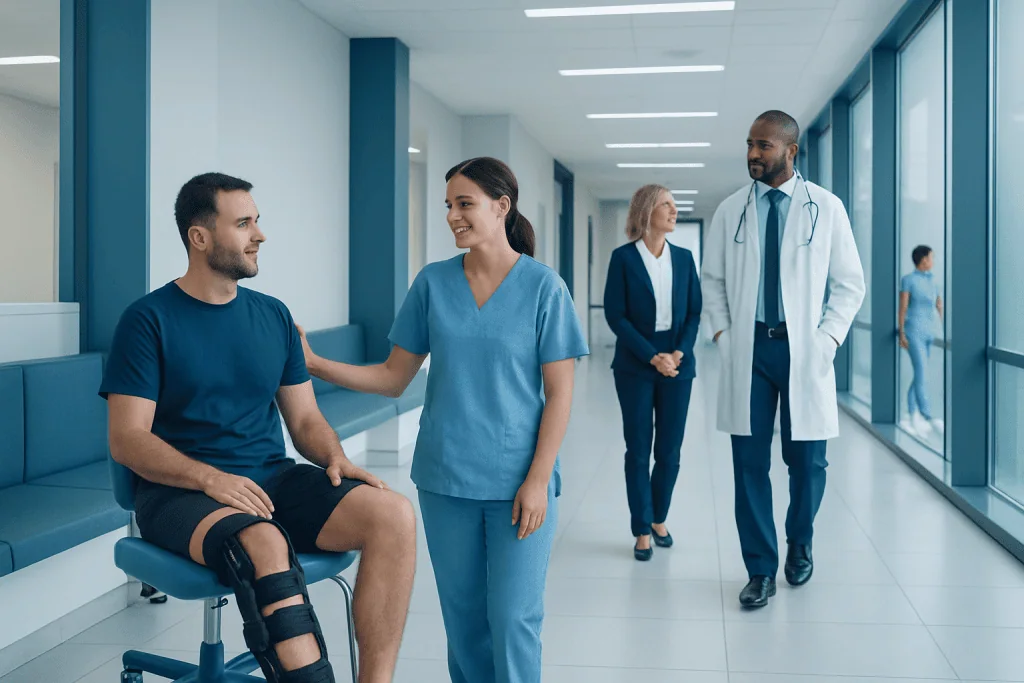
Most people recover in stages over several months rather than weeks. Physical therapy is essential for regaining motion, strength, balance, and confidence.
Key Takeaways
- Most people recover in stages over several months rather than weeks.
- Physical therapy is essential for regaining motion, strength, balance, and confidence.
- Return to sport depends on function and testing, not only on time since surgery.
- Swelling, pain control, and protection of the graft are important early goals.
- Following the surgeon’s and therapist’s instructions helps lower the risk of reinjury.
ACL reconstruction recovery is a gradual process that focuses on healing, restoring knee movement, rebuilding strength, and safely returning to daily activities or sport. Recovery timelines vary, but a structured rehabilitation plan is one of the most important factors in a good outcome.
Overview of ACL Reconstruction Recovery
ACL reconstruction recovery begins immediately after surgery and continues through a series of planned rehabilitation stages. The anterior cruciate ligament, or ACL, helps stabilize the knee during turning, pivoting, landing, and sudden changes of direction. After reconstruction, the new graft needs time to heal into the bone and gradually become strong enough to handle higher loads.
Recovery is not the same for everyone. Age, general health, activity level, associated knee injuries, the type of graft used, and how closely rehabilitation is followed can all affect progress. Some people regain daily function relatively quickly, while return to cutting or pivoting sports often takes longer.
It is helpful to think of recovery as a combination of healing and retraining. The knee must recover from surgery, but the muscles, balance system, and movement patterns also need to be rebuilt. This is why physical therapy plays such a central role after ACL reconstruction.
Typical ACL Surgery Recovery Timeline
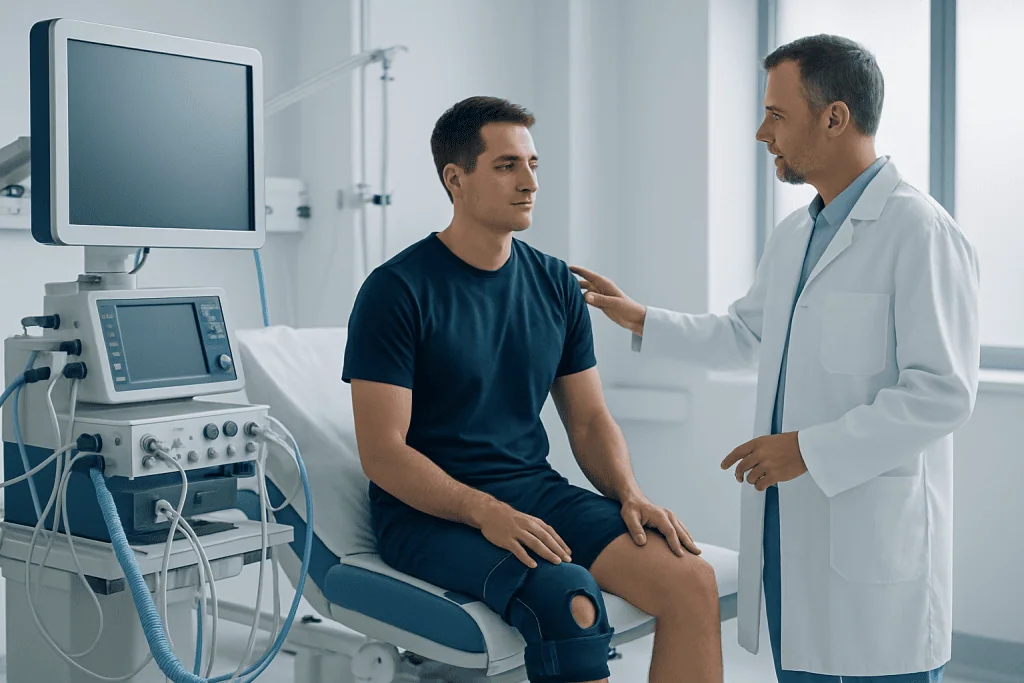
The early days after surgery usually focus on protecting the knee, managing pain and swelling, and starting gentle movement. Many patients begin walking with crutches and, depending on the surgeon’s advice, may use a brace. Early goals often include straightening the knee fully, gradually improving bending, and waking up the quadriceps muscle at the front of the thigh.
During the first 2 to 6 weeks, rehabilitation often progresses toward a more normal walking pattern, better range of motion, and basic strengthening. Swelling may still come and go, especially after activity. Daily tasks usually become easier during this stage, but the knee can still feel weak or stiff.
From about 6 weeks to several months, treatment usually emphasizes strength, endurance, balance, and control of movement. Exercises may advance from simple strengthening to more dynamic tasks such as step work, single-leg training, light jogging, and controlled agility drills when appropriate. Return to sport commonly requires many months and should be guided by clinical assessment and functional testing rather than the calendar alone.
- Days 1-14: swelling control, pain management, safe walking, early motion
- Weeks 2-6: improve bending and straightening, normalize walking, build basic strength
- Weeks 6-12: progress strength, balance, and movement quality
- Months 3-6 and beyond: sport-specific drills, impact progression, return-to-sport testing
What to Expect in the First Weeks
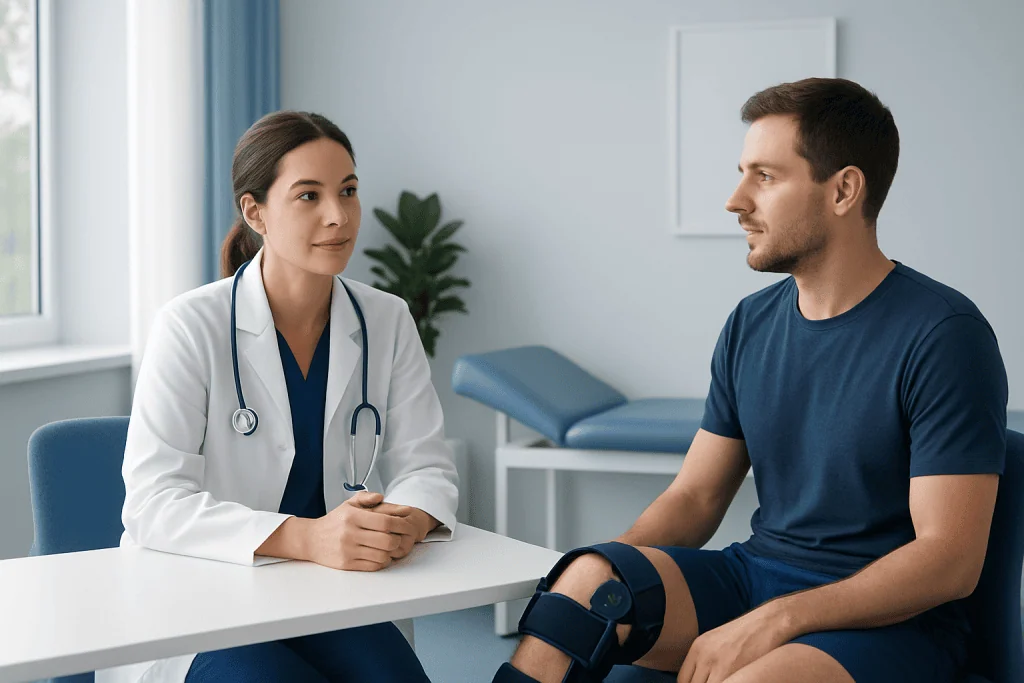
The first few weeks can feel demanding, even when recovery is going well. The knee is often swollen, warm, and stiff, and it may be difficult to fully straighten the leg or activate the quadriceps. Elevation, ice if recommended, prescribed medications, and gentle home exercises are commonly used to manage these early challenges.
Patients are usually advised to follow wound care instructions carefully and watch for signs that need medical review, such as fever, increasing redness, drainage, worsening calf pain, or shortness of breath. Mild bruising and discomfort can be expected, but symptoms that are rapidly worsening should not be ignored.
Regular physiotherapy visits help ensure that progress is on track. Early milestones often include reducing swelling, regaining full extension, improving bending, and walking more comfortably. These may seem like small steps, but they are important foundations for the later phases of recovery.
Rehabilitation and Physical Therapy
Rehabilitation after ACL reconstruction is usually structured and progressive. The program is designed to protect the graft while restoring range of motion, muscle strength, coordination, balance, and confidence in the knee. Exercises are typically adjusted over time based on symptoms, exam findings, and functional progress.
In the beginning, therapy may focus on straight-leg raises, gentle bending and straightening, patellar mobility, and quadriceps activation. As recovery continues, strengthening often expands to include the hamstrings, gluteal muscles, calves, and core. These muscle groups all contribute to better knee support and safer movement patterns.
Later phases often include neuromuscular training, single-leg control, landing mechanics, running progression, and sport-specific drills. A well-planned program helps reduce the risk of moving too fast or returning to high-demand activity before the knee is ready. For many people, this stage is where confidence and movement quality become just as important as strength.
- Range-of-motion exercises to reduce stiffness
- Quadriceps and hamstring strengthening
- Balance and proprioception training
- Gait retraining and movement mechanics
- Gradual return to running, jumping, and cutting when cleared
Pain, Swelling, and Common Recovery Challenges
Some pain and swelling are expected after ACL reconstruction, especially in the first weeks and after harder rehabilitation sessions. These symptoms do not always mean there is a problem, but they can signal that the knee needs more rest, better load management, or a temporary step back in exercise intensity. Consistent communication with the care team can help patients progress safely.
Stiffness is another common issue, particularly difficulty fully straightening the knee. Regaining extension early is often emphasized because it affects walking and later function. Weakness in the quadriceps can also linger and may take months to improve, which is why strengthening and repetition are so important.
Some patients feel frustrated if recovery seems slower than expected. This is understandable, especially for athletes eager to return to training. However, ACL reconstruction recovery is rarely completely linear. Small setbacks can happen, and a patient, steady approach usually supports the best long-term result.
Return to Daily Activities and Return to Sport
Returning to work, school, driving, and household activities depends on the person’s comfort, leg control, and the physical demands of daily life. Sedentary work may be possible sooner than jobs that require standing, lifting, climbing, or manual labor. Driving is usually considered only when a person can safely control the vehicle and is no longer affected by medications that impair alertness.
Return to sport is more complex than simply feeling better. Even if pain is reduced, the knee may still need substantial recovery in strength, endurance, movement control, and confidence. Doctors and physical therapists often use a combination of strength testing, hop tests, movement assessment, and symptom review before clearing an athlete for higher-risk activities.
Sports that involve pivoting, jumping, or sudden direction changes usually require the most caution. A gradual, sport-specific progression is often recommended so that the knee can adapt safely. In some cases, ongoing rehabilitation continues even after a person has resumed training or competition.
Tips to Support Recovery and Lower Reinjury Risk
Consistency is one of the strongest predictors of progress. Attending follow-up appointments, doing home exercises as instructed, and advancing activity only when advised can make a meaningful difference. Sleep, good nutrition, hydration, and avoidance of tobacco products may also support healing and overall recovery.
It is also important to focus on the whole body, not only the knee. Strong hips, core, and lower-leg muscles help improve alignment and movement control. For athletes, retraining landing mechanics, deceleration, and cutting technique may be part of reducing reinjury risk after return to sport.
Patients should avoid comparing their recovery too closely with someone else’s. Timelines can differ, and pushing too hard too early may delay progress. Near the end of recovery, some people benefit from an expert review of their readiness to return to sport. At centers such as Acibadem International, multidisciplinary specialists in JCI-accredited hospitals evaluate knee recovery and rehabilitation needs for international patients.
When to Contact a Doctor
Routine follow-up after ACL reconstruction is important, but some symptoms need earlier medical advice. A patient should contact the surgical team if pain or swelling suddenly becomes much worse, if the wound shows increasing redness or drainage, or if there is fever that could suggest infection. These concerns do not always indicate a serious problem, but they should be checked promptly.
Urgent assessment is also important for calf swelling or pain, chest pain, or shortness of breath, as these may be warning signs of a blood clot or another complication. Mechanical symptoms such as a knee that repeatedly gives way, locks, or cannot be moved normally should also be reviewed.
More commonly, patients may simply need guidance if progress has stalled. Persistent stiffness, difficulty regaining strength, or trouble returning to basic activities can often be improved when addressed early. The safest approach is to discuss concerns with a qualified orthopedic surgeon or physical therapist rather than trying to push through them alone.
Frequently asked questions
How long does ACL reconstruction recovery usually take?
Recovery usually takes several months and often continues for longer when the goal is a full return to sport. Daily activities may improve earlier, but higher-level athletic movements typically require more time, testing, and rehabilitation.
When can someone walk after ACL reconstruction?
Many patients begin walking shortly after surgery with crutches and sometimes a brace, depending on the surgeon’s instructions. The goal is to move toward a normal walking pattern gradually as pain, swelling, and muscle control improve.
Is physical therapy necessary after ACL surgery?
Yes, physical therapy is a key part of recovery for most patients. It helps restore motion, rebuild strength, improve balance, and prepare the knee for safe return to daily activities and sport.
Why does the knee still feel weak months after surgery?
Persistent weakness is common, especially in the quadriceps muscle. The knee needs time to recover from surgery, and muscles may take months of structured exercise to regain strength and control.
When is it safe to return to sport after ACL reconstruction?
Return to sport should be based on function, strength, movement quality, and medical clearance rather than time alone. Many athletes need a gradual progression and formal testing before returning to pivoting or contact sports.
What symptoms after ACL surgery should not be ignored?
A patient should seek medical advice for increasing redness, drainage, fever, severe calf pain or swelling, chest pain, shortness of breath, or sudden worsening of knee symptoms. These signs may need prompt assessment to rule out complications.
References
- American Academy of Orthopaedic Surgeons
- National Institute of Arthritis and Musculoskeletal and Skin Diseases
- American Physical Therapy Association
- MedlinePlus
- OrthoInfo
This article is for general information only and is not a substitute for professional medical advice. Please consult a qualified doctor about your individual situation.
ACL Reconstruction in Turkey — costs, top hospitals & a free quote
JCI-accredited · board-certified surgeons · reply within 24h
Add us as a Preferred Source to see more of our trusted health content across Google Search, AI Overviews and Discover.

Orthopedics & Spine
Care for bones, joints and the musculoskeletal system, including joint replacement, sports injuries and trauma.
125 specialists in this unitMore from the Health Library
Related Specialists
Prof. Dr. Hakan Yildiz
Gastroenterology
Dt. Mehpere Yener
Dentistry
Prof. Dr. Kerem Bilsel
Orthopedic Surgery & Traumatology
Asst. Prof. Dr. Mustafa Sungur
Orthopedic Surgery & Traumatology