Acromegaly: Growth Hormone Excess, Diagnosis, and Treatment

Acromegaly develops slowly, often causing gradual changes in the face, hands, feet, skin, joints, and metabolism. Most cases are caused by a noncancerous pituitary adenoma that produces excess growth hormone.
Key Takeaways
- Acromegaly develops slowly, often causing gradual changes in the face, hands, feet, skin, joints, and metabolism.
- Most cases are caused by a noncancerous pituitary adenoma that produces excess growth hormone.
- Diagnosis usually includes IGF-1 blood testing, growth hormone suppression testing, and pituitary MRI.
- Treatment may involve transsphenoidal surgery, medications, radiation therapy, or a combination of approaches.
- Long-term follow-up is important because hormone levels, tumor control, and related health conditions need ongoing monitoring.
Acromegaly is a rare endocrine condition in which the body produces too much growth hormone, usually because of a benign pituitary tumor. Early diagnosis and individualized treatment can reduce symptoms, control hormone levels, and help prevent long-term complications.
Overview
Acromegaly is a hormonal disorder that occurs when the body produces too much growth hormone after the growth plates in the bones have closed. Growth hormone is made by the pituitary gland, a small gland at the base of the brain that helps regulate growth, metabolism, and several other hormonal systems. In adults, excess growth hormone does not make a person taller; instead, it causes gradual enlargement of soft tissues and certain bones, especially in the face, hands, and feet.
The condition usually develops slowly over many years. Because the physical changes are gradual, people may not notice them at first, and diagnosis is sometimes delayed. A ring may feel tight, shoe size may increase, facial features may become broader, or dental spacing may change. These signs can be subtle when they appear one by one.
Acromegaly is treatable. The main goals of care are to reduce growth hormone and insulin-like growth factor 1, often called IGF-1, control or remove the pituitary tumor when present, improve symptoms, and reduce the risk of complications such as high blood pressure, diabetes, sleep apnea, and joint disease. Care is usually coordinated by an endocrinologist, often with neurosurgery, radiology, ophthalmology, cardiology, and other specialties when needed.
Symptoms and Body Changes
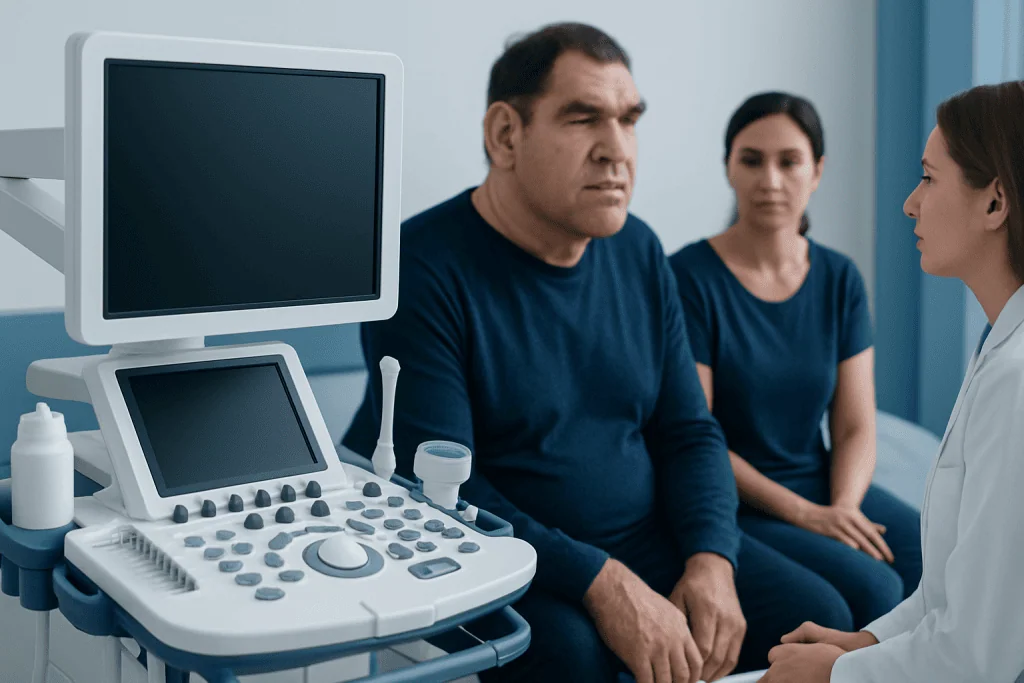
Symptoms of acromegaly often appear gradually and vary from person to person. Many of the changes are related to increased soft tissue growth and thickening of bones in areas that remain responsive to growth hormone and IGF-1. Common early clues include enlarged hands and feet, a need for larger shoes or gloves, rings that no longer fit, and changes in facial appearance.
Facial changes may include a more prominent jaw or forehead, enlarged nose or lips, wider spacing between teeth, and a deeper voice due to thickening of tissues in the throat and vocal cords. Skin may become thicker or oilier, and sweating may increase. Some people develop skin tags. Headaches can occur, especially if a pituitary tumor is pressing on nearby structures.
Acromegaly can also affect many body systems. Possible symptoms and associated problems include:
- Joint pain, stiffness, or carpal tunnel syndrome
- Fatigue, muscle weakness, or reduced exercise tolerance
- Snoring or obstructive sleep apnea
- High blood pressure or heart enlargement
- Changes in blood sugar, including insulin resistance or diabetes
- Menstrual changes, reduced libido, or erectile dysfunction
- Vision changes, especially loss of side vision, if the tumor presses on the optic pathways
Because these symptoms can have many causes, acromegaly is usually confirmed with hormone tests rather than appearance alone. Comparing current photographs with older photos can sometimes help doctors recognize the pattern of gradual change.
Causes and Risk Factors

Most cases of acromegaly are caused by a benign pituitary adenoma. This is a noncancerous tumor in the pituitary gland that produces too much growth hormone. The excess growth hormone signals the liver and other tissues to make increased amounts of IGF-1, which drives many of the body changes and metabolic effects seen in acromegaly.
Pituitary adenomas can vary in size. Smaller tumors may mainly cause hormone-related symptoms, while larger tumors can also press on nearby structures and cause headaches or visual field problems. A large pituitary tumor can sometimes interfere with the gland’s normal hormone production, affecting thyroid, adrenal, or reproductive hormones.
Rarely, acromegaly is caused by tumors outside the pituitary gland that produce growth hormone-releasing hormone, which stimulates the pituitary to make too much growth hormone. These tumors may arise in areas such as the pancreas or lungs, but this is uncommon. In children or adolescents whose growth plates have not yet closed, excess growth hormone causes gigantism rather than adult acromegaly, although the underlying hormonal mechanism is similar.
For most people, acromegaly is not caused by lifestyle habits and is not inherited. Rare genetic syndromes can increase the risk of pituitary tumors, particularly when acromegaly occurs at a young age or there is a family history of endocrine tumors. In such cases, genetic counseling or additional testing may be considered.
Diagnosis
Diagnosis begins with a medical history and physical examination. The doctor may ask about changes in shoe or ring size, facial features, sweating, headaches, sleep, joint symptoms, menstrual function, sexual function, blood pressure, and blood sugar. Old photographs, dental records, and changes noticed by family members can provide useful context, but laboratory testing is essential.
The key screening blood test is IGF-1. IGF-1 levels are more stable during the day than growth hormone levels, so they are useful for detecting chronic growth hormone excess. Results are interpreted according to age and sex, because normal ranges differ. If IGF-1 is elevated or the clinical suspicion remains strong, the doctor may order an oral glucose tolerance test with growth hormone measurement. In people without acromegaly, glucose normally suppresses growth hormone. In acromegaly, growth hormone often does not suppress appropriately.
Once biochemical testing supports the diagnosis, magnetic resonance imaging of the pituitary gland is usually performed to look for a pituitary adenoma and assess its size and relationship to nearby structures. If MRI does not show a pituitary cause, additional evaluation may be needed to search for rare non-pituitary sources of hormone stimulation.
Doctors also evaluate related health conditions. This may include visual field testing, blood pressure assessment, blood glucose or diabetes testing, sleep apnea evaluation, heart assessment, colon screening according to medical guidance, and tests for other pituitary hormones. This broader evaluation helps build a complete treatment plan and establishes a baseline for follow-up.
Treatment Options
Treatment is individualized according to tumor size, hormone levels, symptoms, overall health, and patient preferences. The main goals are to normalize or lower IGF-1 and growth hormone levels, relieve pressure symptoms if present, reduce tumor size or prevent tumor growth, and treat associated conditions. Many people need more than one treatment approach over time.
For many patients with a pituitary adenoma, transsphenoidal surgery is the first-line treatment. This operation is usually performed through the nose and sphenoid sinus to reach the pituitary gland, avoiding an external incision in many cases. When the tumor is well defined and can be safely removed, surgery may rapidly reduce hormone levels and relieve pressure on the optic pathways. Outcomes depend on factors such as tumor size, whether it has grown into nearby structures, and surgical expertise.
Medications are important when surgery is not possible, when hormone levels remain high after surgery, or when medical therapy is chosen as the primary approach. Common medication groups include somatostatin receptor ligands, which reduce growth hormone release; growth hormone receptor antagonists, which block the action of growth hormone and lower IGF-1 effects; and dopamine agonists, which may help some patients, especially with milder hormone elevation or mixed hormone-secreting tumors. The choice of medication depends on hormone results, tumor features, side effects, and response to treatment.
Radiation therapy may be considered when surgery and medication do not fully control the condition or when tumor growth remains a concern. Its effects may take years to develop, so ongoing medical therapy and monitoring are often needed during that period. Because radiation can affect normal pituitary function, long-term hormone follow-up is essential.
Monitoring, Complications, and Long-Term Care
Acromegaly is a long-term condition that requires regular follow-up, even after successful treatment. Doctors monitor IGF-1 and sometimes growth hormone levels to assess biochemical control. Repeat pituitary MRI may be recommended to evaluate any remaining tumor tissue or to check for recurrence. Follow-up frequency depends on the treatment received and how stable the condition is.
Managing associated health issues is just as important as controlling growth hormone. People with acromegaly may need care for high blood pressure, diabetes or prediabetes, sleep apnea, joint problems, headaches, and heart-related changes. If normal pituitary tissue has been affected by the tumor, surgery, or radiation, hormone replacement may be needed for deficiencies such as thyroid, adrenal, or sex hormone insufficiency.
Some physical changes improve after hormone levels are controlled, especially soft tissue swelling, sweating, headaches, and fatigue. Bone and joint changes may improve more slowly or may not fully reverse, particularly if the condition was present for many years before diagnosis. Supportive care such as physiotherapy, weight management when appropriate, sleep apnea treatment, dental care, and pain management can improve comfort and daily function.
Regular communication with an endocrinology team helps patients understand test results, treatment goals, and the meaning of remission or controlled disease. In some cases, a person may feel better before laboratory results are fully controlled, or hormone results may improve before all symptoms resolve. Both clinical wellbeing and objective hormone targets guide care.
Prevention and Self-Care
There is no proven way to prevent most cases of acromegaly because the condition is usually caused by a spontaneous benign pituitary adenoma. However, earlier recognition can reduce the time between symptom onset and diagnosis. People who notice progressive changes in facial features, increasing shoe or ring size, unexplained sweating, persistent headaches, or a combination of joint pain and metabolic changes should discuss these symptoms with a qualified doctor.
Self-care supports treatment but does not replace medical therapy. A balanced diet, regular physical activity suited to joint comfort, not smoking, healthy sleep habits, and routine monitoring of blood pressure and blood sugar can help reduce cardiovascular and metabolic risks. People with snoring, daytime sleepiness, or witnessed breathing pauses during sleep should ask about evaluation for sleep apnea.
Patients can prepare for appointments by keeping a list of symptoms, medications, prior test results, and questions. Bringing older photographs or noting changes in clothing, shoes, gloves, rings, or dental spacing may help the care team understand the timeline. It is also useful to ask which symptoms are expected to improve, how treatment success will be measured, and what follow-up schedule is recommended.
When to See a Doctor
A person should seek medical evaluation if they notice gradual enlargement of the hands or feet, facial changes such as a broader jaw or nose, new gaps between teeth, unexplained excessive sweating, persistent headaches, changes in vision, or symptoms of sleep apnea. These symptoms do not always mean acromegaly, but they deserve assessment, especially when several occur together or progress over time.
People already diagnosed with acromegaly should contact their doctor if headaches worsen, vision changes occur, symptoms return after treatment, or medication side effects develop. Follow-up should not be skipped, because hormone levels and tumor behavior can change even when symptoms are mild.
International patients who need evaluation or ongoing care can consider centers with coordinated endocrinology, neurosurgery, radiology, and related specialties. Acibadem International’s multidisciplinary specialists and JCI-accredited hospitals diagnose and treat pituitary and hormonal disorders, including acromegaly, for international patients. The most appropriate plan should always be based on individual medical evaluation and discussion with qualified clinicians.
Frequently asked questions
What is acromegaly?
Acromegaly is a hormonal disorder caused by too much growth hormone in adulthood. It leads to increased IGF-1 levels and gradual changes in soft tissues, bones, metabolism, and several organs. Most cases are related to a benign pituitary adenoma.
Is acromegaly the same as gigantism?
They are related but not the same. Gigantism occurs when growth hormone excess begins before the growth plates close, causing unusually tall stature. Acromegaly occurs after growth plates have closed, so it causes enlargement of hands, feet, facial features, and soft tissues rather than increased height.
How is acromegaly diagnosed?
Diagnosis usually starts with an IGF-1 blood test, because IGF-1 reflects average growth hormone activity. If results suggest acromegaly, a glucose suppression test for growth hormone may be performed. Pituitary MRI is then used to look for a pituitary adenoma and guide treatment planning.
Can acromegaly be cured?
Some people achieve long-term remission, especially when a pituitary tumor can be completely removed and hormone levels normalize. Others need medication, radiation therapy, or continued monitoring to keep the condition controlled. The outlook depends on tumor size, hormone levels, response to treatment, and associated health conditions.
What happens if acromegaly is not treated?
Untreated acromegaly can contribute to high blood pressure, diabetes, sleep apnea, joint disease, heart changes, and other complications. These problems often develop gradually. Treatment and monitoring can reduce hormone excess and help manage or prevent many related health issues.
Will physical changes go away after treatment?
Some changes, such as soft tissue swelling, sweating, headaches, and fatigue, may improve when hormone levels are controlled. Bone enlargement and long-standing joint changes may be less reversible. Supportive treatments can help with function, comfort, dental concerns, and sleep-related symptoms.
References
- Endocrine Society
- Pituitary Society
- Mayo Clinic
- National Institute of Diabetes and Digestive and Kidney Diseases
- World Health Organization
This article is for general information only and is not a substitute for professional medical advice. Please consult a qualified doctor about your individual situation.
Acromegaly in Turkey — costs, top hospitals & a free quote
JCI-accredited · board-certified surgeons · reply within 24h
Add us as a Preferred Source to see more of our trusted health content across Google Search, AI Overviews and Discover.
Check your numbers in seconds
BMI, calories, due date, blood pressure and 30+ more clinical calculators — free, instant, doctor-reviewed ranges.

Neurology
Diagnosis and treatment of disorders of the brain, spinal cord, nerves and muscles.
51 specialists in this unit