Acupuncture: An Evidence-Based Guide for Patients

Acupuncture involves placing thin, sterile needles at specific body points to support symptom relief. Research supports acupuncture most consistently for some pain conditions, nausea, and certain headache disorders.
Key Takeaways
- Acupuncture involves placing thin, sterile needles at specific body points to support symptom relief.
- Research supports acupuncture most consistently for some pain conditions, nausea, and certain headache disorders.
- It is generally safe when performed by a trained, licensed practitioner using single-use sterile needles.
- Acupuncture should not replace urgent medical evaluation for severe symptoms such as chest pain, weakness, or breathing difficulty.
- Results vary from person to person, and a doctor can help decide whether it fits into an overall treatment plan.
Acupuncture is a traditional medical practice that uses very thin needles placed at specific points on the body. Evidence suggests it may help some people with certain types of pain, nausea, and headache, especially when used as part of a broader care plan.
What acupuncture is and what patients can realistically expect
Acupuncture is a treatment method in which a trained practitioner inserts very thin needles into specific points on the body. It comes from traditional East Asian medicine, but today it is also studied and used in many modern clinical settings. For patients, the most practical answer is this: acupuncture may help relieve certain symptoms, especially some kinds of pain, nausea, and headache, but it is not a cure-all and it does not work the same way for everyone.
Many people seek acupuncture for chronic low back pain, neck pain, osteoarthritis-related discomfort, migraine prevention, tension-type headache, or nausea after surgery or chemotherapy. In these situations, it is often used alongside standard medical care rather than instead of it. A clinician may suggest it as one part of a broader plan that can also include exercise, physical therapy, medication, sleep improvement, or stress management.
During a session, patients usually lie comfortably while a practitioner places needles in selected points. The needles are much thinner than those used for blood tests or injections, so the sensation is often mild. Some people feel a brief prick, tingling, warmth, pressure, or a dull ache; others feel very little. A session commonly lasts around 20 to 40 minutes, although this can vary.
Expectations matter. Some patients notice symptom relief after one or two treatments, while others need a short series before deciding whether it helps. Improvement is often gradual rather than dramatic. A useful approach is to discuss goals clearly in advance, such as reducing pain enough to move more comfortably, sleep better, or rely less on symptom medication under a doctor’s guidance.
How acupuncture may work
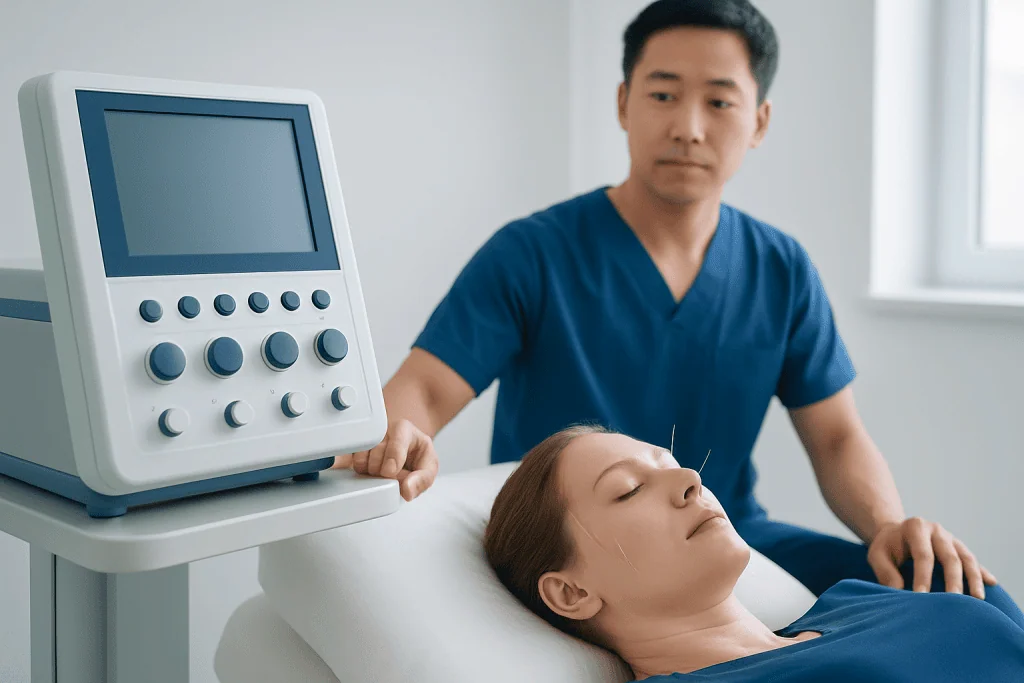
Traditional acupuncture describes the body using concepts such as meridians and the flow of energy, often called qi. Modern medical research approaches the question differently. Scientists are studying how needling may influence nerves, connective tissue, blood flow, and the release of naturally occurring chemicals involved in pain regulation and well-being.
One theory is that acupuncture stimulates sensory nerves in the skin and muscles, which can affect how the brain and spinal cord process pain signals. It may also trigger the release of endorphins and other neurotransmitters that help regulate discomfort and stress responses. Functional brain imaging studies suggest that acupuncture can influence areas involved in pain perception, although these findings do not fully explain who will benefit most.
There is also ongoing discussion about the placebo effect and the therapeutic setting. The time spent with a practitioner, focused attention, relaxation, and positive expectations can all affect symptom experience. This does not necessarily mean a benefit is “just placebo.” In real-world care, several factors may work together, including the needling itself, the body’s pain-control systems, and the supportive clinical environment.
Because the exact mechanisms are still being studied, doctors usually focus on outcomes that matter to patients: whether symptoms improve, daily function gets better, and treatment remains safe. This evidence-based approach is especially important when considering acupuncture for chronic symptoms that can have multiple causes.
What the evidence says: where acupuncture may help

The strongest evidence for acupuncture is generally in symptom management rather than curing disease. Clinical guidelines and systematic reviews support its use most consistently for certain pain conditions, including chronic low back pain, neck pain, knee osteoarthritis pain, and some headache disorders. It may also help prevent migraine attacks in some patients and reduce the frequency of tension-type headaches. For patients with chronic pain conditions such as migraine, acupuncture may be considered as part of a broader treatment strategy.
Acupuncture is also used for nausea and vomiting, especially after surgery and in some cancer-care settings. Some patients with treatment-related nausea may discuss it alongside standard supportive care during chemotherapy. In addition, certain people report improved sleep, reduced stress, or a greater sense of relaxation, although evidence for these benefits is often less consistent and may depend on the underlying condition.
For musculoskeletal symptoms, acupuncture is often considered when patients want a non-drug option or when medication alone has not provided enough relief. For example, someone already working through physical therapy and rehabilitation for ongoing back or neck discomfort may ask whether acupuncture could be added to support pain control and movement.
Evidence is weaker or mixed for many other uses commonly advertised online, such as weight loss, fertility, digestive problems, allergies, or general wellness. That does not mean no one feels better, but it does mean the scientific support is less clear. Patients are best served by asking a qualified doctor or licensed practitioner what high-quality evidence exists for their specific symptom, rather than assuming acupuncture has the same level of benefit for every condition.
Safety, side effects, and who should use extra caution
When performed by a properly trained professional using single-use sterile needles, acupuncture is generally considered safe. Most side effects are minor and short-lived. These can include mild soreness, a small bruise, a drop of bleeding at the needle site, temporary tiredness, or lightheadedness. Many patients are able to return to normal activities soon after treatment.
Serious complications are uncommon but can happen, especially if acupuncture is performed incorrectly or in an unsafe setting. Potential risks include infection, nerve irritation, tissue injury, or, in very rare cases, injury to deeper structures such as the lung if needles are placed improperly in the chest or upper back. This is why practitioner training, hygiene standards, and clear communication about health history are important.
Some people should use extra caution. Patients who take blood thinners, have a bleeding disorder, a compromised immune system, certain skin infections, or implanted electrical devices should discuss acupuncture with their doctor first. Pregnancy also requires special attention because some points are traditionally avoided. A qualified practitioner should ask about these issues before treatment begins.
Acupuncture should not replace standard medical evaluation when symptoms could signal a serious illness. Severe chest pain, sudden weakness, confusion, high fever, bowel or bladder changes with back pain, unexplained weight loss, or persistent vomiting need prompt medical assessment. For people with complex pain or nerve symptoms, further evaluation may involve specialists in neurology or other relevant fields before complementary treatments are added.
How to choose a qualified practitioner and prepare for a session
Choosing a well-trained practitioner is one of the most important steps in safe acupuncture care. Patients should look for someone who is licensed or otherwise appropriately credentialed according to local regulations, uses sterile single-use needles, takes a full medical history, and explains the proposed plan clearly. It is reasonable to ask about training, experience with the specific symptom being treated, and what signs would prompt referral back to a physician.
Before a first visit, it helps to write down symptoms, current medications, medical conditions, allergies, and any recent tests or diagnoses. Patients should also mention pregnancy, pacemakers or other implants, bleeding problems, and use of blood thinners. This allows the practitioner to tailor treatment safely and recognize when acupuncture may not be appropriate without additional medical review.
Preparation is usually simple. It is often best not to arrive on an empty stomach or immediately after a very heavy meal. Wearing loose, comfortable clothing can make access to the arms, legs, or back easier. Patients may also want to avoid strenuous activity right before the session if they tend to feel lightheaded.
After treatment, some people feel relaxed while others feel temporarily tired. Drinking water, eating normally, and paying attention to symptom changes can be helpful. If unusual pain, shortness of breath, significant bleeding, or signs of infection occur afterward, medical advice should be sought promptly.
How acupuncture fits into a broader treatment plan
One helpful way to think about acupuncture is as an adjunctive treatment. For many patients, the best results come when it is combined with evidence-based conventional care rather than used on its own. In chronic pain, for example, long-term improvement often depends not only on symptom relief but also on restoring movement, sleep, mood, and daily function.
For back, joint, or neck symptoms, a doctor may recommend exercise therapy, posture work, weight management when appropriate, and short-term medication use in addition to acupuncture. For headaches, a plan may include trigger management, hydration, sleep routines, and preventive or acute medications. Someone with ongoing a herniated disc or nerve compression symptoms may need imaging or specialist review so that serious causes are not missed while supportive therapies are considered.
Patients with cancer, recent surgery, neurological symptoms, or multiple health conditions should be especially careful to coordinate care. In these settings, acupuncture may still be useful for symptom relief, but treatment decisions should be shared among the patient, physician, and acupuncture practitioner. Good communication helps avoid duplicated treatment, unrealistic expectations, or delayed diagnosis.
Near the end of the care journey, patients often want to know where integrated treatment is available. Acibadem International’s multidisciplinary specialists and JCI-accredited hospitals diagnose and treat a wide range of pain, neurological, and supportive care needs for international patients, and can help determine whether acupuncture fits appropriately within an overall care plan.
When to seek medical care
Acupuncture is not the right first step for every symptom. Medical care should be sought promptly for warning signs such as sudden severe headache, chest pain, trouble breathing, fainting, new weakness or numbness, loss of bladder or bowel control, persistent high fever, or significant trauma. These symptoms can signal urgent conditions that need immediate diagnosis and treatment.
Patients should also see a doctor if pain is severe, keeps coming back, disrupts sleep regularly, or is accompanied by swelling, unexplained weight loss, night sweats, or persistent fatigue. In these situations, acupuncture may still play a role later, but the underlying cause needs to be assessed first.
If someone is already receiving acupuncture and symptoms are worsening, new symptoms are appearing, or there is little improvement after a reasonable trial, follow-up with a physician is sensible. Effective care begins with an accurate diagnosis. Once the cause is clear, the patient and care team can decide whether acupuncture is likely to be helpful, safe, and worth continuing.
Frequently asked questions
Does acupuncture really work?
Acupuncture can help some people, especially for certain pain conditions, nausea, and some headache disorders. The benefit is usually modest to moderate rather than dramatic, and results vary by person and by condition. It is best viewed as one possible part of a broader treatment plan.
Is acupuncture painful?
Most patients describe acupuncture as causing little discomfort because the needles are very thin. A brief prick, tingling, pressure, warmth, or a dull ache can occur when the needle is placed. If pain is significant, the practitioner should adjust or remove the needle.
How many acupuncture sessions are usually needed?
There is no single number that suits everyone. Some people notice improvement quickly, while others need several sessions before deciding whether it is helping. The usual plan depends on the condition, how long symptoms have been present, and whether acupuncture is being combined with other treatments.
Is acupuncture safe?
Acupuncture is generally safe when performed by a trained practitioner using sterile single-use needles. Minor bruising or soreness can happen, but serious complications are uncommon. Patients should share their full medical history so risks can be assessed properly.
Who should avoid acupuncture or ask a doctor first?
People who take blood thinners, have bleeding disorders, certain infections, a weakened immune system, implanted electrical devices, or are pregnant should ask a doctor first. It is also important to seek medical evaluation before acupuncture if symptoms could signal a serious illness. This helps prevent delays in diagnosis or treatment.
Can acupuncture replace medication or standard medical treatment?
In most cases, no. Acupuncture is usually used alongside standard care rather than as a replacement, especially when a condition has a known medical treatment. Any decision to reduce medication should be made with a qualified doctor.
References
- World Health Organization
- National Center for Complementary and Integrative Health
- National Institute for Health and Care Excellence
- Cochrane
- American Academy of Family Physicians
This article is for general information only and is not a substitute for professional medical advice. Please consult a qualified doctor about your individual situation.
Persistent digestive symptoms? Get evaluated in Turkey
JCI-accredited · board-certified surgeons · reply within 24h
Add us as a Preferred Source to see more of our trusted health content across Google Search, AI Overviews and Discover.

More from the Health Library

Endotracheal Tube — Explained by Medical Evidence, Not Myths

Pertussis Injection: What Patients Need to Know

Put Pull: An Evidence-Based Guide for Patients

Pulmonologist: An Evidence-Based Guide for Patients

Balance Exercises: An Evidence-Based Guide for Patients