Balance Exercises: An Evidence-Based Guide for Patients

Balance exercises train the muscles, joints, eyes, and nervous system to work together more effectively. Regular practice may improve stability, confidence, walking, and fall prevention in many age groups.
Key Takeaways
- Balance exercises train the muscles, joints, eyes, and nervous system to work together more effectively.
- Regular practice may improve stability, confidence, walking, and fall prevention in many age groups.
- The safest program starts with basic exercises, a stable support surface, and gradual progression.
- Sudden dizziness, fainting, weakness, numbness, or repeated falls need medical assessment rather than home exercise alone.
- People with stroke, Parkinson’s disease, inner ear disorders, or neuropathy may benefit from individualized rehabilitation.
Balance exercises are simple movements that help the body stay steady during standing, walking, turning, and reaching. When chosen for a person’s age, strength, and medical needs, they can improve confidence, mobility, and fall prevention.
What balance exercises do and who can benefit
Balance exercises are movements designed to improve the body’s ability to stay upright and controlled during everyday activities. They work by challenging posture, coordination, leg strength, joint awareness, vision, and the nervous system in a safe, structured way. For many people, this kind of training helps make standing, walking, turning, climbing stairs, and getting up from a chair feel steadier.
These exercises are not only for older adults. They can be useful for people recovering from illness or injury, those who feel unsteady after a period of inactivity, and individuals living with neurological, musculoskeletal, or inner ear conditions. Athletes may also use them to support coordination and movement control, but in medical settings the main goals are often safety, independence, and confidence.
Balance changes can happen for many reasons, including aging, muscle weakness, joint pain, vision problems, medication effects, nerve damage, and disorders that affect the brain or inner ear. Because balance depends on several body systems working together, improvement often comes from a program that combines posture practice, leg strengthening, walking drills, and gradual exposure to more challenging positions.
How balance works in the body
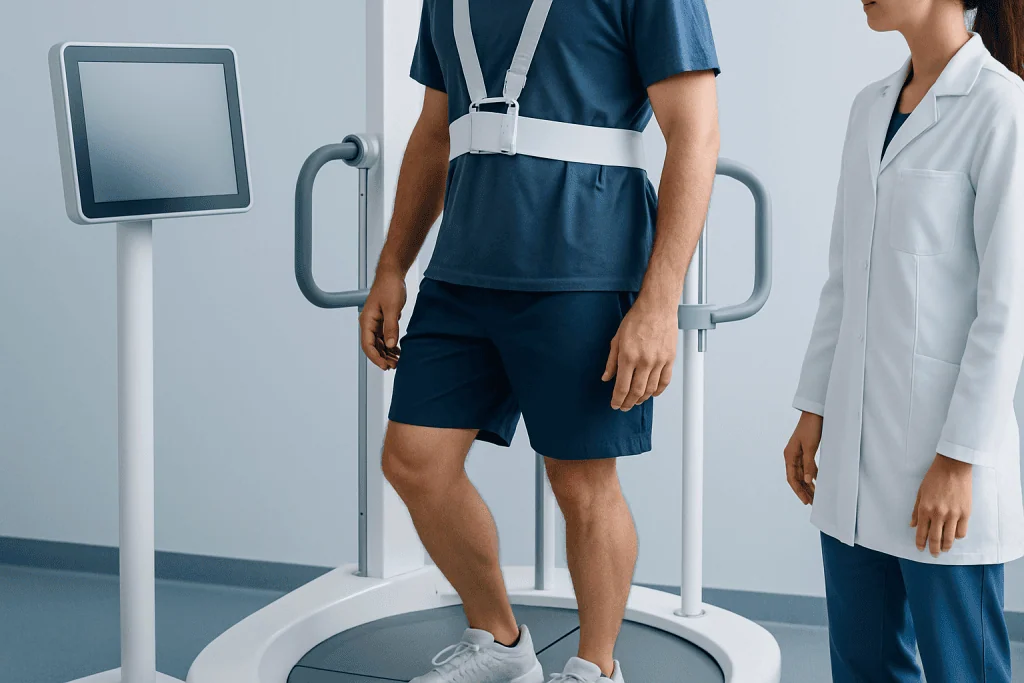
Good balance depends on constant communication between the eyes, inner ears, brain, nerves, muscles, and joints. The eyes provide information about where the body is in space. The inner ear senses head movement and position. Nerves in the feet, ankles, and legs send signals about pressure and joint position. The brain then combines all of this information and tells the muscles how to respond.
When any part of this system is affected, a person may feel unsteady. For example, weak leg muscles can make it harder to recover from a stumble. Reduced feeling in the feet, which can happen with peripheral neuropathy, may decrease awareness of the ground. Inner ear problems can cause dizziness or a spinning sensation. Neurological conditions such as Parkinson’s disease can affect posture, walking, and reaction time.
This is why balance exercises often look simple but are carefully chosen. Standing with feet closer together, shifting weight from side to side, or turning the head while standing can each train a different part of the balance system. Over time, these repeated tasks help the body respond more efficiently to movement and small losses of stability.
Common signs that balance training may help

People often notice balance problems in subtle ways before they experience a fall. They may hold furniture while walking at home, avoid stairs without a handrail, feel nervous on uneven ground, or find it difficult to turn quickly. Some describe a general sense of unsteadiness rather than true dizziness. Others feel less confident leaving the house because they worry about tripping.
Balance exercises may be helpful when a person has:
- Occasional unsteadiness when standing or walking
- Reduced confidence after a fall or near-fall
- Weakness after illness, surgery, or inactivity
- Trouble getting up from a chair without using the hands
- Difficulty walking on curbs, steps, or uneven surfaces
- Age-related decline in strength and reaction time
However, not all balance problems should be managed with exercise alone. Symptoms such as severe vertigo, fainting, chest pain, sudden weakness, new numbness, slurred speech, or sudden vision changes can point to a more urgent medical problem. In these situations, a person should seek prompt medical care rather than starting a home exercise routine.
Examples of evidence-based balance exercises
A useful balance program usually starts with simple exercises near a stable support, such as a countertop or sturdy chair. One common starting point is standing with the feet hip-width apart and shifting weight slowly from one leg to the other. Another is sit-to-stand practice from a chair, which strengthens the legs and improves control during a common daily movement.
As stability improves, exercises can become more challenging. Examples include standing with one foot slightly in front of the other, heel-to-toe walking along a counter, stepping sideways, mini squats while holding support, and standing briefly on one leg if safe to do so. Some people also benefit from turning the head gently while standing or walking, especially when supervised as part of vestibular or neurological rehabilitation.
Walking-based training is often important because it brings balance practice into real movement. This may include changing speed, turning, stepping over small obstacles, or practicing safe direction changes. In a rehabilitation setting, specialists may combine these with physical therapy and rehabilitation to address strength, gait, flexibility, and confidence together.
The best results usually come from regular repetition rather than very difficult drills. Exercises should feel challenging but manageable, and the person should be able to stop and recover safely at any time. A clinician may adapt the program for arthritis, dizziness, stroke recovery, or other medical conditions.
How to practice safely at home
Safety is the most important part of balance training. Exercises should be done in a clear, well-lit area with a stable support nearby, such as a kitchen counter. Loose rugs, electrical cords, and clutter should be removed from the floor. Supportive shoes are often better than socks alone, especially on smooth surfaces.
It is usually best to begin with short sessions and simple tasks. A person might start with a few minutes of weight shifting, chair rises, or supported standing exercises several times a week. Progress can then come from reducing hand support, increasing the time spent in a position, narrowing the foot stance, or adding controlled movement of the head or arms.
Family members or caregivers can help by standing nearby when needed, especially for older adults or anyone with a recent fall. People should stop the session if they develop chest pain, severe shortness of breath, sudden dizziness, or a feeling that they may faint. If a person has a known neurological or balance disorder, a clinician may recommend a more structured program such as vestibular rehabilitation or supervised exercise in a rehabilitation clinic.
When medical assessment is important
Although many people can safely benefit from basic balance exercises, persistent or unexplained imbalance should be assessed by a healthcare professional. A doctor may ask when symptoms started, whether there have been falls, what medications are being taken, and whether dizziness, numbness, hearing changes, headaches, or weakness are also present. This history helps identify whether the main issue is muscular, neurological, cardiovascular, vestibular, or medication-related.
Medical evaluation is especially important after repeated falls, a head injury, or sudden worsening of balance. It is also recommended for people with diabetes, prior stroke, Parkinson’s disease, severe arthritis, or known inner ear problems. Some individuals may need formal testing of gait, sensation, hearing, vision, blood pressure, or brain and nerve function.
Depending on the cause, treatment may involve medication review, treatment of an inner ear disorder, management of nerve or brain conditions, strength training, or specialist rehabilitation. In selected cases, doctors may recommend neurological rehabilitation to support walking, coordination, and daily function. Acibadem International’s multidisciplinary specialists and JCI-accredited hospitals diagnose and treat balance-related conditions for international patients when more comprehensive evaluation is needed.
A practical weekly approach and long-term prevention
For many patients, balance improves most when exercises become part of a broader routine rather than a short-term effort. A practical weekly plan often includes balance work on most days, leg strengthening several times per week, and regular walking or other aerobic activity as tolerated. Flexibility and posture exercises may also help by improving alignment and comfort during movement.
Long-term prevention focuses on reducing factors that contribute to falls and instability. Useful steps include keeping eyeglass prescriptions up to date, managing foot pain, checking home lighting, reviewing medications with a clinician, and treating hearing or inner ear problems when present. Good sleep, hydration, and nutrition can also influence steadiness, especially in older adults.
Improvement is often gradual. Many people first notice better confidence during everyday tasks, followed by steadier walking and less reliance on furniture or walls. The most effective program is one that is safe, realistic, and tailored to the person’s goals and medical needs, with professional guidance when symptoms are significant or complex.
Frequently asked questions
How often should balance exercises be done?
Many people benefit from practicing balance exercises several times a week, and sometimes on most days if the program is gentle and safe. The ideal schedule depends on age, strength, fall risk, and any underlying condition. A clinician or physical therapist can help set the right frequency and progression.
Can balance exercises prevent falls?
Balance exercises can reduce fall risk in many people by improving stability, leg strength, and reaction time. They work best as part of a broader fall-prevention plan that may also include home safety changes, vision checks, and medication review. They cannot remove all risk, especially when a medical condition is involved.
Are balance exercises safe for older adults?
Yes, balance exercises are often very appropriate for older adults when they are adapted to ability and done with good safety measures. Starting near a sturdy support and using simple movements is usually the safest approach. Anyone with recent falls, dizziness, or major weakness should be assessed before doing more challenging exercises.
What is the difference between dizziness and poor balance?
Poor balance usually feels like unsteadiness or difficulty staying stable while standing or walking. Dizziness is a broader term that may include lightheadedness, a spinning sensation, or feeling faint. Because these symptoms can have different causes, persistent symptoms should be discussed with a doctor.
When should someone stop balance exercises?
A person should stop exercising if they develop chest pain, severe shortness of breath, sudden severe dizziness, faintness, or new neurological symptoms such as weakness or numbness. They should also stop if an exercise feels unsafe or repeatedly causes near-falls. Medical advice is important before trying again.
Do people with neurological conditions need supervised balance training?
Often, yes. Conditions such as Parkinson’s disease, stroke, neuropathy, or multiple sclerosis can affect balance in specific ways that benefit from individualized therapy. Supervised rehabilitation can make exercise safer and more effective by matching the program to the person’s symptoms and goals.
This article is for general information only and is not a substitute for professional medical advice. Please consult a qualified doctor about your individual situation.
Explore treatments in Turkey — costs, top hospitals & a free quote
JCI-accredited · board-certified surgeons · reply within 24h
Add us as a Preferred Source to see more of our trusted health content across Google Search, AI Overviews and Discover.

More from the Health Library

Low Carb Alcoholic Drinks: An Evidence-Based Guide for Patients

Travelers Diarrhea: A Complete Medical Overview

Tragus Piercing: An Evidence-Based Guide for Patients

Shadow Work: An Evidence-Based Guide for Patients

Baking Soda Bath: A Complete Medical Overview