Adenomyosis: Heavy Periods, Cramps, and Uterine Enlargement

Adenomyosis is not cancer, but it can significantly affect comfort, energy, and quality of life. Common symptoms include heavy or prolonged periods, severe cramps, pelvic pain, bloating, and an enlarged or tender uterus.
Key Takeaways
- Adenomyosis is not cancer, but it can significantly affect comfort, energy, and quality of life.
- Common symptoms include heavy or prolonged periods, severe cramps, pelvic pain, bloating, and an enlarged or tender uterus.
- Diagnosis often involves a pelvic examination and imaging tests such as ultrasound or MRI.
- Treatment depends on symptoms, age, fertility goals, and personal preferences; options range from pain relief and hormonal therapy to procedures or surgery.
- Medical care is important if bleeding is heavy, pain disrupts daily life, or anemia symptoms such as fatigue and dizziness develop.
Adenomyosis is a benign gynecologic condition in which tissue similar to the uterine lining grows into the muscular wall of the uterus. It can cause heavy menstrual bleeding, painful cramps, pelvic pressure, and uterine enlargement, but many effective treatment options are available.
Overview
Adenomyosis is a condition in which endometrial-like tissue, similar to the tissue that normally lines the inside of the uterus, is found within the muscular wall of the uterus. During the menstrual cycle, this tissue can respond to hormonal changes, contributing to inflammation, thickening of the uterine muscle, cramping, and heavier bleeding. The uterus may become enlarged, sometimes leading to a feeling of pelvic heaviness or bloating.
Adenomyosis is a benign condition, meaning it is not cancer. However, it can be painful and disruptive, especially when periods become very heavy or cramps become difficult to manage. Some people have no symptoms and only learn they may have adenomyosis during an ultrasound, MRI, fertility evaluation, or after surgery for another reason.
The condition is most often diagnosed in people in their 30s and 40s, but it can occur earlier. Because symptoms overlap with other gynecologic conditions such as fibroids, endometriosis, and endometrial polyps, a careful medical evaluation is important. With an accurate diagnosis, treatment can be tailored to the person’s symptoms, reproductive plans, and overall health.
Symptoms of Adenomyosis
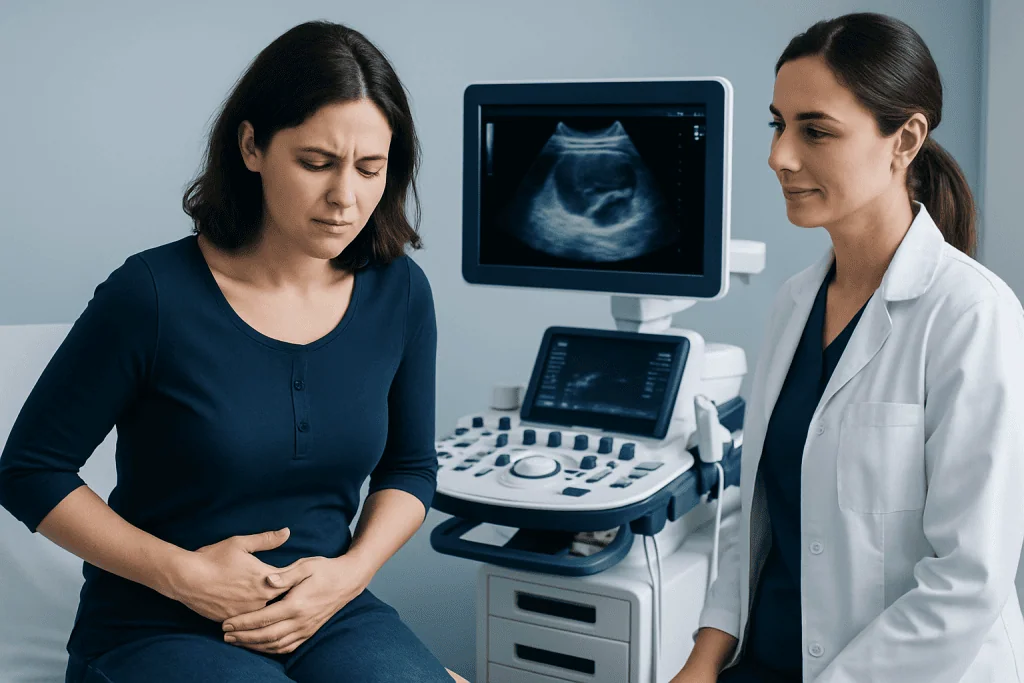
The symptoms of adenomyosis can vary widely. Some people have mild discomfort, while others experience menstrual bleeding and pain that interfere with work, school, sleep, exercise, and social activities. Symptoms may develop gradually over years, and many people notice that periods become heavier or more painful than they used to be.
Common symptoms include:
- Heavy menstrual bleeding, sometimes with clots
- Periods that last longer than usual
- Moderate to severe menstrual cramps
- Pelvic pain or pressure between periods
- Pain during sexual intercourse
- Bloating, abdominal fullness, or a sensation of heaviness
- An enlarged, tender, or “boggy” uterus on pelvic examination
- Fatigue, weakness, or shortness of breath related to iron-deficiency anemia from heavy bleeding
Not every person with adenomyosis has uterine enlargement, and not every enlarged uterus is caused by adenomyosis. Fibroids, pregnancy, and other conditions can also enlarge the uterus. This is why symptoms should be interpreted together with examination findings and imaging results rather than on their own.
Causes and Risk Factors
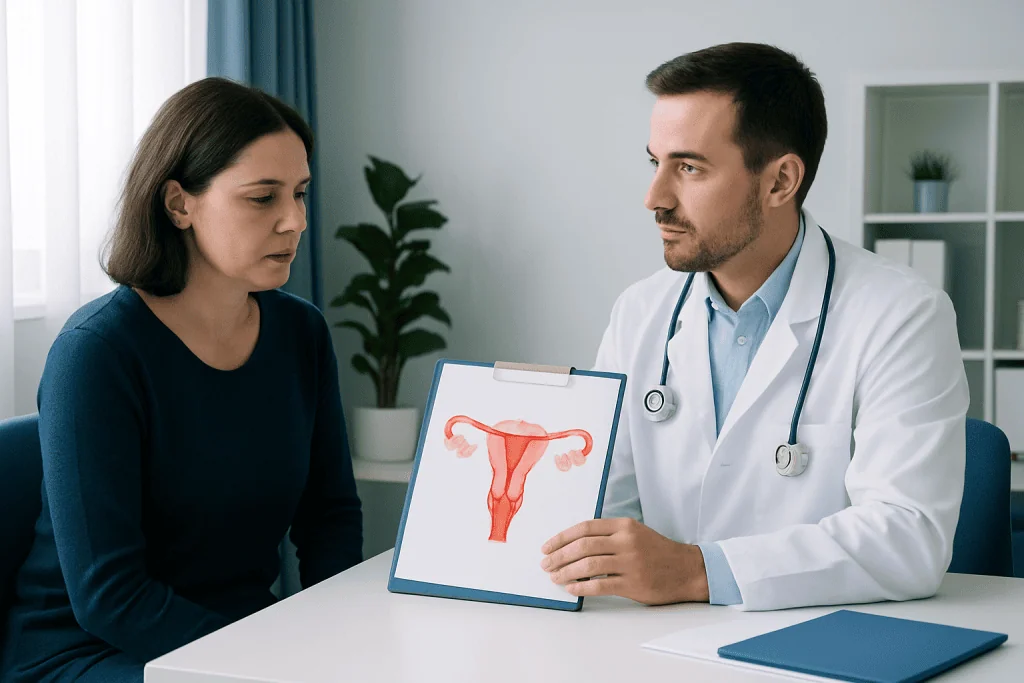
The exact cause of adenomyosis is not fully understood. Several theories exist, including inward growth of the uterine lining into the muscle layer, changes related to childbirth or uterine inflammation, and developmental factors that occur before birth. Hormones, particularly estrogen, are thought to influence the condition because symptoms often occur during reproductive years and may improve after menopause.
Risk factors may include previous pregnancy and childbirth, prior uterine procedures such as cesarean delivery or surgery to remove fibroids, and increasing age during the reproductive years. Adenomyosis may also occur alongside endometriosis or uterine fibroids. Having one of these conditions does not mean a person will definitely have adenomyosis, but overlap is common enough that clinicians often evaluate for more than one cause of pelvic pain or heavy bleeding.
Adenomyosis is not caused by personal behavior, and it is not contagious. It cannot be spread to a partner. People who develop symptoms should not assume that heavy bleeding or severe period pain is simply “normal,” especially if symptoms are new, worsening, or affecting daily life.
Diagnosis
Diagnosis begins with a detailed medical history. A doctor may ask about menstrual flow, cycle length, pain severity, bleeding between periods, pregnancy history, previous surgeries, medications, and whether symptoms affect daily activities. A pelvic examination may reveal an enlarged or tender uterus, although examination alone cannot confirm adenomyosis.
Imaging is often used to support the diagnosis. Transvaginal ultrasound is commonly the first test because it is widely available and can also identify fibroids, ovarian cysts, or other pelvic conditions. MRI may be recommended when ultrasound findings are unclear, symptoms are complex, or a more detailed view of the uterine muscle is needed. MRI can be especially helpful in distinguishing adenomyosis from fibroids in selected cases.
Additional tests may be used depending on symptoms. A complete blood count and iron studies can check for anemia if bleeding is heavy. If abnormal bleeding occurs, especially in people with risk factors or bleeding after menopause, a doctor may recommend endometrial sampling to evaluate the uterine lining. Historically, adenomyosis was often confirmed only after hysterectomy, but modern imaging now allows many cases to be suspected and managed without removing the uterus.
Treatment Options
Treatment for adenomyosis depends on symptom severity, age, overall health, whether the person wants future pregnancy, and how close they may be to menopause. Mild symptoms may be managed with observation, pain relief, or hormonal therapy. More significant symptoms may require a combination of treatments. The goal is to reduce bleeding, relieve pain, improve daily functioning, and respect fertility preferences whenever possible.
Non-surgical treatment may include anti-inflammatory pain relievers, taken under medical guidance, to reduce menstrual cramps. Hormonal options can help control bleeding and pain by thinning the uterine lining or reducing menstrual cycling. These may include certain birth control pills, progestin-only methods, hormonal intrauterine devices, injections, implants, or other hormone-modulating medicines. The best choice depends on medical history, side effects, contraindications, and personal preference.
Procedural options may be considered when symptoms are not controlled with medication or when adenomyosis coexists with fibroids or other conditions. Uterine artery embolization may help selected patients by reducing blood flow to affected uterine tissue. Conservative surgery to remove localized adenomyosis may be possible in some cases, although adenomyosis can be diffuse and difficult to separate from healthy uterine muscle. Hysterectomy, removal of the uterus, is the definitive treatment for adenomyosis in people who do not wish to become pregnant in the future and whose symptoms are severe or persistent.
No single treatment is right for everyone. A shared decision-making discussion with a gynecologist is important, especially for people who wish to preserve fertility or avoid surgery. Benefits, risks, recovery time, likelihood of symptom improvement, and possible recurrence should all be reviewed before choosing a treatment plan.
Fertility, Pregnancy, and Related Conditions
Adenomyosis may be found during fertility evaluations, but its relationship with fertility is complex. Some people with adenomyosis conceive naturally and have uncomplicated pregnancies, while others may have difficulty conceiving, especially if adenomyosis occurs with endometriosis, fibroids, or other reproductive health issues. The impact may depend on the extent of the condition, uterine changes, age, and overall fertility factors.
People trying to become pregnant should discuss symptoms and imaging findings with a gynecologist or fertility specialist. Some treatments used for adenomyosis suppress ovulation or prevent pregnancy while being used, so they are not appropriate when actively trying to conceive. In selected cases, short-term medical therapy, assisted reproductive technologies, or surgical approaches may be considered, but recommendations must be individualized.
During pregnancy, a history of adenomyosis may be part of the overall obstetric assessment. Most pregnancy care decisions are based on the person’s full medical and obstetric history rather than adenomyosis alone. Anyone with known adenomyosis who is planning pregnancy or undergoing fertility treatment should receive personalized counseling from qualified specialists.
Prevention and Self-Care
There is no proven way to prevent adenomyosis completely, because the exact cause is not known. However, self-care can help reduce the impact of symptoms and support overall health. Tracking menstrual cycles, bleeding volume, pain patterns, and medication use can help a doctor understand the pattern and choose the most appropriate treatment.
People with heavy periods should be aware of anemia symptoms such as unusual tiredness, dizziness, pale skin, rapid heartbeat, or shortness of breath with normal activities. A doctor may recommend blood tests and, when needed, iron replacement or dietary guidance. Iron should not be taken in high doses without medical advice, because the correct approach depends on test results and individual tolerance.
Supportive measures may include heat therapy for cramps, gentle physical activity as tolerated, adequate sleep, hydration, and stress-reduction strategies. Over-the-counter pain relievers may help some people, but they are not suitable for everyone, particularly those with certain stomach, kidney, bleeding, or cardiovascular conditions. It is safest to ask a clinician which medicines are appropriate.
When to See a Doctor
A medical appointment is recommended if periods are very heavy, last longer than usual, include large clots, or require frequent changes of pads or tampons. Care is also important if cramps are severe, pelvic pain occurs between periods, pain affects sexual activity, or symptoms interfere with work, school, sleep, or daily routines. New or worsening bleeding should always be discussed with a healthcare professional.
Urgent medical care may be needed if bleeding is extremely heavy, if there is fainting, severe weakness, chest pain, shortness of breath, or sudden severe pelvic pain. Bleeding after menopause should be evaluated promptly, as it is not considered normal and may have causes unrelated to adenomyosis.
Patients who travel for care or want a multidisciplinary review can seek evaluation from experienced gynecology teams. Acibadem International’s JCI-accredited hospitals provide diagnosis and treatment for adenomyosis and related gynecologic conditions for international patients, with care plans developed according to individual medical needs.
Frequently asked questions
Is adenomyosis the same as endometriosis?
No. In adenomyosis, endometrial-like tissue grows into the muscular wall of the uterus. In endometriosis, similar tissue grows outside the uterus, such as on the ovaries, fallopian tubes, or pelvic lining. Some people can have both conditions, which may make symptoms more complex.
Can adenomyosis go away on its own?
Symptoms may improve after menopause because hormone levels decline. Before menopause, adenomyosis often persists, although symptoms can fluctuate. Treatment can help control pain and bleeding even if the condition itself does not fully disappear.
Does adenomyosis always require surgery?
No. Many people manage adenomyosis with pain-relief strategies, hormonal treatments, or observation if symptoms are mild. Surgery is usually considered when symptoms are severe, other treatments do not help, or the person does not want future pregnancy and prefers a definitive option.
Can adenomyosis cause anemia?
Yes. Heavy or prolonged menstrual bleeding can lead to iron-deficiency anemia. Symptoms may include fatigue, weakness, dizziness, headaches, or shortness of breath with activity. A doctor can order blood tests and recommend appropriate treatment if anemia is present.
How is adenomyosis different from fibroids?
Fibroids are benign growths made of muscle and fibrous tissue that form in or on the uterus. Adenomyosis involves endometrial-like tissue within the uterine muscle, often causing the muscle wall to thicken more diffusely. Both conditions can cause heavy bleeding, cramps, and uterine enlargement, so imaging is often needed to tell them apart.
Can someone with adenomyosis become pregnant?
Yes, many people with adenomyosis can become pregnant. However, adenomyosis may be associated with fertility challenges in some cases, especially when other conditions such as endometriosis or fibroids are also present. Anyone planning pregnancy should discuss individualized options with a gynecologist or fertility specialist.
References
- American College of Obstetricians and Gynecologists
- Mayo Clinic
- Cleveland Clinic
- European Society of Human Reproduction and Embryology
- Radiological Society of North America
This article is for general information only and is not a substitute for professional medical advice. Please consult a qualified doctor about your individual situation.
Persistent digestive symptoms? Get evaluated in Turkey
JCI-accredited · board-certified surgeons · reply within 24h
Add us as a Preferred Source to see more of our trusted health content across Google Search, AI Overviews and Discover.

More from the Health Library



Related Specialists

Dr. Ertuğrul Mehmetoğlu
Cardiology
Prof. Dr. Şükrü Yazar
Aesthetic Plastic & Reconstructive Surgery
Prof. Dr. Serhat Çelikel
Pulmonology
Dr. İrem Buse Karakum
Emergency Service