All on 4 dental implants in Turkey: Hospitals, Safety & What to Expect
All-on-4 uses four strategically placed implants to support a fixed full-arch dental prosthesis. Suitability depends on oral health, bone anatomy, medical history, smoking status and expectations.
Key Takeaways
- All-on-4 uses four strategically placed implants to support a fixed full-arch dental prosthesis.
- Suitability depends on oral health, bone anatomy, medical history, smoking status and expectations.
- Planning should include a clinical examination, dental imaging and discussion of temporary and final teeth.
- Healing and bone integration take time, even when a temporary fixed bridge is fitted on the same day.
- Potential complications include infection, implant failure, nerve or sinus-related concerns, and prosthesis maintenance needs.
- Patients travelling for care should plan enough time for assessment, treatment, early reviews and ongoing follow-up.
All on 4 dental implants in Turkey may be an option for people who need a full upper or lower arch of teeth replaced and have suitable jawbone and overall health. Safe treatment depends on an individual assessment, qualified implant clinicians, appropriate imaging, infection control, a realistic recovery plan and reliable follow-up care.
Overview: All on 4 dental implants in Turkey
All on 4 dental implants in Turkey refers to full-arch implant treatment delivered in Turkey, usually for a person who has lost most or all teeth in one jaw or has teeth that cannot be predictably restored. Four dental implants are placed in the jaw and used to support a fixed bridge. The approach can restore chewing ability, appearance and confidence, but it is not a one-size-fits-all solution.
The safety and outcome of treatment are determined less by the destination alone and more by careful case selection, appropriate diagnostic imaging, clinician training, sterile clinical standards, quality-controlled materials and planned aftercare. A dental consultation should clarify whether four implants are appropriate or whether another implant arrangement, bone treatment, removable prosthesis or preservation of natural teeth would be more suitable.
For a broader explanation of the procedure, expected stages and clinical considerations, see All-on-4 dental implant treatment.
How the All-on-4 approach works
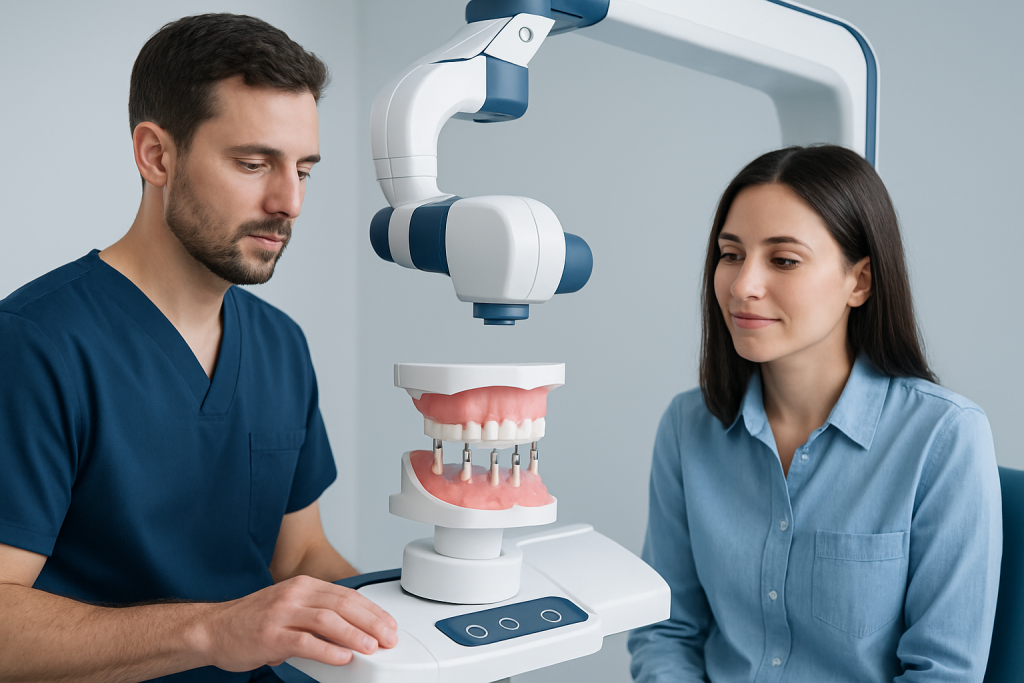
Dental implants are small titanium or ceramic fixtures placed into jawbone to act as artificial tooth roots. In an All-on-4 approach, two implants are usually positioned toward the front of the jaw and two toward the back. The rear implants may be angled to make use of available bone and avoid certain anatomical structures, such as the maxillary sinuses in the upper jaw or nerves in the lower jaw.
After placement, the implants support a full-arch bridge. In some suitable cases, a temporary fixed bridge can be attached shortly after surgery. This is often called immediate loading. It does not mean that healing is complete; the implants still need time to integrate with the bone, and patients must follow instructions about diet and biting forces.
The final bridge is usually made after healing and detailed bite assessment. It may be designed from materials such as acrylic-based composites, ceramic or other restorative materials. The most appropriate design depends on jaw anatomy, bite forces, appearance goals, ease of cleaning and long-term maintenance needs.
Who may be a candidate
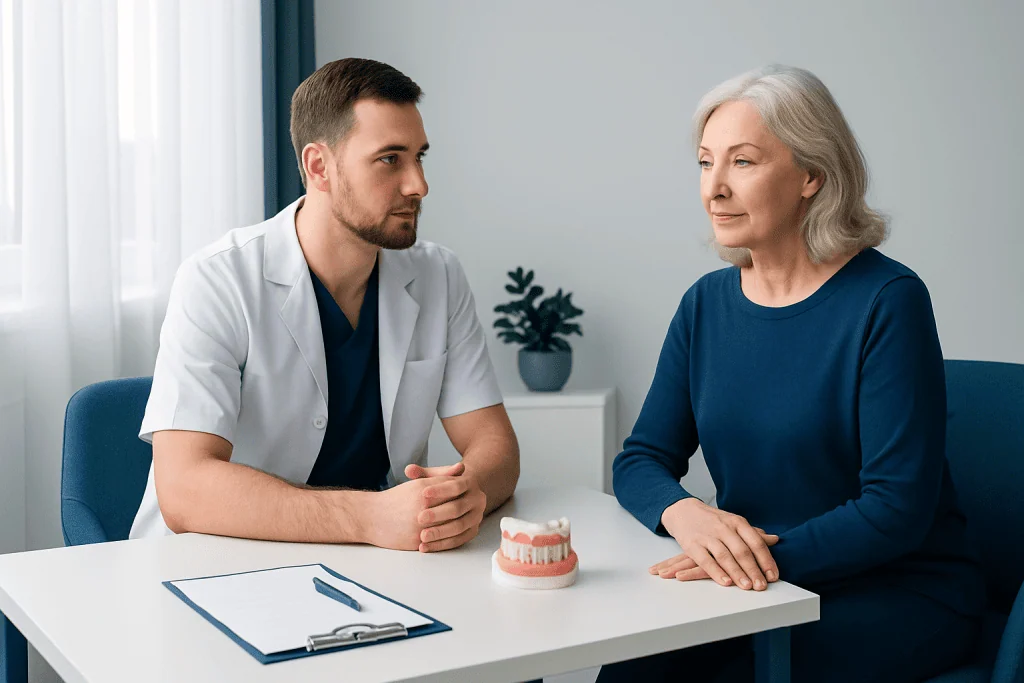
All-on-4 may be considered for adults with a full arch of missing teeth, severely damaged teeth, advanced tooth mobility from gum disease, or dentures that are difficult to keep stable. Some people are candidates despite reduced bone volume, because implant angulation can use existing bone efficiently. However, this can only be decided after imaging and examination.
A dentist or oral and maxillofacial surgeon will review gum health, bone quantity and quality, bite pattern, jaw relationship, existing infections and the condition of any remaining teeth. Cone-beam computed tomography may be used to map bone and nearby anatomical structures. Active gum disease and oral infection usually need treatment before or as part of implant planning.
Medical factors also matter. Poorly controlled diabetes, immune suppression, conditions affecting bone healing, prior head and neck radiotherapy, certain medications and heavy smoking can increase risk or change the treatment plan. A clinician should also discuss medications, allergies, previous dental treatment and whether sedation or anaesthesia is appropriate.
- Suitable candidates can commit to daily cleaning and regular professional reviews.
- People with strong teeth that can be restored may benefit more from conserving natural teeth.
- Patients who clench or grind their teeth may need bite protection and a reinforced prosthetic plan.
Step by step: assessment, surgery and final teeth
Treatment begins with consultation, medical history, clinical photographs, scans and impressions or digital records. The team evaluates the desired teeth, facial support, speech, bite and smile line alongside the surgical plan. This stage should include a clear discussion of alternatives, benefits, limitations, likely treatment phases and how aftercare will be arranged.
On the surgical day, any teeth planned for removal are extracted, the sites are cleaned and implants are placed according to the surgical plan. Local anaesthetic is commonly used, sometimes with sedation or general anaesthesia when clinically indicated. If the implants achieve adequate initial stability and other conditions are favourable, a temporary fixed bridge may be fitted. In other cases, a removable temporary prosthesis or a delayed-loading plan is safer.
Follow-up visits assess swelling, healing, bite comfort and hygiene. Over the following months, bone heals around the implants in a process called osseointegration. Once healing is sufficient, the final bridge is designed and fitted. Adjustments may be needed to refine the bite, speech, comfort and cleaning access.
Travellers should ask in advance how many visits are expected, how long each phase may take and what records will be shared with their home dentist. They should avoid assuming that a final prosthesis can always be completed during one short trip, as timing depends on individual healing and clinical findings.
Recovery timeline, benefits and possible risks
After surgery, mild to moderate swelling, bruising, tenderness and minor bleeding can occur. These effects commonly improve over the first several days, although healing varies. The dental team will give personalised instructions about pain relief, oral hygiene, food choices and activity. A soft diet is often recommended during the early healing period, especially when temporary fixed teeth have been placed.
In the first weeks, it is important not to overload the implants by biting hard foods or using the temporary bridge as though it were a final restoration. Follow-up appointments allow the clinician to check healing and make adjustments. Final restoration timing often depends on bone healing, gum maturation and the stability of the implants.
Potential benefits include a fixed-feeling full arch, improved denture stability, easier chewing compared with unstable dentures and restoration of visible teeth. However, no implant treatment is risk-free. Possible complications include bleeding, infection, delayed healing, implant instability or failure, prosthetic fracture or loosening, gum inflammation around implants, sinus-related issues in the upper jaw and altered sensation if nerves are affected in the lower jaw.
Long-term success also requires maintenance. Fixed bridges need daily cleaning beneath and around the prosthesis, regular professional examinations and occasional repairs or replacement of components. Smoking cessation, management of gum disease and consistent reviews can support oral health around implants.
Safety, hospitals and travel planning in Turkey
For people considering care abroad, a safe process starts before travel. The clinic or hospital should request relevant dental records and medical information, explain what can and cannot be decided remotely, and arrange an in-person assessment before irreversible treatment begins. Patients should receive understandable information about the proposed plan, alternatives, anaesthesia options, materials, expected appointments and follow-up responsibilities.
Hospital accreditation can be one useful indicator of organisational quality systems, although it does not replace checking the qualifications and experience of the individual clinicians. JCI accreditation assesses hospital-wide standards related to patient safety and quality. Patients may also wish to ask about infection prevention procedures, imaging facilities, emergency support, laboratory coordination and how complications are managed.
Travel arrangements should allow adequate time for clinical review after surgery rather than scheduling an immediate return flight. Accommodation should be comfortable and close enough for planned appointments. A companion may be helpful after sedation or lengthy surgery. Travel insurance should be reviewed carefully, because policies may exclude planned dental procedures or related complications.
Acibadem International’s multidisciplinary specialists and JCI-accredited hospitals diagnose and treat dental implant cases for international patients, with care planning that can include assessment, treatment coordination and follow-up guidance.
When to seek medical care
Anyone considering full-arch implants should seek an in-person dental assessment before deciding on treatment. Prompt dental care is particularly important for persistent tooth pain, facial swelling, pus, fever, loose teeth, bleeding gums, difficulty chewing or a denture that causes sores. These symptoms may indicate infection or gum disease that should be addressed before implants are considered.
After implant surgery, the treating team should be contacted urgently for increasing rather than improving pain or swelling, persistent bleeding, fever, discharge, a loose temporary bridge, a change in bite, numbness that persists or worsens, or difficulty swallowing or breathing. Difficulty breathing or rapidly spreading facial or neck swelling requires emergency medical assessment.
Regular reviews remain important after the final bridge is fitted. Early assessment of bleeding, swelling, unpleasant taste, discomfort when biting or a change in how the bridge fits can help address problems before they become more complex.
Frequently asked questions
Are All on 4 dental implants in Turkey safe?
All-on-4 treatment can be safe when it is appropriate for the individual and is delivered with thorough assessment, qualified clinicians, proper imaging, infection control and structured follow-up. Patients should not base a decision on travel destination or marketing alone. They should ask about the treatment plan, clinician credentials, materials, emergency arrangements and aftercare.
Can all teeth be replaced in one day with All-on-4?
In some cases, four implants and a temporary fixed bridge can be placed on the same day. This depends on bone quality, implant stability, gum health, bite forces and the surgical findings. The final bridge is commonly fitted later, after a period of healing and assessment.
How long does recovery take after All-on-4 implants?
Initial swelling and discomfort often improve within days to a couple of weeks, but biological healing takes longer. Bone integration and preparation of the final bridge may require several months. The exact timeline varies according to the jaw, any extractions, healing progress and the treatment approach.
Does All-on-4 require bone grafting?
One aim of All-on-4 planning is to use available bone strategically, which can reduce the need for grafting in some people. It does not eliminate the possibility of grafting or other preparatory treatment for every patient. A scan and clinical examination are needed to determine the safest option.
What are the main risks of All-on-4 dental implants?
Possible risks include infection, bleeding, delayed healing, implant failure, nerve or sinus-related complications, and problems with the temporary or final bridge. Gum inflammation around implants and mechanical wear can also occur over time. Careful planning, hygiene, routine reviews and avoiding tobacco can help reduce some risks.
How should a patient plan follow-up after dental implants abroad?
Before travelling, the patient should confirm the number of planned visits, the expected length of stay and who will provide follow-up at home if needed. They should keep copies of scans, implant details, treatment notes and prosthetic information. A local dentist may be able to provide routine monitoring, but this should be arranged in advance where possible.
References
- World Health Organization
- American Dental Association
- International Team for Implantology
- National Institute of Dental and Craniofacial Research
This article is for general information only and is not a substitute for professional medical advice. Please consult a qualified doctor about your individual situation.
Dental Implants in Turkey — costs, top hospitals & a free quote
JCI-accredited · board-certified surgeons · reply within 24h
Add us as a Preferred Source to see more of our trusted health content across Google Search, AI Overviews and Discover.

Dental & Oral Health
Full-scope dental care from implants and aesthetics to oral and maxillofacial surgery.
158 specialists in this unitMore from the Health Library



Related Specialists
Dr. Nurettin Ümit Özak
Orthopedic Surgery & Traumatology
Assoc. Prof. Dr. Bedriye Koyuncu Sökmen
Gastrointestinal Oncology Unit Clinical Service
Fzt. Osman Karaoğlan
Physical Medicine & Rehabilitation
Dt. Hakan Karagözoğlu
Oral Dental & Maxillofacial Surgery