Allergic Contact Dermatitis Treatment: How It Works, Results and What to Expect

Avoiding the responsible allergen is the most important part of allergic contact dermatitis treatment. Moisturizers, topical anti-inflammatory medicines and itch-relief measures may help the skin recover.
Key Takeaways
- Avoiding the responsible allergen is the most important part of allergic contact dermatitis treatment.
- Moisturizers, topical anti-inflammatory medicines and itch-relief measures may help the skin recover.
- Patch testing can identify delayed skin allergies when the trigger is unclear or rashes recur.
- Symptoms often begin to settle after exposure stops, but complete healing may take days to several weeks.
- Urgent assessment is important for breathing problems, extensive blistering, signs of infection or severe swelling.
Allergic contact dermatitis treatment works by identifying and avoiding the substance causing the reaction, while using skin-directed care to relieve inflammation, itching and discomfort. Most cases improve after the trigger is removed, although healing time depends on the location, severity and whether exposure continues.
Overview: How allergic contact dermatitis treatment works
Allergic contact dermatitis treatment begins with stopping contact with the allergen—the substance that triggers the immune reaction in the skin. A clinician may then recommend gentle skin care, frequent use of bland moisturizers and anti-inflammatory treatment suited to the severity and body area involved. This approach helps reduce redness, swelling, itching, cracking and blistering while the skin barrier repairs itself.
Unlike irritation caused by a harsh chemical, allergic contact dermatitis is a delayed allergy. Once a person has become sensitized, even a small future exposure can cause a rash. Common allergens include fragrance ingredients, preservatives, hair dyes, metals such as nickel, rubber additives, plants and certain ingredients in cosmetics, topical medicines or workplace products.
Effective care is therefore not only about treating the current rash. It also involves finding the trigger, reviewing products and exposures, and creating a practical plan to avoid future reactions. A dermatologist can help distinguish this condition from eczema, fungal infections, psoriasis and other rashes that may require different care.
Who may benefit and how the diagnosis is made

Medical assessment is especially helpful when a rash is recurrent, widespread, severe, linked to work, affects the hands or face, or does not improve after avoiding suspected products. Children and adults can develop allergic contact dermatitis. People with eczema or a damaged skin barrier may be particularly prone to irritation and may have more than one type of dermatitis at the same time.
Diagnosis usually starts with a detailed history and skin examination. The clinician may ask about personal-care products, jewelry, clothing, gloves, hobbies, medicines applied to the skin and occupational exposures. Bringing product labels, photographs of the rash and a timeline of possible exposures can make this assessment more useful.
If the cause is uncertain, patch testing may be recommended. Small amounts of common allergens are placed on patches and applied to intact skin, usually on the back, for a defined period. The skin is checked over several visits for a delayed reaction. Patch testing is different from skin-prick testing, which is generally used to investigate immediate allergies such as hay fever or some food allergies.
Treatment step by step: what to expect
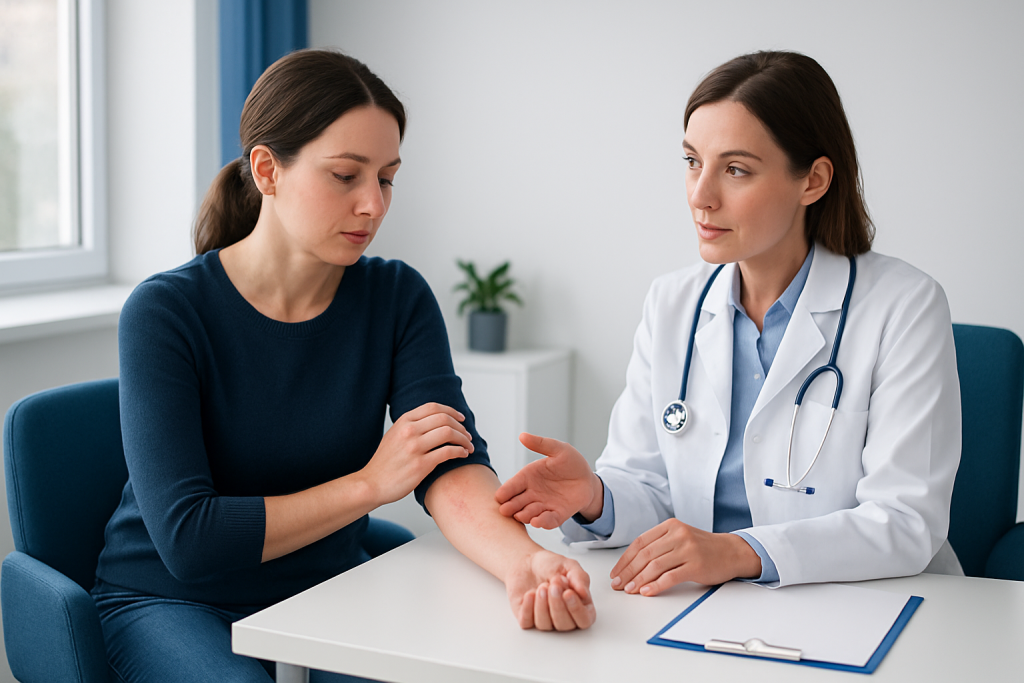
The first step is allergen avoidance. This may mean stopping a newly introduced product, changing gloves or jewelry, selecting fragrance-free alternatives, or using protective equipment at work. A clinician can provide an individualized avoidance list after patch testing. It is important not to restart a suspected product simply because the rash improves, as repeated exposure can lead to another flare.
The next step is calming active inflammation. For limited areas, clinicians may prescribe a topical corticosteroid of an appropriate strength and duration. Lower-strength options or non-steroid anti-inflammatory topical medicines may be considered for sensitive areas such as the face, eyelids, skin folds or genital region. The choice depends on the diagnosis, location, age, skin thickness and overall severity.
Supportive care helps the skin barrier recover. This usually includes fragrance-free emollients, short lukewarm showers, gentle cleansing and avoiding scrubbing. Cool compresses may soothe oozing or very itchy skin. If symptoms are extensive or significantly affect daily activities, a clinician may consider other short-term treatments and will review the person for complications or an alternative diagnosis.
For persistent or complex cases, dermatology-led planning may include patch-test guidance and support for workplace modifications. Acibadem International’s multidisciplinary specialists and JCI-accredited hospitals evaluate and treat dermatologic conditions for international patients, with care tailored to the individual’s clinical needs.
Recovery timeline, benefits and possible treatment risks
After the allergen is fully avoided, mild dermatitis may begin improving within several days. More severe inflammation, thickened skin, fissures or widespread involvement can take several weeks to settle. Recovery may be slower if the allergen remains in an everyday item, if the skin is repeatedly wet or irritated, or if another condition is also present.
The main benefit of a clear treatment and avoidance plan is fewer flares and better control of itching, sleep disruption and discomfort. Identifying a trigger can also help a person make confident choices about cosmetics, jewelry, work products and household items. Even after the visible rash fades, the skin barrier may remain sensitive for a time and benefit from continued gentle care.
Topical treatments are generally safe when used as directed, but they are not risk-free. Prolonged or inappropriate use of stronger topical corticosteroids can thin the skin and may cause other local effects, particularly on delicate skin. Some products, including seemingly “natural” creams, can contain fragrance or other allergens. A clinician should review rashes that worsen, spread or fail to respond as expected.
- Use prescribed anti-inflammatory treatment only as directed.
- Choose simple, fragrance-free moisturizers and cleansers when possible.
- Read labels carefully, including products marketed as hypoallergenic or botanical.
- Ask about alternatives before using a product that previously caused a rash.
How long does it take to get rid of allergic contact dermatitis?
There is no single recovery time. Once exposure to the allergen stops, mild allergic contact dermatitis may start to improve in a few days and resolve within one to three weeks. A more intense reaction can last longer, particularly when there are blisters, open areas, hand involvement or ongoing contact with the trigger.
Itching and redness often improve before dry, rough or discolored areas fully fade. Treatment can shorten and ease a flare, but it cannot prevent continued exposure from reactivating the immune response. If symptoms are not clearly improving after the suspected allergen has been removed and appropriate treatment has been used, a medical review is advisable.
People sometimes assume that a product is safe because they have used it for years. However, an allergy can develop after repeated exposure over time. Patch testing may be useful when the rash repeatedly returns despite careful product changes.
How do you know if contact dermatitis is getting better?
Improvement is usually gradual. The rash may become less itchy, less red and less swollen, while new blisters or weeping areas stop appearing. The affected area should slowly feel less tender or burning, and sleep or daily activities may become easier as itching reduces.
During healing, skin may remain dry, flaky, thickened or temporarily lighter or darker than the surrounding skin. These changes can take longer to fade and do not necessarily mean active allergy remains. Continuing bland moisturizers and avoiding the trigger can support barrier repair.
In contrast, increasing pain, warmth, expanding redness, pus, fever, yellow crusting or rapidly spreading blisters may suggest infection or another problem and should be assessed promptly. A rash that keeps appearing in the same pattern may indicate an ongoing unnoticed exposure.
Does skin go back to normal after contact dermatitis?
For most people, the skin can return close to its usual appearance after allergic contact dermatitis heals and the allergen is avoided. The timing varies. Dryness and texture changes may settle over weeks, while temporary color changes after inflammation can persist for months, especially in deeper skin tones.
Repeated flares can lead to chronic changes such as thick, rough, cracked skin, especially on the hands. Early treatment, consistent allergen avoidance and skin-barrier care reduce the chance of these longer-lasting changes. A dermatologist can assess persistent discoloration, thickening or an unexplained rash to ensure there is not another cause.
Although the skin can recover, the underlying allergy often remains. This means future contact with the same allergen may trigger another reaction. Keeping an allergen list and checking product ingredients are valuable long-term preventive steps.
What are the stages of allergic contact dermatitis?
Allergic contact dermatitis can be understood as a two-part immune process followed by healing. First is sensitization: after exposure to an allergen, the immune system learns to recognize it. This phase usually causes no obvious rash and may occur after one or many exposures.
Second is the elicitation or flare phase. On later exposure, the immune system produces inflammation, typically 24 to 72 hours after contact, though timing can vary. The skin may itch, burn, become red or swollen, then develop small bumps, blisters, oozing, crusting or scaling depending on the severity and location.
The final phase is resolution. Once exposure ends and inflammation is treated, active redness and itching decrease. Dryness, peeling, thickened skin or color changes may remain while the barrier repairs. Re-exposure can restart the flare phase, which is why identifying the allergen is central to long-term control.
When to seek medical care
A person should seek medical care if a rash is severe, widespread, painful, recurrent, involves the eyes, face, mouth or genitals, or interferes with work, sleep or everyday activities. Medical advice is also appropriate when the trigger is unclear, the condition may be work-related, or over-the-counter measures have not helped.
Urgent assessment is needed for difficulty breathing or swallowing, marked swelling of the lips, tongue or face, extensive blistering, rapidly worsening symptoms, fever, or signs of skin infection such as pus, spreading warmth and increasing pain. These symptoms may not be caused by allergic contact dermatitis alone and should not be managed without professional evaluation.
For non-urgent but persistent rashes, a clinician can confirm the diagnosis, advise on safe treatment for the affected body area and arrange patch testing where appropriate. Avoid applying multiple new creams at once, since this can make it harder to identify a trigger and may further irritate sensitized skin.
Frequently asked questions
What is the best treatment for allergic contact dermatitis?
The most important treatment is avoiding the allergen causing the reaction. A clinician may also recommend moisturizers, appropriate topical anti-inflammatory medicine and itch-relief measures based on the rash severity and location. Patch testing can help identify the allergen when it is not clear.
Can allergic contact dermatitis spread from person to person?
No. Allergic contact dermatitis is not contagious and cannot be passed to another person through touch. However, a rash may appear to spread on the affected person if the allergen contacted several areas or if inflammation develops over time.
Should blisters from contact dermatitis be popped?
Blisters should generally not be deliberately popped because intact skin helps protect against infection. Keep the area clean, avoid friction and seek advice if blisters are large, painful, widespread or show signs of infection. A clinician can advise on safe wound care if blisters break.
Can antihistamines cure allergic contact dermatitis?
Antihistamines do not remove the allergen or cure the delayed skin allergy. Some may help certain people manage itching or sleep disruption, but their usefulness varies. Allergen avoidance and clinician-guided skin treatment remain the main approaches.
Why does my contact dermatitis keep coming back?
Recurring dermatitis commonly means there is continued or repeated contact with the allergen, sometimes through an overlooked product or workplace exposure. It can also occur when another skin condition is present at the same time. A dermatologist may recommend patch testing and review all relevant exposures.
Is allergic contact dermatitis the same as irritant contact dermatitis?
They are different, although both can cause red, itchy or cracked skin. Allergic contact dermatitis is an immune response to a specific allergen, while irritant contact dermatitis results from direct damage to the skin barrier by substances such as detergents, solvents or frequent wet work. A person may have both conditions together.
References
- American Academy of Dermatology
- American Contact Dermatitis Society
- National Eczema Association
- National Institute for Health and Care Excellence
- Mayo Clinic
This article is for general information only and is not a substitute for professional medical advice. Please consult a qualified doctor about your individual situation.
Contact Dermatitis in Turkey — costs, top hospitals & a free quote
JCI-accredited · board-certified surgeons · reply within 24h
Add us as a Preferred Source to see more of our trusted health content across Google Search, AI Overviews and Discover.