

Alopecia Areata: Causes, Patterns, and Treatment Options

Alopecia areata is an autoimmune form of non-scarring hair loss. It commonly causes smooth, round patches of hair loss but can affect eyebrows, eyelashes, beard, or the whole scalp.
Key Takeaways
- Alopecia areata is an autoimmune form of non-scarring hair loss.
- It commonly causes smooth, round patches of hair loss but can affect eyebrows, eyelashes, beard, or the whole scalp.
- Diagnosis is often clinical, though doctors sometimes use dermoscopy, blood tests, or a biopsy to rule out other causes.
- Treatment may include observation, topical or injected medicines, and other therapies based on age, extent, and recurrence.
- Early assessment can help confirm the diagnosis and guide care, especially if hair loss is rapid or widespread.
Alopecia areata is an autoimmune condition that causes non-scarring hair loss, often in round or oval patches on the scalp or other body areas. Many people can regrow hair, but the course is unpredictable, so evaluation and follow-up with a qualified doctor are important.
Overview: What alopecia areata is
Alopecia areata is a condition in which the immune system mistakenly targets hair follicles, leading to hair loss. It most often appears as smooth, sharply defined patches on the scalp, but it can also affect the beard area, eyebrows, eyelashes, and body hair. The follicles usually remain alive, which means regrowth is possible even after noticeable shedding.
This condition is considered non-scarring hair loss. In other words, the skin is typically not permanently damaged, and new hair may return over time. Some people experience only one or two small patches, while others have repeated episodes or more extensive involvement.
Alopecia areata is different from common pattern hair loss such as male pattern baldness. It is also different from fungal scalp infection, traction-related loss, or hair shedding after stress. Understanding that distinction is important because the treatment approach and expected course are not the same.
Patterns and symptoms
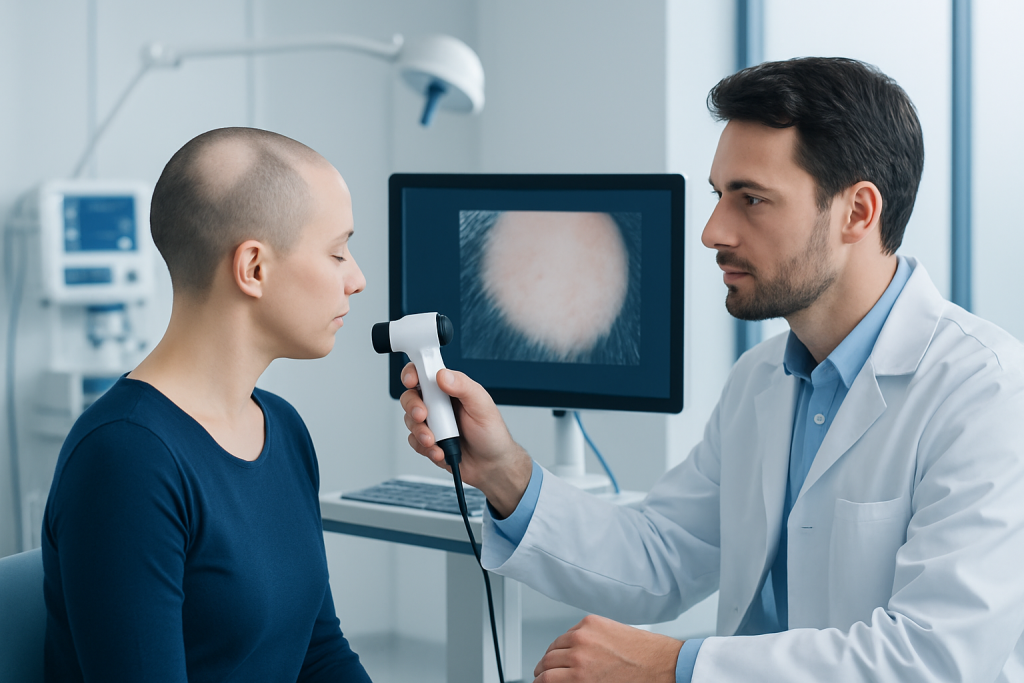
The classic sign of alopecia areata is one or more round or oval bald patches that develop relatively quickly. The skin in these areas often looks normal and smooth, without scale, scarring, or significant redness. Some people notice itching, tingling, or mild burning before a patch appears, but many have no discomfort at all.
Doctors may describe several patterns of the condition. Patchy alopecia areata is the most common form. Alopecia totalis refers to loss of all scalp hair, while alopecia universalis means loss of hair across the scalp and body. Hair loss can also occur in a band-like pattern around the sides and back of the scalp, which may be more persistent.
Nails can be involved too. Small pits, ridges, roughness, or thinning of the nails may occur in some people with alopecia areata. Nail changes do not happen in everyone, but when present, they can support the diagnosis.
- Sudden patchy scalp hair loss
- Loss of eyebrows, eyelashes, or beard hair
- Smooth skin in the affected areas
- Short broken hairs at the patch edges
- Nail pitting or surface changes in some cases
Causes and risk factors

The exact cause of alopecia areata is not fully understood, but it is widely recognized as an autoimmune disorder. The immune system appears to interrupt the normal hair growth cycle by targeting hair follicles. This does not usually destroy the follicles, which is why regrowth can still occur.
Genetics seem to play a role. Some people have a family history of alopecia areata or other autoimmune conditions. The condition is also seen more often in people with immune-related disorders such as thyroid disease, vitiligo, or atopic conditions. However, many people who develop alopecia areata are otherwise healthy and have no known trigger.
Stress is often discussed in relation to hair loss, but it should not be viewed as the sole cause. Emotional or physical stress may coincide with episodes in some individuals, yet alopecia areata is fundamentally an immune-mediated condition. It is not contagious, and it does not result from poor hair care or hygiene.
How doctors diagnose alopecia areata
Diagnosis usually begins with a medical history and close examination of the scalp, hair-bearing skin, and nails. In many cases, the appearance is distinctive enough for a dermatologist to recognize it during the visit. A handheld magnifying device called a dermoscope can help identify features such as broken hairs, narrowing at the hair base, and tiny black dots.
Doctors also consider other causes of hair loss before confirming the diagnosis. These may include hair loss from shedding disorders, fungal infection, traction, trichotillomania, or scarring conditions. If the pattern is unusual, blood tests may be recommended to check for related issues such as thyroid problems or nutritional concerns.
In selected cases, a scalp biopsy may be used to clarify the diagnosis. This is more likely if the doctor suspects another condition or if the hair loss does not fit a typical pattern. An accurate diagnosis matters because treatment decisions depend on the type of hair loss, the extent of involvement, the person’s age, and how long the problem has been present.
Treatment options and what to expect
Treatment for alopecia areata is individualized. Small, limited patches may regrow without treatment, so careful observation can sometimes be appropriate. When treatment is needed, doctors may use topical therapies, injections into affected areas, or other medicines that help reduce immune activity around the follicles.
For localized disease, injected corticosteroids are commonly used because they can encourage regrowth in small patches. Topical corticosteroids and other prescription medicines may also be recommended, especially for children or for areas where injections are not preferred. In more extensive or rapidly progressing cases, a dermatologist may discuss broader treatment options and careful monitoring over time.
Hair regrowth can be partial or complete, and the new hair may initially be fine, pale, or soft before returning to its usual texture and color. Because alopecia areata can recur, treatment often focuses on both regrowth and long-term follow-up. If hair loss is severe and long-standing, specialists may also discuss cosmetic support, scalp camouflage, or whether procedures such as hair transplant evaluation are appropriate in select situations, although transplantation is not a standard first-line solution for active alopecia areata.
People sometimes ask whether platelet-rich plasma or supportive dermatologic procedures can help. These options may be considered in broader hair-loss care depending on the diagnosis, and a specialist can explain when treatments such as PRP for hair loss fit into a personalized plan. The key is to base treatment on a confirmed diagnosis rather than treating all hair loss the same way.
Prevention, self-care, and living with the condition
There is no guaranteed way to prevent alopecia areata because it is an immune-related condition. Still, early assessment can help start appropriate treatment and avoid unnecessary products or supplements. Gentle hair care is sensible: avoid tight hairstyles, harsh chemical processing, and repeated scalp irritation, especially while the scalp is sensitive.
Sun protection may be important for exposed scalp areas. Hats, scarves, or sunscreen on uncovered skin can help protect against sunburn. If eyelashes or eyebrows are affected, people may also need guidance on eye protection and cosmetic options that feel comfortable and natural.
Living with visible hair loss can affect confidence and emotional well-being. Support from family, counseling, or patient communities can be helpful, especially when hair loss is sudden or recurrent. If the diagnosis is uncertain or the pattern changes over time, specialists may review whether related concerns such as female pattern hair loss or another scalp condition are also present.
When to seek medical care
Medical assessment is recommended if a person develops sudden patchy hair loss, loses eyebrows or eyelashes, or notices rapid shedding over days to weeks. A doctor should also evaluate hair loss with scalp redness, scaling, pain, scarring, or broken hairs, because these features can suggest a different diagnosis.
Prompt care is especially important in children, in people with widespread hair loss, and in anyone with nail changes or a history of autoimmune disease. Early diagnosis may improve treatment planning and reduce uncertainty. A dermatologist can explain the likely pattern, expected course, and reasonable options for monitoring or treatment.
For international patients who need specialist evaluation, Acibadem International’s multidisciplinary teams in JCI-accredited hospitals diagnose and treat hair and scalp conditions with individualized care plans. In some cases, assessment may involve both dermatology and related services such as dermatology consultation to confirm the cause of hair loss and guide next steps safely.
Frequently asked questions
Is alopecia areata permanent?
Not always. Alopecia areata is a non-scarring form of hair loss, so many people do experience regrowth. However, the condition can be unpredictable, and some people have recurrent episodes or more extensive loss over time.
Can hair grow back after alopecia areata?
Yes, hair can grow back because the follicles are usually not permanently destroyed. Regrowth may happen on its own or with treatment, and new hair may first appear finer or lighter before returning to its usual appearance.
What triggers alopecia areata?
There is no single confirmed trigger in every case. It is considered an autoimmune condition, and genetic tendency appears to matter. Stress may coincide with episodes in some people, but it is not considered the sole cause.
How is alopecia areata different from pattern baldness?
Alopecia areata usually causes sudden, well-defined patches of hair loss. Pattern baldness tends to develop gradually in characteristic distributions and is related to genetic and hormonal factors rather than an autoimmune process.
Should everyone with alopecia areata have blood tests?
Not necessarily. Many cases can be diagnosed from the history and examination alone. Blood tests may be recommended if symptoms, medical history, or exam findings suggest related conditions such as thyroid disease or another cause of hair loss.
Is hair transplant a standard treatment for alopecia areata?
No. Hair transplant is not usually the first-line treatment for active alopecia areata because the condition is immune-mediated and can recur. A specialist can advise whether transplant evaluation has any role only after the diagnosis and disease stability are carefully assessed.
References
- American Academy of Dermatology
- National Institute of Arthritis and Musculoskeletal and Skin Diseases
- British Association of Dermatologists
- Mayo Clinic
- National Health Service
This article is for general information only and is not a substitute for professional medical advice. Please consult a qualified doctor about your individual situation.
Alopecia Areata in Turkey — costs, top hospitals & a free quote
JCI-accredited · board-certified surgeons · reply within 24h
Add us as a Preferred Source to see more of our trusted health content across Google Search, AI Overviews and Discover.

Plastic, Reconstructive & Aesthetic Surgery
Reconstructive and aesthetic procedures for the face and body, performed by experienced surgeons.
35 specialists in this unitMore from the Health Library



Related Specialists
Prof. Dr. Ufuk Aydınlı
Orthopedic Surgery & Traumatology
Prof. Dr. Banu Coşar
Ophthalmology
Prof. Dr. H. Armağan Arıcan
Radiation Oncology
Dr. Mustafa Şener Yıldırım
Intensive Care