ALS and Neuroimmunology: Is Motor Neuron Disease Autoimmune?
ALS mainly affects motor neurons in the brain and spinal cord, leading to progressive muscle weakness. ALS is not usually considered a classic autoimmune disease, but immune system activity may play a role in disease progression.
Key Takeaways
- ALS mainly affects motor neurons in the brain and spinal cord, leading to progressive muscle weakness.
- ALS is not usually considered a classic autoimmune disease, but immune system activity may play a role in disease progression.
- Neuroinflammation involving microglia, astrocytes, and immune signaling is an important area of ALS research.
- Diagnosis relies on clinical evaluation, neurological examination, EMG, nerve studies, imaging, and exclusion of other conditions.
- Current treatment focuses on symptom management, supportive care, rehabilitation, and disease-modifying medicines when appropriate.
- A multidisciplinary neurology team can help address breathing, nutrition, mobility, communication, and quality of life.
ALS is a progressive motor neuron disease, and researchers are actively studying how the immune system may affect it. While ALS is not generally classified as a classic autoimmune disease, neuroimmunology is helping doctors better understand inflammation, diagnosis, and future treatment directions.
Overview: What ALS Is and Why Neuroimmunology Matters
Amyotrophic lateral sclerosis, often called ALS, is a disease that affects motor neurons. These are the nerve cells that control voluntary muscle movement, including walking, speaking, swallowing, and breathing. As motor neurons become damaged and are gradually lost, muscles weaken and shrink over time.
ALS is usually grouped among neurodegenerative diseases rather than classic autoimmune disorders. However, modern research in neuroimmunology has shown that the immune system and inflammation inside the nervous system may influence how the disease starts or progresses. This has led to an important question for patients and families: is motor neuron disease autoimmune?
The current understanding is nuanced. In most cases, ALS is not considered a typical autoimmune disease in the same way as conditions such as multiple sclerosis or myasthenia gravis. Still, immune-related changes are often found in the brain, spinal cord, and blood of people with ALS, suggesting that inflammation may contribute to injury around already vulnerable motor neurons.
This distinction matters because it shapes both diagnosis and treatment. Doctors do not usually treat ALS as an autoimmune disease by default, but neuroimmunology research may help identify subgroups of patients, explain overlapping symptoms, and guide future therapies aimed at harmful inflammation.
Symptoms of ALS
ALS symptoms often begin subtly and can vary from person to person. Early signs may include weakness in one hand, tripping, difficulty lifting the front of the foot, muscle cramps, twitching, or changes in speech. Some people first notice limb weakness, while others develop bulbar symptoms such as slurred speech or trouble swallowing.
As the disease progresses, weakness typically spreads to other muscle groups. Everyday tasks may become harder, including climbing stairs, buttoning clothes, writing, chewing, or turning in bed. Breathing muscles can also be affected over time, which is why ongoing respiratory monitoring is an important part of care.
ALS usually affects movement rather than sensation, so numbness and tingling are not typically the main features. However, some people may also experience fatigue, emotional changes, or thinking and behavior changes, especially in forms of disease that overlap with frontotemporal dysfunction.
- Progressive muscle weakness
- Muscle twitching and cramps
- Slurred speech or swallowing difficulty
- Loss of hand function or foot drop
- Shortness of breath as breathing muscles weaken
- Weight loss related to swallowing problems or increased energy use
Is ALS Autoimmune? What Research Shows
Most specialists do not classify ALS as a classic autoimmune disease. In autoimmune diseases, the immune system mistakenly targets the body’s own tissues in a more direct and defined way, often with recognizable antibodies or inflammatory patterns that guide diagnosis and treatment. ALS does not consistently follow that model.
Even so, the immune system appears to be involved. Researchers have found activation of microglia and astrocytes, which are support cells in the central nervous system that can influence inflammation. Changes in cytokines, immune signaling pathways, and immune cell behavior have also been observed in some people with ALS.
These findings suggest that inflammation may contribute to motor neuron damage rather than being the only primary cause. In other words, immune activity in ALS may be part of a complex disease process that includes genetics, abnormal protein handling, oxidative stress, mitochondrial dysfunction, and excitotoxicity. This is one reason why immune-targeting therapies have not yet become standard treatment for most patients.
There are also important look-alike conditions. Some immune-mediated neuropathies, myopathies, or neuromuscular junction disorders can resemble ALS early on but may be treatable. That is why careful evaluation by a neurologist is essential when progressive weakness is present.
Causes, Risk Factors, and Immune Involvement
The exact cause of ALS is not fully understood. In many people, it occurs sporadically, meaning there is no clear family history. In a smaller group, ALS is familial and linked to inherited gene changes such as SOD1, C9orf72, TARDBP, or FUS. These genetic forms have helped researchers understand important biological pathways involved in motor neuron injury.
Risk factors may include increasing age, male sex in some age groups, family history, and certain genetic variants. Environmental exposures have also been studied, but no single exposure explains most cases. ALS is best understood as a multifactorial disease in which several mechanisms may interact over time.
Immune involvement may be one of those mechanisms. In ALS, neuroinflammation can develop around damaged neurons, and it may be protective at some stages but harmful at others. This dual role is a key reason neuroimmunology research is so active: scientists are trying to understand when inflammation helps clear injury and when it may worsen degeneration.
Because symptoms can overlap with other neurological conditions, doctors may also consider disorders such as multiple sclerosis or peripheral nerve diseases during evaluation. This does not mean ALS turns into those diseases, but it highlights why a broad and careful diagnostic approach is important.
How ALS Is Diagnosed
There is no single test that confirms ALS in every case. Diagnosis is based on a detailed medical history, neurological examination, and tests that look for evidence of both upper and lower motor neuron involvement while ruling out other causes of weakness. This process can take time, especially early in the disease when symptoms are still evolving.
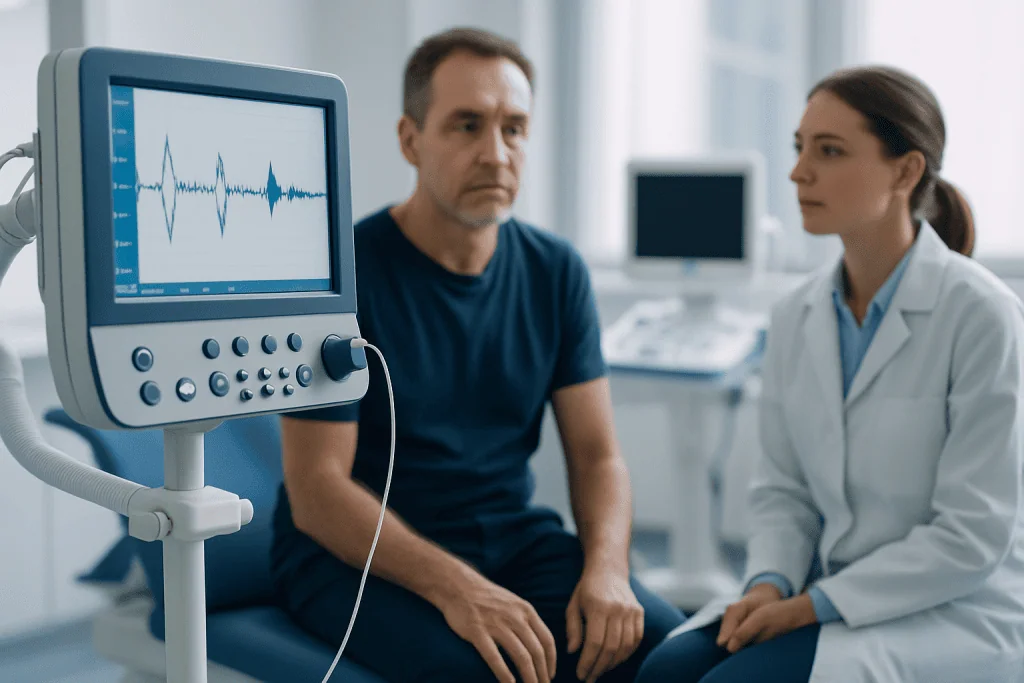
Common tests include electromyography and nerve conduction studies, which help assess how nerves and muscles are functioning. Blood tests may be used to search for metabolic, infectious, inflammatory, or autoimmune explanations. Imaging, especially MRI scans, can help exclude structural problems affecting the brain or spinal cord.
Depending on the situation, doctors may also request genetic testing, swallowing assessment, pulmonary function testing, or evaluation by speech and rehabilitation specialists. If an immune-mediated disorder is suspected, the workup may include additional antibody testing or cerebrospinal fluid analysis to look for alternative diagnoses.
The goal of diagnosis is not only to name the condition accurately but also to identify treatable mimics. Conditions that appear similar to ALS can include neuropathies, cervical spine disease, myasthenia gravis, myopathies, and other neuromuscular diseases.
Treatment Options and Supportive Care
Although there is currently no cure for ALS, treatment can help slow progression in some patients, manage symptoms, and support day-to-day function. Care often involves disease-modifying medicines when appropriate, combined with respiratory care, nutritional support, physical therapy, occupational therapy, speech therapy, and psychosocial support.
Supportive care is central because ALS affects many aspects of life. A speech and swallowing team may suggest strategies to reduce choking risk and maintain nutrition. Respiratory specialists can monitor breathing strength and discuss noninvasive ventilation if needed. Rehabilitation professionals can recommend exercises, stretching, mobility aids, and home adaptations to improve comfort and independence.
In selected cases, procedures to support nutrition may be discussed if swallowing becomes difficult. Some patients may benefit from a feeding tube placed through an endoscopic procedure after careful assessment. If symptoms create uncertainty about diagnosis, doctors may also use EMG testing and other evaluations over time to confirm the pattern of disease.
Because immune changes in ALS are complex, immunotherapy is not standard for most patients unless another immune-mediated diagnosis is found. Ongoing clinical trials continue to explore anti-inflammatory and targeted biological approaches. Near the end of the care pathway, some international patients seek evaluation at centers such as Acibadem International, where multidisciplinary specialists in JCI-accredited hospitals diagnose and treat complex neurological conditions.
Prevention, Self-care, and Living With ALS
There is no proven way to prevent most cases of ALS. For families with inherited disease, genetic counseling may be helpful to understand risks, testing options, and implications for relatives. For everyone else, the focus is usually on early recognition, expert evaluation, and proactive supportive care rather than prevention alone.
Self-care in ALS is practical and personalized. Nutrition matters because maintaining weight can become difficult, especially if swallowing is affected. Energy conservation, safe physical activity, skin care, good sleep, and planning for communication support can all improve quality of life. Emotional health also deserves attention, as adjustment to a progressive diagnosis can be challenging for both patients and caregivers.
Regular follow-up helps the care team adapt treatment as needs change. This may include reassessing mobility devices, monitoring breathing, updating swallowing plans, and addressing pain, cramps, drooling, constipation, or mood symptoms. Palliative care can be introduced early to improve comfort and support decision-making, not only at the end of life.
Patients are often reassured to learn that asking for help early is a strength, not a setback. Coordinated care can reduce avoidable complications and help people stay as active, comfortable, and independent as possible for as long as possible.
When to See a Doctor
A person should seek medical evaluation for progressive muscle weakness, persistent muscle twitching with weakness, speech changes, swallowing difficulty, or unexplained shortness of breath. These symptoms do not always mean ALS, but they do deserve timely neurological assessment.
Urgent medical attention is especially important if there is choking, rapid breathing decline, inability to swallow safely, or sudden severe weakness. A doctor may need to rule out other neurological or neuromuscular conditions that can progress quickly and may require different treatment.
It is also reasonable to seek a second opinion at a specialist center if the diagnosis is uncertain or symptoms do not fit the usual pattern. Because some immune-mediated diseases can mimic motor neuron disease, expert review can be very valuable.
Early consultation helps patients and families plan next steps, understand available treatments, and connect with supportive services. Even when a cure is not available, timely care can make an important difference in symptom control and quality of life.
Frequently asked questions
Is ALS considered an autoimmune disease?
ALS is not usually considered a classic autoimmune disease. However, researchers have found immune and inflammatory changes that may influence how the disease develops or progresses, which is why neuroimmunology is an important area of ALS research.
Can inflammation make ALS worse?
Inflammation may contribute to damage around motor neurons in some people with ALS. The relationship is complex because some immune responses may be protective at certain stages, while others may become harmful over time.
Are there autoimmune diseases that can look like ALS?
Yes. Some immune-mediated nerve, muscle, or neuromuscular junction disorders can resemble ALS early on. This is one reason a thorough neurological evaluation is important, because some of these conditions may be treatable.
How do doctors tell ALS apart from other conditions?
Doctors use the history, neurological examination, EMG and nerve conduction studies, imaging, and blood tests to look for the pattern of motor neuron disease and exclude other causes. Sometimes follow-up over time is needed before the diagnosis becomes clear.
Can immunotherapy treat ALS?
Immunotherapy is not a standard treatment for most people with ALS. It may be considered only if testing suggests a different immune-mediated condition or as part of research studies investigating new approaches.
What specialist should someone see for suspected ALS?
A neurologist, ideally one with experience in neuromuscular disorders or motor neuron disease, is usually the best starting point. Multidisciplinary care may also involve respiratory, rehabilitation, nutrition, speech, and palliative care specialists.
References
- World Health Organization
- National Institute of Neurological Disorders and Stroke
- National Institute on Aging
- ALS Association
- European Academy of Neurology
This article is for general information only and is not a substitute for professional medical advice. Please consult a qualified doctor about your individual situation.
Motor Neuron Disease in Turkey — costs, top hospitals & a free quote
JCI-accredited · board-certified surgeons · reply within 24h
Add us as a Preferred Source to see more of our trusted health content across Google Search, AI Overviews and Discover.

Physical Medicine & Rehabilitation
Restoring movement and function after injury, surgery or neurological conditions.
152 specialists in this unitMore from the Health Library


Related Specialists
Dr. Abdurrahman Yaycı
Anesthesiology
Prof. Dr. Ufuk Topuz
Anesthesiology
Assoc. Prof. Dr. İmam Bakır Batı
Liver Transplant Center
Dr. Hüsnü Mert Arinalp
Anesthesiology