Als Treatment: How It Works, Results and What to Expect

There is currently no cure for ALS, but several treatments and supportive interventions can improve daily function and comfort. Early multidisciplinary care is associated with better symptom management and more timely planning for nutrition, breathing and communication needs.
Key Takeaways
- There is currently no cure for ALS, but several treatments and supportive interventions can improve daily function and comfort.
- Early multidisciplinary care is associated with better symptom management and more timely planning for nutrition, breathing and communication needs.
- ALS affects movement-related nerve cells, but thinking, awareness and sensation are often preserved.
- The pace and pattern of ALS vary substantially between individuals, so prognosis should be discussed with the treating neurology team.
- New or progressive weakness, speech changes, swallowing difficulty or shortness of breath should be medically assessed promptly.
ALS treatment focuses on slowing disease progression where possible, managing symptoms, preserving independence and planning care around each person’s goals. A coordinated neurology, respiratory, nutrition and rehabilitation team can help people with ALS maintain comfort, communication and quality of life throughout the condition.
ALS Treatment: How It Works and What to Expect
ALS treatment cannot currently cure amyotrophic lateral sclerosis (ALS), but it can slow progression for some people, relieve symptoms and support independence, communication, nutrition and breathing. Treatment is individualized because ALS can progress differently from one person to another, and needs may change over time.
ALS is a progressive disease of motor neurons, the nerve cells that control voluntary muscles. As these cells are damaged, people may develop weakness, muscle cramps or twitching, stiffness, speech and swallowing changes, and eventually difficulty with breathing. A care plan usually combines disease-modifying medicines with practical, symptom-focused support.
Care is often coordinated through a multidisciplinary ALS clinic or team. This may include a neurologist, respiratory specialist, rehabilitation physician, physiotherapist, occupational therapist, speech and language therapist, dietitian, specialist nurse, psychologist and palliative-care clinician. The purpose is not only to treat individual symptoms, but also to anticipate needs and help the person remain involved in decisions.
How ALS Treatment Works
Medicines approved or used for ALS may modestly slow functional decline or extend survival for some eligible people. Their role, availability and suitability vary by country and by the person’s ALS type, stage, liver function, other health conditions and concurrent medicines. A neurologist should explain the expected benefit, monitoring needs and possible side effects before treatment begins.
Symptom management is equally important. Clinicians may help treat muscle cramps, stiffness, excess saliva, constipation, pain, anxiety, sleep problems and emotional changes such as involuntary laughing or crying. Treatment is selected carefully to minimize adverse effects such as sedation, falls or worsening swallowing difficulty.
Supportive interventions address the effects of muscle weakness directly. Physiotherapy can help maintain safe movement and reduce discomfort; occupational therapy can recommend equipment and home adaptations; speech therapy can support communication and swallowing. Physical therapy and rehabilitation may be adapted as strength and fatigue levels change.
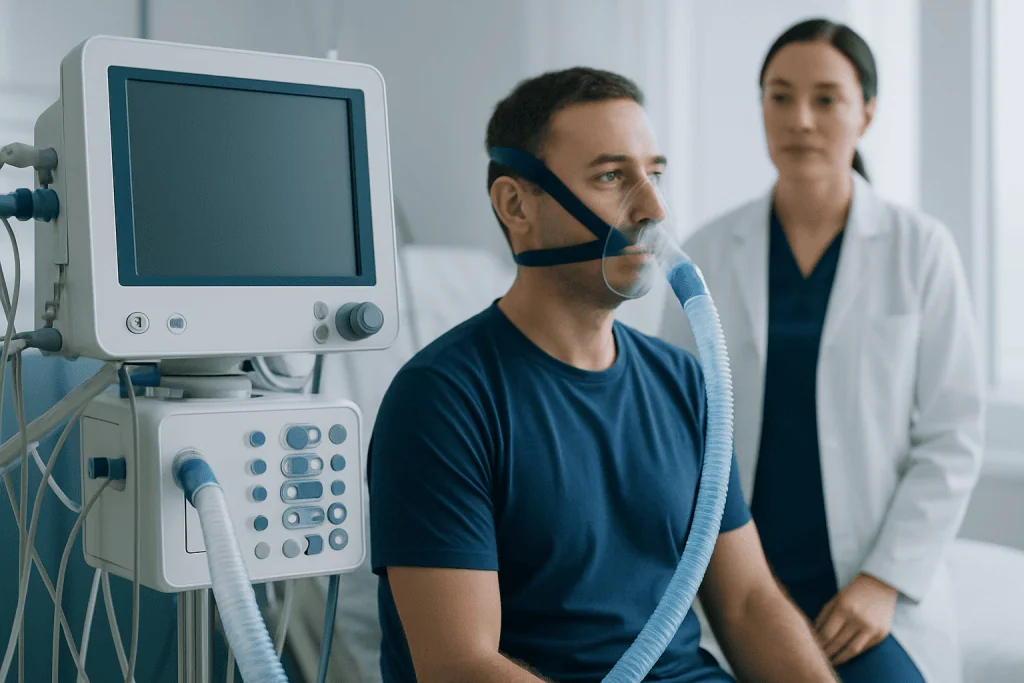
Respiratory assessment is a central part of ALS care. Non-invasive ventilation, usually delivered through a mask, may support breathing when respiratory muscles weaken. Cough-assist techniques and secretion management can also reduce complications and improve comfort.
Who Is a Candidate for ALS Treatment?

Everyone diagnosed with ALS should be offered specialist neurological follow-up and supportive care, regardless of age, symptom severity or whether they choose a disease-modifying medicine. Earlier assessment is useful because interventions for nutrition, breathing, mobility and communication are generally easier to introduce before urgent problems develop.
Before recommending a treatment plan, clinicians confirm the diagnosis and look for conditions that can mimic ALS, including certain nerve, muscle, spinal and metabolic disorders. Assessment may include a neurological examination, electromyography and nerve conduction studies, blood tests, imaging when indicated, breathing tests, swallowing evaluation and nutritional review.
Candidacy for a particular medicine or procedure depends on its indication and on individual circumstances. For example, people with impaired swallowing, unintentional weight loss or prolonged mealtimes may benefit from an early discussion about feeding-tube options. Those with falling respiratory test results, disturbed sleep, morning headaches or breathlessness may be assessed for ventilatory support.
Genetic counselling may be appropriate when there is a family history of ALS, frontotemporal dementia or a known ALS-related genetic variant. Genetic testing is a personal decision and should be accompanied by clear counselling about what results may and may not mean for the individual and family members.
What Happens During ALS Care and Procedures?
ALS care is not one single procedure. At the first specialist visit, the team commonly reviews symptoms, mobility, weight, breathing, speech, swallowing, mood, sleep and personal priorities. Together, the patient, family and clinicians develop a plan that includes regular monitoring and clear contact points if symptoms change.
Follow-up appointments may involve repeat breathing tests, weight checks, functional assessments and review of equipment needs. A physiotherapist may teach gentle stretching, positioning and energy-conservation strategies, while an occupational therapist can recommend aids such as braces, shower equipment, wheelchairs or technology for computer access.
If speech becomes difficult, speech and language therapy may introduce voice amplification, communication boards, tablet-based tools or eye-gaze technology. These options are best explored before communication is severely affected, allowing time to identify the most comfortable and effective method.
When a feeding tube is recommended, the team explains the procedure, possible approaches and timing in relation to breathing status. A feeding tube can supplement nutrition, hydration and medicines, and it does not necessarily mean a person can no longer eat or drink by mouth. Decisions about ventilation, feeding support and future care are personal and should be revisited as circumstances change.
Benefits, Risks and Recovery Timeline
The potential benefits of ALS treatment include slower loss of function for some people, fewer distressing symptoms, better nutritional support, improved sleep and breathing comfort, safer mobility and more reliable communication. Multidisciplinary care also helps patients and families prepare for changes rather than responding only during a crisis.
There is no uniform recovery timeline because ALS is progressive rather than reversible. Instead, care is reviewed regularly, often every few months or sooner when needs change. Some people may experience a gradual course over years, while others have more rapid progression; the treating team can provide the most meaningful outlook based on the individual pattern of disease.
Potential risks depend on the treatment. Medicines can cause side effects and may require blood-test monitoring. Mobility aids need to be fitted properly to reduce injury risk. Non-invasive ventilation may initially feel uncomfortable or cause mask pressure, dryness or air leakage, but adjustments often improve tolerance.
Procedures such as feeding-tube placement have procedural and anesthesia-related risks, particularly when breathing muscles are weak. For this reason, discussions and assessment are ideally undertaken early. The goal is to make informed choices that reflect the person’s priorities, not to apply the same intervention to every patient.
How Close Is ALS to Being Cured?
ALS is not yet curable. Research is active in areas including genetic forms of ALS, inflammation, protein handling, nerve-cell protection and gene-targeted treatments. Some advances have led to treatments for selected groups of patients, but no current therapy can restore motor neurons that have already been lost or stop all forms of ALS.
For now, the most effective approach combines timely diagnosis, appropriate disease-modifying treatment when suitable, respiratory and nutritional support, rehabilitation and symptom relief. Participation in clinical research may be an option for some people, but it should be discussed with an ALS specialist so that potential benefits, uncertainties and practical demands are understood.
Hope in ALS care can include realistic, meaningful goals: maintaining comfort, staying connected with others, preserving preferred activities and making informed choices. A specialist team can help align medical care with those goals at every stage.
How Long Can You Live With ALS With Treatment?
Life expectancy with ALS varies widely. Many people live for several years after symptoms begin, while some live substantially longer and others have a faster course. Survival is influenced by factors such as the age at symptom onset, whether symptoms began in the limbs or bulbar muscles involved in speaking and swallowing, respiratory function, nutritional status and the rate of progression.
Treatment can make an important difference to comfort, function and, for some interventions, survival. In particular, careful nutritional support and timely respiratory care may help people live longer and feel better. However, no clinician can accurately predict an individual timeline from a general average alone.
Regular appointments allow the care team to update the discussion as the disease pattern becomes clearer. Patients may find it helpful to ask what changes to watch for, what decisions may arise in the coming months and which supports are available for family caregivers.
What Triggers ALS to Start?
In most cases, the exact trigger for ALS is unknown. ALS is thought to result from a complex interaction of genetic susceptibility and environmental or biological factors, rather than from one identifiable cause. A minority of cases are inherited through changes in specific genes.
Research has explored possible associations with age, family history, smoking, military service, certain occupational or environmental exposures and previous head injury. These associations do not prove that a particular factor causes ALS in an individual person, and most people with potential exposures will never develop the condition.
ALS is not contagious, and it is not caused by exercise, emotional stress, ordinary physical activity or a personal failing. Anyone concerned about a family history can discuss genetic counselling with a neurologist or genetics professional.
Do ALS Patients Know What Is Going On?
Most people with ALS remain aware of what is happening and retain their ability to understand, feel and make decisions. ALS primarily affects motor neurons, so it causes weakness rather than loss of sensation or consciousness. This is why communication support and advance discussions are so important as speech and hand movement may become more difficult.
Some people with ALS develop changes in thinking, behavior, language or planning, and a smaller proportion develop frontotemporal dementia. These changes are not inevitable, and they should be assessed sensitively because they may affect communication, safety and decision-making support.
Family members should avoid assuming that reduced speech or movement means reduced understanding. Communication tools, yes-or-no methods, eye-gaze devices and extra time can help the person remain actively involved in care and everyday life.
When to Seek Medical Care
A person should arrange a medical assessment for progressive, unexplained muscle weakness; repeated tripping or dropping objects; persistent muscle twitching with weakness; slurred speech; trouble swallowing; or unexplained weight loss. These symptoms have many possible causes, and prompt evaluation helps identify the correct diagnosis and appropriate treatment.
Urgent medical care is needed for significant shortness of breath, choking episodes, inability to clear mucus, sudden worsening weakness, signs of dehydration or inability to maintain adequate nutrition. New breathing problems should not be managed at home without professional advice.
Acibadem International’s multidisciplinary specialists and JCI-accredited hospitals diagnose and treat ALS for international patients, coordinating neurological assessment, respiratory support, rehabilitation and nutritional care. People with progressive weakness may also benefit from evaluation for related neuromuscular diseases that can have different causes and treatment approaches.
Frequently asked questions
Is there a cure for ALS?
There is currently no cure for ALS. Treatment can slow progression for some people and can substantially improve symptom control, breathing support, nutrition, mobility and communication. Research into new therapies remains active.
What is the first treatment after an ALS diagnosis?
The first steps usually include assessment by a neurologist and a multidisciplinary ALS team. The team reviews breathing, swallowing, nutrition, mobility, communication and symptom burden, then discusses disease-modifying medicines and supportive options that may be appropriate.
Can ALS progression be slowed?
Certain medicines may modestly slow progression for eligible people, although their effects vary. Early nutritional support, respiratory monitoring and coordinated multidisciplinary care can also help manage complications and preserve function for as long as possible.
Does a feeding tube mean a person with ALS cannot eat normally?
Not necessarily. A feeding tube can provide additional calories, fluids and medicines when swallowing becomes difficult or meals are exhausting. Some people may still be able to eat and drink safely by mouth, depending on their swallowing assessment.
When is ventilation used in ALS?
Ventilation may be considered when breathing muscles weaken, particularly if a person has breathlessness, disturbed sleep, morning headaches, fatigue or declining respiratory test results. Non-invasive ventilation through a mask is often considered first, and the decision should reflect the person’s goals and medical situation.
Is ALS always inherited?
No. Most ALS cases occur without a known family history. A smaller proportion are linked to inherited genetic changes, and genetic counselling may be helpful when there is a family history of ALS or related neurological conditions.
References
- National Institute of Neurological Disorders and Stroke
- ALS Association
- Mayo Clinic
- National Health Service
- European Academy of Neurology
This article is for general information only and is not a substitute for professional medical advice. Please consult a qualified doctor about your individual situation.
Explore treatments in Turkey — costs, top hospitals & a free quote
JCI-accredited · board-certified surgeons · reply within 24h
Add us as a Preferred Source to see more of our trusted health content across Google Search, AI Overviews and Discover.