Alzheimer’s Disease: When Memory Changes Need Medical Evaluation

Alzheimer’s disease is the most common cause of dementia, but not every memory problem is Alzheimer’s. Warning signs include worsening forgetfulness, confusion, difficulty with language, and trouble managing everyday tasks.
Key Takeaways
- Alzheimer’s disease is the most common cause of dementia, but not every memory problem is Alzheimer’s.
- Warning signs include worsening forgetfulness, confusion, difficulty with language, and trouble managing everyday tasks.
- A medical evaluation may include history-taking, cognitive testing, blood tests, and brain imaging to rule out other causes.
- Treatment cannot cure Alzheimer’s disease, but medicines, lifestyle support, and structured care may help manage symptoms.
- Early diagnosis can improve safety, planning, caregiver support, and access to appropriate services.
Alzheimer’s disease is a progressive brain disorder that affects memory, thinking, behavior, and daily function. Early medical evaluation can help clarify the cause of memory changes, guide treatment, and support long-term care planning.
Overview
Alzheimer’s disease is a progressive disorder of the brain that gradually affects memory, thinking, language, judgment, and the ability to carry out daily activities. It is the most common cause of dementia, a general term for a decline in mental abilities severe enough to interfere with everyday life. Although memory lapses can happen with normal aging, Alzheimer’s disease involves ongoing changes that become more noticeable over time.
In the early stages, a person may have increasing difficulty remembering recent conversations, appointments, or newly learned information. As the condition progresses, it can affect problem-solving, orientation, behavior, and independence. Family members often notice these changes before the person fully recognizes them.
Alzheimer’s disease develops because of abnormal changes in brain cells and the connections between them. These changes slowly damage areas of the brain involved in memory and higher thinking. The process usually begins years before symptoms become obvious, which is one reason medical evaluation is important when memory changes start to affect daily life.
Symptoms and Early Warning Signs

The symptoms of Alzheimer’s disease usually begin gradually and worsen over time. Early signs often include repeating questions, misplacing items more often, forgetting recent events, or struggling to find the right words. A person may still manage many usual routines, but tasks can take longer or feel more confusing than before.
As the disease advances, symptoms may include getting lost in familiar places, difficulty following conversations, poor judgment, trouble handling finances or medications, and changes in mood or personality. Some people become withdrawn, anxious, suspicious, or irritable. Others may show less initiative or find it hard to adapt to change.
Common symptoms can include:
- Memory loss that disrupts daily life
- Difficulty planning, organizing, or solving problems
- Trouble completing familiar tasks at home or work
- Confusion about time, place, or recent events
- Problems with language, reading, or following a conversation
- Misplacing belongings and being unable to retrace steps
- Changes in judgment, behavior, or social engagement
Not every person has the same pattern of symptoms. Some changes may be mild at first, while others become apparent sooner. Any persistent decline in memory or thinking deserves professional assessment, especially if it affects safety, independence, or relationships.
Causes and Risk Factors
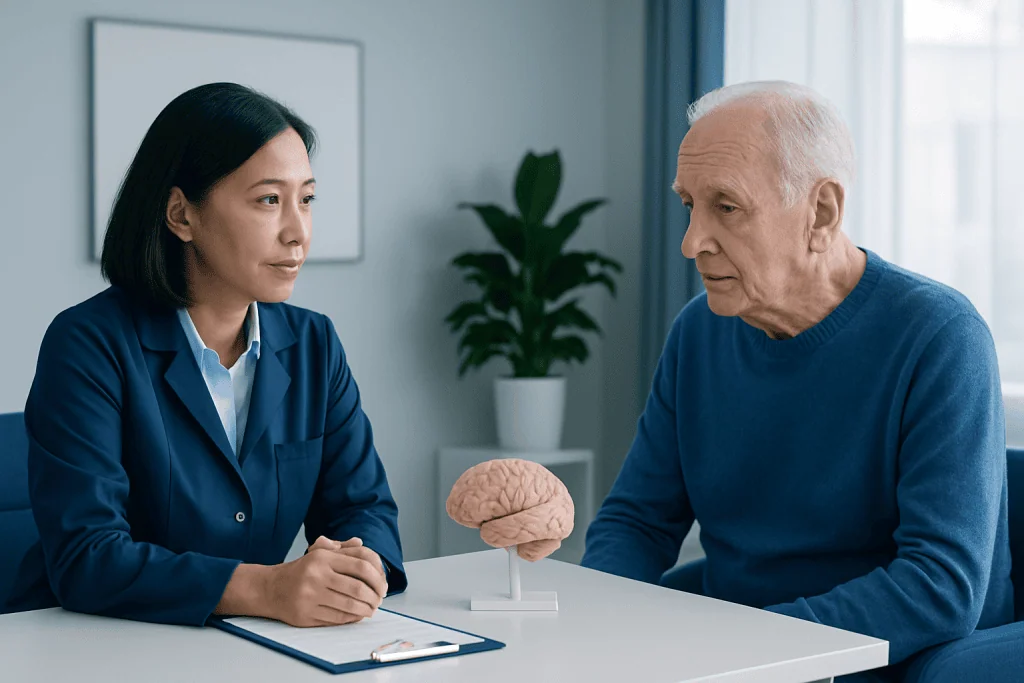
There is no single cause of Alzheimer’s disease. It is thought to result from a combination of age-related brain changes, genetic influences, and environmental or lifestyle factors. The disease is associated with the buildup of abnormal proteins in the brain and the loss of nerve cells involved in memory and thinking.
Age is the strongest known risk factor, and most cases develop later in life. However, Alzheimer’s disease is not a normal part of aging. Some people develop symptoms before age 65, which is known as younger-onset Alzheimer’s disease. A family history may increase risk, especially in certain inherited forms, but many people with Alzheimer’s have no clear genetic pattern.
Other factors linked with a higher risk include cardiovascular disease, high blood pressure, diabetes, smoking, physical inactivity, sleep problems, and low social or cognitive engagement. These factors do not mean a person will definitely develop Alzheimer’s disease, but they may contribute to overall brain health. Some memory concerns may also be caused by other conditions, such as depression, thyroid problems, vitamin deficiencies, medication effects, or other forms of dementia.
How Alzheimer’s Disease Is Diagnosed
There is no single test that can diagnose Alzheimer’s disease on its own. Diagnosis is based on a careful medical evaluation that looks at symptoms, medical history, daily function, and possible alternative causes. Because other conditions can mimic dementia, assessment should be thorough and individualized.
A doctor will usually ask about the timing of symptoms, changes in behavior, current medications, and family history. A relative or caregiver is often asked to describe what they have noticed. Cognitive tests may be used to assess memory, attention, language, and problem-solving. Blood tests can help identify treatable causes of memory problems, such as infection, thyroid disease, or vitamin deficiency.
Brain imaging may also be recommended, especially when the diagnosis is uncertain or symptoms are unusual. Imaging can help rule out stroke, bleeding, tumors, or other structural causes. In some cases, doctors may recommend MRI scan evaluation or other advanced tests. A comprehensive workup may also include neurology assessment when specialized expertise is needed.
When symptoms are mild, a diagnosis of mild cognitive impairment may be considered if memory or thinking is affected but independence is mostly preserved. Not everyone with mild cognitive impairment develops Alzheimer’s disease, but ongoing follow-up is important when changes continue or progress.
Treatment Options and Ongoing Care
There is currently no cure for Alzheimer’s disease, but treatment can help manage symptoms and support quality of life. Care is usually personalized and may combine medication, cognitive support, physical activity, environmental adjustments, and caregiver education. The goals are to maintain function as long as possible, reduce distress, and improve safety.
Doctors may prescribe medicines that help some people with memory, attention, or day-to-day function for a period of time. Other medications may be used carefully to address symptoms such as anxiety, depression, agitation, or sleep disturbance when appropriate. Treatment choices depend on the stage of disease, overall health, and the balance of possible benefits and side effects.
Non-drug approaches are also very important. Helpful strategies include keeping a predictable routine, using calendars and reminders, reducing noise and clutter, encouraging regular movement, and supporting sleep. Speech, occupational, or cognitive therapies may be useful in selected cases. If mobility, balance, or rehabilitation needs become important, a doctor may suggest physical therapy and rehabilitation.
As the disease progresses, care planning becomes increasingly important. Families may need guidance on home safety, driving, nutrition, legal planning, and future support needs. Near the end of the care journey, multidisciplinary teams such as those at Acibadem International’s JCI-accredited hospitals can help international patients with diagnosis, treatment planning, and coordinated follow-up.
Prevention and Self-care for Brain Health
Alzheimer’s disease cannot always be prevented, but healthy habits may support brain health and may lower the risk of cognitive decline. These habits are also valuable for people already living with memory changes because they can improve overall wellbeing and help maintain function.
General self-care steps include staying physically active, managing blood pressure and blood sugar, eating a balanced diet, sleeping well, avoiding smoking, and limiting alcohol if advised by a doctor. Social connection and mentally stimulating activities, such as reading, conversation, games, music, or learning new skills, may also be helpful.
For someone with early Alzheimer’s disease, practical self-care often focuses on routine and safety. It may help to simplify tasks, label drawers, keep important items in one place, and use pill organizers or reminders. Caregivers also need support, rest, and reliable information. A structured care plan can reduce stress for both the person affected and the family.
When to See a Doctor
A doctor should be consulted when memory or thinking changes are persistent, worsening, or interfering with normal life. Warning signs include getting lost, repeating the same questions frequently, struggling with bills or medications, major personality changes, or forgetting important recent events. Early evaluation matters because some causes of cognitive symptoms are treatable, and support is more effective when started early.
Urgent medical attention is needed if confusion appears suddenly, especially with fever, severe headache, weakness, trouble speaking, falls, or a major change in alertness. Sudden confusion is not typical of Alzheimer’s disease and may signal a different medical problem that needs prompt care.
Families do not need to wait until symptoms become severe. A timely assessment can help distinguish Alzheimer’s disease from other causes of memory problems, including Parkinson’s disease-related cognitive changes, depression, medication effects, or other neurological conditions. Early diagnosis can also help the person take part in decisions about treatment, daily routines, and future planning.
Frequently asked questions
Is Alzheimer’s disease the same as normal aging?
No. Normal aging may cause occasional forgetfulness, but Alzheimer’s disease leads to a progressive decline in memory, thinking, and daily function. When changes begin to interfere with work, home responsibilities, safety, or communication, medical evaluation is important.
What is the difference between Alzheimer’s disease and dementia?
Dementia is a broad term for a group of symptoms affecting memory, thinking, and daily abilities. Alzheimer’s disease is the most common cause of dementia. In other words, Alzheimer’s is a specific disease, while dementia describes the overall syndrome.
Can Alzheimer’s disease be cured?
At present, there is no cure that reverses Alzheimer’s disease. However, treatment can help manage symptoms, support independence for a time, and improve quality of life. Ongoing medical care and caregiver support are important parts of treatment.
When should memory loss be checked by a doctor?
Memory loss should be evaluated when it is persistent, getting worse, or affecting everyday activities such as finances, driving, medication use, or communication. It is also important to seek care if family members notice changes in judgment, personality, or orientation. Early assessment can identify treatable causes and help with planning.
Can younger people get Alzheimer’s disease?
Yes, although it is less common. Some people develop younger-onset Alzheimer’s disease before age 65. Symptoms may be similar, but the diagnosis can be overlooked at first because memory changes are not always expected in younger adults.
What tests are used to diagnose Alzheimer’s disease?
Doctors usually use a combination of medical history, cognitive testing, physical and neurological examination, blood tests, and brain imaging when needed. These tests help assess memory and thinking while ruling out other possible causes. Diagnosis is based on the overall clinical picture rather than a single result.
References
- World Health Organization
- National Institute on Aging
- Alzheimer's Association
- Centers for Disease Control and Prevention
- National Health Service
This article is for general information only and is not a substitute for professional medical advice. Please consult a qualified doctor about your individual situation.
Explore treatments in Turkey — costs, top hospitals & a free quote
JCI-accredited · board-certified surgeons · reply within 24h
Add us as a Preferred Source to see more of our trusted health content across Google Search, AI Overviews and Discover.
Check your numbers in seconds
BMI, calories, due date, blood pressure and 30+ more clinical calculators — free, instant, doctor-reviewed ranges.