Ambulatory Blood Pressure Monitoring: What Patients Need to Know

Ambulatory blood pressure monitoring measures blood pressure over 24 hours, including during sleep. It can detect white coat hypertension, masked hypertension, and nighttime blood pressure changes.
Key Takeaways
- Ambulatory blood pressure monitoring measures blood pressure over 24 hours, including during sleep.
- It can detect white coat hypertension, masked hypertension, and nighttime blood pressure changes.
- The test is noninvasive and usually involves wearing a cuff and small portable monitor for a full day.
- Results help doctors diagnose hypertension more accurately and adjust treatment when needed.
- Patients should follow normal routines as much as possible and keep the monitor dry during the test.
Ambulatory blood pressure monitoring is a 24-hour test that records blood pressure at regular intervals while a person goes about normal daily activities and sleep. It helps doctors confirm or rule out high blood pressure more accurately than a single clinic reading and can guide treatment decisions.
Overview: what ambulatory blood pressure monitoring shows
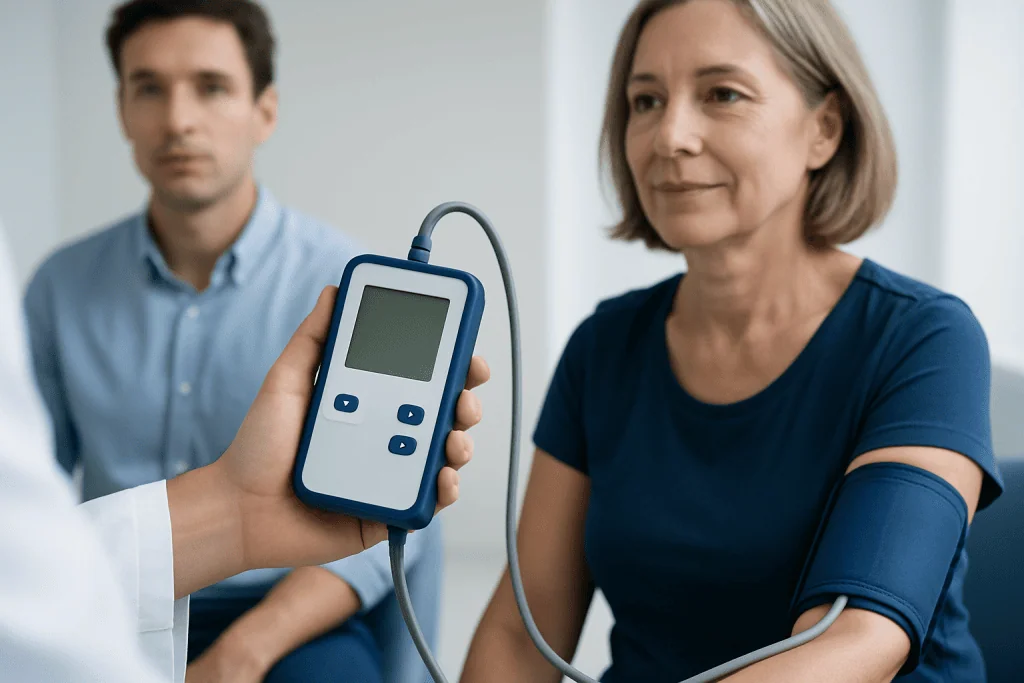
Ambulatory blood pressure monitoring is a test that measures blood pressure repeatedly over 24 hours, and sometimes longer, while a person continues normal daily activities. A cuff is worn on the upper arm and connected to a small monitor carried on a belt or shoulder strap. The device inflates at set times during the day and night and stores the readings for later review by a doctor.
This approach gives a broader picture than a single blood pressure check in a clinic. Blood pressure naturally changes with movement, stress, meals, work, rest, and sleep. By capturing these patterns, ambulatory blood pressure monitoring can show whether blood pressure is truly elevated, whether it drops normally at night, and whether treatment is working throughout the full day.
Doctors often use this test when office readings do not tell the whole story. It is especially helpful when a person may have higher readings in medical settings, called white coat hypertension, or normal clinic readings but high blood pressure during daily life, called masked hypertension. It can also support the evaluation of high blood pressure when readings vary from visit to visit.
Who may need this test
A doctor may recommend ambulatory blood pressure monitoring if clinic blood pressure readings are borderline, inconsistent, or unexpectedly high. It is commonly used to confirm a diagnosis of hypertension before long-term treatment begins. It may also be advised when symptoms or health history suggest blood pressure may be rising outside the clinic, even if office readings appear normal.
The test can be useful for people who already take blood pressure medicine. In those cases, it helps show whether treatment is controlling blood pressure across the entire day and night rather than only at the moment of an office visit. Some people have normal daytime readings but higher pressures early in the morning or while asleep, and these patterns may affect care decisions.
Common reasons a clinician may order the test include:
- Possible white coat hypertension
- Possible masked hypertension
- Large differences between home and office readings
- Assessment of treatment response
- Suspected nighttime hypertension or abnormal sleep-time patterns
- Evaluation of blood pressure in pregnancy or in certain long-term conditions, when appropriate
Because the monitor records readings over many hours, it can sometimes reveal important trends that would otherwise be missed. This can help avoid unnecessary treatment in some people and support earlier treatment in others.
How the test works and what to expect

Before the test begins, a healthcare professional fits the cuff to the upper arm and checks that the monitor is working correctly. The machine is programmed to measure blood pressure at regular intervals, often every 15 to 30 minutes during the day and every 30 to 60 minutes at night. Once fitted, the patient leaves the clinic and continues usual activities as much as possible.
When the cuff starts to inflate, it helps to pause, keep the arm still, and relax it at the side if possible. The squeezing feeling can be uncomfortable for a short time, but the test is generally well tolerated. Because the monitor runs overnight, some people find it mildly disruptive to sleep, but nighttime readings are one of the most valuable parts of the test.
Patients are usually asked to keep a diary of sleep, meals, exercise, work, symptoms, and medicine times. This information helps the doctor interpret the results in context. The monitor should be kept dry, so bathing, showering, or swimming are usually avoided until the device is removed.
In some situations, a doctor may compare ambulatory monitoring with other approaches, such as standard office checks or blood pressure checks done outside the clinic. Depending on the person’s needs, this may be part of a broader cardiovascular evaluation that can include check-up and screening and follow-up assessment.
What the results can reveal
The value of ambulatory blood pressure monitoring lies in the patterns it captures. Doctors usually review average daytime, nighttime, and 24-hour blood pressure readings rather than focusing on a single number. These averages can help confirm whether a person meets the criteria for hypertension and whether blood pressure remains controlled throughout the day.
The test can also show whether blood pressure falls during sleep. In many healthy patterns, blood pressure dips at night. When it does not fall as expected, or rises overnight, it may suggest a higher cardiovascular risk and may influence treatment planning. The monitor can also show morning surges or episodes of variable blood pressure that are not obvious in office readings.
Ambulatory monitoring may identify:
- White coat hypertension, when clinic readings are high but average readings outside the clinic are not
- Masked hypertension, when clinic readings look normal but out-of-office readings are high
- Sustained hypertension, when blood pressure is elevated both in and out of the clinic
- Overtreated blood pressure, if readings fall too low at certain times
- Nighttime hypertension or reduced nighttime dipping
These findings help guide the next steps. A doctor may recommend lifestyle changes, additional testing, or medicines, or may decide that ongoing observation is the better plan. For some people, the results also help clarify whether symptoms such as headaches or lightheadedness are likely to be related to blood pressure.
How doctors use the findings in diagnosis and treatment
Ambulatory blood pressure monitoring is often considered one of the most useful tools for confirming hypertension because it reflects blood pressure during real life rather than a brief clinic encounter. If the results show persistently high average readings, a doctor may diagnose hypertension and discuss treatment options. If the readings are mostly normal, the person may avoid starting medicine unnecessarily.
Treatment decisions are based on the full clinical picture, not only the monitor report. Doctors consider age, symptoms, family history, heart and kidney health, diabetes, smoking, and cholesterol levels. In some cases, further evaluation may be needed to look for related conditions or effects on the heart and blood vessels. When appropriate, a clinician may refer the patient for cardiology evaluation or other specialist care.
If treatment is recommended, the plan may include lifestyle measures such as reducing excess sodium, maintaining a healthy weight, increasing physical activity, limiting alcohol, improving sleep habits, and managing stress. Some people also need medication. Follow-up may involve repeat clinic checks, home monitoring, or another period of ambulatory monitoring to see whether the plan is effective.
When blood pressure patterns raise concern about heart rhythm or related cardiovascular issues, doctors may combine the blood pressure assessment with other tests. Depending on symptoms and medical history, this could be part of a broader workup that includes cardiovascular risk management and recovery support in selected patients after heart-related events or procedures.
Tips for getting the most accurate reading
Patients can help improve the quality of the test by following a few practical steps. It is usually best to wear loose clothing so the cuff and tubing stay comfortable and undisturbed. During the monitoring period, daily routines should stay as normal as possible unless the doctor gives different instructions. A typical day gives the most useful information.
When the cuff inflates, the arm should be kept still and relaxed. Repeated movement during measurements may interfere with readings. It is also helpful to record any symptoms, physical activity, emotional stress, meals, and medication times in the diary provided. If a reading feels unusual or the cuff slips, noting this can help with interpretation later.
Helpful preparation and self-care tips include:
- Take prescribed medicines exactly as instructed unless told otherwise
- Avoid showering or swimming while wearing the monitor
- Sleep with the tubing positioned to reduce pulling on the cuff
- Continue usual work and gentle daily activity if possible
- Tell the clinic if the cuff becomes very painful, loose, or stops working
Home blood pressure monitoring can also play an important role before or after ambulatory testing. While home devices do not replace ambulatory monitoring for some questions, they can support long-term follow-up and help patients better understand how daily habits affect blood pressure.
When to seek medical care
Most people complete ambulatory blood pressure monitoring without problems, but medical advice should be sought if the cuff causes significant pain, swelling, numbness, skin injury, or if the device seems faulty and the clinic cannot be reached for guidance. The test itself is not a treatment, so any concerning symptoms should still be taken seriously.
A person should contact a doctor promptly if blood pressure concerns are accompanied by chest pain, shortness of breath, fainting, new weakness, trouble speaking, severe headache, or sudden vision changes. These symptoms need urgent medical assessment because they may signal a serious condition rather than a routine blood pressure issue.
If repeat office or home readings remain high, or if there are ongoing symptoms such as dizziness, palpitations, or headaches, a clinician can decide whether ambulatory monitoring, medication review, or specialist evaluation is needed. Near the end of the care pathway, some international patients may choose centers such as Acibadem International, where multidisciplinary specialists in JCI-accredited hospitals diagnose and treat blood pressure and cardiovascular conditions.
Frequently asked questions
Is ambulatory blood pressure monitoring better than a clinic blood pressure reading?
It often gives a more complete picture because it measures blood pressure many times during normal daily life and sleep. A clinic reading is still useful, but ambulatory monitoring can better confirm whether blood pressure is truly high or only elevated in certain settings.
How long does ambulatory blood pressure monitoring last?
The test usually lasts 24 hours, although some people may wear the device for a different period if their doctor recommends it. During that time, the monitor takes readings at regular intervals during the day and night.
Can a person work or go about daily activities while wearing the monitor?
Yes. Most people are encouraged to continue their usual routine so the test reflects real-life blood pressure patterns. The main exceptions are activities that could get the monitor wet or dislodge the cuff.
Is ambulatory blood pressure monitoring painful?
The test is not usually painful, but the cuff may feel tight or briefly uncomfortable each time it inflates. Some people notice mild sleep disturbance because of nighttime readings, but the discomfort is generally temporary.
What is the difference between ambulatory monitoring and home blood pressure monitoring?
Home monitoring involves a person checking blood pressure manually at selected times with their own device. Ambulatory monitoring is automatic and records readings throughout the day and night, which can reveal patterns that home checks may miss.
Can ambulatory blood pressure monitoring detect white coat hypertension?
Yes. This is one of its main uses. If blood pressure is high in the clinic but normal during usual daily life, the test can help identify white coat hypertension and prevent misclassification.
References
- American Heart Association
- Centers for Disease Control and Prevention
- National Heart, Lung, and Blood Institute
- European Society of Cardiology
- National Institute for Health and Care Excellence
This article is for general information only and is not a substitute for professional medical advice. Please consult a qualified doctor about your individual situation.
Joint and spine care in Turkey — expert assessment & treatment
JCI-accredited · board-certified surgeons · reply within 24h
Add us as a Preferred Source to see more of our trusted health content across Google Search, AI Overviews and Discover.
Check your numbers in seconds
BMI, calories, due date, blood pressure and 30+ more clinical calculators — free, instant, doctor-reviewed ranges.