Anencephaly — Explained by Medical Evidence, Not Myths

Anencephaly develops very early in pregnancy when the upper part of the neural tube does not close completely. It is usually diagnosed during pregnancy with ultrasound and blood tests, and sometimes confirmed with fetal MRI or amniocentesis.
Key Takeaways
- Anencephaly develops very early in pregnancy when the upper part of the neural tube does not close completely.
- It is usually diagnosed during pregnancy with ultrasound and blood tests, and sometimes confirmed with fetal MRI or amniocentesis.
- Folic acid before conception and in early pregnancy helps lower the risk of neural tube defects.
- Anencephaly is not caused by stress, ordinary exercise, or common myths about pregnancy.
- Care focuses on clear diagnosis, compassionate counseling, pregnancy care, and support for the family.
Anencephaly is a serious birth condition in which major parts of the brain, skull, and scalp do not form as expected during early pregnancy. Medical evidence shows it is a type of neural tube defect, usually identified before birth, and it is not caused by myths, everyday emotions, or a single action during pregnancy.
Overview: what anencephaly is
Anencephaly is a severe congenital condition that happens when the upper part of the neural tube does not close properly very early in pregnancy. Because this structure later forms the brain and skull, the baby is born without parts of the brain, skull, and scalp developing normally. It belongs to a group of conditions called neural tube defects.
This condition develops in the first weeks of pregnancy, often before a person knows they are pregnant. That early timing is important because it explains why anencephaly is not related to later events, common worries, or popular myths. It is a developmental condition linked to how the neural tube forms, not to a parent’s thoughts, minor daily activities, or a single food eaten once.
Anencephaly is considered incompatible with long-term survival. Some pregnancies end in miscarriage or stillbirth, while some babies are born alive but survive only a short time. For families, the medical journey often centers on accurate diagnosis, understanding what the condition means, and receiving compassionate support for decision-making and pregnancy care.
How anencephaly affects development and pregnancy

In normal early development, the neural tube closes and becomes the brain and spinal cord. In anencephaly, the upper end remains open. This prevents normal formation of important brain structures, especially parts of the cerebrum, and the skull bones above them do not fully develop. The exposed tissue may also be affected by contact with amniotic fluid during pregnancy.
Because the parts of the brain responsible for higher function do not develop normally, babies with anencephaly cannot gain consciousness, think, or interact in the usual way. Basic reflexes may be present in some cases, but the condition is not treatable in a way that restores missing brain tissue.
Pregnancy with anencephaly can also bring specific obstetric considerations. There may be extra amniotic fluid, called polyhydramnios, which can cause abdominal discomfort or increase the chance of preterm labor. Obstetric specialists monitor the pregnancy and discuss options and planning in a respectful, individualized way.
When clinicians evaluate this condition, they may also look for other congenital abnormalities and distinguish it from related conditions such as spina bifida, another neural tube defect that affects the spine rather than the upper brain and skull.
Symptoms and signs before and after birth
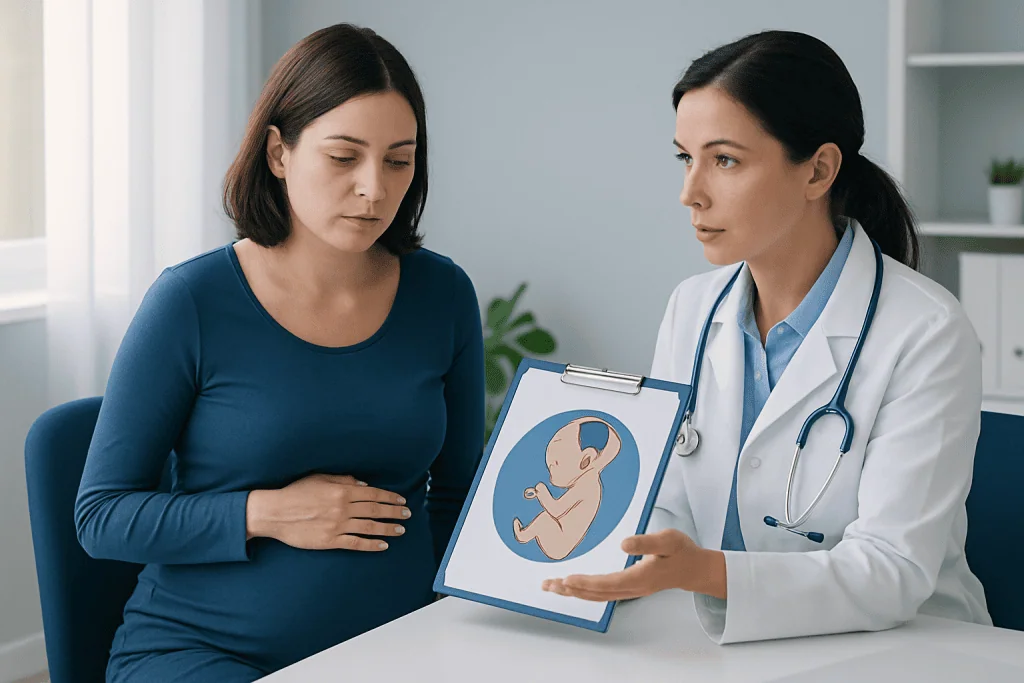
Anencephaly usually does not cause symptoms that a pregnant person can feel early on. Instead, it is commonly suspected during routine prenatal screening. An ultrasound may show absence of part of the skull and severe abnormalities in brain development. Blood testing may also show higher-than-expected levels of alpha-fetoprotein, which can suggest an open neural tube defect.
In some pregnancies, excess amniotic fluid develops later and may lead to symptoms such as a rapidly enlarging abdomen, shortness of breath, or discomfort. These symptoms do not confirm anencephaly on their own, but they can prompt further evaluation.
After birth, the physical findings are generally clear. The baby has absent portions of the skull and scalp, and much of the upper brain is missing or not formed normally. Although this is a medical description, families benefit from explanations that are direct and gentle, with time to ask questions and understand what the diagnosis means.
- Prenatal ultrasound findings suggesting abnormal skull and brain development
- Elevated maternal serum alpha-fetoprotein on screening
- Possible polyhydramnios during pregnancy
- Visible absence of parts of the skull and scalp at birth
Causes, risk factors, and common myths
The exact cause of anencephaly is not always known. Like many birth defects, it is thought to result from a combination of genetic and environmental factors that affect early development. Most cases occur without a clear single explanation, and in many families there is no previous history.
Known risk factors include not getting enough folate before conception and in early pregnancy, a previous pregnancy affected by a neural tube defect, certain anti-seizure medicines, poorly controlled diabetes, obesity, and exposure to high body temperature very early in pregnancy, such as from fever or frequent overheating. These factors can raise risk, but they do not mean a pregnancy will definitely be affected.
It is equally important to address myths clearly. Anencephaly is not caused by stress, ordinary exercise, sexual activity, working, traveling, or normal emotional experiences during pregnancy. It is also not caused by a single moment of eating the wrong food. This evidence-based explanation can reduce unnecessary guilt and help families focus on appropriate medical guidance.
In some situations, doctors may recommend genetic counseling to review family history, recurrence risk, and future pregnancy planning. Counseling does not always find a specific cause, but it often helps families understand what is known, what remains uncertain, and what preventive steps may be useful later.
How anencephaly is diagnosed
Anencephaly is most often diagnosed before birth. Routine prenatal ultrasound is the main test, and in many cases the condition can be recognized in the first trimester or confirmed during the detailed anatomy scan in the second trimester. The ultrasound appearance is usually distinctive because the skull and upper brain structures have not formed normally.
Maternal blood screening can support the diagnosis. Elevated alpha-fetoprotein may suggest an open neural tube defect, though it is not specific to anencephaly and must be interpreted with imaging findings. In some situations, doctors may recommend additional testing such as amniocentesis to assess amniotic fluid markers or chromosome studies if there are concerns about other conditions.
Fetal MRI is not always required, but it can sometimes help clarify anatomy when ultrasound views are limited. This may be especially useful in specialized centers with expertise in neuroradiology and fetal imaging. The goal of diagnosis is not simply to name the condition, but to give the family a clear understanding of what it means for the pregnancy and the baby.
Because the diagnosis carries major emotional and practical implications, care is best delivered by a multidisciplinary team. This may include obstetrics, maternal-fetal medicine, neonatology, genetics, radiology, and supportive counseling services.
Treatment, pregnancy care, and family support
There is no curative treatment for anencephaly because the missing brain and skull structures cannot be replaced. Medical care therefore focuses on confirming the diagnosis, monitoring the pregnancy, discussing options, and supporting the physical and emotional needs of the family. The specific plan depends on gestational age, maternal health, local regulations, and the family’s values and wishes.
During pregnancy, clinicians may monitor for complications such as polyhydramnios or preterm labor. Delivery planning is individualized. After birth, if the baby is born alive, care is typically comfort-focused. This means keeping the baby warm, minimizing discomfort, and helping the family spend meaningful time together. Aggressive life-prolonging interventions are generally not beneficial because the condition is not survivable long term.
For some families, support from specialists in high-risk pregnancy and neonatal care is helpful throughout the process. Depending on the broader medical picture, related specialty services such as perinatology or neonatology may be part of care planning. Bereavement support, psychological support, and spiritual care can also play an important role.
Near the end of evaluation and planning, some families seek care in experienced international centers. Acibadem International’s multidisciplinary specialists and JCI-accredited hospitals diagnose and support management of complex fetal conditions for international patients.
Prevention, future pregnancy planning, and when to seek medical care
The most important preventive step known today is adequate folic acid before conception and during early pregnancy. Because neural tube closure happens very early, folic acid is most helpful when started before pregnancy begins. Doctors may advise a standard supplement for anyone who could become pregnant, and a higher dose for those with a previous neural tube defect-affected pregnancy or certain medical risks. This should always be guided by a qualified clinician.
Good preconception care also matters. Managing diabetes carefully, reviewing medications before trying to conceive, treating fever promptly, and avoiding excessive heat exposure in very early pregnancy may help lower risk. For families with a past history of neural tube defects, pre-pregnancy counseling can be reassuring and practical.
Medical care should be sought promptly if a prenatal screening test is abnormal, if an ultrasound raises concern about fetal development, or if pregnancy symptoms such as marked abdominal enlargement, contractions, bleeding, or reduced well-being occur. Early specialist review helps clarify the diagnosis and allows time for informed decisions and supportive care planning.
Even after a confirmed diagnosis, ongoing follow-up is important. Families often benefit from clear communication, written information, and access to specialists who can explain next steps, discuss recurrence risk, and coordinate care in future pregnancies.
Frequently asked questions
What is anencephaly in simple terms?
Anencephaly is a severe birth condition in which major parts of the brain and skull do not develop normally. It happens very early in pregnancy when the upper part of the neural tube does not close as it should.
Can anencephaly be treated or cured?
No. There is no treatment that can rebuild the missing parts of the brain and skull. Care focuses on accurate diagnosis, pregnancy management, comfort care after birth if needed, and support for the family.
How is anencephaly diagnosed during pregnancy?
It is usually diagnosed with prenatal ultrasound. Maternal blood tests, such as alpha-fetoprotein screening, may support the diagnosis, and some cases may need additional imaging or testing for confirmation.
What causes anencephaly?
The cause is often multifactorial, meaning more than one factor may contribute. Low folate intake before and early in pregnancy, certain medicines, poorly controlled diabetes, obesity, and a prior neural tube defect pregnancy can increase risk, but many cases happen without a clear single cause.
Can folic acid prevent anencephaly?
Folic acid can reduce the risk of neural tube defects, including anencephaly, but it cannot prevent every case. It is most effective when taken before conception and in early pregnancy, so pre-pregnancy planning is important.
Is anencephaly caused by stress or something the parent did?
No evidence shows that ordinary stress, routine activity, travel, or normal emotions cause anencephaly. Families often need reassurance that this condition is a developmental problem that begins very early and is usually not the result of a single action.
What is the chance of anencephaly happening again in a future pregnancy?
The risk can be higher after a previous neural tube defect-affected pregnancy, but the exact recurrence risk varies by family and medical history. A doctor or genetic counselor can explain individual risk and advise on folic acid and preconception care for future pregnancies.
This article is for general information only and is not a substitute for professional medical advice. Please consult a qualified doctor about your individual situation.
Hair transplant in Turkey — costs, graft counts & a free assessment
JCI-accredited · board-certified surgeons · reply within 24h
Add us as a Preferred Source to see more of our trusted health content across Google Search, AI Overviews and Discover.

More from the Health Library

Astringent Taste: A Complete Medical Overview

Popped Blister: An Evidence-Based Guide for Patients

Folate: An Evidence-Based Guide for Patients

Chest Back Discomfort: An Evidence-Based Guide for Patients

Emotional Distress: An Evidence-Based Guide for Patients