Ankle Replacement Surgery: Candidacy, Procedure Steps, and Recovery Timeline

Ankle replacement surgery is mainly used to treat advanced ankle arthritis that causes ongoing pain and disability. Good candidates are selected carefully based on age, activity level, bone quality, alignment, soft tissue health, and overall medical history.
Key Takeaways
- Ankle replacement surgery is mainly used to treat advanced ankle arthritis that causes ongoing pain and disability.
- Good candidates are selected carefully based on age, activity level, bone quality, alignment, soft tissue health, and overall medical history.
- The procedure removes damaged joint surfaces and replaces them with metal and plastic components designed to restore smoother movement.
- Recovery happens in stages and often includes a period of immobilization, gradual weight-bearing, and physical therapy.
- Benefits can include pain relief and motion preservation, but risks such as infection, implant loosening, nerve injury, or need for revision surgery should be discussed with a specialist.
Ankle replacement surgery is an option for some people with severe ankle arthritis when pain, stiffness, and limited mobility continue despite nonsurgical care. It works by replacing damaged parts of the ankle joint with artificial components, with the goal of reducing pain while preserving more motion than ankle fusion.
Overview: What ankle replacement surgery is and how it works
Ankle replacement surgery, also called total ankle replacement, is a procedure used to treat severe damage in the ankle joint, most often from arthritis. In this operation, a surgeon removes the worn joint surfaces and replaces them with artificial parts made of metal and a durable plastic insert. The main goals are to reduce pain, improve function, and preserve some ankle movement.
This procedure is different from ankle fusion. Fusion permanently joins the bones of the joint so they no longer move, which can relieve pain but limits motion. By contrast, ankle replacement surgery aims to keep movement in the ankle, which may help make walking feel more natural for selected patients.
The ankle is a complex weight-bearing joint that must balance stability with flexibility. Because of this, ankle replacement surgery is not the right solution for everyone with ankle pain. Careful evaluation is important to decide whether it is likely to provide durable relief and whether another approach, such as bracing, injections, physical therapy and rehabilitation, or surgery, would be more suitable.
Who may be a candidate for ankle replacement surgery
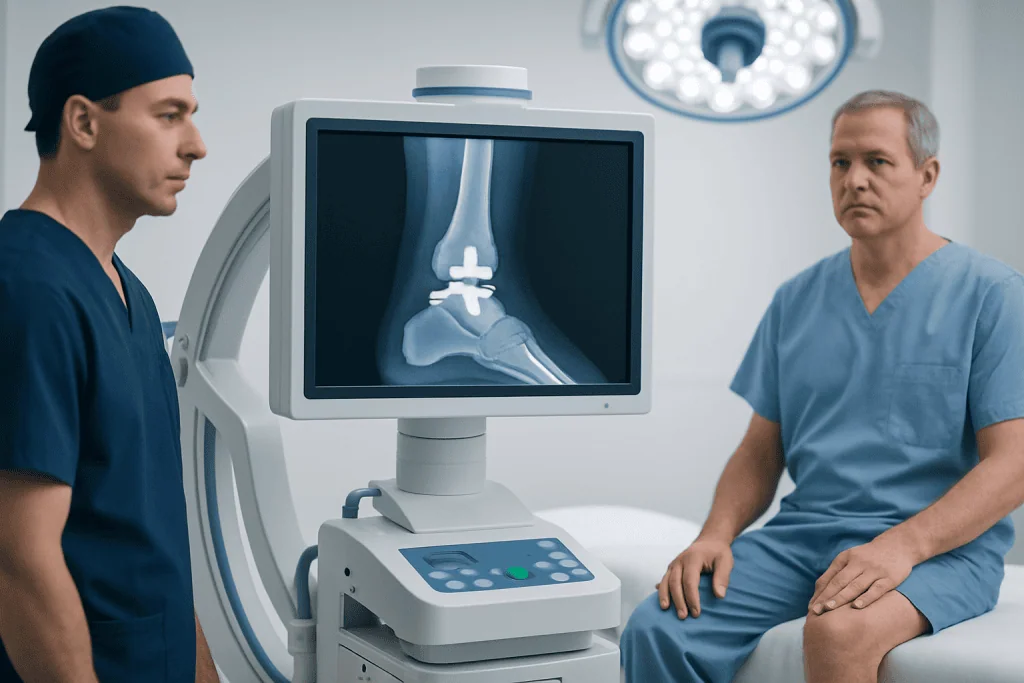
The most common reason for ankle replacement surgery is end-stage ankle arthritis. This may develop after a fracture or other injury, from inflammatory conditions such as rheumatoid arthritis, or less commonly from wear-and-tear degeneration. People usually consider surgery when ankle pain becomes persistent, walking is limited, and everyday activities remain difficult despite a full trial of nonsurgical treatment.
Surgeons look at several factors when deciding whether a person is a good candidate. These include the severity of joint damage, the alignment of the ankle and foot, bone quality, ligament stability, skin and soft tissue condition, body weight, circulation, nerve function, and general health. A person’s activity level also matters, because high-impact demands may place more stress on the implant over time.
Some situations may make ankle replacement less suitable. These can include active infection, severe bone loss, marked deformity that cannot be corrected, significant nerve damage, poor blood supply, or uncontrolled medical conditions. In some cases, a different operation such as ankle arthroscopy or fusion may be considered depending on the underlying problem and the stage of joint damage.
When symptoms are related to chronic inflammatory disease, post-traumatic damage, or complex alignment problems, the evaluation may involve several specialists. This helps clarify whether symptoms are mainly coming from the ankle joint itself or from nearby structures such as tendons, ligaments, or the subtalar joint.
Symptoms and conditions that may lead to surgery
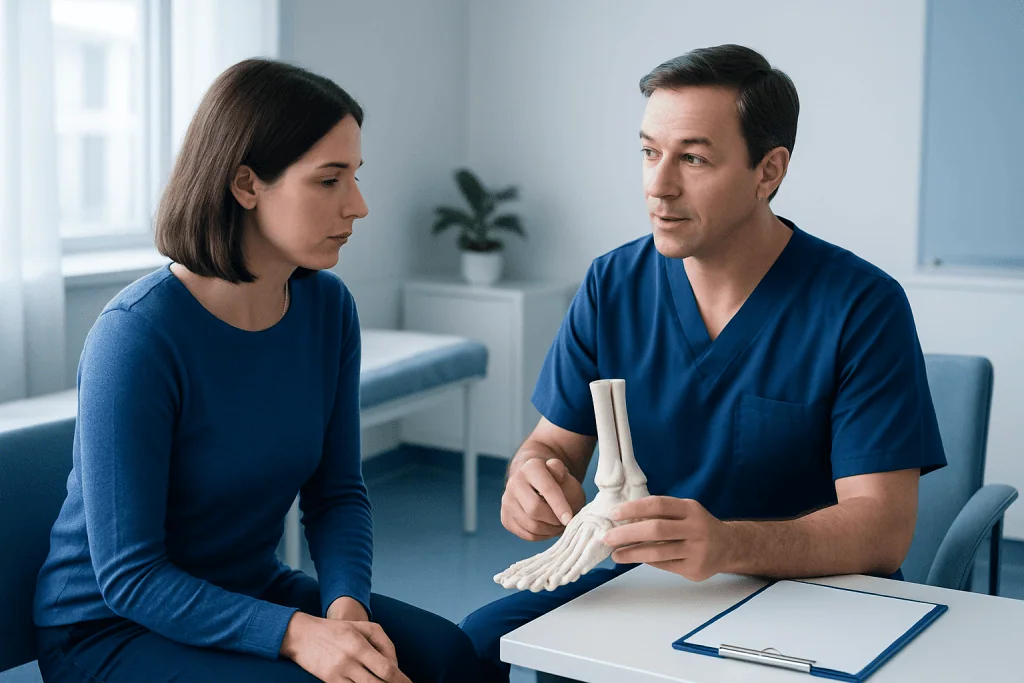
People considering ankle replacement surgery often have deep ankle pain that worsens with standing or walking. Stiffness, swelling, reduced range of motion, and difficulty walking on uneven ground are also common. Some describe a grinding sensation, instability, or progressive loss of function that affects work, exercise, or daily routines.
The underlying condition is often ankle arthritis, especially when cartilage loss is advanced and the joint surfaces are no longer moving smoothly. In many patients, the damage is post-traumatic, meaning it developed after a past fracture, repeated sprains, or another injury that changed the mechanics of the joint.
Before surgery is considered, doctors usually recommend a stepwise approach. This may include activity modification, supportive footwear, ankle braces, anti-inflammatory medicines when appropriate, walking aids, physical therapy, and selected injections. If these measures no longer provide enough relief, and imaging confirms severe joint deterioration, surgery may become a reasonable next step.
How the procedure is performed: step by step
Before the operation, the surgical team reviews imaging studies, general health, and the plan for anesthesia. X-rays are essential, and some patients also need CT scans to assess bone shape, alignment, and implant positioning. The surgeon may also plan any additional corrective procedures needed at the same time, such as ligament balancing or realignment of the foot.
During ankle replacement surgery, the patient is positioned so the front of the ankle can be accessed. After the skin incision is made, the surgeon carefully protects nearby nerves, tendons, and blood vessels. The damaged surfaces of the shin bone and ankle bone are then removed with precise instruments or guides designed to prepare the joint for the implant.
Metal components are placed on the prepared bone surfaces, and a plastic spacer is inserted between them to help create smooth movement. The surgeon checks alignment, stability, and range of motion before closing the incision. In some cases, additional procedures are performed in the same operation to improve balance and function of the foot and ankle.
After surgery, the ankle is usually protected in a splint or cast at first. Depending on the surgical technique and the patient’s bone and soft tissue condition, the care team provides specific instructions about wound care, movement, and when weight-bearing can begin.
Recovery timeline after ankle replacement surgery
Recovery after ankle replacement surgery is gradual and typically happens over several months. In the early period after surgery, the focus is on protecting the incision, controlling swelling, managing pain, and preventing complications. The ankle may be immobilized, and many patients need crutches, a walker, or another aid while they avoid or limit weight-bearing.
Over the following weeks, the surgeon usually checks healing with follow-up visits and imaging. As healing progresses, patients may move from a splint or cast to a removable boot, and weight-bearing may be increased step by step if the joint is stable and the wound is healing well. Rehabilitation is often an important part of the process, helping restore mobility, strength, balance, and walking mechanics through guided rehabilitation.
Many people notice gradual improvement in pain and walking over the first few months, but swelling can last longer and recovery is not identical for everyone. Return to desk-based work may be possible sooner than return to more physical jobs. Higher-impact activities are often discouraged to help protect the implant and support long-term function.
The final recovery timeline depends on the individual, the exact procedure performed, and whether any additional corrective surgeries were needed. Following the orthopedic team’s advice closely is one of the most important parts of achieving the best possible outcome.
Benefits, risks, and possible complications
The main potential benefit of ankle replacement surgery is pain relief with preservation of ankle motion. For suitable patients, this may improve walking comfort and everyday function more naturally than a fused joint. Preserving motion may also reduce stress on nearby joints in the foot, although outcomes vary from person to person.
Like any major joint operation, ankle replacement surgery has risks. These include infection, blood clots, wound-healing problems, nerve injury, fracture around the implant, stiffness, persistent pain, instability, loosening of the implant, wear of the plastic component, and the possibility of needing further surgery later. Some implants may eventually require revision or conversion to fusion.
Not every patient achieves the same result, and it is important to have realistic expectations. Surgery can reduce pain and improve function, but it may not restore a completely normal ankle. A thorough discussion with an orthopedic foot and ankle specialist helps patients weigh the possible benefits against the long-term demands and limitations of an artificial joint.
When to seek medical care
Medical assessment is important when ankle pain is ongoing, swelling keeps returning, movement becomes increasingly limited, or walking grows difficult despite rest and basic treatments. A doctor should also evaluate pain that follows an old injury and never fully settled, since post-traumatic arthritis can develop gradually over time.
Urgent medical attention is needed if ankle symptoms are accompanied by fever, marked redness, drainage from a wound, sudden inability to bear weight, severe calf pain, shortness of breath, or new numbness and weakness. These symptoms do not always mean a serious complication is present, but they should be assessed promptly.
People who have already had ankle surgery should contact their surgeon if pain suddenly worsens, swelling becomes much more pronounced, or the incision area looks irritated or starts draining. For those exploring treatment options, a specialist evaluation can help determine whether nonsurgical care, fusion, or ankle replacement surgery is the most appropriate path.
At Acibadem International, multidisciplinary specialists in JCI-accredited hospitals evaluate and treat complex foot and ankle conditions for international patients, including advanced arthritis requiring surgical care.
Frequently asked questions
How long does it take to recover from ankle replacement surgery?
Recovery usually takes several months and happens in stages. Early healing focuses on protecting the joint and incision, while later phases involve gradual weight-bearing and rehabilitation. Swelling may continue for some time even as pain and walking improve.
Is ankle replacement surgery better than ankle fusion?
Neither procedure is automatically better for everyone. Ankle replacement surgery aims to preserve movement, while fusion is designed to stop painful motion by joining the bones together. The best choice depends on joint damage, alignment, activity level, bone quality, and overall health.
Who is not a good candidate for ankle replacement surgery?
People with active infection, severe bone loss, major uncorrectable deformity, poor blood supply, significant nerve problems, or uncontrolled medical conditions may not be ideal candidates. High-impact activity demands can also influence whether the procedure is appropriate. A specialist assessment is needed to make this decision safely.
How painful is ankle replacement surgery?
Some pain and swelling are expected after surgery, especially in the first days and weeks. Doctors use a planned approach to pain control, and discomfort usually improves as healing progresses. Persistent or worsening pain after surgery should be discussed with the surgical team.
How long does an ankle replacement last?
Implant longevity varies from one person to another. It can be influenced by activity level, alignment, body weight, bone quality, surgical technique, and how well the implant integrates with the joint. Regular follow-up helps monitor the implant over time.
Can a person walk normally after ankle replacement surgery?
Many patients are able to walk more comfortably after recovery, especially if severe arthritis had greatly limited movement before surgery. The goal is improved function and reduced pain, not necessarily a completely normal ankle. Gait often improves gradually with rehabilitation and time.
References
- American Academy of Orthopaedic Surgeons
- National Institute of Arthritis and Musculoskeletal and Skin Diseases
- American Orthopaedic Foot & Ankle Society
- National Health Service
- Arthritis Foundation
This article is for general information only and is not a substitute for professional medical advice. Please consult a qualified doctor about your individual situation.
Ankle Replacement in Turkey — costs, top hospitals & a free quote
JCI-accredited · board-certified surgeons · reply within 24h
Add us as a Preferred Source to see more of our trusted health content across Google Search, AI Overviews and Discover.

Orthopedics & Spine
Care for bones, joints and the musculoskeletal system, including joint replacement, sports injuries and trauma.
124 specialists in this unit