Ankle Strengthening Exercises: An Evidence-Based Guide for Patients

Ankle strengthening exercises work best when they include calf, foot, and balance training. Progress should be gradual, especially after pain, swelling, or a recent ankle sprain.
Key Takeaways
- Ankle strengthening exercises work best when they include calf, foot, and balance training.
- Progress should be gradual, especially after pain, swelling, or a recent ankle sprain.
- Mild muscle effort is expected, but sharp pain, instability, or increasing swelling should stop the session.
- People recovering from injury often benefit from a structured plan guided by a clinician or physical therapist.
- Supportive footwear, safe surfaces, and consistency are as important as the exercises themselves.
Ankle strengthening exercises help improve stability, support recovery after minor injury, and reduce the risk of repeated ankle problems when performed with good technique. The most effective approach usually combines strength, balance, mobility, and gradual progression rather than relying on a single movement.
Overview: What ankle strengthening exercises do
Ankle strengthening exercises are targeted movements designed to improve the strength, control, and endurance of the muscles that support the ankle and foot. For many people, they can help improve balance, make walking and climbing stairs feel steadier, and support recovery after a mild strain or sprain. They are also commonly used to help lower the chance of repeated ankle injuries.
A useful program does more than strengthen the ankle alone. The ankle works closely with the calf muscles, the small muscles of the foot, and the muscles around the hips and knees. Because of this, an evidence-based routine usually combines resistance exercises, balance practice, mobility work, and gradual return to daily activity or sport.
These exercises may be recommended for people with weak ankles, repeated “rolling” of the ankle, reduced confidence when walking on uneven ground, or stiffness after a period of rest. They can also be part of rehabilitation after conditions such as ankle sprain, although the exact timing and intensity should match the stage of healing.
Who may benefit from them
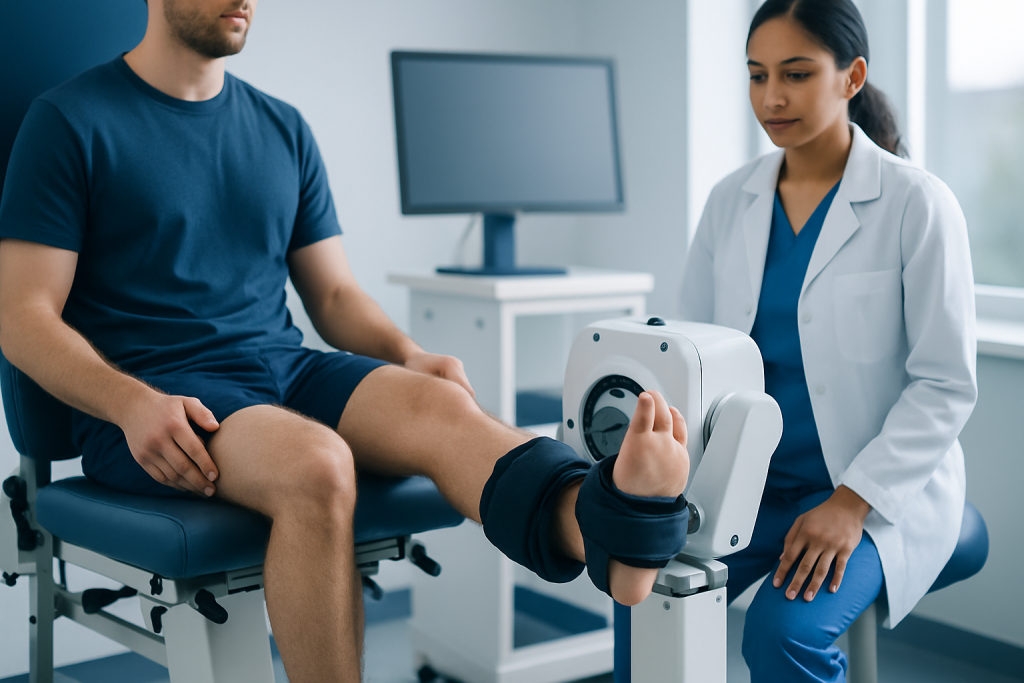
Many different groups can benefit from ankle strengthening exercises. Athletes often use them to improve performance and reduce the risk of reinjury, but they are just as relevant for older adults, people returning to activity after rest, and anyone who notices ankle weakness or poor balance in daily life.
They may be especially helpful after minor ankle injuries, repeated sprains, prolonged sitting or bed rest, or when footwear habits have changed. Some people also develop weakness because they avoid fully loading the ankle after pain, even when tissues are healing. In these situations, restoring strength and confidence can be an important part of recovery.
However, not every painful ankle should be exercised right away. If symptoms are caused by a fracture, significant ligament injury, tendon tear, severe arthritis, infection, or certain nerve problems, the exercise plan may need to be modified or delayed. When there is uncertainty, clinical assessment is the safest starting point.
Common symptoms and goals of rehabilitation

People who seek ankle exercises often describe a feeling of weakness, wobbliness, stiffness, or a tendency for the ankle to give way. Some notice soreness when walking longer distances, reduced confidence on stairs, or difficulty standing on one leg. After an injury, swelling and limited range of motion may also be part of the picture.
The goals of rehabilitation are practical. They usually include restoring comfortable movement, rebuilding muscle support, improving balance, and helping the person return safely to daily tasks, work, or sport. For some, the aim is prevention rather than recovery from an injury. In those cases, exercises focus on resilience and control.
Progress is not judged by strength alone. Better balance, improved walking pattern, reduced fear of movement, and ability to tolerate normal activity without symptom flare are also meaningful signs that the program is working.
Core ankle strengthening exercises patients often use
The most common ankle strengthening exercises are simple and can often be done at home. A balanced routine usually starts with controlled movements and then progresses to weight-bearing tasks. It is usually better to perform fewer exercises with good technique than many exercises with poor control.
Examples that are often used include:
- Ankle pumps and circles: gentle mobility work to reduce stiffness and encourage control.
- Resistance band exercises: pushing the foot up, down, inward, and outward against light resistance to strengthen the muscles around the ankle.
- Calf raises: rising onto the toes with support if needed, then lowering slowly to strengthen the calf and improve ankle support.
- Toe raises: lifting the front of the foot while keeping the heels down to work the muscles that lift the ankle.
- Single-leg standing: a balance exercise that helps the ankle react to small changes in position.
- Step-ups and controlled heel drops: later-stage exercises that build strength for walking, stairs, and return to activity.
Technique matters. Movements should be slow and controlled, with attention to alignment of the foot, ankle, and knee. A person should usually feel muscle effort, but not sharp pain. If balance is limited, using a wall or chair for support is sensible and safe.
For some patients, clinicians may also suggest broader rehabilitation strategies such as physical therapy and rehabilitation to individualize progression, improve gait, and address nearby muscle groups that affect ankle control.
How to build a safe, effective exercise plan
An effective plan usually begins with the current level of symptoms and function. In the early stage after a mild injury, the focus may be on gentle mobility, swelling control, and light activation. As pain settles, resistance and balance work can increase gradually. Later, the program can include hopping, direction changes, or sport-specific drills if needed.
A practical way to progress is to change one factor at a time: increase repetitions, add resistance, reduce hand support, or move from two legs to one. Sudden jumps in difficulty are more likely to aggravate symptoms. Most people do better with short, regular sessions several times each week than with occasional intense workouts.
The surrounding joints should not be ignored. Hip and knee strength influence ankle position during walking and exercise, so whole-leg training is often helpful. If flat feet, high arches, or walking mechanics are contributing to strain, the plan may also include footwear review or supportive advice from a clinician.
After a significant injury or surgery, a structured rehabilitation pathway may be needed. In selected cases, evaluation by specialists in orthopedic rehabilitation can help guide safe loading and return to activity.
When ankle exercises should be modified or avoided
Exercise is helpful in many situations, but there are times when it should be delayed or adjusted. A person should be cautious if the ankle is very swollen, badly bruised, unable to bear weight, visibly deformed, or painful at rest after an injury. These features may suggest a more serious problem that needs medical review before strengthening begins.
Exercises should also be modified if they consistently cause worsening pain, increased swelling later in the day, limping, or a feeling that the joint is slipping or locking. Continuing through these warning signs can slow recovery rather than speed it.
People with diabetes, circulation problems, inflammatory joint disease, neuropathy, or previous ankle surgery may need a more individualized plan. If there is concern about tendon injury, chronic instability, or other structural problems, imaging or specialist assessment may be recommended. Related conditions such as Achilles tendonitis can also influence exercise choice and progression.
Prevention, self-care, and daily habits that support stronger ankles
Exercise works best when daily habits support healing and stability. Supportive footwear that fits well, especially during walking or training, can reduce unnecessary strain. Uneven or slippery surfaces may need to be avoided temporarily when balance is still improving.
Warm-up matters. Gentle walking, ankle mobility drills, and a few easy calf raises can prepare the joint before longer exercise sessions. Recovery also matters: rest days, hydration, and sensible activity pacing help tissues adapt. When there has been a recent flare, temporary icing and elevation may be used for comfort, based on personal medical advice.
Consistency is usually more important than intensity. A sustainable home routine performed regularly often produces better long-term results than an overly ambitious program that causes setbacks. If exercises are confusing or progress has stalled, supervised care can help refine the plan.
For patients who need more detailed assessment or treatment planning, Acibadem International’s multidisciplinary specialists in JCI-accredited hospitals diagnose and treat musculoskeletal conditions for international patients, including those who may benefit from sports injury rehabilitation.
When to seek medical care
Medical care is appropriate if ankle pain follows a fall, twist, sports injury, or direct blow and the person cannot bear weight comfortably. It is also important to seek assessment when there is major swelling, deformity, numbness, fever, worsening redness, or pain that does not improve with rest and simple self-care.
An evaluation is also reasonable for repeated ankle sprains, persistent instability, or symptoms lasting more than a few weeks despite careful exercise. In these situations, a clinician may look for ligament injury, tendon problems, joint damage, or other causes of chronic weakness.
Early assessment can help the person follow the right plan from the start. Diagnosis may include physical examination and, when needed, imaging or referral to rehabilitation or orthopedic specialists.
Frequently asked questions
What are the best ankle strengthening exercises for beginners?
Beginners often start with ankle pumps, ankle circles, resistance band movements, calf raises, and supported single-leg standing. These exercises are simple, low-impact, and help build both strength and control. Starting with gentle, well-controlled movements is usually safer than jumping into advanced balance drills.
Can ankle strengthening exercises help after an ankle sprain?
Yes, ankle strengthening exercises are commonly used after an ankle sprain once the initial injury has been assessed and early pain and swelling are being managed appropriately. They can help restore muscle support, improve balance, and reduce the risk of another sprain. The timing and intensity should match the severity of the injury and the person’s stage of healing.
How often should ankle exercises be done?
This depends on the person’s symptoms, goals, and stage of recovery, but many people do well with short sessions several times per week. Consistency is usually more effective than occasional intense training. A doctor or physical therapist can suggest a schedule that fits the individual situation.
Should ankle exercises hurt?
Mild muscle fatigue or a sense of effort is normal, but sharp pain is not. If an exercise causes increasing pain, swelling, limping, or a feeling of instability, it should be stopped and reviewed. Persistent symptoms should be discussed with a qualified clinician.
Do stronger ankles improve balance?
Often, yes. The ankle plays an important role in reacting to small shifts in body position, especially during standing and walking. Balance usually improves most when strengthening is combined with specific balance exercises, not from strength work alone.
Can these exercises prevent future ankle injuries?
They may help reduce the risk of future injuries, particularly in people who have had previous ankle sprains or feel unstable on uneven ground. Prevention is strongest when exercises are performed regularly and combined with good footwear, activity-specific warm-up, and gradual progression. They cannot eliminate all risk, but they can improve resilience.
This article is for general information only and is not a substitute for professional medical advice. Please consult a qualified doctor about your individual situation.
Explore treatments in Turkey — costs, top hospitals & a free quote
JCI-accredited · board-certified surgeons · reply within 24h
Add us as a Preferred Source to see more of our trusted health content across Google Search, AI Overviews and Discover.

More from the Health Library

Persimmon — Explained by Medical Evidence, Not Myths

Saline Solution: What Patients Need to Know

Black Spot on Inside Cheek of Mouth: A Complete Medical Overview

What Is Popcorn Lung? Causes, Symptoms, and How It Is Treated

Olive Oil: What Patients Need to Know

Eczema Psoriasis Face: An Evidence-Based Guide for Patients
Physical Medicine & Rehabilitation Specialists at Acibadem

Fzt. Ceren Kandemir Gençsoylu
Physical Medicine & Rehabilitation
Fzt. Ceren Keser
Physical Medicine & Rehabilitation
Dr. Ceyhun Başoğlu
Physical Medicine & Rehabilitation
Çiğdem Ünver
Physical Medicine & Rehabilitation