Eczema Psoriasis Face: An Evidence-Based Guide for Patients

Facial eczema commonly causes dry, itchy, sensitive skin, while facial psoriasis more often forms well-defined, persistent scaly patches. The eyelids, eyebrows, sides of the nose, hairline, and areas around the mouth may be affected by either condition.
Key Takeaways
- Facial eczema commonly causes dry, itchy, sensitive skin, while facial psoriasis more often forms well-defined, persistent scaly patches.
- The eyelids, eyebrows, sides of the nose, hairline, and areas around the mouth may be affected by either condition.
- Facial skin is thin and sensitive, so treatment should be selected carefully and used under medical guidance.
- Gentle skin care, regular moisturising, and avoiding known irritants can help reduce flares.
- A clinician should assess a new, persistent, painful, infected-looking, or treatment-resistant facial rash.
Eczema and psoriasis can both affect the face, causing redness, scaling, dryness, and discomfort. Although they may appear alike, their patterns, triggers, and treatments differ, so an accurate medical assessment is important—especially around the eyes and mouth.
Eczema Psoriasis Face: What Is the Difference?
Eczema psoriasis face describes two common inflammatory skin conditions that can cause red, flaky, uncomfortable patches on the face. Eczema, often called atopic dermatitis when it is part of a long-term allergic-type skin condition, usually makes the skin dry, sensitive, and itchy. Psoriasis is an immune-mediated condition that speeds up skin-cell turnover and tends to produce more clearly outlined, thicker scaly areas.
Neither condition is contagious, and both can vary over time. A facial rash is not always eczema or psoriasis: seborrheic dermatitis, contact dermatitis, rosacea, fungal infection, acne-related conditions, and lupus are among other possible causes. Because facial skin is delicate and visible, identifying the correct cause helps clinicians recommend the safest approach.
Some people have features of more than one skin condition. For example, psoriasis may occur alongside seborrheic dermatitis in the scalp, eyebrows, and folds beside the nose. A dermatologist can consider the distribution of the rash, symptoms, personal history, and response to previous treatments when making a diagnosis.
How Facial Eczema and Psoriasis May Look and Feel
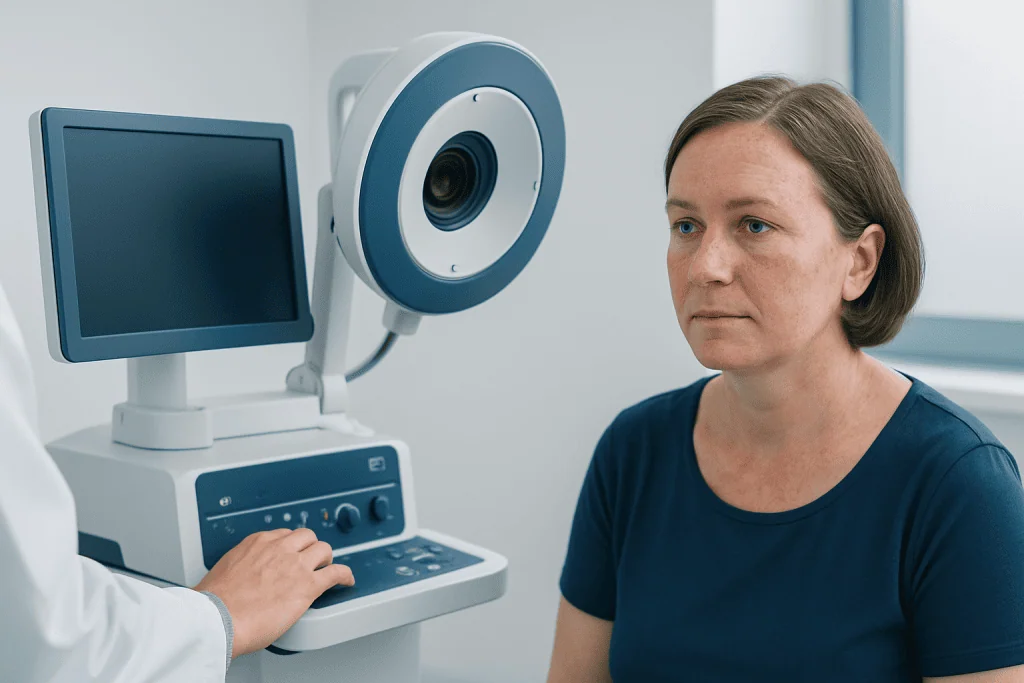
Facial eczema often causes itch, dryness, roughness, burning, or stinging. The skin may look red, pink, purple, gray, or darker brown depending on a person’s natural skin tone. In acute flares, there may be tiny fluid-filled bumps, weeping, crusting, or swelling. Long-standing rubbing or scratching can make skin thicker and more textured.
Facial psoriasis may appear as persistent, well-demarcated patches with dry white, silvery, or fine scale. On the face, scale can be less thick than it is on the elbows, knees, or scalp. Common sites include the hairline, forehead, eyebrows, upper eyelids, sides of the nose, beard area, and around the ears. Itching can occur, though some people experience more tightness, soreness, or scaling than itch.
The pattern elsewhere on the body can provide useful clues. Eczema may be associated with dry skin, asthma, hay fever, or flexural rashes, while psoriasis may affect the scalp, nails, or other typical sites and can have a family history. These are only clues, however; appearance alone cannot reliably confirm the diagnosis.
- Features that may suggest eczema: prominent itch, very dry or cracked skin, sensitivity to products, and fluctuating flares.
- Features that may suggest psoriasis: sharper patch borders, recurring scale, scalp or nail involvement, and plaques in other body areas.
Why These Conditions Develop and What Can Trigger Flares

Eczema results from a combination of skin-barrier weakness, immune-system activity, genetics, and environmental exposures. The skin loses moisture more easily and may react strongly to irritants or allergens. Fragranced cosmetics, harsh cleansers, frequent washing, cold or dry weather, sweating, stress, and some fabrics can worsen symptoms in susceptible people.
Psoriasis is driven by immune-system signals that cause skin cells to multiply and accumulate more quickly than usual. Genetics contribute, but having a family member with psoriasis does not mean that someone will definitely develop it. Flares may be linked with stress, skin injury, certain infections, smoking, heavy alcohol use, and some medicines. A clinician should review medicines rather than a patient stopping prescribed treatment independently.
Contact allergy or irritation can complicate either condition, particularly on the face where people use skin care, sunscreen, makeup, hair products, shaving products, and fragrance. New or worsening redness around the eyelids, lips, or hairline after a product change deserves attention. Patch testing may be helpful when allergic contact dermatitis is suspected.
How Clinicians Diagnose a Facial Rash
Diagnosis is usually based on a detailed history and a close examination of the skin. A clinician may ask when the rash began, whether it itches or burns, which skin-care products are used, whether there are rashes on the body or scalp, and whether there is a personal or family history of eczema, psoriasis, allergies, or autoimmune disease.
Most people do not need blood tests or a skin biopsy. However, these tests may be considered if the rash is unusual, severe, not responding as expected, or if another diagnosis needs to be ruled out. A skin swab or scraping may be used when infection is possible. For recurring facial reactions, patch testing can help identify relevant contact allergens.
Taking clear photographs during flares can be useful, particularly when symptoms come and go before an appointment. It is also helpful to bring or list all creams, cosmetics, hair products, and medicines being used. This allows the clinician to spot potential irritants, allergens, or treatments that may be too strong for facial skin.
Treatment Options for Eczema and Psoriasis on the Face
Treatment is individualized according to the diagnosis, location, severity, age, medical history, and impact on daily life. The first step is often restoring the skin barrier with a plain, fragrance-free moisturiser used regularly. Gentle cleansing with lukewarm water and a mild, non-soap cleanser may reduce dryness and irritation. Products should be introduced one at a time when the skin is active or sensitive.
For inflammation, clinicians may prescribe a low-potency topical corticosteroid for a short, carefully supervised course. Facial skin absorbs topical medicines readily, and inappropriate or prolonged steroid use can cause thinning of the skin and other side effects. Stronger corticosteroids should generally not be used on the face unless specifically directed by a qualified clinician.
Non-steroid prescription anti-inflammatory creams, including topical calcineurin inhibitors, are often useful for sensitive areas such as the eyelids, face, and skin folds. Depending on the condition, clinicians may also consider vitamin D-related topical treatments, carefully selected medicated scalp products when the hairline is involved, light therapy, or systemic treatments for more extensive psoriasis. A specialist can discuss dermatology assessment and treatment planning when facial symptoms are persistent or recurrent.
If crusting, oozing, pain, or rapidly spreading redness suggests infection, medical review is needed because treatment may need to change. For people with diagnosed psoriasis, a broader evaluation can also be important if there are joint symptoms such as persistent swelling, stiffness, or pain.
Daily Skin Care and Flare Prevention
Consistent, simple skin care supports medical treatment and can lower the chance of irritation. Moisturiser is usually most effective when applied soon after washing, while the skin is still slightly damp. Creams and ointments are often better tolerated than fragranced lotions, though the best choice depends on individual preference and skin type.
During a flare, it may help to pause exfoliants, retinoids, alcohol-based toners, fragranced products, essential oils, and new cosmetics. Mineral or broad-spectrum sunscreen formulated for sensitive skin may be better tolerated than products with multiple fragrances or active ingredients. Makeup should be removed gently without scrubbing.
People can also consider keeping a brief symptom diary. Recording flares, weather changes, stress, sleep disruption, illness, foods only when there is a consistent suspected reaction, and new products can help identify patterns. Restrictive diets are not routinely recommended for eczema or psoriasis unless a healthcare professional identifies a clear allergy or another medical reason.
- Use a fragrance-free moisturiser regularly.
- Wash with lukewarm rather than hot water and avoid scrubbing.
- Choose simple, hypoallergenic products where possible.
- Avoid scratching; cool compresses may temporarily ease itch.
- Follow prescribed treatment instructions and attend review appointments if symptoms continue.
When to Seek Medical Care
Medical advice is appropriate for a new facial rash, a rash that lasts more than a few weeks, or symptoms that do not improve with gentle skin care. A clinician should also assess recurrent flares, severe itch that affects sleep, significant discomfort, uncertain diagnosis, or concern that a medicine or cosmetic product is causing a reaction.
Prompt assessment is particularly important if there is facial swelling, eye involvement, severe pain, blisters, fever, pus, honey-colored crusting, rapidly spreading redness, or a person feels generally unwell. These features can indicate infection or another condition requiring timely care. Emergency care may be needed for sudden swelling of the lips, tongue, or throat, breathing difficulty, or widespread hives.
Patients seeking specialist support can discuss their symptoms with dermatology teams. Acibadem International’s multidisciplinary specialists and JCI-accredited hospitals provide diagnosis and treatment planning for international patients with eczema, psoriasis, and other skin conditions.
Frequently asked questions
Can eczema and psoriasis occur on the face at the same time?
It is possible for a person to have both eczema and psoriasis, although one condition may be more prominent than the other. Facial scaling can also overlap with seborrheic dermatitis or contact dermatitis. A dermatologist can help distinguish these conditions and tailor treatment safely.
Is facial eczema or psoriasis contagious?
No. Eczema and psoriasis are inflammatory skin conditions and cannot be passed from one person to another through touch, shared towels, or close contact. However, a secondary skin infection can occasionally develop and should be assessed by a clinician.
Can steroid creams be used on the face?
Some low-potency steroid creams may be prescribed for short periods on facial skin. Because the face is thin and sensitive, the product strength, amount, and duration should be directed by a clinician. Long-term or unsupervised use can cause side effects.
What is the best moisturiser for facial eczema?
A plain, fragrance-free cream or ointment is often a good starting point because it helps limit water loss from the skin. The best product varies by individual tolerance, skin type, and personal preference. If a moisturiser stings or worsens redness, it should be stopped and discussed with a healthcare professional.
Can makeup make facial eczema or psoriasis worse?
Makeup does not necessarily worsen either condition, but fragrances, preservatives, exfoliating ingredients, and repeated rubbing can irritate sensitive or inflamed skin. Choosing gentle products and removing them carefully can help. It is sensible to avoid introducing several new products during a flare.
How long does a facial eczema or psoriasis flare last?
The duration varies widely. Mild flares may settle within days to weeks with appropriate care, while chronic or recurrent disease may need ongoing management. If the rash persists, spreads, or returns frequently, medical assessment can clarify the diagnosis and treatment plan.
References
- American Academy of Dermatology Association
- National Eczema Association
- National Psoriasis Foundation
- National Institute of Arthritis and Musculoskeletal and Skin Diseases
- NHS
This article is for general information only and is not a substitute for professional medical advice. Please consult a qualified doctor about your individual situation.
Eczema in Turkey — costs, top hospitals & a free quote
JCI-accredited · board-certified surgeons · reply within 24h
Add us as a Preferred Source to see more of our trusted health content across Google Search, AI Overviews and Discover.

More from the Health Library



Related Specialists

Dr. Süheyla Yeldan Vatansever
Pediatrics
Prof. Dr. Murat Urkan
General Surgery
Dt. Serpil Terzioğlu
Oral & Dental Health
Assoc. Prof. Dr. Enver Mahir Gülcan
Pediatric Gastroenterology