Nose Tingly: An Evidence-Based Guide for Patients

A tingly nose is often temporary and may follow cold air, dryness, allergies, irritants, or pressure on the skin. The nose receives sensation through branches of the trigeminal nerve, so facial nerve irritation can sometimes cause tingling.
Key Takeaways
- A tingly nose is often temporary and may follow cold air, dryness, allergies, irritants, or pressure on the skin.
- The nose receives sensation through branches of the trigeminal nerve, so facial nerve irritation can sometimes cause tingling.
- Gentle measures such as avoiding triggers, using saline spray, and protecting the skin may help when symptoms are mild.
- Urgent assessment is needed for tingling with facial weakness, speech difficulty, vision changes, severe headache, or other sudden neurological symptoms.
- Persistent, recurrent, one-sided, painful, or unexplained symptoms warrant a medical evaluation.
A nose tingly sensation is commonly caused by temporary irritation of sensitive facial nerves or the nasal lining, such as from allergies, dry air, cold exposure, or skin contact. It usually settles once the trigger is addressed, but new, persistent, worsening, or neurologically associated symptoms should be assessed by a clinician.
What does a tingly nose mean?
A nose tingly feeling may be described as prickling, pins and needles, buzzing, crawling, itching, or reduced sensation around the nostrils and bridge of the nose. In many cases, it is a short-lived response to cold air, dryness, allergens, cosmetic or skin products, or mild pressure on the area. The sensation may occur inside the nostrils, on the skin of the nose, or as part of a wider facial tingling feeling.
The nose and upper face are supplied by sensory branches of the trigeminal nerve. This nerve carries information about touch, temperature, irritation, and pain to the brain. When the nasal lining, skin, or nearby nerve endings are stimulated, a tingly sensation can occur even when there is no serious underlying problem.
How long the symptom lasts and what accompanies it are important clues. A brief sensation after stepping into cold weather is different from persistent numbness, a painful rash, or sudden tingling involving one side of the face. Most isolated episodes are not dangerous, but a clinician can help identify the cause when symptoms are recurrent or unclear.
Common patterns and accompanying symptoms
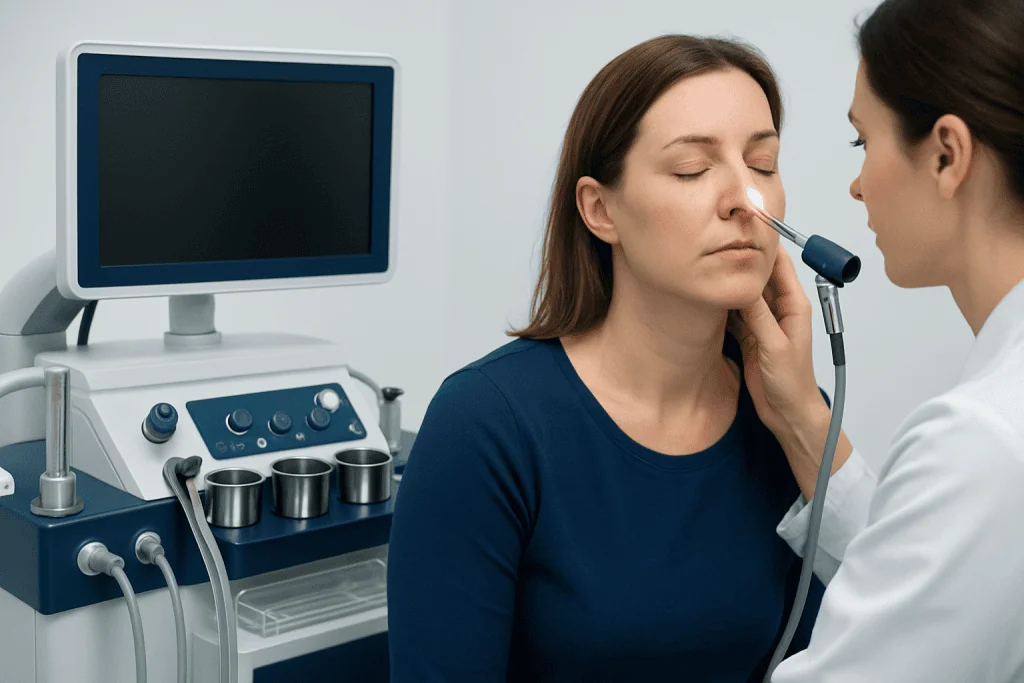
Nose tingling may occur on its own or alongside nasal and facial symptoms. With allergies or irritant exposure, it may be accompanied by sneezing, a runny or blocked nose, itchy eyes, throat irritation, or postnasal drip. Dryness may cause a stinging sensation, crusting, mild nosebleeds, or discomfort when breathing through the nose.
When skin irritation is contributing, there may be redness, scaling, dryness, burning, or tenderness on the nose. This can happen after frequent wiping, wearing a face covering, trying a new skincare product, or using products that contain fragrance or other potential irritants. A cold sore-type rash, grouped blisters, or pain on one side of the nose or face deserves prompt medical advice.
Some people notice tingling during periods of anxiety, fast breathing, or panic. Hyperventilation can alter carbon dioxide levels temporarily and may lead to tingling around the mouth, nose, hands, or feet. This does not mean symptoms should automatically be attributed to stress; new or troubling symptoms still deserve appropriate clinical assessment.
- Brief and trigger-related: often associated with cold, dry air, irritants, or pressure.
- Itchy with sneezing: may suggest allergy-related nasal inflammation.
- Burning or rash-related: may point to skin inflammation or infection.
- One-sided or spreading: may need evaluation for a nerve, dental, sinus, or neurological cause.
Why can the nose feel tingly?

Environmental exposure is a frequent explanation. Cold air can stimulate nerve endings and temporarily change blood flow in the skin. Heated indoor air, air conditioning, smoke, strong perfumes, cleaning products, and dust can dry or irritate the nasal passages. Repeated nose blowing or wiping during a cold can also leave the skin and lining sensitive.
Allergic rhinitis can cause inflammation in the nose after exposure to triggers such as pollen, dust mites, animal dander, or mold. People often experience itchiness more than true numbness, but itching can be perceived as tingling. Viral upper respiratory infections may also produce irritation, congestion, and altered sensations while the lining heals.
Skin conditions, including contact dermatitis, eczema, rosacea, or irritation from topical products, can affect the outer nose. Less commonly, nerve-related conditions can cause facial tingling. These include migraine-related sensory symptoms, irritation of trigeminal nerve branches, or shingles affecting the face. Dental or sinus problems can occasionally create referred sensations in the cheek, upper lip, or side of the nose.
A tingly nose is not usually a standalone sign of stroke. However, sudden facial numbness or weakness, especially with arm weakness, difficulty speaking, confusion, severe dizziness, vision changes, or an unusually severe headache, requires emergency care. These symptoms should never be watched at home to see if they pass.
How clinicians assess persistent nose tingling
A clinician will usually begin by asking when the sensation started, whether it is constant or intermittent, where it is located, and what seems to trigger or relieve it. They may ask about recent colds, allergy symptoms, headaches, dental treatment, skin products, medications, injuries, stress, and other symptoms affecting the face or body.
An examination may include checking the nasal passages, skin, sinuses, mouth, teeth, and facial sensation and movement. The clinician may look for inflammation, dryness, infection, rash, blocked nasal passages, or signs that a sensory nerve is affected. Depending on the findings, evaluation by an ear, nose, and throat specialist, dentist, dermatologist, neurologist, or allergy specialist may be appropriate.
Tests are not needed for every episode. If symptoms are persistent, one-sided, associated with a concerning rash, or accompanied by other neurological signs, a clinician may recommend targeted tests. These can include allergy assessment, dental imaging, blood tests, nasal examination, or imaging studies when clinically indicated.
It is helpful to keep a brief symptom record before an appointment. Note the timing, duration, side of the nose affected, related foods or environmental exposures, skincare products, headache symptoms, and any visible skin changes. This information can make patterns easier to recognize.
Treatment and practical relief options
Treatment depends on the cause rather than the tingling sensation alone. If cold, dry air, or mild irritation is responsible, protecting the nose from wind, avoiding smoke and strong fragrances, and using a humidifier in dry indoor environments may help. A saline nasal spray or rinse can moisturize the nasal lining and clear irritants; it should be used as directed and with safe, clean water when preparing a rinse.
For possible allergy symptoms, reducing exposure to known triggers may be useful. A clinician or pharmacist can advise whether an antihistamine, nasal corticosteroid spray, or other allergy treatment is suitable for the individual. It is best not to overuse decongestant nasal sprays, as they can worsen congestion when used beyond a short period.
For skin irritation, people can pause newly introduced products and use gentle, fragrance-free skincare. Avoid scratching, vigorous exfoliation, or applying harsh products inside the nostrils. If there is a persistent rash, swelling, discharge, crusting, or pain, medical advice is important because treatment differs for dermatitis, bacterial infection, fungal infection, and viral conditions.
When a nerve-related issue, migraine, sinus disorder, or dental problem is identified, care focuses on that condition. Migraine can sometimes include temporary sensory symptoms, while ongoing nasal or sinus concerns may benefit from specialist assessment. A qualified clinician should guide treatment when symptoms are recurrent, progressive, or affecting daily life.
Prevention and self-care
Many episodes of nose tingling can be reduced by protecting the nasal lining and surrounding skin. Staying hydrated, avoiding tobacco smoke, limiting exposure to strong chemicals, and using appropriate humidity indoors can support nasal comfort. During cold weather, covering the nose loosely with a soft scarf may reduce direct exposure to cold, dry air.
For people with seasonal or indoor allergies, practical measures may include closing windows during high-pollen periods, showering after outdoor exposure, washing bedding regularly, and keeping pets out of the bedroom if animal dander is a known trigger. A clinician can help confirm whether allergies are involved rather than relying on symptoms alone.
Gentle skincare is especially important if the skin of the nose feels tingly, dry, or inflamed. Choose non-irritating products, patch-test new products when possible, and avoid sharing makeup or nasal devices. Do not insert cotton swabs or other objects deeply into the nose, as this may cause injury and irritation.
Managing stress and slowing breathing can be helpful if tingling appears during anxiety. Breathing slowly and steadily, sitting in a comfortable position, and seeking support for recurring anxiety symptoms may reduce this pattern. These measures are supportive, not a substitute for assessment of new or severe symptoms.
When to seek medical care
Routine medical advice is appropriate when a nose tingly sensation lasts more than a few days without an obvious trigger, returns frequently, affects only one side, spreads across the face, or occurs with persistent congestion, facial pain, recurrent nosebleeds, dental pain, or a rash. Assessment is also advisable when symptoms interfere with sleep, work, eating, or general wellbeing.
Urgent medical care is needed for sudden facial drooping or weakness, numbness affecting an arm or leg, difficulty speaking or understanding speech, trouble walking, new vision loss or double vision, fainting, confusion, or a sudden severe headache. These symptoms may indicate a neurological emergency and should be assessed immediately.
Prompt evaluation is also important for a painful blistering rash near the nose or eye, especially if the eye is red, painful, light-sensitive, or has changes in vision. Infections involving this area may need timely treatment to protect eye health.
Acibadem International’s multidisciplinary specialists and JCI-accredited hospitals can assess nasal, skin, dental, allergy, and neurological contributors to persistent facial sensations for international patients. An appointment with a qualified healthcare professional can provide a clear diagnosis and a plan suited to the person’s symptoms and medical history.
Frequently asked questions
Why is my nose tingly all of a sudden?
A sudden tingly nose is often caused by cold air, dryness, allergy exposure, strong odors, or irritation from touching or wiping the nose. It may also occur with a cold or minor skin irritation. If it is sudden and accompanied by facial weakness, speech changes, severe headache, or other neurological symptoms, emergency assessment is needed.
Can allergies make the nose tingle?
Yes. Allergies can inflame the nasal lining and stimulate nerve endings, causing itching, tingling, sneezing, congestion, and a runny nose. Avoiding known triggers and discussing appropriate allergy treatment with a clinician may help.
Is a tingly nose a sign of anxiety?
It can be, particularly if it occurs during panic, rapid breathing, or intense stress and is accompanied by tingling around the mouth, hands, or feet. However, anxiety should not be assumed to be the cause of a new, persistent, or one-sided symptom. A clinician can help rule out other explanations.
Can dry air cause tingling inside the nose?
Yes. Dry air can irritate the delicate lining inside the nose, producing stinging, tingling, crusting, or mild bleeding. Humidified air and saline nasal products may provide relief, but persistent bleeding or discomfort should be assessed.
What does tingling on one side of the nose mean?
One-sided tingling may still be due to local irritation, a skin condition, dental or sinus concerns, or pressure on a nerve. Because it can sometimes reflect a more specific underlying problem, persistent or recurrent one-sided symptoms should be discussed with a doctor. Seek urgent care if it begins suddenly with weakness, speech difficulty, or vision changes.
Should I see a doctor for a tingly nose?
It is reasonable to seek medical advice if the symptom does not improve, keeps returning, becomes painful, or occurs with a rash, numbness, facial weakness, or significant nasal symptoms. A clinician can examine the nose, skin, teeth, and nervous system as needed. Immediate care is important for symptoms that suggest a stroke or serious eye-related infection.
References
- American Academy of Otolaryngology–Head and Neck Surgery
- American Academy of Dermatology Association
- National Institute of Neurological Disorders and Stroke
- Mayo Clinic
- Centers for Disease Control and Prevention
This article is for general information only and is not a substitute for professional medical advice. Please consult a qualified doctor about your individual situation.
Explore treatments in Turkey — costs, top hospitals & a free quote
JCI-accredited · board-certified surgeons · reply within 24h
Add us as a Preferred Source to see more of our trusted health content across Google Search, AI Overviews and Discover.