Antalgic Gait: What Patients Need to Know

Antalgic gait is a pain-avoiding limp, not a diagnosis on its own. It most often comes from problems in the hip, knee, leg, foot, or lower back.
Key Takeaways
- Antalgic gait is a pain-avoiding limp, not a diagnosis on its own.
- It most often comes from problems in the hip, knee, leg, foot, or lower back.
- Evaluation focuses on where the pain starts, how walking changes, and whether there are red-flag symptoms.
- Treatment improves the gait by treating the underlying cause and supporting safe movement.
- Sudden inability to bear weight, fever, severe swelling, or trauma needs prompt medical assessment.
Antalgic gait is a limp that happens when a person shortens the time spent standing on one leg because walking is painful. It is not a disease itself, but a sign that the body is trying to protect an injured or inflamed area, so the main goal is to find and treat the cause.
Overview: what antalgic gait means
Antalgic gait is a walking pattern caused by pain. A person with an antalgic gait usually takes a shorter step and spends less time bearing weight on the painful side, which creates a limp. This is the body’s natural way of reducing discomfort and protecting an injured or irritated joint, bone, muscle, or nerve.
Because antalgic gait is a symptom rather than a disease, it can have many different causes. Pain may come from the foot, ankle, knee, hip, pelvis, or lower back. In some cases, the source is obvious, such as a recent sprain. In others, the limp may be the first sign of a condition that needs further evaluation.
Many people assume any limp means a bone or joint problem alone, but pain-related walking changes can also happen with nerve irritation, inflammation, infection, or overuse. The key question is not only how the person walks, but why walking has become painful.
For patients, the most helpful message is that antalgic gait often improves when the cause is identified and treated. A careful medical assessment can usually determine whether the problem is temporary and minor or whether it needs more focused care.
How it looks and feels
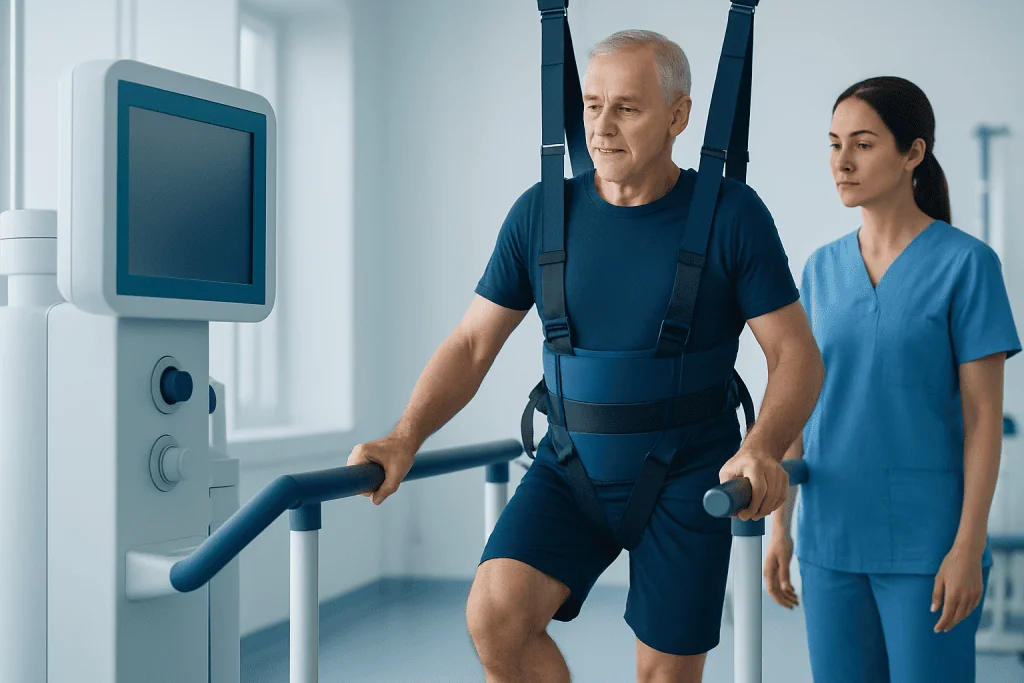
The most noticeable feature of antalgic gait is limping. A person may quickly shift weight off one leg, shorten the stance phase on the painful side, or appear to “favor” one leg. Some people also take slower steps, keep the leg stiff, or avoid fully pushing off with the foot.
The gait pattern may change depending on where the pain is located. Hip pain can lead to a shortened stride and trunk lean. Knee pain may cause limited bending or straightening. Foot or ankle pain may make heel strike or push-off uncomfortable. If lower back pain or nerve pain is involved, walking may also feel unstable or guarded.
Other symptoms often appear along with the limp. These may include:
- Pain with standing or walking
- Joint stiffness
- Swelling or tenderness
- Reduced range of motion
- Weakness or a feeling of instability
- Pain that radiates from the back into the leg
Children and older adults may show antalgic gait differently. A child may simply refuse to walk, while an older adult may reduce activity, walk more slowly, or use furniture or walls for support. Any persistent change in walking deserves attention, especially if it affects daily life.
Common causes and risk factors
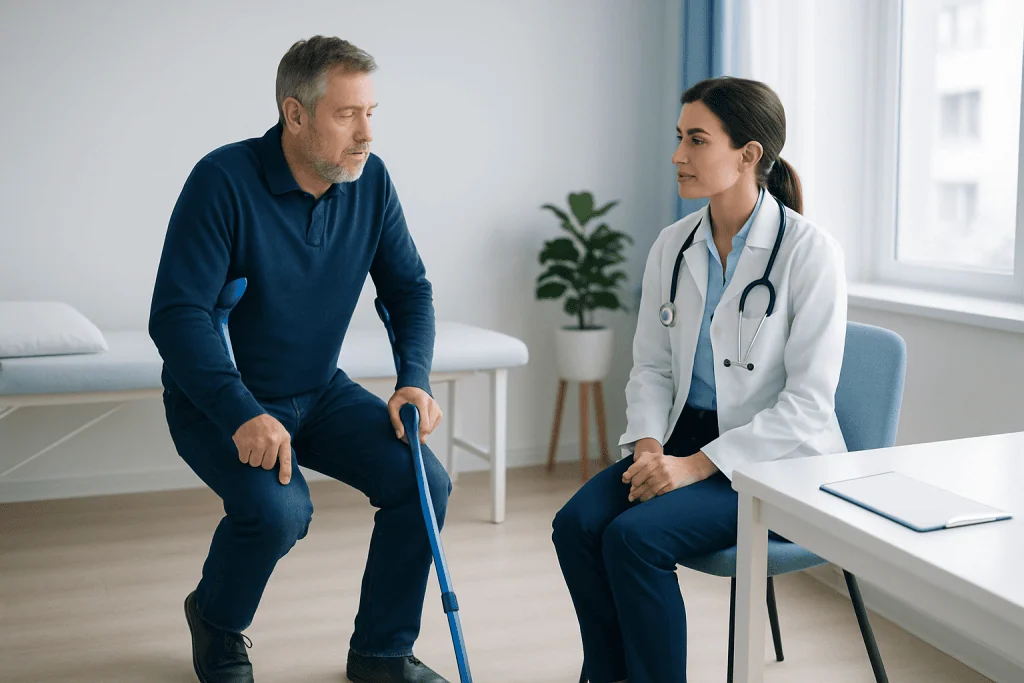
The most common reason for antalgic gait is pain in the lower limb. This pain may come from a minor injury, but it can also be linked to arthritis, tendon problems, bursitis, fractures, or joint inflammation. For example, pain from knee arthritis or a painful hip condition may cause a person to shorten steps and avoid full weight-bearing.
Some causes are mechanical, meaning they involve how the body moves. These include ankle sprains, plantar fasciitis, muscle strains, meniscus injuries, and overuse syndromes. Others are inflammatory or degenerative, such as osteoarthritis, flare-ups of crystal arthritis, or tendon inflammation. Lower back conditions can also affect gait if pain travels into the leg, as may happen with sciatica.
Less common but important causes include infection in a joint or bone, stress fractures, and problems with blood supply to the hip. In children, doctors may also consider developmental or inflammatory causes of limping. In older adults, antalgic gait is sometimes related to balance concerns, previous falls, or multiple painful joints at the same time.
Risk factors depend on the underlying condition, but common ones include recent injury, repetitive sports activity, poor footwear, obesity, older age, previous joint disease, and occupations that involve long periods of standing or walking. A history of cancer, immune suppression, or fever with pain may point to causes that need urgent evaluation.
How doctors diagnose antalgic gait
Diagnosis begins with a detailed history and a physical examination. The doctor will ask when the limp started, where the pain is felt, whether there was a fall or sports injury, and what makes symptoms better or worse. They also observe walking closely to see how steps, posture, balance, and weight-bearing have changed.
The physical exam usually includes checking joint movement, muscle strength, tenderness, swelling, leg length, and nerve function. Sometimes the painful area is not where the underlying problem begins. For example, hip disease can sometimes be felt in the thigh or knee, and back-related nerve irritation may be noticed lower down in the leg.
Tests are chosen based on the suspected cause. X-rays can help identify fractures, arthritis, or alignment problems. Ultrasound may be useful for soft-tissue or fluid-related problems. MRI can help assess cartilage, ligaments, tendons, stress injuries, or spine-related causes. Blood tests may be considered if infection, inflammation, or another systemic condition is suspected.
In some situations, doctors may recommend a specialist assessment in orthopedics, rehabilitation, neurology, or pain management. If advanced evaluation is needed, imaging and targeted care such as MRI scanning or physical therapy and rehabilitation may help clarify both the cause and the best next steps.
Treatment focuses on the cause
There is no single treatment for antalgic gait because the walking change usually improves only when the painful source is addressed. For a mild sprain or muscle strain, rest, temporary activity modification, ice, and short-term pain relief may be enough. For arthritis, overuse injuries, or tendon problems, treatment may include exercise therapy, weight management, and targeted medical care.
Physical therapy is often an important part of recovery. A therapist can help restore range of motion, strengthen weak muscles, improve balance, and retrain walking patterns once pain starts to settle. Assistive devices such as a cane, walker, shoe insert, or brace may also reduce strain and make movement safer during healing.
Some patients need more specific treatment depending on the diagnosis. Joint injections, treatment of infection, fracture care, or a structured plan for spine-related pain may be recommended. If gait changes are related to severe joint damage, doctors may discuss orthopedic procedures; for some patients with advanced hip or knee disease, options may eventually include knee replacement or hip replacement.
Self-directed exercise should be approached carefully. Continuing high-impact activity through significant pain can sometimes worsen the underlying problem or prolong recovery. A qualified clinician can help decide what level of activity is safe while treatment is underway.
Prevention and self-care
Not every cause of antalgic gait can be prevented, but some everyday habits can lower the risk of pain-related limping. Supportive footwear, gradual increases in exercise, proper warm-up, and allowing enough recovery time after intense activity can all help protect the joints and soft tissues of the legs and feet.
Maintaining strength and flexibility is also useful. Strong hip, thigh, and core muscles help control body alignment and reduce stress on the knees and ankles. For people with recurring pain, a clinician or physiotherapist may suggest stretching, strengthening, or balance exercises tailored to the painful area and overall fitness level.
Weight management may reduce stress on the hips, knees, and feet, especially in people with osteoarthritis or chronic overuse pain. At home, simple measures such as limiting aggravating activity for a short period, using ice after a minor strain, and avoiding uneven surfaces may help until a medical review is arranged.
Importantly, self-care should not replace medical assessment when pain is severe, unexplained, or persistent. Ongoing limping can change posture and movement patterns over time, which may lead to discomfort in other areas such as the opposite leg or lower back.
When to seek medical care
Medical care is recommended if antalgic gait lasts more than a few days, keeps returning, or interferes with work, school, exercise, or daily activities. A person should also arrange assessment if they cannot clearly explain the pain, if symptoms are gradually worsening, or if the limp is causing repeated stumbles or fear of falling.
Prompt assessment is especially important after a fall, sports injury, or any event that may have caused a fracture, dislocation, or significant soft-tissue injury. Children with a new limp, older adults with sudden walking changes, and anyone who can no longer bear weight on one leg should not ignore the symptom.
Urgent medical attention is needed if the limp is accompanied by fever, marked swelling, redness, severe night pain, numbness, loss of bladder or bowel control, or a visibly deformed limb. These features can suggest infection, a major injury, or nerve compression that needs immediate evaluation.
For international patients who need coordinated assessment, Acibadem International’s multidisciplinary specialists and JCI-accredited hospitals diagnose and treat conditions that can cause antalgic gait, from orthopedic injuries to spine-related pain, with individualized care plans.
Frequently asked questions
Is antalgic gait a diagnosis?
No. Antalgic gait is a description of a limp caused by pain, not the underlying diagnosis itself. The main medical task is to find where the pain is coming from and treat that problem.
Can antalgic gait go away on its own?
It can, especially if it is caused by a mild and temporary injury such as a minor strain or sprain. However, if the limp persists, worsens, or keeps returning, medical evaluation is important to rule out a more significant cause.
What part of the body usually causes antalgic gait?
Pain most often comes from the hip, knee, ankle, foot, or lower back. Sometimes the painful source is not obvious, so a doctor may examine several areas to identify the true cause.
Is antalgic gait the same as a neurologic walking problem?
Not necessarily. Antalgic gait is specifically related to pain avoidance, while neurologic gait changes are more often linked to weakness, balance problems, coordination changes, or altered nerve function. In some cases, nerve-related pain can still produce an antalgic pattern.
Should a person keep walking with antalgic gait?
That depends on the cause and severity. Gentle movement may be reasonable for minor problems, but walking through significant pain can delay healing or increase strain on other joints. A clinician can advise what level of activity is safe.
When is a limping child a medical concern?
A child should be assessed if the limp appears suddenly, lasts more than a short time, follows an injury, or is associated with fever, refusal to bear weight, swelling, or significant pain. Children may not always describe symptoms clearly, so new limping should be taken seriously.
References
- American Academy of Orthopaedic Surgeons
- National Institute of Arthritis and Musculoskeletal and Skin Diseases
- MedlinePlus
- National Health Service
- American Physical Therapy Association
This article is for general information only and is not a substitute for professional medical advice. Please consult a qualified doctor about your individual situation.
Joint and spine care in Turkey — expert assessment & treatment
JCI-accredited · board-certified surgeons · reply within 24h
Add us as a Preferred Source to see more of our trusted health content across Google Search, AI Overviews and Discover.