Antibiotic Ointment for Road Rash: A Doctor-Reviewed Guide to Uses and Safety
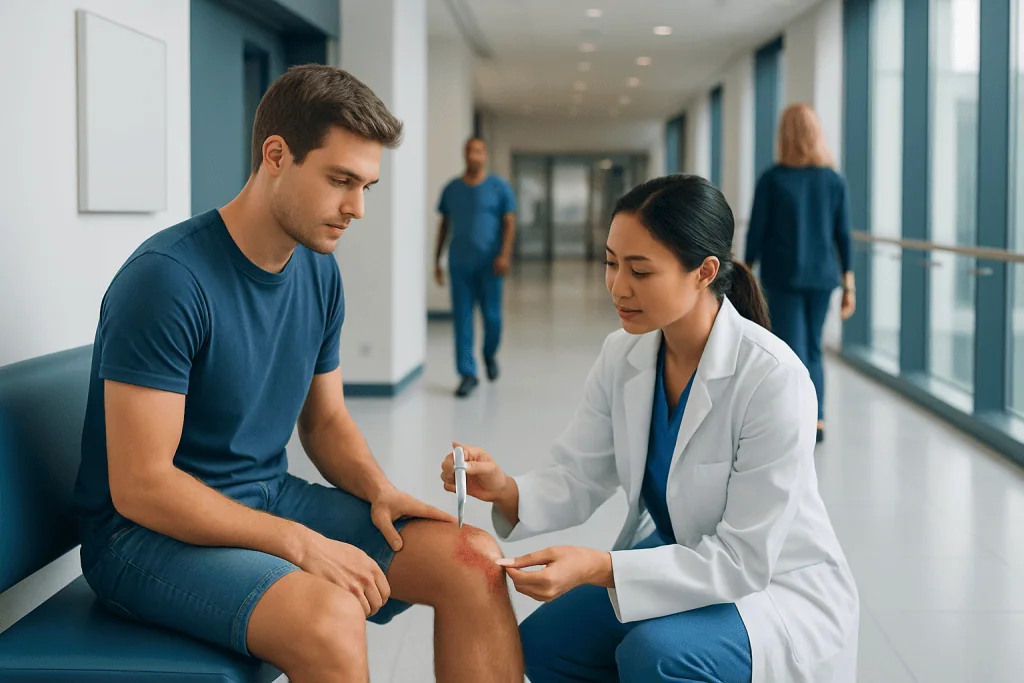
For minor road rash, careful cleaning is the first and most important step before any ointment is used. Antibiotic ointment may help prevent infection in small superficial abrasions, but it is not needed for every scrape.
Key Takeaways
- For minor road rash, careful cleaning is the first and most important step before any ointment is used.
- Antibiotic ointment may help prevent infection in small superficial abrasions, but it is not needed for every scrape.
- People with drug allergies, widespread skin injury, or signs of infection should seek medical advice before self-treating.
- Common label-listed side effects include mild stinging, redness, itching, or rash at the application site.
- Road rash with embedded debris, heavy drainage, fever, spreading redness, or severe pain needs medical evaluation.
Antibiotic ointment for road rash can be useful for some minor, superficial abrasions after the wound has been thoroughly cleaned, because it helps lower the chance of a small skin infection and keeps the area moist. It is not a substitute for proper wound cleaning, and deeper, dirty, or worsening injuries should be assessed by a clinician.
Overview: Is antibiotic ointment good for road rash?
Antibiotic ointment for road rash can be appropriate for a minor, superficial abrasion after the skin has been washed well and visible dirt has been removed. In that setting, a thin layer of a topical antibiotic may help reduce the risk of a small skin infection and support a moist wound environment, which can be more comfortable than letting the scrape dry out and crack.
However, antibiotic ointment is only one part of care. Road rash often contains gravel, dust, or fabric particles, and these need attention first. If the wound is deep, very large, heavily contaminated, or still bleeding, home care may not be enough. Ointment also cannot treat an already established infection or repair deeper tissue damage.
This topic is best understood as a wound-care decision rather than a one-size-fits-all rule. Some simple abrasions may improve with cleaning, a nonstick dressing, and close monitoring alone, while others may benefit from a label-directed topical antibiotic. A clinician can help if there is uncertainty about the depth of the injury, risk of infection, or possible allergy to ingredients.
What road rash is and when ointment may help

Road rash is a friction injury that happens when skin slides across a rough surface such as pavement. It is often called an abrasion, but the injury can range from a mild scrape affecting only the upper skin layers to a deeper wound with loss of skin, trapped debris, and bruising underneath.
Topical antibiotic ointments are usually intended for minor cuts, scrapes, and burns. In road rash, they may be most helpful when the area is small, shallow, and already cleaned. They are less suitable as self-care for wounds that expose deeper tissue, involve a large body area, or appear infected at the start.
It is also important to remember that not every road rash injury is only a skin problem. Falls from bicycles, scooters, motorcycles, or running can also cause sprains, fractures, or head injury. If the person has significant swelling, joint pain, dizziness, or trouble moving, a broader medical assessment is more important than choosing an ointment.
When the abrasion is extensive or healing slowly, doctors may also consider whether there are related skin issues such as eczema or contact irritation from adhesives and wound products. These factors can make the skin more reactive and may change the best aftercare plan.
How to use antibiotic ointment safely for minor road rash
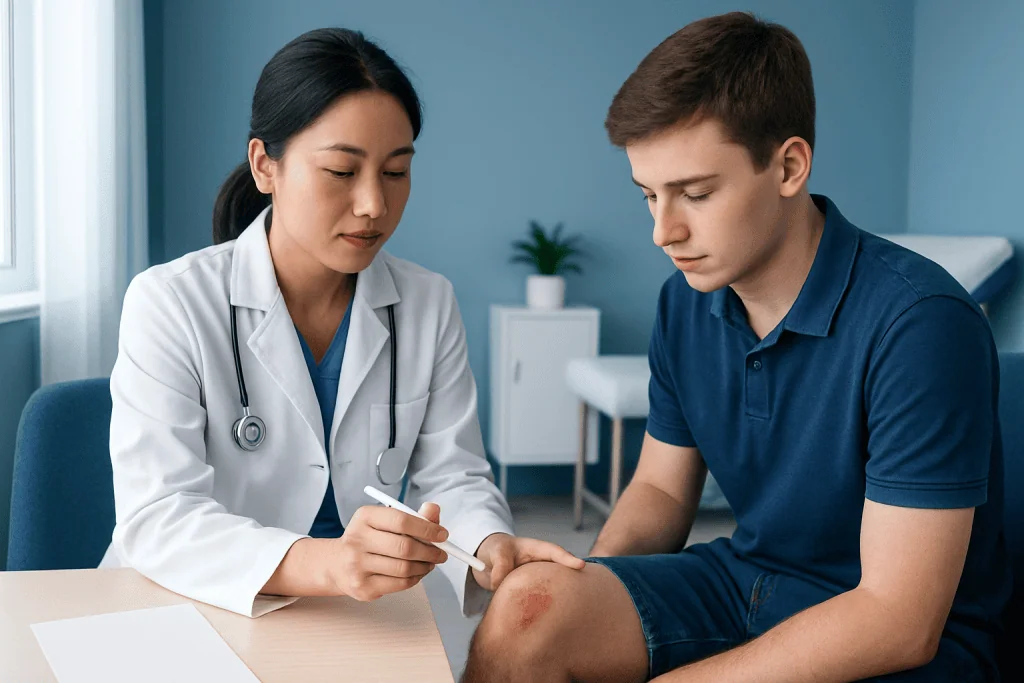
For minor road rash, the safest starting point is gentle cleansing. The area is usually rinsed with clean running water to remove dirt and reduce bacteria on the skin surface. Mild soap may be used around the wound if tolerated. Embedded particles that do not rinse out easily, or any debris that is difficult to remove, should be assessed by a clinician rather than aggressively scrubbed at home.
After cleaning, a topical antibiotic ointment may be applied according to the product label for minor skin injuries. It is generally used on intact surrounding skin and superficial open abrasions, then covered with a clean, nonstick dressing if needed. Dosage and frequency vary by product and are best followed exactly as listed on the package or discussed with a pharmacist or doctor.
Most over-the-counter antibiotic ointments are combinations or single-agent products intended for short-term external use. They are not meant for the eyes, large untreated skin areas, puncture wounds, animal bites, or serious burns unless a clinician advises otherwise. If there are questions about how often to apply the product, how long to use it, or whether it should be combined with another medicine, the safest step is to ask a healthcare professional.
Some patients with larger or more complex wounds may need advanced wound care rather than routine home treatment. If specialist care is needed, options can include wound care and, when injuries are deeper or extensive, consultation with teams experienced in dermatology or skin repair.
Label-level safety: side effects, allergies, interactions, and who should avoid it
Common label-listed side effects of topical antibiotic ointments are usually mild and local. These can include temporary stinging, burning, itching, redness, or irritation where the ointment is applied. If the skin becomes more inflamed instead of gradually calmer, the reaction may be irritation or allergy rather than normal healing.
One of the most important contraindications is a known allergy to any ingredient in the product. Some people develop allergic contact dermatitis to ingredients such as neomycin or certain preservatives. This can look like worsening redness, itch, a weepy rash, or a new pattern of irritation spreading beyond the scrape itself. In that situation, the ointment should not be continued unless a clinician advises it.
Interactions are generally limited because these medicines are used on the skin, but they can still matter. Using multiple medicated creams, antiseptics, or adhesive products on the same area may increase irritation. Patients who use prescription skin treatments, have a history of severe drug allergy, or are treating a large injured area should check with a clinician before combining products.
Topical antibiotic ointment is also not ideal for every wound. Product labels commonly advise medical guidance for deep or puncture wounds, serious burns, animal bites, or wounds that do not improve. Anyone who is immunocompromised, has poor circulation, or has conditions that slow healing may need more individualized care. If there are signs of a more significant skin infection such as cellulitis, medical review is especially important.
Signs of infection and when road rash needs more than home care
Abrasions normally look raw, pink, and tender at first, then gradually improve over several days. Mild oozing right after the injury can be normal. What raises concern is a wound that becomes increasingly red, swollen, painful, warm, or drains thicker yellow, green, or foul-smelling fluid instead of slowly settling down.
Spreading redness, fever, chills, red streaks, or feeling unwell can suggest that the problem is moving beyond a simple surface scrape. In these cases, a topical ointment alone is not enough. A doctor may need to examine the wound, remove retained debris, update tetanus protection if needed, or prescribe another treatment.
Road rash also deserves prompt assessment if debris is deeply embedded, the abrasion covers a large area, bleeding continues, or the injury involves the face, hands, genitals, or a joint. These areas are more sensitive and may affect function or healing. If movement is painful or limited, doctors may also look for an underlying fracture or soft-tissue injury.
In some cases, a wound that appears infected may need further treatment such as antibiotic treatment or procedural cleaning. Patients with diabetes, peripheral vascular disease, or weak immune systems should have a lower threshold to seek care because healing can be slower and infection risk can be higher.
Practical self-care while the wound heals
Good healing depends on a few consistent habits. The dressing should be kept clean and changed when it becomes wet, dirty, or loose. The wound should be checked daily for increasing pain, redness, swelling, discharge, or a bad smell. Gentle washing during dressing changes usually helps remove dried fluid without disturbing healing tissue.
Picking at scabs or peeling skin can delay healing and increase the chance of scarring. Tight clothing or repeated rubbing from sports gear may also re-injure the area. If the wound is on a limb, resting the area and reducing friction can improve comfort. Once the skin closes, sun protection can help limit long-lasting discoloration.
People sometimes use several products at once, such as antiseptic sprays, powders, herbal balms, and medicated creams. This can make the skin more irritated and make it harder to tell whether the wound is healing. A simpler routine is often better: cleanse, use only the chosen product as directed, cover if needed, and monitor.
If healing seems slow or the skin becomes unusually itchy or rash-like, a clinician may check for allergic contact dermatitis, excess moisture under a bandage, or another skin condition. In selected cases, specialist follow-up in plastic and reconstructive surgery may be considered for deeper injuries or scar concerns.
When to seek medical care
Medical care should be sought promptly if road rash is deep, covers a large area, contains embedded gravel that cannot be removed, or follows a high-impact accident. Evaluation is also important when the person may have a head injury, severe joint pain, numbness, or difficulty walking or using the injured area.
A doctor should also review the wound if there are signs of infection such as worsening redness, increasing swelling, pus, fever, or pain that is getting worse rather than better. People with diabetes, weakened immunity, poor circulation, or significant medication allergies should be especially cautious with self-treatment.
It is wise to ask about tetanus protection after any dirty abrasion. Clinicians can also advise whether the product being used is appropriate, whether the skin reaction could be an allergy, and whether another treatment is needed. Near the end of recovery, if the wound is not closing as expected or if scarring becomes a concern, specialist review may help.
For international patients who need assessment or ongoing treatment, Acibadem International’s multidisciplinary specialists in JCI-accredited hospitals diagnose and treat wound, skin, and trauma-related conditions with coordinated follow-up.
Frequently asked questions
Should every road rash be treated with antibiotic ointment?
No. Small, superficial abrasions may improve with thorough cleaning, a protective dressing, and monitoring alone. Antibiotic ointment can be helpful for some minor wounds, but deeper, dirt-filled, or worsening injuries need medical evaluation rather than routine self-treatment.
What is the difference between normal healing and infection?
Normal healing usually means the scrape becomes less painful and less red over time, and the surface starts to close. Infection is more concerning when redness spreads, swelling increases, pain worsens, or the wound drains pus or develops a foul smell. Fever or feeling unwell should also prompt medical care.
Can antibiotic ointment cause a rash?
Yes. Some people develop irritation or an allergic skin reaction to ingredients in topical antibiotics. If the area becomes itchier, redder, more inflamed, or develops a new rash pattern after use, the product may not be suitable and a clinician should be consulted.
Is petroleum jelly better than antibiotic ointment for road rash?
For some minor abrasions, petroleum jelly can help keep the wound moist and protected without exposing the skin to antibiotic ingredients. Antibiotic ointment may be chosen when a clinician or product label supports its use for a minor scrape. The best option depends on the wound, allergy history, and how clean the abrasion is after washing.
Can antibiotic ointment treat an infected road rash?
Not reliably. A topical antibiotic ointment is intended mainly for minor skin injuries and may help prevent infection in some cases, but it is not a substitute for proper treatment of an established infection. If infection is suspected, a doctor should assess the wound.
When should someone ask a doctor instead of treating road rash at home?
Medical advice is important if the wound is deep, large, contaminated with debris, or located on the face, hands, genitals, or over a joint. A doctor should also be contacted for increasing pain, spreading redness, fever, persistent drainage, delayed healing, or concern about tetanus protection.
References
- American Academy of Dermatology
- American Academy of Family Physicians
- MedlinePlus
- U.S. Food and Drug Administration
- Mayo Clinic
This article is for general information only and is not a substitute for professional medical advice. Please consult a qualified doctor about your individual situation.
Explore treatments in Turkey — costs, top hospitals & a free quote
JCI-accredited · board-certified surgeons · reply within 24h
Add us as a Preferred Source to see more of our trusted health content across Google Search, AI Overviews and Discover.